"}},{"@type":"Question","name":"What is agent profitability in insurance distribution?","acceptedAnswer":{"@type":"Answer","text":"Agent profitability in insurance distribution is the measure of how much net value each agent generates for an IMO or BGA, calculated by comparing the commissions and overrides earned from their production against the costs of supporting them — including staff time, marketing credits, advances, and chargebacks. An agent with high production volume may still be unprofitable if their support costs are high or if they generate frequent chargebacks."}},{"@type":"Question","name":"How do IMOs and BGAs track agent profitability?","acceptedAnswer":{"@type":"Answer","text":"Tracking agent profitability requires combining commission data, production data, and cost data into a single view. The most effective approach is using a reporting and dashboards platform built for insurance distribution, where an agent profitability table shows override amounts, commissions paid, and net profitability side by side. This replaces the manual process of pulling data from multiple spreadsheets and calculating figures by hand."}},{"@type":"Question","name":"What is an agent profitability table?","acceptedAnswer":{"@type":"Answer","text":"An agent profitability table is a report that displays each agent's override earned, commissions paid, and net profitability in a single view. For IMOs and BGAs, it's one of the most useful reporting tools available because it cuts through production volume alone and shows the actual financial impact of each agent relationship. Supporting columns can include production volume, advance balances, lead conversion rates, and chargeback history."}},{"@type":"Question","name":"Why does agent profitability matter for staff productivity?","acceptedAnswer":{"@type":"Answer","text":"Agent profitability and staff productivity are closely linked. The more time your team spends manually servicing low-producing or high-maintenance agents, the higher the effective cost of those agent relationships. Platforms that automate commission processing, reporting, and agent communication reduce the staff time required per agent, which directly improves the profitability math for the entire agent population."}},{"@type":"Question","name":"How can tracking agent profitability help an IMO or BGA grow?","acceptedAnswer":{"@type":"Answer","text":"When an IMO or BGA can clearly see which agents generate margin and which consume it, leadership can make smarter decisions about where to invest resources. Marketing credits, training time, and recruitment energy can go to higher-potential agents. Advance policies can be adjusted for agents with poor churn patterns. The result is a business where growth is strategic rather than accidental — with resources flowing to agents and activities that produce the best return."}},{"@type":"Question","name":"What is campaign performance measurement in insurance distribution?","acceptedAnswer":{"@type":"Answer","text":"Campaign performance measurement is the process of tracking the full journey from outreach activity (emails, texts, calls) to production outcomes. For IMOs and BGAs, it means connecting which agents received a campaign to whether those agents submitted more business in the period that followed."}},{"@type":"Question","name":"Why can't most IMOs and BGAs measure whether their campaigns work?","acceptedAnswer":{"@type":"Answer","text":"Most agencies use separate tools for campaigns and production tracking, so there's no automatic connection between outreach activity and production outcomes. Connecting them manually is time-consuming and rarely done consistently."}},{"@type":"Question","name":"What metrics should IMOs and BGAs track for agent outreach campaigns?","acceptedAnswer":{"@type":"Answer","text":"The most useful metrics are open and response rates by agent segment, production submitted within 30, 60 and 90 days by agents in the campaign group, re-engagement rate for dormant agent campaigns and product-specific response rates for product promotion campaigns."}},{"@type":"Question","name":"How does OneHQ connect campaign activity to production data?","acceptedAnswer":{"@type":"Answer","text":"Because OneHQ's CRM and production tracking modules live on the same platform, campaign activity is automatically logged against agent records alongside production data. The Data Visualization module can surface which campaigns drove production without requiring manual data exports or reconciliation."}},{"@type":"Question","name":"How often should IMOs and BGAs review campaign performance?","acceptedAnswer":{"@type":"Answer","text":"Campaign performance should be reviewed at a minimum after each major campaign and ideally on a monthly basis as part of regular marketing and sales reviews. The goal is to build a feedback loop where each campaign informs the next one. --- "}},{"@type":"Question","name":"What is case management reporting in insurance distribution?","acceptedAnswer":{"@type":"Answer","text":"Case management reporting in insurance distribution refers to the dashboards and data views that give case managers, sales managers, and executives real-time visibility into every open case. This includes requirements status lists showing outstanding items, policy status lifecycle views tracking cases from submission to issued, and submitted and pending business summaries. When these reports are connected to live case data, case managers can prioritize their day from facts instead of from memory."}},{"@type":"Question","name":"What is a requirements status list in case management?","acceptedAnswer":{"@type":"Answer","text":"A requirements status list is a report that shows every open case with outstanding carrier requirements, what those requirements are, when they were requested, and whether they have been fulfilled. For case managers handling large pipelines, this list is one of the most critical daily tools — it shows which cases are at risk of stalling because of unresolved requirements and ensures nothing ages unnoticed."}},{"@type":"Question","name":"How does a policy status lifecycle view help case managers?","acceptedAnswer":{"@type":"Answer","text":"A policy status lifecycle view shows where each case stands in the progression from application submission through underwriting, approval, issuance, and in-force status. It gives case managers a way to see the full distribution of their pipeline across stages, identify where cases are clustering or stalling, and prioritize follow-up on cases that have been stuck at a particular stage too long. Without this view, case managers have to contact every agent or carrier individually to get a current picture."}},{"@type":"Question","name":"How does case management reporting reduce agent service requests?","acceptedAnswer":{"@type":"Answer","text":"Case management reporting reduces agent service requests by giving agents self-service access to case status information through an agent portal. When agents can see where their cases stand without calling the agency, the volume of status inquiry calls drops significantly. And when case managers do take status calls, they can answer them instantly because the information is right in front of them rather than requiring a manual lookup."}},{"@type":"Question","name":"What is submitted and pending business tracking?","acceptedAnswer":{"@type":"Answer","text":"Submitted and pending business tracking is a reporting view that shows the volume and status of cases currently in the pipeline — how much business has been submitted by stage, which agents have the most open cases, and how the current pipeline compares to prior periods. This view connects case management activity to production outcomes and gives leadership the visibility they need to see whether the pipeline is healthy or whether cases are stalling at a particular stage."}},{"@type":"Question","name":"What is commission reporting for an IMO or BGA?","acceptedAnswer":{"@type":"Answer","text":"Commission reporting for an IMO or BGA is the set of dashboards and data views that go beyond processing to show the full financial picture of the agency's commission activity. This includes override trend analysis, agent profitability tables, carrier reconciliation reports that catch discrepancies between expected and received payments, and production leaderboards that show which agents are driving the most value. Good commission reporting turns the commissions function from a cost center into a source of strategic insight."}},{"@type":"Question","name":"What is commission accuracy reporting?","acceptedAnswer":{"@type":"Answer","text":"Commission accuracy reporting is the process of systematically comparing what a carrier paid against what the agency expected to receive, based on production volume and contract terms. It identifies discrepancies — missed overrides, incorrect splits, unpaid bonus tiers — before they become permanent losses. For IMOs and BGAs that work with multiple carriers and complex agent hierarchies, commission accuracy reporting is one of the most important financial controls in the business."}},{"@type":"Question","name":"How does an agent profitability table differ from a production leaderboard?","acceptedAnswer":{"@type":"Answer","text":"A production leaderboard shows how much business each agent has submitted or placed, ranking agents by volume. An agent profitability table goes deeper, showing overrides earned, commissions paid out, advance balances, and net profitability per agent. An agent who ranks high on a production leaderboard may rank much lower on a profitability table once overrides and service costs are factored in. Both views matter, but profitability data is what drives smarter resource allocation decisions."}},{"@type":"Question","name":"What are override trends and why do they matter?","acceptedAnswer":{"@type":"Answer","text":"Override trends show how the override amounts your agency earns from carriers have changed over time, typically displayed as a month-by-month chart. When overrides are growing, your business is scaling. When they plateau or decline, it's a signal to investigate whether production is slowing, whether an override tier threshold wasn't reached, or whether a carrier made an error. Executives who monitor override trends regularly can catch revenue issues before they compound."}},{"@type":"Question","name":"How does commission reporting connect to agent retention?","acceptedAnswer":{"@type":"Answer","text":"Commission reporting connects to agent retention because commission accuracy and transparency are among the most important factors in whether agents stay with an agency. Agents who receive accurate, on-time commission statements and can access their payment history through a self-service portal are more satisfied and more loyal. When your internal team has the reporting tools to catch errors before agents experience them, you protect both revenue and agent relationships."}},{"@type":"Question","name":"How does data improve agent recruiting decisions for an IMO or BGA?","acceptedAnswer":{"@type":"Answer","text":"Data helps by identifying the characteristics of your highest-performing and most profitable agents, which creates a recruiting profile. Rather than recruiting based on intuition alone, you can evaluate new recruits against the patterns that predict success in your specific book of business."}},{"@type":"Question","name":"What are the early warning signs of agent disengagement?","acceptedAnswer":{"@type":"Answer","text":"The most common signs include declining submission volume over a two-to-three month period, slower response rates to outreach from your team, falling placement ratios and narrowing product mix. These patterns often appear in production dashboards weeks before an agent redirects their business."}},{"@type":"Question","name":"What does it cost when an active agent leaves your downline?","acceptedAnswer":{"@type":"Answer","text":"The cost includes lost override income, the marketing and recruiting investment already made in that relationship and the time required to find and develop a replacement. Research suggests it costs significantly more to acquire a new agent than to retain an existing one, making early retention action highly cost-effective."}},{"@type":"Question","name":"How can you tell which agents are worth investing in?","acceptedAnswer":{"@type":"Answer","text":"Profitability data, production trends and engagement signals together give you a picture of which agents are growing, which are stable and which are at risk. The agents most worth investing in are typically those with positive trends, consistent placement ratios and responsiveness to your outreach."}},{"@type":"Question","name":"How does OneHQ support data-driven recruiting and retention?","acceptedAnswer":{"@type":"Answer","text":"OneHQ's CRM stores complete agent profiles including production history, product mix and communication history. The Data Visualization module surfaces trends across the agent network so your team can spot growth and risk early. The Agent Portal keeps agents engaged through self-service access to their own data. --- "}},{"@type":"Question","name":"What is data-driven agent recruitment for an IMO or BGA?","acceptedAnswer":{"@type":"Answer","text":"Data-driven agent recruitment means using production data, activity reports, and agent pipeline tracking to make better recruiting decisions. Instead of relying primarily on relationships and referrals, agencies analyze their best-performing agents to identify what high-value recruits look like, use production tracking to close the loop between recruiting investments and agent outcomes, and manage their recruiting pipeline with the same discipline they apply to their production pipeline."}},{"@type":"Question","name":"How can production data improve insurance agent recruiting?","acceptedAnswer":{"@type":"Answer","text":"Production data improves insurance agent recruiting by helping agencies identify the characteristics of their best-performing agents — what product lines they specialize in, what their production looked like in their first 90 days, and what they have in common. That analysis creates a clear profile of high-value recruits. Recruiting teams can then target prospects who match that profile, rather than recruiting broadly and hoping for the best."}},{"@type":"Question","name":"What should an agent recruitment pipeline view include?","acceptedAnswer":{"@type":"Answer","text":"An agent recruitment pipeline view should show every prospective agent by stage, from initial outreach through contract pending and ready to sell. It should display the key data points that indicate fit, such as production history, product specialization, and current appointments. A well-designed pipeline view helps recruiting managers see where prospects are stalling, which stage has the most drop-off, and where to focus outreach for the fastest conversion."}},{"@type":"Question","name":"Why is data-driven recruiting a competitive advantage in insurance distribution?","acceptedAnswer":{"@type":"Answer","text":"Data-driven recruiting is a competitive advantage because it lets agencies target the right agents, with the right offer, at the right time — rather than casting a wide net and hoping for conversions. When you know which agent types produce the best results in your downline, you can focus recruiting resources on finding more of them. When you can demonstrate your agency's production data and agent success story, you make a stronger pitch to prospective recruits than agencies that lead with vague promises of support."}},{"@type":"Question","name":"How does agent recruitment connect to production reporting in insurance distribution?","acceptedAnswer":{"@type":"Answer","text":"Agent recruitment connects to production reporting when both functions live in the same platform. When CRM data, production dashboards, and commissions information are all in one place, you can trace the path from recruiting investment to production outcome. Which sources produce the most active agents? Which onboarding stages lead to faster time-to-first-submission? Those questions are only answerable when recruiting and production data are connected, not siloed in separate systems."}},{"@type":"Question","name":"What does a scalable data setup look like for an IMO or BGA?","acceptedAnswer":{"@type":"Answer","text":"A scalable setup includes one connected platform for agent data, automated data inflow from carriers and vendors, live dashboards that update without manual maintenance and role-appropriate visibility for different team members. When these are in place, growth adds business volume without proportionally adding reporting overhead."}},{"@type":"Question","name":"Why do most IMOs and BGAs outgrow their data setup?","acceptedAnswer":{"@type":"Answer","text":"Most agencies start with spreadsheets and disconnected tools that work at small scale but break as the agent network grows. The manual work required to maintain reporting — updating records, reconciling systems, building reports — grows faster than the business, eventually becoming a constraint on growth."}},{"@type":"Question","name":"What is the biggest data scaling problem for insurance distribution agencies?","acceptedAnswer":{"@type":"Answer","text":"The biggest problem is usually manual data entry from carrier commission statements, which must be processed for every agent in the network. Automating this through carrier integrations eliminates the staffing cost that makes growth expensive."}},{"@type":"Question","name":"How do dashboards help a growing IMO or BGA without adding staff?","acceptedAnswer":{"@type":"Answer","text":"Live dashboards that pull from connected data sources provide the reporting visibility that growing agencies need without requiring someone to build reports manually. As the agency grows, the dashboards scale automatically — more agents and more data simply means more information in the same dashboard."}},{"@type":"Question","name":"At what point should an IMO or BGA invest in better data infrastructure?","acceptedAnswer":{"@type":"Answer","text":"The right time is before growth strains the current setup, not after. Agencies that invest in connected data infrastructure while they're still managing it often see accelerated growth because they can act on information faster and at larger scale without proportionally increasing their team's workload. --- "}},{"@type":"Question","name":"How does data visibility change the relationship between an IMO or BGA and its agents?","acceptedAnswer":{"@type":"Answer","text":"When agents have access to their own production data, commission history and trip standings, they stop spending time calling in for information they could access themselves. The relationship shifts from transactional information requests to strategic partnership conversations — which is a better use of time for both parties."}},{"@type":"Question","name":"What data should agents have self-service access to?","acceptedAnswer":{"@type":"Answer","text":"The most valuable self-service data for agents includes commission statements and payment history, pending case status, incentive trip qualification progress, their own production trends and available marketing credits or resources. This covers the majority of routine inbound questions."}},{"@type":"Question","name":"How does giving agents data access improve IMO or BGA team efficiency?","acceptedAnswer":{"@type":"Answer","text":"When agents can find their own answers, your team fields fewer inbound calls for routine information. That time goes toward outreach, development conversations and the agent interactions that genuinely require a person. The team's focus shifts from answering questions to building relationships."}},{"@type":"Question","name":"Can data visibility be a competitive differentiator for an IMO or BGA?","acceptedAnswer":{"@type":"Answer","text":"Yes. Agents comparing distribution options increasingly value the tools and visibility available to them. An agency that can demonstrate real-time access to commissions, trip standings and production data through a professional portal has an advantage over one that requires agents to call in for the same information."}},{"@type":"Question","name":"How does OneHQ's Agent Portal connect to IMO and BGA production data?","acceptedAnswer":{"@type":"Answer","text":"OneHQ's Agent Portal pulls directly from the platform's CRM, DMS and ICM modules, giving agents a view of their own data that's always current. Because the portal and the agency platform share the same data source, agents and agency staff always see the same accurate information. --- "}},{"@type":"Question","name":"How early can declining agent production be detected?","acceptedAnswer":{"@type":"Answer","text":"With real-time production dashboards, declining trends can be detected within 30 to 45 days of the change beginning. Agents who reduce submission frequency, experience falling placement ratios or narrow their product mix all show these signals in production data before they take action to leave."}},{"@type":"Question","name":"What are the most common early warning signs of agent disengagement?","acceptedAnswer":{"@type":"Answer","text":"The most reliable signals are declining submission frequency over two to four weeks, falling placement ratio, reduced responsiveness to outreach and narrowing product mix. Any of these in isolation may be temporary; two or more together suggest a more systemic issue worth addressing."}},{"@type":"Question","name":"Is a declining submission trend always a retention risk?","acceptedAnswer":{"@type":"Answer","text":"Not always. Some agents have seasonal patterns. Some go quiet during personal events. The purpose of monitoring is to prompt a check-in, not to assume the worst. The call is often simply a supportive \"is there anything we can help with?\" — which sometimes reveals a problem that's easy to solve."}},{"@type":"Question","name":"What is the best way to approach a retention conversation with a declining agent?","acceptedAnswer":{"@type":"Answer","text":"Lead with curiosity, not confrontation. Use the production data to understand the nature of the decline before the call — is it a specific carrier, a placement issue or general inactivity? Ask open-ended questions about what they're experiencing and what would help. Early conversations are much more effective than late ones."}},{"@type":"Question","name":"How does OneHQ help IMOs and BGAs catch declining agents earlier?","acceptedAnswer":{"@type":"Answer","text":"OneHQ's Data Visualization module displays real-time production trends across the agent network. Sales managers can filter to surface agents with declining submission frequency or falling placement ratios at any time. Combined with communication history from the CRM, the platform gives your team everything they need to spot and address disengagement early. --- "}},{"@type":"Question","name":"What is an executive dashboard for insurance distribution?","acceptedAnswer":{"@type":"Answer","text":"An executive dashboard for an IMO or BGA gives leaders a real-time view of the metrics most important for strategic decisions: production trajectory, agent network health, carrier concentration, profitability trends and operational capacity. It draws from connected data sources and updates automatically."}},{"@type":"Question","name":"What production metrics do insurance distribution executives most need to see?","acceptedAnswer":{"@type":"Answer","text":"The most strategically important metrics are year-to-date production versus prior year, active agent count trend, production by carrier and product line, profitability per agent and pipeline volume. Together these paint a picture of current performance and near-term outlook."}},{"@type":"Question","name":"How does an executive dashboard differ from what a sales manager or operations manager sees?","acceptedAnswer":{"@type":"Answer","text":"Executives see the full picture across all teams and functions. Sales managers see their specific team's production data in detail. Operations managers see case pipeline, workload and case management metrics. All three views draw from the same underlying data — they're filtered for relevance to each role."}},{"@type":"Question","name":"Why is real-time data more important for executives than for other roles?","acceptedAnswer":{"@type":"Answer","text":"Executives make strategic decisions that take time to reverse. A direction chosen based on stale data can take months to correct. Real-time visibility gives leaders the ability to spot trends early and adjust strategy before small problems become large ones."}},{"@type":"Question","name":"How does OneHQ support executive reporting for IMOs and BGAs?","acceptedAnswer":{"@type":"Answer","text":"OneHQ's Data Visualization module includes executive-level dashboards that pull from the CRM, DMS and ICM modules in one connected platform. Production, case management, commissions and agent network data all appear in one view that updates automatically. --- "}},{"@type":"Question","name":"How can an IMO or BGA identify their top 10% of agents?","acceptedAnswer":{"@type":"Answer","text":"Identifying top agents requires looking at more than just production volume. The full picture includes placement ratio, product mix, production trend over time and service burden on your team. OneHQ's Data Visualization module assembles this data automatically into a single agent view you can sort and filter."}},{"@type":"Question","name":"Why is production volume alone not enough to identify top agents?","acceptedAnswer":{"@type":"Answer","text":"A high-volume agent with poor placement rates, single-product focus or high service demands may be less valuable than a mid-volume agent who places consistently, writes across multiple lines and requires minimal service. Profitability and trend data round out the picture."}},{"@type":"Question","name":"How should IMOs and BGAs invest in relationships with top agents?","acceptedAnswer":{"@type":"Answer","text":"Intentional investment includes regular personal outreach, priority access to the best carrier products and contracts, early visibility into incentive programs and responsive service when they need it. Top agents should feel like preferred partners, not just producers in a database."}},{"@type":"Question","name":"How can top agent data inform recruiting?","acceptedAnswer":{"@type":"Answer","text":"The characteristics of your current top agents — their product mix, production consistency, placement ratio and growth trajectory — become a template for who to recruit next. Recruiting toward that profile increases the probability of bringing on agents who will perform well in your specific network."}},{"@type":"Question","name":"Can agents see their own performance data in OneHQ?","acceptedAnswer":{"@type":"Answer","text":"Yes. OneHQ's Agent Portal gives agents self-service access to their production data, trip standings and commission history. Agents who can see their own performance data are more engaged and more likely to push toward the next milestone. --- "}},{"@type":"Question","name":"What is insurance distribution analytics?","acceptedAnswer":{"@type":"Answer","text":"Insurance distribution analytics is the process of collecting and displaying key performance data for IMOs, BGAs, MGAs and FMOs so leaders can track agent production, profitability, incentive programs and campaign results in real time. It replaces manual reporting with dashboards that update automatically."}},{"@type":"Question","name":"Why do most IMOs and BGAs struggle with analytics?","acceptedAnswer":{"@type":"Answer","text":"Most agencies manage data across disconnected tools — one for commissions, one for cases, one for agent profiles — with nothing connecting them. Without a platform that integrates these data sources, analytics requires manual data pulls that are slow, error-prone and always a few steps behind."}},{"@type":"Question","name":"What metrics should an IMO or BGA track?","acceptedAnswer":{"@type":"Answer","text":"The most important metrics for insurance distribution include agent production by period, agent profitability, incentive trip standings, case volume and status, campaign response rates and team workload. The right combination depends on the agency's size, goals and the product lines they distribute."}},{"@type":"Question","name":"How does data visualization differ from standard reporting?","acceptedAnswer":{"@type":"Answer","text":"Standard reporting involves pulling data and building a report after the fact. Data visualization presents live, connected data in dashboards that update automatically. You see the current state of your business right now, not what it looked like last week."}},{"@type":"Question","name":"How does OneHQ's Data Visualization module work?","acceptedAnswer":{"@type":"Answer","text":"OneHQ's Data Visualization module pulls data directly from the CRM, DMS and ICM modules inside the platform. Production, cases, commissions, trip standings and campaigns all flow into dashboards that update in real time, giving leaders an accurate, current view of their operation without manual effort. --- *No personal client stories were provided for this post. A case study from an IMO or BGA who specifically improved decision-making speed after implementing real-time dashboards would strengthen the \"decision-making difference\" section.* "}},{"@type":"Question","name":"Why do most IMO and BGA trip programs fail to drive year-round production?","acceptedAnswer":{"@type":"Answer","text":"The most common reason is visibility. When agents don't know where they stand relative to the qualifying threshold, they don't feel the urgency to push. Real-time standings create a continuous feedback loop that keeps the program top of mind throughout the year rather than only at the deadline."}},{"@type":"Question","name":"What does a real-time incentive trip dashboard show?","acceptedAnswer":{"@type":"Answer","text":"A real-time trip dashboard shows each agent's current production or points total for the qualification period, their standing relative to the qualifying threshold and ideally their ranking among peers in the program. The data updates continuously as new production is processed."}},{"@type":"Question","name":"Can agents see their own trip standings without calling your team?","acceptedAnswer":{"@type":"Answer","text":"With OneHQ's Agent Portal, yes. Agents have self-service access to their trip progress, which reduces inbound calls to your team and keeps agents more engaged throughout the qualification period."}},{"@type":"Question","name":"How does trip tracking data help sales managers coach agents?","acceptedAnswer":{"@type":"Answer","text":"When standings are visible across the agent network, sales managers can sort by proximity to the qualifying threshold and identify which agents are closest to qualifying. Those agents are the highest-priority coaching conversations because a small production push could push them over the line."}},{"@type":"Question","name":"How does OneHQ handle different trip qualification structures?","acceptedAnswer":{"@type":"Answer","text":"OneHQ's ICM module tracks the underlying commission and production data that feeds trip calculations, including point-based and premium-based qualification structures. The Data Visualization module then surfaces those standings in dashboards that update in real time as production comes in. --- "}},{"@type":"Question","name":"What should an insurance agency executive dashboard include?","acceptedAnswer":{"@type":"Answer","text":"An insurance agency executive dashboard should include year-over-year production metrics, premium trend line graphs over 12 to 24 months, override amounts by month, and production goals and revenue tracking. It should also surface recruiting pipeline momentum, submitted and pending business volume, and commission accuracy status. Together, these views give an executive a real-time view of business health without requiring anyone to pull a manual report."}},{"@type":"Question","name":"Why do most IMO and BGA executives lack real-time business visibility?","acceptedAnswer":{"@type":"Answer","text":"Most IMO and BGA executives lack real-time visibility because their data lives in multiple disconnected systems. Commission data, production records, case tracking, and CRM activity are often managed in separate platforms that don't talk to each other. Getting a unified view requires someone to manually export and combine data from each source — a process that's time-consuming, error-prone, and produces a snapshot that's already outdated by the time it's ready."}},{"@type":"Question","name":"What is override tracking and why does it matter for executives?","acceptedAnswer":{"@type":"Answer","text":"Override tracking is the monitoring of the override amounts an IMO or BGA earns from carrier relationships, typically displayed month by month and trended over time. Overrides represent the financial return on building and managing a downline. When override tracking is built into an executive dashboard, leaders can see whether revenue from carriers is growing, plateauing, or declining — and act before a negative trend compounds into a significant financial problem."}},{"@type":"Question","name":"How does production goal tracking work in an insurance agency dashboard?","acceptedAnswer":{"@type":"Answer","text":"Production goal tracking in an insurance agency dashboard works by setting a production or revenue target at the start of a period and then displaying current progress against that target in real time. When the dashboard pulls from live production data, executives can check goal pacing at any point during the period and make decisions — shifting resources, adjusting strategy, or escalating focus — while there's still time to make a difference."}},{"@type":"Question","name":"What is the difference between a production leaderboard and an executive dashboard?","acceptedAnswer":{"@type":"Answer","text":"A production leaderboard shows agent rankings by production volume and is primarily a tool for sales managers to coach individuals and manage team accountability. An executive dashboard shows aggregate business performance — total production, revenue trends, override summaries, and goal pacing — and is designed for leadership to assess overall business health and make strategic decisions. Both are valuable, but they serve different audiences and different decision types."}},{"@type":"Question","name":"Why do most IMOs and BGAs struggle to trust their own data?","acceptedAnswer":{"@type":"Answer","text":"The core issue is that data lives in multiple disconnected systems that update independently and diverge over time. Manual data entry adds errors. Without a reconciliation process, those errors accumulate silently until they surface in reports at the worst possible moment."}},{"@type":"Question","name":"What are the most common signs of a data quality problem in insurance distribution?","acceptedAnswer":{"@type":"Answer","text":"Common signs include production reports that don't match between systems, commission errors that only get caught when an agent complains, agent records that are out of date in one system but current in another, and meetings that get derailed reconciling numbers instead of making decisions."}},{"@type":"Question","name":"How does manual data entry create data quality problems?","acceptedAnswer":{"@type":"Answer","text":"Manual data entry introduces errors at every touchpoint: case statuses entered incorrectly, commission amounts transposed, hierarchy changes not updated consistently across systems. Each error is small, but they accumulate over time and are difficult to find and fix retroactively."}},{"@type":"Question","name":"What does a reliable \"one source of truth\" look like for an IMO or BGA?","acceptedAnswer":{"@type":"Answer","text":"A reliable single source of truth means your agent records, production data and commission information all live in one connected platform that updates automatically when data changes. Downstream reports and dashboards pull from that same source, so everyone is always looking at the same numbers."}},{"@type":"Question","name":"How does OneHQ address the data quality problem?","acceptedAnswer":{"@type":"Answer","text":"OneHQ connects CRM, DMS and ICM data in one platform, eliminating the drift that happens when systems update independently. Carrier and vendor integrations automate data entry to reduce manual errors. The Data Visualization module then surfaces reports from that connected data, so there's no need for reconciliation. --- "}},{"@type":"Question","name":"What is insurance distribution reporting?","acceptedAnswer":{"@type":"Answer","text":"Insurance distribution reporting refers to dashboards and data reports that give IMOs, BGAs, and other insurance distribution organizations a real-time view of their business performance. This includes production metrics, commission summaries, agent activity tracking, case status reports, and incentive trip standings. Good reporting gives each team in the agency, from executives to agents, exactly the data they need to do their jobs more effectively."}},{"@type":"Question","name":"Why do IMOs and BGAs struggle with reporting?","acceptedAnswer":{"@type":"Answer","text":"Most IMOs and BGAs struggle with reporting because their data lives in multiple disconnected places. Commission data is in one spreadsheet, case status is tracked in another, and agent production is managed in a third. When data is fragmented, there's no single source of truth. Reports become time-consuming to produce, are often out of date by the time they're ready, and can contain errors from manual data entry."}},{"@type":"Question","name":"What dashboards does an IMO or BGA actually need?","acceptedAnswer":{"@type":"Answer","text":"The specific dashboards that matter depend on the team. Executives typically need year-over-year production metrics, premium trend lines, and override summaries. Sales managers benefit from activity trackers, leads by rank, and production leaderboards. Case managers need requirements status lists and policy lifecycle views. Commissions teams need agent profitability tables and reconciliation reports. Agents benefit from trip qualification progress tracking and book of business visibility."}},{"@type":"Question","name":"What is a data-driven insurance distribution operation?","acceptedAnswer":{"@type":"Answer","text":"A data-driven insurance distribution operation is one where every team makes decisions based on accurate, real-time information rather than guesswork or outdated reports. Executives can see business health at a glance. Sales managers know which agents to prioritize. Case managers can see which cases need immediate attention. This shift requires dashboards that are built specifically for insurance distribution and integrated with the platform where data is actually generated."}},{"@type":"Question","name":"What is insurance incentive trip tracking?","acceptedAnswer":{"@type":"Answer","text":"Insurance incentive trip tracking is the process of monitoring and displaying each agent's progress toward qualifying for an agency's incentive trip program. It involves calculating production points from policy submissions, commission activity, or other qualifying criteria, and presenting that data in a way agents and staff can easily access. When done well, it gives agents a real-time view of how close they are to qualifying, which keeps motivation high throughout the contest period."}},{"@type":"Question","name":"How do IMOs and BGAs track agent trip qualification status?","acceptedAnswer":{"@type":"Answer","text":"IMOs and BGAs track agent trip qualification status by pulling production and commission data and calculating points against the qualification threshold for each agent. The most efficient approach uses a reporting platform that does this automatically, giving agents a progress bar or point total view in their portal, while giving internal staff a ranked list of all agents and their qualification status. This eliminates the need for manual lookups and ensures agents always have access to accurate, up-to-date information."}},{"@type":"Question","name":"Why does real-time trip tracking matter for agent motivation?","acceptedAnswer":{"@type":"Answer","text":"Real-time trip tracking keeps agents motivated because visibility into progress sustains urgency. An agent who sees they are 80% of the way to qualifying thinks and behaves differently than one who has no idea where they stand. Research supports this: well-run incentive travel programs with clear tracking and consistent communication generate significantly higher production growth than programs without those features. The visibility itself is part of what makes the incentive work."}},{"@type":"Question","name":"How can trip dashboards reduce the workload on IMO and BGA staff?","acceptedAnswer":{"@type":"Answer","text":"Trip dashboards reduce staff workload by giving agents self-service access to their own qualification status. When agents can look up their trip standing without calling or emailing the agency, the volume of status inquiry calls drops. Staff time that was previously spent on manual lookups can go toward higher-value work, like proactive outreach to agents who are close to qualifying and could use a push to get there."}},{"@type":"Question","name":"Can trip tracking data be used for agent recruitment?","acceptedAnswer":{"@type":"Answer","text":"Yes. Trip tracking data and incentive program transparency are valuable recruiting tools. Prospective agents evaluating which IMO or BGA to contract with often look at the quality and accessibility of incentive programs. An agency that can demonstrate clear qualification criteria, real-time tracking, and a history of agents qualifying creates a more compelling pitch than one where trip programs are poorly tracked or inconsistently communicated."}},{"@type":"Question","name":"What metrics should an IMO or BGA track beyond total production?","acceptedAnswer":{"@type":"Answer","text":"The most important additional metrics are active agent percentage, agent production trend by tier, placement ratio by agent and carrier, agent profitability, new agent production velocity, pipeline metrics by stage, trip qualification progress across the network and average case age by status."}},{"@type":"Question","name":"What is active agent percentage and why does it matter?","acceptedAnswer":{"@type":"Answer","text":"Active agent percentage is the share of your contracted agents who have submitted business in a given period. It tells you how well you're activating and retaining your agent network — a more meaningful metric than total agent count, which can grow while activity rates decline."}},{"@type":"Question","name":"What is a placement ratio and what does a declining ratio signal?","acceptedAnswer":{"@type":"Answer","text":"Placement ratio is the percentage of submitted business that ultimately gets issued and placed. A declining placement ratio may signal underwriting challenges with certain carriers, quality issues in the business being submitted or product-client mismatches worth addressing."}},{"@type":"Question","name":"How does tracking new agent production velocity help an IMO or BGA?","acceptedAnswer":{"@type":"Answer","text":"New agent production velocity tells you how effective your onboarding and early development process is. Agents who produce quickly in their first 90 to 180 days are more likely to become long-term active producers. Slow velocity may indicate gaps in your onboarding experience or initial support."}},{"@type":"Question","name":"What is the difference between lagging and leading metrics in insurance distribution?","acceptedAnswer":{"@type":"Answer","text":"Lagging metrics confirm what already happened — total placed premium is the most common example. Leading metrics predict what's likely to happen — pipeline volume, agent activity rates and submission trends are examples. Tracking both gives you the ability to celebrate outcomes and intervene in trends before they become outcomes. --- "}},{"@type":"Question","name":"What is the difference between manual reporting and live dashboards?","acceptedAnswer":{"@type":"Answer","text":"Manual reporting requires someone to export data, build a report and distribute it — a process that takes time, introduces errors and produces results that are already out of date by the time they're read. Live dashboards update automatically and are always current, requiring no manual effort to maintain."}},{"@type":"Question","name":"Which functions in an IMO or BGA benefit most from live dashboards?","acceptedAnswer":{"@type":"Answer","text":"Production reporting, commission tracking, case management visibility and executive reporting all see significant improvement. Each of these currently requires someone to build reports manually; live dashboards make the same information available instantly and continuously."}},{"@type":"Question","name":"How accurate are live dashboards compared to manually built reports?","acceptedAnswer":{"@type":"Answer","text":"Live dashboards are typically more accurate because they eliminate the manual steps where errors are introduced. When data flows directly from the source into the dashboard without anyone touching it, transcription errors and timing gaps disappear."}},{"@type":"Question","name":"What does it take to set up live dashboards for an IMO or BGA?","acceptedAnswer":{"@type":"Answer","text":"Setup involves connecting your data sources to the dashboard layer and configuring the views your team needs. For agencies moving to OneHQ, this is part of the structured Launch onboarding process, which includes data conversion and team training."}},{"@type":"Question","name":"Why does production volume not tell the whole story?","acceptedAnswer":{"@type":"Answer","text":"Production volume only shows one side of the equation. An agent with high volume but high service costs, frequent commission corrections and a poor placement ratio may be less profitable than a lower-volume agent who operates efficiently and consistently. Profitability tracking shows the full picture."}},{"@type":"Question","name":"How can IMOs and BGAs use profitability data to guide decisions?","acceptedAnswer":{"@type":"Answer","text":"Profitability data informs marketing investment (where to allocate marketing credits), service prioritization (which agents deserve the most attention from your team), recruiting strategy (what profile to target) and retention decisions (which relationships to invest in for the long term)."}},{"@type":"Question","name":"Does OneHQ's Data Visualization module include agent profitability views?","acceptedAnswer":{"@type":"Answer","text":"Yes. OneHQ's Data Visualization module includes an agent profitability table that pulls override, production and commission data side by side from the platform's ICM and CRM modules. Leaders can see profitability by agent and filter by product line, carrier or time period. --- "}},{"@type":"Question","name":"What is a real-time operations dashboard for insurance distribution?","acceptedAnswer":{"@type":"Answer","text":"A real-time operations dashboard shows case volume and status across the whole team, case age by status, workload by team member and carrier-specific queues — all updating continuously as cases move through the pipeline. It gives operations managers visibility without requiring manual check-ins."}},{"@type":"Question","name":"How does a dashboard help operations managers catch problems earlier?","acceptedAnswer":{"@type":"Answer","text":"By surfacing cases that have been in the same status for too long, workload imbalances that could cause cases to fall behind and carrier queues that are backing up. When the manager can see the full pipeline at a glance, problems become visible before they reach the agent."}},{"@type":"Question","name":"What is the biggest operations challenge for growing IMOs and BGAs?","acceptedAnswer":{"@type":"Answer","text":"The biggest challenge is maintaining visibility as the team grows. Managing five case managers informally is manageable. Managing twenty without a dashboard is not. Real-time dashboards scale the manager's visibility without requiring proportionally more management overhead."}},{"@type":"Question","name":"How does consistent case management improve agent experience?","acceptedAnswer":{"@type":"Answer","text":"When all team members see the same real-time case data, any of them can answer an agent's call with an accurate status. This consistency — always getting the same accurate answer regardless of who picks up — is what agents describe as professional service."}},{"@type":"Question","name":"How does OneHQ support operations management with dashboards?","acceptedAnswer":{"@type":"Answer","text":"OneHQ's DMS stores all case details, notes and status updates in one place. The Data Visualization module surfaces that data in operations dashboards showing volume, age, workload distribution and carrier-specific queues — giving operations managers full visibility without manual reporting. --- "}},{"@type":"Question","name":"What is the difference between reactive and proactive reporting in insurance distribution?","acceptedAnswer":{"@type":"Answer","text":"Reactive reporting means reviewing historical data after outcomes have already been determined — then responding. Proactive decision-making means monitoring data continuously, spotting developing trends early and acting before outcomes are set. The data is the same; the timing is everything."}},{"@type":"Question","name":"What makes the shift from reactive to proactive reporting difficult?","acceptedAnswer":{"@type":"Answer","text":"The main barriers are structural. When data lives in disconnected systems and reports are built manually, real-time visibility is impossible. The shift requires connected data infrastructure — one platform where production, case and commission data update automatically and are always accessible."}},{"@type":"Question","name":"How does individual agent-level data enable more proactive management?","acceptedAnswer":{"@type":"Answer","text":"Aggregate production numbers hide individual agent trends. When you can see each agent's submission frequency, placement ratio and response rate individually, you catch the early signals of disengagement, underperformance or risk that would be invisible at the aggregate level."}},{"@type":"Question","name":"What is the role of workflow in proactive decision-making?","acceptedAnswer":{"@type":"Answer","text":"Data visibility alone is not proactive decision-making. The data needs to connect to action. A declining agent trend should feed directly into a sales manager's outreach queue. An aging case should trigger a follow-up workflow. When observation automatically connects to action, the management becomes genuinely proactive."}},{"@type":"Question","name":"How does OneHQ help IMOs and BGAs make the shift to proactive management?","acceptedAnswer":{"@type":"Answer","text":"OneHQ's Data Visualization module surfaces real-time trends across production, case management and commissions. The CRM connects that data to outreach workflows. The DMS flags aging cases automatically. Together, these tools make proactive management practical rather than aspirational. --- "}},{"@type":"Question","name":"How do production dashboards create accountability for sales managers?","acceptedAnswer":{"@type":"Answer","text":"Production dashboards make performance visible in real time rather than revealing it at end-of-month. When leaders can see agent activity rates, submission trends and goal progress throughout the month, accountability conversations become specific, timely and actionable rather than retrospective."}},{"@type":"Question","name":"What data should a sales manager production dashboard include?","acceptedAnswer":{"@type":"Answer","text":"The most useful data points are active agent count, production by agent and by team, pipeline depth by stage, goal progress versus target and period-over-period trends. Together these show not just what happened but what's likely to happen, giving managers time to adjust."}},{"@type":"Question","name":"How does real-time production data change management conversations?","acceptedAnswer":{"@type":"Answer","text":"It makes them specific. Instead of \"how's the team doing,\" leaders can ask \"you have 18 agents who haven't submitted in 30 days — what's your plan?\" Data replaces vague impressions with concrete facts, which makes accountability conversations more productive and less adversarial."}},{"@type":"Question","name":"Do sales managers see the same dashboard as executives?","acceptedAnswer":{"@type":"Answer","text":"In a well-configured data setup, executives see the full picture across all teams while sales managers see their own team's data in detail. Both views come from the same underlying data, so the numbers match when they compare notes."}},{"@type":"Question","name":"How does OneHQ support production goal tracking for sales teams?","acceptedAnswer":{"@type":"Answer","text":"OneHQ's CRM allows production goals to be set by agent and by team. The Data Visualization module then tracks progress against those goals in live dashboards, giving sales managers and executives a current picture of where each team stands relative to its target at any point in the month. --- "}},{"@type":"Question","name":"Why do most insurance distribution production goals fail to drive behavior?","acceptedAnswer":{"@type":"Answer","text":"Most goals are set once and reviewed rarely, so they don't influence daily or weekly decisions. Goals drive behavior when they're visible in real time and connected to actions your team can take now. Without live tracking, a goal is just a number that gets compared to the result after the fact."}},{"@type":"Question","name":"How should IMOs and BGAs set production goals that are realistic?","acceptedAnswer":{"@type":"Answer","text":"Start with historical production data over two or three years, then project a growth target that is informed by actual trends rather than round numbers. Realistic goals grounded in history are more motivating than aspirational ones that feel arbitrary."}},{"@type":"Question","name":"How do you turn an annual production goal into something trackable?","acceptedAnswer":{"@type":"Answer","text":"Break the annual goal into monthly and quarterly milestones. If your annual target is 15% growth, calculate the implied monthly growth rate and track against it weekly. Early tracking makes course correction possible; end-of-year tracking does not."}},{"@type":"Question","name":"What is the benefit of setting production goals at the agent level?","acceptedAnswer":{"@type":"Answer","text":"Agent-level goals assign accountability specifically rather than collectively. When each agent has a target based on their own history and trajectory, sales managers can see who is on pace and who needs support — rather than waiting to see whether the aggregate number comes through."}},{"@type":"Question","name":"How does OneHQ support production goal tracking throughout the year?","acceptedAnswer":{"@type":"Answer","text":"OneHQ's Data Visualization module allows production goals to be set at the team and agent level and tracked against actual production in real time. The CRM and ICM modules feed the underlying data, keeping the goal progress view accurate and current. --- "}},{"@type":"Question","name":"Why is accurate carrier and upline reporting so important for IMOs and BGAs?","acceptedAnswer":{"@type":"Answer","text":"Override and bonus income is directly tied to production thresholds that carriers track. When your reporting is accurate and timely, you can ensure every dollar you've earned is captured. When it's not, discrepancies can delay payments, strain relationships and cause you to miss bonus tiers you actually qualified for."}},{"@type":"Question","name":"What typically goes into a production report for a carrier or upline?","acceptedAnswer":{"@type":"Answer","text":"Most carrier and upline production reports include total submitted and placed premium by carrier, an agent-level breakdown, a product line breakdown and a period comparison showing current versus prior year. The exact format varies by carrier relationship and agreement."}},{"@type":"Question","name":"How does manual carrier reporting create problems?","acceptedAnswer":{"@type":"Answer","text":"Manual reporting compiles data from multiple systems by hand, which introduces errors and timing gaps. When the production figures you submit don't match the carrier's records, the discrepancy requires investigation and often delays payment resolution."}},{"@type":"Question","name":"How does OneHQ make carrier reporting more accurate?","acceptedAnswer":{"@type":"Answer","text":"OneHQ's Data Visualization module pulls production data from the ICM and DMS modules, which receive data through carrier integrations rather than manual entry. The result is a production view that is always current and already reconciled — so reports to carriers are built from the same data source as your commissions calculations."}},{"@type":"Question","name":"Can IMOs and BGAs report different production views to different carriers?","acceptedAnswer":{"@type":"Answer","text":"Yes. OneHQ's dashboards can be filtered by carrier, product line, agent and time period, so you can pull carrier-specific views for reporting purposes without needing to build separate reports for each relationship. --- "}},{"@type":"Question","name":"What is production reporting in insurance distribution?","acceptedAnswer":{"@type":"Answer","text":"Production reporting in insurance distribution refers to the dashboards and data reports that track the volume, trend, and goal alignment of an agency's business output. For IMOs and BGAs, this includes premium volume by agent or product line, year-over-year growth comparisons, submitted versus in-force business breakdowns, and revenue tracking by month or quarter. Good production reporting gives executives and sales managers a clear view of business health and whether the agency is on pace to hit its goals."}},{"@type":"Question","name":"Why do most IMOs and BGAs struggle with production reporting?","acceptedAnswer":{"@type":"Answer","text":"Most IMOs and BGAs struggle with production reporting because their data lives in separate systems — commissions in one platform, case tracking in another, agent activity in a CRM, and policy data in a spreadsheet. Pulling all of that together into a unified production view requires manual effort that is time-consuming, error-prone, and often delayed. By the time the report is ready, the data may already be a week or more out of date."}},{"@type":"Question","name":"What does year-over-year production data show about agency health?","acceptedAnswer":{"@type":"Answer","text":"Year-over-year production data shows whether an agency is on a consistent growth trajectory, whether growth is accelerating or slowing, and which agents, product lines, or time periods are driving performance. It also provides context that single-month numbers lack — knowing whether this quarter is historically strong or weak changes how you interpret the current numbers, and trend lines over 12 to 24 months reveal patterns that snapshots cannot."}},{"@type":"Question","name":"How can production dashboards help sales managers?","acceptedAnswer":{"@type":"Answer","text":"Production dashboards help sales managers by giving them a real-time view of which agents are active and submitting, which are stalling, and which are on pace for a strong production period. Instead of waiting for a manual report, sales managers can check a production leaderboard or trend view at any time, know exactly who to call or coach, and track whether outreach and support efforts are translating into improved agent output."}},{"@type":"Question","name":"What is the connection between production reporting and agency growth?","acceptedAnswer":{"@type":"Answer","text":"Production reporting creates the visibility that enables smarter decisions — about where to invest resources, which agents to develop, and where to focus sales and marketing efforts. Agencies that track production closely and can act quickly on what the data shows tend to grow faster than those flying blind. Reporting doesn't cause growth on its own, but it gives leadership the information needed to steer the agency toward it."}},{"@type":"Question","name":"What is manual reporting in insurance distribution?","acceptedAnswer":{"@type":"Answer","text":"Manual reporting in insurance distribution refers to the practice of building data reports and summaries by hand — typically in Excel or Google Sheets — by exporting data from multiple systems, combining it manually, and formatting it into summaries that leadership or operations teams can read. This process is time-consuming, prone to errors, and produces data that is already aging by the time it reaches the people who need it."}},{"@type":"Question","name":"What are the hidden costs of spreadsheet-based reporting for IMOs and BGAs?","acceptedAnswer":{"@type":"Answer","text":"The hidden costs of spreadsheet reporting include the staff hours required to build and maintain reports, the errors that manual data entry and formula management introduce, and the decisions that get delayed or made on outdated information. Research finds that the vast majority of spreadsheets used in business decision-making contain errors. For insurance agencies where commission accuracy, production trends, and agent activity drive key decisions, those errors have real financial consequences."}},{"@type":"Question","name":"What does it mean to replace manual reporting with automated dashboards?","acceptedAnswer":{"@type":"Answer","text":"Replacing manual reporting with automated dashboards means connecting your reporting directly to the live data in your operational platform — so that production reports, commission summaries, agent profitability tables, and case status views update automatically without anyone building or maintaining them manually. When dashboards are built into the same platform that manages your commissions, cases, and CRM, the data is always current and always available."}},{"@type":"Question","name":"How do automated reporting dashboards reduce busy work for insurance distribution teams?","acceptedAnswer":{"@type":"Answer","text":"Automated reporting dashboards reduce busy work by eliminating the need for someone to manually pull, format, and distribute reports. When production data, commission information, and case status are visible in real-time dashboards, staff members spend their time acting on the data instead of compiling it. Case managers see their follow-up queue directly. Commissions teams see accuracy reports run automatically after each batch. Sales managers open a dashboard and know who to call."}},{"@type":"Question","name":"How is OneHQ's Data Visualization module different from a generic reporting tool?","acceptedAnswer":{"@type":"Answer","text":"OneHQ's Data Visualization module is built into the same all-in-one platform for insurance distribution that manages CRM, case management, commissions, and the agent portal. Because it pulls from live data across all of those modules, the reports are always current without manual data exports or connections between separate systems. It was also built specifically for insurance distribution, so the metrics, hierarchies, and reporting categories map directly to how IMOs and BGAs actually operate — not to a generic business template."}},{"@type":"Question","name":"What is a sales manager dashboard for insurance agencies?","acceptedAnswer":{"@type":"Answer","text":"A sales manager dashboard for an insurance agency is a reporting view that consolidates the key metrics a sales manager needs to coach agents, track team performance, and report upward to leadership. This typically includes agent activity data, lead pipeline status, production rankings, and campaign performance. When built specifically for insurance distribution, it maps to the metrics that actually matter — submitted business, application conversion, incentive program standing, and agent activity volume."}},{"@type":"Question","name":"What is an activity tracker in insurance sales management?","acceptedAnswer":{"@type":"Answer","text":"An activity tracker in insurance sales management shows how much meaningful work each agent is doing in a given period — calls made, leads contacted, applications submitted, and follow-ups completed. It gives sales managers a way to identify whether production gaps stem from effort issues or conversion issues, which leads to much more targeted coaching conversations than production data alone provides."}},{"@type":"Question","name":"How do production leaderboards help insurance agencies?","acceptedAnswer":{"@type":"Answer","text":"Production leaderboards help insurance agencies by making individual and team performance visible to everyone on the team. High performers stay motivated when they can see their ranking. Middle performers have a concrete goal to chase. And sales managers can spot who is performing well and who needs a conversation without having to manually pull and compare individual reports. Leaderboards create accountability through transparency rather than micromanagement."}},{"@type":"Question","name":"What is leads by rank in insurance CRM dashboards?","acceptedAnswer":{"@type":"Answer","text":"Leads by rank is a reporting view that sorts the lead pipeline by a combination of factors including recency, status, last activity, and potential. It shows sales managers which leads are being actively worked, which are stalling, and which haven't been touched at all. This view helps ensure the agency's lead investment translates into production by making it easy to identify and address gaps in follow-up."}},{"@type":"Question","name":"How does sales dashboard reporting help insurance agencies grow?","acceptedAnswer":{"@type":"Answer","text":"Sales dashboard reporting helps insurance agencies grow by giving leadership and sales managers the visibility to make faster, better decisions. When you can see which agents are active, which campaigns are working, and where production is lagging, you can course-correct before small issues become large ones. Agencies that track performance at the individual level identify coaching opportunities earlier and allocate resources more effectively than those working from aggregate numbers alone."}},{"@type":"Question","name":"Why is spreadsheet-based production tracking a problem for IMOs and BGAs?","acceptedAnswer":{"@type":"Answer","text":"Spreadsheets require someone to manually pull data from multiple systems, reconcile numbers and rebuild reports repeatedly. This process is time-consuming, error-prone and always out of date. As the agent network grows, the problem gets worse and the time investment increases."}},{"@type":"Question","name":"What is agent production trend tracking?","acceptedAnswer":{"@type":"Answer","text":"Agent production trend tracking means monitoring how each agent's submitted, pending and placed business changes over time. Tracking trends rather than just point-in-time numbers lets you see which agents are building momentum, which are slowing down and whether the overall business is on pace with its goals."}},{"@type":"Question","name":"What data feeds into a production trend dashboard?","acceptedAnswer":{"@type":"Answer","text":"A complete production trend dashboard pulls from commission data (amounts paid and owed), case management data (submitted, pending, placed and lapsed business) and CRM data (agent profiles, hierarchy and activity). The more connected these sources are, the more accurate and current the dashboard will be."}},{"@type":"Question","name":"How does OneHQ connect production data across systems?","acceptedAnswer":{"@type":"Answer","text":"OneHQ's Data Visualization module pulls data directly from the platform's DMS, ICM and CRM modules. Since all of these live inside the same platform, data flows automatically without manual reconciliation or exports. Production trends update in real time."}},{"@type":"Question","name":"How much time can agencies save by switching from spreadsheets to dashboards?","acceptedAnswer":{"@type":"Answer","text":"This varies by agency size, but agencies that have made the switch typically report that the hours previously spent on manual reporting are redirected to higher-value work. For some, that means reducing the need for a dedicated reporting resource entirely. --- "}},{"@type":"Question","name":"Why do generic accountants struggle with insurance distribution agency accounting?","acceptedAnswer":{"@type":"Answer","text":"Insurance distribution agencies have revenue recognition patterns, financial structures, and operational accounting requirements that are different from most businesses. Commission income is cyclical and carrier-dependent, not directly tied to client invoices. Advances and chargebacks create a receivable and liability structure that requires specific tracking. Producer payouts need to be classified separately from overhead to show true gross margin. Accountants without insurance distribution experience often apply general bookkeeping practices that produce technically reconciled but operationally misleading financial statements."}},{"@type":"Question","name":"What is commission income recognition for an IMO or BGA?","acceptedAnswer":{"@type":"Answer","text":"Commission income recognition for an IMO or BGA refers to when and how commission earnings are recorded in the financial statements. Best practice is to recognize commission income when the commission is earned, based on production and carrier payment schedules, not when deposits happen to arrive in the bank. Using deposits as a proxy for revenue, which is common in generic bookkeeping, can misstate monthly income significantly due to carrier payment timing differences."}},{"@type":"Question","name":"How do advances and chargebacks affect accounting for insurance distribution agencies?","acceptedAnswer":{"@type":"Answer","text":"When an IMO or BGA advances a commission payment to an agent before it has been fully earned, that advance is a receivable on the agency's balance sheet. If the underlying policy lapses or cancels, a chargeback is triggered and the advance must be recovered from the agent's future earnings. Tracking the net advance balance per agent, and accounting for chargeback reversals accurately, requires a process specifically designed for this structure. Generic bookkeeping platforms don't handle this well without customization."}},{"@type":"Question","name":"What financial reports should an IMO or BGA owner review monthly?","acceptedAnswer":{"@type":"Answer","text":"An IMO or BGA owner should review a monthly P&L that separates commission income by type (direct carrier commissions, override income, and production bonuses), a balance sheet that correctly shows advance balances as receivables and trust account positions as liabilities, and a cash flow statement that accounts for commission cycle timing. A producer payout visibility report, showing what was paid to agents and how it relates to production, is also essential for managing profitability and identifying agent development opportunities."}},{"@type":"Question","name":"Can OneHQ's accounting service replace my existing CPA?","acceptedAnswer":{"@type":"Answer","text":"No, and it's not designed to. OneHQ's accounting service handles the ongoing bookkeeping, monthly close, reconciliation, and financial reporting that your CPA needs clean data for. Your CPA continues to handle tax strategy, compliance, and financial advisory work. The relationship works best when the books they receive are accurate, properly classified, and built on a foundation of correct commission data. OneHQ's team coordinates with CPAs so the handoff at tax time is straightforward and the work is based on numbers you can trust."}},{"@type":"Question","name":"What is book of business management for an IMO or BGA?","acceptedAnswer":{"@type":"Answer","text":"Book of business management refers to the ongoing operational work of keeping an agency's policy records accurate, current, and organized. For IMOs and BGAs, this includes creating new policies as they are issued, updating policy statuses throughout the policy lifecycle, keeping agent and carrier associations correct, and maintaining a reliable, up-to-date view of total in-force production. When done consistently, it provides the data foundation for production reporting, commission accuracy, and informed business decisions."}},{"@type":"Question","name":"How does poor book of business data affect commission accuracy?","acceptedAnswer":{"@type":"Answer","text":"Policy records and commission calculations are directly connected. If a policy is missing from your platform, linked to the wrong agent, or carrying an incorrect status, the commission calculation for that policy will be wrong or missing entirely. Accurate book of business records are not just a reporting function. They are a prerequisite for paying agents correctly and for reconciling carrier payments against what your agency is actually owed."}},{"@type":"Question","name":"Why do book of business records fall behind in busy agencies?","acceptedAnswer":{"@type":"Answer","text":"In most agencies, policy data maintenance competes with more urgent tasks for the same team members' time. Case managers handling active submissions, commission staff running statements, and operations leads managing agent questions all have reasons to push routine data entry to later. Over time, the gap between what's in the system and what's actually happening in the portfolio grows. It rarely becomes an obvious crisis, but it creates a slow erosion of data reliability that affects every report and decision downstream."}},{"@type":"Question","name":"What does a book of business management service actually do?","acceptedAnswer":{"@type":"Answer","text":"A book of business management service handles the ongoing work of keeping policy records current. This includes creating new policies as they are issued, updating policy statuses as they change, maintaining accurate carrier and coverage details, and flagging any discrepancies between your platform records and carrier data. The goal is to keep your platform as a reliable, real-time source of truth for in-force production, without consuming your internal team's time to maintain it."}},{"@type":"Question","name":"How does accurate book of business data improve agent retention?","acceptedAnswer":{"@type":"Answer","text":"Agents judge your agency's professionalism in part by how accurately your systems reflect their business. When agents can check their policy status through your agent portal and trust what they see, they develop confidence in your operations. When data is stale or incorrect, that confidence erodes. Given that agents often have relationships with multiple distribution partners, operational reliability, including accurate, current policy data, is one of the real differentiators that keeps agents directing their business through your agency."}},{"@type":"Question","name":"What causes commission errors in insurance distribution?","acceptedAnswer":{"@type":"Answer","text":"Commission errors in insurance distribution most commonly result from hierarchy levels that are set up incorrectly or not updated, manual data entry during carrier statement import, advance and chargeback calculations applied inconsistently, policies that are missing from the platform, and override or bonus thresholds that aren't tracked precisely. Each of these can be addressed with the right combination of purpose-built technology and systematic reconciliation processes."}},{"@type":"Question","name":"How do commission errors affect agent retention?","acceptedAnswer":{"@type":"Answer","text":"Agents who receive incorrect commission payments lose confidence in their distribution partner's ability to handle their money accurately. Even a single unresolved commission error can prompt an agent to question whether your agency is well-run. Over time, a reputation for commission problems becomes a recruiting and retention liability. Conversely, agencies with a strong reputation for commission accuracy and transparency consistently attract and retain better-producing agents."}},{"@type":"Question","name":"What is the difference between a commission error and a commission dispute?","acceptedAnswer":{"@type":"Answer","text":"A commission error is an internal mistake: an incorrect calculation, a misapplied hierarchy level, or a missing payment that your agency made. A commission dispute involves a disagreement with a carrier or upline about what was owed versus what was paid. Both require attention, but they are addressed differently. Errors are fixed by correcting your internal process. Disputes are resolved by documenting the discrepancy and following up with the relevant party. Reconciliation is the process that surfaces both."}},{"@type":"Question","name":"How can IMOs and BGAs reduce commission processing errors?","acceptedAnswer":{"@type":"Answer","text":"The most effective approach combines a purpose-built commission platform with systematic post-processing reconciliation. The platform handles hierarchy-level calculations automatically, reducing manual calculation errors. The reconciliation process, ideally run after every commission cycle, matches every payment against expected amounts and flags exceptions for review. Custom error-catching reports run after each batch provide a final check before statements are sent to agents."}},{"@type":"Question","name":"Should my agency outsource commission processing to prevent errors?","acceptedAnswer":{"@type":"Answer","text":"Outsourcing commission processing to an insurance-specific service team can significantly reduce error rates because the team applies the same systematic process consistently, regardless of volume or workload pressure. A specialized team that processes insurance commissions full-time develops the institutional knowledge to catch errors that internal teams with multiple responsibilities might miss. For agencies where commission complexity exceeds the capacity of internal staff to manage accurately, outsourcing is often the most reliable path to consistent accuracy."}},{"@type":"Question","name":"What is commission reconciliation for IMOs and BGAs?","acceptedAnswer":{"@type":"Answer","text":"Commission reconciliation is the process of comparing payments received from carriers and uplines against what your agency is contractually owed. For IMOs and BGAs, it involves matching every commission payment to the correct policy, agent, and hierarchy level, and following up on any discrepancies. Agencies that run regular reconciliation cycles consistently recover revenue that would otherwise go undetected and unpaid."}},{"@type":"Question","name":"How much money can an agency recover through commission reconciliation?","acceptedAnswer":{"@type":"Answer","text":"The amount varies depending on agency size, the number of carriers, and how long reconciliation has been absent or incomplete. Industry data suggests that agencies using manual tracking can lose between 5% and 12% of total commission revenue annually. OneHQ has helped individual clients recover as much as $240,000 through a single reconciliation engagement. Even smaller agencies consistently find meaningful discrepancies once a formal process is in place."}},{"@type":"Question","name":"Why do commission errors happen so often in insurance distribution?","acceptedAnswer":{"@type":"Answer","text":"Commission errors are common because insurance commission structures are genuinely complex. Different carriers use different statement formats, agent hierarchies create multiple layers of payment calculation, and advances and chargebacks require ongoing tracking. Without a platform built for this specific complexity, errors accumulate and go unnoticed, often for months at a time."}},{"@type":"Question","name":"What is the difference between in-house reconciliation and outsourced reconciliation services?","acceptedAnswer":{"@type":"Answer","text":"In-house reconciliation means your team handles statement processing, matching, exception reporting, and carrier follow-up internally. Outsourced reconciliation services, like OneHQ's Business Processing team, take over the entire process, acting as an extension of your operations staff. Outsourcing is particularly valuable for agencies that lack the time or insurance-specific expertise to run reconciliation at the frequency and depth required to catch all discrepancies."}},{"@type":"Question","name":"What is \"busy work\" in an insurance distribution agency?","acceptedAnswer":{"@type":"Answer","text":"Busy work in an IMO or BGA refers to the manual, repetitive tasks that consume staff time without creating competitive advantage: re-keying carrier commission statements, manually updating policy statuses, chasing contracting requirements, reformatting data for reports, and processing applications that could have been automated. This work has to get done, but the way most agencies do it, manually and without integrated systems, is inefficient, error-prone, and limits how much time the team can spend on the higher-value work that actually grows the business."}},{"@type":"Question","name":"How does reducing busy work help an IMO or BGA grow faster?","acceptedAnswer":{"@type":"Answer","text":"When the time your team spends on manual processing is reduced, that time gets redirected to higher-value activities: supporting agents, recruiting, strengthening carrier relationships, and making better business decisions from reliable data. The agencies that grow fastest aren't necessarily the ones with the most staff. They're the ones whose teams spend the most time on work that creates competitive advantage rather than processing transactions. Reducing busy work creates the capacity for that reallocation."}},{"@type":"Question","name":"What is the difference between reducing busy work through technology and through outsourcing?","acceptedAnswer":{"@type":"Answer","text":"Technology automation eliminates the need for manual action on routine data flows: application entry from carriers, commission calculations from contracted hierarchy levels, policy status updates from integrations, and reporting from centralized data. Outsourcing reduces busy work in functions that require human expertise applied consistently, like commission reconciliation, contracting follow-up, and application scrubbing. The most effective agencies use both together: automation for what can be automated, and specialized services for what requires judgment and expertise."}},{"@type":"Question","name":"Which operational bottleneck should an IMO or BGA address first?","acceptedAnswer":{"@type":"Answer","text":"The right starting point depends on where the most friction is currently. For most agencies, commission processing is the highest-priority bottleneck because errors there directly cost money and damage agent trust. For agencies in active growth phases, contracting is often the constraint because slow onboarding delays production. The most effective approach is to identify which bottleneck is costing the most, address it specifically, and then move to the next one, rather than trying to solve everything at once."}},{"@type":"Question","name":"How does the OneHQ tagline \"Reduce Busy Work. Help More Clients.\" apply to an IMO or BGA?","acceptedAnswer":{"@type":"Answer","text":"The tagline reflects the two-sided value of operational efficiency for an insurance distribution agency. Reducing busy work is the means: eliminating manual data entry, automating commission calculations, streamlining contracting, and making data accessible in real time. Helping more clients is the outcome: when your team is no longer consumed by routine processing, they can focus on the agents and the relationships that grow the business. The tagline describes a causal relationship, not just two parallel goals."}},{"@type":"Question","name":"Why does insurance agent contracting and licensing take so long?","acceptedAnswer":{"@type":"Answer","text":"Agent contracting and licensing involves multiple simultaneous processes: submitting carrier appointments, verifying state licenses, confirming AML training, and checking E&O coverage. Each of these has its own timeline and requirements, and they must be completed before an agent can write business with any given carrier. Without a systematic follow-up process, delays accumulate at each step, and the total time from contracted to ready-to-sell stretches well beyond what it needs to be."}},{"@type":"Question","name":"How does slow agent onboarding affect an IMO or BGA's revenue?","acceptedAnswer":{"@type":"Answer","text":"Every day an agent is not ready to sell is a day of production your agency does not earn. For agents with active pipelines, onboarding delays of even a week or two can represent meaningful missed revenue. Compounded across all new agents and across an entire growth year, the total impact of slow onboarding can be significant. Beyond revenue, slow onboarding also shapes the agent's first impression of your agency's professionalism and can influence whether they stay or look elsewhere."}},{"@type":"Question","name":"What should be included in an outsourced contracting and licensing service?","acceptedAnswer":{"@type":"Answer","text":"A complete contracting and licensing service should cover processing initial paperwork, submitting carrier appointments, tracking and following up on missing requirements, managing state license renewals, monitoring AML and E&O compliance, and notifying both the agency and the agent when they are fully ready to sell. Ongoing tracking of all renewals and expiration dates should also be included, since keeping agents compliant long-term is just as important as the initial onboarding."}},{"@type":"Question","name":"Can an outsourced service handle contracting and licensing at scale?","acceptedAnswer":{"@type":"Answer","text":"Yes, and that is one of its primary advantages over in-house processing. An outsourced contracting and licensing service applies the same consistent process regardless of whether your agency is onboarding 5 agents per month or 500. You do not need to add internal headcount as your production grows, and the quality and speed of the process remains consistent even during growth surges."}},{"@type":"Question","name":"How does better contracting and licensing improve agent retention?","acceptedAnswer":{"@type":"Answer","text":"Agents form opinions about your agency early in the relationship. A clean, organized, and fast contracting process demonstrates that your agency runs well and respects the agent's time. Agents who experience a professional onboarding are more likely to trust that their commissions will be handled accurately, their cases will be managed well, and their questions will be answered quickly. That trust is foundational to retention, and it starts before the first policy is written."}},{"@type":"Question","name":"What is application processing for IMOs and BGAs?","acceptedAnswer":{"@type":"Answer","text":"Application processing covers the full workflow of receiving an insurance application from an agent, reviewing it for completeness and accuracy, building the case in the agency management platform, ordering any required medical records or exams, and submitting the application to the carrier. For IMOs and BGAs, this process must be consistent across potentially hundreds of carrier-agent combinations, each with their own requirements and submission preferences."}},{"@type":"Question","name":"What does NIGO mean in insurance application processing?","acceptedAnswer":{"@type":"Answer","text":"NIGO stands for not-in-good-order. It means a carrier has received an application that is incomplete, inaccurate, or missing required documents or signatures. A NIGO application is returned to the agency for correction and resubmission, which delays the policy issuance, requires additional time from both the agent and the case management team, and often frustrates the end client. Most NIGOs are preventable with a consistent pre-submission review process."}},{"@type":"Question","name":"How does outsourcing application processing reduce NIGO rates?","acceptedAnswer":{"@type":"Answer","text":"Outsourcing reduces NIGOs by applying a consistent, systematic review process to every application before it leaves your organization. A dedicated service team checks every application against carrier-specific requirements, confirms all required information is present, and flags missing items before submission. This is more reliable than individual case managers applying inconsistent review standards under varying time pressure."}},{"@type":"Question","name":"Does outsourcing application processing work for both paper and electronic applications?","acceptedAnswer":{"@type":"Answer","text":"Yes. A professional application processing service handles both paper applications, including scanning, imaging, and document typing, and electronic applications submitted through carrier portals and eApplication platforms. The service team is responsible for ensuring each application meets the submission requirements of the specific carrier involved, regardless of the format."}},{"@type":"Question","name":"How does professional application processing affect agent satisfaction?","acceptedAnswer":{"@type":"Answer","text":"Agents judge your agency in part on how smoothly their business gets processed. When applications go through clean the first time, policies get issued faster, commissions arrive sooner, and agents avoid the uncomfortable task of going back to their clients to fix paperwork errors. That experience builds confidence in your agency and makes agents more likely to direct their production through you consistently."}},{"@type":"Question","name":"What is insurance back-office outsourcing for an IMO or BGA?","acceptedAnswer":{"@type":"Answer","text":"Insurance back-office outsourcing for an IMO or BGA means delegating well-defined operational functions to a specialized external team. For insurance distribution, these functions typically include commission processing and reconciliation, contracting and licensing management, application processing, book of business maintenance, and accounting. The key distinction is that back-office outsourcing covers process-driven, internally-focused work, not agent relationships, strategic decisions, or carrier management."}},{"@type":"Question","name":"What makes insurance distribution back-office outsourcing different from generic outsourcing?","acceptedAnswer":{"@type":"Answer","text":"Insurance distribution has specific operational requirements that generic outsourcing partners don't understand: carrier statement formats, multi-level agent hierarchies, advance and chargeback cycles, AML requirements, state licensing renewals, and carrier appointment processes. A generic outsourcer will need weeks of education before they can do the work accurately. An insurance-specific provider already understands these requirements and can add value from day one. That difference is significant in both efficiency and accuracy."}},{"@type":"Question","name":"How do I know if a back-office outsourcing partner actually understands insurance distribution?","acceptedAnswer":{"@type":"Answer","text":"The clearest test is asking them to walk you through their process for a specific function, like commission reconciliation or agent contracting. They should be able to describe a specific, detailed process without you having to explain how insurance commission structures work. You can also ask for references from IMOs or BGAs they currently serve. If they understand the business, they should be able to name specific challenges in your segment and how they address them."}},{"@type":"Question","name":"Which back-office functions should never be outsourced by an IMO or BGA?","acceptedAnswer":{"@type":"Answer","text":"Agent relationships, carrier relationship management, strategic business decisions, and recruiting conversations should remain internal. These require judgment, continuity, and relationship capital that can't be transferred to a processing partner. The functions best suited for outsourcing are those that are well-defined, process-driven, and time-consuming without requiring senior business judgment: commissions, contracting, application processing, and data management."}},{"@type":"Question","name":"How does outsourcing back-office work affect my internal team's experience?","acceptedAnswer":{"@type":"Answer","text":"When done right, outsourcing back-office functions frees your internal team from the work that was consuming their time without using their best skills. Case managers who were spending hours on routine data entry can focus on supporting agents through complex cases. Commission staff who were buried in statement re-entry can focus on exception handling and agent communication. The result is a team that is less stressed, more focused on high-value work, and more effective at the things that actually differentiate your agency."}},{"@type":"Question","name":"What does outsourcing commission processing mean for an IMO or BGA?","acceptedAnswer":{"@type":"Answer","text":"Outsourcing commission processing means a specialized external team handles the end-to-end work of importing carrier statements, matching commission payments to policies and agents, identifying discrepancies, calculating agent payouts, and generating statements. For IMOs and BGAs, this requires a provider with genuine insurance distribution expertise, not a generic accounting firm. The best providers act as a true extension of your operations team rather than a vendor you manage from a distance."}},{"@type":"Question","name":"How do I know if my commission process is ready to outsource?","acceptedAnswer":{"@type":"Answer","text":"Key signals include commission processing taking several days per month, commission errors generating agent complaints, difficulty scaling the process as you add agents and carriers, and commission staff with institutional knowledge that creates single-person dependencies. If you can't quickly answer an agent's commission question during a live call, that's also a signal that your current process has real gaps."}},{"@type":"Question","name":"Is outsourcing commission processing more expensive than doing it in-house?","acceptedAnswer":{"@type":"Answer","text":"Not always. When you factor in the full cost of in-house processing, including staff time, software, training, and the cost of errors and unrecovered revenue, outsourcing is often less expensive. The more complex your commission structures are, the more the comparison favors outsourcing. A provider who catches systematic underpayments from carriers can recover more than their service costs within the first engagement."}},{"@type":"Question","name":"What makes an insurance-specific commission processing provider different from a generic one?","acceptedAnswer":{"@type":"Answer","text":"Insurance commission structures involve carrier-specific statement formats, multi-level agent hierarchies, advances and chargebacks, and production tier calculations. A generic accounting or outsourcing firm will need you to explain how these work before they can process anything accurately. An insurance-specific provider already understands these structures and can add value from day one, without requiring your team to spend weeks educating them."}},{"@type":"Question","name":"Can I outsource just part of my commission processing, or does it have to be all-or-nothing?","acceptedAnswer":{"@type":"Answer","text":"Outsourcing can be scoped to fit your needs. Some agencies outsource the full process, from statement import through agent payout. Others outsource only specific functions, such as reconciliation or exception handling, while keeping routine processing in-house. The right scope depends on where your team's time is most constrained and where the highest risk of error exists. Starting with reconciliation, where the recovery potential is highest, is a common entry point for agencies new to outsourcing."}},{"@type":"Question","name":"Can an IMO or BGA really grow without adding proportional headcount?","acceptedAnswer":{"@type":"Answer","text":"Yes, when manual processes are replaced with purpose-built platforms and operational functions are supported by specialized services. Agencies that automate routine tasks, use integrated platforms, and outsource high-complexity back-office functions like commission processing and contracting can handle significantly more production volume without a proportional increase in staff. The key is identifying which functions are creating bottlenecks and addressing those specifically rather than defaulting to hiring."}},{"@type":"Question","name":"What insurance distribution functions are best suited for outsourcing as an agency scales?","acceptedAnswer":{"@type":"Answer","text":"The functions most suited for outsourcing are those that are well-defined, time-consuming, and require specific insurance expertise: commission processing and reconciliation, contracting and licensing management, application processing, and book of business maintenance. These are all areas where a specialized service team can deliver consistent, high-quality results and scale volume without adding internal management overhead."}},{"@type":"Question","name":"How do business processing services differ from just hiring more staff?","acceptedAnswer":{"@type":"Answer","text":"Business processing services provide specialized expertise on a flexible basis without the fixed costs of employment: salary, benefits, training time, and management overhead. They also come with built-in institutional knowledge about insurance distribution processes, so you are not spending time educating a new hire about how commission structures or carrier contracting works. The service scales with your production volume rather than requiring you to hire in advance of growth or lay off staff during slower periods."}},{"@type":"Question","name":"What role does technology play in scaling without headcount?","acceptedAnswer":{"@type":"Answer","text":"Technology creates the operational leverage that makes scaling possible. A purpose-built platform like OneHQ automates routine data entry through integrations, keeps information organized in a single source so staff aren't recreating it from multiple places, and gives agents self-service access to their information, reducing the volume of inbound questions your team has to handle. When the right platform and the right services work together, the capacity of each person on your team increases significantly."}},{"@type":"Question","name":"How does Empower Brokerage's 3-to-4x commission processing capacity increase apply to other agencies?","acceptedAnswer":{"@type":"Answer","text":"Empower Brokerage's experience reflects what happens when manual, spreadsheet-based commission processing is replaced by a platform designed for the specific complexity of insurance commission structures. The increase in capacity came from eliminating redundant manual steps, automating hierarchy calculations, and applying consistent processes that didn't require touching every individual policy. Any IMO or BGA processing commissions manually or with generic tools can expect a meaningful capacity improvement by moving to a purpose-built platform."}},{"@type":"Question","name":"When should 1099s be available in the portal?","acceptedAnswer":{"@type":"Answer","text":"By the IRS deadline at the latest, earlier if possible. Most shops aim to have forms available in the first week of the delivery window."}},{"@type":"Question","name":"How far back should historical 1099s be stored?","acceptedAnswer":{"@type":"Answer","text":"At least seven years, to match standard tax record retention. Longer if your shop has the storage."}},{"@type":"Question","name":"Do agents need to opt in to electronic delivery?","acceptedAnswer":{"@type":"Answer","text":"Yes, per IRS rules. The portal should capture and store that consent."}},{"@type":"Question","name":"Can the portal handle corrections automatically?","acceptedAnswer":{"@type":"Answer","text":"The portal should host corrected forms clearly marked, with a change log. The correction itself is still a manual process triggered by the back office."}},{"@type":"Question","name":"What happens if an agent has a question about their 1099?","acceptedAnswer":{"@type":"Answer","text":"The portal should link each form to the underlying commission detail. That answers most questions without a phone call."}},{"@type":"Question","name":"Is 48-hour onboarding realistic for every IMO and BGA?","acceptedAnswer":{"@type":"Answer","text":"It is realistic for the paperwork and portal setup. Full ready-to-sell takes longer because carriers control their own appointment timing. The goal is to eliminate delays on your side."}},{"@type":"Question","name":"What is the biggest bottleneck in onboarding?","acceptedAnswer":{"@type":"Answer","text":"Carrier appointments, followed by licensing verification. Both can be tracked in the portal, which keeps them from stalling quietly."}},{"@type":"Question","name":"Should the agent drive their own onboarding checklist?","acceptedAnswer":{"@type":"Answer","text":"Yes, with owners tagged on each step. Agents who can see their own progress move faster than ones waiting for updates."}},{"@type":"Question","name":"How does onboarding speed affect retention?","acceptedAnswer":{"@type":"Answer","text":"Directly. Agents who write their first policy in the first month retain at far higher rates than agents who sit idle for weeks."}},{"@type":"Question","name":"Can I automate onboarding without a platform change?","acceptedAnswer":{"@type":"Answer","text":"Partially. Most shops see the biggest gains by moving contracting, licensing, and appointment tracking into a single portal with one source of truth."}},{"@type":"Question","name":"How do you know when a BGA has outgrown its case management process?","acceptedAnswer":{"@type":"Answer","text":"The most common signs are: agents calling frequently for status updates, cases taking longer to process than expected, commission errors tied to data problems, new staff taking weeks to onboard, case managers who are busy but not productive, no real-time view of submitted business and a growing instinct to hire more staff just to keep up with volume. Any two or three of these together signal that the process has hit its limit."}},{"@type":"Question","name":"What is the most common reason insurance case management processes break down?","acceptedAnswer":{"@type":"Answer","text":"The most common reason is that the process was built manually — in spreadsheets, email threads and individual case managers' personal systems — and it doesn't scale. As volume grows, the manual work grows proportionally, onboarding new staff gets harder and errors multiply. A platform that builds the process in means it scales with your business."}},{"@type":"Question","name":"How long does it take to fix a broken case management process?","acceptedAnswer":{"@type":"Answer","text":"With the right platform and implementation support, the transition is faster than most BGA leaders expect. OneHQ's launch process includes data conversion, custom setup and training before you go live. The investment in getting it right upfront pays off quickly in recovered staff time, fewer errors and better agent service."}},{"@type":"Question","name":"Can a BGA switch from spreadsheets to a DMS without losing data?","acceptedAnswer":{"@type":"Answer","text":"Yes. OneHQ's launch process includes 100% accurate data conversion. Your existing case data, agent records and commission history are migrated into the new platform so your team doesn't start from scratch."}},{"@type":"Question","name":"What's the difference between a DMS designed for insurance and a generic case management tool?","acceptedAnswer":{"@type":"Answer","text":"A DMS built for insurance distribution understands the specific workflows, carrier relationships, product types and commission structures that define your business. Generic case management tools require significant customization to approximate those capabilities. A purpose-built DMS covers them out of the box, which means faster setup, fewer workarounds and a platform your team can actually use without extensive technical support."}},{"@type":"Question","name":"What triggers a commission chargeback for an agent?","acceptedAnswer":{"@type":"Answer","text":"Chargebacks are triggered when a policy lapses, is surrendered, or is otherwise terminated before the advance commission has been fully earned. The unearned portion of the advance must be returned to the carrier, and the IMO or BGA recoups it from the agent."}},{"@type":"Question","name":"How should IMOs explain chargebacks to new agents?","acceptedAnswer":{"@type":"Answer","text":"Explain chargebacks at onboarding with a concrete example, not just in contracting documents. Include the triggering events, the approximate timeline, and what agents can do to protect their commissions by actively managing their in-force book."}},{"@type":"Question","name":"How can agents reduce their chargeback exposure?","acceptedAnswer":{"@type":"Answer","text":"Active policy management is the most effective approach. Agents who stay in contact with their clients, monitor for lapse risk, and intervene early when policies are at risk of cancellation experience lower chargeback rates than agents who do not."}},{"@type":"Question","name":"Should advances and chargebacks be visible in an agent portal?","acceptedAnswer":{"@type":"Answer","text":"Yes. Agents should be able to see their outstanding advance balance by case, the policy status of each case with an advance, and any pending chargebacks before they hit the commission statement. Visibility enables proactive management rather than reactive surprise."}},{"@type":"Question","name":"What is the difference between an advance and a commission?","acceptedAnswer":{"@type":"Answer","text":"An advance is a payment made before the commission is fully earned, typically recouped from future earnings. A commission is the earned amount itself."}},{"@type":"Question","name":"How often should advance balance update?","acceptedAnswer":{"@type":"Answer","text":"Every commission cycle at a minimum. Real-time updates tied to case movement are better."}},{"@type":"Question","name":"Why do different products have different schedules?","acceptedAnswer":{"@type":"Answer","text":"Carrier contracts and product types drive schedule differences. Life, annuity, and health products often pay on different terms, which cascades to the agent's schedule."}},{"@type":"Question","name":"Can the portal show projected advance drawdown?","acceptedAnswer":{"@type":"Answer","text":"Yes, and it should. A projected drawdown view helps agents plan income and prevents surprise around advance balances."}},{"@type":"Question","name":"Do advances affect 1099s?","acceptedAnswer":{"@type":"Answer","text":"Advances and commissions both show up on the 1099 based on when they were paid, not when they were earned. The portal should clarify this relationship in the year-end view."}},{"@type":"Question","name":"What is agent activity tracking in insurance distribution?","acceptedAnswer":{"@type":"Answer","text":"Agent activity tracking measures the actions agents take in your platform, such as case submissions, portal logins, training completions and response times, and visualizes those signals as leading indicators of future production. It allows managers to intervene before activity patterns become production problems."}},{"@type":"Question","name":"How is activity tracking different from production tracking?","acceptedAnswer":{"@type":"Answer","text":"Production tracking measures outcomes: submitted cases, issued policies, earned commissions. Activity tracking measures inputs: how often agents are submitting, engaging with your tools and responding to communications. Activity is a leading indicator; production is a lagging one. Tracking both gives you a more complete picture."}},{"@type":"Question","name":"What activity signals best predict agent churn or disengagement?","acceptedAnswer":{"@type":"Answer","text":"The strongest predictors are declining case submission frequency over multiple consecutive periods, reduced portal login frequency, slower response times on case communications and reduced participation in training and certification activities. A combination of multiple declining signals is more reliable than any single metric."}},{"@type":"Question","name":"Can I track activity across hundreds of agents efficiently?","acceptedAnswer":{"@type":"Answer","text":"Yes, especially with a dashboard that builds composite engagement scores and flags agents whose scores cross a threshold. Instead of reviewing hundreds of individual activity records, your managers see a prioritized list of agents whose signals warrant attention."}},{"@type":"Question","name":"How do I balance activity tracking with agent autonomy?","acceptedAnswer":{"@type":"Answer","text":"Focus on business activity signals, such as submission frequency and response times, rather than personal behaviors. Frame activity monitoring as a service tool: \"We want to make sure you have the support you need\" rather than surveillance. Most agents respond positively to early outreach when it comes from a genuine offer of help."}},{"@type":"Question","name":"Why does milestone recognition matter for agent retention?","acceptedAnswer":{"@type":"Answer","text":"Agents stay where they feel valued. Milestone recognition — contract anniversaries, production records, incentive qualifications — is one of the most direct and low-cost ways to signal that your agency sees the agent as an individual and values the relationship. Over time, consistent acknowledgment builds loyalty that resists competitive offers."}},{"@type":"Question","name":"What agent milestones should an insurance CRM track?","acceptedAnswer":{"@type":"Answer","text":"The most valuable milestones to track are contract anniversaries, first submission, personal production records, incentive trip qualifications, marketing credit milestones and certification completions. Each represents a natural opportunity for a positive touchpoint that strengthens the relationship."}},{"@type":"Question","name":"How does a CRM automate milestone tracking without requiring manual oversight?","acceptedAnswer":{"@type":"Answer","text":"By storing contract dates, production data and certification completion information in each agent's profile and using that data to trigger tasks or automated messages on defined dates or when threshold conditions are met. Your team doesn't have to monitor a separate calendar — the CRM surfaces each milestone at the right moment."}},{"@type":"Question","name":"How do milestone touchpoints differ from general outreach?","acceptedAnswer":{"@type":"Answer","text":"General outreach is often check-in-based and requires an agenda or reason to call. Milestone touchpoints are occasion-based — they have a specific, positive reason for contact that agents understand and appreciate. They're easier to deliver and land with more impact than a general check-in."}},{"@type":"Question","name":"Can milestone tracking work alongside other CRM automation without creating overload?","acceptedAnswer":{"@type":"Answer","text":"Yes, when properly configured. Milestone messages are typically brief, positive and infrequent enough that they add to the relationship without creating noise. The key is that they feel earned and specific — not generic bulk communications with a milestone label added to them."}},{"@type":"Question","name":"What is an agent book of business in insurance distribution?","acceptedAnswer":{"@type":"Answer","text":"An agent's book of business is the full collection of their professional activity — pending cases, in-force policies, production history and commission information. Providing agents with organized, accessible visibility into their book of business is one of the most impactful service improvements a BGA can make."}},{"@type":"Question","name":"How does providing book of business access reduce inbound call volume?","acceptedAnswer":{"@type":"Answer","text":"The majority of routine agent calls are about case status and commission information — data that is already in the BGA's systems but not accessible to the agent without calling. Self-service access to this information eliminates those calls without reducing service quality. The calls that remain are the substantive ones that require a human conversation."}},{"@type":"Question","name":"Why do agents care about visibility into their own book of business?","acceptedAnswer":{"@type":"Answer","text":"Agents who can see their pending cases, in-force policies and commission history feel more in control of their business. That sense of control and transparency builds trust in their distribution partner. Agents who have to call for every status update feel dependent on a system that doesn't work for them."}},{"@type":"Question","name":"How does the BGA's CRM organization affect the agent's experience?","acceptedAnswer":{"@type":"Answer","text":"The agent's experience of their book of business is a direct reflection of how well the BGA organizes and maintains its internal data. A well-organized CRM with accurate production and case data enables a clean, current agent portal view. Disorganized data produces a portal that agents stop trusting."}},{"@type":"Question","name":"Can book of business access be provided without a full agent portal?","acceptedAnswer":{"@type":"Answer","text":"Periodic reports can be shared manually, but this approach is labor-intensive and always out of date. A true agent portal connected to live CRM and case data provides a self-service experience that's current without requiring ongoing manual effort from the BGA team."}},{"@type":"Question","name":"How does a CRM improve the agent call experience in insurance distribution?","acceptedAnswer":{"@type":"Answer","text":"By giving whoever answers the call immediate access to the agent's full context — open cases, commission history, carrier appointments, communication history and incentive standing — all in one place, before the agent has finished explaining why they're calling. That access is the difference between a fast, confident answer and a hold or callback."}},{"@type":"Question","name":"What are the most common questions agents call about?","acceptedAnswer":{"@type":"Answer","text":"The most frequent agent calls are about case status, commission payments and pending amounts, carrier appointment questions and clarifications about incentive program standing. A CRM that puts all of this information in the agent's profile makes every one of these calls faster to resolve."}},{"@type":"Question","name":"Why does consistent call quality matter for agent retention?","acceptedAnswer":{"@type":"Answer","text":"Agents evaluate their agency through every interaction. When quality varies based on who picks up the phone, agents lose confidence that your agency is reliably well-run. Consistent, professional responses — driven by consistent access to the same information across your team — build the kind of trust that keeps agents from exploring alternatives."}},{"@type":"Question","name":"How does CRM-based call handling reduce hold time for agents?","acceptedAnswer":{"@type":"Answer","text":"When the information needed to answer the question is already in the agent's profile, the person answering doesn't need to put the agent on hold to look something up in a different system. The answer is in front of them before the question is fully asked. Hold time reflects how many systems someone has to check. A consolidated CRM profile reduces that to one."}},{"@type":"Question","name":"What happens when multiple team members interact with the same agent?","acceptedAnswer":{"@type":"Answer","text":"With a CRM that logs every interaction in the agent's profile, any team member can see the full communication history before a call. No agent has to re-explain their situation. No team member has to ask what was discussed last time. Every conversation starts with context."}},{"@type":"Question","name":"Why should agents have direct case status access through a portal?","acceptedAnswer":{"@type":"Answer","text":"Agent case status access eliminates the need for inbound inquiry calls and emails, reduces staff time spent on status communication, and gives agents the visibility they need to manage their own pipeline proactively."}},{"@type":"Question","name":"What case status information should be visible to agents?","acceptedAnswer":{"@type":"Answer","text":"Agents should see case submission status, current stage in the underwriting or approval process, any outstanding requirements, expected next steps, and historical status changes for each case."}},{"@type":"Question","name":"How does case status self-service affect case manager workload?","acceptedAnswer":{"@type":"Answer","text":"Organizations that implement agent case status portals typically report a significant drop in inbound status inquiries, often forty to sixty percent. That reduction frees case managers to spend their time on work that genuinely requires their expertise."}},{"@type":"Question","name":"Should agents receive automatic case status notifications?","acceptedAnswer":{"@type":"Answer","text":"Yes. Proactive notifications when case status changes eliminate the need for agents to check manually. Push notifications for status changes and requirement requests keep agents informed without requiring them to log into the portal to find out what is happening."}},{"@type":"Question","name":"How current does case status data need to be for agents?","acceptedAnswer":{"@type":"Answer","text":"Real-time updates are ideal. Daily batch updates are a reasonable minimum. The standard agents expect is that when something significant changes on their case, they find out that day, not three days later when they happen to check."}},{"@type":"Question","name":"Why do agents and case teams get stuck in phone tag cycles?","acceptedAnswer":{"@type":"Answer","text":"Phone tag happens because agents have no self-service way to access case status. They must call your team to get information about their own cases. Removing that dependency by providing portal access eliminates the cycle at its source."}},{"@type":"Question","name":"How does slow case communication affect agent relationships?","acceptedAnswer":{"@type":"Answer","text":"Agents who consistently experience delays in getting case updates perceive their IMO or BGA as unresponsive. That perception accumulates and eventually influences their decision to move their business to an organization that communicates better."}},{"@type":"Question","name":"What is the most effective way to reduce case status phone calls?","acceptedAnswer":{"@type":"Answer","text":"Providing agents with direct, real-time case status access through a portal is the most effective approach. Combining portal access with push notifications when status changes means agents receive information proactively rather than having to initiate contact."}},{"@type":"Question","name":"Does automating case status updates reduce case manager satisfaction?","acceptedAnswer":{"@type":"Answer","text":"In organizations that have made the shift, case managers consistently report higher satisfaction after status inquiry volume drops. They spend more time on meaningful casework and less time on repetitive callbacks that do not require their expertise."}},{"@type":"Question","name":"How quickly should case status updates be reflected in an agent portal?","acceptedAnswer":{"@type":"Answer","text":"Updates should appear in the portal as soon as your team receives them from the carrier. Same-day updates are the standard agents expect. Next-day batch updates are acceptable as a minimum but create a window where agents may call for information that is technically already available."}},{"@type":"Question","name":"What is agent cohort analysis in insurance distribution?","acceptedAnswer":{"@type":"Answer","text":"Agent cohort analysis groups producers by a shared characteristic, typically contracting year or start date, and compares their production performance at equivalent tenure milestones. It reveals whether your distribution quality is improving across successive cohorts and where specific changes in your process have had measurable impact."}},{"@type":"Question","name":"What milestones should I track in an agent cohort analysis?","acceptedAnswer":{"@type":"Answer","text":"Track production at 30, 90, 180 and 365 days from contracting. Also track active retention rates at each milestone: what percentage of each cohort is still submitting production at month 12? These two dimensions together show both production quality and durability."}},{"@type":"Question","name":"How does cohort analysis improve recruiting ROI?","acceptedAnswer":{"@type":"Answer","text":"By connecting recruiting source to cohort performance, you can see which recruiting channels produce agents who ramp faster and stay longer. Concentrating recruiting spend on the highest-performing sources improves the average quality of new agents and reduces the cost per durable, productive producer."}},{"@type":"Question","name":"What does it mean if newer cohorts are underperforming older ones?","acceptedAnswer":{"@type":"Answer","text":"It may mean recruiting quality has declined, your onboarding process has degraded or market conditions have changed in ways that affect newer agents differently. Investigate whether the pattern is consistent across all cohorts or specific to agents in a particular region, product line or recruiting channel."}},{"@type":"Question","name":"Can I run cohort analysis without a data visualization platform?","acceptedAnswer":{"@type":"Answer","text":"It is possible in spreadsheets for small networks but becomes impractical as your agent base grows. The manual reconciliation required to group agents by cohort and track production at specific tenure milestones across hundreds of agents is too time-consuming to do consistently. A data visualization platform that automates cohort grouping makes this analysis routine rather than exceptional."}},{"@type":"Question","name":"Why do agents call so often about commission payments?","acceptedAnswer":{"@type":"Answer","text":"Agents call about commission because they lack self-service access to their payment data. Without a portal showing pending commissions, recent payouts, and adjustment history, calling your team is their only way to get answers."}},{"@type":"Question","name":"What information should a commission portal show agents?","acceptedAnswer":{"@type":"Answer","text":"A commission portal should show agents their pending commissions by case, recent payment history, payout dates and amounts, adjustment or hold explanations, and a breakdown of each commission payment by case and carrier."}},{"@type":"Question","name":"How can IMOs reduce commission inquiry call volume?","acceptedAnswer":{"@type":"Answer","text":"Giving agents self-service access to commission data is the most effective single step. Proactive payment notifications and clear commission statements also reduce call volume significantly by answering common questions before agents think to ask."}},{"@type":"Question","name":"Does commission transparency affect agent retention?","acceptedAnswer":{"@type":"Answer","text":"Yes. Agents who can verify their own payment accuracy are more trusting of their IMO's commission processes. Agents who cannot see their commission data are more likely to assume errors exist, even when payments are correct."}},{"@type":"Question","name":"What is a reasonable benchmark for commission inquiry call volume?","acceptedAnswer":{"@type":"Answer","text":"There is no universal benchmark, but organizations with strong commission self-service typically report that commission-related inbound contacts drop by fifty to seventy percent after implementing agent-facing commission portals."}},{"@type":"Question","name":"What communication channels should a DMS support for agent communication?","acceptedAnswer":{"@type":"Answer","text":"A well-designed DMS should support email, SMS text messaging, in-app messaging, encrypted email for sensitive information and a self-service agent portal. Supporting multiple channels ensures agents can receive communications through the method they are most likely to respond to."}},{"@type":"Question","name":"Why is encrypted email important in insurance distribution?","acceptedAnswer":{"@type":"Answer","text":"Insurance communications often include sensitive personal, financial and health information. Sending this information through standard unencrypted email creates compliance and security risks. A DMS with built-in encrypted email capability allows secure communication without requiring separate tools."}},{"@type":"Question","name":"How does text messaging improve agent communication in insurance distribution?","acceptedAnswer":{"@type":"Answer","text":"Text messages have significantly higher open rates than email and are particularly effective for time-sensitive updates like outstanding requirements, approvals and commission notifications. For agents who check their phones more often than their email, text is a much more reliable channel."}},{"@type":"Question","name":"What should be included in an agent portal for communication?","acceptedAnswer":{"@type":"Answer","text":"An effective agent portal should include case status and history, outstanding requirements, commission statements and payment history, documents and resources, messaging functionality and notification preferences. The goal is a single place where agents can find anything they need about their book."}},{"@type":"Question","name":"How does multi-channel communication reduce inbound calls from agents?","acceptedAnswer":{"@type":"Answer","text":"When agents receive timely updates through their preferred channel, they have less reason to call for information they could access themselves. Fewer inbound calls means less time spent on routine status inquiries and more time for your team to focus on complex case work."}},{"@type":"Question","name":"How does CRM automation improve agent communication in insurance distribution?","acceptedAnswer":{"@type":"Answer","text":"It ensures that agents receive consistent, relevant outreach at key moments — production milestones, incentive updates, inactivity follow-ups — without requiring your team to manually track and send each message. Consistency builds trust in a way that reactive communication never can."}},{"@type":"Question","name":"What types of communication can an insurance CRM automate?","acceptedAnswer":{"@type":"Answer","text":"An insurance CRM can automate production milestone messages, incentive threshold updates, inactivity follow-up prompts, license and renewal reminders and campaign-based outreach for new products or programs — all triggered by live data from the agent's profile."}},{"@type":"Question","name":"Does automated communication feel impersonal to agents?","acceptedAnswer":{"@type":"Answer","text":"Not when it's built on real agent data. Automated messages that reference an agent's specific production numbers, their actual incentive standing or a milestone they genuinely hit read as informed and attentive — not as generic blasts. The data is what makes the difference."}},{"@type":"Question","name":"How does communication logging in a CRM help when team members change?","acceptedAnswer":{"@type":"Answer","text":"Every interaction logged in the agent's profile gives any team member full context on the agent relationship before they interact with that agent. New team members can see the history without asking a colleague, and no communication history is lost when someone leaves."}},{"@type":"Question","name":"What is the difference between reactive and proactive agent communication?","acceptedAnswer":{"@type":"Answer","text":"Reactive communication happens when agents ask. Proactive communication happens before agents need to ask. Proactive communication makes agents feel supported and managed professionally, while reactive communication — however responsive — places the burden of the relationship on the agent."}},{"@type":"Question","name":"What compliance requirements do IMOs and BGAs need to track for their agents?","acceptedAnswer":{"@type":"Answer","text":"The core requirements include state license status and renewal dates, continuing education credits by state and cycle, carrier-specific product certifications, annual AML (anti-money laundering) training completion and E&O insurance coverage. Each has different deadlines and renewal cycles, making an automated tracking system essential for large networks."}},{"@type":"Question","name":"What happens if an agent's license lapses without renewal?","acceptedAnswer":{"@type":"Answer","text":"An agent with a lapsed state insurance license cannot legally write business in that state. Any cases submitted while the license is lapsed create compliance risk for both the agent and your organization. The license must be reinstated before the agent can resume writing."}},{"@type":"Question","name":"How far in advance should I alert agents about upcoming compliance deadlines?","acceptedAnswer":{"@type":"Answer","text":"Start at 90 days for most requirements, with escalating reminders at 60 and 30 days. For CE requirements with specific examination requirements, six months notice may be appropriate. The goal is to give agents enough time to complete requirements without urgency-driven shortcuts."}},{"@type":"Question","name":"Can agents track their own compliance requirements?","acceptedAnswer":{"@type":"Answer","text":"Yes, and building self-service compliance visibility into your agent portal significantly reduces the administrative load on your compliance team. When agents can see their own compliance status, upcoming deadlines and completion requirements in one place, they take action without needing repeated reminders."}},{"@type":"Question","name":"How do I handle an agent who misses a compliance deadline?","acceptedAnswer":{"@type":"Answer","text":"Act immediately. Identify which business requirements the lapse affects. Notify the agent and, if appropriate, restrict their production access until the requirement is fulfilled. Document the event. Your compliance dashboard should make this process faster by showing exactly which carriers and products are affected by the specific lapse."}},{"@type":"Question","name":"What contract data should be stored in an insurance distribution CRM?","acceptedAnswer":{"@type":"Answer","text":"The most important contract fields are carrier name, product line authorization, commission rate or tier, hierarchy level, contract effective date and any special terms or provisions. This data should be stored as structured fields in the agent profile, not just as document attachments."}},{"@type":"Question","name":"Why is it risky to manage agent contracts in email?","acceptedAnswer":{"@type":"Answer","text":"Email is unstructured and unsearchable at scale. When the controlling version of a contract is the most recent email attachment rather than a verified record in a platform, your team cannot be certain they're referencing the correct terms — which creates errors in commission calculations and service inconsistencies."}},{"@type":"Question","name":"How does CRM contract management support commission accuracy?","acceptedAnswer":{"@type":"Answer","text":"When commission rates and tier assignments are stored accurately in the CRM as live data, commission calculations can be verified against the contract terms directly — reducing disputes, catching errors early and giving agents clear documentation when they have questions about their payments."}},{"@type":"Question","name":"Can a CRM track contract history when terms change?","acceptedAnswer":{"@type":"Answer","text":"Yes. A purpose-built insurance CRM stores each contract version with its effective date, so you can see what terms applied at any point in time. That history is essential for resolving disputes about historical commission calculations or verifying when a rate change took effect."}},{"@type":"Question","name":"How does structured contract data support carrier negotiations?","acceptedAnswer":{"@type":"Answer","text":"When contract data is stored as structured fields rather than document attachments, you can generate aggregate views — how many agents are at each carrier tier, what their collective production looks like — that inform conversations about rate adjustments, tier upgrades and carrier partnership development."}},{"@type":"Question","name":"What is agent contracting abandonment?","acceptedAnswer":{"@type":"Answer","text":"Agent contracting abandonment happens when a newly recruited agent starts the contracting and appointment process but does not complete it. It is typically caused by long wait times, unclear next steps, and lack of communication rather than a loss of interest."}},{"@type":"Question","name":"How long does agent contracting typically take?","acceptedAnswer":{"@type":"Answer","text":"Most contracting processes take two to four weeks when all documents are submitted correctly and carriers respond promptly. Delays beyond that without explanation are the primary trigger for abandonment."}},{"@type":"Question","name":"What is the most effective way to reduce contracting abandonment?","acceptedAnswer":{"@type":"Answer","text":"Giving agents real-time visibility into their contracting status, automating progress notifications, and setting clear expectations upfront about timelines and requirements are the highest-impact steps an IMO or BGA can take."}},{"@type":"Question","name":"How much does contracting abandonment cost an IMO?","acceptedAnswer":{"@type":"Answer","text":"The cost includes recruiting spend, staff time managing the contracting process, and the lost production value of agents who never reach ready-to-sell. For IMOs placing high recruiting focus, even a small drop in abandonment rate can meaningfully improve production output."}},{"@type":"Question","name":"Does an agent portal help with contracting abandonment?","acceptedAnswer":{"@type":"Answer","text":"Yes. An agent portal that gives recruits a real-time view of their contracting status, required documents, and pending steps significantly improves completion rates compared to email-based or manual processes."}},{"@type":"Question","name":"Why don't IMOs and BGAs give agents visibility into their contracting status?","acceptedAnswer":{"@type":"Answer","text":"Most IMOs and BGAs manage contracting through email, spreadsheets, and carrier portals that are not designed for agent-facing transparency. The information exists internally, but no tool assembles it into a view the agent can access directly."}},{"@type":"Question","name":"How does lack of contracting status visibility affect agent motivation?","acceptedAnswer":{"@type":"Answer","text":"Agents who cannot see their contracting status fill the uncertainty with assumptions. Extended silence during contracting increases anxiety, reduces engagement, and raises the risk that the agent moves their business elsewhere before ever submitting a case."}},{"@type":"Question","name":"What contracting steps should agents be able to see in a portal?","acceptedAnswer":{"@type":"Answer","text":"Agents should be able to see document submission status, which carrier appointments are pending versus confirmed, any items that require their attention, an estimated timeline for remaining steps, and their current ready-to-sell status by carrier and product line."}},{"@type":"Question","name":"How often should IMOs update agents on contracting status?","acceptedAnswer":{"@type":"Answer","text":"Updates should be triggered by events, not by a fixed schedule. Any time a document is received, a step is completed, an action is required, or a status changes, the agent should receive an automatic notification."}},{"@type":"Question","name":"Can contracting status visibility reduce staff workload?","acceptedAnswer":{"@type":"Answer","text":"Yes. When agents can see their own status in a portal and receive automatic updates, the volume of inbound status questions drops significantly. Staff time previously spent on status communication can be redirected to tasks that require genuine expertise."}},{"@type":"Question","name":"Why do insurance agents miss cross-sell opportunities in their existing book?","acceptedAnswer":{"@type":"Answer","text":"Agents typically lack a systematic view of what their clients own and what they are missing. Without a centralized coverage profile that surfaces gaps, cross-sell opportunities remain invisible unless the client happens to bring up a new need."}},{"@type":"Question","name":"What is the most effective way to identify cross-sell opportunities in an agent's book?","acceptedAnswer":{"@type":"Answer","text":"A portal view that shows each client's existing coverage alongside common coverage gaps for their profile is the most systematic approach. Annual reviews that include a structured coverage assessment are also effective when supported by a portal that shows the current portfolio clearly."}},{"@type":"Question","name":"How does cross-sell compare to new client acquisition in terms of agent ROI?","acceptedAnswer":{"@type":"Answer","text":"Cross-sell conversations typically close at higher rates, require less time per sale, and produce a more satisfied client because the agent already understands their situation. For most agents, systematic cross-sell activity produces a better return on time than equivalent effort spent on new client acquisition."}},{"@type":"Question","name":"What cross-sell triggers should an agent portal surface?","acceptedAnswer":{"@type":"Answer","text":"A client who has life insurance but no disability coverage. A client whose coverage amounts have not been reviewed since a major life event. A client approaching retirement age with no annuity or income-guarantee product. Clients with coverage from only one product category represent the highest-probability cross-sell opportunities."}},{"@type":"Question","name":"How does cross-sell activity affect policy persistency?","acceptedAnswer":{"@type":"Answer","text":"Clients who hold multiple products with the same agent have higher persistency rates than single-product clients. The relationship depth created by multiple products makes it less likely that a client cancels one in isolation. Cross-sell is also a retention strategy for the in-force book."}},{"@type":"Question","name":"What is an agent data silo in insurance distribution?","acceptedAnswer":{"@type":"Answer","text":"An agent data silo is when information about the same agent exists in separate, disconnected systems — a CRM for communication history, a spreadsheet for commissions, a separate tool for licensing and another for case management. Each system has a piece of the picture. Nobody has all of it at once."}},{"@type":"Question","name":"How do data silos hurt agent service quality?","acceptedAnswer":{"@type":"Answer","text":"They slow down every interaction that requires information from more than one system. When a team member can't answer a question without opening three platforms, responses are slower, less accurate and less likely to be complete on the first call — which frustrates agents and erodes trust."}},{"@type":"Question","name":"What are the most common data silos in insurance distribution agencies?","acceptedAnswer":{"@type":"Answer","text":"The most common are: agent contact and relationship data in a CRM, production and submission data in a separate report or spreadsheet, commission data in a commissions platform, licensing and contracting data in a separate tracker and case status in yet another tool. The connections between these are all manual."}},{"@type":"Question","name":"How do data silos affect the ability to scale?","acceptedAnswer":{"@type":"Answer","text":"Manual connections between systems don't scale. Every time agent count increases, the volume of manual data transfer and reconciliation increases proportionally. At scale, the manual connections become the operational bottleneck — slowing down the team and multiplying the error rate."}},{"@type":"Question","name":"What does it take to eliminate data silos in an insurance distribution agency?","acceptedAnswer":{"@type":"Answer","text":"The most effective solution is migrating to a platform that natively integrates the core functions — CRM, case management, commissions and agent portal — so data is shared automatically without manual connections. This is not always a fast migration, but starting with the most painful silos is a practical first step."}},{"@type":"Question","name":"What does an agent engagement strategy look like in insurance distribution?","acceptedAnswer":{"@type":"Answer","text":"An effective agent engagement strategy uses CRM data to segment agents by engagement level — highly engaged, developing, disengaging and inactive — and runs different communication and outreach approaches for each segment. It's data-driven and executed through CRM tools rather than managed manually."}},{"@type":"Question","name":"What CRM data signals indicate that an agent is disengaging?","acceptedAnswer":{"@type":"Answer","text":"The strongest signals are declining submission frequency, reduced responsiveness to outreach, lower incentive program participation and narrowing of carrier and product utilization. Any one of these in isolation might have an explanation. A combination of them is a clear warning."}},{"@type":"Question","name":"How does a CRM help execute an engagement strategy at scale?","acceptedAnswer":{"@type":"Answer","text":"Through segmentation tools that identify engagement levels automatically, campaign tools that reach each segment with targeted messaging and automated follow-up workflows that ensure consistent outreach happens without manual tracking across hundreds of agent relationships simultaneously."}},{"@type":"Question","name":"Why is data-driven engagement more effective than event-based engagement alone?","acceptedAnswer":{"@type":"Answer","text":"Events and culture matter, but they reach everyone the same way regardless of where they are in their engagement with your agency. Data-driven engagement targets the right agents with the right approach at the right moment — which is far more effective for addressing specific engagement patterns."}},{"@type":"Question","name":"How often should you review agent engagement data in your CRM?","acceptedAnswer":{"@type":"Answer","text":"Leadership-level engagement trend reviews should happen monthly at a minimum. Sales managers should review their agent engagement signals weekly — particularly the disengaging and inactive segments — so follow-up happens close to the point where intervention is most effective."}},{"@type":"Question","name":"Why do IMO and BGA leaders often overestimate the quality of their agent experience?","acceptedAnswer":{"@type":"Answer","text":"Leaders typically see the internal effort their team makes — the work being done, the cases being processed. What they often do not see is the experience from the agent's perspective: the silence between updates, the delayed notifications, the commission questions that take time to resolve. The gap between effort and experience is where perception diverges from reality."}},{"@type":"Question","name":"What are the most common pain points in the agent experience at an IMO or BGA?","acceptedAnswer":{"@type":"Answer","text":"The most common pain points are: no confirmation after application submission, delayed or no notification when carrier requirements come in, inability to check case status without calling, commission statements that are hard to understand and slow resolution of commission questions."}},{"@type":"Question","name":"How can an IMO or BGA audit its current agent experience?","acceptedAnswer":{"@type":"Answer","text":"The most direct method is to walk through the full case lifecycle as an agent would experience it — from submission to commission — and document every touchpoint. Better yet, ask a trusted agent to do this with a real case and provide candid feedback."}},{"@type":"Question","name":"What is the relationship between agent experience and agent retention?","acceptedAnswer":{"@type":"Answer","text":"Agent experience is one of the primary drivers of retention. Agents who consistently have a smooth, transparent, responsive experience with your organization stay. Those who regularly encounter friction, silence and confusion find alternatives. The service quality your operations team delivers is the retention strategy."}},{"@type":"Question","name":"How does OneHQ improve the agent experience in insurance distribution?","acceptedAnswer":{"@type":"Answer","text":"OneHQ improves the agent experience through automated case status notifications, a self-service Agent Portal with real-time case and commission visibility, multi-channel communication and accurate commission processing through the ICM module. Together, these create a consistent, professional experience at every stage of the case lifecycle."}},{"@type":"Question","name":"What is an agent hierarchy?","acceptedAnswer":{"@type":"Answer","text":"An agent hierarchy is the organizational tree that defines who oversees whom in an IMO or BGA. It determines how overrides and commissions flow across levels."}},{"@type":"Question","name":"Why is hierarchy history so important?","acceptedAnswer":{"@type":"Answer","text":"Because past commissions were calculated based on the hierarchy that existed at that time. Overwriting history makes it impossible to defend or reconcile prior-period payouts."}},{"@type":"Question","name":"How often should hierarchies be audited?","acceptedAnswer":{"@type":"Answer","text":"Monthly is a healthy baseline. Fast-growing IMOs sometimes audit weekly. Audits should check both the current tree and any recent changes."}},{"@type":"Question","name":"Who should approve hierarchy changes?","acceptedAnswer":{"@type":"Answer","text":"Typically sales leadership, with a back-office or compliance second check for commission implications. Structured approval beats informal edits every time."}},{"@type":"Question","name":"Can a DMS fully automate hierarchy management?","acceptedAnswer":{"@type":"Answer","text":"Parts of it, yes. The structural rules can be automated. Decisions like promotions and movements will always involve human judgment, but the DMS should enforce the process around those decisions."}},{"@type":"Question","name":"What is agent hierarchy management in insurance distribution?","acceptedAnswer":{"@type":"Answer","text":"Agent hierarchy management is the process of organizing and tracking the relationships between agents, uplines, agencies and carriers — including the commission overrides and production credits that flow through each level. For a BGA or IMO, accurate hierarchy data is the foundation of correct commission calculations. Errors in the hierarchy produce errors in every commission statement that flows through it."}},{"@type":"Question","name":"Why is managing agent hierarchies in spreadsheets a problem?","acceptedAnswer":{"@type":"Answer","text":"Spreadsheets don't enforce relationship structure or cascade changes automatically. When an agent moves to a new upline, updates a contract level or joins a new tier, those changes have to be manually reflected in every affected spreadsheet tab. A missed update produces incorrect commission calculations that may take multiple statement runs to identify and correct."}},{"@type":"Question","name":"How do hierarchy errors affect commission calculations?","acceptedAnswer":{"@type":"Answer","text":"A hierarchy error flows downstream into every calculation that references the affected relationship. An incorrect override rate produces the wrong payout at every level above the error. An agent linked to the wrong upline generates incorrect production credits and incorrect overrides. These errors compound each pay period until they're found and fixed."}},{"@type":"Question","name":"How should a BGA manage commission hierarchies as the agency grows?","acceptedAnswer":{"@type":"Answer","text":"As an agency grows, manual hierarchy management breaks down at some threshold — usually somewhere between 50 and 200 agents. Beyond that point, the volume of relationships, tier changes and commission schedule updates exceeds what a spreadsheet-based process can handle accurately. A purpose-built platform that treats hierarchy as a structured data model is the only scalable approach."}},{"@type":"Question","name":"Does OneHQ support complex commission hierarchy structures?","acceptedAnswer":{"@type":"Answer","text":"Yes. OneHQ's platform is built for the complexity of insurance distribution hierarchies. The CRM tracks agent relationships, uplines and downlines in a structured model. The ICM module connects hierarchy data to commission calculations so overrides, tiers and schedule changes apply automatically. BGAs managing thousands of agents across multiple levels run their hierarchy operations through OneHQ."}},{"@type":"Question","name":"Why should incentive program tracking be in a CRM rather than a spreadsheet?","acceptedAnswer":{"@type":"Answer","text":"A CRM makes incentive standings visible alongside all other agent data in real time, enabling proactive management of the program. A spreadsheet is static, requires manual updates and is disconnected from the production data that determines standings. The CRM makes the program an active management tool; the spreadsheet makes it a tracking exercise."}},{"@type":"Question","name":"How does real-time incentive tracking improve program results?","acceptedAnswer":{"@type":"Answer","text":"When your sales team can see which agents are close to qualifying at any time, they can make targeted calls that close the production gap. That proactive outreach — based on live data — drives incremental production that wouldn't happen if the program runs passively in the background."}},{"@type":"Question","name":"What incentive programs should an insurance CRM track?","acceptedAnswer":{"@type":"Answer","text":"The most common programs to track are annual trip qualifications, carrier-specific production bonuses, marketing credit balances, tiered commission rate improvements and any mid-year production contests. A CRM should handle all of these and connect incentive standing to the underlying production data that determines it."}},{"@type":"Question","name":"How does automated incentive communication increase agent engagement with programs?","acceptedAnswer":{"@type":"Answer","text":"Automated milestone updates — messages triggered when an agent crosses a percentage of their qualification goal — keep the program visible throughout the year. Agents who receive regular updates on their standing stay more engaged than those who hear about the program once at launch and then have to track their own progress."}},{"@type":"Question","name":"Can agents see their own incentive standings through a self-service portal?","acceptedAnswer":{"@type":"Answer","text":"Yes, when the CRM is connected to an agent portal. When agents can check their trip standing and incentive progress themselves, they stay more engaged with the programs and call in less frequently about their status — which reduces inbound service volume for your team."}},{"@type":"Question","name":"What is an agent leaderboard for insurance distribution?","acceptedAnswer":{"@type":"Answer","text":"An agent leaderboard is a real-time ranking of agents based on production metrics like submitted premium, issued premium or case count. It gives agents visibility into where they stand in incentive programs and motivates competitive production by making standings visible and current."}},{"@type":"Question","name":"How do real-time incentive dashboards help BGAs retain agents?","acceptedAnswer":{"@type":"Answer","text":"Agents who can see their progress toward incentive goals stay more engaged with your program and more committed to your agency. Visible standings turn an incentive trip from a vague possibility into an active goal agents work toward daily."}},{"@type":"Question","name":"What incentive data can BGAs track with data visualization tools?","acceptedAnswer":{"@type":"Answer","text":"BGAs can track trip qualification standings, marketing credit balances, production tier progress, submitted versus issued production, period-over-period comparisons and historical incentive performance by agent."}},{"@type":"Question","name":"How does OneHQ connect incentive tracking to production data?","acceptedAnswer":{"@type":"Answer","text":"Because OneHQ is an all-in-one platform, incentive standings pull directly from the same production data your case managers and commissions team work with. There's no manual updating — standings reflect current submitted and issued business automatically."}},{"@type":"Question","name":"Why should insurance agencies track agent licensing in a CRM?","acceptedAnswer":{"@type":"Answer","text":"Because manual tracking in spreadsheets creates compliance risk. A CRM stores licensing data as a live part of each agent's profile, triggers renewal reminders automatically and gives your team instant visibility into which agents are licensed in which states — without manual lookups."}},{"@type":"Question","name":"What licensing information should a CRM track for each agent?","acceptedAnswer":{"@type":"Answer","text":"At minimum: states of licensure, product lines covered, license numbers, expiration dates and continuing education requirement status. E&O policy details — insurer, coverage amount, effective date and expiration — should also be stored and tracked in the same profile."}},{"@type":"Question","name":"What happens if an agent submits business in a state where their license is expired?","acceptedAnswer":{"@type":"Answer","text":"The carrier will typically decline the application, which creates a compliance issue for the agency and a service failure for the agent. The agency may also face regulatory consequences depending on the severity of the oversight."}},{"@type":"Question","name":"How does CRM automation help with license renewal tracking?","acceptedAnswer":{"@type":"Answer","text":"It generates follow-up tasks before renewal windows close based on the expiration dates stored in each agent's profile. Instead of relying on someone to manually check a spreadsheet, your contracting team receives prompts that ensure renewals are handled proactively."}},{"@type":"Question","name":"Can a CRM track E&O coverage alongside licensing?","acceptedAnswer":{"@type":"Answer","text":"Yes. A purpose-built insurance CRM stores E&O policy information in the agent's profile alongside their licensing data — so your team can verify both in one place and track renewal windows for each with the same automated alert system."}},{"@type":"Question","name":"How does response time affect agent retention in insurance distribution?","acceptedAnswer":{"@type":"Answer","text":"Response time is one of the most significant factors in agent satisfaction and loyalty. When agents consistently receive fast, accurate answers, they develop confidence in the organization. Repeated delays signal that their business is not a priority and contribute to attrition."}},{"@type":"Question","name":"What is first-call resolution and why does it matter for IMOs and BGAs?","acceptedAnswer":{"@type":"Answer","text":"First-call resolution means fully handling an agent's request or question on the first contact, without requiring follow-up calls or callbacks. It is a key service quality metric because it reflects how well your team has access to information and how effectively they can resolve issues without escalation."}},{"@type":"Question","name":"What information does a case manager need to answer agent questions quickly?","acceptedAnswer":{"@type":"Answer","text":"Case managers need immediate access to case status and history, outstanding requirements, commission data, agent contract information, communication history and documents. When all of this lives in one place, most agent questions can be answered in under a minute."}},{"@type":"Question","name":"How can an IMO reduce the volume of agent status inquiry calls?","acceptedAnswer":{"@type":"Answer","text":"The most effective approach is a combination of proactive automated updates at key case milestones and a self-service agent portal where agents can check status at any time. When agents have both, the number of calls made simply to get updates drops dramatically."}},{"@type":"Question","name":"Does a faster operations team lead to more agent submissions?","acceptedAnswer":{"@type":"Answer","text":"Yes. Agents gravitate toward organizations where the process is smooth and responsive. When cases move quickly and questions get answered fast, agents submit more business because the experience is easy. Operational speed is directly linked to production volume."}},{"@type":"Question","name":"Why do agents struggle to find marketing materials when they need them?","acceptedAnswer":{"@type":"Answer","text":"Most marketing material libraries are organized around the publisher's categories, not the agent's workflow. Agents searching by client situation find systems organized by carrier or product line unhelpful. The result is that agents spend too long searching or give up and go without."}},{"@type":"Question","name":"How should a marketing material portal be organized for agent usability?","acceptedAnswer":{"@type":"Answer","text":"Materials should be searchable by client need, product type, carrier, and state availability. Search should accept plain-language queries and return relevant results quickly. Materials should be marked clearly as current or deprecated, and language versions should be easily filterable."}},{"@type":"Question","name":"What is the compliance risk of agents using outdated marketing materials?","acceptedAnswer":{"@type":"Answer","text":"Outdated materials may contain inaccurate rate or benefit information, superseded disclosures, or language that does not comply with current state filing requirements. Agents who use outdated pieces because they cannot easily find current ones create compliance exposure for themselves and their IMO."}},{"@type":"Question","name":"How does marketing material access affect agent close rates?","acceptedAnswer":{"@type":"Answer","text":"Materials available at the point of sale extend the quality of a client conversation and provide immediate reinforcement of the agent's recommendation. Agents who can provide relevant materials during or immediately after a meeting close at higher rates than those who follow up by email days later."}},{"@type":"Question","name":"Should marketing materials be accessible from a mobile device?","acceptedAnswer":{"@type":"Answer","text":"Yes. Agents frequently need materials during client meetings at locations without desktop access. Mobile access to a well-organized material library, including the ability to email a piece to a client directly from the portal, is a significant functional advantage."}},{"@type":"Question","name":"What should an insurance CRM track during agent onboarding?","acceptedAnswer":{"@type":"Answer","text":"At minimum: contracting status, carrier appointment progress, state licensing verification, E&O documentation, required product certifications and all communication with the new agent. Tracking these in one platform prevents steps from falling through the cracks."}},{"@type":"Question","name":"How does CRM automation help with agent onboarding?","acceptedAnswer":{"@type":"Answer","text":"Automated workflows trigger follow-up tasks when steps haven't been completed within a set timeframe. Instead of manually monitoring progress, your team gets alerts and tasks generated automatically — so onboarding moves forward without requiring constant oversight."}},{"@type":"Question","name":"Why is agent onboarding important for retention?","acceptedAnswer":{"@type":"Answer","text":"The onboarding experience shapes an agent's first impression of your agency. A smooth, professional process signals that your agency is well-run and will service their business reliably. A chaotic onboarding experience starts the relationship with friction that is hard to recover from."}},{"@type":"Question","name":"How long does agent onboarding typically take?","acceptedAnswer":{"@type":"Answer","text":"It varies by carrier and state, but most onboarding processes span several weeks when contracting, carrier appointments and licensing verification are all included. The variable is usually how quickly each step moves — and that's largely determined by how well the process is tracked and followed up on."}},{"@type":"Question","name":"Can a CRM track agents at different stages of onboarding simultaneously?","acceptedAnswer":{"@type":"Answer","text":"Yes. A purpose-built insurance CRM tracks every agent's onboarding stage independently, so your team can see at a glance which new agents are fully active, which are pending specific steps and which need follow-up — across your entire onboarding pipeline."}},{"@type":"Question","name":"What do insurance agents value most in an onboarding experience?","acceptedAnswer":{"@type":"Answer","text":"Agents consistently prioritize clarity, responsiveness, and the feeling of being expected. They want a clear process, a dedicated contact, and timely updates on their contracting status. Speed matters, but transparency matters more."}},{"@type":"Question","name":"How does poor onboarding affect agent retention?","acceptedAnswer":{"@type":"Answer","text":"Agents who experience disorganized or slow onboarding are more likely to reduce activity, delay submitting their first case, and ultimately move their business to a competing IMO or BGA. The onboarding period is the highest-risk window in the agent relationship."}},{"@type":"Question","name":"What is the most common complaint agents have about onboarding?","acceptedAnswer":{"@type":"Answer","text":"Lack of communication is the most common complaint. Agents want to know where they stand at each stage of contracting. When updates are infrequent or require the agent to initiate every conversation, trust erodes early."}},{"@type":"Question","name":"How should an IMO structure agent onboarding communication?","acceptedAnswer":{"@type":"Answer","text":"Proactive, automated status updates at each stage of the contracting process work better than reactive communication. Agents should receive a notification when documents are received, when a carrier appointment is submitted, and when ready-to-sell status is confirmed."}},{"@type":"Question","name":"Does self-service onboarding work better than staff-led onboarding?","acceptedAnswer":{"@type":"Answer","text":"The best onboarding experiences combine both. Self-service tools handle document submission, status tracking, and routine questions. Human staff focus on escalations, exceptions, and high-touch moments that genuinely benefit from personal attention."}},{"@type":"Question","name":"What agent onboarding milestones should an IMO track?","acceptedAnswer":{"@type":"Answer","text":"The most important milestones are contracting submission, license verification, carrier appointment approval, first product training completion, ready-to-sell status, first case submitted and first case issued. Tracking these in sequence shows you exactly where each new agent stands and where intervention is needed."}},{"@type":"Question","name":"Why do so many new insurance agents leave in their first 90 days?","acceptedAnswer":{"@type":"Answer","text":"The most common causes are slow starts due to contracting or licensing delays, a lack of support during the critical early weeks, failure to write their first case before motivation fades and insufficient guidance on which products and markets to focus on. Milestone tracking helps you catch these patterns before they lead to departure."}},{"@type":"Question","name":"How does giving agents visibility into their own onboarding milestones help?","acceptedAnswer":{"@type":"Answer","text":"When agents can see their own checklist and track their progress toward ready-to-sell status, they are more likely to move proactively through each step. Self-directed agents who can see what is left to do are faster to complete onboarding than those who are waiting for instructions."}},{"@type":"Question","name":"What should I do when a new agent stalls at a specific milestone?","acceptedAnswer":{"@type":"Answer","text":"Reach out immediately with targeted support for that specific step. If they are stuck on product training, provide resources or schedule a walkthrough. If they are waiting on carrier contracting, escalate your follow-up with the carrier. The key is acting before the delay becomes disengagement."}},{"@type":"Question","name":"How do I measure whether my onboarding process is improving over time?","acceptedAnswer":{"@type":"Answer","text":"Track average time to first submission and first issuance over rolling cohorts of new agents. If your average time from contracting approval to first case submitted is declining, your onboarding process is improving. If it is increasing, there is friction somewhere in the process worth investigating."}},{"@type":"Question","name":"How does CRM data improve agent performance reviews in insurance distribution?","acceptedAnswer":{"@type":"Answer","text":"CRM data provides production trends, carrier utilization, product mix, incentive standing and communication history in one place — making it possible to conduct reviews based on specific facts rather than general impressions. That specificity leads to more actionable development plans and more measurable outcomes."}},{"@type":"Question","name":"What production metrics should be reviewed in an agent development conversation?","acceptedAnswer":{"@type":"Answer","text":"The most useful metrics are production volume trend over 6 to 12 months, submission frequency, carrier utilization compared to available appointments, product line mix and comparison to incentive qualification thresholds. Together they show where the agent is performing and where there's room to grow."}},{"@type":"Question","name":"How do you set measurable goals in an agent development review?","acceptedAnswer":{"@type":"Answer","text":"Start from the CRM data to identify specific gaps — underutilized carriers, product lines the agent is licensed for but not using, production threshold shortfalls. Goals should be specific numbers tied to observable outcomes: target production per period, specific carriers to develop and an incentive qualification target."}},{"@type":"Question","name":"Why do development conversations fail without data?","acceptedAnswer":{"@type":"Answer","text":"Without data, conversations default to general impressions and open-ended commitments. \"I'll try to do better\" is not accountability. Specific goals tied to specific numbers — visible in the CRM — create the foundation for conversations that actually drive behavior change."}},{"@type":"Question","name":"How often should agents receive formal performance reviews?","acceptedAnswer":{"@type":"Answer","text":"Quarterly formal reviews are common for developing agents, with monthly informal check-ins. For top producers, semi-annual reviews often make sense alongside proactive relationship maintenance. The frequency should reflect where the agent is in their development and what level of attention is most useful."}},{"@type":"Question","name":"Can an agent portal really reduce inbound calls by 40-50 percent?","acceptedAnswer":{"@type":"Answer","text":"Yes. Most of the calls your team gets are about case status, commissions, or leads. A portal with these features answers those questions automatically. Many agencies report 40-60 percent reductions in information requests."}},{"@type":"Question","name":"What if we only have 2-3 of these features to start?","acceptedAnswer":{"@type":"Answer","text":"A bare-bones portal is better than nothing, but it will not get high adoption. Agents will use it for one thing and then call about everything else. Plan to roll out all 7 features within your first year."}},{"@type":"Question","name":"How often should portal data be updated?","acceptedAnswer":{"@type":"Answer","text":"Daily at minimum. Real-time is better. If a case status changes and the agent does not see it for 24 hours, they will call to confirm. Real-time data keeps agents from doubting the portal."}},{"@type":"Question","name":"Do we need a separate portal or can we bolt it onto our existing system?","acceptedAnswer":{"@type":"Answer","text":"A portal bolted onto a generic system usually lacks features specific to insurance distribution. A portal built specifically for insurance distribution will have all 7 features integrated and working seamlessly."}},{"@type":"Question","name":"How much does an agent portal cost?","acceptedAnswer":{"@type":"Answer","text":"That depends on the provider and the complexity of your setup. Portal costs usually range from $500 to $2,000 per month, depending on the number of agents and integrations. The cost is usually recovered within months through reduced staff time and better agent retention."}},{"@type":"Question","name":"How long does it take to improve adoption?","acceptedAnswer":{"@type":"Answer","text":"With the right fixes, you can see measurable improvement in a quarter. Full transformation usually takes two to three quarters."}},{"@type":"Question","name":"What is the single biggest adoption blocker?","acceptedAnswer":{"@type":"Answer","text":"Login friction. Solve that first and you clear the path for every other improvement to take hold."}},{"@type":"Question","name":"Does training fix adoption?","acceptedAnswer":{"@type":"Answer","text":"Training helps, but it does not fix a portal that has real friction or stale data. Fix the tool first, then train on the improvements."}},{"@type":"Question","name":"What is the best way to measure adoption?","acceptedAnswer":{"@type":"Answer","text":"Weekly active users, as a percentage of active agents. Monthly and per-feature metrics fill out the picture."}},{"@type":"Question","name":"Can adoption be too high?","acceptedAnswer":{"@type":"Answer","text":"No. High adoption means agents are getting value. Focus on making sure the portal is not becoming a time sink in other ways, like overlong feature lists."}},{"@type":"Question","name":"Why do agents ignore agent portals they were given access to?","acceptedAnswer":{"@type":"Answer","text":"Agents ignore portals that do not address their daily needs better than their existing workarounds. If calling your office for case status is faster than navigating the portal to the same information, agents will call. Adoption requires the portal to be genuinely faster and clearer for high-frequency tasks."}},{"@type":"Question","name":"What is the most important factor in agent portal adoption?","acceptedAnswer":{"@type":"Answer","text":"The first session experience is the most important single factor. Agents who get value quickly in their first portal interaction are likely to return. Agents who find the first session disorienting or slow are unlikely to give the portal a second chance."}},{"@type":"Question","name":"How does portal loading speed affect agent adoption?","acceptedAnswer":{"@type":"Answer","text":"A portal that loads slowly or inconsistently is perceived as unreliable. Agents who experience repeated slow loads stop turning to the portal for time-sensitive information. Speed is an invisible adoption driver that directly affects whether agents integrate the portal into their daily workflow."}},{"@type":"Question","name":"What portal features drive the highest daily agent engagement?","acceptedAnswer":{"@type":"Answer","text":"Case status visibility, commission detail and payment history, trip qualification standings, and carrier resource access are the most frequently used features in portals with high adoption rates. These address questions agents have every day."}},{"@type":"Question","name":"How can an IMO improve portal adoption after a failed initial launch?","acceptedAnswer":{"@type":"Answer","text":"Re-engage agents with a focused demonstration of the specific features that solve their most common daily problems. Address any known technical issues that created negative first impressions. Consider redesigning the most-used workflows based on agent feedback before re-launching the adoption campaign."}},{"@type":"Question","name":"Is an agent portal really going to keep my best agents from leaving?","acceptedAnswer":{"@type":"Answer","text":"Not by itself. But paired with genuinely good support and professional service, it signals that you take agent support seriously. Top agents expect tools that make their job easier. A portal is table stakes."}},{"@type":"Question","name":"What if our top agent never uses the portal?","acceptedAnswer":{"@type":"Answer","text":"Some of your best agents might prefer calling. That is fine. The portal is there for the ones who want instant access. But even your oldest, most traditional agents will appreciate the option."}},{"@type":"Question","name":"How do I know if lack of agent support is the real reason they are leaving?","acceptedAnswer":{"@type":"Answer","text":"Ask them directly. During your exit interview, ask: \"How could we have served you better?\" Listen for answers about access to information, response times, communication, or feeling like they were not prioritized."}},{"@type":"Question","name":"Can a portal alone prevent an agent from leaving if the commission rate is not competitive?","acceptedAnswer":{"@type":"Answer","text":"No. Commission rate matters. But assuming you are competitive, support and experience become the differentiators. Good support keeps good agents. Bad support loses them."}},{"@type":"Question","name":"What is the timeline to see agent retention benefits from a portal?","acceptedAnswer":{"@type":"Answer","text":"Within 60-90 days of launching a real portal, agents start to feel the difference. Within 6 months, you should see measurable improvements in agent satisfaction and retention rates."}},{"@type":"Question","name":"Does calendar integration work with both Outlook and Google?","acceptedAnswer":{"@type":"Answer","text":"Yes. Most modern portals support both, using standard calendar protocols that work across email providers."}},{"@type":"Question","name":"Is the integration secure?","acceptedAnswer":{"@type":"Answer","text":"When configured properly, yes. Best practice is to push category-level reminders with minimal PII to the calendar."}},{"@type":"Question","name":"Can agents control what gets synced?","acceptedAnswer":{"@type":"Answer","text":"Yes. Most integrations let agents choose which categories push to their calendar, balancing visibility against calendar noise."}},{"@type":"Question","name":"What happens when a date changes in the portal?","acceptedAnswer":{"@type":"Answer","text":"One-way sync pushes the update to the calendar automatically, replacing the old entry with the new one."}},{"@type":"Question","name":"Does the integration work on mobile?","acceptedAnswer":{"@type":"Answer","text":"Yes. Mobile calendars sync through the same email provider, so portal dates appear on agents' phones automatically."}},{"@type":"Question","name":"Will reducing inbound calls frustrate our team because they feel less needed?","acceptedAnswer":{"@type":"Answer","text":"No. Most case managers dislike constant interruptions. When interruptions drop, they feel relief and satisfaction. They like being able to focus on actual case work."}},{"@type":"Question","name":"What about agents who refuse to use the portal and keep calling?","acceptedAnswer":{"@type":"Answer","text":"This is rare when the portal is well-designed and valuable. For the few agents who don't adopt, politely direct them to the portal. After a few redirects, they learn."}},{"@type":"Question","name":"Can faster case processing backfire if we're making errors?","acceptedAnswer":{"@type":"Answer","text":"Not if you maintain the same quality standards. A portal doesn't make you work faster and sloppier. It removes interruptions so you can work at the same quality level but without constant disruptions. That often means higher quality, not lower."}},{"@type":"Question","name":"How do we know if the portal is actually reducing interruptions?","acceptedAnswer":{"@type":"Answer","text":"Track inbound calls. Most agencies report 40-60 percent reductions in inbound calls within 60 days of implementing a portal. You'll feel it in your day-to-day work."}},{"@type":"Question","name":"What happens if we get slammed during busy season? Does the portal still help?","acceptedAnswer":{"@type":"Answer","text":"Yes. When you are slammed, interruptions are even more damaging because there's no slack in the system. A portal that reduces interruptions helps you handle peak volume better."}},{"@type":"Question","name":"Will a portal reduce the amount of personal service we provide?","acceptedAnswer":{"@type":"Answer","text":"No. In fact, it usually increases it. Your team will have time for real conversations instead of fielding routine information requests. When agents need help, your team is available and not overwhelmed."}},{"@type":"Question","name":"What if an agent calls with a question that is answered in the portal?","acceptedAnswer":{"@type":"Answer","text":"You can politely direct them to the portal. After a few times, agents learn to check the portal first. This is not rude. It is professional and efficient, and agents respect it."}},{"@type":"Question","name":"Do agents expect to be able to submit documents through a portal?","acceptedAnswer":{"@type":"Answer","text":"Yes, but it is not always necessary. A portal should at minimum let agents upload documents or attach them to cases. This eliminates email threads and keeps everything organized in one place."}},{"@type":"Question","name":"How does a portal help with commission questions specifically?","acceptedAnswer":{"@type":"Answer","text":"Agents can see commission statements, view the commission grid that applies to them, see their revenue forecast, and understand what is owed and when. No guessing. No calling to ask."}},{"@type":"Question","name":"Can a portal integrate with our current systems?","acceptedAnswer":{"@type":"Answer","text":"Yes. A portal built for insurance distribution integrates with your CRM, case management system, and commissions platform. Data flows automatically. There is no manual work."}},{"@type":"Question","name":"How does agent portal quality affect IMO recruiting outcomes?","acceptedAnswer":{"@type":"Answer","text":"Agents who evaluate a new IMO consistently ask current agents about their experience. Portal quality is one of the most-discussed aspects of that experience. IMOs with strong portals earn referrals from current agents and convert better in recruiting conversations where a portal demo is included."}},{"@type":"Question","name":"Can a poor agent portal experience hurt recruiting even if commission rates are competitive?","acceptedAnswer":{"@type":"Answer","text":"Yes. Agents who have experienced poor case visibility, confusing commission statements, or unreliable portal access at a previous organization will specifically evaluate these areas at a new IMO. A competitive commission rate paired with a weak portal is a harder sell to experienced producers."}},{"@type":"Question","name":"What should an IMO show during a portal demo in a recruiting conversation?","acceptedAnswer":{"@type":"Answer","text":"Show the case pipeline view with real-time status, the commission detail screen with payment breakdown, trip qualification and incentive standings, and mobile access. Focus on what makes the agent's daily experience easier and more informed."}},{"@type":"Question","name":"How can IMOs use current agents as recruiting advocates?","acceptedAnswer":{"@type":"Answer","text":"Encourage current agents who are satisfied with their experience to be available as references. Make it easy for them to share their experience honestly. The most credible recruiting pitch is an agent who volunteers positive things about working with your organization without being prompted."}},{"@type":"Question","name":"Is agent experience more important than commission rates in recruiting?","acceptedAnswer":{"@type":"Answer","text":"For experienced producers who have made the mistake of choosing a high-rate, low-service IMO before, agent experience is often weighted more heavily than an incremental commission difference. For newer agents who have not yet experienced that trade-off, commissions may still dominate the decision."}},{"@type":"Question","name":"What is the main difference between an IMO and a BGA agent portal?","acceptedAnswer":{"@type":"Answer","text":"IMO portals center on hierarchy depth, overrides, trip standings, and downline production. BGA portals lean harder on case status, underwriting requirements, and carrier appointments. The underlying data model is different, which is why generic portals tend to fall short."}},{"@type":"Question","name":"Can one agent portal work for both models?","acceptedAnswer":{"@type":"Answer","text":"Yes, but only if it is built on a data layer that supports deep hierarchies and case workflows together. Most legacy portals were built for one model and patched to serve the other."}},{"@type":"Question","name":"How does an agent portal affect commission calls?","acceptedAnswer":{"@type":"Answer","text":"A strong portal shows pending, paid, and projected commissions by carrier and product. That cuts \"where is my commission\" calls sharply because agents can answer their own question before they dial."}},{"@type":"Question","name":"Why do trip standings matter so much to IMOs?","acceptedAnswer":{"@type":"Answer","text":"Trip qualifications drive agent behavior. When standings are visible in real time, agents push harder in the final weeks. When they come in monthly emails, the motivation is gone before it lands."}},{"@type":"Question","name":"Where should BGAs start when improving their portal?","acceptedAnswer":{"@type":"Answer","text":"Start with case status. If agents can see underwriting requirements and case movement without calling in, you have solved the biggest daily friction point in a BGA."}},{"@type":"Question","name":"What is the difference between a separate portal and a native one?","acceptedAnswer":{"@type":"Answer","text":"A separate portal pulls data from the DMS and displays it. A native portal is the DMS, viewed through an agent-facing interface. The native approach eliminates sync issues."}},{"@type":"Question","name":"Can agents really handle most of their IMO interactions through a portal?","acceptedAnswer":{"@type":"Answer","text":"Yes, with the right capabilities. Status, commissions, ready-to-sell, document upload, and messaging cover most needs."}},{"@type":"Question","name":"Does portal quality affect agent retention?","acceptedAnswer":{"@type":"Answer","text":"Yes. It is a visible, daily touchpoint. Agents notice the difference between modern and legacy experiences."}},{"@type":"Question","name":"What about agents who prefer calling?","acceptedAnswer":{"@type":"Answer","text":"They still can. A portal does not replace human support. It removes the routine calls so your team has time for the non-routine ones."}},{"@type":"Question","name":"Is mobile really that important?","acceptedAnswer":{"@type":"Answer","text":"Yes. Most agents check their cases from their phones between appointments. Desktop-only portals feel outdated immediately."}},{"@type":"Question","name":"Why does login friction affect agent portal adoption?","acceptedAnswer":{"@type":"Answer","text":"Agents who cannot log in easily choose the next available option, usually calling your office. Each failed or difficult login creates a negative association with the portal. Agents who experience repeated login problems stop trying to use the portal and default to alternate channels permanently."}},{"@type":"Question","name":"What are the most common login friction points in agent portals?","acceptedAnswer":{"@type":"Answer","text":"The most common friction points are forgotten credentials with a slow or complicated reset process, multi-factor authentication that does not work smoothly on mobile devices, accounts linked to old email addresses, and session timeouts that log agents out frequently during active use."}},{"@type":"Question","name":"How does single sign-on improve agent portal adoption?","acceptedAnswer":{"@type":"Answer","text":"Single sign-on removes the need for agents to manage separate credentials for your portal. Agents authenticate through a system they already use regularly, reducing the cognitive load and friction of portal access to near zero."}},{"@type":"Question","name":"What is a reasonable standard for portal password reset time?","acceptedAnswer":{"@type":"Answer","text":"A password reset that can be completed in under two minutes from a mobile device is the target. The reset should send to the agent's current contact email, work in one step, and return the agent to the portal immediately upon completion."}},{"@type":"Question","name":"Should agents be required to use multi-factor authentication for portal access?","acceptedAnswer":{"@type":"Answer","text":"MFA adds meaningful security value and is worth implementing. The key is choosing an implementation method that minimizes friction for agents who log in from mobile devices, who may have changed phone numbers, or who are in time-pressured situations. Authenticator apps and backup codes are generally more reliable than SMS codes for agents."}},{"@type":"Question","name":"Why is mobile access to an agent portal important for insurance producers?","acceptedAnswer":{"@type":"Answer","text":"Insurance agents spend a significant portion of their working hours in the field, at client meetings, and between appointments. Mobile access to case status, commission data, client profiles, and carrier resources allows agents to respond to client questions immediately and manage their business from anywhere."}},{"@type":"Question","name":"What are the most important agent portal functions to optimize for mobile?","acceptedAnswer":{"@type":"Answer","text":"Case status lookup, commission payment information, client profile and coverage overview, carrier resource access, and production dashboard are the highest-frequency mobile use cases. These should be fast, thumb-navigable, and require minimal scrolling."}},{"@type":"Question","name":"How does poor mobile experience affect agent portal adoption?","acceptedAnswer":{"@type":"Answer","text":"Agents who try to use a poorly optimized portal on mobile and encounter a frustrating experience stop trying. They call your office or wait until they are at a desk. The result is that your portal goes unused for a large portion of potential interactions."}},{"@type":"Question","name":"What is the difference between a mobile-responsive portal and a mobile-optimized one?","acceptedAnswer":{"@type":"Answer","text":"A mobile-responsive portal adjusts layout for smaller screens but retains the same structure and content as the desktop version. A mobile-optimized portal is designed specifically for mobile interaction, with simplified navigation, faster loading, and workflows designed for touchscreen use."}},{"@type":"Question","name":"How does mobile portal access affect agent-client interaction quality?","acceptedAnswer":{"@type":"Answer","text":"Agents who can answer client questions immediately during meetings, pull up coverage information before a review conversation, and check case status from anywhere provide a materially better client experience. The client perceives the agent as informed and organized, which builds trust and generates referrals."}},{"@type":"Question","name":"Why is mobile access important for agent portal adoption?","acceptedAnswer":{"@type":"Answer","text":"Insurance agents spend a significant portion of their working hours away from a fixed desk. When a portal only works well on a desktop computer, it is unavailable during the majority of agents' most productive hours. This creates a direct adoption gap that no amount of training can overcome."}},{"@type":"Question","name":"What is the difference between a mobile-responsive and a mobile-optimized portal?","acceptedAnswer":{"@type":"Answer","text":"A mobile-responsive portal adjusts its layout for smaller screens but retains the same information architecture and interaction design. A mobile-optimized portal is designed specifically for mobile interaction, with navigation, content density, and interaction patterns built for touchscreen and small-screen use."}},{"@type":"Question","name":"Which portal features are most important to optimize for mobile?","acceptedAnswer":{"@type":"Answer","text":"Case status lookup, commission detail, trip qualification standings, carrier resource access, and in-force portfolio review are the highest-frequency tasks that benefit most from mobile optimization. These should be the first priorities in any mobile experience investment."}},{"@type":"Question","name":"How does poor mobile portal experience affect field agents specifically?","acceptedAnswer":{"@type":"Answer","text":"Field agents whose primary working environment is client-facing locations depend on mobile tools. When their portal is not usable on a phone, they cannot access information during client meetings, follow up quickly after conversations, or manage their pipeline between appointments. The result is slower responses and missed opportunities."}},{"@type":"Question","name":"How can an IMO measure whether its portal mobile experience is causing adoption problems?","acceptedAnswer":{"@type":"Answer","text":"Compare login frequency between desktop and mobile for the same features. High desktop adoption with low mobile adoption on the same function suggests mobile experience is the barrier. Also track which agent populations have low portal adoption overall and whether those agents are primarily field-based."}},{"@type":"Question","name":"How many notifications per day is too many?","acceptedAnswer":{"@type":"Answer","text":"More than two or three per day on average is usually too many, unless they are all genuinely time-sensitive."}},{"@type":"Question","name":"What is the best channel for urgent alerts?","acceptedAnswer":{"@type":"Answer","text":"Push notification backed by SMS for deadline-driven events. Email is too slow for anything urgent."}},{"@type":"Question","name":"Should agents be able to customize every notification?","acceptedAnswer":{"@type":"Answer","text":"Yes, within reason. Mandatory alerts like license expiration warnings should stay on, but most preferences should be agent-controlled."}},{"@type":"Question","name":"How do weekly digests compare to daily alerts?","acceptedAnswer":{"@type":"Answer","text":"Weekly digests work for low-priority updates. High-priority events like case status changes still need real-time alerts."}},{"@type":"Question","name":"What happens if agents ignore notifications anyway?","acceptedAnswer":{"@type":"Answer","text":"That is a sign the portal is over-alerting or alerting on the wrong things. Audit the notifications and cut what is not driving action."}},{"@type":"Question","name":"Will highlighting our portal make agents expect more support than we can deliver?","acceptedAnswer":{"@type":"Answer","text":"No. A portal actually reduces support requests because agents find answers themselves. You're not promising more support, you're delivering support through technology."}},{"@type":"Question","name":"What if a recruit asks about the portal but we don't have one yet?","acceptedAnswer":{"@type":"Answer","text":"Be honest. Tell them you're implementing one and give them a timeline. Most agents respect transparency. But make it a priority to implement one because every month you delay is a month you're losing recruiting advantage."}},{"@type":"Question","name":"How much does a portal boost recruitment?","acceptedAnswer":{"@type":"Answer","text":"It's hard to quantify exactly, but agencies consistently report that showing prospects a real agent portal improves close rates. Some agencies report 20-30 percent improvements in recruitment conversion when they can demonstrate a real portal."}},{"@type":"Question","name":"Should we train new agents on how to use the portal?","acceptedAnswer":{"@type":"Answer","text":"A good portal is self-explanatory, but a quick 15-minute walkthrough helps. Show them how to check case status, how to see their commission, and how to message your team. After that, most agents learn by doing."}},{"@type":"Question","name":"Can we use the portal as a differentiator in marketing?","acceptedAnswer":{"@type":"Answer","text":"Absolutely. When recruiting agents or marketing to carriers, highlighting your agent portal demonstrates that you're modern, professional, and focused on agent success. It's a meaningful differentiator."}},{"@type":"Question","name":"How long does it take agents to start using a portal?","acceptedAnswer":{"@type":"Answer","text":"Most agents adopt a portal within the first week. Once they realize they can check case status or commission at midnight without picking up the phone, usage becomes automatic. Your least tech-savvy agents might take 2-3 weeks to feel comfortable, but adoption is usually 70% or higher within a month."}},{"@type":"Question","name":"Do agents need special training to use a portal?","acceptedAnswer":{"@type":"Answer","text":"A good agent portal is designed to be self-explanatory. Many agencies send a quick one-page guide or a 5-minute video walkthrough. Some teams do a 15-minute group demo. If the portal is well-designed, formal training is usually unnecessary. Agents learn by doing."}},{"@type":"Question","name":"What if agents do not use the portal and keep calling anyway?","acceptedAnswer":{"@type":"Answer","text":"This is rare when the portal is clearly valuable. If some agents do not adopt, it is usually because they don't know it exists or don't understand why they would use it. Make sure you have a clear launch announcement and show agents the specific benefits that matter to them. Most agencies find that adoption is organic."}},{"@type":"Question","name":"Can a portal handle growth? What if we go from 500 agents to 5,000?","acceptedAnswer":{"@type":"Answer","text":"A portal built on modern cloud infrastructure scales effortlessly. Empower Brokerage manages 8,000 agents in their system with zero lag or delays. Your portal should handle 10x growth without any performance issues."}},{"@type":"Question","name":"How does a portal improve commission accuracy and payment speed?","acceptedAnswer":{"@type":"Answer","text":"A portal pulls commission data from the same system that calculates and processes commissions. There is no manual data entry or copying into a spreadsheet. Commission statements are accurate because they come straight from the source."}},{"@type":"Question","name":"What percentage of agent support calls can a good portal eliminate?","acceptedAnswer":{"@type":"Answer","text":"In well-designed implementations, fifty to seventy percent reductions in inquiry-driven contact volume are achievable. The exact reduction depends on which features are implemented and how well they address the specific questions driving your current call volume."}},{"@type":"Question","name":"What types of agent inquiries are most easily replaced by self-service?","acceptedAnswer":{"@type":"Answer","text":"Case status questions, commission payment inquiries, carrier resource lookups, contracting status questions, and basic portal navigation questions are the highest-volume, most easily self-served inquiry categories in most IMOs and BGAs."}},{"@type":"Question","name":"How do you calculate the true cost of inbound agent support calls?","acceptedAnswer":{"@type":"Answer","text":"Multiply your average call handling time by the number of calls per week, then by the fully loaded hourly cost of the staff handling those calls. Add the opportunity cost of work not being done during those calls. The total is typically significantly higher than organizations expect."}},{"@type":"Question","name":"Does reducing support call volume affect staff morale?","acceptedAnswer":{"@type":"Answer","text":"Consistently yes. Staff who spend less time on repetitive inquiry handling and more time on meaningful casework report higher job satisfaction. Retaining skilled staff is itself a cost-reduction factor that compounds the direct savings from reduced call volume."}},{"@type":"Question","name":"How long does it take to see call volume reduction after improving portal self-service?","acceptedAnswer":{"@type":"Answer","text":"In most cases, significant reductions are visible within the first sixty to ninety days after a self-service improvement goes live. The reduction continues as agents discover the feature and build the habit of using it instead of calling."}},{"@type":"Question","name":"Do these savings numbers actually happen in real agencies?","acceptedAnswer":{"@type":"Answer","text":"Yes. The numbers we shared are based on real agencies we have worked with. The range ($62,600 to $110,000 annually) is typical for mid-sized agencies with 50-500 agents."}},{"@type":"Question","name":"What if our agency is larger with 1,000+ agents?","acceptedAnswer":{"@type":"Answer","text":"Larger agencies typically see even higher ROI because the impact of reduced interruptions across a bigger team is bigger. Savings can easily exceed $250,000 annually."}},{"@type":"Question","name":"What if our staff doesn't adopt it or continue old processes?","acceptedAnswer":{"@type":"Answer","text":"Then the ROI is lower. A portal only works if your team actually uses it and changes how they work. Make sure your team understands the benefits before launching."}},{"@type":"Question","name":"How long until we see actual dollars in savings?","acceptedAnswer":{"@type":"Answer","text":"Staff time savings are immediate. Within the first month, you should see a measurable reduction in inbound calls. Cash flow improvements start within 3-4 months as cases move faster. Retention benefits typically show up in months 6-12."}},{"@type":"Question","name":"Can these savings be reinvested in growth?","acceptedAnswer":{"@type":"Answer","text":"Absolutely. Many agencies take the $30,000-$50,000 in freed-up staff time and reinvest it in agent recruitment, compliance, or other high-value work. That is how a portal becomes a growth tool, not just a cost-saving tool."}},{"@type":"Question","name":"How long before ROI is visible?","acceptedAnswer":{"@type":"Answer","text":"Call volume moves first, within two months. Full ROI typically shows up over twelve to eighteen months."}},{"@type":"Question","name":"Which metric moves fastest?","acceptedAnswer":{"@type":"Answer","text":"Back-office call volume. It is also the easiest to measure, which is why it makes a good leading indicator for the rest."}},{"@type":"Question","name":"Can ROI be proven for smaller shops?","acceptedAnswer":{"@type":"Answer","text":"Yes. The math scales with agent count and back-office team size, but the categories are the same."}},{"@type":"Question","name":"What if leadership wants ROI before the portal is deployed?","acceptedAnswer":{"@type":"Answer","text":"Build the case on baseline metrics and conservative improvement assumptions. Benchmark against similar shops that have moved."}},{"@type":"Question","name":"Does ROI include recruiting benefits?","acceptedAnswer":{"@type":"Answer","text":"Yes. A better portal is a recruiting asset, and the production from new recruits attributable to the portal belongs in the ROI story."}},{"@type":"Question","name":"What is the most common agent portal security mistake?","acceptedAnswer":{"@type":"Answer","text":"Shared logins. They defeat audit logging and expand the risk of any breach."}},{"@type":"Question","name":"Is multi-factor authentication enough?","acceptedAnswer":{"@type":"Answer","text":"It is necessary but not sufficient. MFA plus role-based access, encryption, and logging together form the real baseline."}},{"@type":"Question","name":"How often should portal security be reviewed?","acceptedAnswer":{"@type":"Answer","text":"At least annually, with additional reviews after any major platform change or vendor migration."}},{"@type":"Question","name":"What should agents know about their portal security?","acceptedAnswer":{"@type":"Answer","text":"Keep passwords private, never share logins, and report anything that looks off. Those three habits prevent most incidents."}},{"@type":"Question","name":"Does a strong portal help with carrier audits?","acceptedAnswer":{"@type":"Answer","text":"Yes. Audit logs and clear access controls make carrier audits far easier to pass than ad-hoc or spreadsheet-based systems."}},{"@type":"Question","name":"Will a self-service culture make agents feel like we don't care about them?","acceptedAnswer":{"@type":"Answer","text":"No. The opposite. Agents appreciate having tools and trust. What makes agents feel ignored is waiting for someone to call them back. Instant self-service access feels like care."}},{"@type":"Question","name":"What if we have agents who don't want to use a portal?","acceptedAnswer":{"@type":"Answer","text":"Some older agents might prefer phone calls. That is fine. The portal is available for agents who want it. But most agents, once they try it, prefer instant access over waiting for a call back."}},{"@type":"Question","name":"How do we balance self-service with personal attention?","acceptedAnswer":{"@type":"Answer","text":"Self-service handles routine questions. Personal attention handles coaching, strategy, and genuine issues. You have more time for personal attention when routine questions are off your plate."}},{"@type":"Question","name":"Can a small agency shift to self-service, or is this only for large agencies?","acceptedAnswer":{"@type":"Answer","text":"Any size agency can and should shift to self-service. Small agencies especially benefit because their small teams are most overwhelmed by routine questions."}},{"@type":"Question","name":"How long does it take to see a culture shift to self-service?","acceptedAnswer":{"@type":"Answer","text":"Within 30-60 days of launching a portal, you will see noticeable changes in agent behavior and team workload. Within 6 months, the culture shift is clear. It takes time to build a new culture, but the results are worth it."}},{"@type":"Question","name":"Can a CRM replace an agent portal?","acceptedAnswer":{"@type":"Answer","text":"No. A CRM handles pipeline and relationships. It does not typically show commissions, case status, or contracting the way an agent portal does."}},{"@type":"Question","name":"Can an agent portal replace a CRM?","acceptedAnswer":{"@type":"Answer","text":"Also no. The portal is for operational visibility. Prospecting, call logs, and campaign work belong in a CRM."}},{"@type":"Question","name":"Do I need both as a smaller BGA?","acceptedAnswer":{"@type":"Answer","text":"Usually yes. Even a small BGA needs pipeline tracking and agent self-service. The sooner you have both working together, the less you patch together in spreadsheets."}},{"@type":"Question","name":"Should the CRM and portal be from the same vendor?","acceptedAnswer":{"@type":"Answer","text":"That is the cleanest path. When both run on the same data, case status, commissions, and client records all stay in sync without manual effort."}},{"@type":"Question","name":"What is the first thing to set up: the portal or the CRM?","acceptedAnswer":{"@type":"Answer","text":"It depends on your biggest pain point. If agents are calling you for commissions and case status, start with the portal. If prospecting is chaotic, start with the CRM."}},{"@type":"Question","name":"What is the difference between a push notification and a pull information system for agents?","acceptedAnswer":{"@type":"Answer","text":"A pull system requires agents to log into a portal and search for information. A push system sends information to agents when it becomes relevant. Push systems produce faster agent responses because the information reaches the agent at the moment it is actionable, rather than waiting for the agent to think to look."}},{"@type":"Question","name":"What types of notifications should an agent portal send to agents?","acceptedAnswer":{"@type":"Answer","text":"The highest-value notifications are case status changes (particularly requirements requests and approvals), commission payment confirmations, trip qualification milestone alerts, in-force policy lapse risk alerts, and co-op fund expiration reminders."}},{"@type":"Question","name":"How should IMOs calibrate notification frequency to avoid agent fatigue?","acceptedAnswer":{"@type":"Answer","text":"Notifications should be triggered by genuinely actionable events rather than on a fixed schedule. Allow agents to customize notification preferences for lower-urgency categories. Ensure each notification contains enough specific information that the agent does not need to log in to understand what it means."}},{"@type":"Question","name":"Does a strong notification system reduce inbound agent call volume?","acceptedAnswer":{"@type":"Answer","text":"Yes. Proactive notifications answer the most common inbound questions before agents think to ask them. Organizations that implement comprehensive agent notification systems consistently report reduced inbound inquiry volume for case status and commission-related questions."}},{"@type":"Question","name":"How should mobile push notifications be used in an agent portal strategy?","acceptedAnswer":{"@type":"Answer","text":"Mobile push notifications are most effective for time-sensitive updates like case status changes and requirements requests. They should link directly to the relevant portal screen so the agent can take action immediately. Less urgent updates can be delivered through in-portal alerts or email."}},{"@type":"Question","name":"What production data should an insurance CRM track per agent?","acceptedAnswer":{"@type":"Answer","text":"The key metrics are submitted business by period, in-force policies, pending cases, production trend over time and standing relative to incentive program thresholds. Having all of this visible in a single agent profile gives your team everything needed to manage the relationship proactively."}},{"@type":"Question","name":"How does real-time production tracking help agent retention?","acceptedAnswer":{"@type":"Answer","text":"It gives your team early warning when an agent's production is declining — before the agent has made a decision to move their business elsewhere. Early visibility allows for proactive outreach to address whatever is driving the drop, which is far more effective than reacting after the fact."}},{"@type":"Question","name":"Can a CRM automatically update production data from carriers?","acceptedAnswer":{"@type":"Answer","text":"Yes, when built with the right integrations. A purpose-built insurance CRM connects to carrier data sources and pulls production information automatically — eliminating the manual spreadsheet updates that most agencies rely on."}},{"@type":"Question","name":"How does production tracking support incentive program management?","acceptedAnswer":{"@type":"Answer","text":"When production data lives in the CRM alongside incentive program criteria, you can see at any time which agents are on track to qualify, which are close to a threshold and which are unlikely to make it. That visibility drives timely, targeted outreach that increases overall program engagement."}},{"@type":"Question","name":"What is production-based segmentation in a CRM?","acceptedAnswer":{"@type":"Answer","text":"It's the ability to filter and group agents based on their production levels — for example, all agents who submitted over a certain threshold in the last quarter, or all agents who haven't submitted in 90 days. Segmentation lets you run targeted campaigns and outreach to the right agents at the right time."}},{"@type":"Question","name":"What is the difference between production and profitability?","acceptedAnswer":{"@type":"Answer","text":"Production is gross volume. Profitability nets out chargebacks, advance drawdowns, persistency, and costs. Two agents with the same production can have very different profitability."}},{"@type":"Question","name":"Should agents see persistency data?","acceptedAnswer":{"@type":"Answer","text":"Yes. Persistency is one of the clearest indicators of book quality and agent sustainability."}},{"@type":"Question","name":"How is profitability calculated?","acceptedAnswer":{"@type":"Answer","text":"Gross commissions minus chargebacks, minus net advance drawdown, minus attributed costs or credits, weighted by persistency when relevant. The portal should show the math, not just the result."}},{"@type":"Question","name":"Does profitability data affect how agents sell?","acceptedAnswer":{"@type":"Answer","text":"Yes. Agents who see low profitability on certain products or carriers often shift focus, which benefits both them and the shop."}},{"@type":"Question","name":"Is profitability private to the agent?","acceptedAnswer":{"@type":"Answer","text":"Within the shop, profitability is shared with sales leaders and appropriate admins. Agents outside the hierarchy should not see it."}},{"@type":"Question","name":"How is agent profitability different from agent production?","acceptedAnswer":{"@type":"Answer","text":"Production measures the gross premium or case volume an agent submits. Profitability measures the net contribution to your agency after all financial adjustments. Two agents with identical production totals can have very different profitability numbers depending on their advance balances, lapse rates and chargeback history."}},{"@type":"Question","name":"Why should BGAs track agent profitability?","acceptedAnswer":{"@type":"Answer","text":"Tracking profitability helps BGAs make smarter decisions about incentive investment, advance policies, retention focus and recruiting strategy. It ensures resources go toward the agents who generate real value — not just volume."}},{"@type":"Question","name":"What data goes into an agent profitability calculation?","acceptedAnswer":{"@type":"Answer","text":"The key inputs are gross production, commissions earned, outstanding advance balances, chargebacks, override payments and any direct service costs associated with the agent relationship."}},{"@type":"Question","name":"How does OneHQ track agent profitability?","acceptedAnswer":{"@type":"Answer","text":"OneHQ's all-in-one platform connects production data from the [DMS](https://www.onehq.com/dms) with commission, advance and chargeback data from the [ICM](https://www.onehq.com/icm) module. The Data Visualization module surfaces this as agent profitability dashboards your team can access at any time without manual reporting."}},{"@type":"Question","name":"Why don't most BGAs track agent profitability?","acceptedAnswer":{"@type":"Answer","text":"The data required to calculate profitability — production records, commission payments, advances, chargebacks, hierarchy costs — typically lives in multiple separate places. Pulling it together manually is time-intensive, so most agencies default to production as a proxy. A purpose-built ICM platform consolidates this data automatically, making profitability tracking practical."}},{"@type":"Question","name":"What can BGAs do with agent profitability data?","acceptedAnswer":{"@type":"Answer","text":"Profitability data helps BGAs make smarter decisions about where to invest in agent development, how to structure advance policies, which agents to prioritize in recruiting and whether incentive programs are driving profitable production. It shifts decision-making from volume-based intuition to data-backed analysis."}},{"@type":"Question","name":"What is agent profitability and why does it matter for IMOs?","acceptedAnswer":{"@type":"Answer","text":"Agent profitability is the net economic contribution of an agent after accounting for override income minus all costs of serving that agent, including chargebacks, staff time, support, and technology costs. It tells a more complete story than production volume about which agents are genuinely valuable to your business."}},{"@type":"Question","name":"How do chargebacks affect agent profitability calculations?","acceptedAnswer":{"@type":"Answer","text":"Chargebacks directly reduce the commission income your organization retains from an agent's production. An agent with a high chargeback rate may appear productive by volume but generates significantly less net income than an agent with similar volume and lower lapse rates."}},{"@type":"Question","name":"Is agent profitability tracking worth building for a smaller IMO?","acceptedAnswer":{"@type":"Answer","text":"Even for smaller organizations, understanding which agents are generating profitable business versus which are volume-heavy but margin-light informs better decisions about retention, onboarding investment, and support allocation. The calculation does not require a sophisticated system."}},{"@type":"Question","name":"What data is needed to calculate agent profitability?","acceptedAnswer":{"@type":"Answer","text":"At minimum: override commission by agent, chargeback history and rates, staff time allocation per case submitted, support interaction volume, and any agent-specific marketing or recruitment costs. More complete analysis includes technology costs allocated per active agent."}},{"@type":"Question","name":"How often should IMOs review agent profitability data?","acceptedAnswer":{"@type":"Answer","text":"Quarterly reviews of agent profitability trends allow for timely adjustments to retention and support investment. Annual reviews may miss developing chargeback patterns or support cost concentrations that are more visible at shorter intervals."}},{"@type":"Question","name":"What is ready-to-sell status for an insurance agent?","acceptedAnswer":{"@type":"Answer","text":"Ready-to-sell status means an agent has completed all contracting, licensing, carrier appointments, and certifications needed to legally sell a specific product line with a specific carrier. Until that status is confirmed, the agent cannot submit cases on that product."}},{"@type":"Question","name":"What is the fastest an agent can realistically be ready-to-sell?","acceptedAnswer":{"@type":"Answer","text":"In ideal conditions with no missing documents and a carrier that processes appointments quickly, some agents can reach ready-to-sell status in five to seven business days. Two weeks is a more realistic target for most IMOs handling multiple carriers."}},{"@type":"Question","name":"How can IMOs speed up the ready-to-sell timeline?","acceptedAnswer":{"@type":"Answer","text":"The highest-impact steps are catching document errors before carrier submission, tracking all outstanding appointments in one place, automating agent communications about status, and proactively managing carrier backlogs by knowing each carrier's current processing times."}},{"@type":"Question","name":"Does state licensing affect the ready-to-sell timeline?","acceptedAnswer":{"@type":"Answer","text":"Yes. Agents who need to add a state license appointment or complete a state-specific certification before contracting can add two to four additional weeks to their timeline depending on the state's processing speed."}},{"@type":"Question","name":"What should agents do while waiting for appointments to clear?","acceptedAnswer":{"@type":"Answer","text":"Agents should focus on product training, CRM setup, and building their pipeline. IMOs and BGAs that give agents meaningful work to do during the wait period see less dropout and better performance once the agent goes live."}},{"@type":"Question","name":"How important is technology in agent recruiting conversations today?","acceptedAnswer":{"@type":"Answer","text":"Technology has become a primary evaluation criterion for experienced producers who have worked at multiple organizations. Agents who have dealt with poor case visibility, confusing commission statements, or unreliable portals prioritize these areas in their evaluation. Organizations that can demonstrate superior technology convert better with this audience."}},{"@type":"Question","name":"What should an IMO demonstrate during a portal-focused recruiting conversation?","acceptedAnswer":{"@type":"Answer","text":"The case pipeline view with real-time status, commission detail screen with payment history, trip qualification and incentive standings, mobile access, and carrier resource access are the highest-impact demonstration points for agents evaluating portal quality."}},{"@type":"Question","name":"Does portal quality matter to newer agents or primarily to experienced producers?","acceptedAnswer":{"@type":"Answer","text":"Experienced producers weight portal quality more heavily because they have comparative experience. Newer agents benefit from a good portal but often do not know what to ask for. As newer agents gain experience and their production grows, portal quality becomes increasingly important to retention."}},{"@type":"Question","name":"How can an IMO include technology in its recruiting value proposition without overpromising?","acceptedAnswer":{"@type":"Answer","text":"Lead with specific, demonstrable capabilities rather than feature claims. Show what the portal actually does rather than describing what it offers. Agents who can evaluate the product directly form more accurate expectations and are less likely to become disappointed recruits."}},{"@type":"Question","name":"What happens when a recruited agent finds the technology does not match what was pitched?","acceptedAnswer":{"@type":"Answer","text":"Agents who feel the technology was oversold during recruiting experience compounded distrust. Not only is the tool disappointing, but the recruiting process itself becomes a source of negative association. Setting accurate expectations and delivering on them is more valuable than winning a recruit with an inflated pitch."}},{"@type":"Question","name":"What portal feature most affects retention?","acceptedAnswer":{"@type":"Answer","text":"Commission visibility, followed by case status. Both are daily touchpoints where friction directly affects agent trust."}},{"@type":"Question","name":"Can you measure portal impact on retention?","acceptedAnswer":{"@type":"Answer","text":"Not directly, but leading indicators like adoption and sentiment surveys predict retention trends. Shops that improve both typically see retention follow."}},{"@type":"Question","name":"Does mobile portal quality affect retention?","acceptedAnswer":{"@type":"Answer","text":"Yes, strongly. Agents live on their phones, and a poor mobile experience is felt every day."}},{"@type":"Question","name":"How long does it take for portal improvements to affect retention?","acceptedAnswer":{"@type":"Answer","text":"Six to twelve months for the effect to show up in retention data. Leading indicators move faster."}},{"@type":"Question","name":"Is the portal the whole retention story?","acceptedAnswer":{"@type":"Answer","text":"No. Comp, carrier relationships, support, and culture all matter. But the portal is the one touchpoint that happens every day."}},{"@type":"Question","name":"What is the most common reason insurance agents leave an IMO or BGA?","acceptedAnswer":{"@type":"Answer","text":"While commission rates are often cited, poor service is a primary driver of agent attrition. Slow case processing, lack of communication, commission errors and difficulty getting answers are the most common underlying causes that prompt agents to explore other options."}},{"@type":"Question","name":"How does a DMS improve agent retention in insurance distribution?","acceptedAnswer":{"@type":"Answer","text":"A DMS improves retention by enabling faster case processing, automating proactive status communications and giving agents self-service access to their case and commission data. The result is a service experience that builds loyalty rather than eroding it."}},{"@type":"Question","name":"What is the connection between case processing speed and agent satisfaction?","acceptedAnswer":{"@type":"Answer","text":"Agents form their perception of your organization largely based on how quickly and smoothly their cases move. Fast, transparent processing builds confidence and trust. Slow, opaque processing — especially without communication — drives frustration and attrition."}},{"@type":"Question","name":"How can an IMO measure the quality of its agent service experience?","acceptedAnswer":{"@type":"Answer","text":"Key metrics include average case processing time, NIGO rate, inbound agent call volume for status questions, commission error rate and agent churn rate. Tracking these over time reveals where the service experience is strong and where it needs improvement."}},{"@type":"Question","name":"Does an agent portal help with retention?","acceptedAnswer":{"@type":"Answer","text":"Yes. An agent portal gives agents 24/7 access to their case status, commissions, pending items and communications — without requiring them to call or email your team. This self-service experience is one of the most direct ways to improve agent satisfaction and reduce churn."}},{"@type":"Question","name":"How can I tell if an agent is about to leave my IMO?","acceptedAnswer":{"@type":"Answer","text":"The most reliable signals are a consecutive production decline over two or more periods, reduced case submission frequency, lower engagement with your agent portal and slower response times on case communications. Tracking these together as a combined score gives you early warning before an agent decides to leave."}},{"@type":"Question","name":"What is the cost of losing an agent for an IMO or BGA?","acceptedAnswer":{"@type":"Answer","text":"Replacing an agent typically costs six to nine months of their compensation when you include recruiting, contracting, licensing support and onboarding time. For a mid-tier producer, that adds up quickly. Preventing even a handful of avoidable departures each year has a significant financial impact."}},{"@type":"Question","name":"What is an at-risk agent scorecard?","acceptedAnswer":{"@type":"Answer","text":"An at-risk agent scorecard is a visualization that combines multiple behavioral signals — production trends, submission frequency, portal activity, response rates — into a single score per agent. Agents above a threshold get flagged for manager outreach before they disengage completely."}},{"@type":"Question","name":"How often should I review agent retention data?","acceptedAnswer":{"@type":"Answer","text":"Sales managers should review at-risk signals weekly. A weekly cadence gives you time to intervene while there is still a relationship to save. Waiting for monthly reviews means you are often reacting after the agent has already made their decision."}},{"@type":"Question","name":"Does agent retention visualization work for large downlines?","acceptedAnswer":{"@type":"Answer","text":"Yes, and it becomes more valuable the larger your network gets. When you have hundreds of agents, you cannot personally check in on everyone. An automated at-risk view surfaces the names that need attention so your team focuses their energy where it matters most."}},{"@type":"Question","name":"What is agent segmentation in insurance distribution CRM?","acceptedAnswer":{"@type":"Answer","text":"Agent segmentation is the ability to divide your agent network into defined groups based on shared attributes — such as production tier, carrier appointments, engagement level or tenure — so you can target communication and outreach to each group specifically rather than sending the same message to everyone."}},{"@type":"Question","name":"What are the most useful segmentation criteria for insurance distribution?","acceptedAnswer":{"@type":"Answer","text":"The most impactful segments for insurance distribution are production tier (top, mid, developing), submission recency (active vs. inactive), carrier appointment profile, licensing readiness status and tenure. These reflect the real differences in what each agent needs from your agency."}},{"@type":"Question","name":"How does segmentation improve agent communication?","acceptedAnswer":{"@type":"Answer","text":"It makes every message more relevant. When agents receive communication that directly applies to their situation — their production level, their carrier relationships, their incentive standing — they engage with it. Generic mass communication gets ignored because it's not written for anyone in particular."}},{"@type":"Question","name":"Can a CRM automatically update segments as agent data changes?","acceptedAnswer":{"@type":"Answer","text":"Yes. In a purpose-built insurance CRM, segments are based on live data. When an agent's production crosses a threshold, they move into the appropriate tier automatically. When an agent completes a licensing requirement, they shift from pending to active. Segments stay accurate without manual updates."}},{"@type":"Question","name":"How does segmentation support agent retention?","acceptedAnswer":{"@type":"Answer","text":"Targeted, relevant outreach is a core component of agent retention. Agents who receive communication that reflects an understanding of their specific situation feel better supported than agents who receive generic broadcasts. That sense of being managed thoughtfully is a meaningful retention factor."}},{"@type":"Question","name":"When should we update an agent split?","acceptedAnswer":{"@type":"Answer","text":"Immediately when the relationship changes. An agent leaves, the split changes. An agent moves to a different role, the split might change. An agent's responsibilities shift, the split might change. Do not wait for the next renewal to update splits."}},{"@type":"Question","name":"Should we allow splits that change over time?","acceptedAnswer":{"@type":"Answer","text":"Sometimes yes. An agent who is ramping down over time might have a split that declines each quarter until they are off the case. That is valid. But it needs to be documented upfront with specific dates."}},{"@type":"Question","name":"What do we do if we discover a split error from years ago?","acceptedAnswer":{"@type":"Answer","text":"First, fix the split going forward so it is correct. Then decide what to do about past overpayments or underpayments. If an agent was underpaid, you probably want to reconcile and pay them. If an agent was overpaid and they left, you might absorb the cost. Talk to your finance and legal team about the right approach."}},{"@type":"Question","name":"Can we use group benefits commission splits as a way to adjust compensation quickly?","acceptedAnswer":{"@type":"Answer","text":"Technically yes, but that is a bad practice. Changes to splits should be tied to actual relationship changes, not to compensation adjustments. If you want to adjust an agent's compensation, do it directly through their base compensation, not through split games."}},{"@type":"Question","name":"How do we handle disputes on multi-agent splits?","acceptedAnswer":{"@type":"Answer","text":"Start with the original documentation. If the split is documented and both agents agreed to it, that is the authority. If it is not documented, you have a problem. Get documentation in place immediately and reconcile based on what the agents agreed to."}},{"@type":"Question","name":"What should agents see after submitting an insurance case?","acceptedAnswer":{"@type":"Answer","text":"Agents should receive a submission confirmation with a case reference number, followed by real-time status updates at each stage of underwriting and approval, plain-language descriptions of any requirements, expected timelines, and a final notification when the policy issues."}},{"@type":"Question","name":"Why do many agents not know when requirements are requested on their cases?","acceptedAnswer":{"@type":"Answer","text":"In most IMOs and BGAs, carrier requirements requests go to the organization's case management team, not directly to the agent. Without a portal that pushes that information to agents in real time, agents often find out about requirements only when they call to ask about status."}},{"@type":"Question","name":"How can an IMO improve the post-submission case experience for agents?","acceptedAnswer":{"@type":"Answer","text":"The most impactful changes are delivering a clear submission confirmation, surfacing open requirements to agents in real time, using plain-language status labels, setting timeline expectations by case type, and sending a policy issued notification when a case closes."}},{"@type":"Question","name":"What status stages should be visible to agents in a case portal?","acceptedAnswer":{"@type":"Answer","text":"Agents should see at minimum: application received, submitted to carrier, pending underwriting review, requirements requested (with details), approved, pending issue, and policy issued. Additional stages relevant to specific product types should also be visible."}},{"@type":"Question","name":"Does better post-submission communication affect policy persistency?","acceptedAnswer":{"@type":"Answer","text":"Yes. Agents who are notified promptly when requirements are requested can resolve them faster, reducing the risk of applications falling through. Agents who receive policy issued notifications are prompted to complete the delivery process, which supports better persistency."}},{"@type":"Question","name":"What metrics should drive agent tier rankings for an IMO or BGA?","acceptedAnswer":{"@type":"Answer","text":"The most useful combination includes issued premium, case count, persistency rate and year-over-year growth. Weighting these metrics based on your business priorities gives you a ranking that rewards the behavior you want to see, not just raw production volume."}},{"@type":"Question","name":"How do I make agent rankings feel motivating rather than punitive?","acceptedAnswer":{"@type":"Answer","text":"Transparency is key. When agents understand exactly how their ranking is calculated and can see what it takes to move up, the ranking becomes a roadmap rather than a judgment. Giving agents access to their own ranking through a portal reinforces this."}},{"@type":"Question","name":"How often should agent rankings update?","acceptedAnswer":{"@type":"Answer","text":"Rankings should update automatically with every new issued case so agents and managers always see current standings. Weekly summaries sent to agents and managers reinforce the habit of checking and acting on ranking data."}},{"@type":"Question","name":"Should I share rankings across the entire agent network or keep them private?","acceptedAnswer":{"@type":"Answer","text":"This depends on your culture. Shared leaderboards within tiers can drive healthy competition. Full cross-network rankings can demotivate lower-tier agents if not handled carefully. Many IMOs share top-tier rankings publicly and keep lower-tier comparisons private."}},{"@type":"Question","name":"How can agent rankings improve comp decisions?","acceptedAnswer":{"@type":"Answer","text":"When tier thresholds are clearly defined and the ranking formula is transparent, comp decisions tied to tier placement are objective. This reduces favoritism, makes performance expectations clear and gives agents a direct line of sight between their production and their earnings."}},{"@type":"Question","name":"Why do agents leave BGAs over communication issues?","acceptedAnswer":{"@type":"Answer","text":"Agents leave when they feel unsupported — and slow, inconsistent or reactive communication is how that feeling develops. Most agents won't escalate communication frustrations directly. They'll reduce their business with you first, then move it entirely. The signal is usually visible in declining production before the departure."}},{"@type":"Question","name":"What types of case communication matter most to agents?","acceptedAnswer":{"@type":"Answer","text":"Agents care most about immediate notification of missing requirements, proactive status updates at each case milestone, consistent information from every team member they speak with and easy access to their case status without having to call in."}},{"@type":"Question","name":"How can a BGA make case communication more proactive?","acceptedAnswer":{"@type":"Answer","text":"The most effective way is to use a DMS that triggers automated case updates at each milestone — rather than relying on case managers to manually send each update. Automated triggers ensure consistency and speed without adding to your team's workload."}},{"@type":"Question","name":"Does self-service case access reduce agent frustration?","acceptedAnswer":{"@type":"Answer","text":"Significantly. Agents who can check their case status, view pending requirements and access documents through a portal without calling in report feeling more supported than agents who have to contact the BGA for every update. Self-service access removes the friction that generates the most common frustration."}},{"@type":"Question","name":"Can better case communication help a BGA recruit new agents?","acceptedAnswer":{"@type":"Answer","text":"Yes. Agents talk to each other. A BGA known for clear, fast, proactive case communication builds a reputation that helps with recruiting — because agents actively look for BGAs that make their work easier, not harder. That reputation is built one case interaction at a time."}},{"@type":"Question","name":"Why do insurance agents use personal spreadsheets to track their book of business?","acceptedAnswer":{"@type":"Answer","text":"Agents create their own tracking systems when their IMO or BGA portal does not provide the in-force data, renewal visibility, or client management view they need to run their business. It is a response to a gap in available tools, not a preference for manual work."}},{"@type":"Question","name":"What is shadow tracking in insurance distribution?","acceptedAnswer":{"@type":"Answer","text":"Shadow tracking refers to agents maintaining their own unofficial systems, typically spreadsheets, to track information they need but cannot access through their IMO's official tools. It is common in organizations where the agent portal does not provide comprehensive book-of-business visibility."}},{"@type":"Question","name":"What are the risks of agents managing their book in external spreadsheets?","acceptedAnswer":{"@type":"Answer","text":"Risks include data that goes out of date, a disconnect between agent-held information and IMO data systems, portability risk when agents leave, and missed coaching and support opportunities because your team cannot see the agent's full picture."}},{"@type":"Question","name":"What should an agent portal show for in-force business management?","acceptedAnswer":{"@type":"Answer","text":"A strong in-force view should show all active policies with current status, renewal dates, premium amounts, payment history, lapse risk indicators, and the ability to filter by various criteria. Proactive alerts for renewal and lapse risk add significant value."}},{"@type":"Question","name":"How does book-of-business visibility in a portal affect persistency?","acceptedAnswer":{"@type":"Answer","text":"Agents who can see their in-force portfolio clearly are better positioned to manage client relationships proactively, catch lapse risks early, and reach out at renewal time. Active in-force management by agents consistently produces better persistency than passive management."}},{"@type":"Question","name":"Why do insurance agents call about case status so frequently?","acceptedAnswer":{"@type":"Answer","text":"Agents call when they have no other way to track their cases. Without a self-service portal or automated updates, calling is their only option. Fixing this requires giving agents direct visibility into their case data."}},{"@type":"Question","name":"How can a DMS reduce inbound calls from agents?","acceptedAnswer":{"@type":"Answer","text":"A DMS reduces inbound calls by automating status updates at key case milestones and providing an agent-facing portal where they can check case progress anytime. When agents have access to real-time data, they stop calling for it."}},{"@type":"Question","name":"What types of case status notifications should an IMO send automatically?","acceptedAnswer":{"@type":"Answer","text":"Key automated notifications include: application received, case submitted to carrier, documents requested, case approved or declined and policy issued. Automating these touchpoints keeps agents informed without adding work for your case managers."}},{"@type":"Question","name":"How does OneHQ's DMS handle agent communication?","acceptedAnswer":{"@type":"Answer","text":"OneHQ's DMS supports communication via mobile app, encrypted email, text message, in-app messaging and web portal. Automated updates can be configured at each stage of the case lifecycle so agents stay informed without calling your team."}},{"@type":"Question","name":"How many portals does the average insurance agent manage?","acceptedAnswer":{"@type":"Answer","text":"Independent agents working with multiple carriers and an IMO or BGA typically manage five to ten active portals, including carrier portals, IMO tools, quoting and illustration software, and CRM platforms. The number varies by the agent's carrier roster and product specialization."}},{"@type":"Question","name":"What is context switching and why does it affect agent productivity?","acceptedAnswer":{"@type":"Answer","text":"Context switching is the cognitive cost of moving attention between different tasks or systems. Each switch requires mental reorientation. Research consistently shows that frequent context switching reduces productivity, increases errors, and makes cognitively demanding work harder."}},{"@type":"Question","name":"How does portal fragmentation affect agent loyalty to an IMO?","acceptedAnswer":{"@type":"Answer","text":"Agents who complete most of their workflow through a single IMO portal have a deeper operational relationship with that organization. Fragmented agents whose workflow involves many external systems have less IMO dependency and are more easily recruited by competitors."}},{"@type":"Question","name":"What does an integrated agent portal consolidate?","acceptedAnswer":{"@type":"Answer","text":"A well-integrated portal consolidates case status across carriers, commission detail and payment history, carrier resources and contacts, production and incentive tracking, in-force portfolio management, and contracting and ready-to-sell status in one agent-facing experience."}},{"@type":"Question","name":"Is it realistic for an IMO portal to reduce an agent's need for carrier portals?","acceptedAnswer":{"@type":"Answer","text":"For common workflow tasks like case status checking, commission confirmation, and resource access, yes. An IMO portal that aggregates information from carrier systems and surfaces it in a single view significantly reduces direct carrier portal usage for routine tasks while still sending agents to carrier portals for more complex or specialized functions."}},{"@type":"Question","name":"Why do experienced agents still prefer paper applications over eApps?","acceptedAnswer":{"@type":"Answer","text":"Experienced agents prefer paper because it is predictable, controllable, and has a known failure mode. eApps introduce variables like form logic errors, internet dependency, and uncertain submission status that paper does not have. The preference is rational, not technophobic."}},{"@type":"Question","name":"What are the most common reasons agents abandon eApp submissions?","acceptedAnswer":{"@type":"Answer","text":"Form freezes mid-completion, unexpected error messages, session timeouts, unclear submission confirmation, and client discomfort with electronic signatures are the most common abandonment triggers."}},{"@type":"Question","name":"How can an IMO accelerate eApp adoption among resistant agents?","acceptedAnswer":{"@type":"Answer","text":"Start with low-stakes cases to build confidence. Make the first few eApp experiences undeniably smooth by having support available. Provide training that focuses on the agent's workflow, not the technology's features. And ensure the digital process has clear advantages over paper in ways agents experience firsthand."}},{"@type":"Question","name":"What role does submission confirmation play in eApp adoption?","acceptedAnswer":{"@type":"Answer","text":"Agents who receive immediate, clear submission confirmation when an eApp is submitted are significantly more willing to use the digital process again. Uncertainty about whether a submission actually went through is one of the most common reasons agents revert to paper."}},{"@type":"Question","name":"How does eApp adoption affect case processing speed?","acceptedAnswer":{"@type":"Answer","text":"eApps submitted with validated data typically move through carrier underwriting faster than paper applications because there are fewer data entry errors to correct and the submission reaches the carrier's system faster. Agents who experience that speed improvement firsthand become advocates for digital submission."}},{"@type":"Question","name":"Why do agents stop reaching out to their IMO even when they have concerns?","acceptedAnswer":{"@type":"Answer","text":"Agents who have experienced slow responses, dismissed concerns, or unresolved issues learn that raising problems does not produce improvement. They develop workarounds and stop initiating contact. This is a disengagement signal, not a satisfaction signal."}},{"@type":"Question","name":"What are the early indicators that an agent is considering leaving?","acceptedAnswer":{"@type":"Answer","text":"Reduced portal login frequency, fewer new case submissions, reversion to calling instead of using self-service tools, non-participation in carrier events or IMO sales calls, and slower response times to outreach from your team are common early disengagement indicators."}},{"@type":"Question","name":"How should an IMO interpret an agent who has not reached out in months?","acceptedAnswer":{"@type":"Answer","text":"Do not interpret it as satisfaction by default. Check portal engagement data, production trends, and recent case submission patterns. If those are declining, proactive outreach is warranted. Assume disengagement until engagement data suggests otherwise."}},{"@type":"Question","name":"What is the best way to re-engage a disengaged agent?","acceptedAnswer":{"@type":"Answer","text":"A direct, genuine conversation that acknowledges the relationship may not have been what it should be and asks specifically what has been frustrating. Follow-through on whatever issues are surfaced is what re-establishes trust."}},{"@type":"Question","name":"Can portal engagement data predict agent churn?","acceptedAnswer":{"@type":"Answer","text":"Portal engagement patterns correlate meaningfully with agent retention outcomes. Agents who show declining login activity, reduced feature use, and increased manual inquiry behavior are at higher churn risk than agents with consistent engagement. Tracking these signals allows organizations to intervene before departure decisions are made."}},{"@type":"Question","name":"How can an IMO identify when an agent is reducing submissions?","acceptedAnswer":{"@type":"Answer","text":"The clearest signal is declining production from a previously active agent. Tracking agent production month-over-month through a DMS or CRM makes it easy to spot trends early — before the agent has already moved their business elsewhere."}},{"@type":"Question","name":"What is the most common operational reason agents reduce submissions to an IMO or BGA?","acceptedAnswer":{"@type":"Answer","text":"Slow case processing and poor communication are the most common operational drivers of reduced agent submissions. When the experience of working with an organization feels difficult or unpredictable, agents gravitate toward organizations where the process is smoother."}},{"@type":"Question","name":"How does an agent portal reduce the friction of doing business with your IMO?","acceptedAnswer":{"@type":"Answer","text":"An agent portal gives agents self-service access to their cases, commissions, documents and communications at any time. This reduces the need to call for updates, makes it easier to submit new business and signals that the organization takes their time and business seriously."}},{"@type":"Question","name":"Can better operations actually reverse declining agent production?","acceptedAnswer":{"@type":"Answer","text":"Yes. When an organization improves its processing speed, communication quality and service consistency, agents who had been submitting less often take notice. Demonstrating that the service experience has improved can bring previously active agents back to full submission."}},{"@type":"Question","name":"What reporting helps an IMO or BGA track agent production trends?","acceptedAnswer":{"@type":"Answer","text":"A DMS with reporting capabilities should provide agent production dashboards showing submitted cases by agent, time period and carrier. CRM-level data on case counts, approval rates and commission totals per agent gives a clear picture of who is active, who is declining and who may be at risk."}},{"@type":"Question","name":"Why do agents bypass official communication channels to text case managers directly?","acceptedAnswer":{"@type":"Answer","text":"Agents go around official channels when those channels are too slow, too opaque or too difficult to use. Direct texts feel faster and more personal. The fix is making the official channel faster and more accessible, not penalizing agents for finding a workaround that meets their needs."}},{"@type":"Question","name":"What are the risks of agents communicating directly with case managers via personal text?","acceptedAnswer":{"@type":"Answer","text":"Direct texts create untracked conversations with no audit trail, potential for inaccurate information being passed informally, unsustainable individual dependencies and a communication breakdown when team members are unavailable. These risks grow as agent count increases."}},{"@type":"Question","name":"How can an agent portal replace the need for direct case manager contact?","acceptedAnswer":{"@type":"Answer","text":"A well-designed portal gives agents real-time access to case status, outstanding requirements, documents and commission information. If an agent can get any answer they need in under a minute by logging in, the impulse to text a case manager directly largely disappears."}},{"@type":"Question","name":"What is in-app messaging in a DMS and how does it work for agents?","acceptedAnswer":{"@type":"Answer","text":"In-app messaging allows agents to send questions directly through the portal or mobile app, with responses coming back through the same channel. The conversation is logged in the case record, visible to all team members and accessible to anyone who needs to follow up — unlike a private text exchange."}},{"@type":"Question","name":"Does OneHQ support text messaging as an official communication channel?","acceptedAnswer":{"@type":"Answer","text":"Yes. OneHQ's DMS includes text messaging as an official, tracked channel for agent communication. This allows your team to send time-sensitive updates via text while maintaining the conversation record within the platform."}},{"@type":"Question","name":"How often should AMS and commission data sync?","acceptedAnswer":{"@type":"Answer","text":"Daily is standard for most agencies. Real-time sync is better if you need to see commission as business is written. Weekly or monthly sync means your commission platform is always behind."}},{"@type":"Question","name":"What's the biggest cause of AMS and commission data mismatches?","acceptedAnswer":{"@type":"Answer","text":"Policy status changes. When a policy is cancelled, lapsed, or transferred, the AMS knows immediately, but the commission platform might not. Until the status change is synced, the platforms show different information."}},{"@type":"Question","name":"Can I fix sync problems by exporting and re-importing data?","acceptedAnswer":{"@type":"Answer","text":"Sometimes, but it's risky. If you re-import and the system creates duplicate records, you've made the problem worse. Work with your platform vendor on the safest way to correct sync problems."}},{"@type":"Question","name":"If I change AMS platforms, how hard is it to change the integration with my commission platform?","acceptedAnswer":{"@type":"Answer","text":"It depends on the platform architecture. If both platforms have APIs and good documentation, the change might be relatively simple. If the integration was hand-coded for your old AMS, the change could be expensive."}},{"@type":"Question","name":"Should I use the same vendor for AMS and commission, or is it okay to use separate vendors?","acceptedAnswer":{"@type":"Answer","text":"Either can work. Separate vendors give you flexibility to choose the best-of-breed platforms. But they require integration work. Same vendor means better integration out of the box, but less flexibility."}},{"@type":"Question","name":"How often should we actually adjust commission structure?","acceptedAnswer":{"@type":"Answer","text":"Quarterly review is a good standard. Annual adjustments to the baseline structure. Tactical adjustments within a quarter when specific market threats emerge or specific opportunities become clear. Not random daily changes, but not locked-in annual changes either."}},{"@type":"Question","name":"Will frequent commission adjustments confuse or frustrate agents?","acceptedAnswer":{"@type":"Answer","text":"Only if you communicate poorly. If you clearly explain why you are adjusting, what behavior you are encouraging, and keep adjustments small and logical, agents understand. If you make large, frequent, inexplicable changes, agents get frustrated. Communication is key."}},{"@type":"Question","name":"Should all agents be notified of commission changes immediately?","acceptedAnswer":{"@type":"Answer","text":"Yes. No surprises. If you are adjusting commission, notify agents clearly. Explain the change and when it takes effect. Typically give 30 days notice unless you are responding to an immediate competitive threat, in which case you can be faster."}},{"@type":"Question","name":"How do we handle agents whose existing book is affected by commission changes?","acceptedAnswer":{"@type":"Answer","text":"Grandfather their existing business. New business gets the new rate. Existing book stays under the old rate for a transition period (usually 6-12 months). This shows respect for relationships and gives agents time to adjust their behavior. Do not penalize existing relationships when you change future direction."}},{"@type":"Question","name":"What is the right trigger for making a commission adjustment?","acceptedAnswer":{"@type":"Answer","text":"Material changes in the market, competitive threats to specific agents or product lines, significant deviations from planned production trends, and carrier rate changes. Small variances from plan do not warrant adjustment. Major changes do."}},{"@type":"Question","name":"Do life and annuity really need different DMS workflows?","acceptedAnswer":{"@type":"Answer","text":"The base case structure is similar, but suitability, replacements, and 1035 handling create real differences. A DMS that treats them identically will underperform."}},{"@type":"Question","name":"What is a 1035 exchange?","acceptedAnswer":{"@type":"Answer","text":"A 1035 exchange is a tax-free transfer of funds from one annuity or life contract to another. It has specific regulatory requirements that a DMS needs to track carefully."}},{"@type":"Question","name":"Why does suitability review slow down annuity cases?","acceptedAnswer":{"@type":"Answer","text":"Because it is often done manually, across email and shared documents. Moving it into the DMS removes most of the delay."}},{"@type":"Question","name":"Can a general DMS handle annuity commissions?","acceptedAnswer":{"@type":"Answer","text":"Some can. The test is whether it handles upfront, trail, and contingent chargebacks all in one engine, with accurate forecasting."}},{"@type":"Question","name":"How long should an annuity case take from submission to placement?","acceptedAnswer":{"@type":"Answer","text":"Varies by product and carrier, but 30 to 45 days is typical. Clean case prep and strong carrier integrations can pull that in significantly."}},{"@type":"Question","name":"Why do annuity cases take so long to place?","acceptedAnswer":{"@type":"Answer","text":"Funds transfer, suitability review, and carrier underwriting all add time. Thirty to ninety days is typical for many annuity structures."}},{"@type":"Question","name":"Should the portal show trail commissions separately?","acceptedAnswer":{"@type":"Answer","text":"Yes. Trail commissions and upfront commissions are different income streams and should be visible separately."}},{"@type":"Question","name":"How does the portal handle suitability?","acceptedAnswer":{"@type":"Answer","text":"Suitability documentation and review status should live in the case record, accessible by the agent, compliance, and sales leaders."}},{"@type":"Question","name":"What is a replacement and why does it matter?","acceptedAnswer":{"@type":"Answer","text":"A replacement swaps one annuity for another, sometimes triggering surrender charges for the client. Suitability reviews examine replacements carefully, and the portal should track the replacement chain."}},{"@type":"Question","name":"Can the portal handle multiple annuity carriers?","acceptedAnswer":{"@type":"Answer","text":"Yes, and it should. Most annuity agents write across several carriers, and the portal should unify the view across all of them."}},{"@type":"Question","name":"Why do insurance agents call their BGA so often with questions?","acceptedAnswer":{"@type":"Answer","text":"Most agent calls are triggered by information gaps. An agent received a commission amount they didn't expect and has no way to verify it. A case they submitted three weeks ago has an unknown status. Their trip standing is unavailable so they can't decide whether to push production. These calls happen because the agent doesn't have self-service access to the information they need, and your team takes time to find it."}},{"@type":"Question","name":"What information should a BGA have ready when an agent calls?","acceptedAnswer":{"@type":"Answer","text":"When an agent calls, your team should be able to immediately pull up their commission history and most recent statement, their current case statuses, their production totals and trends, their carrier contracts and appointment levels and their trip qualification standings. All of this should be in one profile, not scattered across multiple tools."}},{"@type":"Question","name":"How does contact management reduce agent call handling time?","acceptedAnswer":{"@type":"Answer","text":"When all agent data lives in one profile, your team doesn't have to search multiple systems to answer a question. They open one screen, find the information and give a complete answer in seconds. That reduces average call time and eliminates callbacks for information that should have been available on the first call."}},{"@type":"Question","name":"What is first-call resolution and why does it matter for BGAs?","acceptedAnswer":{"@type":"Answer","text":"First-call resolution means the agent's question was fully answered before they hung up — no callback required. It matters because every callback is a second commitment of your team's time and a signal to the agent that your operation doesn't have their information readily available. High first-call resolution rates indicate a well-organized team with the right tools."}},{"@type":"Question","name":"How can a BGA reduce agent call volume without reducing service quality?","acceptedAnswer":{"@type":"Answer","text":"The fastest path to lower call volume is better self-service access. When agents can log into a portal and see their commission statements, case status, production data and trip standings any time they want, routine questions never become calls. Combining self-service access with proactive notifications — automatic alerts when deposits are processed, cases advance or trip standings change — addresses the most common call triggers before they happen."}},{"@type":"Question","name":"What causes delays in insurance application processing?","acceptedAnswer":{"@type":"Answer","text":"Common causes include NIGO applications that require resubmission, outstanding underwriting requirements, slow follow-up on carrier requests, disjointed systems that create communication gaps and insufficient monitoring of pending cases."}},{"@type":"Question","name":"How can IMOs reduce case processing time after submission?","acceptedAnswer":{"@type":"Answer","text":"Reducing post-submission processing time requires a structured workflow with clear stage definitions, automated follow-up tasks and real-time visibility into pending cases. A DMS that centralizes all case data and communication is the most effective way to achieve this."}},{"@type":"Question","name":"What is an underwriting requirement in insurance?","acceptedAnswer":{"@type":"Answer","text":"An underwriting requirement is additional information or documentation that a carrier requests before approving an insurance application. Common requirements include medical records, doctor's statements, financial documents or clarification on application answers. How quickly these are resolved directly affects case processing time."}},{"@type":"Question","name":"How does a DMS help manage pending cases across a large agent network?","acceptedAnswer":{"@type":"Answer","text":"A DMS provides a centralized view of all open cases, their current status and any outstanding items. Case managers can see which cases need attention, what follow-up is required and how long each case has been at its current stage — without switching between multiple carrier portals or spreadsheets."}},{"@type":"Question","name":"What reporting should an IMO use to monitor case pipeline health?","acceptedAnswer":{"@type":"Answer","text":"Key reports include pending case reports by stage, aging case reports (cases that have been in the same status beyond a defined threshold), outstanding requirements reports and submission volume by agent or carrier. These give operations leaders early warning of bottlenecks before they become problems."}},{"@type":"Question","name":"What is a carrier appointment?","acceptedAnswer":{"@type":"Answer","text":"A carrier appointment is a formal authorization from a carrier allowing a specific agent to sell that carrier's products in specific states."}},{"@type":"Question","name":"How often do appointments need to be renewed?","acceptedAnswer":{"@type":"Answer","text":"It varies by carrier and state. Many are annual or biennial. Your DMS should track each renewal cycle individually."}},{"@type":"Question","name":"Can appointment submissions be fully automated?","acceptedAnswer":{"@type":"Answer","text":"For most major carriers, yes. Smaller carriers may still require manual forms, but the DMS should template and route them."}},{"@type":"Question","name":"What happens if an appointment lapses?","acceptedAnswer":{"@type":"Answer","text":"The agent loses the ability to sell with that carrier until the appointment is restored. Lost production is the direct cost."}},{"@type":"Question","name":"How does appointment management connect to commissions?","acceptedAnswer":{"@type":"Answer","text":"Appointments determine which products an agent can write, which affects which cases produce commissions. Poor appointment management creates commission disputes."}},{"@type":"Question","name":"What is automated follow-up in an insurance CRM?","acceptedAnswer":{"@type":"Answer","text":"Automated follow-up is when the CRM generates tasks, reminders or outreach prompts based on defined triggers — such as an agent going inactive for a set number of days, an upcoming renewal date or a production drop below a threshold. The system identifies who needs follow-up so your team doesn't have to."}},{"@type":"Question","name":"How does automated follow-up help with agent retention?","acceptedAnswer":{"@type":"Answer","text":"It catches disengaging agents earlier. When a production drop or inactivity triggers an automatic follow-up, your team can address the issue while there's still time to turn it around — rather than noticing it weeks later when the agent has already moved their business."}},{"@type":"Question","name":"What triggers should an insurance CRM use for agent follow-up?","acceptedAnswer":{"@type":"Answer","text":"The most valuable triggers are production inactivity (no submissions within a defined period), onboarding step delays, incentive threshold proximity, license and E&O renewal windows and engagement drop-offs in communication frequency."}},{"@type":"Question","name":"Does automation replace the personal side of agent relationships?","acceptedAnswer":{"@type":"Answer","text":"No. Automation creates the prompt — the task, the reminder, the context. The actual follow-up conversation is still a human interaction. Automation ensures that conversation happens at the right time, not just when someone happens to remember."}},{"@type":"Question","name":"How does CRM follow-up tracking differ from calendar reminders?","acceptedAnswer":{"@type":"Answer","text":"Calendar reminders are static and disconnected from your agent data. CRM follow-up tracking is dynamic — it adjusts based on what's actually happening with each agent, logs every interaction in the agent's profile and gives your team context that a calendar event can never provide."}},{"@type":"Question","name":"What is application processing in insurance distribution?","acceptedAnswer":{"@type":"Answer","text":"Application processing covers all the operational steps involved in taking an insurance application from agent submission through to carrier review — including data entry, case creation, document collection, pre-submission review and carrier submission. It is one of the most labor-intensive functions in a BGA or IMO."}},{"@type":"Question","name":"How does automating application processing help a BGA grow?","acceptedAnswer":{"@type":"Answer","text":"Automation removes the manual labor from high-volume, repetitive tasks so case volume can grow without a proportional increase in headcount. This reduces the cost per case processed and removes the operational ceiling that manual workflows impose on growth."}},{"@type":"Question","name":"What eApplication platforms does OneHQ integrate with?","acceptedAnswer":{"@type":"Answer","text":"OneHQ connects with 500+ platforms through its integration network. Specific eApp integrations are confirmed during the implementation process based on the tools your organization uses."}},{"@type":"Question","name":"How quickly can a BGA transition to automated application processing?","acceptedAnswer":{"@type":"Answer","text":"The timeline depends on the current process complexity, the number of integrations needed and the organization's readiness. With OneHQ's structured launch process, most organizations can configure and go live with automated workflows within their first implementation phase."}},{"@type":"Question","name":"What role does a case manager play after application processing is automated?","acceptedAnswer":{"@type":"Answer","text":"In an automated processing model, case managers shift from data entry and assembly work to oversight, exception handling and higher-value activities like carrier escalations, complex underwriting support and proactive agent communication. The job becomes more strategic."}},{"@type":"Question","name":"What does automating commission processing mean for a BGA or IMO?","acceptedAnswer":{"@type":"Answer","text":"Automating commission processing means replacing the manual steps of importing carrier statements, calculating agent payouts and distributing statements with technology that handles those tasks automatically. Your commissions team still manages the process, resolves exceptions and handles reconciliation — but they're no longer spending hours on data entry and manual calculation."}},{"@type":"Question","name":"How much can a BGA save by automating commission processing?","acceptedAnswer":{"@type":"Answer","text":"The savings depend on your current volume and staffing, but the gains are typically significant. Research on insurance commission automation shows processing time reductions of 75 to 95%. One team saved more than 90 hours per month and nearly $33,000 per year. Empower Brokerage processed three to four times more business without adding headcount after implementing OneHQ."}},{"@type":"Question","name":"What carrier integrations are needed to automate commission processing?","acceptedAnswer":{"@type":"Answer","text":"You need integrations with the carriers and vendors that send you the most commission statements. OneHQ's ICM connects with 500+ insurance vendors and carriers, which covers most of what BGAs and IMOs work with across life, annuity, health and senior product lines. Direct integrations mean statements flow in automatically instead of requiring manual download and entry."}},{"@type":"Question","name":"Can you automate commission processing without replacing your entire tech stack?","acceptedAnswer":{"@type":"Answer","text":"Yes. OneHQ's ICM can operate as the commission management component of a broader platform, and the launch process is designed to migrate your existing data accurately. You don't need to rebuild your entire operation to start automating commission processing."}},{"@type":"Question","name":"What is the first step to automating commission processing at a BGA?","acceptedAnswer":{"@type":"Answer","text":"The highest-impact first step is automating the import of your highest-volume carrier statements. This removes the most time-consuming manual step immediately. From there, you can build out automated calculation rules, reconciliation flags and statement distribution over time. OneHQ's implementation team helps you prioritize and configure each phase."}},{"@type":"Question","name":"What tasks are easiest to automate first in an insurance distribution operation?","acceptedAnswer":{"@type":"Answer","text":"The easiest starting points are application data entry (via integrations), case status notifications to agents and outstanding requirement follow-ups. These are high-volume, repetitive tasks with clear automation triggers that most DMS platforms can handle."}},{"@type":"Question","name":"Does automation in insurance distribution require technical expertise to set up?","acceptedAnswer":{"@type":"Answer","text":"The setup complexity depends on the platform. A well-designed DMS like OneHQ includes pre-built integrations and configurable workflow automation that does not require coding or technical resources to configure."}},{"@type":"Question","name":"How does automation affect the quality of work in insurance distribution?","acceptedAnswer":{"@type":"Answer","text":"Automation improves quality by removing human error from repetitive tasks and freeing case managers to focus on complex, judgment-based work. Automated follow-ups are also more consistent — they go out on schedule, every time, without depending on someone remembering to send them."}},{"@type":"Question","name":"What is the ROI of automating case status notifications?","acceptedAnswer":{"@type":"Answer","text":"The ROI is multifaceted: reduced inbound calls from agents, higher agent satisfaction, fewer dropped updates and case managers who can handle more cases because they are not manually sending notifications. The exact value depends on caseload volume and current team capacity."}},{"@type":"Question","name":"How does OneHQ support workflow automation for IMOs and BGAs?","acceptedAnswer":{"@type":"Answer","text":"OneHQ's DMS includes built-in workflow automation tools, 500+ platform integrations and configurable notification settings. Organizations can automate data entry, communications, follow-up tasks and document routing — all within the same platform their team uses for day-to-day case management."}},{"@type":"Question","name":"How often should I audit commission data for accuracy?","acceptedAnswer":{"@type":"Answer","text":"At minimum once per quarter, audit a sample of 100-200 policies across your portfolio. Compare commission system records to AMS records, agent records, and carrier statements. If you find mismatches in more than 2-3% of the sample, your data quality is below acceptable standards and needs immediate attention."}},{"@type":"Question","name":"What is the most common source of commission data errors?","acceptedAnswer":{"@type":"Answer","text":"Carrier feed issues are the number one cause of errors. Carriers frequently omit policies from feeds, report commission rates incorrectly, or delay transmission. The second most common cause is AMS configuration drift, where commission rates, downlines, or splits become out of sync with reality. Manual entry errors are third."}},{"@type":"Question","name":"How do I know if my carrier feed is complete?","acceptedAnswer":{"@type":"Answer","text":"Compare the number of policies in the feed to the expected volume based on historical trends and known business. If a week's feed is 20% below normal, something is wrong. Also compare commission amounts to historical patterns. If average commission per policy suddenly jumps or drops, investigate. Use automated validation to catch these issues before they reach commission calculation."}},{"@type":"Question","name":"Should I stop using manual overrides to reduce data errors?","acceptedAnswer":{"@type":"Answer","text":"No, manual overrides are sometimes necessary for split arrangements, clawbacks, and special agreements. The fix is not to eliminate them but to control them. Implement a review process where every manual override is checked by a second person before it is processed. Track all manual entries and audit them monthly for patterns."}},{"@type":"Question","name":"What is the right frequency for AMS commission configuration updates?","acceptedAnswer":{"@type":"Answer","text":"Commission rates and overrides should be updated in the AMS on the same day they are approved by leadership. Downline changes should be reflected in the AMS within one business day of the change event. Product-level commission changes should go through a review process and be validated against historical data before going live. The goal is real-time accuracy, not batch processing."}},{"@type":"Question","name":"Why do top agents leave IMOs even when they are paid competitively?","acceptedAnswer":{"@type":"Answer","text":"Top agents leave because of operational frustrations that accumulate over time. Poor case visibility, commission errors, inconsistent support, and inadequate technology make the prospect of switching more attractive even when the financial difference between organizations is small."}},{"@type":"Question","name":"What are the early warning signs that an agent is considering leaving?","acceptedAnswer":{"@type":"Answer","text":"Early signs include declining production volume, reduced responsiveness to outreach from your team, fewer new cases being submitted, and agents redirecting clients to products they contract outside your organization."}},{"@type":"Question","name":"How can an IMO retain top producers without just offering higher commissions?","acceptedAnswer":{"@type":"Answer","text":"Focus on the daily experience: clean agent portal access, proactive case updates, accurate commissions with clear statements, responsive support, and regular check-ins that treat agent feedback as meaningful input."}},{"@type":"Question","name":"Does agent portal quality actually affect retention?","acceptedAnswer":{"@type":"Answer","text":"Yes. Agents who describe their portal experience as smooth and functional are significantly less likely to engage with competing IMO recruiting. Agents who regularly struggle with portal limitations accumulate frustrations that increase their openness to switching."}},{"@type":"Question","name":"What should an IMO do when a top agent says they are considering leaving?","acceptedAnswer":{"@type":"Answer","text":"Have an honest conversation about what is driving the consideration. If it is operational frustrations, commit to specific improvements and follow through. Counter-offers without operational change address the symptom without fixing what actually caused the disengagement."}},{"@type":"Question","name":"Why does BGA growth create an operations problem?","acceptedAnswer":{"@type":"Answer","text":"Most BGA operations rely on manual processes — manual follow-up tracking, manual data management, manual communication coordination. When agent count grows, the volume of manual work grows proportionally. Without process automation and the right tools, growth requires adding headcount just to maintain the same service level."}},{"@type":"Question","name":"What is operational leverage for an insurance distribution agency?","acceptedAnswer":{"@type":"Answer","text":"Operational leverage is the ability to manage more agents without a proportional increase in staff. It comes from automation, consolidated data and self-service tools that reduce the manual work per agent — so your existing team can support a larger network at the same or better service level."}},{"@type":"Question","name":"How does an agent portal help a BGA grow without adding staff?","acceptedAnswer":{"@type":"Answer","text":"When agents can access case status, commission statements and incentive standings themselves through a self-service portal, they call in less often for routine information. Inbound service volume per agent drops, which means your team can handle more agents without needing to hire just to answer the same questions more times."}},{"@type":"Question","name":"At what point should a BGA invest in a purpose-built CRM for scale?","acceptedAnswer":{"@type":"Answer","text":"Before the growth pressure is acute. The best time to build scalable operations is when there is still time to do it thoughtfully — before headcount pressures and operational stress make the transition harder. If your goal is to grow significantly in the next year, the platform investment decision is worth making now."}},{"@type":"Question","name":"How does a CRM reduce the manual workload per agent?","acceptedAnswer":{"@type":"Answer","text":"By automating the follow-up tracking, scheduling outreach based on agent data triggers, centralizing all agent information in one profile and running onboarding and communication workflows automatically. Each of these removes a category of manual work from your team's daily routine."}},{"@type":"Question","name":"What KPIs should a BGA track on its dashboard?","acceptedAnswer":{"@type":"Answer","text":"The most important BGA KPIs include submitted premium, issued premium, placement ratio, agent count, NTO rate, persistency rate and production by carrier. Limit your core dashboard to 8 to 12 metrics so each one gets attention."}},{"@type":"Question","name":"How often should a BGA review its KPI dashboard?","acceptedAnswer":{"@type":"Answer","text":"Production and pipeline metrics are best reviewed weekly. Financial metrics like persistency and commission payout accuracy work well as monthly reviews. Agent activity metrics can be checked daily by sales managers."}},{"@type":"Question","name":"What is a good placement ratio for a BGA?","acceptedAnswer":{"@type":"Answer","text":"Placement ratios vary by product and carrier, but most BGAs aim for 70% or higher. A drop below that threshold often signals underwriting friction or poor case preparation. Tracking this monthly helps you catch problems early."}},{"@type":"Question","name":"How is a BGA KPI dashboard different from a standard report?","acceptedAnswer":{"@type":"Answer","text":"A report shows historical data in a fixed format. A dashboard shows live or near-live data with visual indicators for performance against goals. Dashboards are built for decisions; reports are built for documentation."}},{"@type":"Question","name":"What technology do I need to build a BGA KPI dashboard?","acceptedAnswer":{"@type":"Answer","text":"You need a platform that connects your commissions data, case management data and CRM data in one place. OneHQ's data visualization module pulls all of this together so you see one source of truth without manually compiling reports."}},{"@type":"Question","name":"What operational infrastructure does a BGA need to scale?","acceptedAnswer":{"@type":"Answer","text":"The core infrastructure includes a case management platform that doesn't require proportional headcount increases, standardized processes enforced by the system, integrated data flows that eliminate manual transfer between tools, an agent-facing self-service experience and real-time reporting for leadership."}},{"@type":"Question","name":"Why do BGAs often hit growth ceilings?","acceptedAnswer":{"@type":"Answer","text":"The most common cause is operational infrastructure that was built for a smaller operation and hasn't kept pace with growth. Manual processes, disconnected tools and knowledge concentrated in individuals all create bottlenecks that become more constraining as volume increases."}},{"@type":"Question","name":"When is the right time for a BGA to invest in operational infrastructure?","acceptedAnswer":{"@type":"Answer","text":"Earlier than most do. The ideal time is before current processes are visibly struggling — when the transition is less disruptive and the foundation can be built correctly. Most agencies that wait until the pain is obvious end up making the transition under pressure, which increases both cost and risk."}},{"@type":"Question","name":"What does it mean for case management to \"not require headcount to scale\"?","acceptedAnswer":{"@type":"Answer","text":"It means that adding agents and cases doesn't proportionally increase the manual work your case managers do. When data entry is automated through integrations, follow-ups are triggered by the system and agent communication happens through the platform, your team's capacity scales with the platform — not just with the number of people."}},{"@type":"Question","name":"How does an all-in-one platform support BGA scale differently than separate tools?","acceptedAnswer":{"@type":"Answer","text":"An all-in-one platform eliminates the manual connections between tools that become operational bottlenecks at scale. When your CRM, DMS, ICM and agent portal all share the same data, there's no manual transfer, no reconciliation between systems and no risk of different tools showing different information about the same case or agent."}},{"@type":"Question","name":"How do BGAs increase case management capacity without hiring?","acceptedAnswer":{"@type":"Answer","text":"BGAs increase capacity by automating the repetitive parts of their case management process. This includes automating application intake through carrier integrations, using workflow automation for requirement tracking and follow-ups, sending automated agent notifications and generating real-time reports. When these tasks are handled by the platform, case managers have significantly more capacity for the work that requires their judgment."}},{"@type":"Question","name":"How much more business can a BGA process with a purpose-built DMS?","acceptedAnswer":{"@type":"Answer","text":"The gains vary depending on how manual the current process is. Empower Brokerage reported processing three to four times more business after implementing OneHQ without increasing headcount. Industry research on insurance automation indicates processing time reductions of up to 50% are achievable through automation."}},{"@type":"Question","name":"When does it make sense to hire case managers instead of invest in technology?","acceptedAnswer":{"@type":"Answer","text":"If your team is already working efficiently and case volume has genuinely outpaced their total available hours, adding staff makes sense. If a significant portion of your team's time goes to manual tasks that could be automated, technology investment will deliver more capacity per dollar than additional headcount."}},{"@type":"Question","name":"Does outsourcing application processing make sense for BGAs?","acceptedAnswer":{"@type":"Answer","text":"For some agencies, outsourcing application processing to a specialized team makes sense — particularly if hiring and managing case management staff is difficult or if case volume fluctuates significantly. OneHQ's Business Processing service handles application scrubbing, case building and submission so your internal team can focus on higher-value work."}},{"@type":"Question","name":"What's the first step to increasing BGA case management capacity?","acceptedAnswer":{"@type":"Answer","text":"Start by auditing where your team's time actually goes. Identify the tasks that consume the most hours and determine which of those are automatable. For most BGAs, the biggest opportunities are in application intake, requirement tracking and agent status communication. A DMS built for insurance distribution addresses all three."}},{"@type":"Question","name":"Will switching to rolling tiers reduce total bonus payouts?","acceptedAnswer":{"@type":"Answer","text":"Usually yes, by 3-5%. This is because rolling tiers reduce sandbagging. When agents are not gaming the system, they produce more steadily and often produce less total volume because they are not artificially front-loading production to hit tiers. This is actually desirable because it smooths cash flow and reduces volatility. The reduction in bonus cost is a side benefit."}},{"@type":"Question","name":"How do I transition existing agents to rolling tiers without disrupting their expectations?","acceptedAnswer":{"@type":"Answer","text":"Introduce the change with a grandfather period. Let agents earn under the old or new structure, whichever is higher, for the first 12 months. This removes resistance and gives agents time to adjust expectations. After 12 months, everyone uses rolling tiers. Most agents accept the transition gracefully when they know they are not taking a pay cut."}},{"@type":"Question","name":"Can I use rolling tiers with monthly commission resets?","acceptedAnswer":{"@type":"Answer","text":"Yes. Rolling tiers work at any frequency. Monthly rolling tiers mean each month's production counts toward the last 12 months of commission. This smooths behavior over shorter cycles. The principle is the same: use rolling production instead of calendar resets."}},{"@type":"Question","name":"What if some of my agents like the current tier structure and resist rolling tiers?","acceptedAnswer":{"@type":"Answer","text":"The agents who like the current structure are likely the ones gaming it. They benefit from sandbagging. Most of your organization does not benefit. Focus your communication on the benefits to the majority: fairness, simplicity, and no sandbagging incentives. Grandfather period eliminates the financial risk for top producers. Most will come around when they understand the rationale."}},{"@type":"Question","name":"How do rolling tiers affect forecasting and cash flow?","acceptedAnswer":{"@type":"Answer","text":"Positively. Rolling tiers smooth production because they remove the incentive for agents to bunch business into specific periods. Instead of feast-and-famine quarters, you get more consistent monthly production. This makes forecasting easier and cash flow more predictable. It is a major operational benefit beyond the behavioral change."}},{"@type":"Question","name":"How often should the book of business update?","acceptedAnswer":{"@type":"Answer","text":"Daily at minimum, real time where carrier feeds support it. Weekly updates tend to erode trust because agents already know what changed."}},{"@type":"Question","name":"What is the most valuable column in a book view?","acceptedAnswer":{"@type":"Answer","text":"Next renewal date. That one column drives more proactive calls than any other piece of data in the view."}},{"@type":"Question","name":"Should the book show lapsed policies?","acceptedAnswer":{"@type":"Answer","text":"Yes, as a separate tab. Lapsed policies are cross-sell and win-back opportunities, not clutter."}},{"@type":"Question","name":"Can the book view be filtered by line of business?","acceptedAnswer":{"@type":"Answer","text":"It should be. Agents who write multiple lines need to slice the book by product quickly."}},{"@type":"Question","name":"How does a book view affect retention?","acceptedAnswer":{"@type":"Answer","text":"Agents with clean renewal visibility tend to retain more policies because they initiate the renewal conversation earlier."}},{"@type":"Question","name":"Why do DMS platforms slow down at scale?","acceptedAnswer":{"@type":"Answer","text":"Most were architected for a specific volume assumption. When you exceed it, queries take longer, reports break, and integrations strain. The fix is architecture, not more servers."}},{"@type":"Question","name":"How should large IMOs handle hierarchy changes?","acceptedAnswer":{"@type":"Answer","text":"With staged workflows, impact previews, and scheduled effective dates. Every change should be reviewable before it runs."}},{"@type":"Question","name":"Is data partitioning a red flag or a good sign?","acceptedAnswer":{"@type":"Answer","text":"A good sign. It means the DMS is built to scale. Platforms that query the entire database for every report struggle at size."}},{"@type":"Question","name":"What should large IMOs ask carrier integration vendors?","acceptedAnswer":{"@type":"Answer","text":"Throughput, failure handling, retry logic, and peak-day performance. Specifics matter more than feature lists."}},{"@type":"Question","name":"How do you know if you need a new DMS at scale?","acceptedAnswer":{"@type":"Answer","text":"If your reports take more than a few seconds, your hierarchy changes feel risky, or your integrations drop under peak load, the platform is outgrowing you."}},{"@type":"Question","name":"What are brand-compliant marketing materials in insurance distribution?","acceptedAnswer":{"@type":"Answer","text":"Brand-compliant marketing materials are sales and client-facing pieces that accurately represent the product, meet carrier and state regulatory approval requirements, use approved brand elements, and contain current rate and benefit information. Materials created outside this compliance framework create legal and brand risk."}},{"@type":"Question","name":"Why do agents sometimes use outdated or self-created marketing materials?","acceptedAnswer":{"@type":"Answer","text":"Agents create or use outdated materials when the portal does not provide the right piece for their specific client situation, when materials are hard to find, or when the library contains outdated versions that agents cannot distinguish from current ones."}},{"@type":"Question","name":"How can an IMO protect against agents using non-compliant marketing materials?","acceptedAnswer":{"@type":"Answer","text":"Keeping the portal well-organized, current, and easy to search reduces the motivation for agents to go off-portal. Adding state filtering, material approval dates, and clear archiving of outdated versions reduces the chance that agents accidentally use non-compliant pieces."}},{"@type":"Question","name":"What does state filtering do in a marketing materials portal?","acceptedAnswer":{"@type":"Answer","text":"State filtering restricts the materials an agent sees to those approved for use in the states where that agent is licensed. This prevents agents from using pieces with incorrect disclosures or benefit descriptions for their specific market."}},{"@type":"Question","name":"How does marketing material quality affect client perception?","acceptedAnswer":{"@type":"Answer","text":"Professional, current, accurately designed materials signal organizational quality to clients who have no other way to evaluate the institution behind the product. Low-quality or inconsistent materials can create doubt about the product's credibility, even when the product itself is excellent."}},{"@type":"Question","name":"How common is agent turnover due to commission issues?","acceptedAnswer":{"@type":"Answer","text":"More common than most distributors realize. Agents do not usually say \"I left because of commission problems.\" They say they wanted new opportunities. But commission accuracy and transparency consistently rank in the top three drivers of agent retention across the industry."}},{"@type":"Question","name":"What should agent satisfaction with commissions look like?","acceptedAnswer":{"@type":"Answer","text":"You should target at least 85% of agents reporting confidence in their commission statements. If it is lower, your operation is at risk. You should have fewer than five percent of commissions requiring correction in any given cycle."}},{"@type":"Question","name":"How do we improve agent trust in our commission operations?","acceptedAnswer":{"@type":"Answer","text":"Start with transparency. Give agents visibility into how their commission is calculated. Then focus on accuracy. Reduce correction cycles and resolve issues quickly. Then focus on timeliness. Make sure agents get paid on schedule and can see their current balance in real time."}},{"@type":"Question","name":"Can commission accuracy problems be fixed without replacing our system?","acceptedAnswer":{"@type":"Answer","text":"You can improve accuracy through process changes, better reconciliation, and more careful oversight. But if your system makes it hard to be accurate, you will always be fighting an uphill battle. A system designed for commission accuracy makes it easy to be right."}},{"@type":"Question","name":"What is the financial benefit of improving commission accuracy and transparency?","acceptedAnswer":{"@type":"Answer","text":"Improved retention directly improves profitability. Reducing agent turnover reduces recruiting and onboarding costs. Retaining producers extends the lifetime value of their relationships. The ROI of commission accuracy is usually positive within the first year."}},{"@type":"Question","name":"What is a budget vs. actual production dashboard for an IMO?","acceptedAnswer":{"@type":"Answer","text":"A budget versus actual dashboard compares your planned production goals against real production data in real time. It shows the gap at every level (organization, carrier, agent, product) and projects where you will land at year-end if the current trend continues. This gives you time to make corrections rather than discovering shortfalls at year-end."}},{"@type":"Question","name":"How often should I review budget versus actual production?","acceptedAnswer":{"@type":"Answer","text":"Monthly at minimum for organization-level and carrier-level reviews. Weekly for sales managers reviewing individual agent performance against their plans. A monthly cadence for leadership gives enough time between reviews to see whether corrective actions are working."}},{"@type":"Question","name":"What should I do when an agent is significantly behind their production plan?","acceptedAnswer":{"@type":"Answer","text":"First, understand whether the shortfall is concentrated in a specific carrier, product or time period. Diagnose before prescribing. Then have a specific conversation about the gap: is it an activity problem, a case quality problem, a market access problem or something personal? Each root cause has a different support response."}},{"@type":"Question","name":"Can budget vs. actual dashboards connect to carrier commitments?","acceptedAnswer":{"@type":"Answer","text":"Yes. If you have made production commitments to specific carriers as part of your distribution agreement, a carrier-level budget versus actual view shows how you are tracking toward those commitments in real time. This gives you advance warning to address gaps before they affect your carrier relationship."}},{"@type":"Question","name":"How do I set realistic production goals for individual agents?","acceptedAnswer":{"@type":"Answer","text":"Base agent-level goals on historical production, adjusted for expected changes (new market, new product, tenure change). Industry benchmarks can provide context, but agent-specific history is the most reliable starting point. Build in a stretch component without setting goals so aggressive they feel demotivating."}},{"@type":"Question","name":"What is the typical timeline for building a commission platform in-house?","acceptedAnswer":{"@type":"Answer","text":"Most projects take four to six months to reach basic production functionality. Full feature parity with a commercial platform takes significantly longer. If you add unexpected complexity or lose team capacity, timelines slip considerably."}},{"@type":"Question","name":"How much ongoing maintenance does a homegrown commission system require?","acceptedAnswer":{"@type":"Answer","text":"Most teams spend 15 to 20 percent of a dedicated developer's time on maintenance, updates, and bug fixes. As your system grows and ages, that percentage often increases to 30 or 40 percent."}},{"@type":"Question","name":"Can we build a simple version now and migrate to a commercial platform later?","acceptedAnswer":{"@type":"Answer","text":"You can try, but migration is painful. Your data structures are probably different from the commercial platform. Your commission logic is coded in ways that do not translate easily to configuration. You usually have to rebuild your data from scratch when you migrate. Start with the right platform from the beginning."}},{"@type":"Question","name":"What if our commission structure is too complex for any commercial platform?","acceptedAnswer":{"@type":"Answer","text":"Commercial platforms that focus on insurance distribution usually handle very complex structures. Most distributors find that platform configuration can express what they need. If not, the platform usually supports customization for genuinely unique requirements."}},{"@type":"Question","name":"What happens if we outgrow our build and need to migrate?","acceptedAnswer":{"@type":"Answer","text":"Migration is a project. You have to extract your commission data from your system, transform it to match the new platform's data model, validate that everything is accurate, and cut over. This usually takes weeks or months and creates significant operational risk during the transition. Avoid this by choosing the right platform initially."}},{"@type":"Question","name":"What is the difference between a busy and a productive operations team in insurance distribution?","acceptedAnswer":{"@type":"Answer","text":"A busy team has high activity levels but spends much of that time on low-value, repetitive tasks. A productive team focuses its effort on high-impact work — complex case management, proactive agent service, exception handling — because automation handles the routine work."}},{"@type":"Question","name":"What are signs that an operations team is busy but not fully productive?","acceptedAnswer":{"@type":"Answer","text":"Key signs include excessive time spent on data entry, high volume of inbound agent status calls, manual follow-up reminders, case managers who are the personal go-to for multiple agents and operations leaders who cannot easily see where the team's time is going."}},{"@type":"Question","name":"How does automation improve operations team productivity?","acceptedAnswer":{"@type":"Answer","text":"Automation removes high-frequency, low-judgment tasks from the team's workload, freeing time for work that requires experience and human judgment. This shifts the team from reactive maintenance mode to proactive case management — a fundamentally more valuable way to spend their time."}},{"@type":"Question","name":"Can productivity metrics be tracked in a DMS?","acceptedAnswer":{"@type":"Answer","text":"Yes. A DMS with reporting capabilities can track case processing times, NIGO rates, outstanding requirement resolution time, communication response times and agent satisfaction signals. These metrics paint a clearer picture of operational productivity than simple activity counts."}},{"@type":"Question","name":"What is the relationship between team productivity and agent satisfaction in insurance distribution?","acceptedAnswer":{"@type":"Answer","text":"Productive operations teams deliver faster processing times, proactive communication and accurate commissions. These are the exact factors that drive agent satisfaction and loyalty. A team that is genuinely productive — not just busy — creates a service experience that retains agents."}},{"@type":"Question","name":"How often should carrier appointment status update?","acceptedAnswer":{"@type":"Answer","text":"Daily at minimum. Some carriers support direct feeds that enable real-time updates."}},{"@type":"Question","name":"What happens when a carrier rejects an appointment?","acceptedAnswer":{"@type":"Answer","text":"The portal should flag the rejection with the reason and a clear next action, not bury it as a generic status."}},{"@type":"Question","name":"Should agents see other agents' appointments?","acceptedAnswer":{"@type":"Answer","text":"No. Appointment status is personal data and should stay visible only to the agent and the admins who manage the process."}},{"@type":"Question","name":"Can the portal predict appointment timelines accurately?","acceptedAnswer":{"@type":"Answer","text":"It can give reliable averages based on recent shop history. Actual timelines still depend on carriers."}},{"@type":"Question","name":"Does the portal handle appointment renewals too?","acceptedAnswer":{"@type":"Answer","text":"Yes, renewals should appear in the same view with expiration dates flagged in advance so they never lapse."}},{"@type":"Question","name":"What is carrier appointment tracking in insurance distribution?","acceptedAnswer":{"@type":"Answer","text":"Carrier appointment tracking is the process of recording and monitoring which agents are authorized to sell which carriers' products, in which states and at what contract levels. It's a compliance requirement and a core operational function for IMOs, BGAs, MGAs and FMOs."}},{"@type":"Question","name":"Why is tracking carrier appointments in a CRM better than a spreadsheet?","acceptedAnswer":{"@type":"Answer","text":"A CRM stores appointment data as a live part of each agent's profile, connected to their production and communication history. Spreadsheets are static and require manual updates — which means they're often out of date and disconnected from everything else you know about the agent."}},{"@type":"Question","name":"What happens when carrier appointment data is inaccurate?","acceptedAnswer":{"@type":"Answer","text":"Inaccurate appointment data leads to declined applications, compliance issues and frustrated agents. When an agent submits business to a carrier they're not properly appointed with, the application is rejected and trust in your agency takes a hit."}},{"@type":"Question","name":"How does a CRM handle appointment renewals?","acceptedAnswer":{"@type":"Answer","text":"A purpose-built insurance CRM tracks appointment renewal dates and flags upcoming renewals automatically. Tasks are generated before a renewal window closes so your contracting team can take action without monitoring a separate tracking document."}},{"@type":"Question","name":"Can a CRM show all carriers an agent is appointed with at once?","acceptedAnswer":{"@type":"Answer","text":"Yes. In a purpose-built insurance CRM, each agent's profile includes a complete view of their carrier appointments — carrier name, product line, state authorizations, contract level and current status — all visible in one place without cross-referencing external records."}},{"@type":"Question","name":"How do bulletins get into the portal?","acceptedAnswer":{"@type":"Answer","text":"Some carriers provide direct feeds. Others require manual upload by the shop. Over time, integration coverage grows."}},{"@type":"Question","name":"Can bulletins be pushed to agents automatically?","acceptedAnswer":{"@type":"Answer","text":"Yes, through in-portal alerts and email summaries. Urgent bulletins can also trigger push notifications."}},{"@type":"Question","name":"Should agents be able to mute bulletins?","acceptedAnswer":{"@type":"Answer","text":"They should be able to tune by carrier or product relevance. Mandatory compliance bulletins should stay on."}},{"@type":"Question","name":"How do sales leaders confirm a bulletin was read?","acceptedAnswer":{"@type":"Answer","text":"Through read receipts and team view dashboards. That visibility matters for bulletins with regulatory impact."}},{"@type":"Question","name":"Can bulletins drive training assignments?","acceptedAnswer":{"@type":"Answer","text":"Yes. Bulletins that require training should create training tasks in the portal automatically, closing the loop on the action required."}},{"@type":"Question","name":"Why do agents struggle to find carrier underwriting guidelines?","acceptedAnswer":{"@type":"Answer","text":"Carrier guidelines are updated regularly and distributed through various channels including email, carrier websites, and IMO marketing teams. Without a centralized, updated resource hub in the agent portal, agents must hunt across multiple sources to find current information."}},{"@type":"Question","name":"What carrier resources should be accessible to agents in a portal?","acceptedAnswer":{"@type":"Answer","text":"Agents should be able to access current underwriting guidelines by carrier and product, state availability and product filing status, current rates and illustration guides, carrier underwriting contacts, recent product updates and announcements, and any carrier-specific submission requirements."}},{"@type":"Question","name":"How often should carrier resources in an agent portal be updated?","acceptedAnswer":{"@type":"Answer","text":"Carrier guideline updates should be posted within one to two business days of receiving them from the carrier. State availability changes and rate updates should be posted on the day they take effect."}},{"@type":"Question","name":"How does lack of carrier resource access affect agent production?","acceptedAnswer":{"@type":"Answer","text":"Agents who cannot quickly find underwriting guidelines or carrier contacts spend time on resource searches that could be spent on client conversations. The cumulative production impact across a full agent population is significant, even though any individual search seems like a small delay."}},{"@type":"Question","name":"Can a carrier resource hub reduce inbound calls to the IMO marketing team?","acceptedAnswer":{"@type":"Answer","text":"Yes. A significant portion of inbound marketing team inquiries are basic resource lookups that could be self-served if the information were organized and available in the agent portal. Centralizing carrier resources typically reduces marketing team inquiry volume while improving agent productivity."}},{"@type":"Question","name":"What is a carrier contracting pipeline dashboard?","acceptedAnswer":{"@type":"Answer","text":"A carrier contracting pipeline dashboard tracks every open agent-carrier contracting application in real time, showing the current stage, the time elapsed at each stage and who is responsible for the next action. It works like a sales pipeline but for your contracting and compliance team."}},{"@type":"Question","name":"How can I speed up carrier contracting for new agents?","acceptedAnswer":{"@type":"Answer","text":"Measuring cycle time by stage and by carrier tells you exactly where delays occur. Internal delays in your own process are fully controllable. Carrier-side delays can be shortened by ensuring clean, complete submissions that require fewer follow-up requests from the carrier."}},{"@type":"Question","name":"What is the typical carrier contracting timeline for a new agent?","acceptedAnswer":{"@type":"Answer","text":"Timelines vary significantly by carrier. Some carriers complete contracting in one to two weeks for clean applications. Others regularly take four to six weeks or longer for carriers with more involved review processes. Tracking this data over time gives you realistic benchmarks to set expectations with new agents."}},{"@type":"Question","name":"How does a contracting dashboard connect to agent readiness tracking?","acceptedAnswer":{"@type":"Answer","text":"Contracting status is one component of an agent's ready-to-sell status. A full readiness view also includes state licensing, carrier-specific certifications and product training completion. Connecting contracting status to a broader readiness dashboard gives you a complete picture of when an agent can write."}},{"@type":"Question","name":"What happens when a carrier contracting application is declined?","acceptedAnswer":{"@type":"Answer","text":"Declined applications should be tracked separately in your dashboard with the reason noted. Some declines are reversible with additional documentation. Others signal a permanent restriction. Having this history in your system protects you in carrier audits and helps you advise future agent applicants."}},{"@type":"Question","name":"How many carrier integrations is \"enough\"?","acceptedAnswer":{"@type":"Answer","text":"Enough to cover 90 percent or more of your case volume. The remaining long tail can usually be handled with file-based workflows."}},{"@type":"Question","name":"Are integrations expensive to build?","acceptedAnswer":{"@type":"Answer","text":"The upfront build is sometimes included, sometimes not. The real cost is ongoing maintenance, which is why vendor commitment matters."}},{"@type":"Question","name":"Can my DMS integrate with carriers my vendor does not already support?","acceptedAnswer":{"@type":"Answer","text":"Sometimes. Ask about custom integration services and how long they take. A flexible DMS should make this possible."}},{"@type":"Question","name":"What is the difference between a real integration and a file import?","acceptedAnswer":{"@type":"Answer","text":"A real integration is automated, maintained, and bidirectional. A file import is a manual upload that still requires someone to hit a button each time."}},{"@type":"Question","name":"How quickly can I see ROI from integrations?","acceptedAnswer":{"@type":"Answer","text":"Most IMOs see measurable ROI in three to six months, primarily from case manager hours saved and NIGO rate improvement."}},{"@type":"Question","name":"How quickly should I update my system when a carrier announces a rate change?","acceptedAnswer":{"@type":"Answer","text":"Before the effective date. Ideally, update at least one week before the new rate takes effect. This gives you time to verify the update in your test environment before it affects real commission calculations."}},{"@type":"Question","name":"If I calculate commission incorrectly because I didn't update a rate, should I claw back the overpayment?","acceptedAnswer":{"@type":"Answer","text":"Yes, but document it carefully and communicate with the agent. Explain what happened, why the adjustment is necessary, and when it will be processed. This is your error, not the agent's, so be transparent."}},{"@type":"Question","name":"Can I grandfather the old rate for agents who are upset about the reduction?","acceptedAnswer":{"@type":"Answer","text":"You can, but only if your carrier contract allows it. Some carriers require you to apply new rates to all new business immediately. Check your contract before grandfathering."}},{"@type":"Question","name":"What if a carrier changes rates but doesn't notify me and I find out from my agent?","acceptedAnswer":{"@type":"Answer","text":"This is a relationship issue worth escalating. Your carrier should notify you directly of rate changes, not leave you to hear about it from downstream. Ask for a better notification process going forward."}},{"@type":"Question","name":"How do I handle downline rate changes when a carrier changes?","acceptedAnswer":{"@type":"Answer","text":"Give your downlines the same notice you got from the carrier, or more. If the carrier gave you 30 days, give your downlines 30 days too. Don't squeeze them with shorter notice."}},{"@type":"Question","name":"What metrics should I track to evaluate carrier relationship performance?","acceptedAnswer":{"@type":"Answer","text":"The most operationally relevant metrics are average submitted-to-issued processing time, NIGO rate per carrier, placement ratio by carrier, commission payment accuracy and case support responsiveness. Together these metrics give you a complete picture of how each carrier relationship affects your distribution operation."}},{"@type":"Question","name":"How does carrier performance data improve business review meetings?","acceptedAnswer":{"@type":"Answer","text":"Data-backed reviews shift the conversation from general impressions to specific, addressable issues. Instead of discussing that agents have been frustrated with a carrier, you can present that the carrier's average processing time has increased by 9 days over six months. This gives the carrier actionable information to respond to and positions your IMO as a strategic partner."}},{"@type":"Question","name":"What should I do if a carrier consistently underperforms on processing speed?","acceptedAnswer":{"@type":"Answer","text":"First, investigate whether the processing speed issue is specific to certain product types or submission methods (paper versus eApp). If it is a systemic issue with the carrier, raise it in your business review with the specific data. If the carrier cannot improve, factor the processing speed into how you recommend agents approach carrier selection for certain client profiles."}},{"@type":"Question","name":"Can carrier performance data affect my distribution strategy?","acceptedAnswer":{"@type":"Answer","text":"Yes. Carriers with strong processing performance, high placement ratios and accurate commission payments earn more agent production naturally because agents have better experiences. Carriers that underperform on these metrics lose production to competitors. Understanding this dynamic through data helps you have strategic carrier relationship conversations rather than just reacting to agent feedback."}},{"@type":"Question","name":"How often should I review carrier performance metrics?","acceptedAnswer":{"@type":"Answer","text":"Monthly for operational metrics like processing time and NIGO rate, since these can change quickly. Quarterly for strategic metrics like production trend by carrier and placement ratio comparison. Annual reviews with carriers are a natural time to present a full year of performance data alongside your production results."}},{"@type":"Question","name":"How often do carriers audit their IMO partners?","acceptedAnswer":{"@type":"Answer","text":"It varies. Some carriers run annual audits. Others audit only when an issue arises. Either way, being ready at any time is the healthy posture."}},{"@type":"Question","name":"What is the most common audit finding?","acceptedAnswer":{"@type":"Answer","text":"Missing or incomplete documentation, usually around appointments, licensing changes, or case handling. Clean DMS data prevents most of these."}},{"@type":"Question","name":"How long does a typical SOC 2 audit take?","acceptedAnswer":{"@type":"Answer","text":"Months, end to end. But the evidence collection and responses phase is where DMS data matters most, and that portion can go quickly with a good DMS."}},{"@type":"Question","name":"Can a DMS help with complaints-driven regulatory audits?","acceptedAnswer":{"@type":"Answer","text":"Yes. The ability to pull a full case history with every action logged is exactly what regulators want to see."}},{"@type":"Question","name":"What should we do immediately after an audit?","acceptedAnswer":{"@type":"Answer","text":"Document every request, response, and finding. Use that record to improve your DMS workflows so the next audit goes even faster."}},{"@type":"Question","name":"How do I know when my case management process needs to be replaced?","acceptedAnswer":{"@type":"Answer","text":"Key indicators include increasing agent complaints, case managers who are constantly overwhelmed, growing dependence on spreadsheets, declining accuracy and new hires who take months to become productive. If multiple of these are present, your process has already outgrown its infrastructure."}},{"@type":"Question","name":"What is the right DMS for a growing IMO or BGA?","acceptedAnswer":{"@type":"Answer","text":"A DMS for a growing organization should centralize all case data, automate routine follow-up and communications, support standardized workflows, integrate with carrier and partner platforms and provide real-time reporting. It should also be able to scale without requiring a proportional increase in headcount."}},{"@type":"Question","name":"How long does it take to implement a new DMS at an IMO or BGA?","acceptedAnswer":{"@type":"Answer","text":"Implementation timelines vary based on organization size, data complexity and the number of integrations required. With the right onboarding partner, most IMOs and BGAs can complete implementation within a few months. OneHQ's launch process is specifically designed for a smooth transition."}},{"@type":"Question","name":"Can case management software handle different workflows for different carriers?","acceptedAnswer":{"@type":"Answer","text":"Yes. A well-designed DMS supports configurable workflows that can be tailored to different carrier requirements, product types and case complexity levels while maintaining a consistent overall process structure."}},{"@type":"Question","name":"What happens to case data when switching DMS platforms?","acceptedAnswer":{"@type":"Answer","text":"Data migration is one of the most important steps in switching platforms. A good DMS provider handles data conversion as part of the implementation process, ensuring all historical case records, agent information and documents are transferred accurately."}},{"@type":"Question","name":"What is the biggest operational risk when a case manager leaves a BGA?","acceptedAnswer":{"@type":"Answer","text":"The biggest risk is knowledge loss — case history, communication context and pending commitments that lived primarily in the departing team member's inbox and memory rather than in a shared system. Without that context, active cases stall and agents experience service disruptions."}},{"@type":"Question","name":"How can BGAs protect active cases during staff transitions?","acceptedAnswer":{"@type":"Answer","text":"The most effective protection is having all case activity — communications, notes, outstanding tasks and status updates — logged automatically in a shared case management platform. When case knowledge lives in the system rather than the individual, transitions happen without disrupting active cases."}},{"@type":"Question","name":"Does a DMS reduce the impact of staff turnover on agents?","acceptedAnswer":{"@type":"Answer","text":"Significantly. When a new case manager can access the full history of every case from day one, agents don't experience a noticeable service gap. They get accurate, consistent answers from whoever picks up their cases rather than hearing \"I'll need to look into that\" from someone who is still getting up to speed."}},{"@type":"Question","name":"What should be logged in a case management platform to support transitions?","acceptedAnswer":{"@type":"Answer","text":"Every agent and carrier communication, all outstanding requirements and follow-up tasks, the complete document history, case status updates and any notes about commitments made or specific handling instructions for the case."}},{"@type":"Question","name":"How does process standardization help with staff turnover?","acceptedAnswer":{"@type":"Answer","text":"When cases are handled the same way by every team member — same workflow, same communication cadence, same documentation standards — new hires can follow the defined process immediately rather than learning how each previous case manager did things differently. Standardization makes transitions faster and less disruptive."}},{"@type":"Question","name":"How much of a case manager's day should be spent on clerical work?","acceptedAnswer":{"@type":"Answer","text":"Ideally under 20 percent. Most IMOs without strong DMS technology see 50 to 70 percent of case manager time going to clerical tasks."}},{"@type":"Question","name":"Can automation replace case managers?","acceptedAnswer":{"@type":"Answer","text":"No. Automation replaces the repetitive tasks case managers should not be doing. The judgment and relationship work is still human."}},{"@type":"Question","name":"What is the first thing to fix if case managers are burning out?","acceptedAnswer":{"@type":"Answer","text":"Carrier integrations, usually. That is where the most clerical hours disappear first when the right integrations are in place."}},{"@type":"Question","name":"Does case manager burnout affect producer satisfaction?","acceptedAnswer":{"@type":"Answer","text":"Yes, directly. Agents feel the slowdown and the shortened responses. Case manager health is a producer relationship indicator."}},{"@type":"Question","name":"Is hiring more case managers the answer?","acceptedAnswer":{"@type":"Answer","text":"Sometimes, but usually not. If clerical work is the root cause, adding headcount just adds more people doing the same repetitive tasks."}},{"@type":"Question","name":"What is a healthy cases-per-manager ratio?","acceptedAnswer":{"@type":"Answer","text":"Varies by product mix and complexity. For life and annuity, 150 to 250 active cases per manager is common in well-run operations."}},{"@type":"Question","name":"Does automation reduce the number of case managers needed?","acceptedAnswer":{"@type":"Answer","text":"It changes the ratio of case managers to volume. Most growing IMOs do not shrink headcount. They grow volume faster than headcount."}},{"@type":"Question","name":"How fast does productivity improve after DMS implementation?","acceptedAnswer":{"@type":"Answer","text":"Some improvements come within weeks, like status automation. Others compound over months as the team masters the platform."}},{"@type":"Question","name":"Is case manager productivity only about speed?","acceptedAnswer":{"@type":"Answer","text":"No. Quality matters too. A productive case manager catches errors, maintains relationships, and keeps cycle times clean."}},{"@type":"Question","name":"How does retention affect productivity?","acceptedAnswer":{"@type":"Answer","text":"Significantly. Tenured case managers operate at multiple times the effective capacity of new hires."}},{"@type":"Question","name":"What is the most important report for case managers in insurance distribution?","acceptedAnswer":{"@type":"Answer","text":"The aging cases report is typically the most actionable daily tool for case managers. It surfaces cases that have been in the same status beyond expected thresholds, allowing proactive intervention before delays compound."}},{"@type":"Question","name":"What is an outstanding requirements report in a DMS?","acceptedAnswer":{"@type":"Answer","text":"An outstanding requirements report aggregates all open carrier or underwriting requirements across the full case portfolio — showing what is waiting, how long it has been pending and what action is needed. It ensures nothing is overlooked in a high-volume case environment."}},{"@type":"Question","name":"What is a NIGO rate and why should case managers track it?","acceptedAnswer":{"@type":"Answer","text":"NIGO rate is the percentage of applications that are returned by carriers as not-in-good-order. Tracking NIGO rate by agent, carrier and case type helps identify where submission quality issues originate so they can be corrected through training or process changes."}},{"@type":"Question","name":"How can a workload report improve case management team performance?","acceptedAnswer":{"@type":"Answer","text":"A workload distribution report allows operations managers to see whether cases are balanced across the team. When one case manager is significantly more loaded than others, redistribution can happen proactively rather than waiting for service quality to decline."}},{"@type":"Question","name":"Does OneHQ provide configurable reporting for case management operations?","acceptedAnswer":{"@type":"Answer","text":"Yes. OneHQ's data visualization tools include configurable dashboards and reports for pending cases, aging cases, production trends, agent activity and case manager workload. Reports can be filtered, sorted and scheduled to support different operational roles."}},{"@type":"Question","name":"What is a single source of truth in insurance case management?","acceptedAnswer":{"@type":"Answer","text":"A single source of truth means every detail about a case — documents, communications, requirements, status updates and notes — lives in one record in one platform, updated in real time. Anyone on your team can access the complete picture of any case without checking multiple systems."}},{"@type":"Question","name":"Why do BGAs struggle to maintain a single source of truth?","acceptedAnswer":{"@type":"Answer","text":"Most BGAs accumulate tools over time — a spreadsheet for tracking, an email inbox for communications, a carrier portal for status updates, a shared drive for documents. Each tool was added for a practical reason, but the result is fragmented case data that requires case managers to hold the full picture in their heads."}},{"@type":"Question","name":"What are the risks of fragmented case data for a BGA?","acceptedAnswer":{"@type":"Answer","text":"The main risks are knowledge concentration in individual team members, conflicting information reaching agents, time lost navigating multiple systems and gaps in the case history that make it hard to understand what happened when something goes wrong."}},{"@type":"Question","name":"How does a DMS create a single source of truth?","acceptedAnswer":{"@type":"Answer","text":"A purpose-built DMS consolidates all case-related data — documents, communications, status updates, requirements and notes — into one record that updates automatically as your team works and as integrations sync external data. The record builds itself without requiring manual updates to separate tools."}},{"@type":"Question","name":"How does a single source of truth affect agent experience?","acceptedAnswer":{"@type":"Answer","text":"When your team has a complete, current view of every case, agents get accurate, consistent answers regardless of who they reach. They stop receiving conflicting information. Their cases get processed faster. And they call in less often because their questions get resolved on the first contact."}},{"@type":"Question","name":"What is a distribution management system (DMS) in insurance?","acceptedAnswer":{"@type":"Answer","text":"A distribution management system is a platform that helps IMOs and BGAs manage the full case lifecycle — from application submission to commission payment. It centralizes case data, automates repetitive tasks and tracks all agent communication in one place."}},{"@type":"Question","name":"How does a DMS reduce case manager workload?","acceptedAnswer":{"@type":"Answer","text":"A DMS reduces workload by automating data entry, syncing information from carrier and application platforms, standardizing process steps and sending automatic status updates to agents. Case managers spend less time on manual tasks and more time on escalations and service."}},{"@type":"Question","name":"What does an overwhelmed case management team actually cost an IMO?","acceptedAnswer":{"@type":"Answer","text":"The cost shows up in slower case processing, higher agent churn, more errors and an inability to scale without adding headcount. While these costs are often invisible on a balance sheet, they directly affect revenue and agent loyalty."}},{"@type":"Question","name":"How many integrations does OneHQ's DMS support?","acceptedAnswer":{"@type":"Answer","text":"OneHQ's DMS connects to 500+ platforms, allowing data to flow automatically between your DMS, carrier systems and other tools your team uses daily."}},{"@type":"Question","name":"What should I look for in a DMS for my IMO or BGA?","acceptedAnswer":{"@type":"Answer","text":"Look for a DMS that centralizes case data, automates communication, integrates with the platforms you already use and gives you real-time reporting on pending cases and production. It should also scale as your agent count grows without requiring a proportional increase in staff."}},{"@type":"Question","name":"What are the most common documents case managers have to chase in insurance distribution?","acceptedAnswer":{"@type":"Answer","text":"Common outstanding items include signed application amendments, medical records, attending physician statements, financial statements, completed health questionnaires and state-specific forms. These often come from multiple parties — agents, medical providers and the applicant — making coordination complex."}},{"@type":"Question","name":"How can a DMS automate document follow-up?","acceptedAnswer":{"@type":"Answer","text":"A DMS can flag outstanding requirements when a case is created, assign follow-up tasks to the appropriate team member and trigger automated reminder communications at defined intervals. This removes the need for case managers to manually track and follow up on every open item."}},{"@type":"Question","name":"What is the difference between case management and document chasing?","acceptedAnswer":{"@type":"Answer","text":"Case management is proactive — it involves monitoring case progress, communicating with carriers and agents, catching issues early and moving cases toward approval. Document chasing is reactive — it is the manual effort of tracking down missing items. A DMS automates chasing so case managers can focus on managing."}},{"@type":"Question","name":"How does centralizing documents reduce errors in case processing?","acceptedAnswer":{"@type":"Answer","text":"When all documents are stored in a single case record, every team member can see what has been received, what is outstanding and what has been submitted. This eliminates the confusion that arises when documents arrive in multiple channels and prevents cases from being submitted with missing items."}},{"@type":"Question","name":"Does OneHQ integrate with carrier platforms to receive documents automatically?","acceptedAnswer":{"@type":"Answer","text":"OneHQ connects with 500+ platforms through its integration network, enabling automatic data and document syncing with many carrier and partner systems. This reduces the manual effort required to pull updates from individual carrier portals."}},{"@type":"Question","name":"How often should case status update?","acceptedAnswer":{"@type":"Answer","text":"As close to real time as carrier feeds and internal workflows allow. Daily is the minimum acceptable cadence."}},{"@type":"Question","name":"What is the most important field in a case view?","acceptedAnswer":{"@type":"Answer","text":"Outstanding requirements. That field determines whether the agent can take action or not."}},{"@type":"Question","name":"Should case status be available on mobile?","acceptedAnswer":{"@type":"Answer","text":"Yes. Most agents check case status from their phone during the day, and a desktop-only view kills adoption."}},{"@type":"Question","name":"Can a strong case view really reduce calls?","acceptedAnswer":{"@type":"Answer","text":"Yes, significantly. Shops that move to a real-time case view usually see case-related calls drop by half or more within a quarter."}},{"@type":"Question","name":"What is the risk of inaccurate case status?","acceptedAnswer":{"@type":"Answer","text":"Lost trust. If agents catch the portal with wrong data once, they default to calling for every case after that."}},{"@type":"Question","name":"What happens if an agent misses a CE deadline?","acceptedAnswer":{"@type":"Answer","text":"The license can lapse, commissions freeze, and the agent has to navigate a reinstatement process. A portal prevents this in almost every case."}},{"@type":"Question","name":"How often should CE credits update?","acceptedAnswer":{"@type":"Answer","text":"Any time a credit is completed. Feeds from approved providers handle this automatically. Manual uploads should be processed within a day."}},{"@type":"Question","name":"Can CE credits count across states?","acceptedAnswer":{"@type":"Answer","text":"Some states have reciprocity. The portal should reflect the rules accurately rather than assume reciprocity everywhere."}},{"@type":"Question","name":"Do CE alerts overlap with license renewal alerts?","acceptedAnswer":{"@type":"Answer","text":"They work together. CE gates the license renewal, so the alerts are sequenced accordingly."}},{"@type":"Question","name":"Can the portal verify CE completion?","acceptedAnswer":{"@type":"Answer","text":"Through direct provider feeds, yes. For manual entries, the portal should store the certificate and flag anything missing for audit."}},{"@type":"Question","name":"What is a commission chargeback in insurance distribution?","acceptedAnswer":{"@type":"Answer","text":"A commission chargeback occurs when a policy lapses or is cancelled within the carrier's chargeback period, which is typically the first one to three years after issuance. The carrier reclaims the commission advance, and that demand flows through the distribution hierarchy to the IMO, BGA and ultimately the agent who wrote the policy."}},{"@type":"Question","name":"How can I reduce chargeback exposure for my IMO or BGA?","acceptedAnswer":{"@type":"Answer","text":"The most effective strategies combine proactive in-force service, product-fit coaching for agents and early intervention on policies showing lapse signals. A chargeback tracking dashboard that flags at-risk in-force policies gives your team the information needed to intervene before a policy lapses."}},{"@type":"Question","name":"What data do I need to build a chargeback tracking dashboard?","acceptedAnswer":{"@type":"Answer","text":"You need commission advance records, policy status data from your carrier feeds, in-force premium payment history and agent production data. When these connect through a single platform, you can see your current liability, projected exposure and agent-level patterns in one place."}},{"@type":"Question","name":"How do I handle agents who cannot repay chargebacks?","acceptedAnswer":{"@type":"Answer","text":"Most IMOs have contractual provisions for chargeback recovery, including payment plans or offsets against future commissions. A tracking dashboard that shows outstanding agent balances, payment plans and recovery rates helps your team manage collections systematically."}},{"@type":"Question","name":"How often should I review my chargeback dashboard?","acceptedAnswer":{"@type":"Answer","text":"Chargeback liability should be visible on a continuous basis, not just monthly. New lapses can be triggered any time. Weekly reviews of at-risk in-force policies are valuable for proactive intervention. Monthly reviews of total liability and agent-level patterns are useful for strategic planning."}},{"@type":"Question","name":"When should I tell an agent about a clawback?","acceptedAnswer":{"@type":"Answer","text":"Tell them as soon as you know the policy will lapse or the trigger condition is met. Don't wait for the carrier to send the clawback notice. Give your agent time to see it coming."}},{"@type":"Question","name":"Can I apply a new clawback rule to business written under the old rule?","acceptedAnswer":{"@type":"Answer","text":"No. This is how you destroy agent relationships. When you change clawback rules, apply them to new business going forward, not retroactively. Grandfather existing business under the terms that applied when the agent wrote it."}},{"@type":"Question","name":"Should my agents have visibility into their clawback risk?","acceptedAnswer":{"@type":"Answer","text":"Yes. If you're building a transparent culture, show your agents which policies are still within the clawback window. This builds trust and helps them understand the business."}},{"@type":"Question","name":"What if an agent disputes a clawback?","acceptedAnswer":{"@type":"Answer","text":"Pull up the policy record, the lapse date, the carrier terms, and the clawback rule. Walk the agent through the math. If the calculation is wrong, correct it. If it's right, show them why."}},{"@type":"Question","name":"How do I handle clawbacks across multiple carriers with different rules?","acceptedAnswer":{"@type":"Answer","text":"Document each carrier's clawback policy separately. Tell your agents which carriers clawback, what triggers the clawback, and how long the clawback window is. Keep this documentation updated and accessible."}},{"@type":"Question","name":"What is client acquisition cost in insurance distribution?","acceptedAnswer":{"@type":"Answer","text":"Client acquisition cost is the total expense of generating one issued insurance policy, including agent compensation, lead generation costs, marketing support, case management labor and allocated overhead. It measures how efficiently your distribution operation converts investment into issued policies."}},{"@type":"Question","name":"How do I calculate CAC for my IMO or BGA?","acceptedAnswer":{"@type":"Answer","text":"Add up all the variable and allocated costs associated with production for a period (agent compensation, lead costs, marketing credits, case manager time) and divide by the number of issued policies in that period. Doing this by agent, product type and carrier gives you more useful insight than the aggregate number alone."}},{"@type":"Question","name":"What is a good client acquisition cost for insurance distribution?","acceptedAnswer":{"@type":"Answer","text":"There is no universal benchmark. The relevant comparison is CAC versus the first-year commission generated by that policy and versus the expected lifetime commission value. A CAC that is below 50% of first-year commission is generally healthy. The right target depends on your product mix and margin structure."}},{"@type":"Question","name":"Can I track CAC by individual agent?","acceptedAnswer":{"@type":"Answer","text":"Yes, though it requires allocating costs at the agent level. This includes their compensation, any lead program costs associated with their production, allocated marketing credits and an estimated case management labor cost based on their average cases. Organizations that track this data at the agent level can make much more precise decisions about where to invest recruiting and development resources."}},{"@type":"Question","name":"How does CAC connect to agent tier decisions?","acceptedAnswer":{"@type":"Answer","text":"Agents with high CAC and relatively modest production may not justify the support investment required to maintain them. Agents with low CAC and strong production are your highest-ROI producers. Using CAC alongside production and persistency data to inform tier thresholds and support allocation gives you a more economically sound distribution strategy."}},{"@type":"Question","name":"How do I know if my agent portal is clunky?","acceptedAnswer":{"@type":"Answer","text":"Count the support calls your back office takes about commissions, case status, and licensing every week. If it is more than a handful, the portal is the issue."}},{"@type":"Question","name":"What is the first thing to fix in a clunky portal?","acceptedAnswer":{"@type":"Answer","text":"Start with commission visibility. That alone removes the biggest source of call volume and rebuilds trust with agents quickly."}},{"@type":"Question","name":"Does portal quality really affect agent retention?","acceptedAnswer":{"@type":"Answer","text":"Yes. Top producers compare shops on ease of doing business. A sharp portal signals a sharp operation and keeps agents from looking around."}},{"@type":"Question","name":"Can I improve the portal without a full platform change?","acceptedAnswer":{"@type":"Answer","text":"Sometimes. If the underlying data is clean, a better portal layer can be added. If the data is messy, you will need to address the systems behind it."}},{"@type":"Question","name":"How fast can I see ROI on an upgraded portal?","acceptedAnswer":{"@type":"Answer","text":"Most shops see measurable improvements in call volume and onboarding speed within a quarter, and full payback inside a year."}},{"@type":"Question","name":"How often should coaching conversations happen?","acceptedAnswer":{"@type":"Answer","text":"Weekly for active development. Biweekly at minimum. Monthly is usually too infrequent to shape behavior."}},{"@type":"Question","name":"Who should access case manager metrics?","acceptedAnswer":{"@type":"Answer","text":"The case manager themselves, their direct manager, and operations leadership. Peer comparisons are useful in aggregate, less so as individual call-outs."}},{"@type":"Question","name":"Can a DMS auto-generate coaching reports?","acceptedAnswer":{"@type":"Answer","text":"Yes, and it should. Manual report building defeats the rhythm."}},{"@type":"Question","name":"What is the most important single coaching metric?","acceptedAnswer":{"@type":"Answer","text":"Depends on the case manager. New ones need cycle time focus. Veterans might need NIGO attention. Let the data guide."}},{"@type":"Question","name":"Does this approach work for remote case managers?","acceptedAnswer":{"@type":"Answer","text":"Yes, and often better than in-person. Data-driven conversations do not depend on physical presence."}},{"@type":"Question","name":"What is a commission advance in insurance?","acceptedAnswer":{"@type":"Answer","text":"A commission advance is a payment made to an agent before the commission is fully earned, based on the expected policy staying in force. The agent receives the commission upfront instead of waiting for it at an as-earned rate. If the policy lapses before the advance is earned out, the agent owes back the unearned portion — creating a chargeback against future commission payments."}},{"@type":"Question","name":"What is a chargeback in insurance commissions?","acceptedAnswer":{"@type":"Answer","text":"A chargeback is a recovery process triggered when an agent owes back an unearned advance due to a policy lapse or cancellation. The chargeback reduces future commission payments until the outstanding balance is cleared. For BGAs and IMOs managing many agents, tracking chargeback balances accurately is essential to maintain accurate financial records and fair agent payments."}},{"@type":"Question","name":"How do BGAs manage advance balances at scale?","acceptedAnswer":{"@type":"Answer","text":"Managing advance balances at scale requires a platform that tracks every agent's outstanding advance balance in real time, links each advance to the specific policy it was issued against and automatically triggers chargebacks when a policy lapses. Without a purpose-built system, advance tracking in spreadsheets creates exposure that's difficult to see and harder to recover when lapses occur."}},{"@type":"Question","name":"How can BGAs use advance policies to compete for agents?","acceptedAnswer":{"@type":"Answer","text":"Favorable advance terms for proven producers are a meaningful recruiting incentive. Agents with strong persistency records value the cash flow benefit of advance commissions and will choose a BGA that offers them over one that doesn't. The key is pairing the offering with transparent tracking and fair chargeback policies so the program is financially sustainable."}},{"@type":"Question","name":"Does OneHQ track commission advances and chargebacks?","acceptedAnswer":{"@type":"Answer","text":"Yes. OneHQ's ICM module tracks advance balances per agent, links each advance to the underlying policy, calculates chargebacks automatically when policies lapse and gives agents visibility into their own balances through the agent portal. Leadership can see aggregate advance exposure across the full agent base at any time."}},{"@type":"Question","name":"When should I start fixing my commission bottleneck?","acceptedAnswer":{"@type":"Answer","text":"Start now, before next month-end. Document your current timeline this week so you understand exactly where the slowdown happens. Then you have time to implement changes before the next close crunch."}},{"@type":"Question","name":"Can we fix month-end bottlenecks without hiring more people?","acceptedAnswer":{"@type":"Answer","text":"Yes. Most bottlenecks are process problems, not volume problems. Automating manual steps, distributing approvals across a team, and simplifying your structure can often move things much faster without headcount increases."}},{"@type":"Question","name":"What tools help with month-end commission processing?","acceptedAnswer":{"@type":"Answer","text":"A platform that integrates with your carriers, automates commission calculations, and provides real-time reporting reduces manual work throughout the month and month-end. The smaller your manual footprint, the fewer bottlenecks you have."}},{"@type":"Question","name":"How do we handle the dispute backlog during month-end?","acceptedAnswer":{"@type":"Answer","text":"Create a simple system for logging disputes and assigning them to team members as capacity exists. Some disputes need research. Others you will accept and move forward. Not every dispute needs to be perfect before you close month-end."}},{"@type":"Question","name":"Should finance be approving every single agent payout?","acceptedAnswer":{"@type":"Answer","text":"No. Set approval rules based on dollar amount or agent status. Finance reviews exceptions, not every transaction. This distributes the work and keeps approvals moving."}},{"@type":"Question","name":"Will simplifying my commission schedule reduce agent earnings?","acceptedAnswer":{"@type":"Answer","text":"Not if you do it correctly. When you simplify, you adjust base rates to keep total compensation the same. The change is in transparency and predictability, not in total payout. Some agents may earn slightly less (those who were optimizing the complex schedule), but most earn the same or more because they now understand the system and optimize more effectively."}},{"@type":"Question","name":"How do I handle existing special agreements when simplifying my schedule?","acceptedAnswer":{"@type":"Answer","text":"Honor existing agreements during a transition period. Grandfather agents with special arrangements under the old schedule for 12 months while they transition. For new agreements, apply the simplified schedule. This reduces resistance and gives agents time to adapt. After the transition period, all agents are on the same simple schedule."}},{"@type":"Question","name":"What if simplifying my schedule means I cannot drive specific product or behavior?","acceptedAnswer":{"@type":"Answer","text":"You can still drive behavior with a simple schedule. Add a modest team bonus if you want specific outcomes. For example, offer a team bonus if the book achieves a target product mix. Or add a small retention bonus if you want to reward multi-year renewals. These modifications add minimal complexity while driving behavior. The goal is simplicity, not elimination of incentives."}},{"@type":"Question","name":"How often should I review my simplified schedule to ensure it is still working?","acceptedAnswer":{"@type":"Answer","text":"At least once per year. Look at whether the schedule is driving the behavior you want. Look at whether disputes are lower. Look at whether production is higher. If the schedule is working, do not change it. Frequent changes create confusion. But if you see unintended behavior emerging, adjust quickly. Simplicity is only valuable if it is stable."}},{"@type":"Question","name":"What is the relationship between commission simplicity and agent retention?","acceptedAnswer":{"@type":"Answer","text":"Research shows agents are 2-3 times more likely to stay with a distributor that has a clear, simple commission schedule. Agents value certainty in compensation. A simple schedule signals that your organization is professional and treats agents fairly. A complex schedule signals chaos or gaming. Simple commission is one of the strongest retention levers you have."}},{"@type":"Question","name":"What percentage of first-year commission should we pay for renewals?","acceptedAnswer":{"@type":"Answer","text":"A common baseline is 60% to 80% of first-year commission. Some distributors pay more, recognizing that renewals are lower-risk revenue. The right percentage depends on your margin profile and your strategic goals. The key is that renewal commission should be meaningful enough that agents view renewals as valuable."}},{"@type":"Question","name":"How do we transition from a hunt-focused to a relationship-focused commission structure?","acceptedAnswer":{"@type":"Answer","text":"Gradually. If you change structure overnight, agents will leave. Give existing agents a grace period where they can earn under the old structure for their existing book. Then transition new business to the new structure. Phase in retention bonuses over time. Communicate the change clearly and explain why you are making it."}},{"@type":"Question","name":"Should we have different commission structures for new business and renewal agents?","acceptedAnswer":{"@type":"Answer","text":"You can, but be careful about creating a two-tier system that feels unfair. Better approach is usually one structure that rewards both appropriately, with different roles focusing on different aspects. If you do use separate structures, make sure they are equally competitive and professional."}},{"@type":"Question","name":"What is a good target for customer retention by agent?","acceptedAnswer":{"@type":"Answer","text":"Target 85% or higher. If your average retention is below 80%, your commission structure might be part of the problem. Agents should be viewing retention as important as new business."}},{"@type":"Question","name":"How do we handle producer tenure? Does longer tenure mean lower commission?","acceptedAnswer":{"@type":"Answer","text":"No. Longer tenure should mean more trust and potentially more autonomy. Commission rates should not decrease based on tenure. But you might build in benefits like bonuses for long tenure, preferred commission rates on certain products, or other recognition. Rewarding longevity builds loyalty."}},{"@type":"Question","name":"What is the typical cost of resolving a single commission dispute?","acceptedAnswer":{"@type":"Answer","text":"A single dispute requires 2-3 hours of staff time minimum, often more if it involves multiple carriers or complex schedule logic. At typical back-office labor rates, that is $200-400 per dispute in direct cost. Add the cost of producer anxiety and reduced confidence in your systems, and the true cost is much higher."}},{"@type":"Question","name":"How should I handle a commission dispute to preserve the producer relationship?","acceptedAnswer":{"@type":"Answer","text":"Respond within 24 hours with a detailed explanation. Show the agent the data, the schedule rule that applies, and the calculation. If you made an error, fix it immediately and acknowledge the mistake directly. Never make the agent feel foolish for questioning the number. The goal is to rebuild confidence in your accuracy."}},{"@type":"Question","name":"Can I prevent disputes entirely?","acceptedAnswer":{"@type":"Answer","text":"No, but you can prevent the vast majority of them. Most disputes arise from data errors or unclear schedule logic, both of which are fixable. By investing in clean data pipelines and simplified schedules, you can reduce disputes by 80-90%. The remaining 10-20% will be legitimate questions that you handle with transparency and speed."}},{"@type":"Question","name":"What is the relationship between commission dispute rate and producer turnover?","acceptedAnswer":{"@type":"Answer","text":"Research on commission disputes shows that producers experiencing even one dispute in a year are 3-4 times more likely to consider moving. Producers with multiple disputes or slow resolution have turnover rates 50% higher than their peers. Commission accuracy is directly correlated with retention."}},{"@type":"Question","name":"How do I measure whether my commission process is trustworthy?","acceptedAnswer":{"@type":"Answer","text":"Ask your producers directly. Survey them on whether they trust commission statements, whether they verify numbers manually, and whether they understand the schedule. Also track dispute volume, resolution time, and the reasons disputes are raised. If disputes are frequent, resolution is slow, or agents report low confidence, your process needs investment."}},{"@type":"Question","name":"What are the most common causes of commission errors for IMOs?","acceptedAnswer":{"@type":"Answer","text":"The most common causes include incorrect hierarchy configurations, carrier data entry errors, outdated commission schedules in internal systems, and miscalculations on split or overriding commissions. Manual reconciliation processes increase error rates."}},{"@type":"Question","name":"How should an IMO communicate a commission error to an agent?","acceptedAnswer":{"@type":"Answer","text":"Proactively, specifically, and promptly. Agents should hear about an error from your team before they find it themselves. The communication should explain what happened, what the correct amount should have been, and when the correction will be processed."}},{"@type":"Question","name":"How long should commission error corrections take?","acceptedAnswer":{"@type":"Answer","text":"Most corrections should be processed within one to three business days of identification. Delays beyond a week signal to agents that corrections are not a priority, which damages trust more than the error itself."}},{"@type":"Question","name":"Does commission portal visibility help prevent disputes?","acceptedAnswer":{"@type":"Answer","text":"Yes. When agents can see their commission detail, including the rate applied, the case it came from, and any adjustments, they can identify discrepancies themselves and initiate conversations earlier. Clear statements also prevent disputes caused by agents simply not understanding how their payment was calculated."}},{"@type":"Question","name":"What is the difference between commission accuracy and commission fairness?","acceptedAnswer":{"@type":"Answer","text":"Accuracy is whether the math is right. Fairness is whether agents trust that the math is right and that they are being treated the same way as other agents. You can be accurate and unfair if agents cannot verify the accuracy or see how decisions are made."}},{"@type":"Question","name":"How do we improve perceived fairness without changing our actual compensation?","acceptedAnswer":{"@type":"Answer","text":"Increase transparency and speed. Give agents access to their data. Explain decisions clearly. Resolve questions and corrections quickly. Often, perceived unfairness is not about the amount paid, but about not understanding how the amount was calculated or feeling like the process is slow and opaque."}},{"@type":"Question","name":"What should our target be for commission inquiries from agents?","acceptedAnswer":{"@type":"Answer","text":"If you are getting more than two or three inquiries per 100 agents per cycle, your fairness perception is probably low. Inquiries should be rare once agents understand the plan and trust the process."}},{"@type":"Question","name":"How long should it take to respond to an agent commission question?","acceptedAnswer":{"@type":"Answer","text":"Same-day acknowledgment, resolution within three business days unless genuinely complex. If you take longer, agents assume you are not prioritizing their concern."}},{"@type":"Question","name":"Should we share commission exceptions and special rates with all agents?","acceptedAnswer":{"@type":"Answer","text":"Not the exact rates (those are confidential), but agents should know that exceptions exist and understand the general categories. Do not hide exceptions. If agents find out you are paying someone else more and you did not tell them, they lose trust. If they know you pay market-based rates for competitive reasons, they understand."}},{"@type":"Question","name":"What is commission forecasting for insurance distribution?","acceptedAnswer":{"@type":"Answer","text":"Commission forecasting is the process of projecting future commission income based on submitted business in the pipeline, in-force policies generating renewals and known commission schedules. For BGAs and IMOs, it replaces reactive cash management — waiting to see what carriers send — with a forward-looking revenue picture that supports planning, advance management and growth decisions."}},{"@type":"Question","name":"What data do BGAs need to forecast commissions accurately?","acceptedAnswer":{"@type":"Answer","text":"Accurate commission forecasting requires access to submitted business pending issuance, in-force policy data generating renewal commissions, historical issuance rates and carrier timelines, commission schedules by product and carrier, and outstanding advance balances. When all of this data lives in one platform, producing a forecast is practical. When it's scattered across spreadsheets and portals, it isn't."}},{"@type":"Question","name":"How does commission forecasting help with advance management?","acceptedAnswer":{"@type":"Answer","text":"Forecasting gross commission income against outstanding advance balances shows your net exposure. If your advance portfolio is large relative to projected incoming commissions, a higher-than-expected lapse rate could create a cash flow squeeze. Forecasting lets you see this risk before it materializes and adjust advance policies or cash reserves proactively."}},{"@type":"Question","name":"How accurate can commission forecasts be for a BGA?","acceptedAnswer":{"@type":"Answer","text":"Forecasting accuracy depends on the quality and completeness of your data. Short-term forecasts based on submitted business in the pipeline tend to be fairly accurate because carrier timelines and issuance rates are relatively predictable. Longer-term forecasts based on in-force renewals require accurate policy data and realistic lapse rate assumptions. Starting with short-term forecasting and building from there is a practical approach."}},{"@type":"Question","name":"Does OneHQ include commission forecasting tools?","acceptedAnswer":{"@type":"Answer","text":"Yes. OneHQ's ICM module includes forecasting capabilities built on your production data, in-force records and commission schedules. Combined with OneHQ's data visualization tools, your leadership team can review revenue projections, advance exposure models and production trend analysis without pulling data from multiple sources."}},{"@type":"Question","name":"What is a commission hierarchy in insurance distribution?","acceptedAnswer":{"@type":"Answer","text":"A commission hierarchy is the layered structure that determines how commission payments flow from a carrier through IMOs, BGAs, MGAs and sub-producers down to the writing agent. Each level has different contracted rates, override structures and rules. Managing these structures accurately requires a platform that can apply multi-level rules consistently across every calculation."}},{"@type":"Question","name":"Why are commission hierarchies so difficult to manage in spreadsheets?","acceptedAnswer":{"@type":"Answer","text":"Spreadsheet-based hierarchy management fails at scale because hierarchy rules involve multiple interacting variables — rates, levels, product lines, production tiers — that are hard to encode accurately in formulas and even harder to maintain when agent contracts change. A single formula error can affect dozens of agents simultaneously, and there's no automatic audit trail to diagnose what went wrong."}},{"@type":"Question","name":"What are production tiers in insurance commission structures?","acceptedAnswer":{"@type":"Answer","text":"Production tiers are rate bands that assign different commission rates based on an agent's total production volume. An agent who crosses a production threshold earns a higher rate. Managing tiers manually requires monitoring each agent's production against their tier threshold and updating their rate configuration at every inflection point. A purpose-built ICM platform tracks production and updates rates automatically."}},{"@type":"Question","name":"How does a platform audit insurance commission calculations?","acceptedAnswer":{"@type":"Answer","text":"A purpose-built ICM platform logs the inputs used in every commission calculation: the carrier payment amount, the commission rate applied, the hierarchy level, the advance balance applied and any chargeback deducted. This creates an auditable record that your team can review and share with agents when they have questions about their statements."}},{"@type":"Question","name":"Can OneHQ handle multi-level IMO and BGA commission hierarchies?","acceptedAnswer":{"@type":"Answer","text":"Yes. OneHQ's ICM module is designed to manage the full complexity of multi-level commission hierarchies in insurance distribution. You configure each level's rates, rules and relationships once, and the platform applies them consistently across every calculation. Changes to agent levels or rate structures propagate automatically without manual updates to formulas or spreadsheets."}},{"@type":"Question","name":"What is the difference between integration debt and technical debt?","acceptedAnswer":{"@type":"Answer","text":"Integration debt specifically refers to the cost of disconnected systems that don't talk to each other. Technical debt is broader and includes outdated code, poor design, and unmaintained tools. In commission operations, integration debt is usually the most expensive kind because it directly impacts cycle time and accuracy."}},{"@type":"Question","name":"How do I know if my commission operation has serious integration debt?","acceptedAnswer":{"@type":"Answer","text":"If your team spends more than a few hours each cycle on manual reconciliation or data mapping between systems, you have integration debt. If your finance team maintains a separate commission accrual calculation, you have debt. If agents see different commission numbers in different places, you have debt."}},{"@type":"Question","name":"Can I reduce integration debt without replacing all my systems?","acceptedAnswer":{"@type":"Answer","text":"Partially. You can automate some connections with APIs or data syncs between specific systems. But each new connection is another patch. Real reduction requires consolidating on a platform designed for integrated commission operations from the ground up."}},{"@type":"Question","name":"What is the cost of not addressing integration debt?","acceptedAnswer":{"@type":"Answer","text":"Growing staff hours to manage cycles, higher error rates and rework, increased carrier relationship friction, delayed financial close, and reduced agent trust. Eventually, integration debt becomes a hard ceiling on how fast your distribution can grow."}},{"@type":"Question","name":"Is integration debt worth fixing if we are planning to stay small?","acceptedAnswer":{"@type":"Answer","text":"Even small distributors benefit from reducing manual work. But integration debt compounds fastest when you are growing. If you plan to grow, start reducing debt now so you are not dealing with years of accumulated patches at the same time you are onboarding new lines or carriers."}},{"@type":"Question","name":"How does integrating commission and finance data improve accuracy?","acceptedAnswer":{"@type":"Answer","text":"Integration eliminates the translation layer where errors usually happen. Commission data is recorded once, in context, and flows automatically into the general ledger. There is no manual mapping, no rekeying, no chance for misclassification."}},{"@type":"Question","name":"What should my finance close timeline look like with connected commission data?","acceptedAnswer":{"@type":"Answer","text":"Ideally, commission and finance close on the same schedule. Commission finalizes, data flows into the general ledger automatically, and finance can close within one or two days. No waiting for commission reconciliation. No provisional numbers that get corrected later."}},{"@type":"Question","name":"Does integration require replacing my accounting system?","acceptedAnswer":{"@type":"Answer","text":"Not necessarily. Many accounting systems have APIs that allow clean data feeds from specialized commission platforms. The key is whether your commission platform can output data in a format your accounting system can consume reliably and repeatedly."}},{"@type":"Question","name":"How do I measure the ROI of connecting commission and finance?","acceptedAnswer":{"@type":"Answer","text":"Start with the cost of your current reconciliation process. Multiply hours spent per month by your average blended cost. Then measure the cost of delayed financial close, provisional reporting, and auditor questions. Most distributors find integration saves 20 to 30 hours per month immediately."}},{"@type":"Question","name":"What is the risk of not connecting commission and finance as we scale?","acceptedAnswer":{"@type":"Answer","text":"The risk grows exponentially. Every new carrier, new office, new product line makes reconciliation harder. At some point, your finance team becomes dependent on your commission team, and closes get later. Then quality starts to slip. Integration now prevents that ceiling from forming."}},{"@type":"Question","name":"How often should agents see their commission data?","acceptedAnswer":{"@type":"Answer","text":"At minimum, weekly. Ideally, daily or in real time. The more frequently agents see their commission, the better they understand their performance trends and the less likely they are to assume they are being underpaid."}},{"@type":"Question","name":"Should we show agents commission from other agents on their team?","acceptedAnswer":{"@type":"Answer","text":"That depends on your culture and structure. Some organizations show competitive data to drive healthy competition. Others keep it private. The key is consistency: whatever you choose to show should be transparent and predictable."}},{"@type":"Question","name":"What if an agent sees a mistake in their commission statement?","acceptedAnswer":{"@type":"Answer","text":"That is good. It means they are paying attention. Have a simple process for them to raise questions. Most \"mistakes\" agents catch are actually things that were not explained clearly on the statement. Use that feedback to improve your reporting."}},{"@type":"Question","name":"Can we build an agent portal with our current systems?","acceptedAnswer":{"@type":"Answer","text":"Maybe. If your commission data is consolidated in one place, you can build a portal on top of it. If your data is spread across multiple systems, you will need to consolidate first. Talk to your IT team about what is possible with your current setup."}},{"@type":"Question","name":"How much does commission transparency cost to implement?","acceptedAnswer":{"@type":"Answer","text":"It depends on your current systems and complexity. A simple monthly email statement with clear formatting costs almost nothing. A real-time agent portal costs more but pays for itself through reduced calls and improved retention."}},{"@type":"Question","name":"How often do state insurance departments audit commission operations?","acceptedAnswer":{"@type":"Answer","text":"It depends on your license type and your state. Some states audit every 3-5 years. Some audit more frequently if you hold an MGA or BGA license. Ask your state regulator what their audit schedule is."}},{"@type":"Question","name":"What's the difference between a financial audit and an insurance department audit?","acceptedAnswer":{"@type":"Answer","text":"A financial audit (by your CPA) focuses on whether commission is recorded correctly in your books. An insurance department audit focuses on whether you're complying with contracts and regulations. Both examine commission, but from different angles."}},{"@type":"Question","name":"If an auditor finds an error in my commission calculations, what happens?","acceptedAnswer":{"@type":"Answer","text":"It depends on the size and nature of the error. If it's small, the auditor might ask you to correct it going forward. If it's significant or systematic, the auditor might require a retroactive audit of all commission or demand refunds to affected agents or downlines."}},{"@type":"Question","name":"Should I disclose an error I find before an auditor does?","acceptedAnswer":{"@type":"Answer","text":"Yes. If you find an error, correct it and document the correction. If the error affects agents or downlines, contact them and explain the issue. Auditors look more favorably on organizations that self-correct than on organizations where errors are discovered during the audit."}},{"@type":"Question","name":"What should I do if I can't fully reconcile my commission records?","acceptedAnswer":{"@type":"Answer","text":"Document the discrepancy and explain why you can't reconcile. If you've recently changed systems or processes, explain the transition period. If you're missing records, explain what happened and what you're doing to prevent it. Complete inability to reconcile is a major audit finding."}},{"@type":"Question","name":"Will showing agents their pending commissions create false expectations?","acceptedAnswer":{"@type":"Answer","text":"If a commission is pending because paperwork is incomplete, explain that. Real transparency includes explaining why something has not been paid yet. Most agents appreciate the honesty."}},{"@type":"Question","name":"What if an agent disagrees with how commission was calculated?","acceptedAnswer":{"@type":"Answer","text":"That is actually good. It means they are paying attention. A portal doesn't eliminate commission disputes, but it does make them more likely to happen early when they can be resolved quickly, rather than weeks later."}},{"@type":"Question","name":"How do we handle agents who earn commissions based on complex hierarchies or rules?","acceptedAnswer":{"@type":"Answer","text":"A portal built for insurance distribution handles complex commission hierarchies. Agents can see their specific commission grid and understand how their production tier affects their rate."}},{"@type":"Question","name":"Can agents see other agents' commissions?","acceptedAnswer":{"@type":"Answer","text":"No. A good portal shows each agent only their own information. Security and privacy are built in."}},{"@type":"Question","name":"What if an agent discovers a legitimate commission error because they saw something wrong in the portal?","acceptedAnswer":{"@type":"Answer","text":"That is a win. You discovered an error and fixed it before it became a bigger problem. This actually happened to a client: they found a $10,000+ error a carrier made, and the agent who discovered it through the portal helped them get reimbursed."}},{"@type":"Question","name":"What does a commission reporting dashboard show for BGAs?","acceptedAnswer":{"@type":"Answer","text":"A commission reporting dashboard shows payment status by carrier, reconciliation progress, agent commission summaries, advance balances, outstanding chargebacks and open discrepancies — all in real time without manual report building."}},{"@type":"Question","name":"How do commission dashboards help BGAs catch payment errors?","acceptedAnswer":{"@type":"Answer","text":"By making all incoming payments, reconciliation status and discrepancies visible in one place, dashboards allow your commissions team to identify underpayments, missing statements and calculation errors as they process — rather than discovering them weeks later in a manual review."}},{"@type":"Question","name":"Can commission dashboards help recover underpaid commissions?","acceptedAnswer":{"@type":"Answer","text":"Yes. When commission data is tracked and reconciled systematically, discrepancies between expected and received payments become visible. OneHQ clients have recovered significant underpayments from carriers and uplines that were missed under manual processes."}},{"@type":"Question","name":"How do commission reporting dashboards affect agent trust?","acceptedAnswer":{"@type":"Answer","text":"Accurate, timely commission payments build agent trust. Dashboards help your team answer commission questions quickly and catch errors before they reach agents — so your agency develops a reputation for getting commissions right."}},{"@type":"Question","name":"Does OneHQ's commission reporting integrate with carrier statements?","acceptedAnswer":{"@type":"Answer","text":"Yes. OneHQ's platform integrates with 500+ insurance vendors and carriers through its [integration network](https://www.onehq.com/integration), allowing commission statements to flow in automatically and reducing the manual data entry that leads to errors."}},{"@type":"Question","name":"How often should commission reports be refreshed?","acceptedAnswer":{"@type":"Answer","text":"At minimum, monthly. Ideally, weekly or daily for key metrics. The more frequently you see the data, the faster you can spot trends and adjust. Real-time dashboards are ideal for metrics that move quickly."}},{"@type":"Question","name":"Who should have access to commission reporting?","acceptedAnswer":{"@type":"Answer","text":"At minimum, your leadership team and operations leadership. Carriers and agents should have access to their own commission data. Whether to share full commission data across the organization depends on your culture."}},{"@type":"Question","name":"What is the difference between commission paid and commission profitability?","acceptedAnswer":{"@type":"Answer","text":"Commission paid is what you pay agents. Commission profitability is what you make after covering your costs. They are different. A high-commission carrier might be less profitable than a low-commission carrier if your costs are lower. Track both."}},{"@type":"Question","name":"How do we know if our commission structure is working?","acceptedAnswer":{"@type":"Answer","text":"Look at commission per agent over time. If commission per agent is increasing, your agents are producing more and your structure is working. If it is declining, either your agents are producing less or your structure has changed. Either way, investigate."}},{"@type":"Question","name":"Can we automate commission reporting entirely?","acceptedAnswer":{"@type":"Answer","text":"Mostly. You can automate data collection, calculation, and visualization. What you cannot automate is interpretation and decision-making. Reports should show you the data clearly so you can make good decisions quickly."}},{"@type":"Question","name":"How much notice should I give before a commission schedule change?","acceptedAnswer":{"@type":"Answer","text":"60-90 days is standard. This gives agents time to process, ask questions, and decide whether to stay. Less notice creates panic and triggers departures."}},{"@type":"Question","name":"Should I apply the new schedule to existing policies or only new business?","acceptedAnswer":{"@type":"Answer","text":"Grandfathering existing business is the best retention strategy. Agents who sold at the old rate keep the old rate. New business uses the new rate. This prevents the sense that you're penalizing past performance."}},{"@type":"Question","name":"What if an agent threatens to leave over the commission change?","acceptedAnswer":{"@type":"Answer","text":"Listen. Understand their concerns. Be honest about why the change is necessary. Offer exceptions if they're justified. But don't reverse the change to keep one agent. That sets a precedent that the commission schedule is negotiable."}},{"@type":"Question","name":"Should I grandfather commission schedules across multiple products?","acceptedAnswer":{"@type":"Answer","text":"Yes, if your structure allows it. If you're changing rates on term, universal life, and annuities, grandfathering applies to all of them. Consistency matters."}},{"@type":"Question","name":"How do I handle commission schedule changes for downline agents?","acceptedAnswer":{"@type":"Answer","text":"Give them the same notice and grandfathering terms you give direct agents. If they're independent contractors, be prepared for some to leave if the change is negative. Downlines always have alternatives."}},{"@type":"Question","name":"How do I know if my commission schedule is causing sandbagging?","acceptedAnswer":{"@type":"Answer","text":"Look at your monthly and quarterly production patterns. If production spikes at the beginning of periods and drops at the end, sandbagging is likely. If top agents consistently take time off or reduce activity in the weeks before period resets, that is a sign. Ask your agents directly whether they time their business to hit tiers. Honest feedback will confirm what the data suggests."}},{"@type":"Question","name":"What is the best way to structure commission for product balance?","acceptedAnswer":{"@type":"Answer","text":"Pay the same base commission rate for all strategic products. Use team bonuses tied to book composition if you need finer-grained control. For example, offer a team bonus if the book is at least 40% life insurance and 40% annuities. This incentivizes the mix you want without penalizing individual agents for product choice."}},{"@type":"Question","name":"How often should I review my commission schedule for alignment?","acceptedAnswer":{"@type":"Answer","text":"At minimum once per year. Look at actual production patterns and compare them to your stated goals. If sandbagging is increasing, if product mix is drifting, or if disputes are rising, do not wait for the annual review. Make changes immediately. Use [OneHQ management tools](https://onehq.com/management) to track these metrics continuously."}},{"@type":"Question","name":"Should I pay different commission rates for different agent levels in my hierarchy?","acceptedAnswer":{"@type":"Answer","text":"Yes, but be clear about roles. If someone is a manager who builds a team, pay an override. If someone is a producer who recruits but still produces personally, separate the two components of earnings. Do not pay an override that is so large it disincentivizes personal production. The best incentive structures have both personal commission and override commission, keeping both components meaningful."}},{"@type":"Question","name":"How do I transition agents to a new commission schedule without alienating them?","acceptedAnswer":{"@type":"Answer","text":"Introduce the change gradually. Explain the rationale first. Ask for agent feedback. Then implement with a grandfather period where agents can earn under the old or new schedule, whichever is higher. This reduces resistance and gives agents time to adjust their behavior. Most agents will quickly embrace a simpler, fairer schedule if you communicate the benefit clearly."}},{"@type":"Question","name":"Why do insurance agents call their BGA so often about commission statements?","acceptedAnswer":{"@type":"Answer","text":"Agents call about commissions when their statement doesn't clearly answer their questions — about payment timing, chargeback deductions, advance balances or itemized policy-level calculations. Each call represents a gap in the information the statement provided. Improving statement clarity and adding self-service portal access addresses the root cause and significantly reduces call volume."}},{"@type":"Question","name":"What should a detailed commission statement include?","acceptedAnswer":{"@type":"Answer","text":"A good commission statement includes policy-level itemization showing each policy, commission rate and payout; explicit advance balance and chargeback line items with policy references; clear totals showing gross commission, deductions and net payment; and payment timing information showing when the deposit was processed and when it's expected to arrive."}},{"@type":"Question","name":"How does an agent portal reduce commission-related calls?","acceptedAnswer":{"@type":"Answer","text":"An agent portal gives agents self-service access to their statements, payment history, advance balances and chargeback records at any time. When agents can answer their own routine questions, they don't need to call in. This is particularly effective for the high-frequency but low-complexity inquiries that consume the most commission team time."}},{"@type":"Question","name":"What is a proactive commission notification and why does it matter?","acceptedAnswer":{"@type":"Answer","text":"A proactive commission notification is an automated message — typically a text or email — sent to agents when their statement has been processed and payment is scheduled. It answers the most common question (when is my money coming?) before the agent thinks to ask it. This simple automation eliminates a significant percentage of inbound commission calls with no manual effort from your team."}},{"@type":"Question","name":"How can BGAs measure the improvement from better commission communication?","acceptedAnswer":{"@type":"Answer","text":"The clearest metric is inbound commission call volume per pay period. Track calls before and after improving your statements and adding portal access. Most agencies see a meaningful reduction. You can also track average call resolution time, which should decrease as agents arrive to calls better informed and disputes are resolved more quickly with a clear audit trail."}},{"@type":"Question","name":"What is the most important piece of a transparent statement?","acceptedAnswer":{"@type":"Answer","text":"The per-policy breakdown with premium, rate, and level visible. That single view answers most agent questions before they come up."}},{"@type":"Question","name":"Should advances be shown separately?","acceptedAnswer":{"@type":"Answer","text":"Yes, with a clear running balance and schedule. Mixing advances into gross payouts is what creates the biggest source of confusion."}},{"@type":"Question","name":"Can transparent statements replace summary reports?","acceptedAnswer":{"@type":"Answer","text":"Summary reports still have a place for quick scans. The transparent detail should be one click away."}},{"@type":"Question","name":"Do top producers really care about statement transparency?","acceptedAnswer":{"@type":"Answer","text":"Yes, more than any other agent segment. Top producers understand commission math and want to see the work."}},{"@type":"Question","name":"How often should statements be generated?","acceptedAnswer":{"@type":"Answer","text":"Weekly is a strong cadence. Monthly is acceptable. Anything slower and agents lose track of how their business is performing."}},{"@type":"Question","name":"Why are commission statements hard for agents to understand?","acceptedAnswer":{"@type":"Answer","text":"Most commission statements are generated by back-office accounting systems designed for processing rather than agent communication. They use internal codes, organize data by transaction type rather than by case, and provide no context for adjustments or changes from prior periods."}},{"@type":"Question","name":"What should a clear commission statement include?","acceptedAnswer":{"@type":"Answer","text":"A clear statement should show a total payment summary, a line-level breakdown by case with carrier name, product, rate, and amount, plain-language explanations for any adjustments or chargebacks, and an outstanding advance balance if applicable."}},{"@type":"Question","name":"How does a confusing commission statement affect agent trust?","acceptedAnswer":{"@type":"Answer","text":"Agents who cannot reconcile their commission statement on their own are left with two options: call your team or wonder silently whether they were paid correctly. Both outcomes are worse than a statement that answers the question directly."}},{"@type":"Question","name":"How often should commission statements be sent?","acceptedAnswer":{"@type":"Answer","text":"Statements should align with your commission processing cycle and be delivered to agents within one business day of each payment. Agents who receive statements quickly can reconcile while the cases are fresh in their memory."}},{"@type":"Question","name":"Can a better commission statement reduce call volume?","acceptedAnswer":{"@type":"Answer","text":"Significantly. Most commission inquiry calls are driven by confusion about payment calculation or unexpected adjustments. Statements that explain both clearly eliminate the most common reasons agents call."}},{"@type":"Question","name":"How often should we change our commission structure?","acceptedAnswer":{"@type":"Answer","text":"At least quarterly or semi-annually. Markets move, carrier relationships change, strategic priorities shift. A static annual schedule is out of date too often. Review your structure regularly and adjust when the market or your strategy changes."}},{"@type":"Question","name":"How do we know if our current commission structure is aligned with our growth strategy?","acceptedAnswer":{"@type":"Answer","text":"Measure agent behavior change when you adjust commission. If you raise commission for new business and your agents do not hunt more new business, your commission signal is not strong enough or agents are constrained by other factors. Track actual behavior against intended behavior."}},{"@type":"Question","name":"What is the relationship between agent retention and commission strategy?","acceptedAnswer":{"@type":"Answer","text":"High retention usually correlates with commission structures that are transparent, competitive with the market, and clearly tied to agent effort and production. If your retention is low, commission structure might be the issue. Ask agents directly."}},{"@type":"Question","name":"Should we have different commission schedules for different agents?","acceptedAnswer":{"@type":"Answer","text":"It depends. If you have acquired different distribution companies, they might have different history and expectations. But over time, consolidate toward one clear structure. Multiple commission schedules create the impression of favoritism and are hard to manage fairly."}},{"@type":"Question","name":"Can commission structure drive behavior change without other changes?","acceptedAnswer":{"@type":"Answer","text":"Partially. Commission is one lever among many. Your training, your management focus, your market positioning, your carrier relationships, and your agent quality all matter. But commission is one of the most direct signals of what you care about. Use it strategically alongside other management decisions."}},{"@type":"Question","name":"How do I know if our commission operation has serious tech debt?","acceptedAnswer":{"@type":"Answer","text":"If your commission cycle takes longer than one or two weeks, if more than one person maintains critical workarounds, or if onboarding a new team member takes more than a month because they have to learn undocumented processes, you have serious debt."}},{"@type":"Question","name":"Can we reduce tech debt without replacing our entire system?","acceptedAnswer":{"@type":"Answer","text":"You can automate individual workarounds or clean up specific processes. But fragmented improvements do not eliminate the root problem of scattered tools and undocumented complexity. Real reduction usually requires consolidating on a unified platform."}},{"@type":"Question","name":"What is the cost of not addressing tech debt?","acceptedAnswer":{"@type":"Answer","text":"Increasing staff hours, higher error rates, delayed financial close, lost institutional knowledge, and difficulty hiring because the role becomes tedious and unsustainable. At some point, the cost becomes a ceiling on how fast you can grow."}},{"@type":"Question","name":"How long does it take to migrate away from a highly patched commission system?","acceptedAnswer":{"@type":"Answer","text":"Usually two to four months for a full migration, including data validation. The migration period creates risk because you are running parallel systems. But this one-time investment is usually much cheaper than continuing to pay the ongoing cost of tech debt."}},{"@type":"Question","name":"Can tech debt be addressed incrementally while we keep running cycles?","acceptedAnswer":{"@type":"Answer","text":"Partially. You can automate individual workarounds and consolidate some spreadsheets. But if your debt is deep, you will eventually hit a point where incremental improvements are not enough. A full migration to a purpose-built platform is usually the only way to truly eliminate debt."}},{"@type":"Question","name":"What is the commission visibility gap in insurance distribution?","acceptedAnswer":{"@type":"Answer","text":"The commission visibility gap is the difference between what your operations team can see about agent commission data and what agents themselves can access. It typically exists because commission systems are designed for back-office processing, not agent-facing transparency."}},{"@type":"Question","name":"What happens when agents cannot see their own commission detail?","acceptedAnswer":{"@type":"Answer","text":"Agents who lack commission visibility rely on calling or emailing your team for payment information. This increases inbound inquiry volume, slows down reconciliation, and creates distrust when agents feel information is being withheld."}},{"@type":"Question","name":"How much commission detail should agents be able to see?","acceptedAnswer":{"@type":"Answer","text":"Agents should see pending commissions by case, recent payment history with a breakdown by case and carrier, payout dates, adjustment and chargeback detail, and advance and repayment history if applicable."}},{"@type":"Question","name":"Does commission visibility reduce disputes between IMOs and agents?","acceptedAnswer":{"@type":"Answer","text":"Yes. Most commission disputes arise from confusion about how payments are calculated rather than actual errors. When agents can see the calculation detail, they resolve most questions without needing to escalate to your team."}},{"@type":"Question","name":"What technology gives agents commission visibility?","acceptedAnswer":{"@type":"Answer","text":"Agent portals with built-in commission modules allow IMOs and BGAs to surface payment data directly to agents. Look for platforms that pull from your commission processing system in real time rather than generating static monthly statements."}},{"@type":"Question","name":"How many days before a deadline should reminders start?","acceptedAnswer":{"@type":"Answer","text":"Ninety days is a strong starting cadence, with additional reminders at sixty, thirty, and seven days out."}},{"@type":"Question","name":"What channels should reminders use?","acceptedAnswer":{"@type":"Answer","text":"In-portal, email, push, and SMS for urgent reminders. Multi-channel delivery catches agents regardless of where they work."}},{"@type":"Question","name":"Should reminders escalate to sales leaders?","acceptedAnswer":{"@type":"Answer","text":"Yes, after a defined ignore window. Escalation prevents a missed deadline from causing a real compliance issue."}},{"@type":"Question","name":"Can reminders be personalized by state?","acceptedAnswer":{"@type":"Answer","text":"Yes. Renewal rules vary by state, and a strong portal reflects those differences without manual configuration."}},{"@type":"Question","name":"What if an agent disputes a reminder?","acceptedAnswer":{"@type":"Answer","text":"The portal should show the source data for every reminder. If a license was renewed but the portal did not reflect it, the audit trail makes the dispute easy to resolve."}},{"@type":"Question","name":"What is CRM activity tracking in insurance distribution?","acceptedAnswer":{"@type":"Answer","text":"Activity tracking is the automatic logging of every interaction — calls, emails, messages, campaign sends and follow-up tasks — in the agent's CRM profile. It creates a complete timeline of every touchpoint between your team and each agent, visible to any team member who accesses the profile."}},{"@type":"Question","name":"How does activity tracking help sales managers in insurance distribution?","acceptedAnswer":{"@type":"Answer","text":"It replaces memory-based management with data-based management. Instead of trying to remember who they've spoken to recently, sales managers work from a task queue generated by the CRM — follow-ups due today, agents overdue for contact, open commitments that need resolution."}},{"@type":"Question","name":"How does activity tracking prevent service inconsistency across team members?","acceptedAnswer":{"@type":"Answer","text":"When every interaction is logged in the agent's profile, any team member who picks up an agent's call sees the full history before they say hello. No duplicate communications, no conflicting answers and no agent who has to repeat context because the person they're speaking with doesn't know the background."}},{"@type":"Question","name":"Can leadership use activity tracking to manage the sales team?","acceptedAnswer":{"@type":"Answer","text":"Yes. Activity tracking creates measurable data about sales manager performance — call volume, email volume, follow-up completion rates and response lag — that supports specific, evidence-based coaching conversations. Leadership can see where activity is high and where it's falling behind across the team."}},{"@type":"Question","name":"How does activity tracking improve follow-up consistency?","acceptedAnswer":{"@type":"Answer","text":"Follow-up commitments logged as tasks in the CRM are surfaced in the task queue automatically, rather than relying on a sales manager to remember each commitment personally. When tasks are tracked in the platform, follow-up happens at the right time for every agent — not just the ones whose managers happen to remember."}},{"@type":"Question","name":"How does a CRM help retain insurance agents?","acceptedAnswer":{"@type":"Answer","text":"A CRM gives your team the visibility to spot disengaging agents early, the tools to reach out proactively and the data to answer questions quickly and accurately. Consistent, informed communication keeps agents feeling supported — which is one of the most significant factors in the decision to stay or leave."}},{"@type":"Question","name":"What are the early warning signs of agent disengagement that a CRM can track?","acceptedAnswer":{"@type":"Answer","text":"The most reliable signals are declining production volume, increasing gaps between submissions, reduced inbound communication and unresolved follow-up items. A purpose-built insurance CRM surfaces these patterns through dashboards and automated alerts before they become departures."}},{"@type":"Question","name":"Is commission visibility important for agent retention?","acceptedAnswer":{"@type":"Answer","text":"Yes. Commission-related frustrations are among the most common drivers of agent dissatisfaction. When agents can get immediate, accurate answers to commission questions — because your team can see their commission data in the CRM — that responsiveness builds trust and reduces friction."}},{"@type":"Question","name":"How do incentive programs contribute to agent retention when managed through a CRM?","acceptedAnswer":{"@type":"Answer","text":"When your team can see each agent's incentive standing in real time, they can make proactive calls that close the gap to qualification. Those conversations motivate production and build the personal relationship that makes agents want to keep working with your agency."}},{"@type":"Question","name":"Does a CRM for agent retention replace the need for personal relationship management?","acceptedAnswer":{"@type":"Answer","text":"No. A CRM supports and enables personal relationship management. It ensures that every agent receives consistent outreach and accurate answers — not just the ones who call frequently. The human element of the relationship remains central; the CRM ensures it's applied systematically."}},{"@type":"Question","name":"How does agent self-service reduce inbound call volume for a BGA?","acceptedAnswer":{"@type":"Answer","text":"By giving agents direct access to the information they most commonly call about — case status, commission statements, incentive standings and production history — through a self-service portal connected to live platform data. When agents can find the answer themselves, they don't call to ask for it."}},{"@type":"Question","name":"Does self-service hurt the agent relationship?","acceptedAnswer":{"@type":"Answer","text":"No. Agents who have access to their own information feel more supported, not less. The relationship is strengthened when agents can get routine information instantly and reserve their calls for substantive conversations. The frustration of having to call for every routine update is what erodes the relationship."}},{"@type":"Question","name":"What makes an agent portal self-service experience actually useful?","acceptedAnswer":{"@type":"Answer","text":"Current, accurate data. An agent portal is only useful if the information it shows is up to date and reliable. This depends on the quality of the CRM, DMS and commission data behind it. A well-organized all-in-one platform produces a portal agents trust. Outdated or incomplete data produces one they stop using."}},{"@type":"Question","name":"Which types of agent questions can be fully resolved through self-service?","acceptedAnswer":{"@type":"Answer","text":"Case status checks, commission statement access, production history views, incentive program standings, resource and training material access and appointment or event scheduling can all be handled through a well-designed agent portal. Complex questions, disputes and relationship conversations still benefit from human interaction."}},{"@type":"Question","name":"How does self-service access support agent loyalty and retention?","acceptedAnswer":{"@type":"Answer","text":"Agents evaluate their distribution partners on the ease of working with them. An agency that makes it easy for agents to access their own information — without waiting for a callback or navigating a phone tree — signals professionalism and operational competence. That signal compounds over time into loyalty."}},{"@type":"Question","name":"What campaign capabilities should an insurance distribution CRM include?","acceptedAnswer":{"@type":"Answer","text":"An insurance CRM should support email blasts, text message campaigns and power dialing — with segmentation based on insurance-specific data like production tier, carrier appointments, licensing status and incentive standing. Saved templates and automated response logging are also essential for efficient ongoing use."}},{"@type":"Question","name":"How does CRM-based campaign targeting differ from generic email marketing?","acceptedAnswer":{"@type":"Answer","text":"Generic email platforms segment by demographics or behavioral data designed for consumer marketing. An insurance CRM segments based on data that's specific to your agent relationships — carrier appointments, production tier, incentive standing and licensing status. That precision makes campaigns more relevant and more effective."}},{"@type":"Question","name":"What is a power dial in an insurance CRM?","acceptedAnswer":{"@type":"Answer","text":"A power dial is a calling campaign that presents your sales manager with a prioritized list of agents to call, automates the dialing sequence and logs each call outcome in the agent's profile. It increases the efficiency of high-volume outreach by eliminating manual dialing and call tracking."}},{"@type":"Question","name":"How do saved campaign templates benefit insurance distribution teams?","acceptedAnswer":{"@type":"Answer","text":"Templates reduce the time required to launch recurring campaigns — carrier product announcements, incentive updates, re-engagement sequences — from \"build from scratch\" to \"select, review and send.\" Over time, a template library becomes a significant operational asset that maintains brand consistency and reduces repetitive work."}},{"@type":"Question","name":"How should campaigns be measured in an insurance distribution CRM?","acceptedAnswer":{"@type":"Answer","text":"Beyond open rates and click rates, the most meaningful metrics are response rates and production outcomes. Did the re-engagement campaign produce new submissions? Did the incentive update generate inbound calls about qualification? Tracking campaign activity in each agent's profile connects communication to production in a way that aggregate email metrics can't."}},{"@type":"Question","name":"What CRM data is most useful in carrier negotiations?","acceptedAnswer":{"@type":"Answer","text":"The most valuable data points are total submitted premium per carrier by period, agent-level production per carrier, contract tier distribution across your agent base and production trajectory over two to three years. Together, these give you the organized evidence to support arguments for rate improvements or tier upgrades."}},{"@type":"Question","name":"How does organized CRM data change the dynamics of a carrier negotiation?","acceptedAnswer":{"@type":"Answer","text":"When you walk in with organized, current data that supports your position, you're negotiating from evidence rather than estimation. Carriers respect distributors who track their own production carefully — and organized data is a prerequisite for making credible arguments about tier changes or rate improvements."}},{"@type":"Question","name":"Can a CRM show which agents are close to a higher carrier tier?","acceptedAnswer":{"@type":"Answer","text":"Yes. A CRM that tracks production by carrier at the agent level can identify agents who are within a defined range of the next tier threshold. That information is useful both for internal development planning and for demonstrating to carriers how close segments of your agent base are to higher tier qualification."}},{"@type":"Question","name":"How does CRM data support ongoing carrier relationship management beyond formal negotiations?","acceptedAnswer":{"@type":"Answer","text":"Production data organized by carrier lets your leadership team monitor how each carrier relationship is performing on a regular basis — tracking growth, identifying concentration risk and spotting emerging problems before they affect the relationship. That ongoing visibility is what makes formal negotiations more productive when they do occur."}},{"@type":"Question","name":"How do you use CRM data to show production trajectory to a carrier?","acceptedAnswer":{"@type":"Answer","text":"Pull production totals by carrier across multiple comparable periods — ideally monthly or quarterly data for two to three years — and present them as a trend line. Consistent upward trajectory is the most compelling evidence for a carrier that the relationship is worth investing in through better terms."}},{"@type":"Question","name":"What compliance documentation should an insurance distribution CRM track?","acceptedAnswer":{"@type":"Answer","text":"The core compliance records are state licenses (with numbers, states and expiration dates), E&O insurance (policy details and expiration), carrier appointment confirmations (by carrier, product line and state), product certifications and agent contract documentation. All of these should be stored in the agent's CRM profile with expiration tracking."}},{"@type":"Question","name":"How does a CRM reduce compliance risk for insurance distribution agencies?","acceptedAnswer":{"@type":"Answer","text":"By tracking expiration dates and generating renewal alerts before they close, a CRM prevents the passive compliance lapses that happen when someone simply didn't notice a deadline. It converts compliance from a reactive catch-up process to an ongoing operational function."}},{"@type":"Question","name":"What happens when an agent's license expires without an agency's knowledge?","acceptedAnswer":{"@type":"Answer","text":"If an agent submits business in a state where their license is expired, the carrier will typically decline the application. Depending on the jurisdiction and the nature of the submission, the agency may face regulatory consequences. The business impact is an immediate declined application and a compliance record that requires explanation."}},{"@type":"Question","name":"How does CRM compliance tracking support a carrier audit?","acceptedAnswer":{"@type":"Answer","text":"When documentation is organized in the CRM with current expiration status and renewal history, producing the requested records for any agent is a search rather than a scramble. Compliance officers receive organized, complete documentation quickly — which reflects well on the agency and reduces the audit's scope of concern."}},{"@type":"Question","name":"Can a CRM generate compliance reports for leadership?","acceptedAnswer":{"@type":"Answer","text":"Yes. A purpose-built insurance CRM can generate compliance status reports showing how many agents have current licensing, how many have upcoming renewals and how many have documentation gaps — giving leadership a real-time picture of the organization's compliance posture."}},{"@type":"Question","name":"What should a CRM dashboard show for insurance distribution leadership?","acceptedAnswer":{"@type":"Answer","text":"The most valuable elements are current production trends, active vs. inactive agent counts, recruiting pipeline status, incentive program standings and compliance gaps. These give leaders a real-time picture of organizational health without requiring a manual report."}},{"@type":"Question","name":"What is the difference between a CRM dashboard and a report?","acceptedAnswer":{"@type":"Answer","text":"Reports are generated for a specific time period and show historical data. Dashboards show the current state of live data — updated in real time as underlying information changes. Both have a place in insurance distribution management, and a strong CRM provides both."}},{"@type":"Question","name":"Why do generic CRM dashboards fail for insurance distribution?","acceptedAnswer":{"@type":"Answer","text":"Generic dashboards are built around sales pipeline stages, deal values and lead sources — metrics that don't map to how insurance distribution organizations operate. An insurance-specific dashboard is built around production, agent activity, contracting status and compliance, which are the metrics that actually drive decisions."}},{"@type":"Question","name":"How do role-specific dashboards improve CRM usage?","acceptedAnswer":{"@type":"Answer","text":"When each team member sees a dashboard relevant to their responsibilities, the CRM becomes part of their daily workflow rather than a platform they visit occasionally. Role-specific views reduce noise and increase the signal-to-noise ratio for every user."}},{"@type":"Question","name":"How does real-time dashboard data improve leadership decisions?","acceptedAnswer":{"@type":"Answer","text":"Leaders who can see current production and agent activity data make better resource allocation and strategic decisions than those working from month-old reports. The value of current data compounds over time as early-warning signals lead to proactive action rather than reactive response."}},{"@type":"Question","name":"What data should a BGA or IMO track in their CRM?","acceptedAnswer":{"@type":"Answer","text":"The most important data includes agent production by period and product line, commission payments and advance balances, case submission and issuance rates by carrier, agent activity levels and communication history, and incentive trip standings. When all of this is visible in one platform, leadership can answer operational and strategic questions without building custom reports from scratch."}},{"@type":"Question","name":"How does connected CRM data help a BGA make better decisions?","acceptedAnswer":{"@type":"Answer","text":"When production data, commission history, case volume and agent activity live in one platform, leadership can see the full picture of any agent or segment quickly. Patterns that are invisible in fragmented systems — an agent whose production is declining while their case rejection rate is rising, or a product line that's growing across a specific agent tier — become actionable information when the data is connected."}},{"@type":"Question","name":"What reporting should a BGA or IMO leadership team review regularly?","acceptedAnswer":{"@type":"Answer","text":"The most valuable regular reports are production by agent and period, agent activity and engagement trends, commission income and advance exposure, case submission and issuance rates by carrier, and agent profitability. These five views answer most strategic questions. More detailed reports support specific investigations but shouldn't be the primary decision-making tool."}},{"@type":"Question","name":"Why is having one source of truth important for insurance distribution data?","acceptedAnswer":{"@type":"Answer","text":"When data lives across multiple spreadsheets, carrier portals and disconnected tools, different team members work from different numbers. Disagreements about what the data says are common. Decisions made on incomplete data are common. One source of truth means everyone in the organization works from the same current information, which reduces errors and speeds up decision-making."}},{"@type":"Question","name":"Does OneHQ provide dashboards and reports for insurance distribution leadership?","acceptedAnswer":{"@type":"Answer","text":"Yes. OneHQ's data visualization tools provide production dashboards, agent leaderboards, commission income views, incentive standings and agent profitability analysis — all built on the same data that the CRM and commissions teams use daily. Leadership can access current information without waiting for a report to be prepared or exported. The platform is designed to give decision-makers the view they need when they need it."}},{"@type":"Question","name":"Why is it a problem when CRM, DMS and commissions are separate tools?","acceptedAnswer":{"@type":"Answer","text":"Separate tools create manual connection points where data must be transferred, compared or reconciled by hand. These points slow down your team, introduce errors and mean that no single team member ever has the complete picture of an agent relationship without opening multiple platforms."}},{"@type":"Question","name":"What data should flow between a CRM and a DMS in insurance distribution?","acceptedAnswer":{"@type":"Answer","text":"Ideally, agent profile data — production history, communication records and relationship context — should be visible to case managers alongside case detail. And case managers should be able to update case status in ways that are visible to the sales team without manual communication."}},{"@type":"Question","name":"How does CRM and commission integration improve agent service?","acceptedAnswer":{"@type":"Answer","text":"When commission data is accessible inside the agent's CRM profile, sales managers can answer commission questions on the first call without transferring to a commissions specialist or logging into a separate platform. Faster, more accurate answers build agent trust."}},{"@type":"Question","name":"What is the cost of managing disconnected tools in insurance distribution?","acceptedAnswer":{"@type":"Answer","text":"The cost shows up in three places: time spent on manual data transfer and reconciliation, errors that occur at the connection points between systems and service quality gaps that affect agent satisfaction and retention. An integrated platform eliminates all three."}},{"@type":"Question","name":"What does an all-in-one platform for insurance distribution include?","acceptedAnswer":{"@type":"Answer","text":"A true all-in-one platform includes CRM for agent relationship management, a DMS for case management, an ICM for commission processing and reconciliation, an agent portal for self-service access and data visualization tools for reporting — all sharing the same data without manual connections."}},{"@type":"Question","name":"What is a CRM for insurance distribution?","acceptedAnswer":{"@type":"Answer","text":"A CRM for insurance distribution is a contact management platform built for IMOs, FMOs and BGAs to manage their agent networks. Unlike generic sales CRMs, it combines agent production data, commission history, carrier contracts, incentive standings and communication history in a single profile — so your team can serve agents faster and make smarter decisions about who to contact next."}},{"@type":"Question","name":"How is an insurance distribution CRM different from a regular CRM?","acceptedAnswer":{"@type":"Answer","text":"A standard CRM is built for selling products to end customers. An insurance distribution CRM is built for managing a network of independent agents. It handles agent hierarchies, downline relationships, carrier contracts, trip qualifications and commission questions — things a generic CRM has no way to track without significant custom development."}},{"@type":"Question","name":"What data should an insurance CRM track for each agent?","acceptedAnswer":{"@type":"Answer","text":"A good insurance distribution CRM should show production volume and trends, submitted and in-force cases, carrier contracts and appointment status, commission history and advance balances, incentive trip standings and all communication and follow-up history. The goal is a complete picture of each agent relationship in one place."}},{"@type":"Question","name":"Can a BGA or IMO use a generic CRM like Salesforce or HubSpot?","acceptedAnswer":{"@type":"Answer","text":"Yes, but it requires extensive customization to handle insurance-specific data like hierarchies, commission schedules and carrier contracts. Most BGAs and IMOs that try a generic CRM end up running parallel spreadsheets or separate tools alongside it, which creates the same disjointed data problem they were trying to solve. A purpose-built platform avoids that from the start."}},{"@type":"Question","name":"How does a CRM help a BGA retain more agents?","acceptedAnswer":{"@type":"Answer","text":"When agents can get accurate, fast answers about their production, commissions and incentive standings, they trust their BGA more. A CRM gives your team real-time access to agent data so calls get resolved on the spot — not after a follow-up. That responsiveness is one of the clearest differentiators for agents deciding whether to stay with or move production to a different BGA."}},{"@type":"Question","name":"What are production tiers in insurance distribution CRM management?","acceptedAnswer":{"@type":"Answer","text":"Production tiers are defined groups of agents organized by their production volume and trajectory — typically top tier, mid tier, developing tier and inactive. Tiers allow agencies to manage different groups with different strategies, allocating time and resources based on the expected return for each cohort."}},{"@type":"Question","name":"How does tier-based management improve a sales team's effectiveness?","acceptedAnswer":{"@type":"Answer","text":"It ensures that follow-up effort is directed where it generates the highest return. Top producers receive relationship maintenance. Developing agents receive active coaching. Inactive agents receive re-engagement or get deprioritized. Without tier management, all agents get the same attention regardless of where the investment makes the most sense."}},{"@type":"Question","name":"How often should production tiers be updated in a CRM?","acceptedAnswer":{"@type":"Answer","text":"Tier assignments should update automatically based on rolling production data — ideally monthly. Real-time updates mean tier-based campaigns and task queues are always based on current performance, not a quarterly snapshot that may no longer reflect where each agent actually stands."}},{"@type":"Question","name":"What is the best use of a sales manager's time for developing tier agents?","acceptedAnswer":{"@type":"Answer","text":"Developing tier agents benefit most from proactive check-ins, carrier and product expansion conversations, incentive program guidance and direct support for specific obstacles — whether that's training, resource access or help understanding a carrier product. The goal is removing barriers and creating momentum toward consistent production."}},{"@type":"Question","name":"How do you identify which mid-tier agents are most likely to move to the top tier?","acceptedAnswer":{"@type":"Answer","text":"Look for trajectory rather than current volume. Mid-tier agents with consistently growing production over 3 to 6 months, strong engagement with your incentive programs and high responsiveness to outreach are the strongest candidates for investment in active development."}},{"@type":"Question","name":"What reports should a CRM provide for IMO and FMO leadership?","acceptedAnswer":{"@type":"Answer","text":"The most valuable reports for distribution leadership are production by agent and carrier, agent engagement and activity trends, recruiting and onboarding pipeline status, incentive trip standings and licensing and certification compliance across the network. These give leaders a complete picture of organizational health."}},{"@type":"Question","name":"Why does the timing of reporting data matter for insurance distribution?","acceptedAnswer":{"@type":"Answer","text":"Insurance distribution decisions — where to focus recruiting, which agents need outreach, how to allocate resources — are most effective when made on current information. Monthly reports built from spreadsheets reflect a snapshot of the past. Real-time CRM reporting reflects what's actually happening now."}},{"@type":"Question","name":"How do CRM dashboards differ from spreadsheet reports?","acceptedAnswer":{"@type":"Answer","text":"CRM dashboards update automatically as underlying data changes. Spreadsheet reports require someone to collect, enter and format data manually — which means they're always behind, require effort to maintain and are prone to errors during the transfer process."}},{"@type":"Question","name":"Can a CRM show production reports broken down by carrier?","acceptedAnswer":{"@type":"Answer","text":"Yes. A purpose-built insurance CRM can display production data segmented by carrier, which is critical for understanding where your business is concentrating, how carrier relationships are trending and how to prioritize future carrier partnership investments."}},{"@type":"Question","name":"How does leadership reporting in a CRM support strategic planning?","acceptedAnswer":{"@type":"Answer","text":"When leaders have accurate, current data on agent production, recruitment trends and carrier performance, they can make strategic decisions — where to invest, which segments to grow, which carrier relationships to develop — based on real evidence rather than intuition or outdated summaries."}},{"@type":"Question","name":"How does a shared CRM improve team collaboration in insurance distribution?","acceptedAnswer":{"@type":"Answer","text":"A shared CRM ensures every team member sees the same complete agent profile — regardless of their role. Sales managers, case managers, commissions processors and contracting staff all work from the same information, which eliminates service inconsistencies and reduces the coordination overhead between departments."}},{"@type":"Question","name":"What is the most common service gap caused by teams using separate systems?","acceptedAnswer":{"@type":"Answer","text":"The most frequent issue is inconsistent answers. When different team members access different data about the same agent, they give the agent different information depending on who they speak with. A shared CRM ensures every team member has the same current picture, so the agent always gets a consistent answer."}},{"@type":"Question","name":"How does activity logging in a CRM function as team communication?","acceptedAnswer":{"@type":"Answer","text":"When every call, email, task and note is logged in the agent's profile, team members passively communicate through the shared record. A commitment made by a sales manager is visible to the case manager. A concern raised with the commissions desk is visible to the relationship manager. No forwarded emails or team meetings required."}},{"@type":"Question","name":"How does a shared CRM help when team members leave or change roles?","acceptedAnswer":{"@type":"Answer","text":"Because the agent's complete history is in the platform, new team members can review the full relationship record without a knowledge transfer briefing. Institutional knowledge is preserved in the system rather than walking out the door when experienced people leave."}},{"@type":"Question","name":"Can a CRM be configured so different team members see different levels of detail?","acceptedAnswer":{"@type":"Answer","text":"Yes. A well-designed insurance CRM allows role-based access — sales managers see the full relationship profile, commissions staff see payment and commission detail, case managers see case-related data — while sharing the core agent record that everyone needs to understand the full context."}},{"@type":"Question","name":"What is CRM workflow automation for insurance distribution?","acceptedAnswer":{"@type":"Answer","text":"It's the ability to automatically trigger actions — tasks, messages, alerts — based on defined conditions in your agent data. Examples include creating a follow-up task when an agent has been inactive for 60 days, sending a congratulations message when an agent completes their first submission or alerting your contracting team when a license renewal date is approaching."}},{"@type":"Question","name":"How does workflow automation improve agent experiences?","acceptedAnswer":{"@type":"Answer","text":"Automation ensures consistent, timely communication at every stage of the agent relationship — onboarding, production milestones, incentive updates and renewal reminders. Agents who receive proactive, timely communication feel better supported than those who only hear from their agency when they reach out first."}},{"@type":"Question","name":"Does CRM automation replace the need for sales managers?","acceptedAnswer":{"@type":"Answer","text":"No. Automation handles the predictable, recurring actions that consume time without requiring judgment. Sales managers focus on the conversations, decisions and relationship elements that require a human. The combination is more effective than either alone."}},{"@type":"Question","name":"What workflows should an insurance distribution CRM automate first?","acceptedAnswer":{"@type":"Answer","text":"The highest-impact workflows to automate first are inactivity follow-up sequences, new agent onboarding touchpoints and license and E&O renewal reminders. These three address the most common operational gaps — disengaging agents, inconsistent onboarding and compliance lapses."}},{"@type":"Question","name":"Can CRM automation be configured without technical development?","acceptedAnswer":{"@type":"Answer","text":"In a purpose-built insurance CRM, yes. Workflow configurations are designed to be set up by operations teams without requiring development resources — you define the trigger condition and the resulting action, and the platform handles execution automatically."}},{"@type":"Question","name":"How does the portal generate cross-sell signals?","acceptedAnswer":{"@type":"Answer","text":"By combining client data with policy lines, effective dates, coverage amounts, and tenure. Patterns surface automatically from the underlying data."}},{"@type":"Question","name":"What if a client has opted out of marketing?","acceptedAnswer":{"@type":"Answer","text":"Marketing preferences should be respected in the signal engine. The portal should filter out clients who have opted out."}},{"@type":"Question","name":"Can cross-sell signals be customized per agent?","acceptedAnswer":{"@type":"Answer","text":"Yes. Agents who specialize in certain lines should see signals relevant to those lines first. Generic signal feeds tend to be ignored."}},{"@type":"Question","name":"How does compliance fit into cross-sell?","acceptedAnswer":{"@type":"Answer","text":"Suitability checks should run at the signal level. Any signal that raises suitability concerns should flag clearly to the agent."}},{"@type":"Question","name":"Does cross-sell data help recruiting?","acceptedAnswer":{"@type":"Answer","text":"Indirectly. A shop with clean cross-sell signals produces more per agent, which is a retention and recruiting story worth telling."}},{"@type":"Question","name":"What is cross-sell opportunity mapping in insurance distribution?","acceptedAnswer":{"@type":"Answer","text":"Cross-sell opportunity mapping is the process of analyzing your existing in-force book of business to identify clients who need additional coverage they do not currently hold. It visualizes these opportunities by agent, product type and client profile so your team knows exactly who to contact and why."}},{"@type":"Question","name":"What data do I need for cross-sell opportunity mapping?","acceptedAnswer":{"@type":"Answer","text":"You need in-force policy data showing current coverage, client profile data from your CRM and agent production data from your distribution management platform. When these three sources connect in one place, patterns become visible that are impossible to spot in separate reports."}},{"@type":"Question","name":"How is cross-sell mapping different from a marketing campaign?","acceptedAnswer":{"@type":"Answer","text":"A marketing campaign broadcasts to a wide audience hoping for a match. Cross-sell mapping is targeted: it surfaces specific clients for specific agents based on their actual coverage gaps and profile. The result is fewer outreach attempts with significantly higher conversion rates."}},{"@type":"Question","name":"How often should I review cross-sell opportunity data?","acceptedAnswer":{"@type":"Answer","text":"Cross-sell opportunities should be visible on a rolling basis, not just quarterly. Build it into your agents' weekly workflow so they always know which clients to prioritize. New opportunities surface as policies are issued and as client profiles change."}},{"@type":"Question","name":"Can cross-sell mapping work for both IMOs and BGAs?","acceptedAnswer":{"@type":"Answer","text":"Yes. The approach is the same regardless of the size of your distribution network. Larger networks benefit more from automation since manual tracking across thousands of agents is not practical. A connected data platform makes cross-sell mapping scalable for IMOs with large downlines."}},{"@type":"Question","name":"How much time do insurance operations teams typically spend on manual data entry?","acceptedAnswer":{"@type":"Answer","text":"The amount varies by organization size and process design, but it is common for case managers to spend several hours each day on manual entry tasks including application data, carrier updates and case notes. This represents a significant share of daily productivity that automation can reclaim."}},{"@type":"Question","name":"What types of data entry can be automated in insurance distribution?","acceptedAnswer":{"@type":"Answer","text":"Application data from eApplication platforms, carrier status updates, commission statement imports, case note syncing and document intake can all be automated with the right integrations. Each automated step removes a manual task from your team's daily workload."}},{"@type":"Question","name":"What is the error rate risk of manual data entry?","acceptedAnswer":{"@type":"Answer","text":"Human error rates in manual data entry are well-documented across industries. In insurance, errors can result in NIGO applications, commission discrepancies and policy documentation mistakes — each of which takes additional time and resources to resolve."}},{"@type":"Question","name":"How does OneHQ reduce manual data entry for case managers?","acceptedAnswer":{"@type":"Answer","text":"OneHQ's DMS connects with 500+ platforms through its integration network, enabling automatic data flow between eApplication tools, carrier systems and commission platforms. Application data, status updates and commission information sync automatically without manual re-entry."}},{"@type":"Question","name":"Does automating data entry require changing the way my team works?","acceptedAnswer":{"@type":"Answer","text":"Yes — automation works best when workflows are redesigned around it, not just added on top of existing manual processes. OneHQ's implementation process includes workflow design so your team operates in a new model from day one, not just with new software layered over old habits."}},{"@type":"Question","name":"How often should portal data refresh?","acceptedAnswer":{"@type":"Answer","text":"Real time for high-frequency data like commissions and case status. Daily for reports and aggregate views. Anything slower is a risk."}},{"@type":"Question","name":"What is the single biggest freshness issue?","acceptedAnswer":{"@type":"Answer","text":"Carrier commission feeds. When a feed lags, commissions appear wrong, and agents lose trust quickly."}},{"@type":"Question","name":"Should the portal show when data was last updated?","acceptedAnswer":{"@type":"Answer","text":"Yes. A subtle \"last updated\" timestamp on key views helps agents trust current data and know when something is lagging."}},{"@type":"Question","name":"How do I measure data freshness?","acceptedAnswer":{"@type":"Answer","text":"Track feed reliability as a percentage over time, and compare portal data to source systems periodically. Both numbers should stay high."}},{"@type":"Question","name":"What should I do when a feed fails?","acceptedAnswer":{"@type":"Answer","text":"Notify agents through an in-portal banner or alert. Transparency about a known issue is better than silent stale data."}},{"@type":"Question","name":"What is a data quality dashboard for insurance distribution?","acceptedAnswer":{"@type":"Answer","text":"A data quality dashboard tracks the completeness, accuracy and consistency of records across your platforms. It shows where agent records are missing required fields, where case data has gaps, where duplicate records exist and where inconsistencies between your internal data and carrier data create operational problems."}},{"@type":"Question","name":"What are the most common data quality problems in insurance distribution?","acceptedAnswer":{"@type":"Answer","text":"The most common issues include incomplete agent records with missing license numbers or NPN, duplicate agent records created during contact updates, outdated carrier appointment status, incomplete case submission data generating NIGO returns and commission mapping errors from incorrect hierarchy or schedule assignments."}},{"@type":"Question","name":"How do data quality problems affect commission accuracy?","acceptedAnswer":{"@type":"Answer","text":"Duplicate agent records split production history between records, making reconciliation manual and error-prone. Incorrect hierarchy mappings cause overrides to apply at wrong levels. Outdated commission schedule assignments generate payouts that do not match the current contracted rates. Each of these requires manual investigation and correction, consuming time and creating agent frustration."}},{"@type":"Question","name":"Can data quality be tracked as a KPI?","acceptedAnswer":{"@type":"Answer","text":"Yes. Completeness rate (percentage of required fields populated) and error rate (number of NIGO cases or commission corrections generated per period) are practical data quality KPIs. Tracking these alongside production metrics gives you a fuller picture of operational health."}},{"@type":"Question","name":"How often should I review data quality metrics?","acceptedAnswer":{"@type":"Answer","text":"Monthly review of completeness scores and error rates is appropriate for most organizations. Real-time alerts for high-impact issues, such as a case submitted with a missing carrier code or an agent record flagged as a duplicate, are more valuable than waiting for a monthly review to catch them."}},{"@type":"Question","name":"What data signals indicate an agent may be at risk of leaving a BGA?","acceptedAnswer":{"@type":"Answer","text":"Key signals include declining production over multiple months, reduced frequency of case submissions, decreased engagement with outreach campaigns, a drop in inbound contact after a period of higher volume and unresolved commission questions or discrepancies."}},{"@type":"Question","name":"How can BGAs use data visibility to improve agent retention?","acceptedAnswer":{"@type":"Answer","text":"Data visibility enables proactive outreach before agents have made a decision to leave. When your team can see production trends, engagement patterns and commission health in real time, they can identify at-risk agents early and address issues while there's still time to resolve them."}},{"@type":"Question","name":"Why is self-service data access important for agent retention?","acceptedAnswer":{"@type":"Answer","text":"Agents who can access their case status, commission statements and incentive standings without calling in feel more professionally supported. Self-service access reduces the minor frustrations that accumulate when agents have to chase basic information, and it signals that your agency takes their experience seriously."}},{"@type":"Question","name":"How does OneHQ connect data visibility to agent retention?","acceptedAnswer":{"@type":"Answer","text":"OneHQ's all-in-one platform brings together production dashboards, agent profitability tracking, commission reporting and agent communication tools in one place. Your team gets the visibility to spot at-risk relationships early. Agents get the self-service access that makes them feel supported. Both are part of the same platform."}},{"@type":"Question","name":"What is data visualization for insurance distribution?","acceptedAnswer":{"@type":"Answer","text":"Data visualization for insurance distribution refers to dashboards and reports that give BGAs and IMOs real-time visibility into production, commissions, agent activity, incentive standings and more. Instead of pulling data manually from multiple tools, everything is visible in one place, updated automatically."}},{"@type":"Question","name":"What data can BGAs and IMOs track with data visualization tools?","acceptedAnswer":{"@type":"Answer","text":"Key data tracked includes production trends by agent, carrier and product line; agent profitability after advances and chargebacks; commission reconciliation status; incentive trip standings; marketing credit balances; and campaign performance."}},{"@type":"Question","name":"How is a data visualization dashboard different from a spreadsheet?","acceptedAnswer":{"@type":"Answer","text":"A dashboard pulls live data automatically and lets you filter and view it in real time. A spreadsheet is a static snapshot that requires manual updates. For BGAs and IMOs making time-sensitive decisions, dashboards give you a current picture without any manual work."}},{"@type":"Question","name":"Does OneHQ's data visualization connect to its other modules?","acceptedAnswer":{"@type":"Answer","text":"Yes. OneHQ's Data Visualization is part of the all-in-one platform, so dashboards pull directly from your [CRM](https://www.onehq.com/crm), [DMS](https://www.onehq.com/dms) and [ICM](https://www.onehq.com/icm) data. There's no exporting or syncing — the data in your dashboards is the same data your team works with every day."}},{"@type":"Question","name":"What problems does data visualization solve for BGAs?","acceptedAnswer":{"@type":"Answer","text":"The main problems it solves are not knowing which agents are actually profitable, getting slow answers to basic business questions, spending time building manual reports, and relying on outdated monthly recaps to make decisions that need current data."}},{"@type":"Question","name":"How fast can digital recruiting complete intake?","acceptedAnswer":{"@type":"Answer","text":"For clean cases, intake can complete in under twenty-four hours. Licensing verification and carrier appointments still depend on external timelines."}},{"@type":"Question","name":"What should the intake form include?","acceptedAnswer":{"@type":"Answer","text":"Contact info, NPN, state licenses, AML status, carrier appointments, tax information, and schedule preference. Shorter is better."}},{"@type":"Question","name":"Should contracting be digital too?","acceptedAnswer":{"@type":"Answer","text":"Yes. E-signed contracts through the portal beat paper every time. Compliance, speed, and storage all improve."}},{"@type":"Question","name":"Can recruits see their next steps during intake?","acceptedAnswer":{"@type":"Answer","text":"Yes, and they should. A progress indicator and clear next step reduce drop-off and set expectations early."}},{"@type":"Question","name":"How do sales leaders track new recruits?","acceptedAnswer":{"@type":"Answer","text":"Through the shared recruiting view in the portal, which should show intake stage and next action for every recruit in flight."}},{"@type":"Question","name":"Is it realistic to expect every carrier to integrate?","acceptedAnswer":{"@type":"Answer","text":"The largest carriers support modern integrations. Smaller carriers vary, but a flexible DMS handles both worlds without forcing your team to switch modes."}},{"@type":"Question","name":"How long does it take to onboard a new carrier to my DMS?","acceptedAnswer":{"@type":"Answer","text":"For integrated carriers, often days. For file-based setups, a few weeks. Custom integrations can take longer."}},{"@type":"Question","name":"What is the biggest payoff from unified carrier systems?","acceptedAnswer":{"@type":"Answer","text":"Case manager time, usually. The second-biggest is cross-carrier reporting that was previously impossible."}},{"@type":"Question","name":"Does unifying carriers create any compliance risk?","acceptedAnswer":{"@type":"Answer","text":"No. It typically improves compliance because audit trails and document storage are consistent across carriers."}},{"@type":"Question","name":"Can my DMS handle carriers I add in the future?","acceptedAnswer":{"@type":"Answer","text":"A strong DMS scales to new carriers through both integration and file-based approaches. Ask about their roadmap before committing."}},{"@type":"Question","name":"What are examples of disjointed systems in an IMO or BGA?","acceptedAnswer":{"@type":"Answer","text":"Common examples include a case management platform that does not sync with carrier portals, a commission tool that requires manual statement imports, a CRM that is not connected to case data and communication tools that operate independently of the DMS. Each gap requires manual labor to bridge."}},{"@type":"Question","name":"How do disconnected tools affect data accuracy in insurance distribution?","acceptedAnswer":{"@type":"Answer","text":"Every manual data transfer introduces human error. When case managers copy data between systems by hand, errors compound over time: transposed numbers, missed updates, inconsistent records. An integrated system eliminates these transfer errors by moving data automatically."}},{"@type":"Question","name":"What is the operational cost of using multiple disconnected tools?","acceptedAnswer":{"@type":"Answer","text":"The primary cost is labor — time spent moving data between systems that do not share it automatically. Secondary costs include data accuracy issues, limited visibility for decision-making and a manual overhead that scales proportionally with business volume rather than decreasing as the organization grows."}},{"@type":"Question","name":"How does a connected DMS reduce the burden on case managers?","acceptedAnswer":{"@type":"Answer","text":"A connected DMS pulls data automatically from integrated platforms — eApp tools, carrier portals, commission systems — eliminating the manual transfer tasks that consume case manager time each day. Case managers work in one system with a complete, accurate record rather than assembling information from multiple tools."}},{"@type":"Question","name":"What does it mean for a DMS to be a 'single source of truth' in insurance distribution?","acceptedAnswer":{"@type":"Answer","text":"A single source of truth means all relevant data for a case, agent or operation is centralized in one system — accessible to every team member in real time, without requiring manual reconciliation between disconnected tools. This improves accuracy, speeds up decisions and simplifies training."}},{"@type":"Question","name":"How does disorganized product access affect insurance agent sales?","acceptedAnswer":{"@type":"Answer","text":"When agents cannot quickly find the right product for a client need during a conversation, sales momentum is lost. Agents default to products they have memorized, potentially missing better options. The result is both lost sales opportunities and suboptimal product recommendations."}},{"@type":"Question","name":"What is the most agent-friendly way to organize products in a portal?","acceptedAnswer":{"@type":"Answer","text":"Products should be searchable by client need criteria such as age, health category, coverage type, and state availability, rather than organized solely by carrier or product line. This lets agents navigate from client situation to product match rather than from product catalog to potential client fit."}},{"@type":"Question","name":"How do outdated product pages in a portal affect agent behavior?","acceptedAnswer":{"@type":"Answer","text":"Agents who find outdated rate sheets or guidelines in a portal stop trusting the portal as a reliable source and begin working around it. This increases calls to the marketing team and reduces the efficiency benefit that the portal was designed to provide."}},{"@type":"Question","name":"Does product organization in an agent portal affect which carriers receive business?","acceptedAnswer":{"@type":"Answer","text":"Yes significantly. Products that are easy to find and compare in the portal receive more business than products that are hard to navigate to. IMOs and BGAs can influence their carrier mix by designing product access that surfaces the right options for the right client situations."}},{"@type":"Question","name":"What role does cross-sell visibility play in agent portal product design?","acceptedAnswer":{"@type":"Answer","text":"A portal that shows agents their client's existing coverage alongside product recommendations relevant to gaps in that coverage enables proactive cross-sell conversations. This requires the portal to hold client policy data and display it in context during product research."}},{"@type":"Question","name":"What is the difference between a DMS and a CRM for insurance distribution?","acceptedAnswer":{"@type":"Answer","text":"A CRM tracks relationships and prospecting activity. A DMS tracks cases, producers, contracts, hierarchies, and carrier connections. IMOs and BGAs need both, but the DMS is where the actual business runs."}},{"@type":"Question","name":"Who uses a DMS inside an IMO or BGA?","acceptedAnswer":{"@type":"Answer","text":"Case managers, sales managers, recruiters, back-office staff, and leadership all use it. Agents usually access a related agent portal that feeds into the same data."}},{"@type":"Question","name":"Can a DMS replace spreadsheets entirely?","acceptedAnswer":{"@type":"Answer","text":"Yes. A well-built DMS eliminates the need for spreadsheets to track cases, hierarchies, production, or ready-to-sell status. Your team gets the same answers faster and with less error."}},{"@type":"Question","name":"How long does it take to implement a DMS?","acceptedAnswer":{"@type":"Answer","text":"Timelines range from 30 days to several months depending on size, carriers, and data migration needs. A clear onboarding plan matters more than speed."}},{"@type":"Question","name":"Does a DMS handle commissions?","acceptedAnswer":{"@type":"Answer","text":"Some DMS platforms handle commissions directly, while others integrate with a dedicated commissions tool. OneHQ offers both in one connected platform."}},{"@type":"Question","name":"What does a distribution management system do in insurance?","acceptedAnswer":{"@type":"Answer","text":"A distribution management system tracks every insurance case from application submission through policy issuance and commission. It gives case managers a single place to manage requirements, documents, follow-ups and agent communication, so nothing falls through the cracks and every case gets consistent, professional handling."}},{"@type":"Question","name":"How is a DMS different from a CRM in insurance distribution?","acceptedAnswer":{"@type":"Answer","text":"A CRM manages your relationships with agents — production, communication history and follow-ups. A DMS manages your cases — tracking submissions, requirements, case status and policy-level communication. In an all-in-one platform like OneHQ, both tools work together so agent data and case data are always connected."}},{"@type":"Question","name":"What pain points does a DMS solve for BGAs and IMOs?","acceptedAnswer":{"@type":"Answer","text":"The biggest pain points a DMS addresses are manual data entry, agents calling in for case status updates, inconsistent service across your team, and case details scattered across emails and spreadsheets. A DMS brings everything into one place and automates the repetitive work."}},{"@type":"Question","name":"Can a DMS integrate with carrier and vendor platforms?","acceptedAnswer":{"@type":"Answer","text":"Yes. A purpose-built DMS for insurance distribution should integrate with the carriers and vendors your team already works with. OneHQ's DMS connects with 500+ insurance vendors and carriers, so application data flows in automatically instead of being entered by hand."}},{"@type":"Question","name":"How long does it take to get set up on a DMS?","acceptedAnswer":{"@type":"Answer","text":"Implementation timelines vary based on your agency's size and complexity. OneHQ has a proven launch process with 100+ successful implementations and 100% accurate data conversions. Your team doesn't go live until everything is set up, tested and your staff is trained."}},{"@type":"Question","name":"How long does adoption typically take?","acceptedAnswer":{"@type":"Answer","text":"Most of the work happens in the first 90 days. Full depth of adoption, where the DMS is second nature, usually takes six to nine months."}},{"@type":"Question","name":"What if some agents flatly refuse to use it?","acceptedAnswer":{"@type":"Answer","text":"Address the refusal directly. Usually there is a specific friction point, not a philosophical objection. Remove the friction and most agents come along."}},{"@type":"Question","name":"Is it better to roll out to everyone at once or in waves?","acceptedAnswer":{"@type":"Answer","text":"Waves almost always win. Early waves teach you what to fix before the full roster hits the new tool."}},{"@type":"Question","name":"Should we incentivize adoption?","acceptedAnswer":{"@type":"Answer","text":"Sometimes. Recognition works better than monetary incentives in most cases. Focus on visibility of early wins."}},{"@type":"Question","name":"How do we handle agents who have always relied on their case manager for everything?","acceptedAnswer":{"@type":"Answer","text":"Show them that the DMS is an augmentation, not a replacement. They can still call. But for routine status checks, the portal saves them time."}},{"@type":"Question","name":"Which signal is the strongest predictor?","acceptedAnswer":{"@type":"Answer","text":"First 30 days activity, for most IMOs. Agents who write a case in the first month dramatically outproduce those who do not."}},{"@type":"Question","name":"How often should these signals be reviewed?","acceptedAnswer":{"@type":"Answer","text":"Weekly for sales managers, daily during peak seasons like AEP or year-end."}},{"@type":"Question","name":"Can a DMS automatically generate a watchlist?","acceptedAnswer":{"@type":"Answer","text":"A modern DMS should. If yours requires a custom build, it is falling behind."}},{"@type":"Question","name":"Does portal engagement really predict production?","acceptedAnswer":{"@type":"Answer","text":"Yes, as a soft signal. It correlates with overall engagement, which correlates with production."}},{"@type":"Question","name":"What should a sales manager say when an early warning fires?","acceptedAnswer":{"@type":"Answer","text":"Usually the first call is a check-in, not a coaching session. Ask what is happening, listen, then decide what to coach."}},{"@type":"Question","name":"Do I need an in-house developer to benefit from a DMS API?","acceptedAnswer":{"@type":"Answer","text":"No. Many third-party tools use APIs under the hood. You benefit without writing code yourself."}},{"@type":"Question","name":"What does \"REST API\" mean in practical terms?","acceptedAnswer":{"@type":"Answer","text":"REST is a widely used standard for modern APIs. It signals that the DMS uses common conventions that most tools and developers already know."}},{"@type":"Question","name":"Can APIs be secured against unauthorized access?","acceptedAnswer":{"@type":"Answer","text":"Yes, through authentication, rate limiting, and scoping. Ask vendors how they handle each."}},{"@type":"Question","name":"How often do API versions change?","acceptedAnswer":{"@type":"Answer","text":"Good vendors support versioned APIs for long periods and give clear deprecation notices. Changes every few months are a red flag."}},{"@type":"Question","name":"Do APIs replace integrations?","acceptedAnswer":{"@type":"Answer","text":"No. Integrations are often built on APIs. Strong API coverage makes future integrations easier."}},{"@type":"Question","name":"How often do DMS hierarchy errors actually occur?","acceptedAnswer":{"@type":"Answer","text":"In agencies with more than 500 agents, hierarchy changes happen constantly and legacy DMS platforms commonly miss or delay them. Even small errors add up when they affect overrides across multiple levels."}},{"@type":"Question","name":"What is a healthy persistency rate for life and annuity business?","acceptedAnswer":{"@type":"Answer","text":"Persistency varies by product, but most carriers expect 85 percent or better on 13-month policies. If your in-force reporting cannot show this, you cannot manage it."}},{"@type":"Question","name":"Can a DMS pull ready-to-sell data from carriers automatically?","acceptedAnswer":{"@type":"Answer","text":"Yes. A modern DMS with carrier integrations can pull appointment and licensing data, so ready-to-sell updates without manual input."}},{"@type":"Question","name":"How do I know if my DMS has these blind spots?","acceptedAnswer":{"@type":"Answer","text":"Run a simple test. Ask for a report of hierarchy changes from the last 90 days, ready-to-sell updates by agent, and in-force drop-offs with chargebacks. If it takes more than a day, you probably have a blind spot."}},{"@type":"Question","name":"Does switching DMS platforms solve this?","acceptedAnswer":{"@type":"Answer","text":"Not automatically. What solves it is choosing a DMS with the integrations and automation to eliminate manual upkeep. Switching without that fix just recreates the same problems on a new interface."}},{"@type":"Question","name":"What daily visibility should an operations leader have in their DMS?","acceptedAnswer":{"@type":"Answer","text":"At minimum: total open cases by stage, aging cases beyond defined thresholds, outstanding requirements by age, team workload distribution and production pacing versus target. These five views answer the most important management questions of the day."}},{"@type":"Question","name":"What is an aging case report and how should it be configured?","acceptedAnswer":{"@type":"Answer","text":"An aging case report shows all cases that have been in the same status beyond a defined threshold. Thresholds should be set by stage — a \"submitted\" case aging beyond five days may be normal; a \"pending additional information\" case aging beyond ten days typically is not. Configuring thresholds to match your expected processing timelines makes the report actionable."}},{"@type":"Question","name":"How does workload visibility improve operations team performance?","acceptedAnswer":{"@type":"Answer","text":"When leaders can see workload distribution in real time, they can balance caseloads before imbalances affect performance. This prevents burnout, reduces processing delays and ensures service quality stays consistent across the team."}},{"@type":"Question","name":"What production reports are most useful for an operations leader versus a sales manager?","acceptedAnswer":{"@type":"Answer","text":"Operations leaders benefit most from processing time, NIGO rate and pending case aging reports. Sales managers benefit most from agent submission activity, production pacing versus target and carrier approval rates. A well-designed DMS provides both sets of reports from the same data."}},{"@type":"Question","name":"How does OneHQ provide operations visibility for insurance distribution leaders?","acceptedAnswer":{"@type":"Answer","text":"OneHQ's data visualization tools include configurable dashboards and reports for case pipeline, aging cases, team workload, production trends and outstanding requirements. All reports draw from live DMS data and are accessible to the appropriate team members based on their role."}},{"@type":"Question","name":"Can DMS and commissions be separate vendors?","acceptedAnswer":{"@type":"Answer","text":"Yes, but the integration between them has to be tight. Same-vendor setups are easier, but multi-vendor works when the integration is maintained."}},{"@type":"Question","name":"What is the biggest data risk in a weak integration?","acceptedAnswer":{"@type":"Answer","text":"Hierarchy drift, usually. The two systems disagree on what the tree looks like and who earns overrides."}},{"@type":"Question","name":"How long should month-end take with strong integration?","acceptedAnswer":{"@type":"Answer","text":"Hours, not days. Most IMOs with integrated DMS and commissions close within two business days."}},{"@type":"Question","name":"Can agent statements be generated automatically?","acceptedAnswer":{"@type":"Answer","text":"Yes, when the data is clean and integrated. Automation-generated statements save hours and reduce errors."}},{"@type":"Question","name":"Does integration affect chargebacks?","acceptedAnswer":{"@type":"Answer","text":"Yes, directly. Chargebacks need to flow from the in-force tracking in the DMS into the commissions engine without manual entry."}},{"@type":"Question","name":"Should the acquirer's DMS always win?","acceptedAnswer":{"@type":"Answer","text":"No. Evaluate honestly. The better platform wins, regardless of who acquired whom."}},{"@type":"Question","name":"How quickly should commissions merge?","acceptedAnswer":{"@type":"Answer","text":"Slowly. Run parallel commission calculations for at least a quarter to ensure accuracy."}},{"@type":"Question","name":"What is the biggest mistake in DMS consolidation?","acceptedAnswer":{"@type":"Answer","text":"Rushing. Speed creates data errors, agent anxiety, and commission issues that take years to clean up."}},{"@type":"Question","name":"Do agents leave during integration?","acceptedAnswer":{"@type":"Answer","text":"Some will. Strong communication, clean commission continuity, and minimal portal disruption minimize the loss."}},{"@type":"Question","name":"Can a new DMS be chosen for both sides?","acceptedAnswer":{"@type":"Answer","text":"Yes, if neither platform is adequate for the combined entity. It is more work but sometimes the right call."}},{"@type":"Question","name":"How many custom fields is too many?","acceptedAnswer":{"@type":"Answer","text":"If your team complains about form length, you have too many. Most IMOs need fewer than they think."}},{"@type":"Question","name":"Can custom fields be deleted later?","acceptedAnswer":{"@type":"Answer","text":"Usually yes, but the historical data in those fields is often preserved. Check your DMS's handling of field deletion before relying on it."}},{"@type":"Question","name":"What is the best way to decide whether a new field is needed?","acceptedAnswer":{"@type":"Answer","text":"Answer three questions. What decision does it drive. What report feeds from it. What workflow triggers off it. If none, skip."}},{"@type":"Question","name":"Should every team be able to add custom fields?","acceptedAnswer":{"@type":"Answer","text":"No. Concentrate field ownership in operations or admin teams. Decentralized field creation leads to duplication and chaos."}},{"@type":"Question","name":"How often should we audit custom fields?","acceptedAnswer":{"@type":"Answer","text":"Quarterly. Tie the audit to a regular operations review to make it routine."}},{"@type":"Question","name":"How does a DMS eliminate manual data entry in insurance?","acceptedAnswer":{"@type":"Answer","text":"A DMS connects directly to the carriers and vendors your team works with, pulling application and policy data in automatically instead of requiring someone to type it by hand. With integrations to 500+ insurance vendors and carriers, OneHQ's DMS automates the data flow so cases are built and ready to work without the manual entry step."}},{"@type":"Question","name":"What types of data can be automated through a DMS?","acceptedAnswer":{"@type":"Answer","text":"Application data from eApplication and eSignature platforms, policy details from carrier portals, case status updates and more can flow automatically into your DMS. The specific integrations available depend on which carriers and vendors your BGA works with, but a well-connected DMS covers the majority of your incoming data."}},{"@type":"Question","name":"How much time does manual data entry waste in insurance distribution?","acceptedAnswer":{"@type":"Answer","text":"Manual data entry can take up to 15 minutes per application. For a BGA processing dozens of cases per day, that adds up to several hours of staff time daily. Eliminating manual entry through automation frees that time for higher-value work like follow-ups, agent communication and case review."}},{"@type":"Question","name":"Does automating data entry create more errors or fewer?","acceptedAnswer":{"@type":"Answer","text":"Fewer. Human data entry introduces errors through typos, transposed numbers and missed fields. Automated data entry pulls information directly from the source, reducing the chance of error at the point of entry. Cleaner data means fewer delays, fewer corrections and fewer agent complaints."}},{"@type":"Question","name":"What happens to cases that still need manual attention?","acceptedAnswer":{"@type":"Answer","text":"Not every application can be fully automated. Some require scrubbing, manual follow-up or judgment calls from your case managers. Automation handles the repetitive parts so your team's time is spent on the cases that actually need their expertise. For agencies that want additional help, OneHQ's Business Processing service can also handle application processing on your behalf."}},{"@type":"Question","name":"What is a distribution management system for insurance?","acceptedAnswer":{"@type":"Answer","text":"A DMS for insurance distribution is a platform that manages the full lifecycle of an insurance case — from application submission through policy issuance and commission. It tracks case status, documents, requirements and agent communication in one place, replacing spreadsheets and disconnected tools."}},{"@type":"Question","name":"What should BGAs look for when evaluating a DMS?","acceptedAnswer":{"@type":"Answer","text":"Key evaluation criteria include insurance-specific functionality built in from day one, depth of carrier and vendor integrations, full case lifecycle tracking from submission through commission, agent communication tools, process standardization features, reporting and an implementation process with a proven track record."}},{"@type":"Question","name":"How is a DMS built for insurance different from a generic case tracker?","acceptedAnswer":{"@type":"Answer","text":"A generic case tracker handles tasks and statuses but requires significant customization to understand insurance-specific workflows, policy types, carrier requirements and commission structures. A DMS built for insurance distribution includes these as standard features, reducing the time and cost to get up and running."}},{"@type":"Question","name":"How long does DMS implementation typically take for a BGA?","acceptedAnswer":{"@type":"Answer","text":"Implementation timelines vary based on agency size and complexity, but look for vendors who can demonstrate a clear process, a history of successful launches and 100% accurate data conversion. Rushed or poorly managed implementations are one of the most common reasons DMS rollouts fail."}},{"@type":"Question","name":"Can a DMS reduce inbound calls from agents about case status?","acceptedAnswer":{"@type":"Answer","text":"Yes. When agents have self-service access to case status through a portal, the volume of routine inbound calls drops significantly. BGAs using a purpose-built DMS with agent-facing access report meaningful reductions in status update calls from their agent network."}},{"@type":"Question","name":"What is hierarchy versioning and why does it matter?","acceptedAnswer":{"@type":"Answer","text":"Hierarchy versioning means the DMS tracks what your hierarchy looked like on any given day, not just today. It is essential for accurate commission reconciliation and audit response."}},{"@type":"Question","name":"How often should carrier integrations be updated?","acceptedAnswer":{"@type":"Answer","text":"At minimum, whenever carriers change their file formats or API endpoints. Good DMS vendors push integration updates on a regular cadence."}},{"@type":"Question","name":"Is real-time case status realistic with every carrier?","acceptedAnswer":{"@type":"Answer","text":"Near real-time is realistic with most major carriers. Some older carriers still rely on batch updates, but a good DMS fills the gap with scheduled pulls."}},{"@type":"Question","name":"What persistency rate should I expect for life and annuity business?","acceptedAnswer":{"@type":"Answer","text":"Targets vary, but 85 percent or higher on 13-month persistency is a reasonable baseline for most life products."}},{"@type":"Question","name":"Does onboarding automation really cut weeks off time to first sale?","acceptedAnswer":{"@type":"Answer","text":"Yes. When licensing pulls, carrier appointments, and contract packaging happen automatically, agents clear for sale much faster than they do with manual steps."}},{"@type":"Question","name":"Can a DMS be implemented in 30 days?","acceptedAnswer":{"@type":"Answer","text":"Rarely fully. A core subset can go live in 30 days, but full deployment with integrations typically takes longer."}},{"@type":"Question","name":"What is the biggest time consumer during implementation?","acceptedAnswer":{"@type":"Answer","text":"Usually data cleanup and carrier integration testing. Both are non-negotiable and both take time."}},{"@type":"Question","name":"Should I implement during a busy season?","acceptedAnswer":{"@type":"Answer","text":"No. Implement between peaks so your team has mental space to absorb the change."}},{"@type":"Question","name":"How much of my team's time is needed during implementation?","acceptedAnswer":{"@type":"Answer","text":"Plan for 10 to 25 percent of key team members' time, with power users at the higher end. Leadership should budget two to three hours per week."}},{"@type":"Question","name":"What happens if we fall behind the timeline?","acceptedAnswer":{"@type":"Answer","text":"Identify the specific blocker and address it. Most delays trace to a single root cause that is resolvable if named."}},{"@type":"Question","name":"What types of platforms does a DMS typically integrate with in insurance distribution?","acceptedAnswer":{"@type":"Answer","text":"Common integrations include eApplication platforms, carrier portals, commission management systems, CRM tools, document management platforms, communication tools and carrier credentialing services. The more of these that are connected, the less manual work your team has to do."}},{"@type":"Question","name":"What is the difference between a shallow and a deep DMS integration?","acceptedAnswer":{"@type":"Answer","text":"A shallow integration typically allows basic data import or export, often requiring manual steps to trigger. A deep integration transfers data automatically, covers a comprehensive data set and updates in real time or near real time. Deep integrations deliver significantly more value."}},{"@type":"Question","name":"How do integrations help an IMO or BGA scale without adding headcount?","acceptedAnswer":{"@type":"Answer","text":"Integrations automate the data transfer work that grows proportionally with case volume. When data flows automatically, adding more agents or carriers does not add proportionally more manual work. The operational cost per case stays flat rather than growing with volume."}},{"@type":"Question","name":"What should I ask a DMS vendor about their integrations?","acceptedAnswer":{"@type":"Answer","text":"Ask whether integrations are automatic or manually triggered, how frequently they sync, what specific data fields are covered, how errors and sync failures are handled and whether the integration is pre-built or requires custom development."}},{"@type":"Question","name":"How does OneHQ's integration network work?","acceptedAnswer":{"@type":"Answer","text":"OneHQ connects with 500+ platforms used in insurance distribution, with pre-built integrations for many common eApp, carrier and commission tools. Integrations are configured during the implementation process and are monitored by OneHQ's team to ensure data flows reliably."}},{"@type":"Question","name":"Should recruiters use the CRM or the DMS?","acceptedAnswer":{"@type":"Answer","text":"Both, but for different things. The CRM tracks the recruitment relationship. The DMS handles contracting and everything after. The handoff between them is the key."}},{"@type":"Question","name":"How fast should an agent go from yes to contracted?","acceptedAnswer":{"@type":"Answer","text":"48 hours is achievable with automation. One to two weeks is typical without. Every day lost is lost momentum."}},{"@type":"Question","name":"Can recruiters see what happens to their agents after contracting?","acceptedAnswer":{"@type":"Answer","text":"They should. A good DMS gives recruiters visibility into their recruits' onboarding and early production."}},{"@type":"Question","name":"What is the single biggest improvement an IMO can make in recruiting?","acceptedAnswer":{"@type":"Answer","text":"Tightening the handoff. That fix has the biggest ROI because it compounds across every recruit."}},{"@type":"Question","name":"Does faster onboarding improve retention?","acceptedAnswer":{"@type":"Answer","text":"Yes, meaningfully. Agents who hit milestones quickly stay longer."}},{"@type":"Question","name":"What is NIGO in insurance?","acceptedAnswer":{"@type":"Answer","text":"NIGO stands for not in good order. It means a case or application was submitted to a carrier but rejected because of missing, incorrect, or inconsistent information."}},{"@type":"Question","name":"What is a good NIGO rate?","acceptedAnswer":{"@type":"Answer","text":"Rates vary, but most well-run IMOs and BGAs aim to stay under 10 percent, with top operations running under 5 percent. Anything above 15 percent signals real friction."}},{"@type":"Question","name":"Can a DMS prevent all NIGO issues?","acceptedAnswer":{"@type":"Answer","text":"No. Some NIGO causes, like missing medical records or third-party data, are outside your DMS's control. But most preventable errors, missing fields, wrong forms, mismatched data, can be caught automatically."}},{"@type":"Question","name":"Do carriers care about your NIGO rate?","acceptedAnswer":{"@type":"Answer","text":"Yes, especially for high-volume relationships. Carriers track the clean-submission rate of each distributor and use it in service and pricing conversations."}},{"@type":"Question","name":"Does eApplication reduce NIGO significantly?","acceptedAnswer":{"@type":"Answer","text":"Yes. Most distributors who move to eApp with strong validation see NIGO rates drop substantially in the first six months of consistent use."}},{"@type":"Question","name":"Who owns compliance inside an IMO?","acceptedAnswer":{"@type":"Answer","text":"A compliance officer or equivalent leads, but the whole operation contributes. A DMS distributes the workload appropriately."}},{"@type":"Question","name":"Is DMS compliance support the same across states?","acceptedAnswer":{"@type":"Answer","text":"Good DMS platforms handle state-specific variation. Weaker ones force workarounds, which create risk."}},{"@type":"Question","name":"Does a compliance-aware DMS replace a compliance officer?","acceptedAnswer":{"@type":"Answer","text":"No. It supports them with tools, evidence, and automated enforcement."}},{"@type":"Question","name":"How often should compliance configurations be reviewed?","acceptedAnswer":{"@type":"Answer","text":"At least annually, or whenever regulations change. Your DMS vendor should help keep configurations current."}},{"@type":"Question","name":"What is the single most common compliance gap?","acceptedAnswer":{"@type":"Answer","text":"Missing or incomplete documentation. Automated evidence capture addresses most of this directly."}},{"@type":"Question","name":"How many dashboards should a sales manager have?","acceptedAnswer":{"@type":"Answer","text":"Three primary ones, plus a handful of reference dashboards for occasional use."}},{"@type":"Question","name":"Should executives see the same dashboards as sales managers?","acceptedAnswer":{"@type":"Answer","text":"No. Executives want rollups and trends. Sales managers want agent-level specifics. Design for each audience."}},{"@type":"Question","name":"How often should dashboards be redesigned?","acceptedAnswer":{"@type":"Answer","text":"Review quarterly. Redesign when managers tell you they have stopped using them, not after."}},{"@type":"Question","name":"What is the single most important metric on a daily dashboard?","acceptedAnswer":{"@type":"Answer","text":"Usually whichever metric is most likely to reveal a problem early. For most IMOs, that is agent activity decline or late-stage case delays."}},{"@type":"Question","name":"Can AI improve dashboard design?","acceptedAnswer":{"@type":"Answer","text":"Indirectly, by surfacing the patterns worth highlighting. The fundamental work is still editorial: deciding what to show and what to cut."}},{"@type":"Question","name":"What is a typical DMS payback period?","acceptedAnswer":{"@type":"Answer","text":"Six to twelve months for a well-chosen platform. Larger operations sometimes see faster payback because savings scale with headcount."}},{"@type":"Question","name":"Which ROI line item is usually biggest?","acceptedAnswer":{"@type":"Answer","text":"Case manager time saved, for most IMOs. NIGO reduction and faster onboarding are close behind."}},{"@type":"Question","name":"How do you measure persistency improvement?","acceptedAnswer":{"@type":"Answer","text":"Compare 13-month persistency before and after DMS implementation. A one-point improvement is material."}},{"@type":"Question","name":"Do smaller BGAs see ROI from a DMS?","acceptedAnswer":{"@type":"Answer","text":"Yes, but the shape is different. Smaller operations often see bigger gains in sales manager time and process consistency."}},{"@type":"Question","name":"Should I trust a vendor's ROI estimate?","acceptedAnswer":{"@type":"Answer","text":"Only if they explain each line item with your numbers. Generic percentage claims are not a defense."}},{"@type":"Question","name":"What is SOC 2 Type II?","acceptedAnswer":{"@type":"Answer","text":"SOC 2 is a security audit framework. Type II means the vendor has operated controls consistently over a period, typically a year. It is stronger than Type I, which is a point-in-time snapshot."}},{"@type":"Question","name":"Does HIPAA apply to IMOs and BGAs?","acceptedAnswer":{"@type":"Answer","text":"If you handle protected health information, often yes. Medicare distribution, in particular, touches HIPAA-adjacent data. Check with your compliance counsel."}},{"@type":"Question","name":"How often should we audit our DMS vendor's security?","acceptedAnswer":{"@type":"Answer","text":"Annually at minimum. Review the latest SOC 2 report, the incident history, and any material changes to the environment."}},{"@type":"Question","name":"Who owns the data in the DMS?","acceptedAnswer":{"@type":"Answer","text":"You do. The contract should make this explicit. If it does not, ask."}},{"@type":"Question","name":"What happens to our data when we leave the vendor?","acceptedAnswer":{"@type":"Answer","text":"A reputable vendor returns your data in a usable format and deletes their copies on a defined timeline. Get this in writing before signing."}},{"@type":"Question","name":"Can a CRM really not handle case management?","acceptedAnswer":{"@type":"Answer","text":"A generic CRM can track tasks and custom fields, but it was not built for insurance case lifecycles, carrier-specific workflows, or hierarchy management. You can force it, but your team will spend more time maintaining the tool than using it."}},{"@type":"Question","name":"Can a DMS handle recruitment?","acceptedAnswer":{"@type":"Answer","text":"Some can track a recruitment pipeline, but CRMs are usually better at email sequences, campaign tracking, and lead scoring. The best setup uses a DMS with a tightly integrated CRM."}},{"@type":"Question","name":"How do I decide which to buy first?","acceptedAnswer":{"@type":"Answer","text":"If you are writing business today, start with the DMS. The cost of manual case management grows faster than the cost of manual recruitment tracking. Add the CRM as your recruiting motion matures."}},{"@type":"Question","name":"Do I really need both?","acceptedAnswer":{"@type":"Answer","text":"Most IMOs past 25 to 50 producing agents need both. Below that size, a lightweight CRM and heavy spreadsheet use can sometimes work, but you will hit a wall quickly."}},{"@type":"Question","name":"What happens if they do not integrate?","acceptedAnswer":{"@type":"Answer","text":"Your team enters data twice, your reports disagree, and your producers get confused when information differs between systems. The hidden cost shows up in hours, not dollars, but it is real."}},{"@type":"Question","name":"How many carriers can a wholesale DMS support?","acceptedAnswer":{"@type":"Answer","text":"The strongest platforms support dozens of maintained integrations, plus flexible ingestion for the long tail."}},{"@type":"Question","name":"How many hierarchy levels should a wholesale DMS handle?","acceptedAnswer":{"@type":"Answer","text":"Enough for the deepest tier you operate, with room to grow. Limits under eight to ten levels are usually too restrictive."}},{"@type":"Question","name":"Is reporting speed really different at scale?","acceptedAnswer":{"@type":"Answer","text":"Yes. Platforms not engineered for scale start timing out or producing slow dashboards at wholesale volume."}},{"@type":"Question","name":"What is the biggest risk of buying a smaller-scale DMS as a wholesaler?","acceptedAnswer":{"@type":"Answer","text":"Hitting limits you cannot engineer around, usually in hierarchy depth or commission calculation capacity."}},{"@type":"Question","name":"Can a wholesaler outgrow a DMS?","acceptedAnswer":{"@type":"Answer","text":"Yes, if the platform was not engineered for their scale from the start. Choose for growth headroom."}},{"@type":"Question","name":"How much storage does a vault typically need?","acceptedAnswer":{"@type":"Answer","text":"It depends on the shop size and document volume. Most platforms scale storage with the plan, so you do not need to calculate in advance."}},{"@type":"Question","name":"Should client documents live in the vault?","acceptedAnswer":{"@type":"Answer","text":"Yes, with client permission and appropriate retention policies. Keeping client records in the vault simplifies compliance."}},{"@type":"Question","name":"How does the vault handle retention requirements?","acceptedAnswer":{"@type":"Answer","text":"Policies should be configurable by document type. Tax documents follow one retention schedule, contracts another, and the vault should enforce both."}},{"@type":"Question","name":"Can agents upload documents themselves?","acceptedAnswer":{"@type":"Answer","text":"Yes, and they should. Agent-uploaded documents flow into the same permissioned structure as back-office documents."}},{"@type":"Question","name":"What if an agent leaves the shop?","acceptedAnswer":{"@type":"Answer","text":"Contract terms determine what happens to client documents. The vault should support a documented offboarding process that respects those terms."}},{"@type":"Question","name":"Can a BGA really double case volume without adding case managers?","acceptedAnswer":{"@type":"Answer","text":"In many cases, yes — not by working harder, but by removing the operational drag that limits how many cases the existing team can handle. Automating data entry, reducing inbound agent calls, standardizing workflows and automating routine follow-ups together free up significant capacity in a team of any size."}},{"@type":"Question","name":"What tasks consume the most case manager time that could be automated?","acceptedAnswer":{"@type":"Answer","text":"The biggest time consumers are manual data entry from carrier sources, reactive communication with agents about case status, tracking and following up on outstanding requirements and rebuilding context during case handoffs. All four can be substantially reduced with the right platform and workflow design."}},{"@type":"Question","name":"How does standardizing workflows increase case processing capacity?","acceptedAnswer":{"@type":"Answer","text":"Standardized workflows eliminate the overhead of deciding how to handle routine cases, reduce errors from inconsistent processes, speed up case handoffs between team members and make it easier to onboard new staff. Collectively, these improvements increase throughput without requiring additional headcount."}},{"@type":"Question","name":"How does reducing inbound agent calls affect case manager capacity?","acceptedAnswer":{"@type":"Answer","text":"Every inbound status call takes time away from active case processing — not just the call itself but the context switch that follows. Agencies that give agents self-service access to case status typically report significant reductions in routine inbound calls, which translates directly into more case processing time for their team."}},{"@type":"Question","name":"At what size does a BGA most benefit from automation in case management?","acceptedAnswer":{"@type":"Answer","text":"The benefit exists at any size, but it becomes critical when agencies reach the point where manual processes can't keep up with volume. Most BGAs hit this inflection point somewhere between 100 and 300 active agents, when the accumulated weight of manual tasks starts visibly constraining growth."}},{"@type":"Question","name":"What is downline management in insurance distribution?","acceptedAnswer":{"@type":"Answer","text":"Downline management refers to tracking and managing the agents contracted below you in the distribution hierarchy — including their production, licensing status, carrier appointments and engagement. In a multi-tier structure, this means visibility across multiple levels of agents."}},{"@type":"Question","name":"Why can't generic CRMs handle downline management effectively?","acceptedAnswer":{"@type":"Answer","text":"Generic CRMs use a flat contact model with no native concept of hierarchical relationships, production roll-ups or contract levels. Managing a downline requires a data structure that reflects how insurance distribution actually works — which a purpose-built CRM provides."}},{"@type":"Question","name":"How does a CRM show production across a downline hierarchy?","acceptedAnswer":{"@type":"Answer","text":"A purpose-built insurance CRM rolls production data up through the hierarchy so you can see aggregate production at any tier — from a single sub-agent to an entire level of your network. This view is available in the platform without requiring manual spreadsheet work."}},{"@type":"Question","name":"What actions can you take with better downline visibility?","acceptedAnswer":{"@type":"Answer","text":"With real-time downline visibility, you can identify inactive agents earlier, target outreach to specific tiers, monitor incentive progress across the network, spot production trends before they become problems and allocate your team's time to the relationships with the highest impact."}},{"@type":"Question","name":"How does downline visibility support agent retention?","acceptedAnswer":{"@type":"Answer","text":"When you can see engagement and production data across all tiers, you can identify agents who are disengaging before they've made the decision to leave. Early visibility creates the opportunity for proactive relationship management that keeps agents active and productive."}},{"@type":"Question","name":"How should I handle rounding in a multi-level commission calculation?","acceptedAnswer":{"@type":"Answer","text":"Choose one rounding rule and apply it consistently to all calculations. Banker's rounding (round to nearest even) is common because it reduces bias. Document your choice and stick with it."}},{"@type":"Question","name":"If a policy lapses and gets clawed back at the agent level, do overrides get clawed back too?","acceptedAnswer":{"@type":"Answer","text":"Yes. If the agent loses commission, the manager loses their override on that commission. Your system should handle clawback logic so overrides at all levels are adjusted automatically."}},{"@type":"Question","name":"Can I calculate overrides on net commission instead of gross?","acceptedAnswer":{"@type":"Answer","text":"Yes, but document it. If you have multiple override tiers and some are calculated on gross while others are on net, your rollup calculations get complicated. Be consistent within each hierarchy level."}},{"@type":"Question","name":"How do I verify downline commission calculations?","acceptedAnswer":{"@type":"Answer","text":"Request detailed production reports and manually audit their rollup calculations against the production they reported. Your commission platform should be able to calculate what they should owe you based on your contract. Compare that to what they claim they owe."}},{"@type":"Question","name":"What if my commission platform can't calculate rollups accurately?","acceptedAnswer":{"@type":"Answer","text":"That's a serious problem. Consider a platform migration. In the meantime, build a verification spreadsheet that audits your platform's output. This is temporary, but it prevents undetected errors."}},{"@type":"Question","name":"What is downline growth visualization for an IMO?","acceptedAnswer":{"@type":"Answer","text":"Downline growth visualization shows the structure and expansion of your distribution hierarchy over time. It displays how many new producers were added at each tier, how production is distributed across hierarchy levels and which parts of your network are growing, stable or contracting."}},{"@type":"Question","name":"How is a downline growth view different from an org chart?","acceptedAnswer":{"@type":"Answer","text":"An org chart shows static structure. A downline growth view shows structure plus production data plus change over time. It is dynamic, updated with each new agent addition or departure, and overlaid with production metrics so you can see the health of each part of the hierarchy at a glance."}},{"@type":"Question","name":"How do I identify which parts of my downline are growing fastest?","acceptedAnswer":{"@type":"Answer","text":"Filter your downline view by new producer additions over rolling 30, 90 and 180-day windows. The entities at the top of that ranking are your growth engines. Understand what they are doing to recruit, support and retain new agents, then build programs that help other parts of your hierarchy replicate that approach."}},{"@type":"Question","name":"What are the warning signs of an unhealthy downline?","acceptedAnswer":{"@type":"Answer","text":"Key warning signs include net agent count decline over two or more consecutive periods, a sub-IMO or manager with a high agent count but declining production per agent, zero new agent additions in a region or entity for 90 days and a concentration of production in one or two agents within a sub-network that would collapse if those agents left."}},{"@type":"Question","name":"How does hierarchy data help with carrier relationships?","acceptedAnswer":{"@type":"Answer","text":"Carriers value IMOs with diverse, deep distribution hierarchies that spread production across many agents and geographies. A downline growth visualization that shows breadth and consistent expansion is a compelling data point in carrier business review meetings and contract negotiations."}},{"@type":"Question","name":"How long should a weekly downline report be?","acceptedAnswer":{"@type":"Answer","text":"Short enough to read on a phone in a minute. Five to seven key signals maximum."}},{"@type":"Question","name":"What metric should appear first?","acceptedAnswer":{"@type":"Answer","text":"The one that most needs action. Usually that is going-quiet alerts or new agents stalling before first sale."}},{"@type":"Question","name":"Is a daily report ever a good idea?","acceptedAnswer":{"@type":"Answer","text":"Rarely. Daily reports create fatigue and most sales managers stop opening them within a month."}},{"@type":"Question","name":"Should the report include historical trends?","acceptedAnswer":{"@type":"Answer","text":"A small trend line is helpful. Long historical charts belong in the DMS, not the email."}},{"@type":"Question","name":"How do you know if the reports are working?","acceptedAnswer":{"@type":"Answer","text":"Ask your sales managers. If they cannot tell you what was in last week's report, it is not working."}},{"@type":"Question","name":"What is downline visibility for an IMO in an insurance CRM?","acceptedAnswer":{"@type":"Answer","text":"Downline visibility is the ability to see production, compliance and engagement data for every tier in your distribution hierarchy — not just your direct relationships, but every BGA, agent and sub-agent below you. A CRM that supports multi-level hierarchy management provides this view without requiring manual reporting from each tier."}},{"@type":"Question","name":"Why can't IMOs rely on BGA self-reporting for downline visibility?","acceptedAnswer":{"@type":"Answer","text":"Self-reporting provides a filtered picture. BGAs present their performance in the best available light and on their own schedule. Direct visibility through a shared platform gives IMOs the unfiltered, current view they need to make accurate assessments of their distribution network."}},{"@type":"Question","name":"How does production roll-up work in a multi-level insurance CRM?","acceptedAnswer":{"@type":"Answer","text":"Production data for each agent aggregates to the BGA level, which aggregates to the IMO level — so you can see total production at any point in the hierarchy, drill down for detail or roll up for a summary view, without building a custom report."}},{"@type":"Question","name":"What compliance risks does downline visibility help IMOs manage?","acceptedAnswer":{"@type":"Answer","text":"The most common compliance risks that hierarchy visibility surfaces are licensing lapses at the agent level, E&O coverage gaps and carrier appointment irregularities. When you can see compliance status across your full downline, you can address gaps proactively rather than discovering them during an audit or a declined application."}},{"@type":"Question","name":"How does CRM hierarchy visibility support BGA partner development?","acceptedAnswer":{"@type":"Answer","text":"When you can see production trends at the BGA level — which partners are growing, which are declining, which have capacity gaps — you can allocate development support, resources and recruiting assistance toward the partners with the highest potential impact on your overall production."}},{"@type":"Question","name":"Should uplines see every agent in their downline by default?","acceptedAnswer":{"@type":"Answer","text":"Yes, but with the ability to filter. Seeing everyone lets them scan for outliers. Filtering lets them focus on the coaching conversations that matter this week."}},{"@type":"Question","name":"How do you protect downline privacy across uplines?","acceptedAnswer":{"@type":"Answer","text":"Role-based access tied to the hierarchy. Each upline sees their tree and nothing else, without needing a custom permission list."}},{"@type":"Question","name":"What is the most valuable metric in a downline view?","acceptedAnswer":{"@type":"Answer","text":"Activity in the last seven days. Production matters, but activity is the leading indicator that predicts whether production holds up next month."}},{"@type":"Question","name":"Does mobile matter for uplines?","acceptedAnswer":{"@type":"Answer","text":"Yes. Uplines check the downline during the day between calls. A mobile view that ranks production and flags inactivity is high-leverage."}},{"@type":"Question","name":"Can downline visibility help with recruiting?","acceptedAnswer":{"@type":"Answer","text":"Absolutely. Uplines use live downline data to tell a credible story to prospective recruits. Vague descriptions do not move top producers."}},{"@type":"Question","name":"What is eApp abandonment in insurance distribution?","acceptedAnswer":{"@type":"Answer","text":"eApp abandonment occurs when an agent starts a digital insurance application but does not complete it. This can happen during the application itself or during the electronic signature step. Abandoned applications represent missed submission opportunities that are often not tracked."}},{"@type":"Question","name":"What causes the most eApp abandonment?","acceptedAnswer":{"@type":"Answer","text":"The most common causes are session timeouts that lose form progress, required fields the agent or client cannot complete without additional information, electronic signature friction with specific client demographics, and unexpected complexity that makes the digital process feel risky to manage in front of a client."}},{"@type":"Question","name":"How can IMOs reduce eApp abandonment rates?","acceptedAnswer":{"@type":"Answer","text":"Key improvements include eliminating session timeouts during active completion, providing pre-session checklists of information needed, enabling form saves for return completion, making eSignature accessible across client comfort levels, and designing for complex scenario escalation clearly within the form."}},{"@type":"Question","name":"Should IMOs track eApp abandonment separately from submission rates?","acceptedAnswer":{"@type":"Answer","text":"Yes. Submission rates only tell you about completed applications. Abandonment tracking shows you where the digital process is failing before agents reach submission. The gap between starts and completions often reveals specific, fixable problems in the eApp experience."}},{"@type":"Question","name":"How does eApp abandonment affect case processing timelines?","acceptedAnswer":{"@type":"Answer","text":"Abandoned eApps that agents restart on paper add days to the submission timeline compared to completed digital submissions. More significant, some abandoned applications are never restarted at all, representing a direct loss of submitted business."}},{"@type":"Question","name":"What is eApp adoption rate in insurance distribution?","acceptedAnswer":{"@type":"Answer","text":"eApp adoption rate is the percentage of case submissions submitted through electronic application platforms rather than paper forms. It measures how widely your agent network is using digital submission tools. High adoption rates are associated with lower NIGO rates, faster carrier processing and higher placement ratios."}},{"@type":"Question","name":"Why do eApplications have lower NIGO rates than paper submissions?","acceptedAnswer":{"@type":"Answer","text":"Electronic application platforms include built-in validation that catches missing or incorrect information before the application is submitted. Paper applications lack this real-time error checking, so agents may submit incomplete forms that generate not-in-good-order rejections from the carrier. Fixing NIGO rejections delays cases and lowers placement ratios."}},{"@type":"Question","name":"How does eApp adoption affect policy issue time?","acceptedAnswer":{"@type":"Answer","text":"Digital submissions are processed faster than paper applications at most carriers. The absence of data entry by carrier staff, combined with cleaner application data from electronic validation, reduces processing time. Many carriers process eApp submissions in days versus weeks for paper."}},{"@type":"Question","name":"How do I increase eApp adoption among resistant agents?","acceptedAnswer":{"@type":"Answer","text":"Show agents their own performance data comparing eApp versus paper outcomes. Data-driven conversations are more effective than mandates. Also invest in training: many agents who are hesitant about eApp submission have not been shown how to use the specific carrier platforms efficiently."}},{"@type":"Question","name":"Should I track eApp adoption differently for different product types?","acceptedAnswer":{"@type":"Answer","text":"Yes. Some product categories, particularly fully underwritten life products, may have carrier eApp platforms that are more mature than others. Track adoption by product type to identify where digital submission is available but underused versus where the digital tools may still be limited."}},{"@type":"Question","name":"Does eApp integration work with every carrier?","acceptedAnswer":{"@type":"Answer","text":"Not every carrier has an eApp, and not every eApp integrates everywhere. A strong portal supports the major platforms and carriers, covering the bulk of your business."}},{"@type":"Question","name":"What happens to cases submitted on paper?","acceptedAnswer":{"@type":"Answer","text":"Paper cases still exist in some carrier workflows. A good portal tracks them alongside eApps so agents see the full picture regardless of submission method."}},{"@type":"Question","name":"Can agents submit from their phone?","acceptedAnswer":{"@type":"Answer","text":"Yes, with a portal built for mobile. Field submissions from a phone are a major use case for top producers."}},{"@type":"Question","name":"Does integration reduce NIGO in every case?","acceptedAnswer":{"@type":"Answer","text":"No. Some NIGOs come from carrier-side requirements that no portal can prevent. But the preventable ones, like mistyped fields, disappear."}},{"@type":"Question","name":"Does the portal store submitted eApps?","acceptedAnswer":{"@type":"Answer","text":"Yes. Submitted forms live in the case record for audit and reference, accessible whenever the agent or admin needs them."}},{"@type":"Question","name":"Can any DMS accept eApp data?","acceptedAnswer":{"@type":"Answer","text":"Most can import data. The difference is whether it arrives complete with documents, signatures, and status already live, or whether someone has to assemble the pieces."}},{"@type":"Question","name":"What fields are most often dropped in eApp-to-DMS handoffs?","acceptedAnswer":{"@type":"Answer","text":"State-specific disclosures, replacement indicators, and custom carrier fields. These are the first ones to check when evaluating a handoff."}},{"@type":"Question","name":"Is native eApp always better than third-party eApp?","acceptedAnswer":{"@type":"Answer","text":"Native inside your DMS is cleaner. But practical needs sometimes require third-party or carrier-hosted eApp. A flexible DMS handles both."}},{"@type":"Question","name":"Does eApp reduce NIGO?","acceptedAnswer":{"@type":"Answer","text":"Yes, significantly, when validation is front-loaded. The key is to catch errors before submission, not after."}},{"@type":"Question","name":"How long should a case take to appear in the DMS after eApp submission?","acceptedAnswer":{"@type":"Answer","text":"Seconds, for a native integration. Minutes, for a good file-based handoff. Hours or longer is a sign the integration is not real."}},{"@type":"Question","name":"What is eApplication in insurance distribution?","acceptedAnswer":{"@type":"Answer","text":"An eApplication is a carrier's digital application form completed electronically through a web-based interface. It enforces required fields, validates data in real time and prevents common submission errors — replacing paper forms that must be printed, completed by hand and scanned or mailed."}},{"@type":"Question","name":"How does eSignature speed up insurance case processing?","acceptedAnswer":{"@type":"Answer","text":"eSignature allows clients to sign application documents digitally from any device, eliminating the time spent printing, signing, scanning and returning paper documents. The signed document is returned immediately and attaches directly to the case record, removing a multi-day wait from the case timeline."}},{"@type":"Question","name":"What errors does eApplication prevent?","acceptedAnswer":{"@type":"Answer","text":"eApplication prevents missing fields, format errors, outdated form versions and carrier-specific requirement gaps by enforcing data validation at the point of entry. Applications submitted electronically have significantly lower error and rejection rates than paper applications."}},{"@type":"Question","name":"What are the compliance benefits of eApplication and eSignature?","acceptedAnswer":{"@type":"Answer","text":"Electronic applications and signatures create a complete audit trail — timestamps, submission records and identity-verified signing events — that provides clear documentation in the event of a dispute, compliance review or claim. This documentation is more complete and more reliable than a scanned paper signature."}},{"@type":"Question","name":"Do agents prefer eApplication over paper?","acceptedAnswer":{"@type":"Answer","text":"Consistently, yes. eApplications are faster to complete, less likely to be rejected for errors and easier to submit from anywhere. Agents working with carriers that support eApplication through their BGA report higher satisfaction with the submission process and faster case movement compared to paper alternatives."}},{"@type":"Question","name":"How much time does eSignature save in the insurance application process?","acceptedAnswer":{"@type":"Answer","text":"eSignature typically eliminates three to seven days of signature collection time for paper processes. When clients sign at the time of application rather than returning documents separately, cases reach carrier submission on the same day they are completed."}},{"@type":"Question","name":"What happens to signature correction cycles when using eSignature?","acceptedAnswer":{"@type":"Answer","text":"eSignature platforms validate that all required signature fields are completed before submission. Missing signatures are flagged immediately for the client to complete in real time. The two to three round-trip correction cycles common with paper signatures are eliminated."}},{"@type":"Question","name":"Are all clients able to use eSignature?","acceptedAnswer":{"@type":"Answer","text":"Most clients can use modern eSignature platforms, which work on mobile devices without requiring account creation. Agents serving demographics with lower digital comfort levels, particularly older clients, should assess on a case-by-case basis whether eSignature or in-person paper is more appropriate."}},{"@type":"Question","name":"Does eSignature require the agent and client to be in the same location?","acceptedAnswer":{"@type":"Answer","text":"No. Most eSignature workflows allow the client to receive a link via email or text and complete the signature remotely. This enables agents to complete applications by phone or video and have clients sign without an additional meeting."}},{"@type":"Question","name":"How does eSignature affect policy issuance speed?","acceptedAnswer":{"@type":"Answer","text":"Faster carrier submission produces faster underwriting decisions in cases without complications. The time saved between application completion and carrier receipt directly translates to faster case progression and earlier policy issuance."}},{"@type":"Question","name":"Is eSignature legally equivalent to a paper signature?","acceptedAnswer":{"@type":"Answer","text":"In the United States, yes, under the ESIGN Act and UETA. Most carriers accept eSignature for life, annuity, and Medicare products."}},{"@type":"Question","name":"What should an eSignature audit trail include?","acceptedAnswer":{"@type":"Answer","text":"Timestamp, IP address, device, verified identity of the signer, and a record of what documents they signed. A clean DMS captures all of this."}},{"@type":"Question","name":"Does eSignature work for all product types?","acceptedAnswer":{"@type":"Answer","text":"Most. Some carriers or states still require paper for specific forms, but the list is shrinking."}},{"@type":"Question","name":"Can eSignature reduce NIGO on its own?","acceptedAnswer":{"@type":"Answer","text":"Somewhat. It eliminates missed signatures and signatures on the wrong line. Clean packet generation plus eSignature together have the biggest impact."}},{"@type":"Question","name":"How long should a signature request take from send to signed?","acceptedAnswer":{"@type":"Answer","text":"Many signers complete in minutes. Complex cases can stretch to hours or days, but faster is always achievable with good routing and mobile experience."}},{"@type":"Question","name":"How long does it take to migrate from Excel to a dedicated commission platform?","acceptedAnswer":{"@type":"Answer","text":"Most organizations can migrate within 4-8 weeks. The first week is data cleanup, the second and third weeks are configuration and testing, and weeks 4-8 are training and go-live. The timeline depends on data complexity and how well your current Excel system is documented. Well-organized Excel systems migrate faster than messy ones."}},{"@type":"Question","name":"Will agents resist the change from Excel spreadsheets?","acceptedAnswer":{"@type":"Answer","text":"No. Agents do not care how commission is calculated behind the scenes. What they care about is getting accurate, timely commission statements and being able to verify their numbers. A dedicated platform delivers both better than Excel. Agents typically embrace the change within 30 days."}},{"@type":"Question","name":"What if my commission structure is too complex for a platform to handle?","acceptedAnswer":{"@type":"Answer","text":"Modern commission platforms handle very complex structures including multiple tiers, overrides, splits, clawbacks, and manual adjustments. If your structure is genuinely unique, a platform can usually be customized or configured to support it. In many cases, moving to a platform forces simplification of overly complex structures, which is a benefit."}},{"@type":"Question","name":"How do I justify the cost of a commission platform to my leadership?","acceptedAnswer":{"@type":"Answer","text":"Use the true cost calculation. Document how many hours your team spends on commission management. Calculate the labor cost. Then compare it to the platform cost. The ROI is typically 3:1 or better. Leadership will immediately see the payoff. Add the benefits of improved accuracy, faster statements, and better retention, and the case is strong."}},{"@type":"Question","name":"Can I keep using Excel for some commission calculations and use a platform for others?","acceptedAnswer":{"@type":"Answer","text":"You can, but it is not recommended. Hybrid approaches create complexity, reduce accuracy, and defeat the purpose of moving to a platform. Commit to moving everything off Excel. Train your team on the new platform. Retire Excel for commission management. The cost of a hybrid approach often exceeds the cost of full migration."}},{"@type":"Question","name":"Why do finance and ops teams always disagree on commission numbers?","acceptedAnswer":{"@type":"Answer","text":"They typically access commission data at different points in the process, use different calculation methods, and reconcile manually. When data lives in multiple systems without a single source of truth, timing and formula differences create disagreements."}},{"@type":"Question","name":"How much time does commission reconciliation take?","acceptedAnswer":{"@type":"Answer","text":"Most finance and ops teams spend 5-10 hours per month reconciling commission numbers across systems. For larger organizations, that can stretch to 20+ hours, especially month-end. Time that could be spent on strategic work instead."}},{"@type":"Question","name":"Can we fix this without new software?","acceptedAnswer":{"@type":"Answer","text":"You can reduce disagreements through better documentation and communication, but you will still be manually reconciling data across multiple systems. A unified platform eliminates the manual step and keeps data in sync automatically."}},{"@type":"Question","name":"What should finance and ops track differently?","acceptedAnswer":{"@type":"Answer","text":"Finance tracks what you owe carriers and when cash is due. Ops tracks what you owe agents and when payouts happen. The source data should be the same, but their reports answer different questions based on that shared source."}},{"@type":"Question","name":"How do we move commission data to a single system?","acceptedAnswer":{"@type":"Answer","text":"Start by mapping your current data flow: where commission data lands when it arrives from carriers, where it is processed, and where it is reported. Then connect those systems through APIs or consolidate them into a single platform that handles the entire pipeline."}},{"@type":"Question","name":"How long should a DMS rollout take?","acceptedAnswer":{"@type":"Answer","text":"The first 90 days cover core adoption. Full optimization usually runs through month six. Plan for both."}},{"@type":"Question","name":"Do I need to clean all my data before launch?","acceptedAnswer":{"@type":"Answer","text":"No, but you need to clean the active data. Historical records can be migrated in later phases."}},{"@type":"Question","name":"What if some of my team refuses to use the new DMS?","acceptedAnswer":{"@type":"Answer","text":"Make the old tool read-only for new cases by day 30. Hope is not a rollout strategy."}},{"@type":"Question","name":"Who owns the rollout internally?","acceptedAnswer":{"@type":"Answer","text":"A single owner, typically a COO or operations director, plus power users in each role. Distributed ownership creates confusion."}},{"@type":"Question","name":"Is a phased rollout better than a big bang?","acceptedAnswer":{"@type":"Answer","text":"Yes, almost always. Phased rollouts let your team absorb change in manageable chunks and fix issues before they scale."}},{"@type":"Question","name":"What is the difference between first-year and renewal commissions in insurance distribution?","acceptedAnswer":{"@type":"Answer","text":"First-year commissions are paid on new policies in their first policy year and are typically higher to reward production activity. Renewal commissions are paid on policies that persist into subsequent years and are typically lower per period but accumulate over time as the in-force block grows. The split between them reveals how dependent your income is on new production versus accumulated book value."}},{"@type":"Question","name":"What is a healthy first-year versus renewal commission ratio for an IMO?","acceptedAnswer":{"@type":"Answer","text":"A mature, stable IMO typically derives 40 to 60% of its commission income from renewals. A growing organization that has been expanding rapidly may have a higher first-year share. The most important measure is whether the renewal share is growing over time, which signals that your book is compounding."}},{"@type":"Question","name":"How does lapse rate affect renewal commission income?","acceptedAnswer":{"@type":"Answer","text":"Directly and significantly. Every policy that lapses removes a renewal commission stream from your forward income. A rising lapse rate does not just affect current period chargebacks. It reduces your future renewal income every time a policy exits the in-force block before reaching its natural term."}},{"@type":"Question","name":"Can I see first-year vs. renewal commission splits by individual agent?","acceptedAnswer":{"@type":"Answer","text":"Yes, and this is one of the most useful applications of this data. Agents whose books show low renewal income relative to their first-year production may be writing lower-quality business or not supporting clients through the first policy year effectively. This creates a specific, evidence-based coaching opportunity."}},{"@type":"Question","name":"How does this visualization help with financial planning?","acceptedAnswer":{"@type":"Answer","text":"Knowing your renewal income as a stable baseline helps you plan operating expenses with confidence. Renewal income covers predictable overhead without requiring new production. First-year income funds growth and variable costs. Understanding the split tells you how much of your operation is self-funding and how much depends on production activity."}},{"@type":"Question","name":"Why do generic CRMs fail for insurance distribution?","acceptedAnswer":{"@type":"Answer","text":"Generic CRMs lack the data structures to handle what insurance distribution actually requires — agent hierarchies, carrier contracts, licensing tracking, production-based reporting and incentive program management. These aren't features you can add through configuration — they require a platform built for the industry."}},{"@type":"Question","name":"What specific features are missing from generic CRMs for insurance distribution?","acceptedAnswer":{"@type":"Answer","text":"The biggest gaps are hierarchy management, carrier appointment tracking, state licensing and E&O date tracking, production-based segmentation and incentive trip qualification monitoring. All of these require custom development in a generic CRM and are still incomplete compared to a purpose-built platform."}},{"@type":"Question","name":"Is it worth customizing a generic CRM for insurance distribution?","acceptedAnswer":{"@type":"Answer","text":"Typically not. Customizing a generic CRM to cover the core needs of an insurance distribution organization is expensive, time-consuming and produces a fragile result. A purpose-built platform covers these needs natively at a fraction of the ongoing maintenance cost."}},{"@type":"Question","name":"What does an insurance-specific CRM do that a generic one cannot?","acceptedAnswer":{"@type":"Answer","text":"It manages the complete agent relationship — not just communication and deal stages, but production history, carrier contract levels, licensing status, hierarchy position and incentive standing — all in one profile, updated automatically as data changes."}},{"@type":"Question","name":"How do you know when it's time to replace your generic CRM?","acceptedAnswer":{"@type":"Answer","text":"When your team regularly uses spreadsheets alongside the CRM to answer basic agent questions, when you can't see production data without pulling from another tool, or when agent-facing communication requires manual coordination across multiple platforms, the CRM is not doing its job."}},{"@type":"Question","name":"Why don't generic CRMs like Salesforce work well for insurance distribution?","acceptedAnswer":{"@type":"Answer","text":"Generic CRMs are designed for selling products to end customers, not for managing a network of independent agents. They lack native support for agent hierarchies, carrier contracts, commission schedules, trip qualifications and production tracking. Building these features in requires extensive customization, and most BGAs that try it end up maintaining parallel spreadsheets anyway because the CRM still doesn't work the way their business does."}},{"@type":"Question","name":"What is the difference between a generic CRM and an insurance distribution CRM?","acceptedAnswer":{"@type":"Answer","text":"A generic CRM tracks leads, deals and customer contacts. An insurance distribution CRM tracks agent hierarchies, commission history, carrier contracts, trip standings, submitted and in-force business and all communication with each agent in one profile. The data model is fundamentally different because the business model is different."}},{"@type":"Question","name":"How much does it cost to customize a generic CRM for insurance distribution?","acceptedAnswer":{"@type":"Answer","text":"The upfront customization cost varies, but most agencies underestimate the ongoing maintenance burden. Every carrier change, commission structure update or hierarchy adjustment requires more custom development. The more complex the customization, the more expensive it becomes to maintain. Many BGAs find that the total cost of customizing a generic tool exceeds the cost of switching to a purpose-built platform."}},{"@type":"Question","name":"Can a small BGA or IMO justify a purpose-built insurance distribution CRM?","acceptedAnswer":{"@type":"Answer","text":"Yes. Purpose-built platforms for insurance distribution are typically priced for the industry and scale with your network. A small BGA that starts on a purpose-built platform avoids the technical debt of a customized generic CRM and builds on a foundation designed to scale. Starting right is cheaper than retrofitting later."}},{"@type":"Question","name":"What should you look for when evaluating a CRM for an IMO or BGA?","acceptedAnswer":{"@type":"Answer","text":"Look for native support for agent hierarchies and downlines, carrier contract tracking, commission history integration, trip qualification tracking and campaign tools designed for agent outreach. The platform should handle these without customization. Also look for integration with your commission processing and case management tools — if those are separate products with no connection, you will end up with siloed data again."}},{"@type":"Question","name":"What is geographic production mapping for insurance distribution?","acceptedAnswer":{"@type":"Answer","text":"Geographic production mapping is the visualization of your agent locations, client concentrations and premium volumes on a map interface. It shows you where your business is coming from, where you have gaps and where your best recruiting and expansion opportunities are."}},{"@type":"Question","name":"What data do I need to build a geographic production map?","acceptedAnswer":{"@type":"Answer","text":"You need agent location data, submitted and issued premium by state or region and client location data from your CRM. When these three datasets layer together in a map view, patterns become immediately visible that are invisible in standard table-based reports."}},{"@type":"Question","name":"How does geographic mapping help with carrier relationships?","acceptedAnswer":{"@type":"Answer","text":"Carriers evaluate IMOs and BGAs in part by their geographic reach and diversity. A geographic production map lets you show carriers exactly where you are active, how production is trending by state and where you are expanding. This is more compelling than a list of licensed states."}},{"@type":"Question","name":"How often should I update my geographic production map?","acceptedAnswer":{"@type":"Answer","text":"Production maps should refresh automatically with each new case submission and issuance. For strategic planning purposes, review the map quarterly when setting recruiting goals. Monthly reviews are useful for tracking growth against regional targets."}},{"@type":"Question","name":"Can geographic mapping help me identify where to recruit new agents?","acceptedAnswer":{"@type":"Answer","text":"Yes. Overlaying your current agent density with population and income data shows you regions where demand for coverage exists but your network has limited presence. This turns geographic mapping into a recruiting prioritization tool."}},{"@type":"Question","name":"What do the fastest-growing BGAs have in common operationally?","acceptedAnswer":{"@type":"Answer","text":"They standardize their processes before scaling, automate routine work before it becomes a staffing burden, invest in the agent experience as an operations function and use real-time data to make decisions. They also treat platform implementation as a strategic investment rather than a cost to minimize."}},{"@type":"Question","name":"When should a BGA invest in operational infrastructure?","acceptedAnswer":{"@type":"Answer","text":"Earlier than most do. The common mistake is waiting until the current process is clearly broken. By then, the transition to a better platform is more disruptive and more expensive. Agencies that invest earlier get the benefit of a solid foundation compounding across every case they process."}},{"@type":"Question","name":"Why does standardization matter so much for BGA growth?","acceptedAnswer":{"@type":"Answer","text":"Standardization makes operations scalable. When every case is handled the same way, quality doesn't degrade as you add staff. New hires ramp up faster. Agents get consistent service. And your leadership can identify process issues without wondering whether the variation they're seeing is individual or systemic."}},{"@type":"Question","name":"How does agent experience connect to BGA growth?","acceptedAnswer":{"@type":"Answer","text":"Agents choose and stay with BGAs that make their work easier. A BGA known for fast case updates, clear commission communication and professional self-service tools has a meaningful recruiting and retention advantage — one that compounds over time as agents recommend your agency to peers."}},{"@type":"Question","name":"What is the risk of delaying operational investment for a BGA?","acceptedAnswer":{"@type":"Answer","text":"Delaying means building manual habits that become harder to change as volume increases. It means hiring people to cover work that a system should handle. And it means eventually making a disruptive platform transition under the pressure of a growing operation — which is harder and riskier than making it earlier."}},{"@type":"Question","name":"What is the most important metric on the MGA view?","acceptedAnswer":{"@type":"Answer","text":"Activity in the last seven days. Production is the outcome, but activity tells MGAs where to coach before production slips."}},{"@type":"Question","name":"Should MGAs see every agent in their downline by default?","acceptedAnswer":{"@type":"Answer","text":"Yes, with filters. Seeing everyone lets them scan for outliers. Filtering lets them focus on specific conversations."}},{"@type":"Question","name":"Can MGAs see other MGAs' agents?","acceptedAnswer":{"@type":"Answer","text":"Only if the hierarchy or shop structure permits it. Most setups keep each MGA limited to their own tree."}},{"@type":"Question","name":"How often should the MGA view update?","acceptedAnswer":{"@type":"Answer","text":"Daily at minimum. Real time is better, especially for activity metrics that drive coaching."}},{"@type":"Question","name":"Does the MGA view help with recruiting?","acceptedAnswer":{"@type":"Answer","text":"Yes. Fresh downline data gives MGAs credible answers when recruiting. Vague pitches do not compete with live numbers."}},{"@type":"Question","name":"Why do agent portal launches often underperform in adoption?","acceptedAnswer":{"@type":"Answer","text":"Most portal launches fail to produce expected adoption because they are managed as technology releases rather than behavior change projects. Sending an announcement email does not replace the guided first experience, habit formation support, and rapid issue response that actually drives adoption."}},{"@type":"Question","name":"What is the most common mistake in agent portal rollout strategy?","acceptedAnswer":{"@type":"Answer","text":"Launching with too many features simultaneously and then waiting for organic adoption is the most common mistake. Agents who are overwhelmed by a feature-rich launch default to no features. Focusing rollout on two or three high-frequency use cases first produces better adoption rates than a full-feature launch."}},{"@type":"Question","name":"How long does it take for an agent portal to reach stable adoption rates?","acceptedAnswer":{"@type":"Answer","text":"With a well-managed rollout, stable adoption patterns typically emerge within sixty to ninety days. Without proactive rollout support, adoption plateaus much earlier at lower rates as momentum from the launch period fades."}},{"@type":"Question","name":"What role does sales manager engagement play in portal rollout?","acceptedAnswer":{"@type":"Answer","text":"Sales managers who actively encourage portal use, check in with agents during their first two weeks, and model portal-first workflows in their own interactions with agents consistently produce higher adoption rates in their agent groups than managers who leave adoption to the agents themselves."}},{"@type":"Question","name":"How should IMOs handle vocal portal skeptics during rollout?","acceptedAnswer":{"@type":"Answer","text":"Engage them directly and quickly. Find out the specific problem they experienced. Fix it if it is fixable. Follow up with the resolution. An agent who had a bad first experience and received a fast, specific response is often more loyal than an agent who never had a problem at all."}},{"@type":"Question","name":"How do you calculate the ROI of a DMS investment for an IMO or BGA?","acceptedAnswer":{"@type":"Answer","text":"ROI is calculated by comparing the financial benefit of the investment (labor savings from automation, reduced error costs, improved agent retention value, additional growth capacity) against the total investment cost (platform fees and implementation). Most organizations find positive ROI within the first year when all cost categories are honestly calculated."}},{"@type":"Question","name":"What is the most compelling financial argument for DMS investment?","acceptedAnswer":{"@type":"Answer","text":"Agent retention value is often the most compelling argument because the math is clear and the numbers are large. If better service retains even a few agents per year who would otherwise leave, the revenue value of those retained relationships typically exceeds the annual platform cost."}},{"@type":"Question","name":"How does framing DMS as a growth investment change the conversation?","acceptedAnswer":{"@type":"Answer","text":"Framing DMS as a growth enabler — unlocking additional production capacity without proportional headcount growth — shifts the conversation from \"cost to reduce problems\" to \"investment to grow revenue.\" Growth investments get approved more readily than cost reduction initiatives in most organizations."}},{"@type":"Question","name":"What are the risks of delaying DMS investment?","acceptedAnswer":{"@type":"Answer","text":"Delaying investment means continuing to pay the daily cost of inefficiency — in labor, errors and agent attrition. These costs compound over time as volume grows. The longer the delay, the more the operational deficit grows and the harder the eventual transition becomes."}},{"@type":"Question","name":"What should be included in a DMS business case for IMO leadership?","acceptedAnswer":{"@type":"Answer","text":"A business case should include: quantified current cost of operational inefficiency, annual revenue impact of service-related agent attrition, growth capacity unlocked by automation, total platform cost including implementation and a timeline to ROI. This gives leadership a complete financial picture rather than a feature-focused pitch."}},{"@type":"Question","name":"How long should a DMS RFP be?","acceptedAnswer":{"@type":"Answer","text":"Shorter than you think. Twenty sharp questions beat a hundred generic ones."}},{"@type":"Question","name":"Should we include pricing in the RFP?","acceptedAnswer":{"@type":"Answer","text":"Yes, but ask for specifics, not ranges. Implementation, subscription, integrations, and support should all be clearly separated."}},{"@type":"Question","name":"How many vendors should we evaluate?","acceptedAnswer":{"@type":"Answer","text":"Three to five is typical. More than that dilutes your evaluation attention."}},{"@type":"Question","name":"What is the single most predictive question?","acceptedAnswer":{"@type":"Answer","text":"\"Show me a real customer dashboard in production.\" It exposes adoption and capability at the same time."}},{"@type":"Question","name":"Should we include current-customer references?","acceptedAnswer":{"@type":"Answer","text":"Yes, and talk to references that resemble your operation in size and product mix."}},{"@type":"Question","name":"What metrics should an IMO track to measure real growth?","acceptedAnswer":{"@type":"Answer","text":"Beyond total production, meaningful IMO growth metrics include active agent count trend, production per active agent, renewal commission percentage, carrier relationship breadth and profit margin on commissions. Tracking these dimensions together reveals whether growth is healthy and durable or concentrated and fragile."}},{"@type":"Question","name":"How do I build a multi-dimensional growth dashboard for my IMO?","acceptedAnswer":{"@type":"Answer","text":"Start by identifying the three to six growth dimensions most relevant to your business model. Map each to a data source in your existing systems. Connect those sources through a data visualization platform that can display trend lines for all dimensions side by side. Review quarterly with leadership and use it as the foundation for your annual planning cycle."}},{"@type":"Question","name":"What does sustainable IMO growth look like?","acceptedAnswer":{"@type":"Answer","text":"Sustainable growth includes rising production with broad agent network participation, increasing renewal income share, diversified carrier relationships, improving production per active agent and stable or improving margin. When multiple dimensions move in the right direction simultaneously, growth is more likely to sustain."}},{"@type":"Question","name":"How far back should IMO growth data go?","acceptedAnswer":{"@type":"Answer","text":"Three to five years of historical data is ideal for trend analysis. Shorter periods can be misleading because of seasonal variation and year-specific factors. Longer periods may include data from before significant structural changes to your business that make older comparisons less relevant."}},{"@type":"Question","name":"What should I do if my production is growing but other dimensions are declining?","acceptedAnswer":{"@type":"Answer","text":"Treat it as a leading indicator of a future problem and investigate the specific declining dimension. Declining active agent count with growing production suggests over-reliance on a few producers. Declining renewal share suggests quality issues. Each scenario has a different response, but catching it while production is still growing gives you time to address it before it becomes a crisis."}},{"@type":"Question","name":"What counts as in-force?","acceptedAnswer":{"@type":"Answer","text":"An in-force policy is one that remains active, with premiums current, after it was placed. Tracking in-force is about watching when those policies change status."}},{"@type":"Question","name":"What is the most important persistency milestone?","acceptedAnswer":{"@type":"Answer","text":"For most life products, 13-month persistency is the benchmark carriers use to assess distributor quality. Strong IMOs aim for 85 percent or higher."}},{"@type":"Question","name":"How often should in-force be reviewed?","acceptedAnswer":{"@type":"Answer","text":"Monthly at minimum, weekly if you have volume. Real-time alerts on triggering events are even better."}},{"@type":"Question","name":"Can in-force tracking reduce chargebacks?","acceptedAnswer":{"@type":"Answer","text":"Yes. When you see early lapses before they become chargebacks, case managers and agents can often save the policy with a quick intervention."}},{"@type":"Question","name":"Do all DMS platforms track in-force?","acceptedAnswer":{"@type":"Answer","text":"Most track placed business. Far fewer track in-force cleanly with time-based persistency views. That is the capability to verify before you buy."}},{"@type":"Question","name":"What are common types of insurance agent incentive programs?","acceptedAnswer":{"@type":"Answer","text":"The most common types are carrier incentive trips (rewarding agents who hit production thresholds), marketing credits (funds agents can use for lead generation and marketing), production bonuses (additional commissions for hitting volume or persistency targets), and leaderboards that create competitive motivation among agents in a network. Each type motivates agents differently and works best when agents have clear visibility into their standings."}},{"@type":"Question","name":"How do incentive trip qualifications work in insurance distribution?","acceptedAnswer":{"@type":"Answer","text":"Carriers set specific production thresholds — typically based on submitted business, issued policies, premium volume or product mix — that agents must hit within a qualification period to earn trip spots. BGAs and IMOs often manage these qualifications on the carriers' behalf, tracking which of their agents are on track and communicating standings throughout the qualification period."}},{"@type":"Question","name":"Why is it important for agents to see their incentive standings in real time?","acceptedAnswer":{"@type":"Answer","text":"Real-time visibility into incentive standings is what turns a passive program into an active production driver. Agents who can see exactly how far they are from the next threshold make placement decisions based on that information. Agents who receive standings only at the end of the qualification period have no opportunity to adjust their behavior during it."}},{"@type":"Question","name":"How do marketing credits work for insurance agents?","acceptedAnswer":{"@type":"Answer","text":"Marketing credits are funds provided to qualifying agents by carriers or BGAs to support marketing activities like lead generation, advertising or prospecting campaigns. The amount available varies by production level and carrier program. BGAs that actively communicate credit balances and track expiration dates help agents make the most of the resource — which drives more production."}},{"@type":"Question","name":"How does OneHQ track incentive programs for BGAs and IMOs?","acceptedAnswer":{"@type":"Answer","text":"OneHQ's ICM module tracks trip qualifications, marketing credit balances and production standings per agent. Standing data updates automatically as new business is submitted. Agents can view their own standings through the agent portal, and leadership can review incentive engagement data through OneHQ's data visualization tools alongside production and commission information."}},{"@type":"Question","name":"What is in-force case management in insurance distribution?","acceptedAnswer":{"@type":"Answer","text":"In-force case management refers to all operational activity associated with an insurance policy after issuance — including policy servicing requests, beneficiary changes, reinstatements, renewal tracking and ongoing agent and client support."}},{"@type":"Question","name":"Why is in-force case management important for agent retention?","acceptedAnswer":{"@type":"Answer","text":"Agents whose in-force books are well-managed have a strong reason to stay with the organization. When their existing policies are easy to access, service requests are handled efficiently and renewals are tracked proactively, the overall relationship is stronger and longer-lasting."}},{"@type":"Question","name":"How should in-force service requests be tracked in a DMS?","acceptedAnswer":{"@type":"Answer","text":"In-force service requests should be treated like cases — with tracked intake, assigned ownership, status visibility and completion documentation. A DMS that applies the same workflow discipline to in-force requests as to new cases ensures nothing is lost and every request has a clear owner."}},{"@type":"Question","name":"What renewal tracking should an IMO or BGA have in place?","acceptedAnswer":{"@type":"Answer","text":"Key renewals to track include policy renewals, agent license renewals, state appointment renewals and product certification deadlines. Each should be logged in the DMS with automated reminders sent to the appropriate parties before the deadline."}},{"@type":"Question","name":"Does an agent portal help with in-force case management?","acceptedAnswer":{"@type":"Answer","text":"Yes. An agent portal that includes in-force case visibility gives agents direct access to their book of business — policy status, open service requests, upcoming renewals and commission history. This self-service access reduces inbound inquiries and supports a more professional agent experience."}},{"@type":"Question","name":"What is segmented agent outreach for a BGA or IMO?","acceptedAnswer":{"@type":"Answer","text":"Segmented outreach means dividing your agent list into targeted groups based on criteria like production level, carrier contracts, certification status or activity level — and sending different, relevant messages to each group. Instead of sending the same email to 300 agents, you send a specific message to the 40 agents it actually applies to. Engagement rates and response rates both improve significantly."}},{"@type":"Question","name":"What types of campaigns work best for engaging insurance agents?","acceptedAnswer":{"@type":"Answer","text":"The most effective campaigns are tied to specific triggers: re-engaging agents who have gone quiet, alerting agents who are close to a trip qualification threshold, announcing new products to agents with relevant certifications and recognizing top producers. These campaigns perform far better than untargeted newsletters because they speak directly to where each agent is."}},{"@type":"Question","name":"How does a CRM make agent campaigns easier to run?","acceptedAnswer":{"@type":"Answer","text":"When production data, carrier contracts, communication history and certification records are all in one CRM, building a targeted segment takes seconds. You pull the list, write the message and send — without exporting to a separate marketing tool. The results also come back into the CRM, so you can see which agents responded and follow up with the ones who didn't."}},{"@type":"Question","name":"How often should a BGA or IMO send campaigns to agents?","acceptedAnswer":{"@type":"Answer","text":"Frequency depends on what you're sending. Relevant, triggered communications — like trip standing updates or product launch announcements — can go out as often as the data warrants. A general newsletter or check-in probably works best monthly. The key is making sure every message is worth reading. Agents who receive irrelevant emails regularly will start ignoring all of them."}},{"@type":"Question","name":"How do you measure whether agent campaigns are working?","acceptedAnswer":{"@type":"Answer","text":"The most meaningful metric isn't open rate or click rate — it's whether campaign recipients produced in the following 30 days. Track production in the period after each campaign and compare it to the same period before. Re-engagement campaigns should reduce the percentage of inactive agents. Trip qualification campaigns should produce a short-term production spike. If neither is happening, the message or the segment needs adjustment."}},{"@type":"Question","name":"What is agent production tracking in insurance distribution?","acceptedAnswer":{"@type":"Answer","text":"Agent production tracking is the process of monitoring each agent's submitted and in-force business over time. For a BGA or IMO, it means knowing who is actively producing, how their numbers are trending, what product lines they're writing and how they compare to peers. When production data is visible in real time, your team can prioritize outreach and make smarter decisions about where to invest their time."}},{"@type":"Question","name":"Why is spreadsheet-based production tracking a problem?","acceptedAnswer":{"@type":"Answer","text":"Spreadsheets require manual data entry from multiple carrier portals, are always slightly out of date and don't surface patterns automatically. They show you what happened but don't alert you when something changes. As your agent network grows, the time cost of maintaining manual tracking increases and the accuracy decreases. Purpose-built production tracking updates automatically and gives your team a live view."}},{"@type":"Question","name":"What production metrics should a BGA track for each agent?","acceptedAnswer":{"@type":"Answer","text":"The most important metrics include submitted business by period, in-force premium, production by product line and carrier, month-over-month and year-over-year trends and how the agent ranks within the broader network. These metrics combined tell you who is growing, who has gone quiet and where outreach will have the most impact."}},{"@type":"Question","name":"How does production tracking help with agent retention?","acceptedAnswer":{"@type":"Answer","text":"When you can see which agents have gone quiet or are producing below their previous level, you can reach out proactively. A conversation before an agent starts looking elsewhere is far more effective than a recovery call after they've moved production. Production tracking turns a reactive problem into a proactive opportunity."}},{"@type":"Question","name":"Does OneHQ include agent production tracking?","acceptedAnswer":{"@type":"Answer","text":"Yes. OneHQ's CRM keeps each agent's production history alongside their commission records, carrier contracts, incentive standings and communication history in a single profile. Data visualization tools give leadership production dashboards and leaderboards without custom report building. Your team works from a live, connected view of the full agent network."}},{"@type":"Question","name":"How does a CRM improve insurance agent recruiting?","acceptedAnswer":{"@type":"Answer","text":"A CRM turns recruiting from an informal activity into a structured pipeline. Every prospect is in a defined stage, every follow-up is tracked as a task and automated reminders ensure that no good lead goes cold because someone forgot to follow up."}},{"@type":"Question","name":"What stages should be in an insurance agency recruiting pipeline?","acceptedAnswer":{"@type":"Answer","text":"A strong recruiting pipeline includes: initial contact, first conversation held, interest confirmed, contracting in progress and newly contracted. Each stage has defined next steps and a clear handoff to the next stage."}},{"@type":"Question","name":"How does CRM automation help with recruiting follow-up?","acceptedAnswer":{"@type":"Answer","text":"Automated tasks are generated when it's time to follow up with a prospect — based on the date the last conversation happened or the follow-up date the recruiter logged. The recruiter doesn't have to maintain a manual tracking system; the CRM surfaces who needs contact each day."}},{"@type":"Question","name":"Can a CRM track where prospects drop out of the recruiting funnel?","acceptedAnswer":{"@type":"Answer","text":"Yes. Because each prospect's stage is tracked in the platform, you can measure how many prospects enter each stage and how many advance to the next. That visibility tells you where your pipeline is leaking and what needs to improve."}},{"@type":"Question","name":"How does recruiting pipeline management connect to agent activation?","acceptedAnswer":{"@type":"Answer","text":"Once an agent is contracted, they move from the recruiting pipeline into the activation pipeline — where the focus shifts to getting them to first submission. A CRM that manages both pipelines gives your team a continuous view of the agent lifecycle from prospect to active producer."}},{"@type":"Question","name":"How can a BGA or IMO use a CRM for insurance agent recruitment?","acceptedAnswer":{"@type":"Answer","text":"A CRM tracks each recruit through a defined pipeline from initial outreach to signed agreement, with follow-up reminders, conversation history and next-step tracking at every stage. This prevents candidates from going cold due to missed follow-ups and gives leadership visibility into how the recruiting pipeline is performing."}},{"@type":"Question","name":"What makes insurance agent recruitment so competitive right now?","acceptedAnswer":{"@type":"Answer","text":"Low unemployment means that top agents are already employed and have less urgency to change. They respond more slowly, drop out of conversations more easily and evaluate BGAs and IMOs more carefully before committing. Speed, organization and a clear value proposition beyond commission rates are the keys to winning candidates."}},{"@type":"Question","name":"What should a BGA offer beyond commission to attract agents?","acceptedAnswer":{"@type":"Answer","text":"Research on insurance distribution consistently shows that agents evaluate BGAs on service quality, technology, marketing support and training — not just commission levels. BGAs that can demonstrate a professional, well-organized operation with the tools to help agents grow their business attract stronger recruits than those competing purely on rate."}},{"@type":"Question","name":"How do you avoid losing recruits to a competitor during the recruiting process?","acceptedAnswer":{"@type":"Answer","text":"The most common way BGAs lose recruits is through slow follow-up. When a candidate is evaluating multiple BGAs, the one that responds fastest and follows up consistently often wins — regardless of whether their commission offer is the highest. A CRM with follow-up queues and task reminders prevents candidates from going cold."}},{"@type":"Question","name":"How long does it take for a new agent to start producing after joining a BGA?","acceptedAnswer":{"@type":"Answer","text":"The timeline depends on how quickly they complete carrier contracting, state appointments and product training. BGAs with a structured onboarding process tracked in their CRM typically get new agents to first placement faster because nothing gets missed. A disorganized onboarding experience delays production and can create a negative first impression that affects long-term retention."}},{"@type":"Question","name":"What is campaign performance reporting for insurance BGAs?","acceptedAnswer":{"@type":"Answer","text":"Campaign performance reporting tracks the outcomes of outreach campaigns sent to your agent network — including open rates, response rates, production submitted following a campaign and segment-level performance. It connects marketing activity to measurable business outcomes."}},{"@type":"Question","name":"Why is it important to track more than open rates for agent campaigns?","acceptedAnswer":{"@type":"Answer","text":"Open rates tell you whether agents saw your message. Production data tells you whether it worked. For BGAs, the most valuable campaign metric is how many agents submitted business with a promoted carrier or product after receiving a campaign — which requires connecting outreach data to production records."}},{"@type":"Question","name":"How does segmentation improve campaign performance for BGAs?","acceptedAnswer":{"@type":"Answer","text":"Sending targeted campaigns to specific agent segments — by production level, product line, certification or location — consistently outperforms mass campaigns to the full agent list. Segmentation reporting shows which groups engage with which message types, so your targeting improves over time."}},{"@type":"Question","name":"Can campaign reporting connect outreach to production outcomes?","acceptedAnswer":{"@type":"Answer","text":"Yes, if your campaign and production data live in the same platform. OneHQ connects campaign activity in the CRM to production data in the DMS, so you can measure what happens after an agent receives a campaign — not just whether they opened it."}},{"@type":"Question","name":"What campaigns do BGAs typically run to their agent networks?","acceptedAnswer":{"@type":"Answer","text":"Common campaign types include new carrier product announcements, trip program updates and standings, training and certification reminders, re-engagement campaigns for inactive agents, product promotions and seasonal outreach tied to enrollment periods or market conditions."}},{"@type":"Question","name":"What does \"submission to commission\" mean in insurance case management?","acceptedAnswer":{"@type":"Answer","text":"\"Submission to commission\" refers to the full lifecycle of an insurance case — from the moment an agent submits an application through underwriting, policy issuance and final commission payment. A DMS tracks every step of this journey in one place, ensuring nothing is missed and every case reaches completion."}},{"@type":"Question","name":"Why do so many insurance cases stall in underwriting?","acceptedAnswer":{"@type":"Answer","text":"Cases most often stall in underwriting because of missed or delayed requirements. A carrier requests a medical record or a financial document and no one follows up when it's not received. A DMS with automated follow-ups tracks every outstanding requirement and triggers reminders on schedule so cases don't wait in limbo."}},{"@type":"Question","name":"How does a DMS connect case management with commission tracking?","acceptedAnswer":{"@type":"Answer","text":"In an all-in-one platform like OneHQ, the DMS and the ICM (Incentives and Commissions Management module) are connected. When a case issues, the commission calculation is triggered automatically based on the carrier schedule, agent hierarchy and production levels. Case data flows to the commission module without manual re-entry."}},{"@type":"Question","name":"What reports should BGAs be running on their case management data?","acceptedAnswer":{"@type":"Answer","text":"BGAs should regularly review cases by stage (submitted, in underwriting, pending requirements, issued), average time in underwriting by carrier, outstanding requirements aging, and in-force case volume. OneHQ's production reports and data visualization tools make these available in real time so leadership always has an accurate view of the business."}},{"@type":"Question","name":"How does a DMS handle cases across multiple carriers and product lines?","acceptedAnswer":{"@type":"Answer","text":"A purpose-built DMS for insurance distribution is designed to handle the variety of carriers and product lines BGAs work with. You can set different workflow templates for different case types, track carrier-specific requirements and customize the follow-up schedule by product line — all within the same platform."}},{"@type":"Question","name":"What are the most common insurance commission errors?","acceptedAnswer":{"@type":"Answer","text":"The most common commission errors in insurance distribution are underpayments from carriers, overpayments to agents, hierarchy application mistakes and data entry errors during manual processing. Each type has a different financial impact, but all of them are preventable with a purpose-built commission management platform and a structured reconciliation process."}},{"@type":"Question","name":"How do BGAs and IMOs detect commission errors?","acceptedAnswer":{"@type":"Answer","text":"The most reliable detection method is systematic reconciliation: comparing every carrier payment received against the expected amount based on your commission grid and production data. Without this process, small errors go undetected for months. With it, discrepancies are flagged immediately and can be addressed before they affect agent payments."}},{"@type":"Question","name":"Can commission errors damage agent relationships?","acceptedAnswer":{"@type":"Answer","text":"Yes — and this is often the most costly consequence. An agent who receives an incorrect commission statement loses trust. Multiple errors create a pattern that agents notice and discuss with colleagues. Commission accuracy is a foundational part of the agent experience and directly affects whether top producers stay with your BGA or move their business elsewhere."}},{"@type":"Question","name":"How much time does fixing commission errors take?","acceptedAnswer":{"@type":"Answer","text":"The time varies by complexity. Tracking down a single discrepancy — pulling the carrier statement, cross-referencing the contract, verifying the hierarchy, documenting the correction — can take 30 minutes to several hours. Across a high-volume agency, commission error resolution can consume dozens of staff hours per month that could be spent on higher-value work."}},{"@type":"Question","name":"What's the difference between a commission error and a chargeback?","acceptedAnswer":{"@type":"Answer","text":"A commission error is a mistake in calculating or paying a commission — either to an agent or between a carrier and your agency. A chargeback is a structured reversal of a previously paid commission, typically triggered when a policy lapses or is cancelled before the advance period is satisfied. Both affect agent balances, but chargebacks are expected and manageable when tracked properly, while errors are unexpected and should be minimized."}},{"@type":"Question","name":"What is the advantage of a CRM that's part of an all-in-one platform?","acceptedAnswer":{"@type":"Answer","text":"An all-in-one platform allows the CRM to share data with case management, commission processing and the agent portal — giving your team a complete view of every agent relationship in one profile. A standalone CRM only knows what's been manually entered into it; an integrated CRM knows what's happening across the full operation."}},{"@type":"Question","name":"What data does an all-in-one platform add to a CRM agent profile?","acceptedAnswer":{"@type":"Answer","text":"The most impactful additions are commission history and pending payments from the ICM, case status and outstanding requirements from the DMS, agent portal engagement activity and compliance status including licensing and appointment data. Together, these fill the gaps that a standalone CRM leaves open."}},{"@type":"Question","name":"Why do agencies still use standalone CRMs despite the limitations?","acceptedAnswer":{"@type":"Answer","text":"Often because the CRM was implemented before a more complete platform was available or affordable. Many agencies layer a standalone CRM onto existing tools as a partial solution, then manage the gaps manually. Migrating to an all-in-one platform is a commitment, but the operational return typically justifies it."}},{"@type":"Question","name":"Does an all-in-one platform replace multiple tool subscriptions?","acceptedAnswer":{"@type":"Answer","text":"Yes. A complete all-in-one platform for insurance distribution replaces a standalone CRM, a separate DMS, a separate commission tool and potentially a separate agent portal and reporting tool. The consolidation reduces both cost and operational complexity."}},{"@type":"Question","name":"How does a connected CRM improve agent call handling specifically?","acceptedAnswer":{"@type":"Answer","text":"When commission data, case status and compliance information are all visible in the CRM alongside communication history, the person answering an agent's call can address almost any question without putting the agent on hold or transferring them to a different department. That speed and completeness is the most visible benefit of CRM integration."}},{"@type":"Question","name":"What is an insurance distribution CRM?","acceptedAnswer":{"@type":"Answer","text":"An insurance distribution CRM is a platform built specifically for IMOs, BGAs, MGAs and FMOs to manage their agent networks. Unlike generic CRMs, it tracks agent hierarchies, carrier contracts, licensing status, production and commissions — all in one place."}},{"@type":"Question","name":"Why don't generic CRMs work well for insurance distribution?","acceptedAnswer":{"@type":"Answer","text":"Generic CRMs are designed around sales pipelines and contact management for B2B sales teams. They don't natively handle agent hierarchies, carrier appointments, E&O tracking, incentive programs or production-based reporting — which are central to how insurance distribution organizations operate."}},{"@type":"Question","name":"What agent data should a CRM track for insurance distribution?","acceptedAnswer":{"@type":"Answer","text":"At minimum: production history, carrier contracts and levels, state licensing and renewal dates, E&O information, incentive trip standings, communication history and hierarchy position. A purpose-built CRM keeps all of this in one agent profile."}},{"@type":"Question","name":"How does a CRM help with agent retention in insurance distribution?","acceptedAnswer":{"@type":"Answer","text":"A CRM gives you visibility into agent engagement — who is submitting, who isn't and who is at risk of moving their business. With that visibility and built-in communication tools, you can act before an agent disengages rather than after."}},{"@type":"Question","name":"Can a CRM replace spreadsheets for tracking agent data?","acceptedAnswer":{"@type":"Answer","text":"Yes, and it's a significant upgrade. Spreadsheets are manual, error-prone and don't connect to your other tools. A purpose-built CRM centralizes agent data, automates updates and gives every team member the same accurate information in real time."}},{"@type":"Question","name":"What data should an insurance distribution CRM track for each agent?","acceptedAnswer":{"@type":"Answer","text":"The most critical data points are production history and trends, carrier contract levels and appointment status, state licensing and E&O information, incentive and trip program standing, full communication history and hierarchy position. These are the fields that drive real decisions in agent relationship management."}},{"@type":"Question","name":"Why is data quality more important than data volume in an insurance CRM?","acceptedAnswer":{"@type":"Answer","text":"A CRM with 50 fields that mostly go unused doesn't help your team work more effectively — it makes the profile harder to navigate. A CRM with the right 15 to 20 fields, all current and accessible, is more valuable because your team can find what they need immediately during a live interaction."}},{"@type":"Question","name":"How does automatic data updating improve CRM usefulness?","acceptedAnswer":{"@type":"Answer","text":"Manual data entry is slow and introduces errors. When production, case and commission data update automatically through integrations, your team always works from current information. That currency is what makes the CRM trustworthy for live decision-making."}},{"@type":"Question","name":"What is the cost of having agent data in multiple disconnected systems?","acceptedAnswer":{"@type":"Answer","text":"Every time your team has to look in two places to get a complete answer, you lose time, risk inconsistency and make it harder to manage agent relationships proactively. The cost compounds across hundreds of agent interactions and is most visible when things go wrong — a missed renewal, a commission error or a lost agent."}},{"@type":"Question","name":"How should an insurance CRM present agent data to make it most useful?","acceptedAnswer":{"@type":"Answer","text":"The most valuable data should be immediately visible at the top of the agent profile — production summary, recent activity, upcoming renewal dates and current incentive standing. Supporting detail — full communication history, document attachments, carrier-level contract detail — should be accessible but secondary."}},{"@type":"Question","name":"What licenses and credentials need to be tracked in insurance distribution?","acceptedAnswer":{"@type":"Answer","text":"Key credentials include state insurance licenses (with separate tracking by state and line of authority), E&O insurance coverage, state carrier appointments and carrier-specific product training and certification requirements. Each has different renewal cycles and requirements."}},{"@type":"Question","name":"How does a DMS automate compliance tracking for an IMO or BGA?","acceptedAnswer":{"@type":"Answer","text":"A DMS stores expiration dates for each credential and triggers automated alerts to agents and operations staff before renewals lapse. This keeps the team ahead of compliance requirements without requiring manual monitoring of each agent's credential status."}},{"@type":"Question","name":"What is the risk of allowing an agent to submit business on an expired license?","acceptedAnswer":{"@type":"Answer","text":"An agent submitting on an expired license creates potential regulatory liability, carrier relationship risk and policy issuance problems. Depending on the circumstances, it can also expose the IMO or BGA to claims or regulatory action. Proactive compliance tracking prevents this scenario."}},{"@type":"Question","name":"What does 'ready-to-sell' mean for an insurance agent?","acceptedAnswer":{"@type":"Answer","text":"Ready-to-sell means an agent has all required credentials in good standing to submit business for a specific product with a specific carrier in a specific state — including an active state license, current E&O coverage, the required carrier appointment and any applicable product certifications."}},{"@type":"Question","name":"How can an IMO ensure agents complete required product certifications before the deadline?","acceptedAnswer":{"@type":"Answer","text":"A DMS that tracks certification deadlines and sends automated reminders to agents before those deadlines pass is the most reliable approach. Some organizations also use reporting to identify agents who have not completed required certifications so outreach can be prioritized before the deadline affects their production."}},{"@type":"Question","name":"What is an operational breaking point in insurance distribution?","acceptedAnswer":{"@type":"Answer","text":"An operational breaking point is the moment when the volume, complexity or pace of the business exceeds the capacity of the current operations process to handle it effectively. It shows up as case delays, increased errors, agent attrition, team burnout and declining service quality."}},{"@type":"Question","name":"How can an IMO or BGA identify an approaching breaking point?","acceptedAnswer":{"@type":"Answer","text":"Warning signs include key person dependency, rising agent complaints, stagnant production despite active recruiting, significant operational workarounds and an inability to describe the operations process clearly and consistently across the team."}},{"@type":"Question","name":"What is the most common cause of operational breaking points in insurance distribution?","acceptedAnswer":{"@type":"Answer","text":"The most common cause is manual, person-dependent processes that do not scale. When every additional agent or case adds proportional manual work, the team eventually hits a ceiling it cannot work past — regardless of effort."}},{"@type":"Question","name":"How does a DMS help prevent operational breaking points?","acceptedAnswer":{"@type":"Answer","text":"A DMS automates the repetitive work that grows with volume, standardizes processes so they are not dependent on specific individuals, provides visibility through reporting so leaders can see problems developing early and integrates with external platforms to eliminate manual data transfer."}},{"@type":"Question","name":"What is the best time to invest in operational infrastructure for an IMO or BGA?","acceptedAnswer":{"@type":"Answer","text":"The best time is before the growth phase — when there is still capacity to implement changes without disrupting ongoing operations. Organizations that invest after the breaking point is reached face a harder transition under worse conditions."}},{"@type":"Question","name":"What reporting does a BGA or IMO need to run the business effectively?","acceptedAnswer":{"@type":"Answer","text":"Effective BGA reporting covers three layers: operational (case status, commission reconciliation, open requirements), performance (agent production, incentive standings, campaign results) and strategic (production trends, agent profitability, year-over-year growth). Ideally, all three pull from the same connected data source."}},{"@type":"Question","name":"Why do most BGAs underuse the data they already have?","acceptedAnswer":{"@type":"Answer","text":"The most common reason is fragmentation. Data lives across multiple platforms — a case management tool, a commission spreadsheet, an email history — and combining it for reporting requires manual work that most teams only have time to do monthly, if at all."}},{"@type":"Question","name":"What is connected reporting for insurance distribution?","acceptedAnswer":{"@type":"Answer","text":"Connected reporting means your production, commission and agent data all flow into dashboards and reports automatically from a single platform. There's no manual aggregation step and no risk of conflicting numbers from different sources."}},{"@type":"Question","name":"How does connected reporting help BGAs make faster decisions?","acceptedAnswer":{"@type":"Answer","text":"When data is always current and accessible, decisions happen closer to the events that require them. A production decline visible today gets a response today — not when the monthly report confirms it three weeks later."}},{"@type":"Question","name":"What is OneHQ's approach to reporting for insurance distribution?","acceptedAnswer":{"@type":"Answer","text":"OneHQ's all-in-one platform connects operational data across case management, commissions and agent relationship management into a single Data Visualization layer. Dashboards update automatically as your team works, giving every level of your organization the current data they need without manual report building."}},{"@type":"Question","name":"Why does onboarding new case managers take so long in many insurance distribution organizations?","acceptedAnswer":{"@type":"Answer","text":"The most common reason is that the process is not documented or systematized — it lives informally in the knowledge of experienced team members. New hires learn through observation and coaching, which is slow, inconsistent and dependent on people who are already at capacity."}},{"@type":"Question","name":"How does a well-designed DMS accelerate new team member training?","acceptedAnswer":{"@type":"Answer","text":"A well-configured DMS guides new team members through the workflow by surfacing required tasks at each case stage, providing access to checklists, templates and carrier-specific notes and enforcing the correct process through the platform structure. New hires follow the system rather than needing to memorize everything upfront."}},{"@type":"Question","name":"What should be documented in a DMS to support operations team training?","acceptedAnswer":{"@type":"Answer","text":"Key documentation includes: case workflow steps by stage and carrier, carrier-specific requirements and contact information, communication templates for routine updates, agent preference notes and common exception handling procedures. The more of this that lives in the system, the less new hires have to learn through informal means."}},{"@type":"Question","name":"How does a DMS reduce the cost of employee turnover in an operations team?","acceptedAnswer":{"@type":"Answer","text":"By reducing the time-to-productivity for new hires, a DMS lowers the per-hire training cost and reduces the period of performance gap when team members turn over. It also reduces the knowledge loss that occurs when experienced team members leave, because their process knowledge is embedded in the system rather than carried in their heads."}},{"@type":"Question","name":"What is reasonable time-to-productivity for a new case manager in insurance distribution?","acceptedAnswer":{"@type":"Answer","text":"With a well-configured DMS and documented workflows, a new case manager should be handling routine cases independently within four to six weeks. Without those tools, the same timeline often extends to three to six months."}},{"@type":"Question","name":"What does a DMS do to support new agent onboarding in insurance distribution?","acceptedAnswer":{"@type":"Answer","text":"A DMS supports new agent onboarding by automating portal provisioning, processing first cases through standardized workflows, sending proactive status updates and giving the agent self-service access to their case data, commission information and resources from day one."}},{"@type":"Question","name":"Why is the first case experience so important for new agent relationships?","acceptedAnswer":{"@type":"Answer","text":"The first case sets the agent's expectations for every future interaction. A fast, communicative, accurate first case experience builds confidence in the organization and makes the agent more likely to continue submitting. A frustrating first case raises doubts that are difficult to overcome."}},{"@type":"Question","name":"What should a new agent be able to access through the agent portal from day one?","acceptedAnswer":{"@type":"Answer","text":"A new agent should have immediate access to case submission capability, case status tracking, their commission schedule, product training and sales materials, contact information for their dedicated support team and messaging or communication tools."}},{"@type":"Question","name":"How can an IMO or BGA automate portal access provisioning for new agents?","acceptedAnswer":{"@type":"Answer","text":"By triggering portal provisioning from within the DMS as part of the contracting and licensing workflow, the setup can happen automatically when the agent's record is complete — eliminating the manual step of setting up access and sending instructions separately."}},{"@type":"Question","name":"What is the connection between onboarding quality and long-term agent production?","acceptedAnswer":{"@type":"Answer","text":"Agents who onboard smoothly start submitting faster and more confidently. Agents who struggle through onboarding often reduce their initial activity or reconsider the relationship entirely. The quality of the onboarding experience has a measurable effect on early production levels and long-term retention."}},{"@type":"Question","name":"What is incentive trip tracking for insurance distribution?","acceptedAnswer":{"@type":"Answer","text":"Incentive trip tracking is the process of monitoring each agent's progress toward a production-based trip qualification threshold in real time. For a BGA or IMO, it means knowing who is close to qualifying, who has already qualified and who needs a different kind of engagement. When this data is visible to your team and shared with agents automatically, trip programs generate significantly more production lift."}},{"@type":"Question","name":"Why do incentive trip programs often fail to drive production?","acceptedAnswer":{"@type":"Answer","text":"Most trip programs underperform because agents don't have real-time visibility into their standing. A quarterly update or a manual spreadsheet doesn't create the day-by-day awareness that drives production decisions. Agents who don't know they're close to qualifying don't push. Agents who don't know how far behind they are don't engage. Frequent, accurate standing updates are what turn a trip program from a reward into an incentive."}},{"@type":"Question","name":"How often should a BGA or IMO update and share trip standings?","acceptedAnswer":{"@type":"Answer","text":"At minimum, monthly — but more frequent updates produce better results. Sending standings at program launch, midpoint, monthly in the final quarter and any time an agent is within 10% of qualifying keeps the program in front of agents consistently. Automated notifications that fire when an agent crosses a threshold (50% qualified, 90% qualified) are the most efficient way to do this at scale."}},{"@type":"Question","name":"How can a BGA use trip standing data to target outreach?","acceptedAnswer":{"@type":"Answer","text":"Agents close to qualifying are the highest-value outreach target. A personalized message showing their current standing and the gap to qualification often produces a placement within days. Agents who have already qualified are worth recognizing publicly. Agents who are far behind may need a different conversation about their production level and what support your team can provide."}},{"@type":"Question","name":"Does OneHQ track incentive trip standings?","acceptedAnswer":{"@type":"Answer","text":"Yes. OneHQ's ICM module tracks incentive trip standings alongside production data and commission records. Standings are visible in the agent portal so agents can check their progress at any time. The CRM campaign tools let your team segment agents by qualification tier and send targeted outreach — without manually updating a spreadsheet or exporting data to a separate tool."}},{"@type":"Question","name":"What does an insurance production dashboard show?","acceptedAnswer":{"@type":"Answer","text":"An insurance production dashboard shows submitted business by agent, carrier and product line in real time. It tracks period-over-period comparisons, submitted versus placed business and agent-level output — all without manual report building."}},{"@type":"Question","name":"How is a production dashboard different from carrier portal reporting?","acceptedAnswer":{"@type":"Answer","text":"Carrier portals only show production data for that specific carrier. A production dashboard aggregates data from all carriers in one view, so you get a complete picture of your agency's output without logging into multiple platforms."}},{"@type":"Question","name":"Can a production dashboard show individual agent performance?","acceptedAnswer":{"@type":"Answer","text":"Yes. A production dashboard built for insurance distribution shows each agent's submitted business, issued production and trends over time. You can filter by agent, carrier, product line or time period to get the view you need."}},{"@type":"Question","name":"How often does dashboard data update?","acceptedAnswer":{"@type":"Answer","text":"In a well-built platform, dashboard data updates automatically as cases and commissions are processed. You don't need to run a report or export data — the numbers reflect your current operational state."}},{"@type":"Question","name":"Does a production dashboard integrate with carrier data?","acceptedAnswer":{"@type":"Answer","text":"OneHQ's platform integrates with 500+ insurance vendors and carriers through its [integration network](https://www.onehq.com/integration), so production data flows into your dashboards automatically rather than requiring manual entry."}},{"@type":"Question","name":"What metrics should appear on a sales manager's daily production dashboard?","acceptedAnswer":{"@type":"Answer","text":"Recent case submission activity by agent, agents with no submissions in a defined period, open requirements by case and age, active pipeline by stage, and conversion rate from submission to issue are the highest-value daily metrics for sales managers."}},{"@type":"Question","name":"How does real-time production data improve sales management outcomes?","acceptedAnswer":{"@type":"Answer","text":"Sales managers who can see current-state data act on signals earlier. An agent who has not submitted in ten days receives a check-in on day ten rather than day twenty-one when a weekly report surfaces the gap. Earlier intervention produces better outcomes on average."}},{"@type":"Question","name":"How can IMOs measure the ROI of production dashboard investment?","acceptedAnswer":{"@type":"Answer","text":"Measure production trends in the period before and after dashboard implementation, controlling for other factors. Track how frequently managers take action on signals surfaced by the dashboard and the outcomes of those interventions. Improvement in active agent percentage and reduction in dormant agent drift are measurable outcomes."}},{"@type":"Question","name":"Should production dashboards be accessible to agents or only to management?","acceptedAnswer":{"@type":"Answer","text":"Both. Management dashboards show population-level trends and allow managers to identify agents who need attention. Agent-facing dashboards show individual producers their own performance trends, which drives motivation and self-management. The data may overlap but the view and purpose are different."}},{"@type":"Question","name":"Why do insurance reporting spreadsheets fail as BGAs grow?","acceptedAnswer":{"@type":"Answer","text":"Spreadsheets fail at scale because they rely on manual data entry, have no version control, require significant time to build and maintain, and produce static reports that go out of date quickly. As agency volume and complexity grow, these limitations compound into real operational and financial costs."}},{"@type":"Question","name":"What are the most common spreadsheet reporting problems for BGAs?","acceptedAnswer":{"@type":"Answer","text":"The most common problems are conflicting data across multiple file versions, manual entry errors in commission and production data, no audit trail for changes, and the staff time required to build reports manually each week or month."}},{"@type":"Question","name":"How much does spreadsheet-based reporting actually cost?","acceptedAnswer":{"@type":"Answer","text":"The direct costs include staff time spent building reports and fixing errors. The indirect costs include commission errors that go undetected, delayed decisions due to stale data and agent trust that erodes when numbers are wrong. For some agencies, undetected commission errors alone represent tens of thousands of dollars in lost or misallocated revenue."}},{"@type":"Question","name":"What should BGAs look for in a replacement for spreadsheet reporting?","acceptedAnswer":{"@type":"Answer","text":"Look for a platform where data flows automatically from your operational tools into dashboards and reports. Key criteria include real-time data updates, filtering and segmentation by agent, carrier and product line, commission reconciliation reporting and no manual report-building requirement."}},{"@type":"Question","name":"How does OneHQ eliminate the need for spreadsheet reporting?","acceptedAnswer":{"@type":"Answer","text":"OneHQ connects production, commission and agent data in one platform. Reports and dashboards update automatically as data is entered and processed. There is no separate reporting tool to maintain, no manual compilation step and no risk of conflicting data versions."}},{"@type":"Question","name":"Will agents resent being tracked on lead conversion?","acceptedAnswer":{"@type":"Answer","text":"Not when the leads are quality and the tracking is transparent. Agents appreciate accountability when it's applied fairly. And when an agent's conversion rate is high, they're proud of it and want to be recognized."}},{"@type":"Question","name":"What if an agent's conversion rate is very low?","acceptedAnswer":{"@type":"Answer","text":"That's a coaching opportunity or a sign that the leads aren't a fit for that agent. Low conversion might mean: agent needs training, agent is not working leads effectively, or leads should go to different agents. The data helps you figure out which."}},{"@type":"Question","name":"How do we handle leads that fall outside our network?","acceptedAnswer":{"@type":"Answer","text":"If an agent receives a lead for a product outside your network or an issue that doesn't fit, they mark it \"not a fit\" in the portal and note why. Over time, this helps you refine which leads go to which agents."}},{"@type":"Question","name":"Can we set conversion rate minimums for agents?","acceptedAnswer":{"@type":"Answer","text":"You can use data to set expectations, but conversion rate minimums can be tricky because lead quality varies. Better to use conversion rate data as a coaching tool than a rigid requirement."}},{"@type":"Question","name":"How long until we see patterns in the lead data?","acceptedAnswer":{"@type":"Answer","text":"After 100-150 leads distributed, you'll start seeing patterns. After 500+ leads, the data becomes very reliable and actionable."}},{"@type":"Question","name":"What distribution rule works best?","acceptedAnswer":{"@type":"Answer","text":"Rules-based routing tuned to agent strengths typically outperforms round-robin. A good starting point is geography and product specialization."}},{"@type":"Question","name":"How fast should leads be accepted?","acceptedAnswer":{"@type":"Answer","text":"Within minutes to hours, depending on lead type. Inbound request leads often need contact within an hour. Cold leads can wait a day."}},{"@type":"Question","name":"Should agents see unassigned leads?","acceptedAnswer":{"@type":"Answer","text":"Typically no. Unassigned leads should route automatically. Showing a pool of unassigned leads creates disputes and slow starts."}},{"@type":"Question","name":"Can the portal track multiple lead sources?","acceptedAnswer":{"@type":"Answer","text":"Yes. The portal should handle leads from multiple vendors and internal sources, tagging each so economics can be tracked separately."}},{"@type":"Question","name":"What if an agent cannot accept a lead?","acceptedAnswer":{"@type":"Answer","text":"Automatic reassignment after the acceptance window. Agents unable to work leads in real time should be able to flag themselves as unavailable."}},{"@type":"Question","name":"What is lead source attribution in insurance distribution?","acceptedAnswer":{"@type":"Answer","text":"Lead source attribution tracks each insurance lead or client contact back to the channel that generated them, then follows that tag through the production funnel to issuance. It shows which marketing and lead sources produce actual issued policies rather than just initial contact volume."}},{"@type":"Question","name":"Why is it hard to do lead source attribution in insurance?","acceptedAnswer":{"@type":"Answer","text":"The main challenge is connecting two separate data systems: lead entry data in your CRM and production outcomes in your case management platform. Additionally, inconsistent lead source tagging at the point of entry makes grouping and analysis difficult. Standardized source categories and discipline at entry are prerequisites."}},{"@type":"Question","name":"What should I do with attribution data that shows a lead program underperforming?","acceptedAnswer":{"@type":"Answer","text":"First, check the full funnel: is the problem low volume, low conversion or both? A high-volume, low-conversion source may still be worth running if the cost per lead is very low. A low-volume, low-conversion source with a meaningful cost per lead is harder to justify. Use the data to negotiate program changes with the lead vendor or reallocate budget to better-performing channels."}},{"@type":"Question","name":"How does lead source attribution affect my marketing budget decisions?","acceptedAnswer":{"@type":"Answer","text":"It replaces gut-feel allocation with data-backed decisions. When you can show that source A produces issued policies at $180 CAC and source B produces them at $440 CAC, reallocating budget from B to A has a clear financial rationale. Without attribution, budget decisions are educated guesses."}},{"@type":"Question","name":"Can attribution work for agents who generate their own leads?","acceptedAnswer":{"@type":"Answer","text":"Yes. Capturing that an agent's leads come from their personal referral network, their own social media activity or their existing book is valuable. It tells you what percentage of production depends on agent-driven versus company-driven lead sources, which is important for understanding what happens to production if a high-performing self-sourcing agent leaves."}},{"@type":"Question","name":"What is a lead-to-issued conversion funnel in insurance distribution?","acceptedAnswer":{"@type":"Answer","text":"A conversion funnel tracks the movement of prospects through each stage of your sales process from initial lead to issued policy. It shows the volume at each stage and the conversion rate between stages, making it easy to identify where the most significant drops in production are occurring."}},{"@type":"Question","name":"What is a good conversion rate from lead to issued policy?","acceptedAnswer":{"@type":"Answer","text":"Conversion rates vary significantly by distribution model, lead source and product type. The more useful comparison is tracking your own rates over time to see whether conversion is improving or declining. A sudden drop at any specific stage signals a problem that warrants investigation."}},{"@type":"Question","name":"Why should IMOs and BGAs track stages before case submission?","acceptedAnswer":{"@type":"Answer","text":"Most organizations start tracking when a case is submitted. But the biggest drivers of production are what happens earlier: how well leads convert to appointments, how well appointments convert to applications. Fixing an upstream conversion problem can improve production more than any amount of submission-side pressure."}},{"@type":"Question","name":"How do I connect early-funnel data from my CRM to case management data?","acceptedAnswer":{"@type":"Answer","text":"Your CRM holds lead and appointment activity. Your case management system holds submission and issuance data. A data visualization platform that integrates both gives you a unified funnel view without manually reconciling two separate reports."}},{"@type":"Question","name":"Can I see conversion funnel data at the individual agent level?","acceptedAnswer":{"@type":"Answer","text":"Yes. Agent-level funnel views show you exactly which stage each agent struggles with, making coaching conversations specific and actionable. One agent might need help converting appointments to applications. Another might need help moving submitted cases to issuance. The funnel tells you which."}},{"@type":"Question","name":"How long does a typical migration take?","acceptedAnswer":{"@type":"Answer","text":"Three to six months for most shops. Very complex setups can take longer, but a well-scoped project stays inside that window."}},{"@type":"Question","name":"What is the biggest migration risk?","acceptedAnswer":{"@type":"Answer","text":"Dirty data transferring into the new system. Migration is the moment to clean up, not to carry forward bad data."}},{"@type":"Question","name":"Should agents keep access to the old portal after cutover?","acceptedAnswer":{"@type":"Answer","text":"For a short period, yes, in read-only mode. That keeps historical references accessible while the new portal becomes the system of record."}},{"@type":"Question","name":"How do agents react to migration?","acceptedAnswer":{"@type":"Answer","text":"Initially resistant, then positive if the new portal is a real upgrade. Communication before, during, and after is what determines the curve."}},{"@type":"Question","name":"What happens to the historical data?","acceptedAnswer":{"@type":"Answer","text":"Most of it moves. Some very old records may be archived. The migration plan should specify retention of every data type."}},{"@type":"Question","name":"How long does a typical DMS migration take?","acceptedAnswer":{"@type":"Answer","text":"For a mid-sized IMO, plan for 60 to 120 days end to end. Larger operations with complex integrations can take longer, but the sequencing is the same."}},{"@type":"Question","name":"Will I lose any data?","acceptedAnswer":{"@type":"Answer","text":"Not if the migration is planned well. The real risk is carrying over bad data that should have been cleaned. Plan the audit step carefully."}},{"@type":"Question","name":"Should we migrate during a busy season?","acceptedAnswer":{"@type":"Answer","text":"No. Migrate between busy seasons. For Medicare, avoid AEP. For life and annuity, avoid year-end and the weeks leading into 1035 exchanges."}},{"@type":"Question","name":"Do I need to shut down the legacy system immediately?","acceptedAnswer":{"@type":"Answer","text":"No. Keep it in read-only access for at least 12 months, long enough to close out pending cases and respond to audits."}},{"@type":"Question","name":"Can our existing spreadsheets come with us?","acceptedAnswer":{"@type":"Answer","text":"Most should not. The point of moving to a DMS is to retire the spreadsheets that substitute for features."}},{"@type":"Question","name":"How far in advance should renewal alerts start?","acceptedAnswer":{"@type":"Answer","text":"Ninety days out is a good starting cadence, with tightening reminders as the deadline approaches."}},{"@type":"Question","name":"Can the portal handle continuing education tracking too?","acceptedAnswer":{"@type":"Answer","text":"Yes, and it should. CE credits and license renewals are tightly linked, and a portal that tracks both reduces friction."}},{"@type":"Question","name":"What happens if an agent misses a renewal despite the alerts?","acceptedAnswer":{"@type":"Answer","text":"The portal should auto-block ready-to-sell for that state and notify the licensing admin so the team can start the reinstatement process."}},{"@type":"Question","name":"Should alerts be personalized by state?","acceptedAnswer":{"@type":"Answer","text":"Yes. Renewal rules vary by state, and a portal that cannot reflect those differences will eventually miss a deadline."}},{"@type":"Question","name":"Can clients and carriers see license status?","acceptedAnswer":{"@type":"Answer","text":"Agents can share a current license reference as needed, but clients and carriers typically verify through state databases. The portal is for agent and admin awareness."}},{"@type":"Question","name":"How long should a typical life case take from submission to placement?","acceptedAnswer":{"@type":"Answer","text":"Varies widely by product and underwriting class. Term life can place in days, fully underwritten permanent can take 45 to 60 days. Cycle time reduction is the goal regardless of baseline."}},{"@type":"Question","name":"Can eApplication alone solve most of the lifecycle?","acceptedAnswer":{"@type":"Answer","text":"No. eApp handles submission well. The longer stretches of underwriting, requirements, and placement still need automation."}},{"@type":"Question","name":"What is the biggest automation win in life case management?","acceptedAnswer":{"@type":"Answer","text":"Requirement tracking, for most IMOs. It addresses the single largest cause of cycle delay."}},{"@type":"Question","name":"Does automation reduce case manager headcount?","acceptedAnswer":{"@type":"Answer","text":"Usually no. It frees case managers to handle more cases at higher quality rather than reducing staff."}},{"@type":"Question","name":"How do you know when the lifecycle is truly automated?","acceptedAnswer":{"@type":"Answer","text":"When case managers are not asking \"what is happening with case X\" anymore. The DMS tells them before they think to ask."}},{"@type":"Question","name":"How often should life case status update?","acceptedAnswer":{"@type":"Answer","text":"Daily at minimum, real time where carrier feeds support it. Slower updates create a gap where cases can stall quietly."}},{"@type":"Question","name":"What is the most important field in a life case view?","acceptedAnswer":{"@type":"Answer","text":"Outstanding requirements. Agents can act on specific requirements and often resolve them faster than case managers can alone."}},{"@type":"Question","name":"Should the client be able to see case status?","acceptedAnswer":{"@type":"Answer","text":"Agents often share updates with clients during the underwriting wait. The portal view should be clean enough to share verbally or in summary."}},{"@type":"Question","name":"How does the portal handle underwriting decisions?","acceptedAnswer":{"@type":"Answer","text":"Decisions show in the case record with a timestamp. Any offers with modifications, like table ratings, should display clearly so the agent can talk through options with the client."}},{"@type":"Question","name":"Can the portal track replacement cases?","acceptedAnswer":{"@type":"Answer","text":"Yes. Replacement tracking with prior policy details matters for compliance and should live in the same case record."}},{"@type":"Question","name":"Should we consolidate to fewer carriers to reduce complexity?","acceptedAnswer":{"@type":"Answer","text":"Sometimes. If you have carriers that are producing minimal volume but creating significant complexity, consolidation makes sense. But most organizations benefit from working with multiple carriers. The solution is better process, not fewer carriers."}},{"@type":"Question","name":"How do we handle carriers that keep changing their data format?","acceptedAnswer":{"@type":"Answer","text":"Build your integration with flexibility. Use a standard data format internally and map carrier formats to that standard. When a carrier changes their format, you only have to update the mapping, not your entire process."}},{"@type":"Question","name":"What is the most common multi-carrier error?","acceptedAnswer":{"@type":"Answer","text":"Hierarchy and split mismatches. Carriers record agent hierarchies differently than your system does. Agents own splits differently than carriers understand them. These mismatches create errors that cascade. Focus there first."}},{"@type":"Question","name":"How often should we reconcile multi-carrier commission?","acceptedAnswer":{"@type":"Answer","text":"At minimum, monthly. Weekly is better if you can manage it. The sooner you discover mismatches, the sooner you can fix them before they create downstream problems."}},{"@type":"Question","name":"Can we require carriers to standardize their formats?","acceptedAnswer":{"@type":"Answer","text":"Not really. Carriers use what they use. But you can work with the ones that offer APIs to build direct integrations. You can build data mappings for the ones that send files. The point is to standardize your side, not theirs."}},{"@type":"Question","name":"What counts as manual onboarding for insurance agents?","acceptedAnswer":{"@type":"Answer","text":"Manual onboarding includes any part of the contracting process managed through email, phone, spreadsheets, or paper forms rather than an automated or centralized platform. This typically includes document collection, data entry, status tracking, and agent communication."}},{"@type":"Question","name":"How much time does manual agent onboarding typically take per agent?","acceptedAnswer":{"@type":"Answer","text":"Time varies by organization, but two to five hours of combined staff time per new agent is common in IMOs using primarily manual processes. This includes initial outreach, document chasing, data entry, carrier submission, and status communication."}},{"@type":"Question","name":"What are the most common errors in manual agent onboarding?","acceptedAnswer":{"@type":"Answer","text":"The most common errors are missing or outdated license information, incorrect NPN numbers, missing E&O documentation, and signature gaps on contracting forms. Each error typically adds days to the onboarding timeline when caught by a carrier."}},{"@type":"Question","name":"How does slow onboarding affect agent production?","acceptedAnswer":{"@type":"Answer","text":"Agents who reach ready-to-sell status later start generating production later. For an agent writing two or three cases per month, a two-week delay in their start date represents a meaningful loss of early-career production that rarely gets made up."}},{"@type":"Question","name":"What should IMOs look for in an automated onboarding platform?","acceptedAnswer":{"@type":"Answer","text":"Look for a platform that handles document collection and validation, tracks carrier appointment status in one place, sends automated updates to agents, and integrates with your existing commission and case management workflows."}},{"@type":"Question","name":"What documentation do I need to keep for audit readiness?","acceptedAnswer":{"@type":"Answer","text":"Written commission calculation rules, system output showing how each commission was calculated, reconciliation reports showing how you verified calculations, and records of any manual adjustments with explanations of why they were necessary."}},{"@type":"Question","name":"If I've been doing manual calculations for years, do I need to go back and audit everything?","acceptedAnswer":{"@type":"Answer","text":"Not necessarily, but it's worth doing for recent years (at least the past two years). If you're planning to get audited or if you're preparing for a system implementation, a retroactive audit helps you identify and correct historical problems."}},{"@type":"Question","name":"How often should I reconcile commission calculations?","acceptedAnswer":{"@type":"Answer","text":"Monthly is standard. Weekly is better if you have large volume or complex hierarchies. Monthly gives you time to investigate without letting errors compound."}},{"@type":"Question","name":"What should I do if I find a historical error in commission calculations?","acceptedAnswer":{"@type":"Answer","text":"Document what the error was, why it occurred, how much the overpayment or underpayment was, and how you're correcting it. If the error is significant, you might need to contact affected agents or downlines to correct their records."}},{"@type":"Question","name":"Do I need a commission system to be audit-ready, or can spreadsheets work?","acceptedAnswer":{"@type":"Answer","text":"Spreadsheets require very disciplined processes to be audit-ready. You need documentation showing how each calculation was done, and you need to reconcile against accounting records monthly. A system makes this easier, but good discipline with spreadsheets can work if you're willing to invest the time."}},{"@type":"Question","name":"How much time do operations teams typically lose to manual data entry?","acceptedAnswer":{"@type":"Answer","text":"The exact amount varies by organization, but it is common for case managers in insurance distribution to spend two to four hours per day on manual data entry tasks. Across a team and a full year, this represents a significant share of total productive capacity."}},{"@type":"Question","name":"What are the most common causes of manual data entry in insurance distribution?","acceptedAnswer":{"@type":"Answer","text":"The most common cause is a lack of integration between platforms — eApp tools, carrier portals, commission systems and case management platforms that do not share data automatically. When systems are disconnected, data transfer requires human labor."}},{"@type":"Question","name":"How does automation improve data accuracy in insurance operations?","acceptedAnswer":{"@type":"Answer","text":"Automated data transfer eliminates the human error that comes with manual entry. Data entered once at the source is passed directly to downstream systems without retyping, reducing the risk of transposition errors, missed fields and inconsistent records."}},{"@type":"Question","name":"What integrations should an IMO prioritize to reduce manual entry?","acceptedAnswer":{"@type":"Answer","text":"The highest-impact integrations for most IMOs are eApplication platforms (to automate application data flow), carrier status feeds (to automate case updates) and commission statement imports (to automate commission processing). These three areas typically account for the majority of daily manual entry."}},{"@type":"Question","name":"Does OneHQ's DMS include pre-built integrations?","acceptedAnswer":{"@type":"Answer","text":"Yes. OneHQ connects with 500+ platforms through its integration network. Pre-built connections are available for many common eApp, carrier and commission platforms used in insurance distribution."}},{"@type":"Question","name":"Why is manual data entry such a problem in insurance distribution?","acceptedAnswer":{"@type":"Answer","text":"Insurance distribution involves data from many external sources — carriers, vendors, uplines — that arrive in formats that don't automatically connect to internal systems. Without integrations, someone on your team has to bridge those gaps by hand, which takes time, introduces errors and scales poorly as your agency grows."}},{"@type":"Question","name":"What does replacing manual data entry with integrations actually change?","acceptedAnswer":{"@type":"Answer","text":"It frees your case managers from repetitive keying tasks so they can focus on actual case processing — reviewing requirements, communicating with agents and carriers and resolving issues. It also reduces errors, speeds up case processing and makes your operations more scalable without proportional headcount increases."}},{"@type":"Question","name":"How many carrier integrations does a BGA realistically need?","acceptedAnswer":{"@type":"Answer","text":"It depends on your carrier mix. The key is that your DMS integrates with the specific carriers and vendors your team works with most frequently. A platform with broad integration coverage reduces the number of carriers you have to manage manually, which has a direct impact on your team's daily workload."}},{"@type":"Question","name":"Can integrations completely eliminate manual data entry?","acceptedAnswer":{"@type":"Answer","text":"Not entirely — there will always be edge cases, new carriers without existing integrations and exception workflows that require manual handling. But a well-integrated DMS can eliminate the majority of routine manual data entry, which is where most of the time cost lives."}},{"@type":"Question","name":"What is the risk of not addressing the manual data entry problem?","acceptedAnswer":{"@type":"Answer","text":"The risk grows with your volume. As you add agents and cases, the manual work scales with it. BGAs that don't address it find their headcount growing to cover data entry work rather than operational capacity — which limits how efficiently they can grow."}},{"@type":"Question","name":"Where do most IMOs fall behind on automation?","acceptedAnswer":{"@type":"Answer","text":"Ready-to-sell updates and case status tracking are the two most common gaps. Both require integrations that are sometimes skipped during initial setup."}},{"@type":"Question","name":"Can every DMS automate all 12 of these?","acceptedAnswer":{"@type":"Answer","text":"No. Capability varies widely by platform. These are the checks to run when evaluating."}},{"@type":"Question","name":"How long does it take to configure these automations?","acceptedAnswer":{"@type":"Answer","text":"Hours to weeks, depending on the item. Ready-to-sell automation is often a single configuration change. Full workflow automation takes longer."}},{"@type":"Question","name":"Does automation eliminate the need for case managers?","acceptedAnswer":{"@type":"Answer","text":"No. It eliminates the clerical work, freeing case managers for judgment and relationship work."}},{"@type":"Question","name":"How do I prioritize which automations to turn on first?","acceptedAnswer":{"@type":"Answer","text":"Start with the task that steals the most case manager time. That is usually case status tracking or ready-to-sell."}},{"@type":"Question","name":"What are insurance carrier co-op marketing funds?","acceptedAnswer":{"@type":"Answer","text":"Co-op marketing funds are money made available by insurance carriers to support agent marketing activities. Agents who hit production thresholds earn credits that can be used for eligible marketing expenses like lead generation campaigns, client events, or advertising, with reimbursement from the carrier."}},{"@type":"Question","name":"Why do insurance agents leave co-op marketing funds unused?","acceptedAnswer":{"@type":"Answer","text":"The most common reasons are that agents do not know their available balance, do not understand what expenses are eligible, find the submission process too cumbersome, or are not notified before funds expire."}},{"@type":"Question","name":"How can IMOs help agents use their co-op funds more effectively?","acceptedAnswer":{"@type":"Answer","text":"Centralizing co-op balance visibility in the agent portal, providing plain-language guidance on eligible expenses, simplifying the reimbursement submission process, and sending proactive notifications before balances expire are the highest-impact steps."}},{"@type":"Question","name":"What happens to unused co-op marketing funds?","acceptedAnswer":{"@type":"Answer","text":"Unused funds expire according to each carrier's program timeline, typically at the end of a calendar or program year. Expired funds are not carried over. They represent marketing investment that agents were entitled to but did not claim."}},{"@type":"Question","name":"How does higher co-op fund utilization affect agent production?","acceptedAnswer":{"@type":"Answer","text":"Agents who use marketing funds for lead generation and client acquisition activity write more cases. More cases build toward higher production thresholds, which in some programs unlock additional credits. Driving co-op utilization creates a production feedback loop that benefits both the agent and the IMO."}},{"@type":"Question","name":"How often should credits update in the portal?","acceptedAnswer":{"@type":"Answer","text":"Daily at minimum. Agents tracking a campaign need to see the earn the day after production hits, not weeks later."}},{"@type":"Question","name":"What is the right detail level for a credit view?","acceptedAnswer":{"@type":"Answer","text":"Balance, pending, earned-in-period, expired, and available spend categories. Any more becomes clutter, any less erodes trust."}},{"@type":"Question","name":"Should credit spend approvals run through the portal?","acceptedAnswer":{"@type":"Answer","text":"Yes. That keeps the whole program in one place and creates the audit trail leadership needs."}},{"@type":"Question","name":"Do marketing credits actually drive production?","acceptedAnswer":{"@type":"Answer","text":"When they are visible and spendable, yes. Credits tied to real campaigns show up in agent activity within a month."}},{"@type":"Question","name":"Can I move credits into the portal without changing my program?","acceptedAnswer":{"@type":"Answer","text":"Often yes. The program rules stay the same, the tracking just gets cleaner and faster."}},{"@type":"Question","name":"When should AEP preparation start?","acceptedAnswer":{"@type":"Answer","text":"No later than August. Ready-to-sell, carrier integration validation, and certification refreshes all take time."}},{"@type":"Question","name":"What is the most common AEP DMS failure?","acceptedAnswer":{"@type":"Answer","text":"Stale ready-to-sell data, followed by integrations that cannot handle peak volume."}},{"@type":"Question","name":"How do I know if my DMS can handle AEP load?","acceptedAnswer":{"@type":"Answer","text":"Ask your vendor for stress test documentation and, if possible, run your own test in September."}},{"@type":"Question","name":"Can a DMS reduce post-AEP chargebacks?","acceptedAnswer":{"@type":"Answer","text":"Yes, primarily by catching errors and mismatches before they reach the carrier, and by supporting clean reconciliation after the season."}},{"@type":"Question","name":"Should we hire temporary staff for AEP?","acceptedAnswer":{"@type":"Answer","text":"Sometimes, but the bigger win is usually DMS automation. Temporary staff without a strong DMS amplifies chaos rather than reducing it."}},{"@type":"Question","name":"How often should I receive override reporting from my downlines?","acceptedAnswer":{"@type":"Answer","text":"Monthly is standard. Weekly is better if you have large downlines. Monthly gives you time to audit without waiting so long that corrections become difficult."}},{"@type":"Question","name":"What should I look for in an override statement?","acceptedAnswer":{"@type":"Answer","text":"Policy counts by product, total premiums, override rate applied, override amount, and comparison to prior months. If you can't verify each number against your contract, the statement is incomplete."}},{"@type":"Question","name":"Can I audit my downline's records if I think an override calculation is wrong?","acceptedAnswer":{"@type":"Answer","text":"You should. Your contract should include audit rights. If it doesn't, add them in your next renewal. The right to verify numbers is fundamental."}},{"@type":"Question","name":"What if my downline and I disagree on what \"issued\" means for override calculations?","acceptedAnswer":{"@type":"Answer","text":"Clarify it in writing before you dispute a payout. Have your contract attorney review the language. If there's ambiguity, get both parties to agree on the definition. Document it. Use it going forward."}},{"@type":"Question","name":"Should I provide real-time override visibility to my own agents?","acceptedAnswer":{"@type":"Answer","text":"Yes, if you manage downlines. The same principle applies. Your agents benefit from seeing their production and override earnings in real time. Your relationship improves when transparency is high."}},{"@type":"Question","name":"What case status updates should be sent to agents automatically?","acceptedAnswer":{"@type":"Answer","text":"Key automated touchpoints include: application received, case submitted to carrier, underwriting requirement received, requirement resolved or outstanding for more than a defined period, case approved, policy issued and commission posted. These cover the moments agents care most about."}},{"@type":"Question","name":"How does automating case communication benefit case managers?","acceptedAnswer":{"@type":"Answer","text":"Automation removes the overhead of manually sending routine notifications, freeing case managers to focus on exception handling and complex cases. It also eliminates the risk of forgotten updates under high-volume conditions."}},{"@type":"Question","name":"What communication channels can a DMS use to notify agents?","acceptedAnswer":{"@type":"Answer","text":"A well-designed DMS supports multiple agent communication channels including email, SMS text message, in-app messaging and portal notifications. Agents can typically choose their preferred channel so updates reach them where they are most responsive."}},{"@type":"Question","name":"Does better case communication actually reduce inbound agent calls?","acceptedAnswer":{"@type":"Answer","text":"Yes. Proactive, consistent communication removes the uncertainty that drives \"checking in\" calls. When agents know they will hear about case movements automatically, the volume of status inquiry calls drops significantly."}},{"@type":"Question","name":"What is the difference between an agent portal and automated notifications?","acceptedAnswer":{"@type":"Answer","text":"Automated notifications push updates to agents at defined milestones. An agent portal gives agents the ability to pull information at any time by logging in and checking their case status. Both serve the same goal — keeping agents informed — and work best together."}},{"@type":"Question","name":"Do agents really use a mobile portal?","acceptedAnswer":{"@type":"Answer","text":"Yes, overwhelmingly. Most agents prefer mobile for quick checks during the day and desktop for deeper work like contracting. The portal should serve both."}},{"@type":"Question","name":"Is a responsive web portal as good as a native app?","acceptedAnswer":{"@type":"Answer","text":"For most IMOs and BGAs, yes. A fast, responsive web portal covers the core use cases without the cost of a native app. What matters is speed and focus."}},{"@type":"Question","name":"What features should I hide on mobile?","acceptedAnswer":{"@type":"Answer","text":"Hide deep reports, bulk document management, and recruitment workflows. Those belong on desktop. Keep mobile tight."}},{"@type":"Question","name":"Does mobile access make security harder?","acceptedAnswer":{"@type":"Answer","text":"Not if you set it up right. Multi-factor authentication and single sign-on make mobile just as secure as desktop."}},{"@type":"Question","name":"How do I measure mobile portal success?","acceptedAnswer":{"@type":"Answer","text":"Track weekly active agents on mobile and the number of calls to the back office about commissions and case status. Both should move in the right direction within a quarter."}},{"@type":"Question","name":"How do I get my carriers to send data more reliably and on time?","acceptedAnswer":{"@type":"Answer","text":"Establish a data quality agreement. Tell carriers: we need your file by day 3 of the following month with 99% accuracy. Monitor their performance and give feedback quarterly. If they miss the standard, apply a penalty (or escalate support costs to them). Most carriers will improve when they know the standard matters. Also, diversify your data sources. Do not rely entirely on carrier feeds. Use your AMS as a check."}},{"@type":"Question","name":"What should I do if a carrier feed is incomplete or wrong?","acceptedAnswer":{"@type":"Answer","text":"First, validate proactively so you catch it early, not at month-end. When you find an error, contact the carrier immediately and ask for corrected data. Do not wait. Do not work around it. Get the truth. If a carrier consistently sends bad data, escalate to your account executive. Performance matters."}},{"@type":"Question","name":"How do I reconcile commission when an agent has multiple downlines or splits?","acceptedAnswer":{"@type":"Answer","text":"Use a system that understands hierarchy. Instead of manually tracing splits and overrides, a system calculates them automatically. Build the hierarchy into your commission platform. Validate it when agents move or splits change. By month-end, the system has already calculated who pays whom correctly. You just confirm the calculations."}},{"@type":"Question","name":"Should I process commission weekly instead of monthly?","acceptedAnswer":{"@type":"Answer","text":"Many modern organizations do. Weekly commission processing reduces the accumulation of errors and gives agents more frequent visibility into earnings. If you move to weekly processing, also move to real-time validation so you do not just shift the crisis from monthly to weekly. The key is continuous data quality, not processing frequency."}},{"@type":"Question","name":"What is the cost of pushing commission statements late?","acceptedAnswer":{"@type":"Answer","text":"The direct cost is not large. The indirect cost is significant. Late statements erode agent trust in the commission operation. Agents assume there is a problem. They start verifying manually. They wonder if the organization is failing. In severe cases, late statements drive agent turnover. The cost of one agent leaving (recruiting, training, lost revenue) is $50,000+. Avoid it by building a process that gets statements out on time."}},{"@type":"Question","name":"How many carriers does a multi-carrier DMS typically support?","acceptedAnswer":{"@type":"Answer","text":"A strong platform supports dozens of carriers directly, plus flexible ingestion for the long tail."}},{"@type":"Question","name":"What happens when carriers change their data formats?","acceptedAnswer":{"@type":"Answer","text":"A well-maintained DMS updates its mapping layer to absorb the change. Your team should not feel it."}},{"@type":"Question","name":"Can we add carriers to the DMS over time?","acceptedAnswer":{"@type":"Answer","text":"Yes. New carriers are added as you contract with them. The platform grows with your business."}},{"@type":"Question","name":"Is multi-carrier reporting reliable across carriers with different definitions?","acceptedAnswer":{"@type":"Answer","text":"With good mapping, yes. The DMS normalizes definitions so reports are comparable across carriers."}},{"@type":"Question","name":"Do agents really use the unified portal?","acceptedAnswer":{"@type":"Answer","text":"Agents who have used both carrier portals and a unified agent portal rarely go back. The time savings are obvious."}},{"@type":"Question","name":"What is carrier concentration risk for an IMO or BGA?","acceptedAnswer":{"@type":"Answer","text":"Carrier concentration risk is the exposure created when a significant percentage of your total production flows through a small number of carriers. If those carriers change compensation, tighten underwriting or reduce capacity, the impact on your production is amplified. Most organizations aim to limit any single carrier to less than 30 to 40% of total production."}},{"@type":"Question","name":"How do I reduce carrier concentration in my distribution network?","acceptedAnswer":{"@type":"Answer","text":"First, identify which of your agents are appointed with diversified carriers but defaulting to one primary carrier. Then use targeted incentives, training and sales tools to make other carriers more accessible. A contest or promotion focused on an underutilized carrier can shift production patterns quickly."}},{"@type":"Question","name":"What should I look for in a multi-carrier production comparison?","acceptedAnswer":{"@type":"Answer","text":"Watch for any single carrier exceeding 35 to 40% of total production, year-over-year declines with specific carriers that may signal competitive or relationship issues, carriers with high appointment counts but low production representing untapped capacity and carriers where production is concentrated in a small number of agents."}},{"@type":"Question","name":"How does carrier production data help in business review meetings?","acceptedAnswer":{"@type":"Answer","text":"Year-over-year production data with a carrier shows the growth or decline of your partnership in concrete terms. Agent participation data shows whether growth is broad-based or concentrated. This gives you a data-backed agenda for discussions about compensation, underwriting support and product development."}},{"@type":"Question","name":"Can I see multi-carrier production data by individual agent?","acceptedAnswer":{"@type":"Answer","text":"Yes. An agent-level carrier breakdown shows which agents are writing with which carriers and in what volumes. This is valuable for identifying agents who are overconcentrated in one carrier and for conversations about portfolio diversification at the producer level."}},{"@type":"Question","name":"What is agent activation in insurance distribution?","acceptedAnswer":{"@type":"Answer","text":"Agent activation is the transition from contracted status to active production — specifically, a newly contracted agent's first submission. Activation rates measure what percentage of newly contracted agents submit business within a defined period after contracting."}},{"@type":"Question","name":"Why do so many contracted agents never activate?","acceptedAnswer":{"@type":"Answer","text":"Most non-activation is a process failure, not an agent failure. New agents who don't receive structured follow-up, clear next steps and timely support in the early weeks after contracting often drift rather than submit. The activation window is narrow, and without a process to keep agents moving through it, too many fall out."}},{"@type":"Question","name":"How does a CRM improve new agent activation rates?","acceptedAnswer":{"@type":"Answer","text":"By defining an activation pipeline with automated touchpoints, follow-up tasks and stall detection. Instead of relying on sales managers to personally track 20 new agents simultaneously, the CRM surfaces who needs follow-up and when — ensuring every new agent receives consistent support through the activation window."}},{"@type":"Question","name":"What happens when a new agent submits their first case?","acceptedAnswer":{"@type":"Answer","text":"In a well-configured insurance CRM, a first submission triggers a milestone acknowledgment — a message to the agent congratulating them and reinforcing their relationship with your agency. It also shifts the agent's status in the pipeline from activation to production development."}},{"@type":"Question","name":"How does improving activation rates compare to increasing recruiting volume?","acceptedAnswer":{"@type":"Answer","text":"Improving activation is more efficient. If you're contracting 20 agents per quarter and activating 8, increasing activation to 12 adds the same active production capacity as contracting 25 agents with the same 40% activation rate — without the additional recruiting cost."}},{"@type":"Question","name":"Why is the first 90 days so critical for new agent retention?","acceptedAnswer":{"@type":"Answer","text":"The first 90 days are when agents form their habits around using your tools, submitting cases, and engaging with your team. Agents who reach a first production milestone in this window are significantly more likely to become long-term contributors than those who do not."}},{"@type":"Question","name":"What percentage of new agents submit their first case within 60 days?","acceptedAnswer":{"@type":"Answer","text":"The rate varies widely by organization, but industry experience suggests that agents who do not submit within 60 days of reaching ready-to-sell status have a substantially higher dropout rate than those who submit earlier."}},{"@type":"Question","name":"How should an IMO support new agents in their first 90 days?","acceptedAnswer":{"@type":"Answer","text":"Structured onboarding with milestone moments, proactive outreach at key points, a dedicated support contact, portal guidance, product recommendations, and clear expectations about commission timelines are the most effective support elements."}},{"@type":"Question","name":"What role does the agent portal play in new agent retention?","acceptedAnswer":{"@type":"Answer","text":"The portal's first impression matters significantly. New agents who have a clean, task-oriented first portal experience are more likely to log in regularly and integrate it into their workflow. Agents who find a generic or confusing portal on their first visit are less likely to build the habit."}},{"@type":"Question","name":"How can an IMO tell if a new agent is at risk of becoming dormant?","acceptedAnswer":{"@type":"Answer","text":"The clearest signal is the absence of case submissions in the first 60 days after ready-to-sell status. Secondary signals include infrequent portal logins, no response to outreach, and no engagement with training or product resources provided during onboarding."}},{"@type":"Question","name":"How long should the first week checklist be?","acceptedAnswer":{"@type":"Answer","text":"Six to ten items. Short enough to execute, long enough to matter. Any longer and agents lose focus."}},{"@type":"Question","name":"Should sales leaders see the checklist too?","acceptedAnswer":{"@type":"Answer","text":"Yes. A shared view lets leaders spot stuck agents before momentum stalls."}},{"@type":"Question","name":"What happens if an agent skips an item?","acceptedAnswer":{"@type":"Answer","text":"The portal should block dependent steps. Ready-to-sell for a carrier, for example, should not turn green until every prerequisite is complete."}},{"@type":"Question","name":"Can agents self-serve through the whole checklist?","acceptedAnswer":{"@type":"Answer","text":"Mostly. A few items require back-office action, but the portal should show the status of those items so agents stay in the loop."}},{"@type":"Question","name":"Does a checklist really affect ramp time?","acceptedAnswer":{"@type":"Answer","text":"Yes. Shops with checklist-driven onboarding consistently see faster first policies and higher six-month retention."}},{"@type":"Question","name":"What is new agent ramp-up time in insurance distribution?","acceptedAnswer":{"@type":"Answer","text":"Ramp-up time is the period from an agent's initial contracting approval to when they reach a defined production threshold, such as their first issued case or a minimum monthly production level. It measures how quickly the investment in recruiting and onboarding begins generating production returns."}},{"@type":"Question","name":"How long is a typical ramp-up period for a new insurance agent?","acceptedAnswer":{"@type":"Answer","text":"This varies significantly by product, market and agent experience level. Career agents entering the business often take three to six months to reach steady production. Experienced agents bringing an existing book may reach production targets much faster. Tracking your own cohort averages gives you the most relevant benchmark for your specific business."}},{"@type":"Question","name":"What early signals predict which new agents will succeed?","acceptedAnswer":{"@type":"Answer","text":"The strongest predictors are how quickly an agent submits their first case after appointment and whether they hit minimum production thresholds at 30 and 60 days. Agents who submit their first case within two weeks of appointment and hit a minimum 30-day threshold are significantly more likely to remain active and productive at one year."}},{"@type":"Question","name":"How does ramp-up tracking improve ROI on recruiting investment?","acceptedAnswer":{"@type":"Answer","text":"By measuring time-to-production against the cost of recruiting and onboarding, you can calculate the actual return on each recruiting investment and compare it across different recruiting channels, manager territories and agent profiles. This data informs where to concentrate future recruiting resources."}},{"@type":"Question","name":"Can I use ramp-up data to improve my onboarding process?","acceptedAnswer":{"@type":"Answer","text":"Yes, and this is one of the highest-value applications. Cohort-level ramp-up analysis shows whether newer agents are ramping faster or slower than older cohorts. When you make a specific change to your onboarding process, the next cohort's ramp-up data shows whether it worked."}},{"@type":"Question","name":"Why should I separate new business and renewal premium in my reports?","acceptedAnswer":{"@type":"Answer","text":"They represent different parts of your business with different drivers. New business reflects your production activity. Renewals reflect your book quality and persistency. If you combine them, you can miss a declining renewal block that is being masked by strong new production."}},{"@type":"Question","name":"What is a healthy ratio of renewal premium to new business premium?","acceptedAnswer":{"@type":"Answer","text":"This varies by product and distribution model, but generally a growing and stable book should show renewals increasing as a percentage of total premium over time, meaning past production is sticking. A declining renewal share signals lapse or persistency problems that need investigation."}},{"@type":"Question","name":"What causes renewal premium to decline?","acceptedAnswer":{"@type":"Answer","text":"Common causes include policy lapses driven by clients who stop paying, agent-driven replacements where a client moves to a different carrier or product, and in-force service failures that reduce client satisfaction. Visualizing renewal declines by carrier, agent and product helps you identify the specific cause."}},{"@type":"Question","name":"How can I visualize new business and renewal premium together?","acceptedAnswer":{"@type":"Answer","text":"Stacked area charts, waterfall charts and ratio trend charts all work well. The key is choosing a format that shows both streams over time, not just a snapshot, so you can see whether the ratio is moving in the right direction."}},{"@type":"Question","name":"What should I do if my renewal premium is declining while new business grows?","acceptedAnswer":{"@type":"Answer","text":"First, identify whether the decline is concentrated in specific carriers, products, agents or time cohorts. A cohort analysis showing when policies were written compared to when they lapsed often reveals the root cause. Bring those findings to your carrier relationships and your agent coaching conversations."}},{"@type":"Question","name":"What does NIGO mean in life insurance?","acceptedAnswer":{"@type":"Answer","text":"NIGO stands for not-in-good-order. It refers to an insurance application that cannot be processed because it is incomplete, contains errors or is missing required documentation. NIGO applications are returned to the submitting party for correction before the carrier will review the case."}},{"@type":"Question","name":"What are the most common causes of NIGO applications?","acceptedAnswer":{"@type":"Answer","text":"Common NIGO causes include missing or mismatched signatures, incorrect dates, incomplete beneficiary information, missing medical history, unlicensed agents and mismatched application fields. Many of these can be caught through a structured pre-submission review process."}},{"@type":"Question","name":"How do NIGO applications affect agent relationships?","acceptedAnswer":{"@type":"Answer","text":"NIGO applications delay cases and sometimes require agents to re-sign or resubmit documents. Repeated NIGOs erode agent confidence in the IMO's operations team and can drive agents toward organizations with cleaner, faster submission processes."}},{"@type":"Question","name":"How can an IMO or BGA reduce NIGO rates?","acceptedAnswer":{"@type":"Answer","text":"The most effective approach is implementing a standardized application scrubbing process that reviews every submission for completeness before it goes to the carrier. A DMS with built-in workflow tools helps enforce that process consistently across all case managers."}},{"@type":"Question","name":"Does OneHQ help with application processing?","acceptedAnswer":{"@type":"Answer","text":"Yes. OneHQ offers application processing as part of its business processing services, including scrubbing applications, building out cases, ordering required documentation and handling imaging and submission. This is available as a fully managed service or as a workflow within the OneHQ platform."}},{"@type":"Question","name":"What is NTO rate in insurance distribution?","acceptedAnswer":{"@type":"Answer","text":"NTO (not-taken-out) rate is the percentage of submitted applications that never become issued policies because the client chose not to proceed. It is calculated as NTO cases divided by total submitted cases. A high NTO rate indicates that submitted production is not converting efficiently to issued, earned business."}},{"@type":"Question","name":"What is a good NTO rate for an IMO or BGA?","acceptedAnswer":{"@type":"Answer","text":"NTO rate benchmarks vary by product, carrier and distribution model. Most organizations target NTO rates below 10 to 15%. Rates above 20% typically indicate a systemic issue in pre-submission qualification, expectation-setting or post-submission follow-up."}},{"@type":"Question","name":"What is the difference between NTO rate and placement ratio?","acceptedAnswer":{"@type":"Answer","text":"Placement ratio measures issued cases as a percentage of submitted cases, including underwriting declines, policy changes and NTOs in the non-placed category. NTO rate specifically isolates client withdrawal cases where the underwriting was approved but the client chose not to proceed. Both metrics matter and have different root causes."}},{"@type":"Question","name":"How can I reduce NTO rates for specific agents?","acceptedAnswer":{"@type":"Answer","text":"Start by understanding the pattern. Is the agent's NTO rate concentrated in specific carriers, products or client demographics? Once you identify the pattern, the intervention becomes clearer. Pre-submission qualification coaching, expectation-setting training and post-submission follow-up support are the most common approaches."}},{"@type":"Question","name":"Should I track NTO rate by carrier?","acceptedAnswer":{"@type":"Answer","text":"Yes. Some carriers have NTO rate problems that are structural to their policy delivery process, premium billing setup or underwriting communication style. Identifying carriers with above-average NTO rates across multiple agents is valuable information for your carrier relationship conversations."}},{"@type":"Question","name":"What operational infrastructure does a fast-growing IMO or BGA need?","acceptedAnswer":{"@type":"Answer","text":"The core elements are a DMS that automates routine case management work, carrier and platform integrations that eliminate manual data transfer, standardized workflows that ensure consistent service quality, agent self-service capabilities that reduce inbound demand and real-time reporting that gives leadership current operational visibility."}},{"@type":"Question","name":"When should an IMO invest in operational infrastructure?","acceptedAnswer":{"@type":"Answer","text":"The best time is before significant growth, when there is still capacity to implement changes without operational disruption. Organizations that wait until growth has overwhelmed their current process face a more difficult transition — implementing major changes under volume pressure rather than ahead of it."}},{"@type":"Question","name":"What is the cost of building operational infrastructure too late?","acceptedAnswer":{"@type":"Answer","text":"The cost of under-prepared infrastructure shows up in multiple ways: case processing delays, increased NIGO rates, rising agent churn, operations team burnout and turnover and limited ability to grow further. Each of these is more expensive than the infrastructure investment that would have prevented them."}},{"@type":"Question","name":"How does a DMS support organizational growth in insurance distribution?","acceptedAnswer":{"@type":"Answer","text":"A well-implemented DMS removes the manual overhead from case management, standardizes processes across the team, provides real-time visibility into operations and integrates with the platforms that feed it data. Together, these capabilities allow the organization to grow agent count without proportional growth in operations headcount."}},{"@type":"Question","name":"What does OneHQ's launch process include for growing organizations?","acceptedAnswer":{"@type":"Answer","text":"OneHQ's launch process includes discovery and planning, data migration, custom workflow configuration, integrations setup, team training and ongoing support after go-live. The process is designed to implement the full platform infrastructure efficiently so the organization can scale on a solid foundation."}},{"@type":"Question","name":"What does outsourced application processing include in insurance distribution?","acceptedAnswer":{"@type":"Answer","text":"Outsourced application processing typically covers application scrubbing for completeness, case building in the DMS, medical record and exam ordering, document management and carrier submission. The outsourced team handles these tasks on behalf of the IMO or BGA."}},{"@type":"Question","name":"When is outsourcing application processing a better option than hiring internal staff?","acceptedAnswer":{"@type":"Answer","text":"Outsourcing makes sense when the IMO or BGA has high or unpredictable processing volume, limited hiring capacity, a persistent NIGO problem or internal staff who are better utilized on higher-value work. The variable cost model of outsourcing also compares favorably to fixed internal headcount during growth phases."}},{"@type":"Question","name":"How does outsourced processing integrate with an existing DMS?","acceptedAnswer":{"@type":"Answer","text":"The best outsourced processing partners operate within the organization's DMS rather than a separate system. This ensures the processing team and the internal team work from the same case records, with full visibility and no data transfer gaps between the two."}},{"@type":"Question","name":"What accountability standards should an outsourced processing partner commit to?","acceptedAnswer":{"@type":"Answer","text":"Look for commitments around NIGO rate targets, processing turnaround time, communication standards and error correction processes. A quality outsourced partner should be willing to track and report on these metrics transparently."}},{"@type":"Question","name":"Does OneHQ offer application processing as a service?","acceptedAnswer":{"@type":"Answer","text":"Yes. OneHQ's business processing services include application processing as a fully managed service, performed by insurance and technology experts who work within the OneHQ platform. This service is available as a standalone offering or as part of a broader business processing engagement."}},{"@type":"Question","name":"How many override rules is too many?","acceptedAnswer":{"@type":"Answer","text":"There is no magic number, but if you have more than ten overrides that are not part of your current org chart, you probably have accumulated too much. Overrides should be the exception, not the rule."}},{"@type":"Question","name":"Should overrides change when an agent is promoted?","acceptedAnswer":{"@type":"Answer","text":"Usually yes. If an agent is promoted, their override on their former team should usually phase out or be explicitly modified. If it just stays in place forever, you have created permanent technical debt."}},{"@type":"Question","name":"What is the difference between an override and a split?","acceptedAnswer":{"@type":"Answer","text":"An override is commission a person receives from other people's sales. A split is commission shared between multiple people on the same sale. They are related but different. Both need to be documented."}},{"@type":"Question","name":"How do we prevent overrides from spiraling in the future?","acceptedAnswer":{"@type":"Answer","text":"Create a change control process and stick to it. Every override that is added gets a documented reason, an expiration or review date, and an owner. Every year, review all overrides. Delete or renew each one explicitly."}},{"@type":"Question","name":"Can we automatically clean up old overrides?","acceptedAnswer":{"@type":"Answer","text":"You can create a policy: any override that has not been explicitly renewed in the last two years is deleted. But be careful with this. Some overrides are meant to be permanent. Get explicit approval from leadership before deleting any override."}},{"@type":"Question","name":"Is paperless case processing realistic for every BGA?","acceptedAnswer":{"@type":"Answer","text":"Most BGAs can go 90 percent paperless today. The remaining 10 percent depends on specific carriers or products."}},{"@type":"Question","name":"Do clients accept eSignature?","acceptedAnswer":{"@type":"Answer","text":"Yes, overwhelmingly. Most clients prefer it over paper."}},{"@type":"Question","name":"What is the biggest paperless cost saver?","acceptedAnswer":{"@type":"Answer","text":"Time. Printing, scanning, mailing, and filing add up to hours per case that paperless eliminates."}},{"@type":"Question","name":"Does paperless mean no filing cabinets?","acceptedAnswer":{"@type":"Answer","text":"Yes. Everything is stored digitally in the DMS with appropriate retention and security."}},{"@type":"Question","name":"What carriers still require paper?","acceptedAnswer":{"@type":"Answer","text":"Fewer every year. The list varies and your DMS vendor can give you a current picture."}},{"@type":"Question","name":"Why is a pending case report important for an IMO or BGA?","acceptedAnswer":{"@type":"Answer","text":"A pending case report gives operations leaders and sales managers visibility into all active cases and their current stage in the process. It is used to prioritize follow-up, identify aging cases that need intervention and track production momentum."}},{"@type":"Question","name":"What causes inaccuracies in a pending case report?","acceptedAnswer":{"@type":"Answer","text":"The most common cause is manual case status updates. When records are only updated when team members have time to enter changes — rather than syncing automatically from carrier systems — the report falls behind real-time status and becomes unreliable."}},{"@type":"Question","name":"How does carrier integration improve pending case accuracy?","acceptedAnswer":{"@type":"Answer","text":"Carrier integration allows the DMS to pull status updates directly from carrier systems rather than relying on manual entry. When a carrier updates a case status, the DMS record updates automatically — keeping the pending case report current without additional labor."}},{"@type":"Question","name":"What is an aging case in insurance distribution?","acceptedAnswer":{"@type":"Answer","text":"An aging case is one that has been in the same status for longer than expected, suggesting it may be stalled, overlooked or awaiting action. Regular aging case reviews — based on accurate status data — allow operations teams to intervene before delays compound."}},{"@type":"Question","name":"How often should an IMO or BGA review its pending case pipeline?","acceptedAnswer":{"@type":"Answer","text":"Pending case pipelines should be reviewed at least weekly, with real-time visibility available for daily operational management. Operations leaders should have access to live pipeline data rather than waiting for scheduled reports to identify cases that need attention."}},{"@type":"Question","name":"How often should pending commissions update?","acceptedAnswer":{"@type":"Answer","text":"Daily at minimum, real-time where case data supports it. Slower updates create mistrust in the projection."}},{"@type":"Question","name":"What is the most common pending stage agents ask about?","acceptedAnswer":{"@type":"Answer","text":"Underwriting. It is the longest and most variable stage, and agents want to see where their case sits inside it."}},{"@type":"Question","name":"Should pending include commissions that might be chargebacked?","acceptedAnswer":{"@type":"Answer","text":"Yes, with the chargeback window flagged. Agents need to know which income is settled versus still protected."}},{"@type":"Question","name":"Can the portal project future commissions beyond pending?","acceptedAnswer":{"@type":"Answer","text":"Some can, based on pipeline data and historical conversion. Any projection should make its assumptions clear."}},{"@type":"Question","name":"What is the biggest risk of not showing pending?","acceptedAnswer":{"@type":"Answer","text":"Agents lose confidence in the payout process and fill the gap with phone calls. Show pending and the calls stop."}},{"@type":"Question","name":"What does pipeline management mean for an insurance distribution agency?","acceptedAnswer":{"@type":"Answer","text":"For insurance distribution, pipeline management covers three areas: the recruiting pipeline (prospects moving toward contracting), the new agent activation pipeline (contracted agents moving toward first submission) and the production development pipeline (active agents moving toward higher tiers). A CRM manages all three with structured stages and automated follow-ups."}},{"@type":"Question","name":"How is insurance distribution pipeline management different from a standard sales pipeline?","acceptedAnswer":{"@type":"Answer","text":"A standard sales pipeline tracks deals from prospect to close. Insurance distribution pipelines extend well past the initial contracting decision — the agent relationship is ongoing and the pipeline includes development milestones, production goals and incentive program progress that continue for the life of the relationship."}},{"@type":"Question","name":"Why do new agents fail to activate quickly without pipeline management?","acceptedAnswer":{"@type":"Answer","text":"Without a structured activation pipeline, there are no defined touchpoints to keep a new agent moving toward their first submission. Agents who don't receive proactive support and guidance during the early weeks of their tenure often disengage — not because they weren't interested, but because nobody stayed on top of the steps between contracting and active production."}},{"@type":"Question","name":"How does pipeline visibility help prioritize a sales manager's time?","acceptedAnswer":{"@type":"Answer","text":"When you can see where every agent and prospect sits in the pipeline, you can identify who is closest to a meaningful milestone — a first submission, an incentive threshold, a contracting decision — and prioritize outreach accordingly. That kind of targeted management produces better results than a first-come, first-served approach."}},{"@type":"Question","name":"Can a CRM show multiple pipeline types in one view?","acceptedAnswer":{"@type":"Answer","text":"Yes. A purpose-built insurance CRM can display recruiting, activation and production development pipelines in a unified interface, giving your sales managers a complete picture of their entire book of agent relationships in one place."}},{"@type":"Question","name":"How hard is it to normalize data across carriers?","acceptedAnswer":{"@type":"Answer","text":"It is non-trivial, which is why a DMS handles it rather than your team. The right DMS maps carrier-specific data into a shared model automatically."}},{"@type":"Question","name":"What is the first cross-carrier view to set up?","acceptedAnswer":{"@type":"Answer","text":"Submitted and placed by carrier, with cycle time. That view answers the most common strategic questions."}},{"@type":"Question","name":"How often should leaders look at this view?","acceptedAnswer":{"@type":"Answer","text":"Monthly at least. Weekly during peak seasons."}},{"@type":"Question","name":"Can carrier performance changes be detected early?","acceptedAnswer":{"@type":"Answer","text":"Yes. A shift in cycle time or placement rate that shows up three weeks in a row is usually a real change, not noise."}},{"@type":"Question","name":"Does this view help with carrier negotiations?","acceptedAnswer":{"@type":"Answer","text":"Directly. Specific data about your own performance with the carrier is one of the strongest negotiating assets."}},{"@type":"Question","name":"What is placement ratio in insurance distribution?","acceptedAnswer":{"@type":"Answer","text":"Placement ratio is the percentage of submitted insurance applications that result in an issued policy. It is calculated as issued cases divided by submitted cases over a defined period. A higher placement ratio means more of your submitted production is converting to in-force business and earned commissions."}},{"@type":"Question","name":"What is a good placement ratio for an IMO or BGA?","acceptedAnswer":{"@type":"Answer","text":"Most organizations in life insurance distribution target placement ratios of 75 to 85% for standard fully underwritten products. Simplified issue products tend to run higher. Placement ratios below 65% typically signal quality or process issues worth investigating."}},{"@type":"Question","name":"How is placement ratio different from NTO rate?","acceptedAnswer":{"@type":"Answer","text":"NTO rate measures cases that were approved or processable but the client chose not to proceed. Placement ratio is a broader measure that includes NTOs, underwriting declines, expired applications and modified offers the client did not accept. Placement ratio is the composite case quality metric; NTO rate is a specific sub-category of non-placed cases."}},{"@type":"Question","name":"How do I improve placement ratio for agents with below-average results?","acceptedAnswer":{"@type":"Answer","text":"Start by understanding whether the low ratio reflects high underwriting declines, high NTOs or a combination. High declines suggest pre-submission qualification issues. High NTOs suggest commitment or expectation issues. Case management delays may affect both. Targeted coaching on the specific pattern is more effective than general advice."}},{"@type":"Question","name":"Should I compare my placement ratio to industry benchmarks?","acceptedAnswer":{"@type":"Answer","text":"Industry benchmarks provide context, but your own historical trend is the most actionable comparison. Industry averages vary too much by product, carrier and market segment to be directly comparable. Focus on whether your ratio is improving, stable or declining over time, and investigate any sustained downward movement."}},{"@type":"Question","name":"What is a good lapse rate for an IMO or BGA?","acceptedAnswer":{"@type":"Answer","text":"This depends on product mix and distribution model, but most organizations target lapse rates below 7 to 10% for life products. Individual life lapse rates nationally have been rising recently. The more useful question is whether your lapse rate is improving or deteriorating over time and how it compares to your own historical baseline."}},{"@type":"Question","name":"How do I calculate lapse rate for my book of business?","acceptedAnswer":{"@type":"Answer","text":"Lapse rate is typically calculated as the number of policies that lapsed during a period divided by the total in-force policies at the start of the period, expressed as a percentage. Some organizations use premium amounts rather than policy counts, which gives more weight to larger policies."}},{"@type":"Question","name":"Can I see lapse rates by individual agent?","acceptedAnswer":{"@type":"Answer","text":"Yes, and this is one of the most valuable applications of lapse data. Agents whose clients lapse at above-average rates may need coaching on product fit, client suitability or first-year service. A lapse rate dashboard filtered by agent shows these patterns clearly."}},{"@type":"Question","name":"What causes high lapse rates in life insurance distribution?","acceptedAnswer":{"@type":"Answer","text":"Common causes include product-client mismatch (coverage the client was not fully committed to), financial stress on the client side, poor first-year service leading to dissatisfaction and agent replacement activity where the agent rewrites a client with a different carrier. Each cause has a different intervention."}},{"@type":"Question","name":"How does lapse rate connect to chargeback exposure?","acceptedAnswer":{"@type":"Answer","text":"They are directly connected. Most carrier chargebacks are triggered by policy lapses within the chargeback window, typically the first two to three years. A rising lapse rate in your newer production cohorts means rising chargeback exposure that will surface in your financials over the next several months."}},{"@type":"Question","name":"What is persistency rate in insurance distribution?","acceptedAnswer":{"@type":"Answer","text":"Persistency rate measures the percentage of in-force policies that remain active and renewing at the end of a period. It is the inverse of lapse rate. A persistency rate of 90% means 90% of your in-force policies are renewing; 10% lapsed during the period."}},{"@type":"Question","name":"What is a good persistency rate for an IMO or BGA?","acceptedAnswer":{"@type":"Answer","text":"Industry averages for life insurance persistency sit around 84 to 85%. Elite organizations achieve 93 to 95%. The most meaningful target is to improve your own rate consistently over time. Even a two-percentage-point improvement in persistency rate across a large in-force block has significant financial impact."}},{"@type":"Question","name":"How does persistency rate affect IMO carrier relationships?","acceptedAnswer":{"@type":"Answer","text":"Carriers track persistency metrics for their distribution partners and factor them into compensation structures, production bonuses and relationship priority. IMOs with strong persistency receive preferential treatment including better comp schedules, more responsive case management support and greater flexibility in complex case handling."}},{"@type":"Question","name":"What is a cohort persistency analysis?","acceptedAnswer":{"@type":"Answer","text":"Cohort analysis compares persistency rates across policies grouped by the year they were written. If policies written three years ago persist at 92% but policies written last year persist at 82%, your more recent production quality has declined. Cohort analysis reveals trends that period-over-period averages can hide."}},{"@type":"Question","name":"Can I improve persistency after a policy is already in-force?","acceptedAnswer":{"@type":"Answer","text":"Yes. In-force service programs that include proactive outreach at the 30, 90 and 365-day marks, premium billing assistance and regular agent-client touchpoints all improve first-year persistency. The key is making these outreach actions systematic and triggered by data rather than relying on individual agents to remember."}},{"@type":"Question","name":"How does poor case visibility contribute to agent churn?","acceptedAnswer":{"@type":"Answer","text":"Agents who cannot access real-time case information accumulate frustration over time. When a competing IMO offers better visibility, that accumulated frustration makes agents more likely to move their business, regardless of whether commission rates are identical."}},{"@type":"Question","name":"Do agents actually cite case visibility when explaining why they left an IMO?","acceptedAnswer":{"@type":"Answer","text":"In exit conversations, agents consistently mention being unable to get timely information about case status, having to call repeatedly for updates, and feeling out of the loop on their own pipeline as contributing factors to leaving."}},{"@type":"Question","name":"How does case visibility affect agent recruiting outcomes?","acceptedAnswer":{"@type":"Answer","text":"IMOs and BGAs that can demonstrate a real-time case portal during recruiting conversations convert at higher rates among experienced agents who have been frustrated by visibility limitations at previous organizations."}},{"@type":"Question","name":"What case visibility features are most important to agents evaluating a new IMO?","acceptedAnswer":{"@type":"Answer","text":"Real-time status updates, requirements visibility, plain-language status labels, pipeline overview across all carriers, and proactive push notifications when status changes are the features agents most commonly identify as differentiating."}},{"@type":"Question","name":"Is case visibility a competitive advantage or a baseline expectation?","acceptedAnswer":{"@type":"Answer","text":"It is becoming a baseline expectation. In markets where leading IMOs and BGAs offer strong case portals, organizations without real-time agent access are at a measurable recruiting and retention disadvantage."}},{"@type":"Question","name":"What is the single feature that drives willing adoption?","acceptedAnswer":{"@type":"Answer","text":"Clean commission visibility. It is the number agents check most often, and it sets the tone for the entire portal experience."}},{"@type":"Question","name":"How do I know if agents want to log in?","acceptedAnswer":{"@type":"Answer","text":"Adoption above eighty percent weekly, positive survey results, and low call volume for routine questions. All three are proxies for willing use."}},{"@type":"Question","name":"Can a redesign change an entrenched negative portal perception?","acceptedAnswer":{"@type":"Answer","text":"Yes, with time. Agents need a few weeks of positive experiences before they update their view. The redesign has to hold up under daily use."}},{"@type":"Question","name":"Does agent feedback really change adoption?","acceptedAnswer":{"@type":"Answer","text":"When agents see their feedback produce changes, yes. Visible improvements build trust and increase engagement over time."}},{"@type":"Question","name":"Is speed really a feature?","acceptedAnswer":{"@type":"Answer","text":"It is the foundation of every feature. Slow portals lose agents regardless of the feature list. Fast portals let every other feature shine."}},{"@type":"Question","name":"What should a producer contract management dashboard include?","acceptedAnswer":{"@type":"Answer","text":"A complete dashboard includes current contract terms and compensation schedules, contract effective and renewal dates, advance and chargeback terms, any special arrangements or addendums and the full contract history for each producer. Summary views for the whole network and detail views for individual agents support both operational and strategic use cases."}},{"@type":"Question","name":"What risks come from not tracking producer contracts systematically?","acceptedAnswer":{"@type":"Answer","text":"Key risks include commission calculations using outdated rates, advances extended beyond authorized limits, contracts that expire without renewal creating ambiguous agent status and disputes that cannot be resolved quickly because contract terms are not immediately accessible. These risks grow with network size."}},{"@type":"Question","name":"How do I handle commission disputes more efficiently?","acceptedAnswer":{"@type":"Answer","text":"When commission calculations are directly linked to contract terms in your platform, your team can show the agent exactly which contracted rate was applied and why in real time. Most disputes resolve immediately when the agent can see the calculation traced to their specific contract terms. Disputes that require escalation are handled with clear documentation."}},{"@type":"Question","name":"Can I track different compensation schedules for different agent tiers?","acceptedAnswer":{"@type":"Answer","text":"Yes. Most production-based compensation systems have multiple tiers with different rate schedules. Your contract management view should show each agent's tier assignment and the corresponding schedule, with the ability to see what rates change if an agent moves between tiers."}},{"@type":"Question","name":"How far in advance should contract renewal alerts fire?","acceptedAnswer":{"@type":"Answer","text":"60 days is the minimum for most producer contracts. Some complex relationships warrant 90-day advance notice to allow time for negotiation, legal review and execution before the existing contract expires. Your dashboard should allow you to configure the alert window based on contract type."}},{"@type":"Question","name":"Can any IMO achieve 48-hour contracting?","acceptedAnswer":{"@type":"Answer","text":"Most can, with the right DMS and process. Very complex cases with specialty carriers sometimes run longer, but they should be the exception, not the rule."}},{"@type":"Question","name":"What is NPN and why is it important in contracting?","acceptedAnswer":{"@type":"Answer","text":"NPN stands for National Producer Number. It is the unique identifier used to verify an insurance producer's license across states. Automated validation of NPN is a baseline DMS capability."}},{"@type":"Question","name":"Do digital packets work for all carriers?","acceptedAnswer":{"@type":"Answer","text":"Most major carriers accept them. A few still require specific paper forms, but that list keeps shrinking."}},{"@type":"Question","name":"How does the agent know what to do during contracting?","acceptedAnswer":{"@type":"Answer","text":"A clean DMS sends them a single digital packet with instructions and a status tracker. They do not have to manage email threads or chase case managers."}},{"@type":"Question","name":"What happens after appointments are submitted?","acceptedAnswer":{"@type":"Answer","text":"Ready-to-sell status activates in the DMS as each carrier confirms the appointment, and the agent gains portal access. They can start writing cases immediately."}},{"@type":"Question","name":"What is a producer licensing dashboard?","acceptedAnswer":{"@type":"Answer","text":"A producer licensing dashboard is a visual display of each agent's current licensing and carrier appointment status. It shows who is active and compliant, who has pending appointments and who has gaps that could prevent them from submitting business. It is typically organized as a grid by agent and carrier with color-coded status indicators."}},{"@type":"Question","name":"Why does ready-to-sell status matter for IMOs and BGAs?","acceptedAnswer":{"@type":"Answer","text":"Ready-to-sell status confirms that an agent meets all requirements to write a specific product with a specific carrier, including state licensing, carrier appointment and product training. Without this view, it is easy for agents to submit business they are not yet qualified to write, creating compliance risk and case delays."}},{"@type":"Question","name":"How often should a licensing dashboard be updated?","acceptedAnswer":{"@type":"Answer","text":"Licensing and appointment status can change any day. Your dashboard should update automatically whenever appointment data changes, rather than relying on manual weekly or monthly updates. Expiration date alerts should fire 30 to 60 days before a license or appointment lapses."}},{"@type":"Question","name":"What are the compliance risks of not tracking agent licensing?","acceptedAnswer":{"@type":"Answer","text":"Writing business through an unlicensed or unappointment agent creates regulatory risk for your organization. State insurance regulators and carriers both audit appointment records. Non-compliance can result in carrier penalties, regulatory fines and reputational damage with your carrier partners."}},{"@type":"Question","name":"Can a licensing dashboard work for IMOs with hundreds of agents?","acceptedAnswer":{"@type":"Answer","text":"A licensing dashboard is most valuable at scale. When you have hundreds of producers across dozens of carriers and multiple states, manual tracking is not realistic. An automated dashboard surfaces the problems that would otherwise stay invisible until a case gets kicked back."}},{"@type":"Question","name":"What is NIPR?","acceptedAnswer":{"@type":"Answer","text":"NIPR is the National Insurance Producer Registry, an authoritative source for producer licensing data. A modern DMS integrates with it for automatic license updates."}},{"@type":"Question","name":"How often should licensing data refresh?","acceptedAnswer":{"@type":"Answer","text":"Daily at minimum. NIPR updates daily, and your DMS should stay aligned."}},{"@type":"Question","name":"Who is responsible for renewing an agent's license?","acceptedAnswer":{"@type":"Answer","text":"The agent is legally responsible, but a well-run IMO proactively reminds and supports them through renewal."}},{"@type":"Question","name":"Can a DMS block submissions from unlicensed agents?","acceptedAnswer":{"@type":"Answer","text":"Yes. Submission-time validation is the cleanest way to prevent unlicensed business from reaching a carrier."}},{"@type":"Question","name":"What happens if CE requirements are not met?","acceptedAnswer":{"@type":"Answer","text":"The license typically will not renew. Tracking CE inside the DMS prevents this from becoming a surprise."}},{"@type":"Question","name":"How long should I keep commission records for legal protection?","acceptedAnswer":{"@type":"Answer","text":"Keep them for at least 7 years after the commission was paid. This covers the IRS statute of limitations and most state claims. If you expect an agent might file a lawsuit, keep records even longer."}},{"@type":"Question","name":"If I can't find a record in response to a subpoena, what should I do?","acceptedAnswer":{"@type":"Answer","text":"Tell your attorney immediately. Don't ignore the subpoena or pretend you have records you don't. Work with your attorney on how to respond honestly about what you have and don't have."}},{"@type":"Question","name":"Should I volunteer commission dispute documentation, or only provide what's subpoenaed?","acceptedAnswer":{"@type":"Answer","text":"Let your attorney advise you. Generally, you must respond to a subpoena, but you don't volunteer additional information. Your attorney will guide the response."}},{"@type":"Question","name":"What if the opposing attorney claims my records are incomplete?","acceptedAnswer":{"@type":"Answer","text":"If your records are actually incomplete, work with your attorney to explain why. If your records are complete but organized in a way the attorney claims is incomplete, have your attorney clarify that the requested information is in your records."}},{"@type":"Question","name":"Can I be sued for something that happened years ago if I don't have the commission records?","acceptedAnswer":{"@type":"Answer","text":"It depends on your state's statute of limitations. Most states allow commission disputes to be filed within 3-5 years of when the agent discovered the underpayment. Your commission records need to go back at least that far."}},{"@type":"Question","name":"Why do agents not trust commission statements even when payouts are correct?","acceptedAnswer":{"@type":"Answer","text":"Trust is cumulative. One error creates doubt. Multiple errors create a habit of verification. Even after payouts are corrected, agents have learned to validate the numbers themselves. Rebuilding that trust requires sustained accuracy plus visibility into how commission is calculated."}},{"@type":"Question","name":"How do I know if my producers are auditing their own commissions?","acceptedAnswer":{"@type":"Answer","text":"Watch for informal signals: agents asking for detailed carrier statements, requests for manual payment verification, or agents discussing \"discrepancies\" in team meetings. The most direct method is to ask your producers directly whether they verify their own statements. Honest feedback will point you to process gaps."}},{"@type":"Question","name":"What is the first step to improve commission transparency?","acceptedAnswer":{"@type":"Answer","text":"Start with a producer survey about commission clarity. Ask agents what information they wish they had access to, when they need it, and what would reduce their need to verify payouts manually. Use that feedback to prioritize visibility improvements. Often the highest-impact fix is real-time month-to-date commission tracking."}},{"@type":"Question","name":"Can Excel spreadsheets provide the transparency agents need?","acceptedAnswer":{"@type":"Answer","text":"No. Excel is where agents build their own audits because the official process is not transparent. Transparency requires a platform integrated with your carrier feeds and AMS so that agents see live data, not static monthly reports. Excel is a symptom of the problem, not a solution."}},{"@type":"Question","name":"How widespread is shadow accounting in insurance distribution?","acceptedAnswer":{"@type":"Answer","text":"Research on commission practices suggests that shadow accounting occurs in 40-60% of agents across most distribution organizations. It is most common in organizations with complex commission schedules or a history of commission errors. In organizations with strong, transparent commission operations, the rate drops to 5-10%."}},{"@type":"Question","name":"What should I do if I discover agents are doing shadow accounting?","acceptedAnswer":{"@type":"Answer","text":"Start with curiosity, not judgment. Talk to agents about why they verify their commission. Ask what information would make them comfortable trusting the official statement. Use their feedback to understand gaps in transparency, simplicity, or accuracy. Then invest in closing those gaps."}},{"@type":"Question","name":"Can I require agents to stop keeping personal commission records?","acceptedAnswer":{"@type":"Answer","text":"No, and you should not try. Agents keep these records because they do not trust your process. Forbidding the practice will not rebuild trust. Instead, invest in making your official process so clear, simple, and accurate that agents do not feel the need to verify independently. That is the only sustainable solution."}},{"@type":"Question","name":"How much time does shadow accounting cost an organization?","acceptedAnswer":{"@type":"Answer","text":"If 30-40% of your agents spend 2-3 hours per month verifying commission, that is 200-300 hours per month in lost productive time, or roughly 2,400-3,600 hours per year. At typical insurance industry labor rates, that is $200,000-400,000 in annual opportunity cost. Most organizations vastly underestimate this cost because it is invisible and distributed."}},{"@type":"Question","name":"What is the fastest way to reduce shadow accounting?","acceptedAnswer":{"@type":"Answer","text":"Implement real-time commission visibility. Agents want to see their month-to-date commission updated daily. When they can log in and see their production instantly, they stop building spreadsheets. This single change often cuts shadow accounting in half within 30 days. Pair it with a clear dispute resolution process and you accelerate trust even further."}},{"@type":"Question","name":"Should agents see all the technical details of their commission calculation?","acceptedAnswer":{"@type":"Answer","text":"No. Most agents do not care how you calculated it. They care what the number is and whether they can trust it. Show them the total and the breakdown by source. Keep technical details available if they ask, but do not force them to wade through it."}},{"@type":"Question","name":"How often should agents see their commission statements?","acceptedAnswer":{"@type":"Answer","text":"Ideally, agents should see their commission at least weekly or monthly. Real-time visibility into their earnings helps them understand how their production is trending and makes them feel more connected to the business."}},{"@type":"Question","name":"What if an agent disputes a number on their statement?","acceptedAnswer":{"@type":"Answer","text":"Have a simple process for them to ask questions. If your statement is clear, most disputes will be about things you did not explain well, not things you calculated wrong. Use disputes as feedback about where your statements need to be clearer."}},{"@type":"Question","name":"Can we simplify statements without hiding important information?","acceptedAnswer":{"@type":"Answer","text":"Absolutely. Most information on commission statements is not important to agents. You can show total earned, breakdown by source, key explanations, and payment timing in a simple format. Everything else can be available if they dig deeper."}},{"@type":"Question","name":"How does statement clarity affect agent recruitment?","acceptedAnswer":{"@type":"Answer","text":"Transparent commission reporting is a recruiting advantage. When you can show a prospective agent a clear, easy-to-understand commission statement, it builds confidence that you are honest about compensation. That is worth real money in recruitment conversations."}},{"@type":"Question","name":"What is product mix visualization for an IMO or BGA?","acceptedAnswer":{"@type":"Answer","text":"Product mix visualization shows how your total production breaks down by product category, typically life, annuity, health and ancillary products. It tracks current composition and historical trends to reveal concentration risk and cross-sell opportunity."}},{"@type":"Question","name":"What percentage of production from any single product is considered risky?","acceptedAnswer":{"@type":"Answer","text":"There is no universal threshold, but most experienced distribution leaders watch for any single product category exceeding 60 to 70% of total production. At that concentration, market shifts specific to that product type, such as interest rate changes for annuities or regulatory changes for specific life products, can have an outsized impact on your business."}},{"@type":"Question","name":"How does product mix visualization help with carrier conversations?","acceptedAnswer":{"@type":"Answer","text":"Showing a carrier your product mix trends over time demonstrates your strategic awareness and positions you as a sophisticated distribution partner. If you are shifting production toward a category where a carrier wants to grow, that alignment is valuable to surface explicitly."}},{"@type":"Question","name":"Can product mix data improve agent cross-sell performance?","acceptedAnswer":{"@type":"Answer","text":"Yes. Filtering product mix by individual agent shows which agents are concentrated in one product type despite having appointments in others. These agents have the clearest cross-sell opportunity, and the product mix data gives you a specific talking point for the coaching conversation."}},{"@type":"Question","name":"How often should I review product mix?","acceptedAnswer":{"@type":"Answer","text":"Quarterly is the right cadence for strategic review. Monthly is useful if you are actively trying to shift your mix. Annual review is not frequent enough since meaningful shifts can occur faster than that, particularly in interest-rate-sensitive products like annuities."}},{"@type":"Question","name":"Does the portal host the training content itself?","acceptedAnswer":{"@type":"Answer","text":"Typically no. The training content stays with the carrier or training provider, but the portal tracks status and handles single sign-on to the content."}},{"@type":"Question","name":"How fast does ready-to-sell update after training completes?","acceptedAnswer":{"@type":"Answer","text":"With proper integration, within hours. Without integration, the delay can stretch to days."}},{"@type":"Question","name":"Should agents see training recommendations?","acceptedAnswer":{"@type":"Answer","text":"Yes. Based on their product focus, the portal should suggest training that expands their ready-to-sell footprint."}},{"@type":"Question","name":"What about training from third-party platforms?","acceptedAnswer":{"@type":"Answer","text":"The portal should support single sign-on to common training platforms and capture completion through integration or document upload."}},{"@type":"Question","name":"Can the portal track training expiration?","acceptedAnswer":{"@type":"Answer","text":"Yes. Annual renewals and certification expirations should flow into the same alert system that handles license renewals."}},{"@type":"Question","name":"What is production trend reporting for insurance BGAs?","acceptedAnswer":{"@type":"Answer","text":"Production trend reporting tracks production metrics over multiple time periods to reveal patterns of growth, decline or change across agents, carriers and product lines. It goes beyond monthly totals to show the direction your business is moving and why."}},{"@type":"Question","name":"Why is trend reporting more valuable than monthly production totals?","acceptedAnswer":{"@type":"Answer","text":"Monthly totals tell you what happened. Trend reporting tells you where things are heading. An agency with flat total production might be seeing strong growth from new agents offsetting declines from established ones — a pattern that only becomes visible through trend analysis."}},{"@type":"Question","name":"How early can production trend reporting reveal at-risk agents?","acceptedAnswer":{"@type":"Answer","text":"With real-time trend data, production declines can become visible within 30 to 60 days of the trend beginning — rather than at quarter-end or year-end when monthly totals are reviewed. That earlier visibility gives your team time to engage and address the issue."}},{"@type":"Question","name":"What carrier trends should BGAs track?","acceptedAnswer":{"@type":"Answer","text":"Key carrier trends include share of submitted business by carrier over time, year-over-year production comparisons by carrier, and carrier performance by product line. Declining production with a specific carrier is often an early signal of a service, pricing or relationship issue worth investigating."}},{"@type":"Question","name":"How does production trend reporting connect to agent retention?","acceptedAnswer":{"@type":"Answer","text":"Agents whose production is declining are often experiencing a frustration, a competitive pull or a service issue your team hasn't been made aware of. Trend data makes those situations visible early, giving your team the opportunity to engage before the agent makes a decision to leave."}},{"@type":"Question","name":"Why is production visibility important for insurance agent performance?","acceptedAnswer":{"@type":"Answer","text":"Agents with access to their own production data can identify performance trends, compare current activity to prior periods, and make adjustments based on actual patterns rather than intuition. Research on professional performance consistently shows that feedback drives improvement."}},{"@type":"Question","name":"What production metrics should agents be able to see in their portal?","acceptedAnswer":{"@type":"Answer","text":"At minimum: cases submitted and issued by month, production by product line and carrier, case completion rates, year-over-year comparisons, and current period trend versus the same period last year."}},{"@type":"Question","name":"Does production visibility affect lower-performing agents more than top producers?","acceptedAnswer":{"@type":"Answer","text":"Production visibility often has the largest impact on mid-level producers who are performing inconsistently. Seeing patterns in their own data gives them specific areas to address. Top producers benefit from comparative and historical data they typically do not track on their own."}},{"@type":"Question","name":"How should IMOs present production data to make it most useful for agents?","acceptedAnswer":{"@type":"Answer","text":"Graphs and trend lines are more actionable than tables of raw numbers. Comparison views that show current period against the same period last year are particularly motivating. Clear, simple presentation that does not require the agent to do additional calculation is key."}},{"@type":"Question","name":"Can production visibility replace a sales manager's coaching conversations?","acceptedAnswer":{"@type":"Answer","text":"No, but it can make those conversations more productive. When an agent and their sales manager both see the same data going into a coaching call, the conversation can focus on analysis and strategy rather than on establishing what the numbers actually are."}},{"@type":"Question","name":"What is quote-to-application conversion rate?","acceptedAnswer":{"@type":"Answer","text":"Quote-to-application conversion rate is the percentage of insurance quotes an agent generates that result in a completed application submission. It measures how effectively agents move interested prospects from the consideration stage to the commitment stage of the sales process."}},{"@type":"Question","name":"What is a good quote-to-application conversion rate for insurance agents?","acceptedAnswer":{"@type":"Answer","text":"Conversion rates vary significantly by product type, target market and prospecting approach. Rather than focusing on industry benchmarks, the most useful comparison is each agent's own trend over time and how they compare to their peers on your team. A consistently declining rate signals a problem worth addressing."}},{"@type":"Question","name":"How do I improve an agent's quote-to-application conversion rate?","acceptedAnswer":{"@type":"Answer","text":"Start by understanding what is happening in the gap between quote and application. Are clients asking for time to think? Are there specific objection patterns? Is the agent quoting clients who are not ready to buy? Each cause has a different response: sales conversation coaching, objection handling training or prospecting quality improvement."}},{"@type":"Question","name":"Can I track quote-to-application conversion rate without integrating my quoting and production systems?","acceptedAnswer":{"@type":"Answer","text":"It is possible to track manually, but this requires reconciling data from separate systems and is unlikely to happen consistently. The most reliable approach is to use an integrated platform where quoting activity and application submissions share a common data layer, allowing automatic calculation of conversion rates."}},{"@type":"Question","name":"Should quote-to-application rate be one of my primary production metrics?","acceptedAnswer":{"@type":"Answer","text":"It is a valuable secondary metric rather than a primary one. Your primary production metrics should still be submitted and issued premium. Quote-to-application conversion serves as a diagnostic tool for understanding why production is at its current level, particularly during coaching conversations with agents who are quoting frequently but submitting less often than expected."}},{"@type":"Question","name":"Can every quote engine integrate with the portal?","acceptedAnswer":{"@type":"Answer","text":"Most major life, health, and annuity engines support integration. Edge cases may still require a link-out with single sign-on."}},{"@type":"Question","name":"Should illustrations be saved automatically?","acceptedAnswer":{"@type":"Answer","text":"Yes. Saving every run to the client file creates the compliance trail and helps the agent recall the conversation later."}},{"@type":"Question","name":"Does mobile quoting really matter?","acceptedAnswer":{"@type":"Answer","text":"For some lines more than others. Medicare and final expense quotes are often done mobile. Complex annuity illustrations tend to stay desktop."}},{"@type":"Question","name":"How do quote tools connect to the CRM?","acceptedAnswer":{"@type":"Answer","text":"A client record in the [CRM](https://www.onehq.com/crm) can feed directly into the quoter. When the two share data, agents stop re-entering basics."}},{"@type":"Question","name":"What about quoting for products not yet supported?","acceptedAnswer":{"@type":"Answer","text":"The portal should support link-outs with single sign-on for less common products. That keeps the agent in one environment even when the quoter is external."}},{"@type":"Question","name":"What data feeds ready-to-sell status?","acceptedAnswer":{"@type":"Answer","text":"Contracting, licensing, appointments, AML training, product training, and carrier-specific requirements. The portal needs all of those to calculate the status correctly."}},{"@type":"Question","name":"How often should ready-to-sell data refresh?","acceptedAnswer":{"@type":"Answer","text":"Daily at minimum. Any slower and agents can get stuck thinking they are blocked when they are clear, or vice versa."}},{"@type":"Question","name":"Can ready-to-sell be automated?","acceptedAnswer":{"@type":"Answer","text":"Most of it, yes. The requirements and data sources are stable enough to automate if the platform supports the right integrations."}},{"@type":"Question","name":"What is the biggest mistake shops make with ready-to-sell?","acceptedAnswer":{"@type":"Answer","text":"Showing only a green, yellow, or red status without telling the agent what is missing. Name the blocker or the status is useless."}},{"@type":"Question","name":"How does ready-to-sell relate to ramp time?","acceptedAnswer":{"@type":"Answer","text":"Directly. Agents who see exactly what is blocking them ramp faster because they can act. Agents who do not have to guess lose weeks waiting."}},{"@type":"Question","name":"What does ready-to-sell mean?","acceptedAnswer":{"@type":"Answer","text":"Ready-to-sell means an agent is licensed, appointed, and certified to sell a specific product through a specific carrier in a specific state, so they can legally write that business."}},{"@type":"Question","name":"Why does ready-to-sell status expire?","acceptedAnswer":{"@type":"Answer","text":"Because underlying data changes. Licenses expire, appointments terminate, certifications need annual renewal. Ready-to-sell is only as fresh as the most recent update."}},{"@type":"Question","name":"Can a DMS automate ready-to-sell completely?","acceptedAnswer":{"@type":"Answer","text":"For most scenarios, yes. Integrations with licensing and carrier sources keep most of the data fresh without human input. Edge cases still need a human check."}},{"@type":"Question","name":"How do agents check their own ready-to-sell status?","acceptedAnswer":{"@type":"Answer","text":"Through a self-service agent portal tied to the DMS. Agents see a clear list of what they can sell, where, and with which carriers."}},{"@type":"Question","name":"What happens if an agent submits a case they are not ready to sell?","acceptedAnswer":{"@type":"Answer","text":"The case typically bounces from the carrier. A good DMS blocks the submission at the point of entry, preventing the bounce and the cleanup work that follows."}},{"@type":"Question","name":"Why is agent communication so difficult for BGAs and IMOs to get right?","acceptedAnswer":{"@type":"Answer","text":"Agent communication breaks down when case data and communication history live in separate places. Case managers have to piece together the story from multiple tools before they can answer an agent's question. A DMS that logs all communication against each case gives your team instant context so they can respond quickly and accurately."}},{"@type":"Question","name":"How does poor agent communication affect agent retention?","acceptedAnswer":{"@type":"Answer","text":"Agents who consistently feel uninformed or underserved will move their business to a BGA that gives them better service. This happens gradually, making it hard to pinpoint. Over time, even small communication gaps can erode an agent's confidence in your agency and quietly reduce the production they send your way."}},{"@type":"Question","name":"What communication channels should a DMS support?","acceptedAnswer":{"@type":"Answer","text":"A purpose-built DMS for insurance distribution should support email, text messaging, in-app messaging, mobile app notifications and web portal access. The goal is to meet agents where they are, keep all communication logged in one place and ensure nothing falls through the cracks regardless of channel."}},{"@type":"Question","name":"Can agents check their own case status without calling in?","acceptedAnswer":{"@type":"Answer","text":"Yes — with the right platform. OneHQ's agent portal gives agents self-service access to their pending cases, submitted business and communication history. This reduces inbound calls, saves your team time and gives agents the professional experience they expect."}},{"@type":"Question","name":"How quickly should BGAs respond to agent questions about case status?","acceptedAnswer":{"@type":"Answer","text":"The faster the better — and the best answer is to get ahead of the question entirely. When agents receive proactive updates as cases progress, they rarely need to call in for status. E4 Insurance Services reports that their support email response time averages under 10 minutes. That level of responsiveness builds the kind of trust that keeps agents loyal."}},{"@type":"Question","name":"How does real-time case status improve agent retention?","acceptedAnswer":{"@type":"Answer","text":"Agents who have real-time visibility into their case pipeline feel more supported and informed. That experience of being well-served reduces the motivation to look for an IMO or BGA that offers a better agent experience."}},{"@type":"Question","name":"What is the difference between case status notifications and a case status portal?","acceptedAnswer":{"@type":"Answer","text":"A portal gives agents on-demand access to their full pipeline. Notifications push status updates to agents when something changes. The best experience combines both: agents can check anytime and also receive automatic alerts when a status changes without having to look."}},{"@type":"Question","name":"How does case status visibility help agents serve their clients better?","acceptedAnswer":{"@type":"Answer","text":"Agents with real-time case status can answer client questions immediately, follow up on stalled cases before clients call, and manage their book of business proactively. That responsiveness builds stronger client relationships and generates more referrals."}},{"@type":"Question","name":"Can real-time case status visibility affect agent production?","acceptedAnswer":{"@type":"Answer","text":"Yes. Agents who can see their pipeline actively manage it. They follow up on pending requirements, accelerate approvals, and ensure cases move through to issue more consistently. Active pipeline management produces measurably better case completion rates."}},{"@type":"Question","name":"How does case status visibility factor into agent recruiting?","acceptedAnswer":{"@type":"Answer","text":"Agents who have experienced poor case visibility at a previous IMO value this feature highly when evaluating their options. Demonstrating real-time case access during a recruiting conversation differentiates your organization from those offering only basic agent services."}},{"@type":"Question","name":"How real-time is \"real-time\"?","acceptedAnswer":{"@type":"Answer","text":"Industry leading is hourly or faster. Anything beyond 24 hours is a daily update, not real-time."}},{"@type":"Question","name":"Do carriers actually support real-time status?","acceptedAnswer":{"@type":"Answer","text":"Most large carriers do. Some smaller or regional ones still rely on batch updates. A good DMS handles both gracefully."}},{"@type":"Question","name":"Can agents see too much?","acceptedAnswer":{"@type":"Answer","text":"Role-based controls let you decide what agents see. Most IMOs expose status, requirements, and next-step information while keeping internal notes private."}},{"@type":"Question","name":"What happens when a case is pending at the carrier?","acceptedAnswer":{"@type":"Answer","text":"The DMS should show the pending reason, the date it entered pending, and any required action. Agents can address requirements directly from the portal."}},{"@type":"Question","name":"Does self-service reduce case manager headcount?","acceptedAnswer":{"@type":"Answer","text":"It reduces the workload per case manager. Most IMOs redeploy that time into higher-value work rather than cutting staff."}},{"@type":"Question","name":"What does real-time CRM reporting mean for insurance distribution?","acceptedAnswer":{"@type":"Answer","text":"It means your dashboards and metrics reflect the current state of your data — updated as events happen rather than on a periodic schedule. Production totals, agent activity, pipeline status and incentive standings all reflect what's actually happening now, not what happened when someone last generated a report."}},{"@type":"Question","name":"Why does the timing of data matter for insurance distribution decisions?","acceptedAnswer":{"@type":"Answer","text":"The most valuable interventions in insurance distribution — re-engaging a declining agent, closing an incentive qualification gap, escalating an operational issue — require timely action. When data is a month old, many of these opportunities have already closed. Real-time data keeps the window for effective action open."}},{"@type":"Question","name":"How is a real-time dashboard different from a monthly report?","acceptedAnswer":{"@type":"Answer","text":"A monthly report is a snapshot of a defined period in the past. A real-time dashboard shows the current state of live data — updated continuously as the underlying records change. You use reports to understand what happened; you use dashboards to understand what is happening."}},{"@type":"Question","name":"Can real-time CRM reports be configured for different roles?","acceptedAnswer":{"@type":"Answer","text":"Yes. Purpose-built insurance CRM platforms support role-specific dashboards — leadership sees production trends and pipeline summaries, sales managers see individual agent activity and follow-up queues, compliance teams see licensing and renewal status. Each view is live and relevant to the decisions that role makes."}},{"@type":"Question","name":"Does real-time reporting require additional technical setup beyond the CRM?","acceptedAnswer":{"@type":"Answer","text":"In a well-built insurance CRM, real-time reporting is part of the platform — not an add-on requiring separate configuration. Data enters the platform as activity happens and reports pull from it automatically. The technical complexity is built into the platform, not into your team's setup requirements."}},{"@type":"Question","name":"How often should a production dashboard update?","acceptedAnswer":{"@type":"Answer","text":"As close to real time as possible. Daily is the minimum. Anything slower loses the motivational edge."}},{"@type":"Question","name":"What is the most motivating number on a dashboard?","acceptedAnswer":{"@type":"Answer","text":"Year-to-date compared to the same point last year. That single number drives more behavior change than any other metric."}},{"@type":"Question","name":"Should the dashboard show commissions too?","acceptedAnswer":{"@type":"Answer","text":"Yes. Production and commissions together give the agent the full picture of their business."}},{"@type":"Question","name":"Can dashboards really change behavior?","acceptedAnswer":{"@type":"Answer","text":"Yes. Feedback speed is one of the best-documented drivers of performance in sales. Real-time dashboards compress the feedback cycle."}},{"@type":"Question","name":"What is the risk of a stale dashboard?","acceptedAnswer":{"@type":"Answer","text":"Loss of credibility. Once an agent catches bad numbers, they stop trusting the dashboard entirely."}},{"@type":"Question","name":"Why is real-time production reporting better than periodic reports?","acceptedAnswer":{"@type":"Answer","text":"Real-time reporting allows faster identification of trends, problems and opportunities. With live data, sales managers can identify declining agents, aging cases or pipeline issues as they develop — rather than discovering them after the fact in a weekly or monthly report."}},{"@type":"Question","name":"What data should feed a production report in a DMS?","acceptedAnswer":{"@type":"Answer","text":"A production report should draw from submitted application data, case status updates, approval and issuance records and agent submission activity. When this data flows automatically from integrated carrier and eApp platforms, reports stay accurate without manual maintenance."}},{"@type":"Question","name":"How can a DMS help identify agents who are at risk of reducing submissions?","acceptedAnswer":{"@type":"Answer","text":"A DMS with agent production reporting can flag agents whose submission frequency has declined month-over-month or who have not submitted within a defined period. This early warning gives sales managers time to reach out and address issues before the agent moves business elsewhere."}},{"@type":"Question","name":"What is the difference between a DMS dashboard and a static production report?","acceptedAnswer":{"@type":"Answer","text":"A DMS dashboard provides a live, interactive view of current operational data — case pipeline, agent activity, pending items — that updates continuously. A static report is a snapshot compiled at a point in time, which becomes outdated as soon as it is generated. Dashboards support real-time decision-making in a way that static reports cannot."}},{"@type":"Question","name":"What is the difference between real-time and batch reporting in insurance distribution?","acceptedAnswer":{"@type":"Answer","text":"Batch reporting aggregates data on a scheduled cycle, typically daily, weekly or monthly, and delivers a snapshot of activity during that period. Real-time reporting updates continuously as events occur. For production-critical workflows like case management and agent activity monitoring, real-time data enables faster decisions and earlier intervention."}},{"@type":"Question","name":"Is real-time reporting necessary for all metrics?","acceptedAnswer":{"@type":"Answer","text":"No. Some strategic metrics, like annual production trends and carrier concentration analysis, are appropriately reviewed monthly or quarterly. Real-time updates are most valuable for operational metrics: case pipeline status, agent submission activity and in-force policy alerts. Focus real-time reporting on the metrics where faster response produces better outcomes."}},{"@type":"Question","name":"What infrastructure do I need for real-time reporting?","acceptedAnswer":{"@type":"Answer","text":"You need a data visualization platform that connects to your operational systems through integrations that push data continuously rather than on a scheduled export. This typically means using a platform that integrates directly with your DMS and commissions system rather than relying on manual exports to a separate reporting tool."}},{"@type":"Question","name":"How do real-time alerts work in insurance distribution reporting?","acceptedAnswer":{"@type":"Answer","text":"Alerts are triggered when specific data conditions are met. Common examples include a case that has been in pending status for a defined number of days, an agent who has not submitted in a set period, a lapse recorded on a policy within its chargeback window or an agent whose activity score falls below a threshold. Alerts route to the appropriate person by role so action is taken quickly."}},{"@type":"Question","name":"What is the ROI of moving to real-time reporting for an IMO?","acceptedAnswer":{"@type":"Answer","text":"The most direct ROI comes from faster case follow-up reducing NTO and lapse rates, earlier agent intervention reducing attrition and improved carrier communication reducing processing delays. While the financial impact varies by organization, most IMOs that make the transition report meaningful improvements in case cycle times and in-force policy retention within the first two quarters."}},{"@type":"Question","name":"What is real-time reporting for insurance distribution?","acceptedAnswer":{"@type":"Answer","text":"Real-time reporting means your dashboards and data summaries reflect current operational data as it's entered and processed — without manual report-building or waiting for a reporting cycle. For BGAs and IMOs, it means production, commission and agent data is always current when you need it."}},{"@type":"Question","name":"How is real-time reporting different from a monthly report?","acceptedAnswer":{"@type":"Answer","text":"A monthly report is a static snapshot built from data up to a specific cutoff date. Real-time reporting reflects your current operational state and updates continuously as your team works. The difference is in how quickly you can see what's happening and respond to it."}},{"@type":"Question","name":"What decisions benefit most from real-time data for BGAs?","acceptedAnswer":{"@type":"Answer","text":"Decisions that benefit most include agent outreach timing, commission discrepancy resolution, incentive program management and production momentum conversations with agents. All of these are more effective when based on current data rather than a monthly summary."}},{"@type":"Question","name":"Does real-time reporting reduce inbound calls from agents?","acceptedAnswer":{"@type":"Answer","text":"Yes. When your team has real-time access to case status, commission data and incentive standings, they answer agent questions immediately rather than calling back. Agents who can access their own data through a portal reduce call volume further by finding answers without contacting your team at all."}},{"@type":"Question","name":"How does OneHQ provide real-time reporting without manual work?","acceptedAnswer":{"@type":"Answer","text":"OneHQ connects production, commission and agent data in one platform. As your team processes cases and commissions, that data flows automatically into dashboards and reports. There's no separate reporting step and no data to export or combine manually."}},{"@type":"Question","name":"How fast can call volume drop after a portal upgrade?","acceptedAnswer":{"@type":"Answer","text":"Most shops see double-digit reductions within the first month of full rollout, with fifty percent reductions common by the end of a quarter."}},{"@type":"Question","name":"What is the single biggest call category?","acceptedAnswer":{"@type":"Answer","text":"Commission questions, followed by case status. Fix those two and the rest fall quickly."}},{"@type":"Question","name":"Does reducing calls hurt agent relationships?","acceptedAnswer":{"@type":"Answer","text":"No. Agents prefer getting answers fast. A portal that answers before they call is a higher-trust experience, not a colder one."}},{"@type":"Question","name":"Should I still staff for peak call times?","acceptedAnswer":{"@type":"Answer","text":"Yes, but lighter. A portal that removes routine calls lets your team focus on complex cases during peak windows."}},{"@type":"Question","name":"Can the portal replace all back office calls?","acceptedAnswer":{"@type":"Answer","text":"No. Some questions will always need a human. The goal is to eliminate the routine ones so humans focus on the hard ones."}},{"@type":"Question","name":"What is busy work in insurance distribution?","acceptedAnswer":{"@type":"Answer","text":"Busy work is repetitive, low-judgment work that consumes time without requiring specialized skill — such as manual data entry, status communication that could be automated and document routing that a system should handle. It is the opposite of the strategic, high-value work that experienced operations professionals should be focused on."}},{"@type":"Question","name":"What is the easiest busy work to eliminate in an IMO or BGA?","acceptedAnswer":{"@type":"Answer","text":"Application data entry through eApp integration is typically the quickest win. After that, automating case status notifications and outstanding requirement follow-ups removes significant daily manual effort for most operations teams."}},{"@type":"Question","name":"How does reducing busy work affect team morale and retention?","acceptedAnswer":{"@type":"Answer","text":"When operations professionals spend their time on meaningful, judgment-based work rather than repetitive manual tasks, job satisfaction improves. Organizations that automate busy work retain their best people longer because the job is more interesting and more professionally rewarding."}},{"@type":"Question","name":"What is the financial impact of reducing busy work in insurance distribution?","acceptedAnswer":{"@type":"Answer","text":"Reducing busy work allows an operations team to handle more cases without adding headcount, reducing the cost per case processed. It also reduces error rates (since automated processes are more accurate than manual ones) and improves agent retention (through better service quality), both of which have direct revenue implications."}},{"@type":"Question","name":"How does OneHQ help IMOs and BGAs reduce busy work?","acceptedAnswer":{"@type":"Answer","text":"OneHQ's DMS automates data entry through 500+ platform integrations, automates case status communications and follow-up reminders, provides agent self-service through the Agent Portal and centralizes all case data so team members can find information quickly without switching between tools."}},{"@type":"Question","name":"What should a regional manager dashboard show in insurance distribution?","acceptedAnswer":{"@type":"Answer","text":"A regional manager dashboard should show team production versus quota, individual agent production and trends, activity indicators like submission frequency and portal engagement, and a pipeline view of cases in progress. The scope should be limited to the manager's own team and filterable by carrier, product and time period."}},{"@type":"Question","name":"How is a regional manager dashboard different from a leadership dashboard?","acceptedAnswer":{"@type":"Answer","text":"Leadership dashboards show organization-wide data and strategic metrics. Regional manager dashboards are team-specific and focused on production activity, agent engagement and pipeline health. The detail level is higher and the scope is narrower, making it practical for day-to-day coaching and management."}},{"@type":"Question","name":"How often should regional managers review their dashboard?","acceptedAnswer":{"@type":"Answer","text":"Production and activity metrics should be reviewed daily or at minimum three times per week. Weekly pipeline reviews keep cases moving and prevent stalls. Monthly summaries help managers understand trends and prepare for leadership conversations about their territory."}},{"@type":"Question","name":"Can regional managers take action directly from a dashboard?","acceptedAnswer":{"@type":"Answer","text":"Yes, and this capability significantly increases dashboard adoption and usefulness. The ability to flag a case for follow-up, schedule a coaching call or trigger a carrier escalation directly from the dashboard reduces friction and keeps managers working within a single tool rather than switching between systems."}},{"@type":"Question","name":"How do I ensure regional manager dashboards show only the right agents?","acceptedAnswer":{"@type":"Answer","text":"Your data visualization platform should support role-based access and team-based filtering so each manager sees only the agents assigned to their territory. This requires your CRM and distribution management platform to maintain accurate team and hierarchy records as your organization changes."}},{"@type":"Question","name":"How often do renewal commissions get calculated wrong?","acceptedAnswer":{"@type":"Answer","text":"Studies suggest that at scale, 5-10% of renewal commissions have some kind of error. Some are small rounding differences. Some are significant ownership or override errors. The larger your in-force book, the more errors compound."}},{"@type":"Question","name":"What is the most common renewal commission error?","acceptedAnswer":{"@type":"Answer","text":"Ownership changes not being properly reflected. A policy gets transferred to a new agent but the system still shows the old owner. When it renews, commission goes to the old owner instead of the new one."}},{"@type":"Question","name":"How do we handle policies where the agent left?","acceptedAnswer":{"@type":"Answer","text":"That depends on your agreement with the departing agent. Some agents get overrides on their book forever. Some get them until a replacement is found. Some get them for a fixed period. Whatever the rule is, it needs to be documented in the policy."}},{"@type":"Question","name":"Should renewal commissions be automated?","acceptedAnswer":{"@type":"Answer","text":"As much as possible, yes. If you know the ownership and the overrides upfront, renewal commission calculation can be automatic. Human review should happen only for exceptions."}},{"@type":"Question","name":"How do we catch renewal commission errors?","acceptedAnswer":{"@type":"Answer","text":"Regular reconciliation is key. For every policy that renewed, confirm that the commission you received from the carrier matches your calculation. Use that comparison to find errors and improve your process."}},{"@type":"Question","name":"Why should an insurance distribution agency switch from spreadsheets to a CRM?","acceptedAnswer":{"@type":"Answer","text":"Spreadsheets require constant manual maintenance, don't connect to other data sources and can't automate follow-up or alerts. A CRM updates automatically, connects production and commission data in a single agent profile and triggers the actions your team needs to take — reducing manual work and improving reliability as agent count grows."}},{"@type":"Question","name":"At what point does managing agents in spreadsheets become a serious problem?","acceptedAnswer":{"@type":"Answer","text":"The transition point varies, but most agencies find that spreadsheet management becomes noticeably unreliable around 100 to 150 agents. Data currency degrades, manual connection points multiply and the team starts spending more time managing the spreadsheets than managing the agents."}},{"@type":"Question","name":"What data can be migrated from spreadsheets to a CRM?","acceptedAnswer":{"@type":"Answer","text":"Agent contact information, production history, contract and appointment records, licensing data and commission history can all be migrated to a purpose-built CRM. A structured migration process with data validation ensures the information transfers accurately."}},{"@type":"Question","name":"How long does it take to transition from spreadsheets to a CRM?","acceptedAnswer":{"@type":"Answer","text":"The timeline depends on the volume of data and the complexity of the current setup, but a structured implementation process with clear milestones typically takes several weeks to a few months. The investment in a clean transition pays back quickly in operational efficiency."}},{"@type":"Question","name":"Do team members need significant technical training to use a CRM?","acceptedAnswer":{"@type":"Answer","text":"A purpose-built insurance CRM is designed for insurance distribution operations teams, not developers or analysts. With proper onboarding and training — which OneHQ provides as part of its Launch process — team members are typically productive within days rather than weeks."}},{"@type":"Question","name":"What is revenue per agent in insurance distribution?","acceptedAnswer":{"@type":"Answer","text":"Revenue per agent is your total production (usually measured in issued premium or earned commission) divided by the number of active agents in your network over a defined period. It measures how efficiently your distribution organization is converting agent relationships into revenue."}},{"@type":"Question","name":"How do I calculate revenue per agent for my IMO?","acceptedAnswer":{"@type":"Answer","text":"Divide your total issued premium or earned commission for a period by the number of agents who were active during that period (at least one case submitted). Tracking this monthly or quarterly and comparing it over time reveals whether your distribution efficiency is improving or declining."}},{"@type":"Question","name":"What is a good revenue per agent benchmark for an IMO or BGA?","acceptedAnswer":{"@type":"Answer","text":"Benchmarks vary significantly by product mix, market and business model. The most meaningful benchmark is your own historical trend. An increasing revenue per agent over time signals improved distribution efficiency. A declining trend warrants investigation into agent development, recruiting quality or inactive agent management."}},{"@type":"Question","name":"What should I do with agents who consistently generate very low production?","acceptedAnswer":{"@type":"Answer","text":"First, understand whether low production reflects a newer agent still ramping up or a long-tenured agent who has simply stopped being active. New agents get time and support. Persistently inactive agents may be worth a targeted re-engagement effort. If that does not work, reducing the administrative overhead of those relationships makes sense."}},{"@type":"Question","name":"How does revenue per agent connect to agent tier management?","acceptedAnswer":{"@type":"Answer","text":"Revenue per agent provides the data that drives tier assignments. Agents in higher tiers should have higher production thresholds that correspond to stronger revenue per agent. This alignment between tiers and production efficiency helps your compensation and support structure remain economically sound."}},{"@type":"Question","name":"How many roles should a portal support?","acceptedAnswer":{"@type":"Answer","text":"At minimum: agent, sales leader, admin. Most shops benefit from additional roles for commissions, compliance, and case management."}},{"@type":"Question","name":"Can roles be combined?","acceptedAnswer":{"@type":"Answer","text":"Yes. A person can hold multiple roles and switch views as needed. The portal should make switching intuitive without losing context."}},{"@type":"Question","name":"Does role-based design slow down implementation?","acceptedAnswer":{"@type":"Answer","text":"No. Most modern portals ship with role templates. Customizing the defaults is faster than building custom views from scratch."}},{"@type":"Question","name":"What happens when someone changes roles?","acceptedAnswer":{"@type":"Answer","text":"The portal should update automatically based on hierarchy or role assignment. Manual view updates are a setup that breaks over time."}},{"@type":"Question","name":"Can role-based views be turned off?","acceptedAnswer":{"@type":"Answer","text":"Some shops prefer a single view for simplicity. The portal should support that, but most shops see better results with role-based design."}},{"@type":"Question","name":"How does a real-time leaderboard make sales contests more effective?","acceptedAnswer":{"@type":"Answer","text":"Real-time leaderboards change agent behavior throughout the contest rather than just at the beginning and end. When agents can see their standing and the gap to the next position at any time, they make daily decisions that affect their rank. This sustained engagement drives significantly more production than contests where standings are only revealed at the end."}},{"@type":"Question","name":"What metrics should drive a sales contest leaderboard?","acceptedAnswer":{"@type":"Answer","text":"The right metrics depend on the behavior you want to encourage. Issued premium rewards quality production. Submitted cases reward activity. New client count rewards breadth. Year-over-year growth rewards improvement. Most effective contests include two or three metrics to create multiple ways to win and keep more agents engaged throughout."}},{"@type":"Question","name":"How do I prevent top agents from dominating the contest and discouraging everyone else?","acceptedAnswer":{"@type":"Answer","text":"Use tiered contests where agents compete within their own production tier rather than against the entire network. Add a \"most improved\" category based on percentage growth so agents with smaller books can win. Multiple prize categories keep more agents competing for prizes that are realistic for their level."}},{"@type":"Question","name":"Should agents be able to see each other's standings?","acceptedAnswer":{"@type":"Answer","text":"Yes. Visibility into the full ranking is a key driver of competitive motivation. Many IMOs also allow agents to see a limited view of competitors near their rank so they know exactly who they are competing against. Full transparency within the contest increases engagement."}},{"@type":"Question","name":"How do I run a contest leaderboard if my team is spread across multiple states?","acceptedAnswer":{"@type":"Answer","text":"A digital leaderboard accessible through your agent portal solves the geographic challenge entirely. Every agent sees the same live standings regardless of location. Remote access to the leaderboard actually increases engagement compared to a physical board at a single office location."}},{"@type":"Question","name":"How can an IMO grow its agent count without proportionally increasing the operations team?","acceptedAnswer":{"@type":"Answer","text":"The key is automating the work that scales linearly with agent volume — data entry, status notifications, document routing, follow-ups — so that case managers handle only the work that requires human judgment. With the right automation infrastructure, each case manager can effectively support significantly more agents than in a manual model."}},{"@type":"Question","name":"What is the biggest operational challenge when scaling an insurance distribution organization?","acceptedAnswer":{"@type":"Answer","text":"The most common challenge is that manual workflows break under increased volume. When processes rely on individual memory and manual effort, adding agents adds proportional work without adding capacity. Replacing those manual workflows with automated, standardized processes before the growth hits is the most effective preparation."}},{"@type":"Question","name":"How does standardizing case processing workflows help with scale?","acceptedAnswer":{"@type":"Answer","text":"Standardized workflows ensure that quality stays consistent as volume increases and as new team members join. When the process is defined in the system rather than in individual knowledge, training time drops and the service experience does not degrade as the team grows."}},{"@type":"Question","name":"What integrations are most important for a scaling IMO or BGA?","acceptedAnswer":{"@type":"Answer","text":"The highest-impact integrations for scaling are eApplication platform connections (to automate data entry), carrier status feeds (to automate case updates) and commission statement imports (to automate commission processing). These three areas represent the majority of the manual work that grows with agent volume."}},{"@type":"Question","name":"Does OneHQ support organizations at different stages of growth?","acceptedAnswer":{"@type":"Answer","text":"Yes. OneHQ works with insurance distribution organizations ranging from growing BGAs to large IMOs with thousands of agents. The platform is designed to scale with the organization, with configurable workflows and an integration network that grows as the business does."}},{"@type":"Question","name":"At what size does a manual commission process start to break?","acceptedAnswer":{"@type":"Answer","text":"The breaking point depends on process complexity. Organizations with simple, flat structures can manage 40-50 agents manually with difficulty. Organizations with hierarchies and downlines start breaking at 25-30 agents. Organizations with complex bonus tiers and special arrangements break even sooner. If your back-office manager is working more than 60 hours per month on commission, your process is close to breaking, regardless of agent count."}},{"@type":"Question","name":"What is the right ratio of back-office staff to producers for commission management?","acceptedAnswer":{"@type":"Answer","text":"In organizations with automated commission systems, the ratio is roughly 1 back-office staff per 150-200 producers. In organizations with manual systems, the ratio is 1 per 25-40 producers. If your ratio is worse than this, your process is under-resourced. Before hiring another person, invest in automation. You will do better work with better tools than with more labor."}},{"@type":"Question","name":"How long does it take to transition to a scalable commission process?","acceptedAnswer":{"@type":"Answer","text":"Implementation typically takes 6-12 weeks depending on current complexity. The first 2-3 weeks are data cleanup and configuration. The next 2-3 weeks are testing. The final 2-4 weeks are training and rollout. Time is not lost during transition. In fact, you typically start seeing time savings within weeks of go-live."}},{"@type":"Question","name":"Should I rebuild my commission process when I am growing or wait until things stabilize?","acceptedAnswer":{"@type":"Answer","text":"Build during growth. Rebuilding during a quiet period is theoretically cleaner, but growth often never stabilizes. If you wait, you will be in crisis mode before you know it. Build the scalable process now, even as you are growing. Modern implementations move fast and have minimal disruption."}},{"@type":"Question","name":"What should I automate first in my commission process?","acceptedAnswer":{"@type":"Answer","text":"Start with your biggest time sink. For most organizations, that is carrier feed processing and AMS data matching. These are the most time-consuming parts of reconciliation. Automate these first and you see immediate time savings. Then move to exception handling and dispute management. Build momentum with quick wins before tackling more complex changes."}},{"@type":"Question","name":"Why do insurance production volumes vary by season?","acceptedAnswer":{"@type":"Answer","text":"Insurance production follows patterns tied to client financial calendars (year-end planning, tax season), product-specific enrollment periods (Medicare, AEP), carrier promotion cycles and agent behavior patterns. These forces create consistent seasonal peaks and troughs that repeat across years, though the exact magnitude varies with market conditions."}},{"@type":"Question","name":"How many years of data do I need for seasonal analysis?","acceptedAnswer":{"@type":"Answer","text":"Three years is the minimum for identifying reliable seasonal patterns. Patterns that appear in only one year may be one-time events. Patterns that repeat across three or more years are reliable enough to plan around. More years improve confidence, though structural changes in your business can make older data less relevant."}},{"@type":"Question","name":"How does seasonal analysis improve quota setting?","acceptedAnswer":{"@type":"Answer","text":"Equal monthly quotas assume flat production potential across the year. Seasonally adjusted quotas set higher targets for historically strong periods and lower targets for weak periods. This makes performance evaluation more accurate and reduces the frustration agents feel when they miss quotas during a market slow period that is beyond their control."}},{"@type":"Question","name":"Can seasonal trends differ by product type within the same IMO?","acceptedAnswer":{"@type":"Answer","text":"Yes. Annuity production often peaks at year-end. Medicare products peak during open enrollment. Term life may have different patterns. Analyzing seasonality by product category rather than in aggregate gives you more precise planning information for each area of your business."}},{"@type":"Question","name":"What should I do when my actual production diverges from the seasonal forecast?","acceptedAnswer":{"@type":"Answer","text":"Investigate the divergence. A worse-than-seasonal result may mean an agent activity problem, a carrier issue or a market shift. A better-than-seasonal result is worth understanding too: what drove it? Can you replicate it? Seasonal forecasts are baselines. Significant deviations are signals worth examining."}},{"@type":"Question","name":"Is secure messaging hard to roll out?","acceptedAnswer":{"@type":"Answer","text":"No. Most agents adopt it within a week if it is tied to the cases they already check daily. The hard part is getting case managers to stop responding from email."}},{"@type":"Question","name":"What about agents who prefer email?","acceptedAnswer":{"@type":"Answer","text":"The portal can send email summaries of in-portal messages, so agents are not locked out of their inbox workflow. The official record still lives in the portal."}},{"@type":"Question","name":"Can secure messaging handle voice notes?","acceptedAnswer":{"@type":"Answer","text":"Many platforms support voice or short audio attachments. The key is that the content stays encrypted and logged."}},{"@type":"Question","name":"Does secure messaging replace the phone call?","acceptedAnswer":{"@type":"Answer","text":"Not entirely. Urgent conversations still happen on the phone. The portal thread should capture the summary after, so the record is complete."}},{"@type":"Question","name":"How does messaging tie to carrier audits?","acceptedAnswer":{"@type":"Answer","text":"All messages are stored, searchable, and tied to the case. Carrier auditors see a clean trail instead of email chains across personal inboxes."}},{"@type":"Question","name":"Is SSO hard to set up?","acceptedAnswer":{"@type":"Answer","text":"Not if the portal supports the major protocols. Most setups take days, not months, with the right platform."}},{"@type":"Question","name":"Does SSO cost extra?","acceptedAnswer":{"@type":"Answer","text":"It depends on the identity provider and the portal vendor. Many modern platforms include it as part of the core product."}},{"@type":"Question","name":"Can independent agents still use SSO?","acceptedAnswer":{"@type":"Answer","text":"Yes, typically through a generic identity provider or the portal's external identity support."}},{"@type":"Question","name":"What happens if the identity provider goes down?","acceptedAnswer":{"@type":"Answer","text":"A strong portal includes a fallback authentication method so agents are not locked out during an outage."}},{"@type":"Question","name":"Does SSO replace multi-factor authentication?","acceptedAnswer":{"@type":"Answer","text":"No, but it centralizes it. MFA runs at the identity provider once, instead of at every tool separately."}},{"@type":"Question","name":"What does 'single source of truth' mean in insurance distribution?","acceptedAnswer":{"@type":"Answer","text":"A single source of truth means all data about cases, agents and commissions lives in one connected system that is accurate, current and accessible to the entire team. It eliminates the need to cross-reference multiple tools and ensures every team member works from the same information."}},{"@type":"Question","name":"What are the most common causes of data fragmentation in an IMO or BGA?","acceptedAnswer":{"@type":"Answer","text":"Data fragmentation typically results from using separate, disconnected tools for case management, commission processing and agent management. Manual data transfers between these tools introduce inconsistencies, and without automatic syncing, records drift apart over time."}},{"@type":"Question","name":"How does a DMS help create a single source of truth?","acceptedAnswer":{"@type":"Answer","text":"A DMS centralizes case data and integrates with external platforms — carrier portals, eApp tools, commission systems — so updates flow automatically rather than requiring manual re-entry. When the DMS is connected to agent and commission management tools, the entire organization operates from one record."}},{"@type":"Question","name":"Does having a single source of truth help with compliance in insurance?","acceptedAnswer":{"@type":"Answer","text":"Yes. A unified, time-stamped record of all case activity, agent interactions and commission transactions provides a clear audit trail. This is valuable for internal reviews, carrier audits and resolving disputes about case history or payment records."}},{"@type":"Question","name":"Is it possible to achieve a single source of truth without replacing all existing tools?","acceptedAnswer":{"@type":"Answer","text":"Sometimes — if the existing tools support robust integration. In practice, deep integrations are easier to achieve on platforms designed to work together. Organizations running on multiple disconnected legacy tools often find that replacing them with a unified platform is more practical than trying to integrate everything through workarounds."}},{"@type":"Question","name":"What is a split commission in insurance distribution?","acceptedAnswer":{"@type":"Answer","text":"A split commission occurs when a single insurance case's commission is shared among multiple parties. This can include co-writing agents sharing the agent commission, a case manager receiving a portion, marketing credits applied to a specific code, or hierarchy overrides distributed across multiple levels. Split commissions require careful calculation and clear documentation to ensure accurate payouts."}},{"@type":"Question","name":"How do commission splits get calculated incorrectly?","acceptedAnswer":{"@type":"Answer","text":"Common calculation errors include applying the wrong split percentage, missing a marketing credit or override adjustment, using the wrong hierarchy level, calculating on gross rather than net commission, or applying a split arrangement from a different case to the current one. Manual calculations are prone to these errors, especially when split arrangements vary by agent, carrier or product."}},{"@type":"Question","name":"Why do commission disputes damage agent relationships?","acceptedAnswer":{"@type":"Answer","text":"Commission disputes signal to agents that they cannot fully trust their IMO or BGA to manage their income accurately. Even small discrepancies, when not explained clearly, create lasting doubt. Agents who experience disputes sometimes reduce their production with an affected carrier or explore other distribution options."}},{"@type":"Question","name":"Can agents verify their own commission calculations?","acceptedAnswer":{"@type":"Answer","text":"Yes, when given access to detailed commission statements through an agent portal. An agent who can see the full breakdown of a case commission, including the split percentages, hierarchy flow and any adjustments applied, can verify their payout independently. This self-service capability reduces the volume of commission inquiries your team handles."}},{"@type":"Question","name":"What data do I need to visualize split commissions accurately?","acceptedAnswer":{"@type":"Answer","text":"You need the carrier commission amount per case, the split percentages per agent, the hierarchy levels and override rates, any marketing credits or special adjustments and the final net payout per payee. All of this must be stored at the case level so it can be audited and displayed for each payment."}},{"@type":"Question","name":"What is the earliest warning signal?","acceptedAnswer":{"@type":"Answer","text":"Declining submission cadence, usually. It shows up before any other metric moves."}},{"@type":"Question","name":"How do you balance sensitivity and noise?","acceptedAnswer":{"@type":"Answer","text":"Use rolling windows and require multiple signals before acting. One weak week is noise. Two weak months across three signals is pattern."}},{"@type":"Question","name":"Should every underperforming agent be coached?","acceptedAnswer":{"@type":"Answer","text":"No. Some agents are permanent drifters, and coaching time is better spent on ones who will respond."}},{"@type":"Question","name":"When is it time to exit an agent?","acceptedAnswer":{"@type":"Answer","text":"When multiple signals have declined across multiple quarters and coaching has not produced change. Data makes this conversation cleaner."}},{"@type":"Question","name":"Are spreadsheets ever the right tool for an IMO?","acceptedAnswer":{"@type":"Answer","text":"For very small teams, sometimes. For a solo BGA with 10 agents and two carriers, a spreadsheet can work. Beyond that, the costs usually outweigh the savings."}},{"@type":"Question","name":"Why do IMOs stay on spreadsheets for so long?","acceptedAnswer":{"@type":"Answer","text":"Inertia and sunk cost. Nobody wants to rebuild the tracker. But the longer you wait, the more process you build around the sheet, and the harder the transition gets."}},{"@type":"Question","name":"How long does it take to move off spreadsheets?","acceptedAnswer":{"@type":"Answer","text":"Most IMOs migrate over 30 to 90 days, depending on the data volume and the complexity of their hierarchies. A strong implementation plan is more important than speed."}},{"@type":"Question","name":"Can I keep some spreadsheets while I adopt a DMS?","acceptedAnswer":{"@type":"Answer","text":"Yes, for ad hoc analysis. But the spreadsheets that serve as systems of record are the ones you need to retire. Those create the real risk."}},{"@type":"Question","name":"How do I convince my team to adopt a new DMS?","acceptedAnswer":{"@type":"Answer","text":"Show them where the time goes today. Case managers who track their own spreadsheet hours for a week almost always become the loudest advocates for change."}},{"@type":"Question","name":"When should an IMO or BGA stop using spreadsheets for case management?","acceptedAnswer":{"@type":"Answer","text":"The tipping point is usually when data integrity issues start appearing regularly — conflicting records, overwritten data, version confusion or reports that take significant time to compile. For most organizations, this happens somewhere between 50 and 200 agents, though it depends on case volume and team size."}},{"@type":"Question","name":"What are the compliance risks of using spreadsheets in insurance distribution?","acceptedAnswer":{"@type":"Answer","text":"Spreadsheets do not provide audit trails, user attribution or version control. In a regulated environment, the inability to document when records were updated, who updated them and what the state of a file was at a given point in time creates significant compliance exposure."}},{"@type":"Question","name":"Can data from spreadsheets be migrated into a DMS?","acceptedAnswer":{"@type":"Answer","text":"Yes. A well-implemented DMS includes data migration as part of the onboarding process. OneHQ's launch process specifically covers data conversion to ensure historical records are transferred accurately from prior tools, including spreadsheets."}},{"@type":"Question","name":"What can a DMS do that a spreadsheet cannot?","acceptedAnswer":{"@type":"Answer","text":"A DMS provides real-time multi-user access without version conflicts, automated workflow triggers, carrier and platform integrations, audit trails, automated agent communications, reporting dashboards and compliance documentation. None of these are possible with a spreadsheet."}},{"@type":"Question","name":"How long does it take an operations team to stop relying on spreadsheets after implementing a DMS?","acceptedAnswer":{"@type":"Answer","text":"The timeline varies, but most teams transition their primary workflows within the first month of using a DMS. The key is configuring the DMS to replace the specific functions the spreadsheet was serving — and committing to using the system rather than running both in parallel."}},{"@type":"Question","name":"How much does commission data lag affect strategy?","acceptedAnswer":{"@type":"Answer","text":"If your lag is more than two weeks, you are making decisions on data that is already out of date. Market conditions, agent performance, and carrier dynamics all shift rapidly. Two weeks is enough time for significant changes to happen."}},{"@type":"Question","name":"Can we get real-time commission data without changing our systems?","acceptedAnswer":{"@type":"Answer","text":"Partially. You can improve reporting speed through better processes and manual work reduction. But true real-time data requires automation. A platform with live carrier feeds and automated commission calculation gives you data within hours of when business is written."}},{"@type":"Question","name":"What is the difference between real-time and near-real-time commission data?","acceptedAnswer":{"@type":"Answer","text":"Real-time means data arrives within minutes or hours of the event. Near-real-time means within a day or two. For most distribution strategy decisions, near-real-time is good enough and much easier to achieve than true real-time."}},{"@type":"Question","name":"How do we know if our agents are actually producing right now?","acceptedAnswer":{"@type":"Answer","text":"Look at your agent portal if your platform has one. Agents often see their in-force production faster than management does. If agents are seeing their book faster than you are, that is a sign your reporting lag is a problem."}},{"@type":"Question","name":"Should all commission data be available to agents in real time?","acceptedAnswer":{"@type":"Answer","text":"Yes, ideally. Agents who can see their production and earnings in real time are more engaged, more motivated, and faster to identify their own issues. Transparency builds trust."}},{"@type":"Question","name":"What does it mean to standardize case management in insurance distribution?","acceptedAnswer":{"@type":"Answer","text":"Standardizing case management means building a repeatable, documented process that every case follows regardless of who handles it. It includes consistent intake steps, automated follow-ups, standard agent notifications and workflow rules that ensure nothing is missed. The goal is that every agent receives the same professional service every time, no matter which case manager is on the team."}},{"@type":"Question","name":"How does inconsistent case management affect agent retention?","acceptedAnswer":{"@type":"Answer","text":"Inconsistent service erodes agent trust. When an agent gets a great experience one week and a frustrating one the next, they can't count on your BGA to make their job easier. Over time, they move their business to a BGA with more reliable service. Standardization ensures every interaction reflects the same quality so agents know what to expect."}},{"@type":"Question","name":"What tools do BGAs need to standardize their case management process?","acceptedAnswer":{"@type":"Answer","text":"The right DMS is the core tool. You need a platform that lets you build case templates, automate follow-ups and require key fields — so the process is enforced by the platform rather than relying on individual case managers to remember every step. OneHQ's DMS includes all of these capabilities made specifically for insurance distribution."}},{"@type":"Question","name":"How does standardization help BGAs scale?","acceptedAnswer":{"@type":"Answer","text":"When every case follows the same automated process, your team's capacity isn't limited by how much each person can manually track. The platform handles the workflow, which means you can process more cases without proportionally more staff. It also makes onboarding new case managers faster, since the process is documented in the platform rather than stored in someone's memory."}},{"@type":"Question","name":"What's the difference between a standardized process and a rigid one?","acceptedAnswer":{"@type":"Answer","text":"A standardized process defines the steps every case must follow. A rigid process leaves no room for judgment or flexibility. The right balance is a platform that enforces the structure — consistent intake, required fields, automated follow-ups — while giving case managers the tools to handle exceptions, document unique circumstances and adapt to carrier-specific requirements as needed."}},{"@type":"Question","name":"What is case processing in insurance distribution?","acceptedAnswer":{"@type":"Answer","text":"Case processing refers to the full workflow of managing an insurance application from the point of submission through to policy issuance and commission payment. It includes intake, data entry, carrier submission, underwriting follow-up and communication with agents."}},{"@type":"Question","name":"Why is inconsistent case processing a problem for IMOs and BGAs?","acceptedAnswer":{"@type":"Answer","text":"Inconsistency leads to variable service quality, higher error rates, slower processing and agent frustration. When processes are informal and person-dependent, results become unpredictable — which is a problem at any scale, and a serious one as the organization grows."}},{"@type":"Question","name":"How does a DMS help standardize case processing?","acceptedAnswer":{"@type":"Answer","text":"A DMS enforces consistent workflows by defining each step in the case lifecycle, assigning tasks automatically and triggering communications at key milestones. Case managers follow the same documented process on every case, reducing variation and errors."}},{"@type":"Question","name":"How long does it take to standardize case processing at an IMO?","acceptedAnswer":{"@type":"Answer","text":"The timeline depends on the size of the organization and the complexity of existing processes. With the right DMS and onboarding support, many IMOs and BGAs can implement standardized workflows within their first few months on the platform."}},{"@type":"Question","name":"Does OneHQ support custom workflows for different carriers or products?","acceptedAnswer":{"@type":"Answer","text":"Yes. OneHQ's DMS allows organizations to build workflows tailored to different carriers, products and case types while maintaining a consistent overall structure. This gives teams flexibility without sacrificing the consistency that standardization provides."}},{"@type":"Question","name":"How fast should commission data update in an agent portal?","acceptedAnswer":{"@type":"Answer","text":"As close to real time as carrier feeds allow. Daily is the bare minimum. Anything slower creates doubt and drives calls back to the back office."}},{"@type":"Question","name":"What is the difference between paid and pending commissions?","acceptedAnswer":{"@type":"Answer","text":"Paid commissions have already cleared into your payout engine. Pending commissions are cases or policies that are moving but have not yet been settled by the carrier. Agents want to see both together to understand what is coming."}},{"@type":"Question","name":"Should the portal show advances?","acceptedAnswer":{"@type":"Answer","text":"Yes. Advances are a common source of confusion. When agents see the advance balance and schedule, chargebacks feel fair rather than surprising."}},{"@type":"Question","name":"Why do commission calls increase at month end?","acceptedAnswer":{"@type":"Answer","text":"Month end is when agents start checking their math for the cycle. If the portal lags, they assume something is off and call in. Real-time updates smooth out that spike."}},{"@type":"Question","name":"Can an agent portal really replace commission phone calls?","acceptedAnswer":{"@type":"Answer","text":"It cannot replace every call, but it can handle the routine ones. The calls that remain tend to be real issues worth your team's attention, which is exactly what you want."}},{"@type":"Question","name":"What is the typical timeline from application submission to commission payment in insurance?","acceptedAnswer":{"@type":"Answer","text":"Timelines vary significantly by product and carrier. Term life applications may be approved and issued in one to four weeks, while complex cases with underwriting requirements can take months. Commission is typically paid after policy issuance, though some organizations offer advances."}},{"@type":"Question","name":"Why do agents get frustrated during the case processing period?","acceptedAnswer":{"@type":"Answer","text":"Agent frustration usually stems from lack of visibility — not knowing where their case stands, being surprised by requirements or not being notified of approvals in a timely way. Poor communication during processing is a leading driver of agent dissatisfaction."}},{"@type":"Question","name":"How can an agent portal improve the submission-to-commission experience?","acceptedAnswer":{"@type":"Answer","text":"An agent portal gives agents real-time access to their case status, outstanding requirements, approval status and commission details. This self-service access eliminates the need to call for updates and dramatically improves the agent experience throughout the case lifecycle."}},{"@type":"Question","name":"What is the connection between case processing speed and agent retention?","acceptedAnswer":{"@type":"Answer","text":"Faster, more transparent case processing builds agent confidence and reinforces the value of working with your organization. Agents who feel their business is handled with care are more likely to continue submitting and recommending your IMO or BGA to other agents."}},{"@type":"Question","name":"How does OneHQ connect the DMS and commission management?","acceptedAnswer":{"@type":"Answer","text":"OneHQ's DMS and ICM (Incentives and Commissions Management) are part of the same all-in-one platform, so case data flows directly into commission calculations. This reduces errors, speeds up processing and gives agents a seamless experience from case submission through payment."}},{"@type":"Question","name":"What is submitted-to-issued timeline visualization?","acceptedAnswer":{"@type":"Answer","text":"It is the tracking and display of the elapsed time a case spends at each stage from submission to policy issuance. It shows averages by carrier, product, agent and time period, allowing you to identify where delays are concentrated and what can be done to reduce them."}},{"@type":"Question","name":"What is a good submitted-to-issued time for life insurance cases?","acceptedAnswer":{"@type":"Answer","text":"For simplified issue products, a submitted-to-issued time of five to ten business days is achievable. For standard fully underwritten products, 15 to 25 business days is more typical. Fully underwritten cases with medical requirements can take longer. Tracking your own baseline by carrier and product type gives you the most relevant benchmarks."}},{"@type":"Question","name":"How does submitted-to-issued time affect NTO rates?","acceptedAnswer":{"@type":"Answer","text":"Longer processing times are associated with higher NTO rates because clients who wait longer lose commitment to the purchase. A client who receives their policy quickly has less time to reconsider. Carriers with faster processing tend to have lower NTO rates, though product and agent factors also play a role."}},{"@type":"Question","name":"What can I do about carriers with consistently slow processing times?","acceptedAnswer":{"@type":"Answer","text":"First, raise the data in your carrier relationship conversation. Carriers value distribution partners who can present specific performance data. Ask whether there are specific application quality improvements on your end that could speed processing. If the carrier's processing time is a structural issue, factor it into your product recommendation strategy."}},{"@type":"Question","name":"How do I improve the delivered-and-accepted stage of the case timeline?","acceptedAnswer":{"@type":"Answer","text":"This stage is largely in the agent's control. Agents who follow up promptly when a policy is issued and who support clients through the delivery process complete this stage faster. Training agents on delivery best practices and giving them clear follow-up protocols reduces the average time in this stage significantly."}},{"@type":"Question","name":"What is a healthy submitted-to-placed ratio?","acceptedAnswer":{"@type":"Answer","text":"It varies by product. Life insurance typically runs 65 to 80 percent placement. Medicare tends to be higher. Annuities can be lower because of case complexity."}},{"@type":"Question","name":"Does a low placement rate always mean a problem?","acceptedAnswer":{"@type":"Answer","text":"Not always, but it demands investigation. It could be product mix, carrier mix, or case prep. A DMS that breaks down the reasons helps you tell the difference."}},{"@type":"Question","name":"How should submitted and placed be displayed in reports?","acceptedAnswer":{"@type":"Answer","text":"Side by side, with the gap visible and broken down by reason. Separate charts hide the relationship and lead to misreads."}},{"@type":"Question","name":"Does submitted business matter at all?","acceptedAnswer":{"@type":"Answer","text":"Yes, as a leading indicator of activity. But it should never be the primary revenue metric."}},{"@type":"Question","name":"How often should these ratios be reviewed?","acceptedAnswer":{"@type":"Answer","text":"Weekly for sales managers, monthly for leadership. Real-time is best for case managers working individual cases."}},{"@type":"Question","name":"What is the biggest risk of switching DMS platforms in insurance distribution?","acceptedAnswer":{"@type":"Answer","text":"The most significant risks are incomplete data migration, poor implementation support and low team adoption. All three are manageable with the right implementation partner. Organizations that switch with structured support and a clear process typically experience far less disruption than they anticipated."}},{"@type":"Question","name":"Will historical case data be preserved when switching DMS platforms?","acceptedAnswer":{"@type":"Answer","text":"With a proper data migration process, yes. Accurate data conversion is a critical component of any DMS implementation. Organizations should require their implementation partner to commit to complete and accurate data migration as part of the project scope before signing."}},{"@type":"Question","name":"How do you minimize disruption when switching DMS platforms?","acceptedAnswer":{"@type":"Answer","text":"Minimizing disruption requires a clear implementation plan, phased rollout where appropriate, thorough team training and ongoing support during the transition period. Having a dedicated implementation partner rather than navigating the process alone significantly reduces the likelihood of operational disruption."}},{"@type":"Question","name":"What should an IMO or BGA ask a DMS vendor before committing?","acceptedAnswer":{"@type":"Answer","text":"Key questions include: How many organizations similar to mine have you implemented? What does your data migration process look like? What support is available during and after implementation? What does training look like? And what happens if something goes wrong?"}},{"@type":"Question","name":"What is an operations systems audit for an insurance distribution organization?","acceptedAnswer":{"@type":"Answer","text":"An operations systems audit is a structured review of all technology and workflows used to run the business. It maps every tool in use, identifies integration gaps, quantifies manual work and error costs and produces a clear picture of where the current stack is working and where it needs to change."}},{"@type":"Question","name":"How often should an IMO or BGA audit its operations systems?","acceptedAnswer":{"@type":"Answer","text":"A formal audit is valuable at least once a year, and specifically whenever the organization is growing significantly, considering new technology or experiencing operational friction that is hard to trace to a single cause."}},{"@type":"Question","name":"What are the most common findings in an insurance distribution systems audit?","acceptedAnswer":{"@type":"Answer","text":"Common findings include: duplicate tools solving the same problem, significant manual data transfer between disconnected platforms, high NIGO or error rates traceable to manual entry, reporting gaps that force manual report compilation and platforms that team members have stopped using but are still paying for."}},{"@type":"Question","name":"How do you calculate the true cost of manual data transfer in an IMO?","acceptedAnswer":{"@type":"Answer","text":"Multiply the time spent on each manual transfer task by the fully-loaded labor cost of the team member performing it, then multiply by frequency. Sum across all manual transfer tasks to get the total annual cost. For most organizations, this number is significantly higher than the cost of the integrations that would eliminate the work."}},{"@type":"Question","name":"What should be the outcome of an operations systems audit?","acceptedAnswer":{"@type":"Answer","text":"The outcome should be a prioritized list of changes — starting with the highest-cost, most impactful gaps — and a clear plan for addressing them. This might mean replacing a tool, adding an integration or consolidating multiple functions onto a single platform."}},{"@type":"Question","name":"What is an operational workaround in insurance distribution?","acceptedAnswer":{"@type":"Answer","text":"An operational workaround is any manual step, supplementary tool or informal process used to compensate for a gap in the primary system. Common examples include manual carrier portal checks, supplementary spreadsheets for commission exceptions and personal device use for agent communication."}},{"@type":"Question","name":"How do workarounds make insurance operations more fragile?","acceptedAnswer":{"@type":"Answer","text":"Workarounds create dependencies on specific individuals who know how to perform them, add undocumented complexity to workflows and introduce manual steps where automation should exist. When team members leave or volume increases, workarounds are often the first things to break."}},{"@type":"Question","name":"What is the cost of operational workarounds for an IMO or BGA?","acceptedAnswer":{"@type":"Answer","text":"The primary cost is labor — the time required to perform manual workarounds that automation should handle. Secondary costs include errors introduced by manual steps, training complexity for new team members and the organizational fragility that comes from undocumented informal processes."}},{"@type":"Question","name":"How can an IMO identify which workarounds to eliminate first?","acceptedAnswer":{"@type":"Answer","text":"Prioritize by frequency and labor cost. The workarounds your team performs multiple times per day and that consume the most cumulative time are the ones with the highest return on elimination. Carrier portal manual updates, commission spreadsheet workarounds and manual notification sends are typically the highest-impact targets."}},{"@type":"Question","name":"Does replacing workarounds require overhauling the entire operations process?","acceptedAnswer":{"@type":"Answer","text":"Not necessarily. Many workarounds can be eliminated incrementally by adding integrations, configuring automated workflows or adopting specific features within a DMS. A phased approach allows organizations to replace the most expensive workarounds first without overhauling everything at once."}},{"@type":"Question","name":"How big does a distribution need to be to have a dedicated commission operations role?","acceptedAnswer":{"@type":"Answer","text":"Even small distributors benefit from clear ownership. You don't need a full-time role until you reach about $10-15M in written premium. Before that, someone can have commission as part of a larger operations role. But make it clear that commission is a strategic priority and someone is accountable for it."}},{"@type":"Question","name":"What technology should we invest in first?","acceptedAnswer":{"@type":"Answer","text":"Commission platform before everything else. If you are running commission off spreadsheets or a system that does not fit, that is your biggest bottleneck. Better carrier integration, better agent portal, better finance integration all follow from having the right core platform."}},{"@type":"Question","name":"How do we get buy-in from leadership to invest in commission operations?","acceptedAnswer":{"@type":"Answer","text":"Show the cost of status quo. Calculate the hours your team spends on manual reconciliation, rework, and workarounds. Show agent satisfaction metrics. Show error rates. Show financial close delays. Put a dollar value on these things. Then propose how investment in commission operations improves all of them."}},{"@type":"Question","name":"Should we hire from inside the company or recruit commission experts?","acceptedAnswer":{"@type":"Answer","text":"Both. If you have someone internally with strong operations mindset, they can learn commission specifics. If you recruit, look for someone with commission experience. Either way, you want someone who understands commission is strategic, not just transactional. This person needs to think like a business owner, not just a processor."}},{"@type":"Question","name":"What is the typical timeline to improve a commission operation from struggling to high-performing?","acceptedAnswer":{"@type":"Answer","text":"Cycle time and accuracy can improve in 2-3 months with process and technology changes. Agent satisfaction takes longer to improve because trust builds slowly. Strategic impact takes 6-9 months because commission changes need to be implemented and measured. But you should see wins in the first quarter if you commit to improvement."}},{"@type":"Question","name":"How does CRM data help identify top-performing agents in insurance distribution?","acceptedAnswer":{"@type":"Answer","text":"A CRM combines production volume, production trajectory, carrier spread, engagement frequency and communication history into a single agent view. That combination is far more informative than a simple production ranking — it shows not just who is performing, but how they're trending and what's driving their performance."}},{"@type":"Question","name":"Why is production trajectory more useful than production volume alone?","acceptedAnswer":{"@type":"Answer","text":"Volume tells you where an agent is today. Trajectory tells you where they're going. An agent growing at 30% over two quarters is a different investment than one declining 30% over the same period, even if their current volume is similar."}},{"@type":"Question","name":"What should you do differently with rising producers in your CRM?","acceptedAnswer":{"@type":"Answer","text":"Proactively invest in the relationship before they reach top-tier status. Provide development resources, make sure they're fully appointed with carriers they could be writing more with and ensure they receive the same quality of service as your established top performers. Early investment compounds."}},{"@type":"Question","name":"How does CRM data help protect relationships with existing top producers?","acceptedAnswer":{"@type":"Answer","text":"By flagging drops in production, engagement or communication frequency before the agent has made a decision to reduce their business with you. Early visibility creates the opportunity for proactive outreach that addresses whatever is driving the change."}},{"@type":"Question","name":"Can a CRM show which agents are growing within a specific carrier relationship?","acceptedAnswer":{"@type":"Answer","text":"Yes. A purpose-built insurance CRM tracks production by carrier at the agent level, so you can see not just total production but how it's distributed across carriers — and where there's room to grow a specific carrier relationship with a specific agent."}},{"@type":"Question","name":"What is the single most important feature for top producers?","acceptedAnswer":{"@type":"Answer","text":"Real-time commission visibility. Everything else matters, but this is the non-negotiable."}},{"@type":"Question","name":"Does a top producer really care about mobile access?","acceptedAnswer":{"@type":"Answer","text":"Yes. Most top producers check the portal from their phone during the day. A clunky mobile view signals a clunky operation."}},{"@type":"Question","name":"How can I tell if my portal is top-producer ready?","acceptedAnswer":{"@type":"Answer","text":"Send your top five producers a short survey asking how long it takes them to check their commissions. If the answer is more than thirty seconds, you have work to do."}},{"@type":"Question","name":"What features should I skip to keep the portal simple?","acceptedAnswer":{"@type":"Answer","text":"Skip novelty charts and decorative dashboards. Keep the home screen to the four or five numbers agents actually need every day."}},{"@type":"Question","name":"Can I recruit better by upgrading the portal?","acceptedAnswer":{"@type":"Answer","text":"Yes. Producers compare portals when they shop for a new shop. A clean portal is a recruiting asset, not just a retention tool."}},{"@type":"Question","name":"What do top-producing insurance agents evaluate when choosing an IMO?","acceptedAnswer":{"@type":"Answer","text":"Top producers evaluate commission rates and carrier access as a baseline, but they also assess agent portal quality, case management responsiveness, commission accuracy and transparency, recruiting support, and the overall reputation of the organization among agents they know."}},{"@type":"Question","name":"Why is technology increasingly important to top producers evaluating an IMO?","acceptedAnswer":{"@type":"Answer","text":"Experienced producers have worked across multiple organizations and have seen the operational difference between strong and weak agent technology. They know that poor tools cost them time, create client service problems, and ultimately limit their production capacity."}},{"@type":"Question","name":"How does an IMO's current agent reputation affect recruiting outcomes?","acceptedAnswer":{"@type":"Answer","text":"Top producers ask other agents about their experience before committing. An IMO known for responsive case management, accurate commissions, and a clean agent portal consistently outperforms in recruiting compared to organizations with better-advertised incentives but weaker agent experiences."}},{"@type":"Question","name":"Should IMOs demonstrate their portal during recruiting conversations?","acceptedAnswer":{"@type":"Answer","text":"Yes. A live portal demonstration is significantly more persuasive than a description of portal features. Experienced producers who see a clean, functional agent experience during recruiting can directly compare it to what they currently have."}},{"@type":"Question","name":"What are common mistakes IMOs make when recruiting top producers?","acceptedAnswer":{"@type":"Answer","text":"Leading exclusively with commission rates, being slow to respond during the recruiting process, being unable to demonstrate technology clearly, and not having credible current agents who can speak to the experience are the most common mistakes."}},{"@type":"Question","name":"Why is incentive visibility important for agent production?","acceptedAnswer":{"@type":"Answer","text":"Agents who know they are close to a qualification threshold are behaviorally motivated to close the gap. Incentive programs that provide real-time standings create continuous motivation rather than periodic activation. Agents who do not know their standings cannot act on the incentive effectively."}},{"@type":"Question","name":"How often should trip standing information be updated for agents?","acceptedAnswer":{"@type":"Answer","text":"At minimum, weekly updates are needed for standings to be actionable. Daily or real-time updates are ideal for agents who are actively managing their production relative to qualification thresholds."}},{"@type":"Question","name":"What incentive information should agents be able to see in a portal?","acceptedAnswer":{"@type":"Answer","text":"Agents should see their current production relative to each qualification threshold, their ranking if standings are competitive, the time remaining in the qualification period, and what they need to qualify at the next tier."}},{"@type":"Question","name":"Does incentive visibility affect agents who are not currently close to qualifying?","acceptedAnswer":{"@type":"Answer","text":"Yes. Agents who are far from a current threshold can use the information to set goals for the next period. Regular exposure to standing data also keeps agents aware of active programs they might otherwise forget about."}},{"@type":"Question","name":"How can IMOs make trip qualification information more actionable?","acceptedAnswer":{"@type":"Answer","text":"Present standings in a clear visual format showing current position, threshold, and gap. Pair the display with push notifications when an agent moves within a meaningful distance of a qualification threshold to prompt action at exactly the right moment."}},{"@type":"Question","name":"Why do incentive programs often underperform their potential?","acceptedAnswer":{"@type":"Answer","text":"Most incentive programs underperform because agents do not have timely access to their standings. Without knowing how close they are to a qualification threshold, agents cannot make informed decisions about prioritizing production. The program design may be strong but the visibility delivery fails to activate behavior."}},{"@type":"Question","name":"How often should incentive standings be updated for agents?","acceptedAnswer":{"@type":"Answer","text":"Real-time or daily updates are optimal. Weekly updates are workable. Monthly updates are not frequent enough to drive the proximity-to-goal effect that makes incentive programs behaviorally effective."}},{"@type":"Question","name":"What incentives should be visible in an agent portal?","acceptedAnswer":{"@type":"Answer","text":"All active incentive programs should be visible, including carrier trip qualifications, IMO production bonuses, marketing credit thresholds, and any active carrier contests. Showing all programs in one view creates a comprehensive incentive picture."}},{"@type":"Question","name":"How can IMOs use push notifications to amplify incentive effectiveness?","acceptedAnswer":{"@type":"Answer","text":"Setting up automated notifications when an agent moves within a defined distance of a qualification threshold creates a timely nudge. An alert that says \"you are two cases away from qualifying for the spring trip\" delivered on a Monday morning is highly actionable."}},{"@type":"Question","name":"Do incentive programs primarily affect top producers or mid-level agents?","acceptedAnswer":{"@type":"Answer","text":"Incentive visibility has the most measurable production impact on mid-level agents who are capable of qualifying but need a reason to prioritize it. Top producers qualify regardless. Agents in the middle tier respond most dramatically to the goal-proximity effect that incentive visibility creates."}},{"@type":"Question","name":"How often should trip standings refresh?","acceptedAnswer":{"@type":"Answer","text":"Daily at minimum, ideally in real time as cases move through submitted and placed stages."}},{"@type":"Question","name":"Can trip standings be personalized by agent level?","acceptedAnswer":{"@type":"Answer","text":"Yes. Standings should reflect the qualification track the agent is on, whether that is a starter tier or a top producer incentive."}},{"@type":"Question","name":"Should trip standings show on mobile?","acceptedAnswer":{"@type":"Answer","text":"Yes. Mobile is where agents check standings during the day. A desktop-only view misses the highest-leverage moment."}},{"@type":"Question","name":"How detailed should the view be?","acceptedAnswer":{"@type":"Answer","text":"Home view should be glanceable. Detail views should show every case that counted toward the standing, with a line-by-line breakdown."}},{"@type":"Question","name":"Do real-time standings actually lift production?","acceptedAnswer":{"@type":"Answer","text":"Yes, meaningfully. The lift shows up in the final weeks of each qualification period, when visibility pushes agents to write the extra case."}},{"@type":"Question","name":"Why do upline changes break commissions?","acceptedAnswer":{"@type":"Answer","text":"Usually because the DMS treats the hierarchy as current state only, so changing it today rewrites yesterday's calculations."}},{"@type":"Question","name":"What is a time-versioned hierarchy?","acceptedAnswer":{"@type":"Answer","text":"A hierarchy where every change carries an effective date and prior states are preserved. That way past commissions use past hierarchies."}},{"@type":"Question","name":"Who should approve upline changes?","acceptedAnswer":{"@type":"Answer","text":"Typically a sales leader with a second check from operations or compliance. The specifics depend on the change's scope."}},{"@type":"Question","name":"Can an upline change be reversed?","acceptedAnswer":{"@type":"Answer","text":"With time-versioned data, yes. You can backdate a correction with a new effective date without breaking historical records."}},{"@type":"Question","name":"How often do upline changes happen?","acceptedAnswer":{"@type":"Answer","text":"In active IMOs, weekly at a minimum. Growth, promotions, and restructures all drive them."}},{"@type":"Question","name":"Do I have to withhold taxes from 1099 contractor commission?","acceptedAnswer":{"@type":"Answer","text":"No. 1099 contractors are responsible for their own tax liability. You report their earnings on a 1099-NEC, but you don't withhold federal, Social Security, or Medicare taxes."}},{"@type":"Question","name":"Can I pay W-2 and 1099 producers on different schedules?","acceptedAnswer":{"@type":"Answer","text":"Yes. W-2 employees typically follow your regular payroll schedule. 1099 contractors can follow a different schedule if your contract allows it. Your commission platform should support both."}},{"@type":"Question","name":"What employment classification matters: my internal classification or the IRS definition?","acceptedAnswer":{"@type":"Answer","text":"The IRS definition. If the IRS determines someone is truly an independent contractor based on how you actually treat them, they're a 1099 for tax purposes regardless of what you call them internally."}},{"@type":"Question","name":"If I split a commission between a W-2 and a 1099 agent, how do I report it?","acceptedAnswer":{"@type":"Answer","text":"Report the W-2 portion on their W-2 form, with appropriate withholding. Report the 1099 portion on a 1099-NEC. Your commission platform should calculate the split and route each portion to the right tax form."}},{"@type":"Question","name":"How long do I need to keep 1099 commission records?","acceptedAnswer":{"@type":"Answer","text":"Keep them for at least three years, and longer if you're concerned about an audit. Make sure your records clearly show what you booked, what you paid, and what you reported on tax forms."}},{"@type":"Question","name":"What do insurance agents look for in a BGA beyond commission rates?","acceptedAnswer":{"@type":"Answer","text":"Agents look for fast, accurate answers to their questions, proactive communication about their cases, consistent professional service and tools that make their job easier. Commission rates get agents in the door. Service keeps them there. BGAs that deliver a reliable, professional experience consistently outperform those competing only on comp grids."}},{"@type":"Question","name":"How does a DMS improve the agent experience?","acceptedAnswer":{"@type":"Answer","text":"A DMS improves the agent experience by giving your case managers instant access to complete case information, automating proactive status updates to agents, standardizing your process so service is consistent and providing agents with self-service access to their cases, commissions and communications through an agent portal."}},{"@type":"Question","name":"What is an agent portal and why do BGAs need one?","acceptedAnswer":{"@type":"Answer","text":"An agent portal is a self-service interface that gives agents direct access to their book of business, pending cases, commission statements, incentive tracking and communication history — without calling into your team. It reduces inbound calls, saves your staff time and gives agents the professional experience they expect from a modern BGA."}},{"@type":"Question","name":"How does agent service quality affect BGA growth?","acceptedAnswer":{"@type":"Answer","text":"Agent service quality directly affects production. Agents who trust their BGA to deliver fast, reliable, professional service send more business and refer colleagues. Poor service erodes that trust quietly over time, reducing production from accounts that could be growing. Improving service quality is one of the most direct ways to grow production from your existing agent base."}},{"@type":"Question","name":"Can a BGA compete on service instead of commission rates?","acceptedAnswer":{"@type":"Answer","text":"Yes — and increasingly, the BGAs that are winning the best agents understand this. While commission rates matter, many top producers value reliable service, fast answers and modern tools highly enough that they'll stay with a BGA even when a competitor offers a slightly higher grid. Service quality is a durable competitive advantage that's harder to replicate than a commission schedule."}},{"@type":"Question","name":"Does white labeling cost extra?","acceptedAnswer":{"@type":"Answer","text":"Most modern platforms include basic white labeling as part of the product. Custom domains and deeper branding may be an add-on."}},{"@type":"Question","name":"Can white labeling hide that I use a vendor?","acceptedAnswer":{"@type":"Answer","text":"Not entirely. Agents who look closely will see references, but the daily experience should feel like your shop's platform."}},{"@type":"Question","name":"What is the most important branding element?","acceptedAnswer":{"@type":"Answer","text":"The login screen. It is the first thing agents see every day, and it sets the tone for every interaction after."}},{"@type":"Question","name":"Should I brand the mobile app if I use one?","acceptedAnswer":{"@type":"Answer","text":"Yes. Mobile is where agents spend the most time, and an unbranded mobile experience undercuts the rest of the white label."}},{"@type":"Question","name":"Can white labeling delay platform updates?","acceptedAnswer":{"@type":"Answer","text":"No. A well-built white label inherits platform updates automatically without touching your branding."}},{"@type":"Question","name":"Why do agents not use tools that would clearly benefit them?","acceptedAnswer":{"@type":"Answer","text":"Agents with established workflows require a clear and compelling reason to change. The threshold for behavior change is higher than the threshold for maintaining an adequate status quo. Agents who are managing adequately with email and phone calls do not see the cost of not changing until the portal experience is specifically better for a problem they care about."}},{"@type":"Question","name":"Is lack of training the main reason agents do not adopt new tools?","acceptedAnswer":{"@type":"Answer","text":"Rarely. Most agents who do not use a new portal understand how it works. They do not see a sufficiently compelling reason to change their current behavior. Treating adoption as a training problem misdiagnoses the issue and produces training solutions that do not address the actual barrier."}},{"@type":"Question","name":"What is the most effective way to improve tool adoption among resistant agents?","acceptedAnswer":{"@type":"Answer","text":"Connect the tool to a specific, current pain point in the agent's workflow. Deliver a first experience that solves that pain point in under thirty seconds. Follow up with social proof from peers who have adopted the tool. These elements together change behavior more effectively than training campaigns."}},{"@type":"Question","name":"When are agents most open to adopting new tools?","acceptedAnswer":{"@type":"Answer","text":"Agents are most open to change immediately after experiencing a pain point the tool addresses. A new agent in their first production month. An agent who just had a commission error. An agent who missed an incentive qualification. These moments of elevated motivation are the highest-conversion adoption windows."}},{"@type":"Question","name":"How do you sustain tool adoption after the initial launch period?","acceptedAnswer":{"@type":"Answer","text":"Sustained adoption requires repeated successful experiences that build habit. Making the first month of portal use consistently positive, recognizing agents who achieve milestones using portal features, and continuously improving the features agents use most are the most effective long-term adoption strategies."}},{"@type":"Question","name":"What commission problems cause agents to leave a BGA?","acceptedAnswer":{"@type":"Answer","text":"The most common commission-related reasons agents leave are payment errors (incorrect amounts), late payments, confusing or incomplete commission statements and slow resolution of disputes. None of these are usually dramatic enough to trigger an immediate departure — but they accumulate into a pattern that eventually causes agents to place business with a BGA that handles commission management more professionally."}},{"@type":"Question","name":"What should a good agent commission statement include?","acceptedAnswer":{"@type":"Answer","text":"A good commission statement should clearly show each policy that generated a payment, the commission amount for each, the rate applied, any advance balance deducted, any chargeback applied and the net payment total. Agents should be able to trace every line item to a specific policy and understand how each number was calculated without needing to call in for clarification."}},{"@type":"Question","name":"How can BGAs speed up commission dispute resolution?","acceptedAnswer":{"@type":"Answer","text":"Fast dispute resolution requires having all commission data in one place with a complete audit trail. When an agent calls with a question, your team should be able to pull up the calculation, show the inputs used and explain the result immediately. This requires a purpose-built commission platform that logs every calculation rather than spreadsheets where the calculation logic is hidden in formulas."}},{"@type":"Question","name":"Does giving agents self-service commission access reduce inbound calls?","acceptedAnswer":{"@type":"Answer","text":"Yes, significantly. When agents can log into a portal and see their current commission statement, advance balance and chargeback history without calling in, the volume of routine commission inquiries drops. Your team can focus on resolving actual issues instead of answering questions the agent could have answered themselves."}},{"@type":"Question","name":"Why do insurance agents leave their BGA or IMO?","acceptedAnswer":{"@type":"Answer","text":"Agents leave BGAs for reasons that go beyond commission rates. Common drivers include slow responses to questions, commission errors or confusion, feeling unknown or unimportant, and a lack of proactive communication from the BGA. Research on independent distribution shows that agents evaluate their BGA on the quality of ongoing service, not just the initial commission offer."}},{"@type":"Question","name":"How does a CRM help a BGA retain agents?","acceptedAnswer":{"@type":"Answer","text":"A CRM gives your team instant access to each agent's production, commission history, carrier contracts and communication history. That means faster, more accurate answers when agents call, and better follow-up when your team reaches out. Agents who feel well-served and informed are far less likely to move their production to a competing BGA."}},{"@type":"Question","name":"What makes agents feel valued by their BGA?","acceptedAnswer":{"@type":"Answer","text":"Agents feel valued when their questions get answered on the first call, when their commissions are accurate every pay period, when they receive proactive updates on their cases and production and when someone at the BGA knows who they are. These aren't hard to deliver — but they require your team to have the right information quickly."}},{"@type":"Question","name":"How much does losing a productive agent cost a BGA?","acceptedAnswer":{"@type":"Answer","text":"The cost goes beyond the replacement search. A productive agent leaving takes their active book of business, their carrier relationships and their referral network. For a top-producing agent, that can represent years of accumulated production walking out the door. BGAs that track agent profitability understand exactly how much each relationship is worth."}},{"@type":"Question","name":"How can a BGA proactively identify agents who might leave?","acceptedAnswer":{"@type":"Answer","text":"A CRM with production tracking and follow-up management lets you flag agents who have gone quiet. When a previously active agent stops submitting or stops responding to communications, that's an early signal. Reaching out before they start looking elsewhere is far more effective than trying to win them back after the fact."}},{"@type":"Question","name":"Why do so many BGAs still use spreadsheets for case management?","acceptedAnswer":{"@type":"Answer","text":"Spreadsheets are free, familiar and easy to start with. For small agencies handling a limited number of cases, they can work. The problem is that they don't scale. As case volume grows, spreadsheet-based processes become a source of errors, bottlenecks and inconsistent service that hold the business back."}},{"@type":"Question","name":"What are the biggest risks of using spreadsheets for insurance case management?","acceptedAnswer":{"@type":"Answer","text":"The biggest risks include manual data entry errors, lack of visibility across the team, no standardized process, agents receiving inconsistent service and the inability to scale without adding staff. When case data is spread across spreadsheets and email, things fall through the cracks."}},{"@type":"Question","name":"How much time can a BGA save by replacing spreadsheets with a DMS?","acceptedAnswer":{"@type":"Answer","text":"The time savings vary by agency, but the impact is significant. Empower Brokerage reported processing three to four times more cases after switching to OneHQ without increasing headcount. Automation can reduce processing time by up to 50%, according to industry research on insurance process automation."}},{"@type":"Question","name":"Does switching from spreadsheets to a DMS require a lot of setup?","acceptedAnswer":{"@type":"Answer","text":"It requires an investment of time upfront, but OneHQ's launch process is built to make the transition smooth. Your data is converted accurately, your team is trained and you don't go live until everything is ready. OneHQ has completed 100+ successful implementations with a 100% accurate data conversion rate."}},{"@type":"Question","name":"How does a DMS help BGAs improve the agent experience?","acceptedAnswer":{"@type":"Answer","text":"A DMS gives agents a clear view of their case status without having to call in. It makes communication faster and more professional. Agents receive consistent service every time because every case follows the same process. That reliability builds trust and keeps top producers engaged with your agency."}},{"@type":"Question","name":"Why do insurance cases take longer to process than they should?","acceptedAnswer":{"@type":"Answer","text":"The most common causes are delays in application submission, late communication of missing requirements to agents, missed or untracked follow-ups, friction during case handoffs between team members and lag in processing incoming documents. Most of these delays happen between steps, not within them."}},{"@type":"Question","name":"Is slow case processing usually the carrier's fault?","acceptedAnswer":{"@type":"Answer","text":"Carriers do contribute to processing time, but a significant portion of case delays originate on the BGA side — in intake queues, communication gaps and untracked follow-ups. Identifying and eliminating those gaps is the most effective way to speed up case processing without waiting for carriers to improve."}},{"@type":"Question","name":"How do automated follow-ups reduce case processing time?","acceptedAnswer":{"@type":"Answer","text":"When follow-up reminders are triggered automatically by the system at set intervals, pending actions don't get missed because someone was busy or forgot. Automated follow-ups ensure that every open requirement, outstanding document and pending callback receives attention on schedule."}},{"@type":"Question","name":"What is the impact of slow case processing on agent relationships?","acceptedAnswer":{"@type":"Answer","text":"Slow case processing erodes agent trust. Agents who submit business and then wait longer than expected for updates become frustrated — and frustrated agents start evaluating whether another BGA would serve them better. Faster processing is one of the most direct ways to improve agent satisfaction."}},{"@type":"Question","name":"How does a DMS reduce case handoff delays?","acceptedAnswer":{"@type":"Answer","text":"A DMS with a complete, current case record eliminates the time spent rebuilding context when a case transfers between team members. The incoming case manager sees the full history, all documents and all outstanding actions in one place — and can pick up immediately without needing a briefing from the outgoing manager."}},{"@type":"Question","name":"What are insurance technology integrations?","acceptedAnswer":{"@type":"Answer","text":"Insurance technology integrations are connections between your internal case management or Distribution Management System platform and the external carriers, vendors and tools your team uses. When an integration is active, data flows automatically between systems — eliminating the need for manual exports, imports and re-entry. The result is faster case setup, fewer errors and more time for your team to work on cases instead of move data around."}},{"@type":"Question","name":"How many integrations does a BGA typically need?","acceptedAnswer":{"@type":"Answer","text":"It depends on your carrier mix and product lines. Most BGAs need integrations with eApplication platforms, major carrier portals and policy management tools at a minimum. OneHQ's Distribution Management System (DMS) connects with 500+ insurance vendors and carriers, covering most of what BGAs and IMOs work with across life, annuity, health and senior product lines."}},{"@type":"Question","name":"What happens if a carrier or vendor isn't already integrated?","acceptedAnswer":{"@type":"Answer","text":"If a carrier or vendor you work with isn't already supported, ask about the process for adding new integrations. OneHQ's team works with clients to assess and build new connections where needed. In the meantime, many platforms offer workarounds like automated email parsing or import tools that reduce manual entry even before a full integration is in place."}},{"@type":"Question","name":"How do integrations affect data accuracy?","acceptedAnswer":{"@type":"Answer","text":"Integrations significantly improve data accuracy by removing the human step from data transfer. Instead of a team member re-typing information from one platform into another, the data flows directly from the source. Fewer handoffs mean fewer opportunities for errors. Cleaner data from the start means less time spent correcting mistakes downstream."}},{"@type":"Question","name":"Can a Distribution Management System (DMS) integrate with tools that BGAs already use, like email and calendar platforms?","acceptedAnswer":{"@type":"Answer","text":"Yes. A well-built Distribution Management System (DMS) for insurance distribution integrates not just with carrier and vendor platforms but also with the communication tools your team already uses. Email sync, calendar integration and messaging tools all connect into the platform so communication and case management happen in one place rather than two."}},{"@type":"Question","name":"What is key person dependency in insurance distribution operations?","acceptedAnswer":{"@type":"Answer","text":"Key person dependency is when the effective functioning of an operations process depends on one or a small number of individuals who hold critical knowledge informally. When those people are unavailable, the process breaks down because the knowledge they carry is not documented or embedded in systems."}},{"@type":"Question","name":"How do you reduce key person dependency in an IMO or BGA?","acceptedAnswer":{"@type":"Answer","text":"The most effective approach is to document the informal knowledge and workarounds carried by key individuals, then embed that knowledge into standardized workflows, DMS configurations and training materials. This converts individual capability into organizational capability."}},{"@type":"Question","name":"What role does a DMS play in reducing key person dependency?","acceptedAnswer":{"@type":"Answer","text":"A DMS holds the process. When workflows, carrier requirements, checklists and case handling rules are configured in the DMS, any team member can follow the correct process without needing to ask the experienced person who used to carry that knowledge informally."}},{"@type":"Question","name":"How can an operations leader identify key person dependency in their team?","acceptedAnswer":{"@type":"Answer","text":"Common signals include: cases that consistently get routed to one person, new team members who take much longer to become independently productive than expected, a notable decline in service quality when certain individuals are absent and team members who cannot describe the process without saying \"just ask [Name].\""}},{"@type":"Question","name":"Does standardizing processes reduce the value of experienced case managers?","acceptedAnswer":{"@type":"Answer","text":"No — it changes what experienced case managers are valuable for. When routine processes are standardized and handled by the system, experienced team members focus on the complex, high-judgment work that genuinely benefits from their expertise. Their value increases because they spend less time on work that anyone could do."}},{"@type":"Question","name":"What should I include in a year-end carrier production presentation?","acceptedAnswer":{"@type":"Answer","text":"Include production trends by quarter with year-over-year comparison, unique agent count and network breadth, geographic coverage by state, product mix with alignment to carrier priorities and a forward-looking projection for next year. Supporting each of these with clear visuals rather than tables makes the presentation more compelling and memorable."}},{"@type":"Question","name":"How is a carrier presentation different from an internal production report?","acceptedAnswer":{"@type":"Answer","text":"An internal report is designed for your team and can be detailed and complex. A carrier presentation is a communication tool designed to build a relationship and support a business conversation. It should tell a clear story, highlight strategic alignment and lead toward a specific conversation about next year's goals and compensation."}},{"@type":"Question","name":"How do I make a compelling case for better compensation in a carrier review?","acceptedAnswer":{"@type":"Answer","text":"Show that your production is growing, that the breadth of your distribution (agent count and geographic diversity) is expanding and that your quality metrics (placement ratio, persistency) are strong. Then connect that demonstrated value to your ask. Carriers respond to distributors who can quantify their value; vague conversations produce vague results."}},{"@type":"Question","name":"How far in advance should I prepare my year-end carrier presentation?","acceptedAnswer":{"@type":"Answer","text":"Start compiling the data in early Q4 so you have time to identify the story before the meeting rather than building slides the day before. A presentation that was thoughtfully prepared looks significantly different from one that was rushed, and carriers can tell the difference."}},{"@type":"Question","name":"What data should I request from carriers before the year-end review?","acceptedAnswer":{"@type":"Answer","text":"Request their production summary for your account, processing time statistics, NIGO rate data and any quality metrics they track for your distribution. Bringing their data alongside your own shows that you are a sophisticated partner who takes the relationship seriously and gives you a foundation for discussing any areas where you want to see improvement on their end."}},{"@type":"Question","name":"What can agents do in a self-service portal without calling their IMO or BGA?","acceptedAnswer":{"@type":"Answer","text":"Agents can check case status on pending applications, view their in-force book of business, review commission statements and revenue forecasts, manage follow-up reminders and calendar activity, access leads and track conversion status, and download training and sales resources, all without needing to contact their agency's internal team."}},{"@type":"Question","name":"How does a self-service portal improve agent productivity?","acceptedAnswer":{"@type":"Answer","text":"By removing the information bottleneck. When agents can get case status, commission data and client information on demand, they spend less time waiting and more time selling. Research indicates that well-implemented agent portals can improve agent productivity by more than 40% compared to agencies without self-service tools."}},{"@type":"Question","name":"How does real-time case status help agents serve clients better?","acceptedAnswer":{"@type":"Answer","text":"When agents know exactly where a case stands, they can proactively communicate with clients rather than giving vague updates. An agent who knows a case is awaiting a specific document can contact the client to collect it immediately, potentially cutting weeks off the processing timeline. This kind of proactive service builds client trust and generates referrals."}},{"@type":"Question","name":"What follow-up tools should an agent portal include?","acceptedAnswer":{"@type":"Answer","text":"A well-built portal includes case-level follow-up reminders, calendar tools for scheduling client communications, messaging capability to coordinate with the agency's internal team and note-keeping that creates a history of all activity on a case or agent record. These tools give agents the structure to be consistent without building a separate tracking system."}},{"@type":"Question","name":"How does agent self-service affect your internal team's workload?","acceptedAnswer":{"@type":"Answer","text":"When agents can answer their own questions through the portal, your case managers and operations staff spend significantly less time fielding routine status calls. That time can be redirected to proactive case management, underwriting coordination and relationship-building with agents who genuinely need hands-on support."}},{"@type":"Question","name":"What is an agent engagement report?","acceptedAnswer":{"@type":"Answer","text":"An agent engagement report is a monthly summary that tracks how actively your agents are using the tools, resources and support your agency provides, including portal logins, case submissions, resource access, lead conversions and commission activity. It gives leadership a leading indicator of agent health before production numbers change."}},{"@type":"Question","name":"What data should I include in an agent engagement report?","acceptedAnswer":{"@type":"Answer","text":"Include both activity data (login frequency, resource usage, alert open rates, case submissions) and outcome data (new business volume, lead conversion rates, commission trends). Combining both layers gives your leadership team a complete picture of engagement rather than just production."}},{"@type":"Question","name":"How is an engagement report different from a production report?","acceptedAnswer":{"@type":"Answer","text":"A production report shows what agents already sold. An engagement report shows how actively agents are using your tools and support, which predicts future production. Engagement is a leading indicator; production is a lagging one."}},{"@type":"Question","name":"How often should I build an agent engagement report?","acceptedAnswer":{"@type":"Answer","text":"Monthly is the right cadence for most agencies. It is frequent enough to catch trends early and consistent enough to build a baseline you can compare over time. Quarter-over-quarter comparison adds even more value once you have several months of data."}},{"@type":"Question","name":"What should my team do with the engagement report?","acceptedAnswer":{"@type":"Answer","text":"Use it to drive three types of action: reach out to newly disengaged agents before they drift further, recognize and deepen relationships with highly engaged agents, and investigate why never-engaged agents haven't logged in. The report should close with a specific action list and named owners for each follow-up."}},{"@type":"Question","name":"Why do newly contracted agents fail to adopt an agent portal?","acceptedAnswer":{"@type":"Answer","text":"The four most common reasons are: they do not understand what the portal does for them specifically, their first login delivers no immediate value, the portal is confusing to navigate, and no one follows up after the initial credential email. Each of these is solvable with a deliberate adoption strategy."}},{"@type":"Question","name":"What should you do before a new agent logs in for the first time?","acceptedAnswer":{"@type":"Answer","text":"Introduce the portal during onboarding as a core part of how your agency works. Provide a short walkthrough video. Configure the portal with the agent's contracting information, relevant carrier resources and any existing case or lead data before they log in. An agent who finds something valuable waiting for them on their first session is far more likely to return."}},{"@type":"Question","name":"What should happen in the first week of a new agent's portal access?","acceptedAnswer":{"@type":"Answer","text":"Send a portal message on day one pointing the agent to three specific actions: check contracting status, access the resource library and use the messaging tools to reach your team. Have a sales manager reference the portal in their first check-in call. By end of week one, the agent should have accessed at least one resource, received at least one portal communication and checked their status at least once."}},{"@type":"Question","name":"How do you sustain portal adoption beyond the first month?","acceptedAnswer":{"@type":"Answer","text":"Make the portal the primary channel for agency communication, route production updates, carrier alerts and case status changes through portal tools rather than email. Use login activity data to identify agents who have dropped off and have sales managers follow up before disengagement becomes permanent."}},{"@type":"Question","name":"What does successful portal adoption look like for a large agent network?","acceptedAnswer":{"@type":"Answer","text":"Successful adoption at scale means agents default to the portal first when they need information, before calling your team. Login rates are high and consistent across the agent network. Inbound routine service calls have declined. Agents regularly access resources, check case status and communicate with your team through the portal as a natural part of their workflow."}},{"@type":"Question","name":"What is an agent portal communication strategy?","acceptedAnswer":{"@type":"Answer","text":"A portal communication strategy is a planned approach to what you communicate to agents through your portal, through which channel, at what frequency and triggered by what events. It ensures that every message agents receive is relevant and purposeful, replacing reactive, uncoordinated communication with a consistent, deliberate cadence."}},{"@type":"Question","name":"What are the main communication channels available in an agent portal?","acceptedAnswer":{"@type":"Answer","text":"Most portals offer in-portal alerts and notifications for time-sensitive messages, secure messaging for direct agent-team communication, broadcast messages for network-wide updates and resource library push notifications for new or updated content. Each channel works best for specific message types."}},{"@type":"Question","name":"How often should you communicate with agents through the portal?","acceptedAnswer":{"@type":"Answer","text":"A typical cadence includes event-triggered alerts for urgent updates (case status, carrier changes), bi-weekly to monthly educational and resource content, and monthly production and incentive summary reminders. The goal is a frequency that keeps agents informed without creating the noise that causes them to ignore everything."}},{"@type":"Question","name":"How do you avoid information overload in agent portal communication?","acceptedAnswer":{"@type":"Answer","text":"Use segmentation. Not every agent needs every message. Segment your network by product line, production tier, contracting status and geography, and send each communication only to the agents for whom it is directly relevant. Targeted messages get opened. Generic blasts get ignored."}},{"@type":"Question","name":"How do you know if your portal communication strategy is working?","acceptedAnswer":{"@type":"Answer","text":"Track open rates to see whether agents are paying attention to your messages, and follow-through actions to see whether agents are taking the steps you asked them to take. Communication that consistently drives action is worth keeping. Communication that does not should be rewritten or reconsidered."}},{"@type":"Question","name":"What are the unique portal needs of an agent who is building a downline?","acceptedAnswer":{"@type":"Answer","text":"Downline-building agents need visibility into two layers of data: their own production and commission information, and their sub-agents' aggregated production, contracting status and commission activity. They also need communication tools to manage their sub-agent network and hierarchical commission views that show both their direct commissions and their override earnings from sub-agents."}},{"@type":"Question","name":"How should a portal handle hierarchical commission visibility for agents with downlines?","acceptedAnswer":{"@type":"Answer","text":"The portal should show downline-building agents both their direct commission earnings and their override commissions from sub-agents, filterable by sub-agent and time period. Agents should be able to drill into individual sub-agent production to understand which agents are generating which portion of their override. This level of visibility is critical for agents who are managing their own agency's economics."}},{"@type":"Question","name":"How can a downline-building agent communicate with their sub-agents through the portal?","acceptedAnswer":{"@type":"Answer","text":"Where configured, the portal's messaging and alert tools can allow downline-building agents to communicate directly with their sub-agents, sharing resources, pushing updates and maintaining documented communication within the same platform where production and commission data lives. This keeps all communication structured and searchable rather than scattered across personal channels."}},{"@type":"Question","name":"How does supporting downline-building agents affect an IMO or BGA's overall growth?","acceptedAnswer":{"@type":"Answer","text":"Agents who are building downlines create exponential production growth for your agency. Every sub-agent they recruit, develop and retain adds to the total production flowing through your hierarchy. Agencies that give downline-building agents the tools to manage and grow their networks accelerate this network effect, turning individual producers into distribution builders."}},{"@type":"Question","name":"What production data should be visible for each sub-agent in a downline view?","acceptedAnswer":{"@type":"Answer","text":"At minimum, a downline-building agent should see each sub-agent's cases submitted, cases placed, production volume, trend direction and current contracting and appointment status. This gives them the management information they need to support their sub-agents effectively, including identifying which ones need coaching, which ones are ready for more responsibility and which ones may be disengaging."}},{"@type":"Question","name":"Why are insurance agency mergers and acquisitions a high-risk period for agent retention?","acceptedAnswer":{"@type":"Answer","text":"M&As create uncertainty about commissions, contracts, contacts and service quality. Independent agents who have multiple upline relationships will consider shifting business to an alternative if they lack confidence in the new organization. High-producing agents, who have the most options, are often the first to leave, making the transition period especially high-stakes."}},{"@type":"Question","name":"What should you communicate to agents through the portal the moment an M&A is announced?","acceptedAnswer":{"@type":"Answer","text":"Communicate three things immediately: what is changing, what is not changing and who agents can contact with specific questions. Be specific and honest about commission terms, agents who discover commission changes through a carrier statement rather than a direct communication lose trust significantly. Vague reassurances are less credible than honest, specific explanations."}},{"@type":"Question","name":"How does a portal maintain data continuity during an M&A transition?","acceptedAnswer":{"@type":"Answer","text":"A portal that retains accurate commission history, complete case records and current book of business data after a transition gives agents evidence that the change was handled professionally. If any period of reduced data access is anticipated during a platform migration, communicate it in advance with a specific timeline, pre-communicated inconveniences are far less damaging than surprises."}},{"@type":"Question","name":"How do you use portal communication to introduce a new organizational culture to agents?","acceptedAnswer":{"@type":"Answer","text":"Use the portal's messaging tools and resource library to share what the combined organization stands for and how it will serve agents going forward. A personal video message from leadership added to the resource library and pushed through a portal alert is more credible and human than a formal letter."}},{"@type":"Question","name":"How does onboarding acquired agents into a new portal support retention?","acceptedAnswer":{"@type":"Answer","text":"Agents from an acquired organization who experience a portal that is more capable, better organized and more professionally maintained than what they had before form a positive first impression of the new organization. This goodwill supports long-term retention and makes it easier to introduce these agents to your agency's tools, resources and communication style from the beginning."}},{"@type":"Question","name":"What do agents need when expanding into a new state?","acceptedAnswer":{"@type":"Answer","text":"Agents expanding into a new state need information on carrier availability and appointment requirements, state-specific licensing and CE requirements, contracting timelines, product availability by carrier and updated commission grids for business written in that state. Providing this information through a self-service portal eliminates the need for agents to call your team for each piece."}},{"@type":"Question","name":"How does a portal resource library support state expansion?","acceptedAnswer":{"@type":"Answer","text":"A resource library organized by state and product line allows agents to pull all the information they need for a new market without contacting your team. This includes contracting requirements, training materials, carrier approvals and commission grids, everything an agent needs to make a decision about expanding and to complete the required steps."}},{"@type":"Question","name":"Why is contracting status tracking important during a state expansion?","acceptedAnswer":{"@type":"Answer","text":"Once agents begin the contracting process, their biggest frustration is not knowing where they stand. A portal that shows contracting status in real time, and pushes alerts when status changes, gives agents the visibility they need without requiring your licensing team to field status calls throughout the process."}},{"@type":"Question","name":"How does commission grid access help agents decide whether to expand?","acceptedAnswer":{"@type":"Answer","text":"Expansion is a business decision. Agents who can see a clear commission grid for a new state or product line can calculate their potential return on the investment of time and licensing fees. Without that information, agents either make expansion decisions with incomplete data or call your team for an estimate, which creates unnecessary work for both sides."}},{"@type":"Question","name":"How do you support a new product line expansion through the portal?","acceptedAnswer":{"@type":"Answer","text":"Publish a complete learning path for the new product in the resource library: product guides, carrier training requirements, underwriting guidelines and sample illustrations. Agents who can train themselves independently arrive at their first conversation with your team ready to sell, not asking foundational questions your sales managers have answered a hundred times."}},{"@type":"Question","name":"Why do IMO and BGA operations teams struggle during open enrollment?","acceptedAnswer":{"@type":"Answer","text":"Open enrollment creates a sudden surge in case submissions, agent inquiries, carrier statement processing and resource requests, all at the same time. Without a self-service layer in place, every agent question becomes an inbound call or email to your internal team, which quickly exceeds their capacity during peak periods."}},{"@type":"Question","name":"How does a self-service portal reduce the pressure on your team during peak season?","acceptedAnswer":{"@type":"Answer","text":"A portal absorbs routine inquiries by giving agents direct access to case status, commission statements, resource materials and commission grid information. When agents can answer their own questions, your internal team has significantly more capacity to handle the complex cases, escalations and relationship calls that genuinely need human attention."}},{"@type":"Question","name":"What should you prepare in your agent portal before open enrollment begins?","acceptedAnswer":{"@type":"Answer","text":"Update the resource library with current product guides, carrier materials, enrollment tools and client-facing sales resources. Configure case management workflows for expected volume. Push a pre-season communication to agents explaining what is new, what has changed and where to find everything they need. Prepare your alert tools to push targeted updates throughout the season."}},{"@type":"Question","name":"How do you use portal communication tools during peak selling season without overwhelming agents?","acceptedAnswer":{"@type":"Answer","text":"Focus on targeted, trigger-based communication rather than high-frequency broadcasts. Push alerts when case status changes, when carrier requirements update, when an agent is within reach of an incentive threshold or when a time-sensitive process change affects them directly. Relevant, timely messages build trust. Frequent irrelevant messages train agents to ignore them."}},{"@type":"Question","name":"How does portal access to commission statements help during peak season?","acceptedAnswer":{"@type":"Answer","text":"Agents who can view their own commission statements resolve most payment questions themselves. They can see what has processed, what is pending and whether amounts match their expectations. When something needs your team's attention, agents come with specific questions rather than general inquiries, which your commissions team can resolve far more efficiently."}},{"@type":"Question","name":"Why do agents react negatively to platform transitions?","acceptedAnswer":{"@type":"Answer","text":"Agents use your portal with a specific purpose, checking cases, accessing commissions, submitting business. When the platform changes without clear communication, agents experience disruption to their workflow. Unannounced changes also signal that data reliability may be uncertain, which erodes trust in the accuracy of their records."}},{"@type":"Question","name":"What should you communicate to agents before a platform transition?","acceptedAnswer":{"@type":"Answer","text":"Tell agents the specific date of the change, what will look different, what will stay the same, how to log in after the transition and who they can contact with questions. Add a transition guide or short tutorial to your resource library so agents know what to expect before they log in for the first time."}},{"@type":"Question","name":"How do you ensure data continuity during a platform switch?","acceptedAnswer":{"@type":"Answer","text":"Verify that all commission history, case records and book of business data transfer correctly before the transition goes live. Run comparison checks between the old and new platform and resolve discrepancies before agents are affected. The goal is for agents to log in and find their data complete and accurate."}},{"@type":"Question","name":"How does a rebrand affect your agent portal experience?","acceptedAnswer":{"@type":"Answer","text":"A rebrand is an opportunity to update your portal's visual identity, refresh stale content in the resource library and present a more professional experience to agents. Take the transition as a prompt to audit and improve every piece of content in the portal, not just the logo."}},{"@type":"Question","name":"How do you re-engage agents who went quiet during a transition?","acceptedAnswer":{"@type":"Answer","text":"Run a portal login activity report 30 to 60 days after the transition. Identify agents who have not logged in and send them a direct re-engagement message explaining what changed and why the new experience is better for them. Agents who still have not re-engaged after 90 days should receive a personal call from their sales manager."}},{"@type":"Question","name":"Why do multi-product agents have different portal needs than single-line agents?","acceptedAnswer":{"@type":"Answer","text":"Multi-product agents manage cases, commission structures, carrier relationships and training resources across two or more distinct product markets simultaneously. Without intentional portal organization, their experience becomes cluttered and difficult to navigate, making it harder to self-serve and more likely they will call your team for routine answers."}},{"@type":"Question","name":"How should you organize a portal resource library for agents selling both senior and life products?","acceptedAnswer":{"@type":"Answer","text":"Use product line as the top-level category, with subcategories for carrier, document type and topic. Agents should be able to navigate to resources for each market in two clicks without sorting through irrelevant materials from the other market. Clear visual differentiation between product line sections reduces cognitive load."}},{"@type":"Question","name":"How do you organize case tracking for multi-product agents?","acceptedAnswer":{"@type":"Answer","text":"Support filtering by product line so agents can view all pending Medicare cases in one view and all life cases in another. This allows targeted follow-up on a specific product line without requiring agents to sort through a mixed case list. Status communication should also be product-line specific when updates are relevant to only one market."}},{"@type":"Question","name":"How should commission statements look for agents selling in multiple product lines?","acceptedAnswer":{"@type":"Answer","text":"Commission statements should show clearly separated totals by product line and carrier, with line-level attribution that shows exactly what was earned from each market. A blended statement without attribution creates confusion and drives commission dispute calls, exactly what self-service access is designed to prevent."}},{"@type":"Question","name":"How does a well-organized multi-product portal support agent retention?","acceptedAnswer":{"@type":"Answer","text":"Multi-product agents who find your portal genuinely useful for both sides of their business have higher switching costs and less reason to split their business between multiple uplines. A portal that meets their needs across all the markets they sell in keeps them integrated with your agency, and makes your organization the easiest partner to work with as they grow."}},{"@type":"Question","name":"Why should IMOs and BGAs run agent recognition programs?","acceptedAnswer":{"@type":"Answer","text":"Agent recognition programs increase loyalty and drive production consolidation. Agents who feel valued by an upline tend to place more business with that partner. In a market where independent agents work with multiple IMOs or BGAs, being the agency that recognizes and rewards performance is a meaningful competitive advantage."}},{"@type":"Question","name":"What should an agent recognition program track?","acceptedAnswer":{"@type":"Answer","text":"Track a combination of production milestones (first submission, first placed case, volume thresholds, consecutive months of production) and engagement behaviors (training completions, certifications, lead conversion rates, checklist usage). Tracking both types ensures you recognize newer agents who are doing the right things alongside high-volume veterans."}},{"@type":"Question","name":"How does a portal make recognition programs easier to run?","acceptedAnswer":{"@type":"Answer","text":"A portal connects production data, messaging tools and incentive tracking in one place. Milestone triggers can be automated based on production thresholds, and personalized alerts can be pushed to agents through the portal the moment they achieve a milestone, without requiring manual tracking by your team."}},{"@type":"Question","name":"How do you keep a recognition program personal when using automation?","acceptedAnswer":{"@type":"Answer","text":"Automation handles the tracking and trigger. Personalization comes from what you do with it, a message that includes the agent's name and the specific achievement, a follow-up call from their sales manager and a clear next milestone to work toward. The data tells you when to act. The relationship determines how."}},{"@type":"Question","name":"How do you launch a recognition program to your agent network?","acceptedAnswer":{"@type":"Answer","text":"Announce the program through your portal's messaging and alert tools. Be specific about what is being recognized, how agents can track their progress and what the milestones look like. Add a dedicated section in the resource library with program rules and milestone tiers. Consider a monthly leaderboard visible to agents in the portal to create engagement and friendly competition."}},{"@type":"Question","name":"Why is training ROI hard to measure for IMOs and BGAs?","acceptedAnswer":{"@type":"Answer","text":"Traditional training measurement relies on completion rates (who attended or watched) rather than behavior change and production outcomes. In insurance distribution, agents are independent, you cannot mandate training attendance. Portal data solves this by showing you which resources agents actually access and connecting that to production trends in the same platform."}},{"@type":"Question","name":"What portal data points help measure training ROI?","acceptedAnswer":{"@type":"Answer","text":"Key data points include resource access rates (which agents opened which documents), production trends in the 60 to 90 days following resource access, underwriting checklist usage paired with NIGO rates, and lead conversion rates for agents who completed specific training modules compared to those who did not."}},{"@type":"Question","name":"How do you connect training resource access to production outcomes?","acceptedAnswer":{"@type":"Answer","text":"Compare the production of agents who accessed a specific training resource against those who did not, over the 90 days following publication. Look for patterns in submission volume, placement rates and average case size. Repeat this comparison for new agent cohorts and carrier-specific training to build a broader picture of which investments are working."}},{"@type":"Question","name":"What should you do when a training resource has low adoption?","acceptedAnswer":{"@type":"Answer","text":"First, push a targeted alert through the portal to agents most likely to benefit from the resource, explaining what it covers and why it matters. If access remains low after a targeted push, the content or format may need revisiting. A brief in-portal survey asking whether the guide was helpful gives you qualitative feedback alongside the access data."}},{"@type":"Question","name":"How does measuring training ROI change your development investment strategy?","acceptedAnswer":{"@type":"Answer","text":"It shifts your strategy from \"create more content\" to \"invest more in what works.\" When you know which resources drive production lift, you can build more in that format or on that topic. When you know which resources go unused, you can redirect budget more effectively, or use agent feedback to improve the content before it stays in the library untouched."}},{"@type":"Question","name":"Why is real-time contracting status visibility important to insurance agents?","acceptedAnswer":{"@type":"Answer","text":"Agents cannot submit business until they are appointed and contracted. Every day of uncertainty about their contracting status is a day they cannot sell, which affects their income and their confidence in your agency. Real-time status visibility in the portal eliminates the guesswork and gets agents to ready-to-sell faster."}},{"@type":"Question","name":"What should a contracting status view in an agent portal include?","acceptedAnswer":{"@type":"Answer","text":"Each carrier should show a specific status (not vague language like \"in review\"), a list of any outstanding requirements blocking the appointment, an estimated timeline where available and a clear confirmation when the agent is fully ready to sell. This gives agents the information they need to take action without calling your team."}},{"@type":"Question","name":"How does contracting status visibility in the portal reduce your team's workload?","acceptedAnswer":{"@type":"Answer","text":"Every status update an agent can see in the portal is a call your contracting team does not receive. Agents who know what is blocking their appointment can take action themselves. Agents who know their estimated timeline can plan ahead without checking in. This reduces the volume of status-related calls and lets your contracting team focus on processing rather than answering the same questions repeatedly."}},{"@type":"Question","name":"What should happen the moment an agent's carrier appointment is confirmed?","acceptedAnswer":{"@type":"Answer","text":"Push an immediate portal alert confirming the appointment and telling the agent they are ready to submit business. Follow up with a message linking to relevant resources: carrier guides, the current commission grid and a quick-start guide for new submissions. This turns an administrative update into a productive launch moment."}},{"@type":"Question","name":"How do you support agents who are contracting with multiple carriers at the same time?","acceptedAnswer":{"@type":"Answer","text":"Display each carrier's contracting status independently in a scannable format, carrier name, current status and any outstanding requirements. Agents managing multiple simultaneous appointments need to be able to see where each one stands at a glance, not read through a narrative explanation for each carrier. Clear, organized presentation reduces friction and helps agents prioritize their next actions."}},{"@type":"Question","name":"What is a carrier exit and how does it affect insurance agents?","acceptedAnswer":{"@type":"Answer","text":"A carrier exit occurs when an insurance carrier stops offering a product or withdraws from a market. This affects agents by putting pending applications at risk, raising questions about in-force policy treatment, and requiring agents to find replacement carriers and products for their clients. Agents need fast, accurate information from their IMO or BGA to navigate the disruption."}},{"@type":"Question","name":"How can a self-service portal reduce the call volume during a carrier disruption?","acceptedAnswer":{"@type":"Answer","text":"A self-service portal lets you push alerts and resource documents to all agents at once through messaging and notification tools. Agents who log in can check their own case status, review their in-force book of business and access updated carrier and product information, without needing to call your team. This dramatically reduces the volume of inbound calls your operations staff handles."}},{"@type":"Question","name":"What information should an IMO or BGA push to agents during a carrier exit?","acceptedAnswer":{"@type":"Answer","text":"Start with an initial alert explaining what is happening, what agents should do right now and when the next update is coming. Follow up with affected policy information, replacement product comparisons, updated commission grids, transition process guidance and a FAQ document. Use the portal resource library as the single source of truth."}},{"@type":"Question","name":"How do you handle commission questions during a carrier exit?","acceptedAnswer":{"@type":"Answer","text":"Be transparent and fast. Use the portal messaging tools to communicate the commission situation clearly, even if some answers are still pending. Provide a timeline for when you will have more information. Agents who can access their commission statements and revenue forecast through the portal will have the baseline context to understand the impact without needing to call in."}},{"@type":"Question","name":"Can a portal help with long-term agent retention after a carrier disruption?","acceptedAnswer":{"@type":"Answer","text":"Yes. How you communicate during a disruption has a lasting effect on agent trust. Agencies that respond quickly, maintain accurate information in the portal and follow up with replacement resources after the crisis tend to come out with stronger agent relationships. A portal that consistently delivers good service makes your agency more competitive in recruiting and retention."}},{"@type":"Question","name":"What is commission forecasting for an insurance agent?","acceptedAnswer":{"@type":"Answer","text":"Commission forecasting is a projection of expected future commission income based on current in-force business, pending applications and production trends. Unlike a commission statement, which shows what has already paid, a forecast looks forward, giving agents a data-driven picture of what they are likely to earn in the next 30 to 90 days."}},{"@type":"Question","name":"How do agents use commission forecasting to prioritize their selling effort?","acceptedAnswer":{"@type":"Answer","text":"By seeing which carriers and product lines are generating the most commission income relative to effort, agents can make deliberate decisions about where to focus. They may discover that a product line they have been neglecting has stronger commission economics than their primary focus, which changes how they prioritize their next client conversations."}},{"@type":"Question","name":"How does commission forecasting help agents track progress toward production goals?","acceptedAnswer":{"@type":"Answer","text":"Forecasting tools show agents how much of their production goal they have achieved and what they need to produce in the remaining period to hit their target. An agent who can see in real time that they are behind on a quarterly goal can accelerate their efforts with specific targets in mind, rather than discovering the shortfall at the end of the quarter."}},{"@type":"Question","name":"How does commission forecasting reduce agent anxiety about income stability?","acceptedAnswer":{"@type":"Answer","text":"Independent agents face income uncertainty because they cannot fully predict when policies will issue or when carriers will pay. A commission forecast that shows projected income from existing in-force and pending business replaces that uncertainty with data. Agents who know their forward income position with clarity can make strategic decisions rather than reactive ones."}},{"@type":"Question","name":"Why is offering commission forecasting tools a competitive advantage in agent recruiting?","acceptedAnswer":{"@type":"Answer","text":"Most competing uplines provide commission statements but not forward-looking revenue forecasts. An IMO or BGA that gives agents visibility into their projected income is providing a professional tool that helps agents run their business smarter. That tangible value proposition is compelling in recruiting conversations, especially with experienced agents who have been managing their production blindly for years."}},{"@type":"Question","name":"How is the agent experience changing in insurance distribution?","acceptedAnswer":{"@type":"Answer","text":"Agent expectations are rising rapidly. Independent agents now compare every upline's tools and communication quality against the best digital experience they encounter anywhere, not just the best insurance upline they work with. The shift is from reactive information access to proactive, personalized, data-rich communication across all functions."}},{"@type":"Question","name":"What are the most important trends shaping the future of the agent experience?","acceptedAnswer":{"@type":"Answer","text":"Three key trends: proactive communication (agents receive relevant information before they ask for it), data intelligence (production data comes with context and decision support, not just raw numbers) and full digital service (a much broader set of agent interactions are handled through the portal rather than by phone or email)."}},{"@type":"Question","name":"What does a future-ready agent portal include?","acceptedAnswer":{"@type":"Answer","text":"Real-time data across all functions, personalization at scale for every agent in the network, mobile accessibility, deep integration with carrier and vendor data and expert human support available for the moments where self-service tools are not enough. These five elements together define the platform architecture that positions agencies competitively for the next five years."}},{"@type":"Question","name":"Why is the agent experience a growth strategy rather than just a technology purchase?","acceptedAnswer":{"@type":"Answer","text":"The agent experience compounds over time. Better experience drives better retention, which reduces production lost to attrition. Better experience strengthens recruiting, which adds higher-quality agents to the network. Better experience increases engagement, which drives higher production per agent. The return on this investment shows up in production numbers and recruiting outcomes, not just in platform satisfaction scores."}},{"@type":"Question","name":"What should IMO and BGA leaders prioritize when building a future-ready agent experience?","acceptedAnswer":{"@type":"Answer","text":"Start with the foundational elements that agents use most frequently: accurate commission data, real-time case status, a current and organized resource library and responsive communication tools. Build from there toward more advanced capabilities, proactive communication, data intelligence and hierarchical reporting for downline-building agents. The agencies that get the foundation right first build the most durable long-term competitive position."}},{"@type":"Question","name":"What do high-volume insurance producers need from an agent portal that average agents do not?","acceptedAnswer":{"@type":"Answer","text":"High-volume producers need more granular commission data (filterable by carrier, product and time period), faster page load times that hold up under frequent daily use, advanced case filtering and sorting for large active pipelines and deeper revenue trend reporting. These needs are consistent with how top producers manage their business, as a business, not just a sales activity."}},{"@type":"Question","name":"How should you configure the portal case view for agents with large active pipelines?","acceptedAnswer":{"@type":"Answer","text":"Enable filtering by product line, carrier, case status and date range. High-volume agents with 50 to 100 pending cases at any given time need to be able to find specific subsets of cases immediately, not scroll through a flat list. Fast, filterable case views are the single most impactful improvement for high-volume case management."}},{"@type":"Question","name":"Why do page load times matter more to high-volume producers than to average agents?","acceptedAnswer":{"@type":"Answer","text":"A high-volume producer may log into the portal multiple times per day to check cases, verify commission processing and review lead status. Small friction points that barely register for a once-a-week user compound significantly for a daily, multiple-times-per-day user. Slow load times are one of the most-cited productivity drains among high-volume portal users."}},{"@type":"Question","name":"How does deep commission data access reduce disputes from high-volume producers?","acceptedAnswer":{"@type":"Answer","text":"High-volume agents are more likely to notice commission discrepancies because they are processing more transactions and are more familiar with the expected amounts. Carrier-level commission detail with policy-level line items gives these agents the visibility they need to verify accuracy themselves, which reduces the number of calls to your commissions team and builds confidence in your data."}},{"@type":"Question","name":"How does the portal experience for top producers affect recruiting and retention?","acceptedAnswer":{"@type":"Answer","text":"High-volume producers who have a genuinely strong portal experience talk about it. Word-of-mouth from top producers about the quality of your tools is one of the most effective recruiting assets you have, and one that most agencies do not invest enough to earn. Delivering a portal experience that meets top producers where they are retains them and attracts others like them."}},{"@type":"Question","name":"Why do insurance agent incentive programs lose momentum mid-year?","acceptedAnswer":{"@type":"Answer","text":"Programs peak in visibility at launch and then fade as agents get busy and the qualifying deadline feels distant. Without regular updates on where they stand, most agents default to their normal production patterns and stop thinking about the incentive. By the time agencies try to re-engage in Q4, many agents who were close to qualifying have already missed their window."}},{"@type":"Question","name":"What should a portal-based incentive tracking view include?","acceptedAnswer":{"@type":"Answer","text":"The view should show the qualifying criteria for each active program, the agent's current production relative to the threshold, the percentage of the qualification period elapsed, the additional production required to qualify and a pace projection showing whether the agent is on track to achieve the goal based on their current production rate."}},{"@type":"Question","name":"How often should you communicate incentive progress to agents?","acceptedAnswer":{"@type":"Answer","text":"Monthly communications are appropriate at the start of the year. In the final quarter, shift to bi-weekly updates for agents who are within qualifying range. In the final two months, weekly personalized updates to close-to-qualifying agents are appropriate, with specific information about exactly how close they are and what qualifying would mean for their production and income."}},{"@type":"Question","name":"How do you segment your incentive communication to make it more effective?","acceptedAnswer":{"@type":"Answer","text":"Segment by qualification status: agents who have already qualified, agents within qualifying range (75-99%), agents on pace but not close, and agents who are behind pace. Each segment receives different messaging, recognition for qualifiers, specific urgency for close-to-qualifying agents, encouragement for on-pace agents and honest alternatives for agents who are unlikely to qualify."}},{"@type":"Question","name":"What other incentive programs should appear in the agent portal?","acceptedAnswer":{"@type":"Answer","text":"Marketing credit balances, carrier-specific production bonus programs and short-term special deal eligibility all benefit from portal visibility. When agents can see their marketing credit balance and bonus program eligibility alongside their commission data and production history, they are more likely to act on opportunities they might otherwise miss."}},{"@type":"Question","name":"What is a personalized production update for an insurance agent?","acceptedAnswer":{"@type":"Answer","text":"A personalized production update is each agent's individual business summary, their own cases submitted, policies placed, commissions earned, pending case status and incentive trip progress. Unlike a general agency-wide report, a personalized update shows agents only their own data, which makes it directly relevant and actionable."}},{"@type":"Question","name":"How does a portal deliver personalized updates without manual effort from your team?","acceptedAnswer":{"@type":"Answer","text":"The portal pulls each agent's production data from your existing commission, case management and incentive tracking records and presents it through their individual login. Your team does not create individual reports, the portal displays each agent's slice of live data automatically every time they log in."}},{"@type":"Question","name":"What production data is most valuable to show agents in their portal?","acceptedAnswer":{"@type":"Answer","text":"The most valuable data includes commission statements and payment trends, pending case status by stage, in-force book of business summary, incentive and trip progress, and month-over-month production comparison. This is the information agents need to manage their business and prioritize their selling activity."}},{"@type":"Question","name":"How does production visibility in the portal affect agent motivation?","acceptedAnswer":{"@type":"Answer","text":"Agents who can see their own production data in real time are more likely to take action when they are behind on a goal, more engaged with incentive programs they can track and more motivated to follow up on stalled cases. Production visibility turns passive monitoring into active decision-making."}},{"@type":"Question","name":"How do you get agents to regularly check their production data in the portal?","acceptedAnswer":{"@type":"Answer","text":"Announce the feature through portal alerts and push a short guide to the resource library. Have sales managers reference the portal during check-in calls. Consistent mentions of portal data in agent communications build the habit of logging in and checking. Agents who find relevant, accurate information on their first few visits tend to return regularly."}},{"@type":"Question","name":"What is a production tier in insurance distribution?","acceptedAnswer":{"@type":"Answer","text":"A production tier is a level in an IMO or BGA's commission structure that reflects an agent's business volume. Higher tiers typically offer better commission rates, improved contract terms and deeper investment from the agency. Moving agents to higher tiers is both a recognition of current performance and a commitment to future growth."}},{"@type":"Question","name":"What portal activity signals indicate an agent is ready for a higher production tier?","acceptedAnswer":{"@type":"Answer","text":"Key signals include frequent commission forecast and statement views, regular access to advanced training resources, consistent case submission patterns, high lead conversion rates and responsiveness to agency alerts and messages. Agents displaying these behaviors are managing their production strategically, which typically precedes volume growth."}},{"@type":"Question","name":"How is portal activity different from production data as a performance indicator?","acceptedAnswer":{"@type":"Answer","text":"Production data is a lagging indicator, it tells you what already happened. Portal activity is a leading indicator, it shows you what agents are doing that will likely affect future production. Using both together gives you a more complete picture of agent trajectory."}},{"@type":"Question","name":"What should you do when portal data identifies a tier-ready agent?","acceptedAnswer":{"@type":"Answer","text":"Have a proactive sales manager call the agent, acknowledge their engagement and recent production and ask how the agency can better support their growth. Based on that conversation, decide whether an immediate tier upgrade makes sense or whether a short-term growth plan with a specific target is more appropriate."}},{"@type":"Question","name":"How do you use portal data to prevent agent attrition?","acceptedAnswer":{"@type":"Answer","text":"Monitor engagement trends monthly. Agents whose portal activity drops, fewer logins, fewer case submissions, less commission statement access, are showing disengagement signals before production drops. Catching those signals early and responding with a proactive outreach call gives you the best chance of re-engaging them before they shift business to a competing upline."}},{"@type":"Question","name":"What is portal resource access data and what does it tell you?","acceptedAnswer":{"@type":"Answer","text":"Portal resource access data tracks how many agents have opened a document, how often and when. It shows you which training materials are being used, by which agent segments, and at what points in the year. This data tells you whether your investment in training content is actually reaching the agents it was designed to help."}},{"@type":"Question","name":"What should you do when a training resource has low usage?","acceptedAnswer":{"@type":"Answer","text":"Investigate whether agents know the resource exists, whether it is clearly positioned in the right library category, and whether the format is appropriate for the information. Push a targeted alert to the relevant agent segment and track whether access increases. If it remains low after promotion, consider revising the format, repositioning the content or asking agents directly whether they found it useful."}},{"@type":"Question","name":"What does high resource usage tell you about your training library?","acceptedAnswer":{"@type":"Answer","text":"High usage signals that a topic matters to agents, that the format is working and that there is appetite for more content on that subject. Build on high-usage resources by creating related content in the same area. Use frequently-accessed resources as proof points in recruiting conversations, they demonstrate tangible value your agency provides."}},{"@type":"Question","name":"How do you build a training content calendar using portal usage data?","acceptedAnswer":{"@type":"Answer","text":"Identify your most- and least-accessed resources. Look for seasonal patterns in access timing. Segment usage data by agent group to see which topics are most relevant to specific segments. Use this analysis to prioritize content development investments, publish resources before agents need them, not after, and focus development effort where usage data confirms the most demand."}},{"@type":"Question","name":"How does tracking resource usage change your training investment strategy?","acceptedAnswer":{"@type":"Answer","text":"It shifts your strategy from assumption-based to evidence-based. Instead of creating content you think agents need, you create content aligned with demonstrated demand. Resources that agents use frequently get expanded. Resources that go unused get revised or removed. The result is a library that is smaller, more current and more useful, which is exactly what agents want."}},{"@type":"Question","name":"What portal engagement signals suggest an agent needs a proactive check-in call?","acceptedAnswer":{"@type":"Answer","text":"Four key signals predict disengagement before production declines: a drop in login frequency after a consistent pattern, a pause in case submissions following a period of activity, a decline in resource library access and viewing a commission statement without submitting new business in the following weeks. Multiple simultaneous signals increase the urgency of a check-in."}},{"@type":"Question","name":"How do you prioritize check-in calls when you have hundreds of agents?","acceptedAnswer":{"@type":"Answer","text":"Build a priority framework based on signal strength and production tier. High-producing agents showing multiple disengagement signals are the highest priority. Mid-tier agents with one clear signal are medium priority. New or lower-producing agents with reduced engagement are worth tracking but can be addressed through group communication before a personal call."}},{"@type":"Question","name":"What is the right approach for opening a proactive check-in call based on engagement data?","acceptedAnswer":{"@type":"Answer","text":"Do not reference portal monitoring directly. Instead, use genuine business context, recent production, an upcoming incentive program, a new carrier update, to give the call a natural reason for happening. The goal is to position the call as an offer of support, not a check on behavior. This opens a conversation where the agent can share any friction they have been experiencing."}},{"@type":"Question","name":"Can engagement data identify agents who are growing, not just at risk?","acceptedAnswer":{"@type":"Answer","text":"Yes. Increasing login frequency, access to advanced training resources, higher-than-average lead conversion and consistent case submission growth are all signals that an agent is ready for more investment. A proactive call with this kind of agent should focus on recognition, production tier advancement and additional resources, not re-engagement."}},{"@type":"Question","name":"How often should you review portal engagement data for check-in call prioritization?","acceptedAnswer":{"@type":"Answer","text":"Monthly is the right cadence for most agencies. A 30-to-45-minute monthly engagement review produces a priority call list for the month ahead: high-priority re-engagement calls, opportunity calls for high-engagement agents and a review of agents whose engagement has improved since the prior period."}},{"@type":"Question","name":"What does a professional agent experience mean in insurance distribution?","acceptedAnswer":{"@type":"Answer","text":"A professional agent experience is accurate (the information in the portal is correct), consistent (every agent gets the same quality of experience regardless of who is staffing the desk) and fast (agents can get answers on demand without waiting for a callback). These three elements, not polish or complexity, define what agents perceive as professional service."}},{"@type":"Question","name":"How does a self-service portal deliver professional service without additional headcount?","acceptedAnswer":{"@type":"Answer","text":"A portal gives every agent in your network access to the same quality of information simultaneously, commission statements, case status, resource library, incentive tracking, without requiring a staff member to be the conduit for each interaction. The same platform serves 50 agents and 5,000 agents with equivalent quality, while your team focuses on the interactions that genuinely require human judgment."}},{"@type":"Question","name":"Why does portal design matter for professional perception?","acceptedAnswer":{"@type":"Answer","text":"Design is the most visible signal of investment. A clean, branded, organized portal communicates that your agency cares about the experience agents have. A cluttered, slow or confusing portal communicates the opposite, regardless of how capable your team is. Both design and function need to be strong for agents to form a genuinely positive professional impression."}},{"@type":"Question","name":"How does a portal deliver professional service outside business hours?","acceptedAnswer":{"@type":"Answer","text":"Your team is available during business hours. Agents often need information in the evenings, on weekends and during peak periods when your team is stretched. A portal that is consistently available around the clock gives agents access to the information they need when they need it, not when your team is available to respond."}},{"@type":"Question","name":"How does professional portal infrastructure support agent recruiting?","acceptedAnswer":{"@type":"Answer","text":"When prospective agents see a polished, functional portal during a recruiting conversation, they form an immediate impression of how the agency operates. A well-built portal signals investment in the agent experience that many competing uplines cannot demonstrate. This is a tangible differentiator in recruiting conversations, especially with experienced agents who have seen what less-invested agencies look like."}},{"@type":"Question","name":"How does an agent portal reduce service costs for IMOs and BGAs?","acceptedAnswer":{"@type":"Answer","text":"A portal absorbs routine service requests, case status checks, commission inquiries, resource access and lead tracking, that would otherwise require your internal team to respond. When agents can self-serve these requests, your team's inbound volume drops significantly without agents experiencing any reduction in the quality of information they receive."}},{"@type":"Question","name":"What types of service requests can an agent portal handle without human involvement?","acceptedAnswer":{"@type":"Answer","text":"Case status inquiries, commission statement questions, resource and document requests, and lead delivery and conversion tracking are all categories that a well-built portal can handle on demand. These represent the majority of routine inbound agent contacts in most IMO and BGA operations."}},{"@type":"Question","name":"How does self-service maintain service quality while reducing cost?","acceptedAnswer":{"@type":"Answer","text":"A professional self-service experience delivers accurate, current information faster than a callback would. Agents who get immediate answers through the portal often experience better service quality than they would waiting for a return call. Simultaneously, your team's reduced volume of routine inquiries gives them more time and focus for the complex cases and relationship calls that genuinely require human judgment."}},{"@type":"Question","name":"What does the cost reduction look like at scale?","acceptedAnswer":{"@type":"Answer","text":"An agency with 500 agents handling 1,500 routine service interactions per month, at 15 minutes per interaction, is spending 375 staff hours monthly on routine answers. A portal that absorbs 60% of those interactions frees 225 staff hours per month. As the agent network grows, the proportional savings compound, allowing the agency to scale agent volume without equivalent growth in service staff."}},{"@type":"Question","name":"How does a professional agent portal affect how agents perceive your agency?","acceptedAnswer":{"@type":"Answer","text":"A clean, accurate, fast-loading portal signals that your agency is organized, well-run and invested in the agent experience. Agents who find what they need immediately feel that the agency respects their time. This professional perception contributes directly to agent retention and makes recruiting conversations more compelling."}},{"@type":"Question","name":"What is a portal resource library for insurance agents?","acceptedAnswer":{"@type":"Answer","text":"A portal resource library is a curated, searchable collection of carrier guides, product information, commission grids, training materials and client-facing sales tools housed within an agent's self-service portal. It gives agents direct access to current information whenever they need it, without calling their IMO or BGA."}},{"@type":"Question","name":"How should a portal resource library be organized?","acceptedAnswer":{"@type":"Answer","text":"Organize by how agents search, not by how your team categorizes. Group resources by carrier, by product line and by topic type. Include a search function. Make the most commonly needed resources, rate sheets, commission grids, underwriting guidelines, easy to find from the main navigation without requiring agents to browse deeply."}},{"@type":"Question","name":"How do you keep a resource library current when carrier information changes frequently?","acceptedAnswer":{"@type":"Answer","text":"Assign a resource library owner who is responsible for updating documents within 24 hours of a material carrier change. Display a \"last updated\" timestamp on every document. Push an alert through the portal whenever a significant update is published, linking directly to the revised resource."}},{"@type":"Question","name":"What types of content should be in a portal resource library?","acceptedAnswer":{"@type":"Answer","text":"The most valuable categories include current carrier rate sheets and product guides, underwriting guidelines, commission grids, client-facing sales materials and training resources. Content should cover both the information agents need to sell effectively and the administrative information they need to understand their relationship with your agency."}},{"@type":"Question","name":"How does a resource library reduce inbound calls to your team?","acceptedAnswer":{"@type":"Answer","text":"Every resource an agent can find in the library is a call your team does not receive. When agents have direct access to current rate sheets, commission grids and underwriting guidelines, they stop calling your team for information that should be self-serviceable. For large agent networks, this can redirect hundreds of hours of inbound service volume each month to higher-value activities."}},{"@type":"Question","name":"What is role-based access control in an insurance agent portal?","acceptedAnswer":{"@type":"Answer","text":"Role-based access control means each agent or staff member sees only the data and tools that are appropriate for their position in the hierarchy. A direct agent sees their own book, commissions and cases. A GA sees their own data plus aggregate visibility into their downline. Operations staff may have broader access across the network. The goal is to match data access to what each role actually needs."}},{"@type":"Question","name":"How does a multi-level agent hierarchy affect portal design?","acceptedAnswer":{"@type":"Answer","text":"A multi-level hierarchy means you have GAs, sub-GAs, direct agents and often agents managing their own downlines — all with different informational needs. A portal that treats every agent the same creates confusion. The portal needs to respect the hierarchy and show each person a view that reflects their level, their relationships and their responsibilities."}},{"@type":"Question","name":"What are the risks of not managing portal access properly?","acceptedAnswer":{"@type":"Answer","text":"When access is too broad, agents may see data that belongs to others, creating trust issues and potential compliance problems. When access is too narrow, agents call in constantly for information they should be able to access themselves. Poorly managed access also means that when agent levels change, the wrong view persists until someone manually corrects it."}},{"@type":"Question","name":"How should portal access update when an agent gets promoted?","acceptedAnswer":{"@type":"Answer","text":"The cleanest approach is to tie portal access directly to the agent's contract level in your back-end system. When the contract level updates, the portal access updates automatically. No manual steps, no tickets, no lag. The agent logs in the next day and sees their new view."}},{"@type":"Question","name":"Can a portal help manage compliance and licensing across a large agent network?","acceptedAnswer":{"@type":"Answer","text":"Yes. A portal that surfaces licensing status, appointment status and upcoming renewal dates helps agents take action before a license lapses. It also gives your operations team visibility into which agents may be submitting business in states where they are not currently licensed, reducing the risk of compliance issues at the carrier level."}},{"@type":"Question","name":"What is the agent lifecycle in insurance distribution?","acceptedAnswer":{"@type":"Answer","text":"The agent lifecycle spans from the first recruiting conversation through active production years to eventual wind-down or retirement. Each stage has distinct informational needs, behavioral patterns and service expectations. A world-class portal addresses each stage deliberately rather than applying a one-size-fits-all experience to agents at very different points in their careers."}},{"@type":"Question","name":"What does a world-class portal look like at the recruiting stage?","acceptedAnswer":{"@type":"Answer","text":"During recruiting, the portal serves as proof of your agency's investment in the agent experience. A live demo that shows the commission view, case tracking, resource library and communication tools demonstrates concretely what the agent will gain by contracting with your agency — compared to vague promises that every recruiter makes. The portal becomes a differentiator before the agent ever signs a contract."}},{"@type":"Question","name":"How does the portal experience need to change as an agent grows and builds a team?","acceptedAnswer":{"@type":"Answer","text":"When an agent moves from solo producer to team leader, the portal needs to expand: adding a downline aggregate view, override commission statements that clearly separate personal and team earnings, team performance alerts and tools that help the leader support their sub-agents without routing every question through your internal team. The portal that serves a solo producer well may actively frustrate a team leader managing 15 sub-agents."}},{"@type":"Question","name":"What makes a portal world-class for a mature, experienced producer?","acceptedAnswer":{"@type":"Answer","text":"Reliability, depth and respect for tenure. A mature producer needs a portal that has always worked — consistency matters more than novelty at this stage. They need production reporting that spans their full relationship with your agency, commission forecasting beyond a monthly estimate and an experience that reflects their status as an established, trusted partner. They should not be looking at onboarding tools six years into the relationship."}},{"@type":"Question","name":"Why do IMOs and BGAs struggle to build a world-class portal experience across the full lifecycle?","acceptedAnswer":{"@type":"Answer","text":"Most agencies treat the portal as a technology deployment rather than a relationship investment. They focus on launch, optimize when problems arise and don't systematically address how agent needs evolve over time. A world-class lifecycle experience requires continuous attention — a feedback loop, clear ownership and a platform that was built for the full complexity of insurance distribution rather than adapted from a generic tool."}},{"@type":"Question","name":"What is an agent portal feedback loop?","acceptedAnswer":{"@type":"Answer","text":"An agent portal feedback loop is a systematic process for collecting behavioral data from portal usage, analyzing that data to identify patterns, and making deliberate improvements to the portal based on what you learn. It requires three connected components: data collection, analysis and action. Without all three, the loop breaks and the portal stops improving."}},{"@type":"Question","name":"What behavioral data should an IMO or BGA track from their agent portal?","acceptedAnswer":{"@type":"Answer","text":"The most useful metrics are: login frequency (how often agents use the portal), feature adoption (which tools agents use regularly versus rarely), drop-off points (where agents abandon tasks without completing them) and search patterns (what agents are looking for but cannot find through navigation). Together, these four data categories reveal what the portal is doing well and where it is falling short."}},{"@type":"Question","name":"How often should you review portal behavior data?","acceptedAnswer":{"@type":"Answer","text":"Review a lightweight dashboard monthly — covering login rates, feature usage trends and support ticket patterns. Conduct a deeper behavioral analysis quarterly, including drop-off analysis, search pattern review and a production comparison between high and low engagement users. This rhythm keeps the portal improving steadily without requiring a full-time product team."}},{"@type":"Question","name":"How do you incorporate direct agent feedback alongside behavioral data?","acceptedAnswer":{"@type":"Answer","text":"Use brief surveys after key interactions (first login, first case submission) to capture agent perceptions alongside the behavioral data. Schedule short quarterly conversations with a rotating group of agents focused specifically on the portal experience. Direct feedback explains the \"why\" behind behavioral patterns — it complements the data rather than replacing it."}},{"@type":"Question","name":"How do you prioritize what to improve when the feedback loop surfaces multiple issues?","acceptedAnswer":{"@type":"Answer","text":"Rank improvements by impact (how many agents are affected?) and effort (how difficult is the change?). High-impact, low-effort improvements come first. High-impact, high-effort improvements go into a planned roadmap with clear timelines. Low-impact improvements wait regardless of effort — the feedback loop should focus energy on changes that meaningfully improve the agent experience."}},{"@type":"Question","name":"What types of agent inquiries does a portal deflect from internal staff?","acceptedAnswer":{"@type":"Answer","text":"The most common deflected inquiry types are case status requests, commission statement access, policy detail lookups, document and form requests, and basic eligibility or appointment status questions. These routine inquiries represent the largest share of agent call and email volume in most IMOs and BGAs — and all of them can be answered by a well-built portal without human involvement."}},{"@type":"Question","name":"How do you measure the productivity impact of an agent portal on internal staff?","acceptedAnswer":{"@type":"Answer","text":"Start with a baseline: track and categorize agent inquiries for two weeks before measuring portal impact. After the portal is launched or a specific feature is added, measure the same inquiry categories. The reduction in volume, multiplied by average handling time per inquiry type, gives you staff hours recovered. Multiply by fully-loaded staff cost to arrive at a dollar value."}},{"@type":"Question","name":"Does portal deflection affect staff morale?","acceptedAnswer":{"@type":"Answer","text":"Positively, in most cases. Operations staff who are freed from repetitive routine inquiries can spend more time on complex, engaging work that better matches their skills. This shift is consistently cited as a morale driver in agencies that have made the transition from high-inbound-volume to portal-supported models."}},{"@type":"Question","name":"What new workload does a portal create for internal staff?","acceptedAnswer":{"@type":"Answer","text":"Portal maintenance: keeping the resource library current, writing and targeting alerts, managing new agent welcome sequences and handling system configuration updates as carriers and products change. This workload is real but substantially smaller than the inquiries the portal deflects. Clear ownership of portal maintenance is essential to keeping the net impact positive."}},{"@type":"Question","name":"How should the internal ROI of an agent portal be reported to agency leadership?","acceptedAnswer":{"@type":"Answer","text":"Present three components: deflection savings (time recovered from routine inquiries expressed in dollar value), capacity expansion (what the team accomplished with recovered time, expressed in output metrics or equivalent headcount value) and quality improvement (lower error rates, faster case placement, fewer disputes). Together, these make the financial case for the portal without relying on abstract arguments about agent experience."}},{"@type":"Question","name":"What makes an agent resource library genuinely useful?","acceptedAnswer":{"@type":"Answer","text":"Three things: currency (documents reflect today's requirements), findability (agents can navigate to what they need in under a minute) and relevance (content is organized to reflect the products and carriers each agent works with). A library that is current but impossible to navigate is not useful. A library that is well-organized but hasn't been updated in six months is not trustworthy. All three elements are required."}},{"@type":"Question","name":"Who should own the resource library in an IMO or BGA?","acceptedAnswer":{"@type":"Answer","text":"One person or a small defined team should own the library. Ownership means responsibility for quarterly audits, a review process for new content, a calendar of known update events and a feedback channel for agents to report outdated materials. Without clear ownership, the library degrades by default as daily operational priorities crowd out maintenance work."}},{"@type":"Question","name":"How often should you audit your resource library?","acceptedAnswer":{"@type":"Answer","text":"At minimum, quarterly audits to flag and update changed documents, plus an annual review of the library's overall organization and structure. For carriers with frequent update cycles, the content owner should track those cycles directly and schedule review checkpoints 60 to 90 days before known update events."}},{"@type":"Question","name":"How do you measure whether agents are using the resource library?","acceptedAnswer":{"@type":"Answer","text":"Your portal should track document access by agent, by document and over time. Usage data tells you which content is valuable (accessed frequently) and which is not (rarely or never touched). High-usage documents should be prominently featured. Low-usage documents may need better placement, better naming or removal if they are genuinely not useful."}},{"@type":"Question","name":"How do you build agent habits around using the resource library?","acceptedAnswer":{"@type":"Answer","text":"Start with the new agent welcome sequence: introduce the library early and demonstrate its value with curated content relevant to each agent's product focus. Reinforce the habit by linking directly to library resources in carrier announcement alerts and product launch notifications. When agents consistently find useful content through the library, the habit forms. When they find outdated or disorganized content, the habit breaks and they return to calling in."}},{"@type":"Question","name":"What portal access does an agent's assistant or staff member typically need?","acceptedAnswer":{"@type":"Answer","text":"Assistants typically need read access to pending cases and case status, access to communication history for cases they're managing follow-ups on, and sometimes write access to document uploads. They do not need access to the agent's commission statements, revenue forecasting, lead tracking or incentive trip data — those are the agent's personal financial information and business development tools."}},{"@type":"Question","name":"Why should agent staff have separate login credentials rather than sharing the agent's login?","acceptedAnswer":{"@type":"Answer","text":"Separate credentials allow you to deactivate the assistant's access immediately if they leave the agent's employ, without disrupting the agent's own access. They also create clear attribution — any portal action is linked to the individual who took it. Shared credentials make revocation disruptive and accountability impossible to establish."}},{"@type":"Question","name":"How does portal access for agent staff reduce the agency's support burden?","acceptedAnswer":{"@type":"Answer","text":"When an assistant can look up case status and communication history directly in the portal, the relay chain — client to assistant to agent to agency and back — collapses to: client to assistant who looks it up in the portal. This eliminates the agency's role in routine status inquiries that the assistant's portal access now handles directly."}},{"@type":"Question","name":"What happens when an agent's staff member leaves?","acceptedAnswer":{"@type":"Answer","text":"Deactivate the sub-account associated with the departing staff member immediately. Because the access was tied to their individual credentials — not the agent's — this does not affect the agent's own portal access. The limited permissions granted to the assistant mean there is no significant risk of data exposure during the transition, provided the deactivation happens promptly."}},{"@type":"Question","name":"Should agents be required to document what access they're granting to their staff?","acceptedAnswer":{"@type":"Answer","text":"Yes. The agent should provide the staff member's name, role and requested access level. The agent should sign a written acknowledgment accepting responsibility for the staff member's use of the portal. This creates accountability at the agent level and prompts a useful conversation about which features are appropriate for the assistant's role versus which belong to the agent's personal information."}},{"@type":"Question","name":"What is a captive-to-independent agent transition?","acceptedAnswer":{"@type":"Answer","text":"A captive-to-independent agent transition is when an insurance agent who previously worked exclusively with one carrier moves to an independent model, contracting with multiple carriers through an IMO, BGA or FMO. The agent gains more product options and higher commission potential but takes on more administrative responsibility."}},{"@type":"Question","name":"Why do so many agents struggle after going independent?","acceptedAnswer":{"@type":"Answer","text":"[Studies show that 90% of new insurance agents quit within their first year](https://www.leadsquared.com/industries/insurance/insurance-agent-onboarding/), often because they underestimate the operational demands of managing their own book. Agents coming from captive environments are especially at risk because they lose the support infrastructure they were used to. Self-service tools, clear commission access and responsive communication from the IMO or BGA significantly improve outcomes."}},{"@type":"Question","name":"How does a self-service portal reduce ramp time for newly independent agents?","acceptedAnswer":{"@type":"Answer","text":"A portal gives agents immediate access to the information they need without calling in. They can check case status, view commission statements, access training materials and submit new business on their own schedule. This eliminates the waiting and uncertainty that slows most agents down in their first months."}},{"@type":"Question","name":"What should an IMO or BGA do in the first 90 days with a transitioning agent?","acceptedAnswer":{"@type":"Answer","text":"Monitor portal engagement closely. Set up alerts for agents who haven't logged in within a week. Schedule check-in calls at the 30-, 60- and 90-day marks. Use the data your portal captures — case submissions, resource views, commission check frequency — to identify which agents are thriving and which need extra help."}},{"@type":"Question","name":"Can a portal help attract agents who are still considering going independent?","acceptedAnswer":{"@type":"Answer","text":"Yes. During recruiting conversations, showing a transitioning agent what their self-service experience will look like is one of the most persuasive things you can do. Agents who came from a captive environment know what good infrastructure looks like. A professional portal demonstrates that your agency has invested in their success before they've even signed a contract."}},{"@type":"Question","name":"What is portal-based CE and certification tracking for insurance agents?","acceptedAnswer":{"@type":"Answer","text":"It's a feature within the agent portal that tracks each agent's CE credit requirements by state, their completed credits, upcoming renewal deadlines and carrier certification status. The portal surfaces this information proactively — rather than waiting for agents to ask or for deadlines to arrive — and delivers alerts at specific intervals to ensure agents have enough time to complete requirements before a lapse occurs."}},{"@type":"Question","name":"Why do insurance agents struggle to manage CE and certification deadlines on their own?","acceptedAnswer":{"@type":"Answer","text":"Agents working across multiple states and with multiple carriers have renewal deadlines in every state and certification renewals for each carrier. These deadlines don't align to a single schedule — they're spread throughout the year and vary by state and product line. Managing this complexity independently, without a system that tracks and surfaces deadlines, frequently leads to missed renewals that could have been prevented."}},{"@type":"Question","name":"What alert cadence works best for CE renewal reminders?","acceptedAnswer":{"@type":"Answer","text":"Alert agents at 90, 60 and 30 days before a renewal deadline. The 90-day alert is informational. The 60-day alert should include links to approved CE courses. The 30-day alert should carry urgency and fast-track options. Post-deadline, confirm completion or escalate to the sales manager for agents who haven't acted. This cadence catches both the proactive agents who respond early and the reactive agents who need multiple reminders."}},{"@type":"Question","name":"How does network-wide CE tracking help an agency's operations team?","acceptedAnswer":{"@type":"Answer","text":"A network-wide CE and certification tracking report shows every agent with an upcoming deadline, an expired certification or a lapsed license — across all states and all carriers — without requiring manual tracking. This gives your operations team a proactive view of compliance risk before it becomes a production problem, and allows for targeted outreach to at-risk agents well before deadlines arrive."}},{"@type":"Question","name":"What should be included in the resource library to support CE completion?","acceptedAnswer":{"@type":"Answer","text":"Include state-specific CE course recommendations from approved providers, organized by state and license type. Add carrier certification completion guides with direct links to each carrier's certification portal, a summary of requirements and an estimated completion time. Agents who have clear guidance and direct access to completion resources act faster than agents who have to search for the process themselves."}},{"@type":"Question","name":"What does a first-time team builder need from an agent portal that a solo producer doesn't?","acceptedAnswer":{"@type":"Answer","text":"First-time team builders need two distinct views in the same portal: their own production data (cases, commissions, leads) and a downline view showing their sub-agents' aggregate production and activity. They also need an override commission statement that clearly separates their personal production commissions from their override earnings, with clear attribution to each sub-agent and carrier."}},{"@type":"Question","name":"How does a portal help a first-time team leader answer sub-agent questions?","acceptedAnswer":{"@type":"Answer","text":"When a sub-agent calls with a question about a pending case or a missing commission payment, the team leader can pull up the relevant data in the portal immediately — without relaying the question to your internal team. This makes the team leader a functional first line of support, faster for the sub-agent and less burdensome for your operations staff."}},{"@type":"Question","name":"What training does a first-time team leader need on the portal?","acceptedAnswer":{"@type":"Answer","text":"Focus training specifically on the new capabilities they haven't used before: the downline aggregate view, the override commission statement and team-level reporting. A 30-minute focused walkthrough delivered when the first sub-agent is contracted is more effective than a comprehensive tutorial given too early or too late."}},{"@type":"Question","name":"How does a portal support commission transparency in a team structure?","acceptedAnswer":{"@type":"Answer","text":"A portal gives sub-agents access to their own commission data at their level, and gives team leaders visibility into override earnings at their level. Each party sees what's appropriate for their role without accessing information that belongs to another level of the hierarchy. This transparency eliminates the speculation and misunderstanding that most commission disputes are built on."}},{"@type":"Question","name":"What happens when a first-time team builder doesn't have portal infrastructure to manage their team?","acceptedAnswer":{"@type":"Answer","text":"Without portal infrastructure, team leaders spend their time relaying questions to your internal team, tracking sub-agent activity through email and phone calls, and reconciling commission payments manually. This consumes the time they should be spending on their own production and team development. The result is usually slowed team growth and, in some cases, burnout that causes the leader to abandon the team-building effort entirely."}},{"@type":"Question","name":"What are the earliest signs of agent disengagement that show up in portal data?","acceptedAnswer":{"@type":"Answer","text":"The earliest signals appear in communication patterns before production data changes: reduced login frequency, unacknowledged portal alerts, declining messaging activity, reduced case tracking behavior and resource library disengagement. These signals typically appear three to eight weeks before a meaningful submission decline becomes visible in production reports."}},{"@type":"Question","name":"How early do portal engagement signals predict production decline?","acceptedAnswer":{"@type":"Answer","text":"Portal engagement signals typically lead production decline by three to eight weeks. This window exists because agents mentally withdraw from a relationship before they behaviorally reduce their submissions — they stop logging in and engaging with communications while still closing cases already in process. Reading the mental withdrawal signal early gives you time to intervene before production is affected."}},{"@type":"Question","name":"How should you set up automated alerts for disengaging agents?","acceptedAnswer":{"@type":"Answer","text":"Define engagement thresholds calibrated to each agent's historical baseline — not generic cutoffs applied uniformly across the network. For example: an agent who was logging in three or more times per week hasn't logged in for eight days, or an agent hasn't opened an alert in 14 days despite receiving three. Threshold alerts that account for individual patterns are far more actionable than blanket rules."}},{"@type":"Question","name":"What should a proactive disengagement intervention call sound like?","acceptedAnswer":{"@type":"Answer","text":"Begin with a genuine personal check-in, not a reference to production metrics. \"I wanted to reach out and see how things are going — is there anything we can be doing better for you?\" opens an honest conversation. If a specific issue surfaces, respond with a concrete fix — not a defense or a promise. Follow-through after the call is what determines whether the intervention actually reverses the disengagement."}},{"@type":"Question","name":"How do you prioritize which disengaging agents to call first?","acceptedAnswer":{"@type":"Answer","text":"Prioritize by historical production value (higher-value agents get senior attention), likelihood of recovery (agents with a specific identifiable cause of disengagement are more recoverable than chronic drifters) and cause of disengagement (specific problems have specific solutions, making intervention more likely to succeed). Not every disengaging agent warrants the same level of intervention — triage your response based on the expected return."}},{"@type":"Question","name":"What is untapped production potential in an insurance distribution context?","acceptedAnswer":{"@type":"Answer","text":"Untapped production potential is the gap between what an agent is currently submitting and what they are capable of submitting based on their carrier appointments, product licenses, tenure and market focus. Identifying and closing this gap is often more valuable per investment dollar than recruiting new agents, because the development cost is lower and the agent already has a relationship with your agency."}},{"@type":"Question","name":"Which portal data signals suggest an agent has untapped potential?","acceptedAnswer":{"@type":"Answer","text":"Look for: agents licensed for more products than they submit, agents concentrated in one carrier despite appointments with several, agents with inconsistent submission patterns (burst activity followed by quiet periods), and agents with high engagement in the portal but submission rates below what their engagement level would predict. Each of these signals represents a specific development conversation."}},{"@type":"Question","name":"How do you prioritize which high-potential agents to invest in?","acceptedAnswer":{"@type":"Answer","text":"Prioritize by the size of the potential gap (how much more could this agent plausibly produce?), the agent's tenure (enough history to evaluate their baseline?), and the cost of capture (what does it take to bridge this specific gap?). Agents with large gaps, established track records and low-cost development pathways should come first."}},{"@type":"Question","name":"How do you have a productive development conversation with a high-potential agent?","acceptedAnswer":{"@type":"Answer","text":"Ground the conversation in specific portal data — a carrier concentration the agent may not have thought about, a product comparison showing commission differentials, a resource in the library directly relevant to their next likely case type. Specificity makes the conversation feel like help rather than management. Vague encouragement does not change behavior. Specific, relevant information does."}},{"@type":"Question","name":"How do you measure whether the development investment is working?","acceptedAnswer":{"@type":"Answer","text":"Monitor the specific behavioral change you targeted: resource library access for a new carrier, more consistent weekly submission rates, or first submissions in a new product category. Set a 60-day window for behavioral change to appear, then evaluate production outcomes at 90 days. Track development investments and production changes across the agent cohort to measure aggregate impact."}},{"@type":"Question","name":"What does an agent selling both individual and group insurance need from a portal?","acceptedAnswer":{"@type":"Answer","text":"These agents need separate case tracking for each product category, a commission view that clearly distinguishes individual and group payouts, organized resource library access by product line, product-appropriate new business submission tools and case-specific communication. When all of these are available in a single portal login, agents can manage both sides of their business without calling in."}},{"@type":"Question","name":"How should commission statements work for agents with both individual and group production?","acceptedAnswer":{"@type":"Answer","text":"Commission statements for multi-line agents should clearly separate payouts by product category, with labeled line items showing the carrier, product type, case reference and commission amount for each. Individual life and group benefits often have different commission structures, so mixing them in an undifferentiated view creates confusion and potential for disputes."}},{"@type":"Question","name":"Is it better for multi-line agents to have a single portal or separate portals for each product category?","acceptedAnswer":{"@type":"Answer","text":"A single portal with well-organized product-line sections is significantly better than requiring agents to log into separate systems. The administrative complexity of managing two logins, two resource libraries and two communication channels is exactly the kind of friction that leads agents to call in instead of using self-service tools. One portal, organized clearly by product category, eliminates that friction."}},{"@type":"Question","name":"How does a resource library support agents who sell across multiple product lines?","acceptedAnswer":{"@type":"Answer","text":"A resource library organized by product category gives multi-line agents fast access to the specific carrier guides, underwriting checklists and compliance documents relevant to each product they sell. When organized well — with top-level sections by product category and clear carrier-level navigation within each — agents can find what they need in seconds rather than searching a general document library."}},{"@type":"Question","name":"What communication tools work best for multi-line agents in an IMO or BGA context?","acceptedAnswer":{"@type":"Answer","text":"Case-specific messaging threads are the most effective communication tool for multi-line agents. When messages are organized by case rather than by contact, the context for every conversation is immediately clear. Alerts and notifications should also be specific to the case type — mentioning the product line, carrier and case reference rather than sending generic status updates that require the agent to figure out which case is being referenced."}},{"@type":"Question","name":"What portal signals identify agents who are ready to respond to a marketing credits offer?","acceptedAnswer":{"@type":"Answer","text":"The five strongest signals are: recent case submission activity (two or more cases in the past 30 days), active lead conversion work, new product training access in the resource library, rising login frequency, and regular commission forecast review. Agents showing three or more of these signals are in the productive mindset that makes a marketing credits offer most likely to generate real return."}},{"@type":"Question","name":"Why is audience selection so important for marketing credits programs?","acceptedAnswer":{"@type":"Answer","text":"Marketing credits amplify momentum — they don't create it. An agent who is already actively selling and prospecting can put a credit to work immediately. An agent who is plateaued or disengaged will not generate meaningful production from a marketing credits offer regardless of its size. Sending credits to the wrong segment wastes the budget and fails to use the incentive tool where it would have the most impact."}},{"@type":"Question","name":"How should you communicate a marketing credits offer through the portal?","acceptedAnswer":{"@type":"Answer","text":"Use a targeted portal alert addressed to agents in your priority segments. Include the offer amount, what it covers and an expiration date. Link to resources showing how the credits can be applied. Follow up with a personal call from the agent's sales manager to convert the offer into a specific plan. Portal delivery ensures the offer is visible on every login; the sales manager call ensures it becomes a production outcome rather than a missed notification."}},{"@type":"Question","name":"How do you measure whether a marketing credits program is generating ROI?","acceptedAnswer":{"@type":"Answer","text":"Compare production in the 60 days following the offer for agents who received and used credits against a matched cohort of agents who didn't receive an offer. Track submission volume changes, lead conversion rate changes and any new carrier or product submissions tied to credit-funded activities. If credit recipients produced meaningfully more in the following period, the investment is paying off. If not, evaluate whether the audience selection criteria need adjustment."}},{"@type":"Question","name":"Can marketing credits data also inform future incentive program design?","acceptedAnswer":{"@type":"Answer","text":"Yes. Tracking which offer types generate the strongest production response — direct mail support, event funding, co-branded materials, digital advertising credits — helps you design future programs that are more effective. Over time, the data tells you which incentive formats work best for which agent segments, allowing increasingly precise incentive targeting."}},{"@type":"Question","name":"What does a successful product launch require for agents in an IMO or BGA network?","acceptedAnswer":{"@type":"Answer","text":"A successful launch requires four elements: awareness (every relevant agent knows the product exists), education (agents understand it well enough to have a confident client conversation), tools (applications, rate guides and disclosure forms are accessible before the first submission) and follow-through (ongoing communication that supports early adopters and drives adoption in the 30 to 60 days after launch)."}},{"@type":"Question","name":"How do portal alerts work differently from email for a product launch?","acceptedAnswer":{"@type":"Answer","text":"Portal alerts are visible every time an agent logs in until they are acknowledged — unlike an email that gets read once and buried. Alerts can be targeted by product line, carrier appointment or state, so only relevant agents receive them. They can link directly to the resource library section for that product. And they create a documented record of delivery and engagement."}},{"@type":"Question","name":"How should the resource library be set up before a product launch?","acceptedAnswer":{"@type":"Answer","text":"Before the launch alert goes live, the library section for the new product should be complete: product overview, rate guide, application link, underwriting guidelines, comparison materials and carrier contact information. Agents who respond to the alert and click through to the library should find everything they need immediately. Missing materials at launch create a negative first impression."}},{"@type":"Question","name":"How do you coordinate multiple product launches in the same quarter without overwhelming agents?","acceptedAnswer":{"@type":"Answer","text":"Prioritize by breadth of relevance and stagger alerts at least two weeks apart. Lead with the products that are most relevant to the widest segment of your agent network. Use a \"Recent Launches\" section in the resource library to keep all current products visible without requiring separate memory. Set clear internal timelines for each launch so the team knows what is going out when."}},{"@type":"Question","name":"How do you measure whether a product launch generated meaningful adoption?","acceptedAnswer":{"@type":"Answer","text":"Track training access rate (what percentage of targeted agents engaged with training materials), first submission count (how many agents submitted at least one case within 30 days) and submission volume versus your pre-launch target at 60 days. If adoption is below target, identify the specific bottleneck — awareness, confidence or product-client fit — and address it with a targeted second-wave communication."}},{"@type":"Question","name":"How do you provide consistent agent service when your agents are in different states?","acceptedAnswer":{"@type":"Answer","text":"Consistency comes from systems, not staffing. A portal gives agents in every state access to the same quality of information — their commissions, case status, leads, resources and communication — without requiring your internal team to be in every market. What varies is the content (products, resources, alerts), which should be filtered by the agent's licensed states. What stays the same is the quality and accessibility of the experience."}},{"@type":"Question","name":"How does an agent portal handle different carrier appointments by state?","acceptedAnswer":{"@type":"Answer","text":"When an agent profile includes their licensed states and carrier appointment status, the portal can filter product options, resource library content and new business submission tools accordingly. An agent who is not yet appointed with a carrier in a given state sees a flag rather than a submission pathway — preventing errors before they happen."}},{"@type":"Question","name":"What is the best way to communicate regulatory changes to agents in specific states?","acceptedAnswer":{"@type":"Answer","text":"A portal with targeted alerting lets you tag messages to specific states or product lines. Agents in affected states see the alert on their next login. Agents in unaffected states see nothing. This eliminates the noise of mass communications and creates a clear record of who received what information and when."}},{"@type":"Question","name":"How does a resource library work across multiple geographic markets?","acceptedAnswer":{"@type":"Answer","text":"The resource library should be organized by product line, carrier and state where applicable. Agents who log in see resources that are relevant to their licensed states and the carriers they work with. Materials that are state-specific — forms, disclosure requirements, suitability guidelines — should be tagged accordingly so agents always access the right version."}},{"@type":"Question","name":"How do you scale a multi-market agent network without scaling internal headcount proportionally?","acceptedAnswer":{"@type":"Answer","text":"Self-service tools are the answer. When agents can access their own data — cases, commissions, leads, resources — without calling in, your internal team's time is freed for the complex work that genuinely requires a human. A well-built portal can support hundreds of agents in dozens of states with a fraction of the staffing a purely call-based model would require."}},{"@type":"Question","name":"What is a portal-based new agent welcome sequence?","acceptedAnswer":{"@type":"Answer","text":"A portal-based new agent welcome sequence is a structured series of touchpoints delivered during an agent's first 30 to 60 days with your agency. It combines portal access milestones, targeted alerts, guided resource library access and direct communication from a named contact to move agents from newly contracted to actively producing as quickly as possible."}},{"@type":"Question","name":"Why do so many new insurance agents disengage in their first few months?","acceptedAnswer":{"@type":"Answer","text":"Most attrition in the first year comes from agents who feel unsupported or confused. They don't know what to do first, they make errors submitting business, they don't understand their commission structure and they don't feel like the agency invested in them. A structured welcome sequence addresses all of these directly by giving agents clear guidance, immediate portal access and proactive check-ins."}},{"@type":"Question","name":"How does the resource library support new agent onboarding?","acceptedAnswer":{"@type":"Answer","text":"The resource library gives new agents self-service access to carrier guides, product summaries, underwriting checklists and sales materials. When organized thoughtfully for new agents — with a curated starting collection rather than a wall of documents — it reduces inbound questions significantly and helps agents get up to speed faster than training calls alone."}},{"@type":"Question","name":"What metrics should you track to evaluate your welcome sequence?","acceptedAnswer":{"@type":"Answer","text":"Track first login within 72 hours, first submission within 30 days, resource library activity in the first two weeks and 30-day retention rate. Compare these metrics across agent cohorts — agents who received a structured welcome sequence versus those who didn't — to quantify the impact."}},{"@type":"Question","name":"How long should a new agent welcome sequence run?","acceptedAnswer":{"@type":"Answer","text":"The most critical period is the first 30 days. This is when habits form and when disengagement is most likely if support is absent. A focused sequence that runs from day one through day 30 with touchpoints at days 1, 7, 14, 21 and 30 covers the highest-risk window effectively. Some agencies extend their sequences to 60 or 90 days for agents who are slower to submit their first case."}},{"@type":"Question","name":"Is there a measurable connection between portal adoption and agent production?","acceptedAnswer":{"@type":"Answer","text":"Yes. Agencies that track portal engagement alongside production data consistently find that active portal users produce more per month, stay with the agency longer and generate less service overhead than non-users. The relationship is not incidental — it reflects the fact that engaged agents are more active in their book of business, which drives both production and retention."}},{"@type":"Question","name":"How do you measure portal adoption across a large agent network?","acceptedAnswer":{"@type":"Answer","text":"Adoption is measured at three levels: access (has the agent ever logged in?), activity (how often does the agent log in?) and depth (what does the agent do in the portal?). Tracking all three gives a more accurate picture than login counts alone. Define \"active user\" clearly — for example, two or more logins per month — and track that percentage of your contracted agent base."}},{"@type":"Question","name":"What is the best way to quantify the production impact of portal adoption?","acceptedAnswer":{"@type":"Answer","text":"Segment your agent base into adoption cohorts — active users, occasional users and non-users — and compare average monthly submitted volume, placement rates and tenure for each group. Track how production changes as individual agents migrate from non-user to occasional user to active user. This cohort analysis makes the production impact of adoption visible without relying on correlation between unrelated variables."}},{"@type":"Question","name":"How do you drive adoption among agents who haven't logged in?","acceptedAnswer":{"@type":"Answer","text":"Start by understanding why they haven't logged in. If it's lack of awareness, run a targeted campaign showing them specific features they currently call in for. If it's early confusion, offer a brief product-line-specific walkthrough. If it's disengagement with the agency more broadly, address that relationship first before focusing on technology adoption."}},{"@type":"Question","name":"What should an ROI report on an agent portal include?","acceptedAnswer":{"@type":"Answer","text":"An effective ROI report includes cost reduction (call volume reduction multiplied by cost per call), production impact (average production differential between active portal users and non-users) and retention improvement (tenure differential multiplied by lifetime production value per agent). These three metrics together give agency leadership a complete picture of the portal's business return."}},{"@type":"Question","name":"What data points are most persuasive in a carrier override negotiation?","acceptedAnswer":{"@type":"Answer","text":"Carriers respond to data that shows not just volume but quality. Portal data that demonstrates high agent login rates, low NIGO submission rates, strong placement rates and evidence of ongoing agent training (resource library usage) tells a story about the quality of your distribution operation — not just its size."}},{"@type":"Question","name":"How does agent engagement data relate to carrier profitability?","acceptedAnswer":{"@type":"Answer","text":"Engaged agents submit cleaner applications, have lower lapse rates on placed business and are more likely to continue submitting regularly. All three of these factors improve carrier profitability on your block of business. When you can demonstrate high agent engagement through portal data, you are making an argument that your business is worth more than the volume number alone suggests."}},{"@type":"Question","name":"Can smaller IMOs and BGAs use this approach effectively?","acceptedAnswer":{"@type":"Answer","text":"Yes. In fact, smaller agencies often have a higher-quality agent network than large ones because they are more selective. If your agents are highly engaged, have strong placement rates and low NIGO ratios, portal data makes that case clearly — even if your total volume is smaller than a competitor's."}},{"@type":"Question","name":"How should you prepare this data for a carrier meeting?","acceptedAnswer":{"@type":"Answer","text":"Build a production quality report that combines your standard production metrics with portal-derived engagement data. Include active agent rates, submission volume per active agent, NIGO rates, placement rates and lapse rates on placed business. Present this as a narrative: here is our production, here is the quality behind it, here is why our block is worth a higher override level."}},{"@type":"Question","name":"How does a professional agent portal support a carrier override argument?","acceptedAnswer":{"@type":"Answer","text":"A portal signals to carriers that you invest in your agents. It reduces NIGO submissions through tools like the underwriting checklist. It keeps agents engaged and actively submitting through commission visibility and case tracking. It helps you retain agents longer, which means more consistent long-term production for the carrier. All of these outcomes are things carriers value when setting override levels."}},{"@type":"Question","name":"What portal engagement signals predict rising agent production?","acceptedAnswer":{"@type":"Answer","text":"The most predictive signals are rising login frequency, new product training access in the resource library, increasing case submission activity and more frequent commission statement and revenue forecast reviews. These behaviors typically appear two to four weeks before production totals start to climb."}},{"@type":"Question","name":"Why is portal engagement data more useful than production data for predicting agent behavior?","acceptedAnswer":{"@type":"Answer","text":"Production data is a lagging indicator — it shows what already happened. Portal engagement data is a leading indicator — it shows what an agent is doing right now. When you combine both, you get a complete picture: the historical baseline plus the real-time signal that tells you where an agent is heading."}},{"@type":"Question","name":"How should a sales manager respond when an agent shows rising engagement signals?","acceptedAnswer":{"@type":"Answer","text":"The best response is a targeted outreach call with a specific purpose. Reference what you observed — a new product they've been exploring, a case they've been tracking — and ask how you can help. Follow up with a relevant resource, incentive or introductory call to a carrier underwriter. The goal is to convert momentum into production with a timely, personalized touch."}},{"@type":"Question","name":"Which agents are most likely to show meaningful engagement signals?","acceptedAnswer":{"@type":"Answer","text":"Look most closely at experienced agents who have been quiet for a period, mid-tier agents approaching a production milestone or bonus threshold and newly trained agents who have completed a significant portion of the training library. Each of these groups has a recognizable behavioral pattern in portal data."}},{"@type":"Question","name":"Can portal engagement data help identify agents at risk of disengagement as well as growth?","acceptedAnswer":{"@type":"Answer","text":"Yes. The same signals that indicate rising production — when absent or declining — indicate disengagement risk. An agent who was logging in daily and now hasn't logged in for two weeks is showing a warning sign. Reading both directions from the same data set gives sales managers a complete view of agent health across the network."}},{"@type":"Question","name":"What administrative tasks should a portal handle for high-value agents?","acceptedAnswer":{"@type":"Answer","text":"The highest-priority tasks are commission access (statements, grid, revenue forecast), real-time case status, in-force policy details, carrier-specific document access and lead tracking. When all of these are available on demand in the portal, top producers spend their time selling instead of waiting on hold or searching for information."}},{"@type":"Question","name":"Why does administrative burden affect top producers more than other agents?","acceptedAnswer":{"@type":"Answer","text":"High-value agents have more cases, more carriers and more client relationships to manage. Every administrative task takes the same amount of time for them as for any other agent — but the opportunity cost is higher because of the production value of their time. Protecting their selling time is one of the highest-return investments an IMO or BGA can make."}},{"@type":"Question","name":"How does speed and performance affect a top producer's portal experience?","acceptedAnswer":{"@type":"Answer","text":"High-volume producers often work in environments with many simultaneous cases and complex data. A platform that loads slowly, returns inaccurate data or struggles under the weight of a large agent network is not acceptable for this cohort. Top producers judge their agency's technology by whether it keeps up with their pace — not just whether it has the right features."}},{"@type":"Question","name":"How can a portal help identify disengaging top producers before they leave?","acceptedAnswer":{"@type":"Answer","text":"Portal engagement data — login frequency, case tracking activity, resource library access, messaging volume — changes before production does. A top producer who is disengaging will show reduced portal activity weeks before their submission rate drops. Sales managers who monitor these patterns can intervene with a personal call, an incentive or a solutions-oriented conversation long before the agent formally moves their business elsewhere."}},{"@type":"Question","name":"Can a portal improve the client experience that top producers deliver?","acceptedAnswer":{"@type":"Answer","text":"Yes. When a top producer can check case status in seconds, they can answer their client's questions accurately in the middle of a conversation rather than saying \"I'll call you back.\" That responsiveness builds the agent's credibility with their client, which builds client loyalty — and an agent who is valued by their clients is an agent who stays productive and continues placing business with the agencies that support them."}},{"@type":"Question","name":"How should an IMO or BGA communicate a regulatory change to its agent network?","acceptedAnswer":{"@type":"Answer","text":"Use a portal alert targeted to the agents affected by the change — by state, product line or carrier appointment. Include the change in plain language, the effective date, what agents are required to do and links to updated resources and training. Supplement with a FAQ document that answers the most common agent questions before they call in. Follow up with agents who haven't acknowledged the alert within a defined period."}},{"@type":"Question","name":"Why is email alone insufficient for regulatory compliance communication?","acceptedAnswer":{"@type":"Answer","text":"Email gets read once and then buried. It cannot be targeted precisely without sophisticated segmentation, it leaves no accessible record of whether an agent read and understood the update, and it provides no mechanism for attestation. A portal keeps the alert visible, documents engagement with a timestamp and stores updated resources persistently for agents to return to when they're actually preparing a case."}},{"@type":"Question","name":"How does a portal help reduce inbound calls during a regulatory change?","acceptedAnswer":{"@type":"Answer","text":"A well-constructed FAQ document published in the portal at the same time as the regulatory alert answers the most common agent questions immediately. When agents can find out whether a rule applies to them and what they need to do before the effective date — without calling in — the call volume surge that typically follows a major announcement is significantly reduced."}},{"@type":"Question","name":"How do you document agent compliance with a new regulation through the portal?","acceptedAnswer":{"@type":"Answer","text":"Use portal attestation tools that require agents to confirm they have read and understood the update, capturing a timestamp with each response. Store records of which agents accessed updated training materials and when. Link all of this to the agent's profile in your system so the evidence is available if a compliance review requires it."}},{"@type":"Question","name":"What if some agents don't acknowledge the portal alert?","acceptedAnswer":{"@type":"Answer","text":"Schedule a follow-up alert for agents who have not acknowledged the initial communication within a defined period — for example, five business days. If agents continue to be unresponsive, escalate to a direct outreach from their sales manager. Document all follow-up attempts. Compliance gaps that are visible in your records — agents who were notified but never acknowledged — create liability. Closing those gaps proactively is always the right approach."}},{"@type":"Question","name":"What does a semi-retired insurance agent need from an agent portal?","acceptedAnswer":{"@type":"Answer","text":"Semi-retired agents primarily need access to their in-force book of business (policy details for client service questions), their commission statements (to track ongoing renewals and trailing commissions), and a communication channel to reach the agency when something comes up. They do not need the new business tools, lead tracking, incentive trip standings or active producer dashboards that make up the core experience for a high-production agent."}},{"@type":"Question","name":"Why does the in-force block of a semi-retired agent matter to an IMO or BGA?","acceptedAnswer":{"@type":"Answer","text":"In-force policies continue to generate renewals, trailing commissions and service obligations for years after an agent stops writing new business. Managing this relationship well protects that ongoing revenue. An agent who feels professionally served during their wind-down years is far less likely to move their block to another agency."}},{"@type":"Question","name":"How should you configure the portal experience for a winding-down agent?","acceptedAnswer":{"@type":"Answer","text":"Suppress or hide the tools that no longer apply — new business submission, lead tracking, incentive trip standings — and simplify the home screen to show in-force cases, recent commission activity and unread messages. The goal is a clean, legible view that matches the agent's current needs without requiring them to navigate past irrelevant content."}},{"@type":"Question","name":"How should commissions be communicated to semi-retired agents?","acceptedAnswer":{"@type":"Answer","text":"Use a simplified commission view grouped by carrier and policy rather than by processing batch. Add commission deposit notifications so the agent doesn't need to log in proactively to confirm payments. Flag expected commissions that did not arrive so issues surface before they become disputes."}},{"@type":"Question","name":"What is the risk of not serving semi-retired agents well?","acceptedAnswer":{"@type":"Answer","text":"Slow disengagement followed by block movement. An agent who is frustrated by an irrelevant or confusing portal experience, or who struggles to find basic information about their in-force book, gradually loses confidence in the relationship. A commission error or unresolved client question can be the tipping point that prompts a block transfer. The cost of preventing that outcome — through a simplified, functional portal experience — is far lower than the cost of recovering from it."}},{"@type":"Question","name":"What is total addressable production capacity for an insurance distribution agency?","acceptedAnswer":{"@type":"Answer","text":"Total addressable production capacity is the realistic maximum production your contracted agent network could generate given their current carrier appointments, product licenses, licensed states and historical submission patterns. It strips out theoretically possible but practically inaccessible production — products agents aren't licensed for, carriers they're not appointed with, states where they don't have active licenses — and focuses on what's genuinely accessible if agents produced at a realistic peak for their situation."}},{"@type":"Question","name":"Why is TAP capacity analysis more useful than simply tracking current production?","acceptedAnswer":{"@type":"Answer","text":"Current production tells you what your network is doing. TAP capacity tells you what it could do — and the gap between the two tells you where to invest. If the gap is large and concentrated in specific agent segments or product lines, you know exactly where development investment will produce the highest return. Without this analysis, resource allocation decisions are based on intuition rather than evidence."}},{"@type":"Question","name":"What data sources go into a TAP capacity calculation?","acceptedAnswer":{"@type":"Answer","text":"Four categories: agent profile data (carrier appointments, state licenses, product certifications, tenure), production history (what each agent has submitted over the past 12 to 24 months by carrier and product), benchmark data (what similarly positioned high-performing agents in your network have produced at their peak) and engagement data from the portal (login frequency, resource library usage, submission patterns). Together, these define both the ceiling and the current position for each agent in the network."}},{"@type":"Question","name":"How do you use TAP capacity analysis in a carrier partnership conversation?","acceptedAnswer":{"@type":"Answer","text":"Present the current production from your agent network in the carrier's products alongside the unrealized capacity those agents could generate with additional training and support. This makes a concrete argument for carrier investment — whether in training resources, marketing co-op funding or enhanced underwriting support — rather than a general request for partnership. Carriers want to grow distribution; a data-backed capacity argument gives them a specific reason to invest."}},{"@type":"Question","name":"How often should you update a TAP capacity analysis?","acceptedAnswer":{"@type":"Answer","text":"Update the analysis annually, using trailing 12-month production data and current agent profile information. Review the gap analysis quarterly alongside your regular production reports to track whether the interventions you've put in place are closing the identified gaps. A capacity analysis that sits static for 18 months is no longer actionable — agent profiles change, agents leave, new agents join and the benchmark data shifts as your network evolves."}},{"@type":"Question","name":"How does a portal help an agent who is navigating a difficult underwriting situation?","acceptedAnswer":{"@type":"Answer","text":"A portal provides real-time case status showing exactly where the case stands and what requirements are outstanding, direct messaging tools to ask specific questions of the agency's case management team, document upload capabilities to submit required items without email delays and a resource library with carrier-specific underwriting guides that help agents understand what's happening and what to do next."}},{"@type":"Question","name":"What case status information should be visible to agents for complex cases?","acceptedAnswer":{"@type":"Answer","text":"The most useful case status view for a complex case shows the current stage, all outstanding requirements with dates received and dates pending, the last carrier communication, and any internal notes from the agency's case management team that the agent is permitted to see. Vague status labels like \"pending\" without further context are not helpful when an agent needs to update their client on a case that has been in underwriting for three weeks."}},{"@type":"Question","name":"What communication tools matter most for agents managing complex cases?","acceptedAnswer":{"@type":"Answer","text":"Direct in-portal messaging tied to the specific case is the most important — it creates a written record of every exchange and is visible to any team member who picks up the case. Document upload capabilities prevent email-attachment delays for required items. Case record email capture ensures both the agent and agency team see the same carrier communications without needing to forward them manually."}},{"@type":"Question","name":"What underwriting resources should live in the resource library for agents?","acceptedAnswer":{"@type":"Answer","text":"Include carrier underwriting guidelines, a glossary of common underwriting terms and what they mean for a case, process guides for common additional requirements (APS requests, financial supplements, physician letters) and carrier underwriting team contact information for appropriate escalations. Anticipating the questions agents have during complex cases and providing self-service answers reduces inbound contacts and keeps agents productive during waiting periods."}},{"@type":"Question","name":"How does real-time case status help an agent manage their client's expectations during a complex case?","acceptedAnswer":{"@type":"Answer","text":"When an agent can log into the portal and see exactly what the carrier received, when they received it and what stage the case is in, they can give their client accurate, specific updates rather than vague reassurances. This professional communication maintains client confidence during a stressful period and reflects well on both the agent and the agency. Agents who can't get accurate case status end up making promises they can't keep — and that erodes the client relationship regardless of how the case ultimately resolves."}},{"@type":"Question","name":"Why do agents move production to a competitor and can those reasons be addressed?","acceptedAnswer":{"@type":"Answer","text":"Agents most often leave for economics, service failures or perception (a competitor appeared more professional). Service and perception reasons are the most addressable through portal investment. An agent who left because they couldn't access commission data, couldn't track cases or felt the agency wasn't professional is describing solvable problems. A portal that solves them is a direct argument for return."}},{"@type":"Question","name":"How do you structure a win-back conversation with a former agent?","acceptedAnswer":{"@type":"Answer","text":"Acknowledge the history honestly, show specifically what changed (ideally with a live portal demo), and make the return process as simple as possible. Avoid describing features without demonstrating them. An agent who left due to service issues needs to see the improvement — not hear about it — to believe it is real."}},{"@type":"Question","name":"What portal features are most compelling in a win-back context?","acceptedAnswer":{"@type":"Answer","text":"Commission access (on-demand statements, commission grid, revenue forecast), real-time case status tracking and a clean, modern communication experience are the most commonly cited factors by agents who returned to an agency after a service-driven departure. These features directly address the three most common service complaints."}},{"@type":"Question","name":"How does word-of-mouth work in agent win-back efforts?","acceptedAnswer":{"@type":"Answer","text":"Agent networks share experiences. An agent who returns to your agency and finds a dramatically better portal will tell other agents — making every successful win-back a potential referral source. Conversely, an agent who returns and finds the experience unchanged will share that too. Win-back efforts only work sustainably when the underlying improvement is genuine."}},{"@type":"Question","name":"What data should you prepare before a win-back conversation?","acceptedAnswer":{"@type":"Answer","text":"Review the agent's production history with your agency, any notes on their departure reason from your CRM, and their current estimated production level. This data lets you personalize the conversation, address the specific reasons they left and assess whether the win-back investment is worth the senior relationship time required."}},{"@type":"Question","name":"How quickly should IMOs and BGAs communicate carrier or product changes to their agents?","acceptedAnswer":{"@type":"Answer","text":"As soon as the change is confirmed and you have the guidance needed to be accurate. Partial information communicated quickly is better than complete information communicated late, provided you are clear about what you know and what is still being confirmed. Agents would rather receive a \"heads up, details to follow\" communication than find out about a change from their carrier rep or from a rejected submission."}},{"@type":"Question","name":"What is the best channel for urgent agent communication about carrier changes?","acceptedAnswer":{"@type":"Answer","text":"Text message for time-sensitive alerts and calls to action, backed by email for full detail and documentation. Text messages reach agents in the field faster than email and have higher immediate open rates. The email provides the documentation agents need for reference and sharing. For your top-producing agents with the affected carrier, a personal call in addition to both channels is worth the extra time."}},{"@type":"Question","name":"How do you communicate a change that will negatively affect agent commissions?","acceptedAnswer":{"@type":"Answer","text":"Be direct, factual and empathetic. Acknowledge that the change may affect their business. Provide the exact numbers. Offer any alternatives available, other carriers, other products, other commission paths. And be available to talk through the implications personally. Agents who hear bad news clearly, with context and with support, stay. Agents who feel like the news was buried or minimized look for more trustworthy partners."}},{"@type":"Question","name":"Should you communicate carrier changes in writing or verbally?","acceptedAnswer":{"@type":"Answer","text":"Both. A written record protects your agency and gives agents something they can reference after the conversation. A verbal conversation, especially for significant changes, gives agents the chance to ask questions in real time and feel genuinely supported. Written first to establish the facts, verbal to address the questions and concerns."}},{"@type":"Question","name":"How do you manage a situation where a carrier change conflicts with promises your agency made to agents?","acceptedAnswer":{"@type":"Answer","text":"This is a challenging situation that requires transparency. Acknowledge the discrepancy directly rather than hoping agents do not notice. Explain what changed and why. If there is any remedy available, a transition period, an alternative product, a temporary commission guarantee, communicate it clearly. Agents respect honesty about difficult situations far more than they respect spin."}},{"@type":"Question","name":"What communication preferences should IMOs and BGAs track for each agent?","acceptedAnswer":{"@type":"Answer","text":"The core preferences to track include: preferred contact method (email, text, phone or a combination), best time of day or week to reach them, preferred frequency for routine updates and any specific notes about their communication style or circumstances. Additional preferences around language, formality of communication and opt-in to marketing campaigns are also worth capturing if relevant to your agency."}},{"@type":"Question","name":"How do you collect communication preferences from agents without making it feel like a survey?","acceptedAnswer":{"@type":"Answer","text":"The best time to collect preferences is during natural conversations. When onboarding a new agent, ask how they like to stay in touch. During annual check-ins, confirm that your current approach is still working for them. Most agents appreciate being asked, it signals that your agency cares about the relationship, not just the production numbers."}},{"@type":"Question","name":"What happens when a manager who knew an agent's preferences leaves the team?","acceptedAnswer":{"@type":"Answer","text":"If those preferences were only in the departing manager's memory, they are lost. If they were logged in the CRM, the new manager can open the agent's profile and immediately understand how to communicate effectively. This is one of the most practical arguments for capturing preferences in a shared system rather than relying on individual memory."}},{"@type":"Question","name":"Can CRM campaigns be segmented by communication preference?","acceptedAnswer":{"@type":"Answer","text":"Yes. A CRM with segmentation and campaign tools lets you filter your contact list by preferred channel, opt-in status or any other preference you have captured. This means your email campaign goes to email-preferred contacts, your text campaign goes to text-preferred contacts and your call queue is built from agents who specifically want phone contact."}},{"@type":"Question","name":"How do you handle agents who are unresponsive despite multiple outreach attempts?","acceptedAnswer":{"@type":"Answer","text":"First, check whether you are using their preferred channel. If you do not have that information, try a different channel. If the agent is unresponsive across all channels after a reasonable period, a brief \"checking to see if this is still a good way to reach you\" message via text often gets a response. If not, moving the agent to a low-frequency nurture cadence preserves the relationship without creating friction."}},{"@type":"Question","name":"What information should be logged for every agent complaint?","acceptedAnswer":{"@type":"Answer","text":"At minimum: the nature of the issue, who raised it, the date it was raised, the steps taken to resolve it and the outcome. For significant issues, also log how long resolution took and whether a follow-up conversation confirmed agent satisfaction. This creates a complete record that any team member can reference in future conversations with that agent."}},{"@type":"Question","name":"How do you identify patterns in agent complaints without a lot of manual analysis?","acceptedAnswer":{"@type":"Answer","text":"A CRM with reporting tools allows you to filter complaint records by category, carrier, product line or time period. Running a monthly summary report on complaint categories gives you a quick view of which issues are recurring and where to focus process improvement efforts. This is much faster and more reliable than reviewing individual records manually."}},{"@type":"Question","name":"What is the risk of not logging agent complaints?","acceptedAnswer":{"@type":"Answer","text":"The most significant risks are: losing institutional knowledge when team members change, missing patterns that indicate systemic problems and failing to provide context to whoever next speaks with that agent. An agent who has to explain their history every time they call feels like they are not being tracked, which erodes trust in the relationship over time."}},{"@type":"Question","name":"How should you handle a complaint from a top-producing agent?","acceptedAnswer":{"@type":"Answer","text":"Immediately elevate it to a senior manager. Top-producing agents deserve rapid, senior attention when they raise issues. A complaint that waits in a general queue sends exactly the wrong message about their importance to your agency. After resolution, a senior manager should personally follow up to ensure the agent is satisfied, not just confirm the issue was closed in the system."}},{"@type":"Question","name":"Can complaint tracking be used in agent retention conversations?","acceptedAnswer":{"@type":"Answer","text":"Yes. If an agent raises concerns about potentially moving their business elsewhere, your CRM's complaint history gives you insight into whether there are unresolved issues contributing to that sentiment. A retention conversation that acknowledges past service challenges, and shows what your agency has done to address them, is more credible than a generic pitch about why your agency is great."}},{"@type":"Question","name":"What is the biggest risk to an agency when a producing agent leaves?","acceptedAnswer":{"@type":"Answer","text":"The biggest risks are losing in-force policies through client attrition, having pending cases fall through the cracks during the transition and experiencing commission confusion, particularly around advances and chargebacks. Agencies that have all policy, client and commission data in a centralized CRM can address all three risks systematically rather than reactively."}},{"@type":"Question","name":"How do you prevent clients from following a departing agent to a new agency?","acceptedAnswer":{"@type":"Answer","text":"Speed and quality of communication are your most effective tools. Reaching out to affected clients quickly, within the first week of the departure, with a professional, reassuring message from your agency reduces the window in which clients might seek the departing agent's guidance on where to go. A strong existing relationship between your agency and the client, maintained through your agent's tenure, is the best long-term protection."}},{"@type":"Question","name":"How long does it take to complete an agent offboarding process?","acceptedAnswer":{"@type":"Answer","text":"The administrative elements, reassigning cases, updating carrier contracts and auditing commissions, can typically be completed within two to four weeks with proper tools and a clear process. Client communication and relationship transition may take longer depending on the complexity of the book and the quality of the agency's relationship with those clients."}},{"@type":"Question","name":"What happens to commissions from in-force policies when an agent leaves?","acceptedAnswer":{"@type":"Answer","text":"This depends on your carrier contracts and agency agreements. In most cases, your agency continues to receive override commissions from in-force policies regardless of the agent's status. Street-level commissions may transfer with the agent if they move their contracting elsewhere, or may remain with your agency if your agreements include ownership clauses. Reviewing your carrier agreements and the agent's specific contract terms is essential."}},{"@type":"Question","name":"How should you handle an agent departure when the agent is hostile or uncooperative?","acceptedAnswer":{"@type":"Answer","text":"Focus on what your agency controls: the data in your CRM, the client relationships you have cultivated and the commission history you have documented. Do not count on the departing agent to facilitate a clean transition. Use your own records to identify the affected policies, reach out to clients directly and ensure your commission tracking is current before the agent's final commission cycle."}},{"@type":"Question","name":"What does \"ready to sell\" mean in insurance distribution?","acceptedAnswer":{"@type":"Answer","text":"Ready-to-sell means an agent has completed all requirements to legally submit business with a specific carrier in a specific state. This includes holding an active state license, completing carrier contracting, receiving a carrier appointment and finishing any required product training or CE credits. The exact requirements vary by carrier and state."}},{"@type":"Question","name":"How do IMOs and BGAs track agent readiness across hundreds of agents?","acceptedAnswer":{"@type":"Answer","text":"The most effective approach is a CRM built specifically for insurance distribution that tracks license status, carrier contracting, appointment status and training completions at the agent level. This gives your team a real-time view of who is ready and who still has outstanding requirements, without manual spreadsheet tracking."}},{"@type":"Question","name":"What happens when an agent's license or appointment lapses?","acceptedAnswer":{"@type":"Answer","text":"If a license lapses, the agent can no longer legally submit business in that state until it is renewed. Carrier appointments also have maintenance requirements. A CRM with renewal alerts notifies your team before these dates arrive so you can contact the agent proactively, rather than discovering the lapse when a submission is rejected."}},{"@type":"Question","name":"Can agents check their own readiness status without calling your team?","acceptedAnswer":{"@type":"Answer","text":"Yes, if your platform includes an agent-facing portal. An agent portal gives agents self-service access to their contract status, license information and outstanding requirements, reducing inbound calls to your team and giving agents a more professional experience."}},{"@type":"Question","name":"How long does it typically take to get a new agent ready to sell?","acceptedAnswer":{"@type":"Answer","text":"The timeline depends on the carrier, the state and the agent's prior licensing history. The process can take anywhere from a few days to several weeks. Agencies that manage this process through a structured CRM workflow typically move agents through the pipeline faster because follow-ups happen systematically rather than reactively."}},{"@type":"Question","name":"What is the biggest risk to agent relationships during an insurance agency merger?","acceptedAnswer":{"@type":"Answer","text":"The biggest risk is disruption to the service experience agents were used to. This includes not being able to reach their usual contact, not getting clear answers about their commission or contract status and not hearing from the new organization proactively. Agents who feel unimportant during a transition are likely to move their business elsewhere."}},{"@type":"Question","name":"How should you prioritize agent outreach after an acquisition closes?","acceptedAnswer":{"@type":"Answer","text":"Start with your highest-producing agents. These relationships carry the most revenue risk and deserve personal outreach from a senior leader, not a mass email. Once your top tier is secured, move to your next tier with a structured communication campaign and then address your full agent population with a broader outreach sequence."}},{"@type":"Question","name":"What happens to agent data when two CRM systems are merged?","acceptedAnswer":{"@type":"Answer","text":"This depends on the platforms and the transition approach. The best outcomes happen when an experienced implementation team manages the data migration, reconciles duplicate records and ensures complete production history, communication logs and contract data are preserved in the new system. Agencies that try to merge data manually through exports and imports frequently lose history and introduce errors."}},{"@type":"Question","name":"Should you re-contract agents after a merger?","acceptedAnswer":{"@type":"Answer","text":"In some cases, yes. If the legal entity of the contracting organization changes, agents may need to sign new contracts. This is a significant operational task that should be tracked in your CRM, with status visible for each agent, follow-up tasks assigned and completion confirmed before the agent submits their next case."}},{"@type":"Question","name":"How long does it take agent relationships to stabilize after a merger?","acceptedAnswer":{"@type":"Answer","text":"Most M&A research suggests six to twelve months is the critical period. Agencies that communicate consistently, maintain service quality and make agents feel valued through the transition typically see their agent base stabilize faster. Those that go quiet or let service quality drop during the transition often see attrition stretch over a longer period."}},{"@type":"Question","name":"How do you measure agent satisfaction without formal surveys?","acceptedAnswer":{"@type":"Answer","text":"Behavioral data in your CRM is the most accessible proxy for satisfaction: production trends, response rates to outreach, complaint frequency and recency of personal contact from an assigned manager. These indicators, combined with structured qualitative check-in conversations, give you a reliable picture of each agent's satisfaction level without requiring a formal survey infrastructure."}},{"@type":"Question","name":"What is the right frequency for agent satisfaction check-ins?","acceptedAnswer":{"@type":"Answer","text":"Quarterly check-ins are appropriate for most active agents. Top-producing agents benefit from semi-monthly or monthly conversations that include a satisfaction component alongside the production review. Agents who have recently raised an issue or shown declining engagement should receive a personal check-in within two weeks of the signal appearing."}},{"@type":"Question","name":"How should you handle a check-in conversation with an agent who is clearly dissatisfied?","acceptedAnswer":{"@type":"Answer","text":"Listen first, respond second. An agent who is dissatisfied needs to feel heard before they can hear your response. Ask clarifying questions. Acknowledge what went wrong without being defensive. Be specific about what your team will do differently. Then follow through, and follow up to confirm the agent experienced the improvement. Agents who see their feedback result in actual change become advocates. Those who feel unheard become former agents."}},{"@type":"Question","name":"Can a CRM tell you which agents are at highest risk of leaving?","acceptedAnswer":{"@type":"Answer","text":"No CRM can predict departures with certainty. But behavioral signals, declining production, reduced engagement with outreach, unresolved issues, long gaps since last personal contact, are reliable leading indicators. Agencies that monitor these signals and act on them proactively retain significantly more agents than those that only discover satisfaction problems after production has dropped."}},{"@type":"Question","name":"What is the cost of losing a producing agent to dissatisfaction?","acceptedAnswer":{"@type":"Answer","text":"The direct cost includes the lost override and commission revenue from that agent's production. The indirect costs include the time spent recruiting and onboarding a replacement, the loss of any client relationships that followed the agent and the signal that departures send to other agents in your network. Retaining a productive agent through proactive satisfaction management is almost always significantly less costly than recruiting their replacement."}},{"@type":"Question","name":"How do you track training completion inside a CRM?","acceptedAnswer":{"@type":"Answer","text":"The most common approaches are: logging completion manually against each agent's profile after a training session or certification is confirmed, integrating with a learning management platform that syncs completion data to the CRM automatically or using tasks and follow-ups in the CRM to track progress through a required training sequence. The right approach depends on your training infrastructure and how much volume you are managing."}},{"@type":"Question","name":"What is the difference between compliance training and development resources?","acceptedAnswer":{"@type":"Answer","text":"Compliance training includes carrier certifications, state licensing requirements and CE credits, anything the agent must complete to legally write business or maintain their license. Development resources include product guides, marketing tools, sales support materials and training designed to improve performance. Both should be tracked, but compliance training carries deadlines and regulatory implications that development resources do not."}},{"@type":"Question","name":"How do you encourage agents to complete training without being pushy?","acceptedAnswer":{"@type":"Answer","text":"The most effective approach is connecting training to something the agent cares about: a new product opportunity they cannot access without the certification, a higher commission tier that requires training completion or a carrier incentive trip where production in a specific product counts. When training is connected to a tangible benefit, agents complete it. When it feels like a box to check, they defer it."}},{"@type":"Question","name":"Can training engagement data predict agent attrition?","acceptedAnswer":{"@type":"Answer","text":"It is one of several useful leading indicators. Agents who stop engaging with resources, ignore training updates and reduce their communication frequency are often showing early signs of disengagement before their production numbers fall. Using this data alongside production trends gives you a more complete picture of which agents are at risk."}},{"@type":"Question","name":"Should you require training completion before agents can write certain products?","acceptedAnswer":{"@type":"Answer","text":"Carrier certifications are often a legal requirement rather than an agency choice, agents cannot submit business without them. For non-mandatory development resources, requiring completion creates friction that some agents resent. A better approach is making the value clear and tracking who has completed training voluntarily, using that data to prioritize outreach to agents who have not yet engaged."}},{"@type":"Question","name":"What data should I pull from my CRM before a carrier contract renewal?","acceptedAnswer":{"@type":"Answer","text":"Focus on submitted premium by carrier for the past 12 months, total contracted agent count, active submitter count and year-over-year growth in both volume and agent activity. This gives you a complete picture of your footprint with that carrier and supports a data-backed conversation about contract terms."}},{"@type":"Question","name":"How can CRM reporting help me negotiate a higher override level with a carrier?","acceptedAnswer":{"@type":"Answer","text":"Carriers set override levels based on production volume and growth trajectory. If your CRM can show consistent premium growth, a high percentage of active submitters and an expanding agent base, you have documented evidence that your agency deserves a higher tier. Without that data, you are asking for something you cannot prove."}},{"@type":"Question","name":"How often should IMOs and BGAs review production data by carrier?","acceptedAnswer":{"@type":"Answer","text":"Reviewing carrier-specific production data at least quarterly gives you enough lead time to spot trends, re-engage dormant agents and address any gaps before a renewal conversation. Monthly reviews are better if you have the reporting tools to make it easy."}},{"@type":"Question","name":"What is the difference between contracted agents and active agents in carrier reporting?","acceptedAnswer":{"@type":"Answer","text":"Contracted agents are all the agents in your network who have an active contract with a given carrier. Active agents are the subset of those who have submitted at least one policy within a defined period, typically 90 days. Carriers care most about active agents because they represent real production, not just signed paperwork."}},{"@type":"Question","name":"Can a CRM track carrier-specific production for each individual agent?","acceptedAnswer":{"@type":"Answer","text":"Yes. A purpose-built CRM for insurance distribution tracks production by carrier at the agent level, so you can filter your reports to see which of your agents are writing which carriers, how much volume they have produced and whether that activity is growing or declining over time."}},{"@type":"Question","name":"How does a CRM prevent two sales managers from calling the same agent?","acceptedAnswer":{"@type":"Answer","text":"A CRM with a shared activity log shows every contact attempt, by every team member, against each agent's profile. Before reaching out, a manager checks the profile and sees what has already been done. Combined with ownership assignment, where each agent is assigned to a specific manager, duplication becomes easy to avoid."}},{"@type":"Question","name":"Should each agent in a CRM be assigned to one sales manager?","acceptedAnswer":{"@type":"Answer","text":"For active recruitment prospects and contracted agents, yes. Assigning ownership creates accountability and prevents confusion about who is responsible for the relationship. For cold prospects who have not yet been contacted, a shared queue approach works well, managers claim ownership when they make the first contact."}},{"@type":"Question","name":"How do you manage follow-up work when a sales manager is out of office?","acceptedAnswer":{"@type":"Answer","text":"In a CRM with shared visibility, any other team member can pick up an open follow-up without losing context. The agent's full communication history is visible, so the covering manager knows exactly what has been discussed and where the conversation stands, no briefing required."}},{"@type":"Question","name":"What happens to agent outreach during a high-volume campaign?","acceptedAnswer":{"@type":"Answer","text":"A CRM with pipeline and task management lets you see the total queue of pending follow-ups during a campaign and distribute the load across your team. You can assign batches of follow-ups by territory, manager capacity or priority tier, keeping the campaign moving without overwhelming any single manager."}},{"@type":"Question","name":"Can a CRM show which sales manager is converting the most agent prospects?","acceptedAnswer":{"@type":"Answer","text":"Yes. A CRM with reporting and dashboards tracks conversion rates by manager, alongside activity metrics like calls made and follow-ups completed. This gives you the data to coach underperformers and recognize top performers based on actual results rather than self-reported activity."}},{"@type":"Question","name":"What CRM metrics should you review when coaching a sales manager?","acceptedAnswer":{"@type":"Answer","text":"The most useful metrics are: personal touchpoints per agent per week (separated by tier), follow-up task completion rate, time-to-response on agent questions, note-logging consistency and production and engagement trends across the manager's assigned agent portfolio. Reviewing all five in combination gives you a complete picture of both activity and outcomes."}},{"@type":"Question","name":"How do you address a sales manager who resists CRM tracking as micromanagement?","acceptedAnswer":{"@type":"Answer","text":"Frame the conversation around outcomes, not surveillance. The goal of CRM tracking is not to monitor how often someone is at their desk, it is to have objective data for coaching conversations that help them perform better and grow their career. Most managers who initially resist the approach come around when they experience a coaching conversation that is specific and genuinely useful rather than vague and critical."}},{"@type":"Question","name":"How often should you review CRM activity data with sales managers?","acceptedAnswer":{"@type":"Answer","text":"Monthly reviews give you enough frequency to course-correct early without overwhelming the process. Some leaders prefer bi-weekly reviews for newer managers or those who are working on specific improvement areas. Weekly data reviews by the manager themselves, self-directed, not manager-imposed, are a discipline that high performers often adopt on their own."}},{"@type":"Question","name":"Can you use CRM activity data to evaluate manager performance for compensation decisions?","acceptedAnswer":{"@type":"Answer","text":"Activity data should inform compensation decisions when it is combined with outcome data, production growth, agent retention rates and relationship quality measures from agent feedback. Activity alone (number of calls made) is a lagging proxy for performance. The combination of high activity and strong outcomes is the signal that deserves recognition and reward."}},{"@type":"Question","name":"What should you do when a manager's CRM data looks strong but their agents are still leaving?","acceptedAnswer":{"@type":"Answer","text":"This is a signal that activity quality is the issue, not activity quantity. The manager is making contact, but something about the nature of those interactions is not building trust or delivering value. A listening exercise, reviewing call notes, sitting in on a few calls or conducting agent satisfaction check-ins, usually surfaces the specific gap between logged activity and agent experience."}},{"@type":"Question","name":"What metrics do carriers use to set override levels for IMOs and BGAs?","acceptedAnswer":{"@type":"Answer","text":"The most common metrics are total submitted premium with that carrier over a defined contract period, the number of active agents submitting business (not just contracted agents) and year-over-year growth in both. Some carriers also consider persistency rates, product diversity and the development trajectory of your agent network. Understanding what your specific carrier weights most heavily lets you emphasize the right data points in your conversation."}},{"@type":"Question","name":"How do you approach a carrier conversation about increasing your override level?","acceptedAnswer":{"@type":"Answer","text":"Prepare a one-page summary of your production data: submitted premium for the past 12 months, year-over-year growth, active agent count and network development activity. Request a meeting specifically for a contract review rather than bringing it up at the end of an unrelated call. Be specific about the data you are presenting and clear about what tier you are requesting. Carriers respond much better to a data-backed conversation than a general request."}},{"@type":"Question","name":"What happens if a carrier's production data does not match your CRM data?","acceptedAnswer":{"@type":"Answer","text":"Discrepancies are not uncommon, especially around timing and policy definition differences. If your CRM shows more submitted premium than the carrier has credited, request a reconciliation meeting with specific policy-level documentation from your CRM. Most carriers will work through discrepancies when presented with organized evidence. Those that do not are worth addressing in your broader carrier strategy."}},{"@type":"Question","name":"Is it worth negotiating override levels on smaller carrier relationships?","acceptedAnswer":{"@type":"Answer","text":"It depends on your growth plans with that carrier. If you have meaningful production with a carrier and see a trajectory for more, a professional override conversation is worth having. If the relationship is supplemental and unlikely to grow significantly, the time investment may not be worth it. Your CRM's carrier-specific production reports help you make this prioritization decision objectively."}},{"@type":"Question","name":"How long does it typically take for a carrier to approve an override level increase?","acceptedAnswer":{"@type":"Answer","text":"Timelines vary significantly by carrier. Some have formal annual review processes with fixed timelines. Others can approve adjustments within weeks of a request. Engaging your carrier rep early and framing the conversation as a strategic partnership review, rather than a contract dispute, generally leads to faster resolution."}},{"@type":"Question","name":"What data should IMOs and BGAs share with carrier partners in a review meeting?","acceptedAnswer":{"@type":"Answer","text":"The most relevant data includes total contracted agent count, active submitter count, submitted premium for the trailing 12 months, year-over-year growth comparisons and your top producers for that carrier's product lines. Trend data, showing consistent growth over multiple periods, is more persuasive than a single snapshot."}},{"@type":"Question","name":"How can CRM reporting help an IMO negotiate a higher override level?","acceptedAnswer":{"@type":"Answer","text":"Override negotiations are strengthened by documented production data: submitted premium over the bonus period, active agent counts and growth trends. If you can show that your network's production has grown consistently and that you have developed new productive agents, you have a data-backed case for a higher tier. Without that documentation, you are negotiating from intuition."}},{"@type":"Question","name":"What is the difference between submitted premium and in-force premium in carrier reporting?","acceptedAnswer":{"@type":"Answer","text":"Submitted premium refers to all business submitted for consideration during a period, including policies that may still be pending or underwriting. In-force premium refers to policies that have been issued and are actively in force. Carriers typically evaluate both: submitted premium shows pipeline activity, while in-force shows the sustained value of your distribution relationship."}},{"@type":"Question","name":"How often should IMOs and BGAs share production data with carrier partners?","acceptedAnswer":{"@type":"Answer","text":"For major carrier partners, a quarterly production update builds the relationship and keeps your agency visible between formal review meetings. Annual reviews are standard, but agencies that share proactive updates stand out as strategic partners rather than passive distributors."}},{"@type":"Question","name":"Can CRM reports be formatted specifically for carrier presentations?","acceptedAnswer":{"@type":"Answer","text":"Yes. A CRM with strong reporting and data visualization tools allows you to filter by carrier, set custom date ranges and export reports in formats suitable for a presentation. This eliminates the manual work of pulling data from multiple sources and compiling it into a document before each carrier meeting."}},{"@type":"Question","name":"How do you identify which agents are ready to expand into new product lines?","acceptedAnswer":{"@type":"Answer","text":"Look for agents who are producing consistently in their current product focus but have never submitted business in an adjacent category. An agent writing life insurance who has never written an annuity case, or one who writes health insurance but has no ancillary product submissions, is a candidate for an expansion conversation. Your CRM's production reports make it easy to filter for these agents without reviewing every profile manually."}},{"@type":"Question","name":"What are the most common barriers to agent expansion in insurance distribution?","acceptedAnswer":{"@type":"Answer","text":"The most common barriers are state licensing requirements, carrier contracting complexity and unfamiliarity with a new product's underwriting and submission process. Agencies that can guide agents through all three, with clear steps, proactive follow-up and training resources, remove the barriers that prevent good agents from writing more business."}},{"@type":"Question","name":"How long does it typically take for an agent to add a new product line?","acceptedAnswer":{"@type":"Answer","text":"The timeline depends on the product and the states involved. Adding a product line where the agent is already licensed can take as little as two to four weeks to complete contracting and certification. Adding a new state requires a licensing application, which can take four to eight weeks depending on the state and the agent's existing license history. Managing this process in your CRM ensures nothing gets lost during the wait."}},{"@type":"Question","name":"Should expansion conversations be initiated by the agency or the agent?","acceptedAnswer":{"@type":"Answer","text":"Both. Agents who come to you with an expansion interest should be met with immediate, structured support. But the most effective agencies proactively identify expansion opportunities in their agent base and initiate the conversation, rather than waiting for agents to ask. Proactive development conversations signal that your agency is invested in the agent's success, not just their current production."}},{"@type":"Question","name":"Can a CRM track which agents have declined expansion conversations?","acceptedAnswer":{"@type":"Answer","text":"Yes. Logging the outcome of expansion conversations in the agent's profile gives your team context for future outreach. An agent who declined an annuity expansion conversation six months ago may be open to the same conversation today if their business has changed. Knowing what was discussed previously allows your team to approach the topic again intelligently rather than from scratch."}},{"@type":"Question","name":"How long should you wait before running a reactivation campaign for a dormant agent?","acceptedAnswer":{"@type":"Answer","text":"Most agencies define dormant as no submission in 90 to 180 days, depending on typical production cadence. The earlier you act, the better your results, an agent who has been quiet for 90 days is easier to re-engage than one who has been quiet for a year. Build your monitoring and alert system so dormancy is flagged automatically rather than discovered in a quarterly review."}},{"@type":"Question","name":"Should reactivation outreach come from a manager or from a campaign?","acceptedAnswer":{"@type":"Answer","text":"For formerly high-value agents, personal outreach from a senior manager almost always outperforms a campaign. The agent feels valued and the conversation is more likely to surface the real reason for the gap in production. For mid-tier and lower-activity dormant agents, a campaign-first approach is more efficient, reserve personal manager time for those who engage with the campaign."}},{"@type":"Question","name":"What is the best message to send to a dormant agent?","acceptedAnswer":{"@type":"Answer","text":"Lead with acknowledgment, something like \"we realized we have not connected in a while and wanted to check in.\" Then give them a specific reason to re-engage: a new carrier product in their focus area, an incentive trip opportunity or a resource that is directly relevant to their business. End with a clear, low-pressure next step. Avoid a hard sell. The goal is to restart the conversation, not immediately close a deal."}},{"@type":"Question","name":"What if a dormant agent says they have moved their business elsewhere?","acceptedAnswer":{"@type":"Answer","text":"Treat it as a valuable conversation rather than a rejection. Ask what drew them to the other agency and what would make them consider reconnecting. Sometimes the answer reveals a service gap or communication breakdown that you can address. Even if they do not return immediately, ending the conversation positively, and keeping the door open, leaves the possibility of a future re-engagement when their circumstances change."}},{"@type":"Question","name":"How do you measure the success of a reactivation campaign?","acceptedAnswer":{"@type":"Answer","text":"Track response rate (how many dormant agents responded to the campaign), conversation rate (how many had a meaningful conversation with a manager) and reactivation rate (how many submitted a policy within 90 days of the campaign). Comparing these metrics across campaigns and over time gives you a baseline for what works with your specific agent population."}},{"@type":"Question","name":"How many touchpoints does it typically take to convert a recruiting prospect?","acceptedAnswer":{"@type":"Answer","text":"Research suggests between 8 and 13 touchpoints before a prospect makes a B2B decision. In insurance distribution, where trust matters significantly, the higher end of that range is more common for high-quality prospects who are evaluating multiple options. A consistent follow-up sequence that delivers value at each stage, rather than simply checking in, moves prospects faster."}},{"@type":"Question","name":"What is the difference between automated and personal follow-up in recruitment?","acceptedAnswer":{"@type":"Answer","text":"Automated follow-up handles the touchpoints between personal conversations: emails, text messages and reminders that keep your agency visible and relevant without requiring manager time for every contact. Personal follow-up is the phone call where the relationship actually develops. Both are necessary. Automation handles the volume; personal outreach handles the trust-building."}},{"@type":"Question","name":"How do you prevent automated follow-up from feeling generic?","acceptedAnswer":{"@type":"Answer","text":"By personalizing the automation based on what you know about each prospect. This requires capturing profile information during early conversations, product focus, geography, carrier relationships, and using that information to customize each automated message. A CRM that holds this data at the agent level makes personalization at scale practical."}},{"@type":"Question","name":"What should you do if a recruitment prospect does not respond to your follow-up sequence?","acceptedAnswer":{"@type":"Answer","text":"Change the channel or change the message. If email is not working, try a text or a LinkedIn message. If the message has been the same for three touchpoints, shift the angle. After 60 to 90 days of no response, a brief \"closing the loop\" message often gets a response, either a genuine reply or a clear signal that the prospect is not interested, which lets you close the record."}},{"@type":"Question","name":"How long should a recruitment follow-up sequence run before a prospect is considered lost?","acceptedAnswer":{"@type":"Answer","text":"This depends on your agency's typical conversion timeline. Most recruitment sequences run 60 to 90 days of active follow-up before a prospect is moved to a long-term nurture cadence. The key is not to cut off entirely, some prospects who are not ready now will become ready in 6 or 12 months, and staying in touch positions you well for when that happens."}},{"@type":"Question","name":"How do you determine which agents belong in which tier?","acceptedAnswer":{"@type":"Answer","text":"The most straightforward approach uses production volume over the past 12 months. Your top 10 to 20% by submitted premium become Tier 1. The next 30 to 40% become Tier 2. The remainder are Tier 3. You can refine this by adding factors like growth trajectory, strategic importance or product line diversity. The key is to set clear, objective criteria and review tier assignments at least annually."}},{"@type":"Question","name":"How often should you personally contact agents in each tier?","acceptedAnswer":{"@type":"Answer","text":"A common cadence is: Tier 1, weekly touchpoints, including personal calls; Tier 2, monthly personal outreach plus campaign touchpoints; Tier 3, campaign-driven outreach monthly or quarterly, with personal outreach triggered by production signals. These are starting points, not rules, adjust based on what works for your network and your managers' capacity."}},{"@type":"Question","name":"What happens when a Tier 3 agent shows signs of becoming active?","acceptedAnswer":{"@type":"Answer","text":"A CRM with production tracking and automated alerts lets you set triggers: if a Tier 3 agent submits their first policy in 90 days, or if their submission frequency increases for two consecutive months, a follow-up task is created for their assigned manager. That manager reaches out personally, welcomes the increased activity and explores what sparked the change. This is how dormant agents get developed rather than abandoned."}},{"@type":"Question","name":"Should small producers know what tier they are in?","acceptedAnswer":{"@type":"Answer","text":"No. The tier system is an internal management tool, not a label you share with agents. From the agent's perspective, your agency's service is professional and consistent regardless of their production level. What differs is the frequency and depth of personal manager involvement, which happens naturally without the agent needing to know the framework."}},{"@type":"Question","name":"How do you prevent top producers from feeling neglected if a key manager leaves?","acceptedAnswer":{"@type":"Answer","text":"This is where the CRM protects you. Every conversation, preference note and production milestone for a Tier 1 agent is stored in their profile, not in the departing manager's memory. When a new manager takes over the relationship, they can open the profile and have an informed first conversation, rather than starting from nothing."}},{"@type":"Question","name":"How do you define an inactive agent in insurance distribution?","acceptedAnswer":{"@type":"Answer","text":"The most common threshold is no policy submission in the past 90 days. However, the right definition depends on your product mix and typical submission cadence. Agencies with agents writing large life cases may use a longer window; those with Medicare supplement agents may use a shorter one. Your CRM should let you set custom thresholds by product line or agent segment."}},{"@type":"Question","name":"Can a CRM automatically flag agents who have stopped submitting?","acceptedAnswer":{"@type":"Answer","text":"Yes. A CRM with automated alerts and follow-up workflows can flag agents who cross your inactivity threshold and generate a follow-up task for the assigned sales manager. This eliminates the need to manually review every agent's submission history and ensures inactivity is caught before it becomes full disengagement."}},{"@type":"Question","name":"What should you say when you reach out to an agent who has gone quiet?","acceptedAnswer":{"@type":"Answer","text":"Start with the relationship, not a pitch. Reference something specific from the agent's history with your agency, their previous production, a carrier they work with often or a product line they have written successfully. Show them you know their business. Then ask an open question about what has changed and what they need. A generic re-engagement script rarely lands well."}},{"@type":"Question","name":"How often should IMOs and BGAs review agent submission activity?","acceptedAnswer":{"@type":"Answer","text":"Monthly reviews of the full network give you enough frequency to catch early inactivity without drowning your team in reporting tasks. For your top tier of agents, those responsible for the most volume, weekly visibility is worth the extra attention. A good CRM surfaces this automatically rather than requiring manual reporting."}},{"@type":"Question","name":"What is the difference between a dormant agent and one who has left your agency?","acceptedAnswer":{"@type":"Answer","text":"A dormant agent is contracted with you but not submitting business. They may have slowed down, redirected their focus or moved their business elsewhere without formally disengaging. A departed agent has either requested contract termination or switched their contracting to another agency. Your CRM should distinguish between these states so your outreach approach matches the actual situation."}},{"@type":"Question","name":"What channels should an agent recruitment campaign use?","acceptedAnswer":{"@type":"Answer","text":"The most effective campaigns combine email (for detailed value communication and content delivery), text (for quick, personal touchpoints and time-sensitive updates) and phone (for relationship-building conversations and closing). The right balance depends on your target audience's preferences, but most successful recruitment campaigns use all three in a coordinated sequence."}},{"@type":"Question","name":"How long should a multi-touch recruitment campaign run?","acceptedAnswer":{"@type":"Answer","text":"Most active recruitment sequences run 30 to 60 days before transitioning prospects to a long-term nurture cadence. Within those first 30 to 60 days, touchpoints should be frequent enough to keep your agency visible but spaced enough that they do not feel intrusive. After 60 days of no engagement, shifting to a monthly check-in is a reasonable approach."}},{"@type":"Question","name":"How do you prevent your campaign from feeling like spam?","acceptedAnswer":{"@type":"Answer","text":"Personalization is the key. Each message should reference something specific about the prospect: their product focus, their geography or a specific carrier opportunity. The channel should match their preference. The frequency should not be so high that it creates fatigue. And the content should deliver genuine value at each touchpoint, not just ask for the meeting."}},{"@type":"Question","name":"Can one CRM run different campaign sequences for different prospect types?","acceptedAnswer":{"@type":"Answer","text":"Yes. A CRM with segmentation and campaign tools lets you run different sequences for different prospect categories: prospects at the awareness stage, those in active evaluation and those who have been in your pipeline for several months. Each sequence can have different timing, channels and messaging tailored to where the prospect is in their decision process."}},{"@type":"Question","name":"What is the best first touchpoint in an agent recruitment campaign?","acceptedAnswer":{"@type":"Answer","text":"A personal email from a senior manager or the sales manager who will own the relationship tends to perform best as a first touch. It should be brief, specific about why you are reaching out (ideally a referral or a specific connection point) and clear about what you are inviting the prospect to do next, whether that is a call, a demo or a simple reply."}},{"@type":"Question","name":"What is the most important thing to do in the first 48 hours after contracting a new agent?","acceptedAnswer":{"@type":"Answer","text":"A personal, senior-level welcome that makes the agent feel they have made the right decision. This should come from a named person, not a generic \"the team\", and should acknowledge what the agent has done to get to this point. Pairing this with clear next steps (what happens in their first week, who their manager is and what to expect in their first 30 days) prevents the most common first-year frustration: new agents feeling like they are waiting for something to happen."}},{"@type":"Question","name":"How do you measure whether your agent onboarding process is effective?","acceptedAnswer":{"@type":"Answer","text":"Track the time from contracting to first submission, the first-year production total relative to your average for agents contracted in the same period and the 12-month retention rate. Agencies with strong onboarding see faster time to first submission and significantly higher 12-month retention compared to those with informal or inconsistent welcome processes."}},{"@type":"Question","name":"Should every new agent receive the same welcome sequence?","acceptedAnswer":{"@type":"Answer","text":"The same baseline experience, yes. Personalization layers on top of that baseline. Every new agent should receive the same level of professionalism, the same clarity about next steps and the same structured touchpoints in the first 30 days. What differs is the specific resources, carrier introductions and development conversations based on what you learn about that agent's individual business."}},{"@type":"Question","name":"How do you handle new agents who are slow to engage with your welcome sequence?","acceptedAnswer":{"@type":"Answer","text":"Treat it as an early signal rather than a late problem. If an agent does not respond to the first two touchpoints in your welcome sequence, a personal call from the assigned manager is warranted, not another automated message. Understanding why an agent is unresponsive in the first two weeks often reveals a barrier that your team can address: a certification issue, a technology problem or simply a communication style mismatch."}},{"@type":"Question","name":"What role does the agent portal play in the first-year experience?","acceptedAnswer":{"@type":"Answer","text":"The agent portal gives new agents self-service access to their contracting status, commission information, production data and resources, reducing their need to call your team for basic information. Getting new agents oriented on the portal during their first week is one of the highest-value onboarding activities because it sets expectations for a professional, self-service experience from the start."}},{"@type":"Question","name":"What is the most important first step toward optimizing agent relationship management?","acceptedAnswer":{"@type":"Answer","text":"Getting your agent data complete and current. If your CRM profiles are missing production history, communication notes or contract status for a significant portion of your agent base, every subsequent step is built on incomplete information. A data cleanup and completion project, often supported by OneHQ's implementation team, is the foundation everything else builds on."}},{"@type":"Question","name":"How long does it take for a mature IMO or BGA to build an optimized agent relationship management operation?","acceptedAnswer":{"@type":"Answer","text":"The infrastructure, the CRM platform, the agent profiles and the campaign tools, can be in place within a few months of onboarding. Building the organizational discipline (consistent data logging, structured manager workflows, coaching culture) typically takes 12 to 18 months to fully embed. Agencies that commit leadership attention to the process get there faster than those that treat it as a technology project rather than an operational transformation."}},{"@type":"Question","name":"What is the difference between a good IMO or BGA and a great one from an agent relationship perspective?","acceptedAnswer":{"@type":"Answer","text":"Good agencies resolve issues well and communicate professionally. Great agencies anticipate what agents need, communicate proactively and use data to continuously improve the quality of every touchpoint. The difference is not usually in talent or product access. It is in the systems and habits that make proactive, data-informed relationship management the standard rather than the exception."}},{"@type":"Question","name":"How do you maintain agent relationship quality as your network grows?","acceptedAnswer":{"@type":"Answer","text":"The answer is technology and process, not headcount. As your agent network grows, the answer is not to hire more managers, it is to build better systems that allow each manager to serve more agents at a higher standard. Tiered service models, automated campaign sequences and CRM workflows that surface the right agent at the right time are how mature agencies scale their relationship quality without proportionally scaling their team."}},{"@type":"Question","name":"What metrics indicate that an IMO or BGA's agent relationship management is truly optimized?","acceptedAnswer":{"@type":"Answer","text":"The clearest indicators are: four-year agent retention rate above the industry average, year-over-year growth in active submitter count, high agent satisfaction scores on periodic check-ins, low complaint volume relative to network size and a growing referral rate from existing agents. These outcomes, measured over time, are the result of optimized operations, not the inputs."}},{"@type":"Question","name":"How do you define an \"active\" agent within a specific product line?","acceptedAnswer":{"@type":"Answer","text":"An agent is typically considered active in a product line if they have submitted at least one policy in that product within the past 90 days. Some agencies use a 60-day or 180-day window depending on typical case frequency for that product. The key is to set a consistent threshold and apply it uniformly so your active counts are comparable over time."}},{"@type":"Question","name":"What should you do when a product line shows declining submission activity?","acceptedAnswer":{"@type":"Answer","text":"Start by understanding the cause. Is it a market issue (competitive pricing shifts), a carrier issue (process or compensation problems), a network issue (agents not qualified or incentivized) or a communication issue (agents are not aware of opportunities in that product)? Each cause has a different response. Carrier conversations, targeted training campaigns and commission structure reviews are all potential levers depending on what the data tells you."}},{"@type":"Question","name":"Can CRM data show which agents write multiple product lines?","acceptedAnswer":{"@type":"Answer","text":"Yes. A CRM that tracks production at the agent and product level can show you agents who are diversified across multiple product lines versus those who are concentrated in one area. Agents writing multiple product lines tend to be more stable relationships because their activity is not dependent on a single carrier or product category."}},{"@type":"Question","name":"How does product line tracking help with carrier partnership decisions?","acceptedAnswer":{"@type":"Answer","text":"If you can show a carrier the specific submission volume, active agent count and trend for their product line within your network, and compare it to adjacent product lines, you have context for conversations about compensation, marketing support and strategic focus. Carriers are more responsive to data-backed requests than to general claims about growth potential."}},{"@type":"Question","name":"How often should IMOs and BGAs review product line performance data?","acceptedAnswer":{"@type":"Answer","text":"Quarterly reviews are the minimum for strategic planning purposes. Monthly views give you enough frequency to spot emerging trends before they become significant problems. For time-sensitive situations, like a new product launch or a carrier making competitive changes, weekly monitoring makes sense."}},{"@type":"Question","name":"What production data should a manager review before calling an agent?","acceptedAnswer":{"@type":"Answer","text":"At minimum: submitted premium for the past 90 days, the same period from the prior year for comparison, most active carriers and product lines, most recent submission date and any notes from previous conversations. This five-minute review gives a manager everything they need to make the call specific and relevant rather than generic."}},{"@type":"Question","name":"How do you use production history to identify upsell and cross-sell opportunities?","acceptedAnswer":{"@type":"Answer","text":"Look for agents who are active in one product line but have never written another product your agency supports. If an agent is consistently writing life insurance but has never submitted an annuity case, that is a conversation about whether they are seeing annuity opportunities and whether your agency can support them in that product area. Production history makes these gaps visible without requiring a manager to manually review every agent's profile."}},{"@type":"Question","name":"How does production history help during difficult agent conversations?","acceptedAnswer":{"@type":"Answer","text":"When an agent's production is declining, production history gives you specific context: how long the decline has been happening, whether it is across all product lines or concentrated in one area and whether there were any significant changes in the relationship around the time the decline started. This specificity helps you have a constructive conversation rather than a generic one."}},{"@type":"Question","name":"Can production history data be shared with agents directly?","acceptedAnswer":{"@type":"Answer","text":"Yes. Many IMOs and BGAs share production summaries with agents through the agent portal, giving each agent visibility into their own history, performance trends and how they compare to their goals. This transparency builds trust and gives agents a clear picture of their own business in a way that occasional verbal updates cannot."}},{"@type":"Question","name":"How often should sales managers review production history for their assigned agents?","acceptedAnswer":{"@type":"Answer","text":"For top-tier agents, weekly or biweekly production reviews allow for timely conversations about opportunities and trends. For mid-tier agents, monthly reviews are usually sufficient. The goal is not to review production obsessively but to make sure every outreach conversation is informed by current data rather than a months-old impression of where the agent stands."}},{"@type":"Question","name":"What information should be captured when logging a referral in a CRM?","acceptedAnswer":{"@type":"Answer","text":"At minimum: the referral source (name and relationship), the referred contact's name and contact information, the date of the referral and who on your team is responsible for follow-up. Adding context about the referred agent's background, product focus or carrier relationships makes the first conversation more productive."}},{"@type":"Question","name":"How quickly should you follow up on an agent referral?","acceptedAnswer":{"@type":"Answer","text":"Within 24 hours is the target. Referrals are warm introductions, and the warmth cools over time. A follow-up within a business day signals that your agency is responsive and professional. A follow-up that happens a week later, or not at all, signals the opposite."}},{"@type":"Question","name":"Can a CRM track which agents are your best referral sources?","acceptedAnswer":{"@type":"Answer","text":"Yes. A CRM that captures referral source attribution can report on how many referrals came from each agent, how many of those converted and what their production looks like over time. This lets you recognize your top referral sources deliberately and understand which relationships are generating the most valuable recruits."}},{"@type":"Question","name":"How do you thank an agent who sends you a referral?","acceptedAnswer":{"@type":"Answer","text":"At a minimum, close the loop quickly, let them know you made contact. If the referral converts, a personal call from a senior manager to thank the referring agent goes a long way. Some agencies build formal referral recognition into their incentive programs. The most important thing is that the referring agent knows their referral was valued."}},{"@type":"Question","name":"Should referral tracking be built into the same CRM as your recruiting pipeline?","acceptedAnswer":{"@type":"Answer","text":"Yes. Having referrals in the same platform as your broader recruiting pipeline means you can track the referral from first contact through onboarding without switching between systems. It also lets you report on referral-sourced recruits as a segment, so you can see how they compare to recruits from other channels over time."}},{"@type":"Question","name":"When should IMOs and BGAs start their AEP and OEP outreach campaigns?","acceptedAnswer":{"@type":"Answer","text":"Six to eight weeks before the enrollment window opens is the recommended lead time for pre-enrollment preparation campaigns. This gives agents enough time to complete any required carrier certifications, review new plan offerings and prepare their client outreach before the window goes live. Outreach started within two weeks of the opening is often too late for agents to act on the information effectively."}},{"@type":"Question","name":"What types of content should agents receive during open enrollment season?","acceptedAnswer":{"@type":"Answer","text":"Pre-enrollment: product guides, updated commission schedules, certification requirements and incentive trip status updates. During enrollment: plan comparison tools, underwriting guidance, deadline reminders and time-sensitive updates on carrier changes. Post-enrollment: production summaries, top-performer recognition and a preview of the next planning cycle."}},{"@type":"Question","name":"How do text message campaigns compare to email for seasonal agent outreach?","acceptedAnswer":{"@type":"Answer","text":"Text messages are significantly more effective for time-sensitive, action-oriented communication during peak periods. Agents in the field check texts faster than email and respond more quickly to urgent updates. Email is better for detailed information, product guides, plan comparisons and resources that agents need to reference later. A well-planned seasonal campaign uses both in combination."}},{"@type":"Question","name":"How do you keep communication organized when your whole team is handling inquiries during peak season?","acceptedAnswer":{"@type":"Answer","text":"A CRM with a shared communication log ensures that every agent inquiry and response is visible to the whole team, regardless of who handled it. This prevents duplicate responses, eliminates dropped inquiries and ensures that any team member can pick up a conversation mid-stream without losing context."}},{"@type":"Question","name":"How do you recognize top-performing agents after an enrollment season?","acceptedAnswer":{"@type":"Answer","text":"Use your CRM's production data to identify agents who achieved their best enrollment season, qualified for a carrier trip or significantly improved their production year over year. A personal call or text from a senior manager acknowledging a specific achievement, by name and by number, is far more meaningful than a generic congratulations email. Recognition that is specific, timely and personal builds the strongest loyalty."}},{"@type":"Question","name":"What data should be documented before an agent book transfer is finalized?","acceptedAnswer":{"@type":"Answer","text":"Before finalizing a transfer, document all open cases with their current status, any trailing commission obligations, the agent's full production history and contract hierarchy, any outstanding advance or chargeback balances and a record of the communication that occurred during the transition. All of this should live in the agent's CRM profile so both parties have a clear, shared reference."}},{"@type":"Question","name":"How do IMOs and BGAs handle in-flight cases during an agent book transfer?","acceptedAnswer":{"@type":"Answer","text":"In-flight cases typically stay with the upline that managed them through to completion. Before the transfer, generate a full report of all open cases tied to the transferring agent. Create a handoff protocol that specifies which cases will be managed by which team, what the status is on each and who the agent should contact with questions during the transition period."}},{"@type":"Question","name":"What happens to trailing commissions when an agent moves between uplines?","acceptedAnswer":{"@type":"Answer","text":"Trailing commissions on policies written before the transfer date are typically owed to the agent under the terms of their original contract. The outgoing upline's commission platform should generate a trailing commission report covering all active policies and any expected future payments. This documentation should be shared with the agent and logged in your CRM to prevent disputes later."}},{"@type":"Question","name":"How should an IMO or BGA handle an agent who leaves and later wants to return?","acceptedAnswer":{"@type":"Answer","text":"Keep the agent's profile and history intact in your CRM rather than deleting or archiving it. Log the transition clearly with any relevant notes. When the agent expresses interest in returning, pull up the full history, review what the relationship looked like and approach the conversation with context. Agents who have a positive experience during an exit are far more likely to consider returning."}},{"@type":"Question","name":"What's the most important thing an IMO or BGA can do when onboarding an agent transferring from another upline?","acceptedAnswer":{"@type":"Answer","text":"Move quickly and set up the agent's profile completely before they start writing business. Commission structure, carrier contracts, hierarchy position and portal access should all be in place from day one. A structured welcome sequence that introduces the agent to your team, your processes and the tools available to them sets the tone for a professional relationship from the beginning."}},{"@type":"Question","name":"How often should a sales manager check in with a top-producing agent?","acceptedAnswer":{"@type":"Answer","text":"Top-producing agents typically benefit from direct outreach every 30 days, with at least one structured call per quarter that includes a production review and conversation about goals. Between calls, automated touchpoints tied to milestones and production events help keep the relationship warm without requiring manual effort from the sales manager for every interaction."}},{"@type":"Question","name":"What should a sales manager say on an agent check-in call?","acceptedAnswer":{"@type":"Answer","text":"The most effective check-in calls start with something specific to the agent's recent activity: their production in the past 30 to 60 days, a case that's in progress or a trip qualification milestone they're working toward. Generic opening lines feel like obligation calls. Specific, informed conversations feel like genuine relationship-building."}},{"@type":"Question","name":"How do you prevent check-in cadence from overwhelming a sales manager's schedule?","acceptedAnswer":{"@type":"Answer","text":"Automation is the answer. A CRM with built-in follow-up management generates tasks for each agent when the cadence interval is reached. Managers work a prioritized daily list rather than manually tracking 100 or more individual follow-up schedules. The system does the tracking. The manager focuses on the conversations."}},{"@type":"Question","name":"What's the best way to manage check-in cadence for lower-activity agents?","acceptedAnswer":{"@type":"Answer","text":"Lower-activity agents benefit from periodic personal outreach, roughly every 90 to 120 days, combined with automated campaign touchpoints in between. When an agent in this tier hasn't submitted business in 90-plus days, they should be flagged for a specific reactivation call from the assigned manager rather than continuing on the standard automated cadence."}},{"@type":"Question","name":"How do you measure whether your agent check-in cadence is working?","acceptedAnswer":{"@type":"Answer","text":"Track cadence compliance rates by agent tier and by sales manager. Look at whether agents in the cadence program are retaining at a higher rate than those who aren't, and whether production trends differ between agents with consistent touchpoints and those without. Over a 12-month period, a structured cadence should show measurable impact on both retention and production."}},{"@type":"Question","name":"Why is the slow selling season a high-risk period for agent retention?","acceptedAnswer":{"@type":"Answer","text":"During slow seasons, agents have more time to take calls from competitors, evaluate their distribution relationships and make decisions they wouldn't have bandwidth to make during peak selling activity. Agencies that go quiet during slow periods create a relationship vacuum that competitors are eager to fill. Regular, value-adding outreach during the off-season keeps agents engaged with your agency rather than looking elsewhere."}},{"@type":"Question","name":"What types of outreach work best for agent engagement during slow seasons?","acceptedAnswer":{"@type":"Answer","text":"Education and product training, business planning conversations, recognition touchpoints and exclusive access to market intelligence or carrier updates all resonate during slow seasons. The key is providing genuine value rather than generic check-ins. Agents who receive something useful during the slow season feel their agency is invested in their success year-round, not just when production numbers matter."}},{"@type":"Question","name":"How do you segment slow-season campaigns by agent type?","acceptedAnswer":{"@type":"Answer","text":"Use your CRM's production data to identify which agents write primarily in seasonal product lines like Medicare and which are active year-round. For each segment, build campaigns that address what's most relevant to their situation during the off-period. Medicare agents in summer need fall enrollment preparation. Annuity agents in a slow Q2 might benefit more from product training or business development resources."}},{"@type":"Question","name":"How do you identify which agents are at risk of going quiet during a slow season?","acceptedAnswer":{"@type":"Answer","text":"Monitor campaign engagement data during the slow period. Agents who stop opening emails, stop responding to outreach and haven't had any logged activity with your agency in 45 or more days are showing early warning signs. A personal call from the assigned sales manager is the best way to diagnose whether the disengagement is benign or a signal that the relationship is at risk."}},{"@type":"Question","name":"Does slow-season engagement actually affect production when selling picks back up?","acceptedAnswer":{"@type":"Answer","text":"Agencies that measure this consistently find that agents who received engaged outreach during slow seasons tend to activate faster and produce more at the start of the next selling cycle compared to agents who went dormant. The mechanism is straightforward: agents who stayed connected are better informed, more confident in their agency's resources and more motivated to hit the ground running when selling conditions return."}},{"@type":"Question","name":"How do IMOs and BGAs track agent licensing expiration dates at scale?","acceptedAnswer":{"@type":"Answer","text":"The most reliable approach is to store licensing data within each agent's CRM profile, including state, line of authority, expiration date and CE status. From there, automated reminders can be triggered at set intervals before each deadline, and reports can surface all agents approaching expiration across the network without manual compilation."}},{"@type":"Question","name":"What should happen when an agent's license is about to expire?","acceptedAnswer":{"@type":"Answer","text":"Automated reminders should go to the agent at 120, 60 and 30 days before expiration, with escalating urgency. The assigned sales manager or contracting team member should receive parallel notifications, especially as the deadline approaches. If the agent is non-responsive, a direct call at the 30-day mark is typically the right move."}},{"@type":"Question","name":"Can a CRM automatically update an agent's status when a license lapses?","acceptedAnswer":{"@type":"Answer","text":"Yes. A CRM configured with licensing data and automated workflows can update an agent's status upon expiration if no renewal has been confirmed, flag the agent as ineligible for new business in that state and notify the internal team. This prevents your case managers from inadvertently processing new applications from agents who aren't currently eligible."}},{"@type":"Question","name":"How does licensing status connect to contract status in a CRM?","acceptedAnswer":{"@type":"Answer","text":"In a purpose-built platform for insurance distribution, licensing and contract data live in the same agent profile. That means your team can see at a glance whether a contract renewal is at risk because of a licensing issue, or whether a licensing lapse affects a carrier appointment. The connection between the two data sets prevents problems that would be invisible in siloed systems."}},{"@type":"Question","name":"What information should be captured when an agent completes a license renewal?","acceptedAnswer":{"@type":"Answer","text":"When an agent completes a renewal, the updated expiration date, confirmation of any CE credits and the date of renewal should all be logged in the agent's profile. A note capturing who processed the renewal and any relevant details helps maintain an accurate record for future reference and audits."}},{"@type":"Question","name":"What dimensions of agent mix should an IMO or BGA evaluate regularly?","acceptedAnswer":{"@type":"Answer","text":"The most strategically important dimensions are production concentration (what percentage of total production comes from your top agents), product line distribution, geographic spread, agent tenure distribution and tier distribution. Together, these dimensions reveal whether the network's composition is aligned with your long-term growth strategy or drifting away from it."}},{"@type":"Question","name":"How do you know when your agent mix is misaligned with your strategy?","acceptedAnswer":{"@type":"Answer","text":"Compare your current production distribution, product line mix and geographic spread against the targets your strategy has defined. Gaps between where you are and where you want to be are misalignments. Some misalignment is normal and acceptable. Persistent misalignment that doesn't narrow over time is a signal that your execution plan needs adjustment."}},{"@type":"Question","name":"What is the biggest production mix risk for a typical IMO or BGA?","acceptedAnswer":{"@type":"Answer","text":"Production concentration is the most common and most underappreciated risk. When a small number of agents generate a disproportionate share of total revenue, the agency is highly vulnerable to the departure, retirement or declining production of any one of those agents. Diversifying the production base over time is one of the most important strategic investments an IMO or BGA can make."}},{"@type":"Question","name":"How long does it take to meaningfully shift an agent network's product line mix?","acceptedAnswer":{"@type":"Answer","text":"Shifting a network's product line mix is a two to three-year effort at minimum. It requires targeted recruiting of agents with the desired product experience, development programs that help existing agents expand into new product lines and tracking that confirms whether the mix is actually moving. Setting annual targets for product line distribution and reviewing progress quarterly is the most effective way to manage this over time."}},{"@type":"Question","name":"Can a CRM help identify agents within the existing network who could help close a strategic mix gap?","acceptedAnswer":{"@type":"Answer","text":"Yes. A CRM can filter your agent network by product line activity, carrier appointment status, geographic location and tenure to surface agents who are already positioned to contribute to your strategic priorities with the right development support. This is often the fastest path to closing a mix gap compared to recruiting entirely new agents."}},{"@type":"Question","name":"What production by product line data should IMOs and BGAs track regularly?","acceptedAnswer":{"@type":"Answer","text":"At minimum, track total submitted premium by product line trended over time, active agent count by product line and the gap between appointment count and active agent count by product line. Together, these metrics show where your network is growing, where there's untapped potential and where marketing investment is most likely to produce results."}},{"@type":"Question","name":"How do you identify which product lines offer the best marketing ROI?","acceptedAnswer":{"@type":"Answer","text":"Compare the gap between appointment count and active agent count by product line. Product lines where many agents are appointed but few are producing represent the highest-leverage marketing opportunity because the access already exists. A campaign that activates dormant appointments converts established relationships into production without the cost of recruiting or new contracting."}},{"@type":"Question","name":"How should product line production data influence campaign design?","acceptedAnswer":{"@type":"Answer","text":"Campaign design should reflect both the current state of production and the desired outcome. For growing product lines, design campaigns that help active agents reach more clients. For product lines with many dormant appointments, design campaigns that build agent confidence through education and sales support. For declining product lines, diagnose the root cause before designing a campaign response."}},{"@type":"Question","name":"Can a CRM connect campaign performance to production changes by product line?","acceptedAnswer":{"@type":"Answer","text":"Yes. By tracking which agents received a specific campaign and comparing their pre-campaign and post-campaign production in the relevant product line, your CRM can provide a direct measurement of campaign impact. This closed-loop measurement tells you which campaigns are actually driving production and which ones are generating engagement without changing behavior."}},{"@type":"Question","name":"How often should IMOs and BGAs review their product line production data?","acceptedAnswer":{"@type":"Answer","text":"Monthly reviews of product line production, with quarterly comparisons against annual targets, is a practical cadence for most agencies. Real-time dashboards that display current product line distribution and trends allow for immediate visibility between formal review cycles, so leadership can respond to changes in the market or in agent behavior without waiting for the next scheduled report."}},{"@type":"Question","name":"What types of milestones should IMOs and BGAs recognize in their agent network?","acceptedAnswer":{"@type":"Answer","text":"Production milestones, including first policy, first $100K and subsequent premium thresholds, should all trigger recognition. Time-based milestones like agency anniversaries and tenure markers are also meaningful. Engagement achievements, including trip qualifications, leaderboard rankings and training completions, round out a comprehensive recognition framework. The goal is to recognize agents at multiple points along their journey, not just at the biggest production moments."}},{"@type":"Question","name":"How do you automate recognition without making it feel impersonal?","acceptedAnswer":{"@type":"Answer","text":"Automation handles the trigger and the logistics. The personal touch comes from the sales manager who makes a call or sends a handwritten note. A well-configured CRM fires a notification to the assigned manager when a recognition trigger is reached, with the agent's milestone details and production context. The manager personalizes the outreach. The combination delivers recognition that feels genuine rather than automated."}},{"@type":"Question","name":"How do leaderboards affect agent motivation in insurance distribution?","acceptedAnswer":{"@type":"Answer","text":"Leaderboards create both recognition and motivation simultaneously. Agents whose names appear publicly benefit from the social recognition that comes with it. Agents near the top of the ranking are motivated to maintain or improve their position. Agents just outside the top tier have a clear, visible target. The most effective leaderboards are published regularly, filtered to relevant peer groups and updated with current data."}},{"@type":"Question","name":"How does recognition connect to agent retention in insurance distribution?","acceptedAnswer":{"@type":"Answer","text":"Agents who feel consistently recognized are more likely to stay with an agency, less likely to be receptive to competitor outreach and more likely to increase production over time. The correlation between recognition and retention is well-established in research on partner and employee engagement. In insurance distribution, where the cost of losing and replacing a productive agent is significant, recognition delivers a meaningful ROI."}},{"@type":"Question","name":"Can a CRM trigger recognition for agents without manual monitoring?","acceptedAnswer":{"@type":"Answer","text":"Yes. A CRM configured with production thresholds, milestone dates and engagement triggers can fire recognition workflows automatically when the conditions are met. Those workflows might send an automated message, create a task for the sales manager or generate a notification for the marketing team. The human element comes in the follow-through, not in the monitoring."}},{"@type":"Question","name":"How many tiers should an IMO or BGA use in their agent tiering model?","acceptedAnswer":{"@type":"Answer","text":"Three tiers, typically defined as premier, active and developing, plus an inactive category for agents who haven't produced recently, is the most common and practical approach. More than three active tiers becomes difficult to administer and communicate clearly. Fewer than three may not provide enough differentiation to meaningfully allocate service resources."}},{"@type":"Question","name":"What criteria should drive agent tier assignments?","acceptedAnswer":{"@type":"Answer","text":"Trailing 12-month submitted premium is the most objective and commonly used criterion. Secondary criteria can include tenure, product mix breadth, number of active carrier appointments and engagement score based on email opens, webinar attendance and portal activity. Using multiple criteria produces tier assignments that better reflect the overall health and value of the agent relationship."}},{"@type":"Question","name":"How often should agent tier assignments be updated?","acceptedAnswer":{"@type":"Answer","text":"Tier assignments should update continuously based on rolling production data, not just at annual review time. An agent who crosses a tier threshold in March should receive the corresponding service model in March, not in January of the following year. CRM-driven tier tracking, where the tier field updates automatically based on production data, makes this possible without manual administration."}},{"@type":"Question","name":"What should the service level differences between tiers actually look like?","acceptedAnswer":{"@type":"Answer","text":"Tier differences should be visible in outreach frequency, response time commitments, access to co-marketing and incentive programs and the depth of the sales manager relationship. Top-tier agents should have monthly direct contact, fast response times and access to enhanced programs. Lower-tier agents should have quarterly contact and standard program access. The gap should be meaningful enough to motivate tier progression without making lower-tier agents feel neglected."}},{"@type":"Question","name":"How do you communicate tier benefits to agents without creating friction?","acceptedAnswer":{"@type":"Answer","text":"Frame the tiering model as a benefit program rather than a service limitation. Explain what each tier offers and what it takes to reach the next level. Agents who understand the framework and can see their own standing relative to tier thresholds are motivated to produce more, which benefits both them and your agency. Transparency about how the model works tends to increase motivation rather than create resentment."}},{"@type":"Question","name":"What data should be included in an IMO or BGA annual business review?","acceptedAnswer":{"@type":"Answer","text":"A complete annual business review should cover agent network health, including active versus inactive ratios and tier distribution; production performance by product line, carrier and agent tier; recruiting outcomes and new agent activation rates; retention rates by tier; carrier relationship performance including production trends and override income; and operational metrics like commission accuracy and case processing time."}},{"@type":"Question","name":"How long should it take to prepare an annual business review?","acceptedAnswer":{"@type":"Answer","text":"With all data in a single CRM, preparing an annual business review should take hours, not days. Most of the data is already organized in reports that can be pulled and presented directly. The preparation time should go into analysis and narrative, not data compilation."}},{"@type":"Question","name":"How do IMOs and BGAs use annual review data to set goals for the coming year?","acceptedAnswer":{"@type":"Answer","text":"Annual review data should directly inform goal-setting. If retention in the mid-tier segment declined, the goal might be a specific improvement in year-two retention rates. If a new carrier relationship drove unexpected production growth, the goal might be expanding appointments with that carrier. Goals grounded in data from the prior year are more specific and more achievable than general growth targets."}},{"@type":"Question","name":"What is the most important metric for an IMO or BGA to track in its annual review?","acceptedAnswer":{"@type":"Answer","text":"There's no single most important metric, but active agent production rate, which measures what percentage of your total contracted agents submitted at least one application in the year, is among the most revealing. It tells you how healthy your network is independent of total premium volume, and it's a leading indicator of how the business is positioned for the year ahead."}},{"@type":"Question","name":"How should an annual business review be structured for a leadership presentation?","acceptedAnswer":{"@type":"Answer","text":"Structure the review to move from context to performance to analysis to priorities. Start with the network health summary. Move to production and financial performance. Analyze the key drivers and what changed year over year. Close with specific priorities and questions for leadership. This flow keeps the meeting focused on what matters and ends with actionable direction rather than open-ended discussion."}},{"@type":"Question","name":"What level of carrier concentration should concern an IMO or BGA?","acceptedAnswer":{"@type":"Answer","text":"Most agencies use a threshold of 30 to 40 percent as a guideline. If any single carrier accounts for more than that share of total submitted premium, the agency has meaningful exposure to disruption from that carrier's rate actions, product changes or partnership shifts. Monitoring concentration annually or quarterly gives leadership time to act before the threshold becomes a problem."}},{"@type":"Question","name":"How do IMOs and BGAs use appointment data in conversations with carriers?","acceptedAnswer":{"@type":"Answer","text":"Appointment data gives agencies concrete evidence of their distribution channel's value. The number of active appointments, the number of agents who have written business in the past 12 months and the total submitted premium are all data points that carriers care about. Agencies that can present this data clearly are in a stronger position when negotiating commission rates, bonus thresholds and exclusive access to new products."}},{"@type":"Question","name":"What should an IMO or BGA do when it identifies single-carrier agents in its network?","acceptedAnswer":{"@type":"Answer","text":"Single-carrier agents should be flagged for targeted outreach from the assigned sales manager. The conversation should focus on expanding the agent's product options in a way that benefits their clients. Most agents who write with a single carrier do so out of familiarity, not preference. Helping them get comfortable with a second or third carrier reduces your concentration risk and expands their production potential at the same time."}},{"@type":"Question","name":"How often should IMOs and BGAs review carrier appointment and production data?","acceptedAnswer":{"@type":"Answer","text":"Quarterly reviews of carrier concentration are a good minimum. Monthly visibility into active appointment counts and submitted premium by carrier is better, especially in a rapidly changing market. Building this data into a leadership dashboard that updates in real time means the information is always current without requiring manual report generation."}},{"@type":"Question","name":"Can a CRM help an IMO or BGA track which agents have inactive appointments?","acceptedAnswer":{"@type":"Answer","text":"Yes. A CRM that stores appointment data by agent and carrier can filter the agent list to show agents who are appointed with a carrier but haven't submitted any business in a defined period, typically 12 months. These agents represent dormant appointments that could be activated with the right outreach. They're also a signal about whether a particular carrier's products are resonating with your agent network."}},{"@type":"Question","name":"How quickly should an IMO or BGA communicate with agents when a carrier exits a market?","acceptedAnswer":{"@type":"Answer","text":"Your first communication to affected agents should go out within 24 to 48 hours of the carrier announcement. Agents who hear from your agency proactively before the industry news cycle picks it up are more likely to feel supported. The initial communication should acknowledge the situation, provide what you know and give agents a clear next step."}},{"@type":"Question","name":"How do you identify which agents are affected by a carrier exit?","acceptedAnswer":{"@type":"Answer","text":"Pull a CRM report showing all agents appointed with the affected carrier and filter further for agents who have submitted business in the past 12 months. Cross-reference this with in-flight case data to identify any applications that need to be resolved before the carrier's submission cutoff. This report is the starting point for all subsequent transition activity."}},{"@type":"Question","name":"What should IMOs and BGAs tell agents who are heavily dependent on an exiting carrier?","acceptedAnswer":{"@type":"Answer","text":"Acknowledge the disruption directly and move quickly to alternatives. Present two or three carrier options that address the same client needs, with specific comparison information so agents can have informed conversations with their clients. For agents with very heavy concentration, schedule a one-on-one call with the assigned sales manager to work through a transition plan."}},{"@type":"Question","name":"What happens to in-flight cases when a carrier discontinues a product?","acceptedAnswer":{"@type":"Answer","text":"Most carriers provide a defined submission cutoff after which new applications will not be accepted. Applications already submitted before the cutoff are typically processed to completion. Cases that cannot be processed before the cutoff need to be discussed with the agent about whether to resubmit with an alternative carrier. Your CRM and case management platform should show the status of every in-flight case tied to the affected product so your team can prioritize accordingly."}},{"@type":"Question","name":"How do you track whether your agency's production recovers after a carrier exit?","acceptedAnswer":{"@type":"Answer","text":"Track submitted business for the affected agent group on a 30, 60 and 90-day basis after the carrier exit. Measure how quickly agents who were writing with the exiting carrier have submitted business with alternative carriers. Monitor whether any agents in the affected group have gone quiet entirely, which may indicate they need additional support or are at risk of leaving the network."}},{"@type":"Question","name":"What types of co-marketing campaigns work best for IMOs and BGAs?","acceptedAnswer":{"@type":"Answer","text":"The most effective co-marketing campaigns for insurance distribution include co-branded direct mail, digital advertising, client seminar hosting and referral programs. The right type depends on the agent's market, their client base and the product lines being promoted. A CRM helps you match campaign type to agent profile so your investment is targeted rather than generic."}},{"@type":"Question","name":"How do you track marketing credit allocations for co-marketing programs?","acceptedAnswer":{"@type":"Answer","text":"Marketing credit allocations should be tracked inside each agent's CRM profile, with fields for approved amount, amount used and remaining balance. Every campaign tied to a credit allocation should be logged with dates, campaign type and production results so the full picture is visible without switching platforms."}},{"@type":"Question","name":"How many agents should an IMO or BGA include in a co-marketing program?","acceptedAnswer":{"@type":"Answer","text":"That depends on your agency's marketing budget and the depth of service you want to provide. Most agencies start with a defined top-tier segment, perhaps the top 10 to 15 percent of producers, and expand the program based on results. Starting smaller and measuring well is better than a large program with no data to evaluate it."}},{"@type":"Question","name":"How do you measure the ROI of co-marketing investments in insurance distribution?","acceptedAnswer":{"@type":"Answer","text":"Track production changes for participating agents before, during and after each campaign. Compare submitted business, placed premium and new carrier appointments against a comparable group of non-participating agents. Over time, you can also compare retention rates between agents who participated in co-marketing programs and those who did not."}},{"@type":"Question","name":"What should an IMO or BGA do after a co-marketing campaign is complete?","acceptedAnswer":{"@type":"Answer","text":"Log the results in the agent's CRM profile, including production data tied to the campaign period. Review what worked and what didn't with the assigned sales manager. Use the data to decide whether to continue the partnership and what the next campaign opportunity looks like. Treating each campaign as a learning opportunity improves both the relationship and the program over time."}},{"@type":"Question","name":"How far in advance should IMOs and BGAs start the agent contract renewal process?","acceptedAnswer":{"@type":"Answer","text":"Most agencies benefit from a 90-day lead time on contract renewals. This window allows time for automated reminders, agent responses, document collection and any follow-up needed before the expiration date. For contracts tied to complex carrier requirements or state licensing, starting earlier is often worth it."}},{"@type":"Question","name":"Can a CRM automate agent contract renewal reminders?","acceptedAnswer":{"@type":"Answer","text":"Yes. A purpose-built CRM for insurance distribution can trigger automated reminders at set intervals before a contract expiration date, such as 90, 60 and 30 days out. These reminders go to agents, assigned sales managers and internal operations staff based on the rules your team configures."}},{"@type":"Question","name":"What information should be tracked in a contract renewal record?","acceptedAnswer":{"@type":"Answer","text":"Each contract renewal record should include the carrier name, expiration date, required documentation, current status, communication history and who owns the renewal on your internal team. Having all of this in the agent's profile, alongside their production and licensing data, gives your team full context without switching platforms."}},{"@type":"Question","name":"What happens if an agent misses a contract renewal?","acceptedAnswer":{"@type":"Answer","text":"If an agent misses a contract renewal, they may temporarily lose their ability to write new business with the affected carrier. Your CRM should flag overdue renewals and give your team a clear view of which agents are at risk so you can prioritize outreach and work toward reinstatement as quickly as possible."}},{"@type":"Question","name":"How does contract renewal management connect to agent retention?","acceptedAnswer":{"@type":"Answer","text":"Agents whose renewals are handled smoothly and professionally are more likely to stay with your agency. A disorganized renewal process that leaves agents scrambling or lapsed sends the message that your team isn't on top of the relationship. Consistent, proactive renewal management is one of the simplest ways to demonstrate that your agency takes the agent relationship seriously."}},{"@type":"Question","name":"What data should an IMO or BGA use to assign agents to sales managers?","acceptedAnswer":{"@type":"Answer","text":"The most useful data points are trailing production, product line specialization, engagement history and geographic location. Production data shows which agents are active and high-value. Product specialization helps match agents with managers who have relevant expertise. Communication history preserves relationship context during transitions."}},{"@type":"Question","name":"How do you balance agent loads across a sales manager team?","acceptedAnswer":{"@type":"Answer","text":"Use your CRM's reporting tools to see how many agents each manager currently owns, how active those agents are and how frequently the manager is engaging with them. From there, you can redistribute agents based on workload, production levels and the depth of service each agent requires. High-producing agents typically need more frequent contact and should be distributed proportionately across your strongest managers."}},{"@type":"Question","name":"What happens to communication history when agents are reassigned to a new manager?","acceptedAnswer":{"@type":"Answer","text":"In a purpose-built CRM for insurance distribution, communication history stays with the agent's profile and is accessible to whoever takes over the relationship. The new manager can review prior conversations, notes and production data before their first outreach, which makes the transition much smoother for both the manager and the agent."}},{"@type":"Question","name":"How often should territory plans be updated?","acceptedAnswer":{"@type":"Answer","text":"At minimum, quarterly. In practice, territory plans should be adjusted whenever significant changes occur: an agent moves into a top-producer tier, a sales manager leaves, a new manager joins or a geographic region shows unusual activity. Real-time CRM data makes it possible to make these adjustments based on current information rather than outdated snapshots."}},{"@type":"Question","name":"Can a CRM identify agents who are not being covered by any sales manager?","acceptedAnswer":{"@type":"Answer","text":"Yes. A CRM with proper agent assignment fields and reporting can surface agents with no assigned manager or no recent logged activity. Identifying coverage gaps is one of the most practical uses of territory planning data and can prevent agents from going quiet or moving to a competitor simply because no one was staying in touch."}},{"@type":"Question","name":"What is the difference between cross-selling and upselling in insurance distribution?","acceptedAnswer":{"@type":"Answer","text":"Cross-selling means helping an agent expand into additional product lines or carriers they aren't currently using. Upselling means helping an agent who is already active in a product category increase their production volume, reach higher commission tiers or access more competitive products within the same category. Both strategies grow revenue from your existing agent network rather than relying on new recruits."}},{"@type":"Question","name":"How do you identify agents who have untapped cross-sell potential?","acceptedAnswer":{"@type":"Answer","text":"Compare each agent's active carrier appointments to their actual production by product line. Agents who are contracted and appointed with multiple carriers but only writing with one have clear cross-sell potential. Agents who are strong in one product line but have contracts in adjacent lines, such as life insurance agents with annuity contracts, are also prime candidates for cross-sell conversations."}},{"@type":"Question","name":"What is the most effective way to start a cross-sell conversation with an agent?","acceptedAnswer":{"@type":"Answer","text":"Lead with something specific to their current situation. A sales manager who opens a cross-sell conversation by referencing the agent's actual production data, their existing carrier appointments and a specific product opportunity that aligns with their client base is far more persuasive than one who leads with a generic pitch. The CRM provides the data. The sales manager provides the judgment about how to frame it."}},{"@type":"Question","name":"How do you run a cross-sell campaign for a large segment of agents?","acceptedAnswer":{"@type":"Answer","text":"Segment the target group using CRM filters, for example agents with active appointments who haven't submitted business with a specific carrier in 12 months. Build a targeted email or text campaign explaining the product opportunity and what it could mean for their clients. Follow up with a sales manager call for agents who engage. Track campaign performance against subsequent production data to measure impact."}},{"@type":"Question","name":"How long does it take to see results from a cross-sell or upsell initiative?","acceptedAnswer":{"@type":"Answer","text":"Most cross-sell and upsell efforts show measurable production changes within 90 to 180 days when paired with targeted outreach and sales manager follow-up. The timeline depends on the product line, the agent's learning curve and whether the agent has an existing client base that can immediately benefit from the additional product. Regular 90-day tracking allows you to assess progress and adjust the approach if needed."}},{"@type":"Question","name":"What data should a sales manager review before an agent development conversation?","acceptedAnswer":{"@type":"Answer","text":"Before any development conversation, a sales manager should review the agent's trailing production and year-over-year trend, their product mix and carrier appointment utilization, their engagement history with agency communications and events, any notes from prior conversations about goals or challenges and their current tier standing relative to the next threshold. This preparation turns a check-in into a meaningful development conversation."}},{"@type":"Question","name":"What makes an agent development plan effective versus ineffective?","acceptedAnswer":{"@type":"Answer","text":"Effective development plans are specific, measurable and based on data from the agent's actual production and engagement history. Ineffective plans are generic, based on general advice rather than the agent's specific situation and have no clear way to measure progress. The difference is usually in the preparation: sales managers who use their CRM before the conversation rather than during it tend to have more productive development discussions."}},{"@type":"Question","name":"How often should IMOs and BGAs check in on an agent's development plan progress?","acceptedAnswer":{"@type":"Answer","text":"Monthly check-ins for agents with active development plans are ideal. At minimum, a 60-day review ensures that the plan is on track and allows for adjustments if circumstances have changed. End-of-year reviews that close out the plan, log the outcomes and set the foundation for the next cycle provide continuity and a clear record of the relationship's evolution."}},{"@type":"Question","name":"What should happen when an agent isn't making progress toward their development goals?","acceptedAnswer":{"@type":"Answer","text":"First, understand why. Is the goal set at the wrong level? Is there an external market factor affecting the agent's ability to produce? Is the agent disengaged from the plan? Different diagnoses call for different responses: revise the goal, address the external barrier, or have a direct conversation about what's getting in the way. Logging the diagnosis and the adjustment in the agent's profile gives future conversations useful context."}},{"@type":"Question","name":"How do you align agent development plans with your agency's overall production goals?","acceptedAnswer":{"@type":"Answer","text":"Look at your agency's aggregate production targets and work backwards to the individual agent level. If the agency needs 15 percent production growth overall, what growth would the top 50 agents need to achieve for the agency to hit that target? Development plans for high-priority agents can be aligned to those specific contributions, making the connection between individual development and agency-level outcomes explicit."}},{"@type":"Question","name":"How should an IMO or BGA track field event attendance in their CRM?","acceptedAnswer":{"@type":"Answer","text":"Log each event as a record in the CRM with the event name, date, location and type. Tag each attending agent's profile with the event participation. This creates a persistent, searchable record you can use to run post-event production comparisons and analyze attendance patterns over time. Without this tagging, event data is lost as soon as the event ends."}},{"@type":"Question","name":"How long after an event should you wait before measuring production impact?","acceptedAnswer":{"@type":"Answer","text":"A 90-day post-event production comparison is the most reliable measurement window for most event types. Shorter windows (30 days) can show early signals but may not capture agents who took time to act on conversations from the event. Longer windows (six months to a year) make it harder to isolate the event's impact from other factors affecting production."}},{"@type":"Question","name":"How do you compare event effectiveness to digital outreach campaigns?","acceptedAnswer":{"@type":"Answer","text":"Calculate cost per attending agent for the event (total cost divided by attendees) and compare the production lift from attending agents to the production lift from a comparable digital campaign reaching the same segment. The comparison tells you whether the premium cost of a live event is justified by proportionally higher production outcomes."}},{"@type":"Question","name":"What should IMOs and BGAs do differently if event attendance isn't translating to production?","acceptedAnswer":{"@type":"Answer","text":"If events are generating attendance but not production lift, investigate what's missing. Are the right agents being invited? Is the event content focused on things that actually help agents write more business? Is the follow-up after the event strong enough to convert conversations into action? Often the answer is in the follow-up: events that are followed by a structured, personalized outreach sequence show higher production conversion than those with no follow-up plan."}},{"@type":"Question","name":"Can a CRM automatically generate a post-event follow-up campaign?","acceptedAnswer":{"@type":"Answer","text":"Yes. A CRM with campaign tools can trigger a post-event email or text sequence for all tagged attendees immediately after the event ends. The sequence can be built in advance and deployed as soon as the attendance list is logged. This ensures consistent, timely follow-up regardless of how busy the team is immediately after the event."}},{"@type":"Question","name":"What data signals indicate an agent has high growth potential?","acceptedAnswer":{"@type":"Answer","text":"The most reliable signals are upward production trends over two or more consecutive periods, active engagement with agency communications such as email opens and webinar attendance, recent contracting activity with new carriers and a broadening product mix. An agent who is engaged, growing and expanding their product portfolio is demonstrating the behaviors that correlate with continued growth."}},{"@type":"Question","name":"How should an IMO or BGA prioritize support across their agent network?","acceptedAnswer":{"@type":"Answer","text":"Start with a segmentation framework that identifies your top producers, high-potential mid-tier agents and lower-activity agents. Top producers need relationship maintenance and recognition. High-potential agents need targeted development support. Lower-activity agents need periodic reactivation outreach. The clearest return on your team's time is usually in the high-potential middle segment."}},{"@type":"Question","name":"What types of support have the biggest impact on agent production growth?","acceptedAnswer":{"@type":"Answer","text":"The answer depends on what's limiting each agent's growth. Common high-impact support types include product training for agents who are underusing their contracts, marketing credits or lead access for agents who need more pipeline and carrier appointment help for agents who aren't yet working with your strongest carriers. A sales manager conversation that identifies the specific barrier is the right starting point."}},{"@type":"Question","name":"How long does it take to see results after investing in a high-potential agent?","acceptedAnswer":{"@type":"Answer","text":"Most agencies see meaningful production changes within 90 to 180 days of targeted support. The timeline depends on the type of support, the product lines involved and the agent's own business development pace. Tracking production at 90-day intervals after initiating support gives you a reliable view of progress."}},{"@type":"Question","name":"Can a CRM automatically flag high-potential agents without manual reporting?","acceptedAnswer":{"@type":"Answer","text":"Yes. A CRM with configurable reporting can run a saved query that applies your high-potential criteria to your full agent database and surfaces matching agents automatically. The criteria can include production growth thresholds, engagement scores, contract activity and other variables. This makes high-potential identification an ongoing process rather than a periodic manual exercise."}},{"@type":"Question","name":"How should IMOs and BGAs route different types of agent inquiries?","acceptedAnswer":{"@type":"Answer","text":"Routing should be based on inquiry type. Commission questions go to the commissions team. Case status questions route to case management. Contracting and licensing questions go to the contracting team. Escalations and relationship issues are handled by the assigned sales manager. A CRM with workflow rules can automate this routing so the right person receives the request without manual sorting."}},{"@type":"Question","name":"What information should be visible when an agent calls in with an inquiry?","acceptedAnswer":{"@type":"Answer","text":"The ideal view includes the agent's recent production, open cases with current status, commission history and any pending payments, licensing and contract status and the full communication history from prior interactions. With this information available before the agent finishes stating the reason for their call, your team can resolve most inquiries on the spot."}},{"@type":"Question","name":"How long should it take to respond to an agent service request?","acceptedAnswer":{"@type":"Answer","text":"Most agencies set a 24-hour response SLA for routine service requests and a same-day or one-hour SLA for urgent escalations. Setting explicit SLAs inside your CRM and monitoring compliance gives your leadership team visibility into whether targets are being met and where the gaps are."}},{"@type":"Question","name":"What's the best way to reduce repeat calls from the same agents?","acceptedAnswer":{"@type":"Answer","text":"Ensure that the resolution of each inquiry is logged clearly in the agent's profile, including what was done and what the outcome was. Follow up with the agent to confirm resolution before closing the request. Agents who call back multiple times for the same issue usually do so because the first interaction didn't produce a clear outcome. A clean resolution with documented follow-through eliminates most repeat calls."}},{"@type":"Question","name":"Can an agent self-service for common inquiry types without calling the agency?","acceptedAnswer":{"@type":"Answer","text":"Yes. An agent portal that gives agents direct access to their commission statements, case status, production data and licensing information eliminates the most common inbound inquiry types. The best agencies give agents self-service options for routine questions and reserve phone and email contact for complex situations that genuinely require a team member."}},{"@type":"Question","name":"How many contacts should an IMO or BGA track for a typical agency partner?","acceptedAnswer":{"@type":"Answer","text":"For most agency partnerships, two to five contacts is the practical range. These typically include the owner or principal, an operations or case management lead, a contracting or licensing contact and a commissions contact. Larger, more complex agency partners may have additional contacts in sales management, marketing or compliance. The goal is to have a relationship, however light, with each person who could materially affect the health of the partnership."}},{"@type":"Question","name":"How do you handle communication when multiple contacts at the same agency need to receive different information?","acceptedAnswer":{"@type":"Answer","text":"Use the role and responsibility notes in each contact record to guide which information goes to which contact. Log every outreach in the parent agency record so your team always knows what's been communicated across the full relationship. Before reaching out to any contact at the agency, review the recent communication history to ensure consistency across the messages your team is sending."}},{"@type":"Question","name":"What should an IMO or BGA do when a key contact at an agency leaves their role?","acceptedAnswer":{"@type":"Answer","text":"Update the agency record immediately with the change. If a replacement contact has been named, add them with their role and any relevant context. Schedule a proactive outreach call to the agency to formally acknowledge the transition and establish a relationship with whoever is taking over. Review the communication history with the departing contact so the new relationship starts with full context rather than a blank slate."}},{"@type":"Question","name":"Can a CRM help identify agencies where your team has only one contact relationship?","acceptedAnswer":{"@type":"Answer","text":"Yes. A CRM report that filters for agencies with only one associated contact record can surface partner agencies where you have minimal relationship depth. For strategic agencies, this is a risk worth addressing: if your one contact leaves, the relationship has no backup. Proactively building a second relationship at these agencies before a personnel change happens is a practical risk management step."}},{"@type":"Question","name":"How do you ensure consistent service across different contacts at the same agency?","acceptedAnswer":{"@type":"Answer","text":"Log all communication in the parent agency record rather than only in the individual contact records. This gives every member of your team access to the full context of what has been discussed with any contact at the agency. Consistent communication that doesn't contradict itself across contacts is the most visible indicator of a well-managed multi-contact agency relationship."}},{"@type":"Question","name":"How long does it take to migrate from a legacy CRM to a purpose-built insurance distribution platform?","acceptedAnswer":{"@type":"Answer","text":"Migration timelines vary based on the complexity of your current data, the number of users and any custom development required. Most mid-sized agencies should plan for three to six months from discovery to go-live. Larger organizations with more complex data structures or custom commission workflows may require longer. A thorough discovery phase is the most reliable way to get an accurate timeline estimate before committing."}},{"@type":"Question","name":"What data is most important to migrate accurately from a legacy CRM?","acceptedAnswer":{"@type":"Answer","text":"In insurance distribution, commission hierarchy levels, carrier appointment records, licensing data and production history are the most critical. Errors in any of these can cause downstream problems in commission calculations, agent service and compliance. Communication history is important but is sometimes archived rather than fully migrated, depending on the volume and the format of the legacy system."}},{"@type":"Question","name":"How do you ensure your team adopts the new platform after migration?","acceptedAnswer":{"@type":"Answer","text":"Role-specific training delivered by people who understand insurance distribution, not just technology, is the most effective adoption strategy. Supplementing formal training with a dedicated client success team that stays engaged post-go-live provides the ongoing support that keeps adoption on track. Agencies that treat training as a one-time event rather than a continuous resource tend to have lower adoption rates and more workaround behavior."}},{"@type":"Question","name":"Can you migrate from a legacy CRM without disrupting daily operations?","acceptedAnswer":{"@type":"Answer","text":"A parallel run approach, where both the legacy system and the new platform run simultaneously for a defined period before cutover, minimizes operational disruption. During the parallel period, your team can validate data in both systems and train without the pressure of a hard cutover deadline. Most agencies find this approach significantly reduces the risk of the migration affecting live operations."}},{"@type":"Question","name":"What should an IMO or BGA look for in a migration partner for an insurance distribution CRM?","acceptedAnswer":{"@type":"Answer","text":"Look for a migration partner with specific experience in insurance distribution data, not just general CRM migration experience. The complexity of commission hierarchies, licensing records and production history requires expertise that doesn't transfer from other industries. Ask for references from agencies of similar size and complexity, and ask specifically about data accuracy and the transition period support model. A migration partner who stays engaged through the first 90 days post-go-live is meaningfully more valuable than one who hands off at go-live."}},{"@type":"Question","name":"What information should transfer from the recruiting team to the operations team when a new agent is contracted?","acceptedAnswer":{"@type":"Answer","text":"The handoff should include the complete agent profile with all contracting details, structured notes from the recruiting conversation capturing the agent's goals and any commitments made, the assigned sales manager and operations contact, and a task list of first-week onboarding steps with deadlines. The goal is for the operations team to have everything they need to serve the agent well before their first interaction."}},{"@type":"Question","name":"How quickly should a new agent hear from the operations team after signing their contract?","acceptedAnswer":{"@type":"Answer","text":"Ideally, the agent should receive a welcome communication within 24 hours of signing their contract and a personal call from their assigned sales manager within 72 hours. The speed of this first contact signals how seriously your agency takes the relationship. Delays at this critical moment undermine the first impression even if everything else is eventually set up correctly."}},{"@type":"Question","name":"What is the most common mistake in the recruiting-to-operations handoff?","acceptedAnswer":{"@type":"Answer","text":"The most common mistake is failing to transfer recruiting context to the operations team and sales manager. When the operations team has nothing but a name and a contract date to work from, the first interactions with the new agent feel generic and impersonal. The conversations the recruiter had about the agent's goals, concerns and situation are the foundation of a strong handoff and should be documented in the agent's CRM profile before the contract is signed."}},{"@type":"Question","name":"How should a new agent be set up in a CRM before they write their first application?","acceptedAnswer":{"@type":"Answer","text":"Before the agent's first application, the CRM should have: all contracting information and carrier appointments loaded, licensing data populated, hierarchy position confirmed in the commission structure, sales manager assigned, campaign enrollment set up and portal access provisioned. Having all of this in place before the first application prevents the delays and errors that make new agents question whether they made the right choice."}},{"@type":"Question","name":"How do you measure whether your new agent onboarding process is working?","acceptedAnswer":{"@type":"Answer","text":"Track first-year activation rates: what percentage of newly contracted agents submit their first application within 30, 60 and 90 days of contracting. Compare these rates by recruiting source, sales manager and contract class. Agents who are onboarded well and feel supported tend to activate faster. If your activation rates are low or slow, the onboarding process is likely the first place to investigate."}},{"@type":"Question","name":"What stages should an insurance distribution recruiting pipeline include?","acceptedAnswer":{"@type":"Answer","text":"A practical recruiting pipeline for an IMO or BGA includes: initial contact, qualification call completed, contracting application submitted, contract signed, first application submitted and first production milestone reached. The specific stages can be customized based on your agency's recruiting process, but each stage should represent a meaningful, verifiable step in the progression from prospect to active producer."}},{"@type":"Question","name":"How do you calculate a recruiting forecast from pipeline data?","acceptedAnswer":{"@type":"Answer","text":"Multiply the number of prospects at each pipeline stage by the historical conversion rate from that stage to contracting. Then apply your average time-to-contract for each stage to estimate when those contracts will be signed. Summing across all stages gives you a projected contract count for the next 30, 60 and 90 days. Update the forecast as prospects move through stages or enter the pipeline."}},{"@type":"Question","name":"How does recruiting pipeline data help with internal hiring decisions?","acceptedAnswer":{"@type":"Answer","text":"A recruiting pipeline forecast tells you how many new agents to expect in the next 30 to 90 days. Your internal team, including contracting, case management and commissions staff, needs to be in place before those agents start writing business. Using pipeline data to plan hires ahead of demand avoids the service gaps that come with reactive hiring."}},{"@type":"Question","name":"How often should an IMO or BGA review its recruiting pipeline?","acceptedAnswer":{"@type":"Answer","text":"Weekly pipeline reviews at the sales manager level are common practice. Monthly leadership reviews of the full pipeline and associated forecast provide the strategic view needed for hiring and investment decisions. Real-time CRM data means the pipeline is always current between formal reviews."}},{"@type":"Question","name":"How do you identify which recruiting sources produce the best agents over time?","acceptedAnswer":{"@type":"Answer","text":"Track each prospect's source in your CRM from first contact through to active production. After 12 months, run a report comparing conversion rates, time-to-first-production and trailing 12-month production by source. Sources that produce agents who convert faster and produce more should receive a larger share of your recruiting investment."}},{"@type":"Question","name":"What is the most important metric for evaluating recruiting source quality?","acceptedAnswer":{"@type":"Answer","text":"Two-year retention rate is generally the most meaningful single metric because it captures both activation and sustainability. A source that produces agents who activate quickly but leave within 18 months is less valuable than one that produces agents who take longer to activate but stay productive for years. Cost per retained active agent, which combines recruiting investment with long-term retention, gives the most complete picture of source economics."}},{"@type":"Question","name":"How do you tag recruiting sources consistently across a large recruiting team?","acceptedAnswer":{"@type":"Answer","text":"Define a standardized list of source categories and train the full recruiting team to use them. Build the source tag as a required field in every new prospect record in the CRM so it can't be skipped. Audit the tagging quarterly to catch inconsistencies before they corrupt the data. Consistency in tagging is the foundation of reliable source quality reporting."}},{"@type":"Question","name":"How long should an IMO or BGA track an agent before evaluating the recruiting source?","acceptedAnswer":{"@type":"Answer","text":"Most meaningful quality measures require at least 12 to 24 months of post-contracting data. First-year activation rate can be evaluated at 90 days. Full first-year production requires 12 months. Two-year retention rates require 24 months. This means your source quality reports need to look back at agents contracted at least two years ago to capture the most complete picture, while also showing current cohorts on the leading indicators."}},{"@type":"Question","name":"What should an IMO or BGA do with a recruiting source that produces high volume but low quality?","acceptedAnswer":{"@type":"Answer","text":"First, investigate whether the source's quality can be improved. High-volume sources that produce variable quality can sometimes be filtered more effectively at the qualification stage, before contracting. If better qualification doesn't improve the quality, evaluate the economics: is the volume large enough that even the lower-quality conversion rate produces enough strong agents to justify the cost? If not, reducing investment in that source in favor of higher-quality alternatives is the right call."}},{"@type":"Question","name":"Can CRM source tracking be used to evaluate individual recruiter performance?","acceptedAnswer":{"@type":"Answer","text":"Yes, though it requires careful interpretation. A recruiter who generates high-volume contracting from lower-quality sources may appear productive in the short term but produce fewer long-term active agents than a recruiter who contracts fewer agents from higher-quality sources. Evaluating recruiter performance on two-year retention and long-term production outcomes, rather than just contract count, aligns their incentives with the agency's actual interests."}},{"@type":"Question","name":"What is the difference between managing a sub-agent and managing a sub-agency?","acceptedAnswer":{"@type":"Answer","text":"A sub-agent is an individual producer who operates under another agency's contract. A sub-agency is an entity, such as another BGA or MGA, that manages its own agents and sits between your organization and those producers in the hierarchy. Sub-agent management focuses on individual production and communication. Sub-agency management adds a layer of relationship ownership, commission override coordination and aggregate production tracking."}},{"@type":"Question","name":"How do commission hierarchies work when sub-agencies are involved?","acceptedAnswer":{"@type":"Answer","text":"Commission hierarchies with sub-agencies typically include an override at the sub-agency level before the remaining commission flows to the individual agent. The sub-agency earns their override on the agent's production, and the remaining commission goes to the agent according to their individual contract. These override levels are set at the contract level in a well-configured CRM, so they apply automatically to every policy written under that arrangement."}},{"@type":"Question","name":"How do IMOs and BGAs maintain visibility into sub-agency agent production?","acceptedAnswer":{"@type":"Answer","text":"A CRM with parent-child hierarchy linking connects sub-agency records to their individual agent records. This allows production reporting at both levels simultaneously: you can see the sub-agency's aggregate production and drill down to the individual agent breakdown without manual compilation. Keeping this data current in your CRM is the foundation of sub-agency relationship management."}},{"@type":"Question","name":"How should an IMO or BGA handle communication with sub-agencies versus direct agents?","acceptedAnswer":{"@type":"Answer","text":"Use your CRM to maintain separate contact records for sub-agency leadership and individual agents under that sub-agency. Communication history with each contact is logged separately but visible at the sub-agency level. Broad agent outreach can be targeted by sub-agency affiliation so the right information reaches the right audience, whether you're communicating with the sub-agency's leadership or directly with their agents."}},{"@type":"Question","name":"What should an IMO or BGA do if a sub-agency changes ownership or leadership?","acceptedAnswer":{"@type":"Answer","text":"Update the sub-agency record in your CRM immediately with new contact information and any changes to the commission or contract structure. Use the communication history in the old contact records to brief the new leadership on the state of the relationship. Identify which top-producing agents under that sub-agency might need direct outreach to ensure continuity of service during the transition."}},{"@type":"Question","name":"What are the most important red flags in insurance agency acquisition data?","acceptedAnswer":{"@type":"Answer","text":"Key red flags include: high agent concentration (top 5 agents generating more than 60% of production), a declining production trend over 18 months or more, a chargeback rate significantly above industry average, heavy carrier concentration in one or two carriers and a history of significant agent attrition in recent years. Any one of these warrants a harder look; multiple red flags together may warrant renegotiation or withdrawal."}},{"@type":"Question","name":"Should I request agent-level production data during due diligence?","acceptedAnswer":{"@type":"Answer","text":"Yes. Aggregate production data can mask individual agent concentration, quality differences and demographic risk. Agent-level data shows you the distribution of production across the book, identifies high-concentration relationships and reveals whether production is growing broadly or being driven by a handful of agents who may or may not stay post-acquisition."}},{"@type":"Question","name":"How do chargebacks affect the valuation of an insurance distribution agency?","acceptedAnswer":{"@type":"Answer","text":"Chargebacks reduce net commission revenue and indicate potential quality issues with the book of business. An agency with a chargeback rate significantly above industry average is generating less net revenue than its gross production suggests and may have ongoing quality challenges that will affect future revenue. Valuation multiples applied to gross production should be adjusted downward to reflect elevated chargeback risk."}},{"@type":"Question","name":"What is the typical timeline for completing operational due diligence on an insurance agency?","acceptedAnswer":{"@type":"Answer","text":"Operational due diligence typically takes two to four weeks for a mid-sized agency, depending on the complexity of the book and the quality of the data the seller provides. Agencies with clean, organized production records in a modern platform can complete due diligence significantly faster than those relying on spreadsheets or manual records."}},{"@type":"Question","name":"How does OneHQ help agencies preparing for acquisition or being acquired?","acceptedAnswer":{"@type":"Answer","text":"OneHQ's connected platform makes it possible to generate accurate, auditable production reports quickly during a due diligence process. For agencies being acquired, having clean data in OneHQ is a competitive advantage — it speeds due diligence, builds acquirer confidence and reduces the risk of surprises post-closing. For acquirers, requesting a platform review through OneHQ gives you direct access to the operational data rather than relying on seller-prepared summaries."}},{"@type":"Question","name":"What data should I prioritize viewing first after acquiring a new agency?","acceptedAnswer":{"@type":"Answer","text":"Start with production volume, active agent count and month-over-month trend. These three metrics give you the clearest picture of whether the acquired agency is healthy and whether production is tracking the way you expected. From there, add agent-level rankings to identify concentration risk and key relationships to prioritize."}},{"@type":"Question","name":"How long does it take to get unified reporting after an acquisition?","acceptedAnswer":{"@type":"Answer","text":"With the right platform, you can have a basic unified reporting view within days of bringing the acquired agency's data into your system. A full integration, including clean agent records and complete production history, typically takes a few weeks depending on the state of the acquired agency's data."}},{"@type":"Question","name":"What is concentration risk in an acquired agency and why does it matter?","acceptedAnswer":{"@type":"Answer","text":"Concentration risk means that a small number of agents are responsible for most of the production. This is a common issue in smaller agencies. If one or two key agents leave after the acquisition, it can significantly impact revenue. Identifying this early through agent-level data allows you to build retention plans before it becomes a problem."}},{"@type":"Question","name":"Should I maintain separate dashboards for the acquired agency and my existing network?","acceptedAnswer":{"@type":"Answer","text":"Not for long. Running separate dashboards creates two sources of truth and makes it hard for leadership to make unified decisions. The goal should be a single dashboard view that shows both organizations together, with the ability to filter by entity if needed for specific analyses."}},{"@type":"Question","name":"How does OneHQ support reporting during an agency acquisition?","acceptedAnswer":{"@type":"Answer","text":"OneHQ's [data visualization](https://www.onehq.com/data-visualization) module gives IMOs and BGAs dashboards that pull production data, agent activity and business health metrics into one place. When you bring an acquired agency into the platform, you get a unified view quickly, without manual reporting work. The [CRM](https://www.onehq.com/crm) and [DMS](https://www.onehq.com/dms) support the underlying data structure that makes that reporting accurate."}},{"@type":"Question","name":"What is the difference between agent production data and agent engagement data?","acceptedAnswer":{"@type":"Answer","text":"Production data shows what an agent is writing: submitted premium, case count and production trend. Engagement data shows how actively an agent is participating in the relationship with your agency: whether they are opening your communications, using the agent portal, attending training sessions and responding to outreach. Production is a lagging indicator of relationship health. Engagement data is a leading indicator that often changes before production does."}},{"@type":"Question","name":"How do you use agent engagement data to improve retention?","acceptedAnswer":{"@type":"Answer","text":"You use engagement data to identify agents who are showing early signs of disengagement — declining communication response, reduced portal usage, fewer interactions with your sales team — and prioritize proactive outreach to those agents before they make a departure decision. Agents who feel noticed and valued when they start to pull back are significantly more likely to re-engage than those who are only contacted after their production has already declined."}},{"@type":"Question","name":"What is a reasonable way to score agent engagement for an IMO or BGA?","acceptedAnswer":{"@type":"Answer","text":"A practical engagement score combines three weighted components: production trend relative to prior period, communication engagement rate and platform activity frequency. Exact weights depend on your business, but a roughly equal weighting with perhaps slightly more emphasis on production makes sense for most agencies. The score should be reviewed relative to the agent's own historical baseline rather than against all agents, since engagement patterns vary significantly across your network."}},{"@type":"Question","name":"How often should you review agent engagement scores?","acceptedAnswer":{"@type":"Answer","text":"A bi-weekly review of engagement score changes is a useful operating cadence. This gives your sales managers a regular signal for who needs attention without overwhelming them with daily data review. Monthly reviews are a reasonable minimum for agencies with smaller networks or less frequent outreach cadences."}},{"@type":"Question","name":"Does OneHQ track agent engagement beyond just production?","acceptedAnswer":{"@type":"Answer","text":"Yes. OneHQ's [CRM](https://www.onehq.com/crm) tracks agent communication history, recent interactions and activity patterns. The [agent portal](https://www.onehq.com/agent-portal) provides usage data that reflects how actively agents are engaging with the self-service tools your agency offers. Combined with production data from the [data visualization](https://www.onehq.com/data-visualization) module, you get a composite view of agent engagement across behavioral and production dimensions."}},{"@type":"Question","name":"How many carriers should an IMO or BGA typically work with?","acceptedAnswer":{"@type":"Answer","text":"There is no universal answer, but most successful agencies find a balance between breadth and depth. Too few carriers limits agent options and exposes you to concentration risk. Too many dilutes focus and strains internal resources. Production data can help you find the right balance for your specific network by showing which carriers are generating meaningful volume and which are not pulling their weight."}},{"@type":"Question","name":"How often should IMOs and BGAs review their carrier mix?","acceptedAnswer":{"@type":"Answer","text":"A formal carrier review at least twice a year is a good baseline. Quarterly is better if your network is large or you are in a growth phase. Many agencies also monitor carrier production on a rolling basis through dashboards so they can spot trend changes between formal reviews."}},{"@type":"Question","name":"What does agent adoption rate tell you about a carrier relationship?","acceptedAnswer":{"@type":"Answer","text":"Agent adoption rate tells you how broadly a carrier is used across your agent network. High adoption with strong production signals a healthy carrier relationship. Low adoption despite availability usually means something is getting in the way — product fit, compensation, service experience or awareness. Tracking adoption helps you diagnose carrier underperformance more accurately than looking at volume alone."}},{"@type":"Question","name":"Can OneHQ help me build a carrier performance dashboard?","acceptedAnswer":{"@type":"Answer","text":"Yes. OneHQ's [data visualization](https://www.onehq.com/data-visualization) module gives you production data by carrier, trend reporting and agent-level detail in one place. Combined with the [CRM](https://www.onehq.com/crm) and [ICM](https://www.onehq.com/icm), you get a full picture of how each carrier is performing across your network."}},{"@type":"Question","name":"What should a carrier-facing production report include?","acceptedAnswer":{"@type":"Answer","text":"At minimum, a carrier-facing production report should include: total submitted premium for the reporting period, a trend comparison to the prior period, number of active agents contracted with the carrier, policy quality metrics such as persistency and lapse rate and geographic distribution of production. Additional sections on bonus threshold progress and year-ahead production projections can strengthen the report further for contract discussions."}},{"@type":"Question","name":"How often should you send a production report to carrier partners?","acceptedAnswer":{"@type":"Answer","text":"Quarterly is a strong cadence for sending production reports to your key carrier relationships. Annual reporting is the minimum for carriers you work with regularly. For carriers where you are actively trying to grow the relationship or negotiate better terms, monthly visibility can keep your name front of mind with their distribution team."}},{"@type":"Question","name":"Can a production report actually improve your carrier compensation?","acceptedAnswer":{"@type":"Answer","text":"Yes. Carriers set compensation and bonus structures based partly on expected volume and growth potential from distribution partners. When you demonstrate documented growth and future distribution potential, you create a business case for better compensation. The data does not guarantee better terms, but it significantly strengthens your negotiating position compared to an agency that walks in with only anecdotal claims."}},{"@type":"Question","name":"What is persistency rate and why do carriers care about it?","acceptedAnswer":{"@type":"Answer","text":"Persistency rate is the percentage of policies placed through an agency that remain in force at 12 and 24 months after issue. High persistency means the business you place is staying on the books, which indicates that clients are appropriately placed and satisfied with their coverage. Carriers value high persistency because it means the business is profitable and the insured risk is performing as expected."}},{"@type":"Question","name":"How does OneHQ support carrier reporting?","acceptedAnswer":{"@type":"Answer","text":"OneHQ's connected platform — including the [DMS](https://www.onehq.com/dms), [ICM](https://www.onehq.com/icm) and [data visualization](https://www.onehq.com/data-visualization) module — gives you the data you need to build carrier-facing reports from one source. Because case data, commission data and agent data are all connected, you can produce carrier-specific reports without manually reconciling data from separate systems."}},{"@type":"Question","name":"What level of agent concentration is considered risky for an IMO or BGA?","acceptedAnswer":{"@type":"Answer","text":"A commonly used benchmark is that the top 10 agents should represent no more than 40-50% of total production. Above that level, the loss of a single top producer creates a meaningful revenue impact. Above 70%, the agency is operating with significant fragility that warrants urgent attention to both retention of current top producers and development of the broader agent base."}},{"@type":"Question","name":"How is agent concentration risk different from carrier concentration risk?","acceptedAnswer":{"@type":"Answer","text":"Agent concentration risk refers to dependence on a small number of producers for the majority of your production. Carrier concentration risk refers to dependence on a small number of carriers for the majority of your revenue. Both are important to measure and manage. An agency with both types of concentration — few key agents writing primarily through one or two carriers — is particularly exposed."}},{"@type":"Question","name":"What should I do if I discover that my top five agents generate 80% of my production?","acceptedAnswer":{"@type":"Answer","text":"Start with retention. Make sure those five agents are deeply engaged, well-compensated and feel valued. At the same time, build a development plan for agents in your mid-tier who show potential for growth. Over time, a deliberate recruiting strategy focused on quality rather than volume helps diversify the production base. This is a multi-year effort, not a quick fix."}},{"@type":"Question","name":"Can data visualization help with agent retention planning?","acceptedAnswer":{"@type":"Answer","text":"Yes. Production dashboards show which agents are your highest contributors, how their production is trending and how engaged they are based on activity metrics. That data is the starting point for retention conversations. Agents who can see their own data, their standing in the network and their progress toward incentive goals are also more engaged and less likely to leave."}},{"@type":"Question","name":"How does OneHQ help agencies track and manage concentration risk?","acceptedAnswer":{"@type":"Answer","text":"OneHQ's [data visualization](https://www.onehq.com/data-visualization) module shows agent production rankings, share of total production and trend data over time — which makes concentration risk visible at a glance. The [CRM](https://www.onehq.com/crm) tracks engagement and communication history for high-value agents, supporting proactive retention efforts."}},{"@type":"Question","name":"What production data should I pull before starting annual planning?","acceptedAnswer":{"@type":"Answer","text":"Pull at least 24 months of production data so you can see two full years of trend, seasonality and variance. Key data points include monthly submitted premium, active agent count, net new agents by month, production by product line and production by carrier. This gives you the baseline from which to build realistic projections."}},{"@type":"Question","name":"How do you set growth goals that are ambitious but achievable?","acceptedAnswer":{"@type":"Answer","text":"Look at your compound annual growth rate over the past two to three years as your baseline. Then assess what specific changes to your model — additional recruiting, new product line investment, field marketing expansion — would be needed to achieve incremental growth above that baseline. Goals become achievable when they are tied to specific actions, not just higher percentages."}},{"@type":"Question","name":"What is the biggest mistake agencies make in annual planning?","acceptedAnswer":{"@type":"Answer","text":"Setting goals in isolation from the data needed to achieve them. Growth targets without a specific agent recruitment plan, revenue goals without a chargeback assumption and resource allocation based on prior-year spend rather than expected return are the most common planning failures. The fix is building the plan bottom-up from data rather than top-down from desired outcomes."}},{"@type":"Question","name":"How should annual planning handle uncertainty about market conditions?","acceptedAnswer":{"@type":"Answer","text":"Build the plan from your historical trend data, then model best case, base case and downside scenarios rather than committing to a single projection. When the base case is grounded in historical data and the scenarios reflect realistic variables, leadership can make resource allocation decisions that are resilient across a range of outcomes."}},{"@type":"Question","name":"How does OneHQ support the annual planning process for insurance agencies?","acceptedAnswer":{"@type":"Answer","text":"OneHQ's [data visualization](https://www.onehq.com/data-visualization) module gives you the trend data, production history and performance reports you need to build a data-grounded annual plan. The [ICM](https://www.onehq.com/icm) provides revenue and commission history for forecasting and the [CRM](https://www.onehq.com/crm) tracks agent network data including recruitment, activation and attrition."}},{"@type":"Question","name":"What is the first step toward becoming a data-driven insurance distribution agency?","acceptedAnswer":{"@type":"Answer","text":"The first step is an honest assessment of where you are today. What questions about your business take more than a day to answer? What data do you trust and what do you question? What decisions are being made on intuition that could be grounded in evidence? That assessment tells you whether you are facing primarily a technology problem, a trust problem or a culture problem — and each requires a different starting point."}},{"@type":"Question","name":"How long does it take to become a data-driven agency?","acceptedAnswer":{"@type":"Answer","text":"Most agencies that make a genuine commitment to becoming data-driven see meaningful progress within 12 to 18 months: a better technology foundation, improved data quality and reporting that leadership actually uses. Full cultural transformation, where data is consistently integrated into decisions at every level, typically takes two to three years and requires sustained leadership commitment throughout."}},{"@type":"Question","name":"Is technology the most important factor in becoming data-driven?","acceptedAnswer":{"@type":"Answer","text":"Technology is necessary but not sufficient. Without the right platform, data-driven operations are impossible. But with the right platform and without data quality discipline and cultural commitment from leadership, the technology does not deliver its potential. All three elements — technology, data quality and culture — need to be addressed."}},{"@type":"Question","name":"What does it cost an agency not to become data-driven?","acceptedAnswer":{"@type":"Answer","text":"The cost is real but often invisible: decisions made on incomplete information, problems caught late rather than early, recruiting investments that go to the wrong places, carrier relationships that underperform because they are not properly evaluated and production opportunities missed because no one spotted the signals in time. These costs compound over years and are difficult to calculate precisely — which is why they are so often accepted rather than addressed."}},{"@type":"Question","name":"How does OneHQ help agencies become data-driven?","acceptedAnswer":{"@type":"Answer","text":"OneHQ provides the all-in-one platform foundation that makes data-driven operations possible: the [CRM](https://www.onehq.com/crm), [DMS](https://www.onehq.com/dms), [ICM](https://www.onehq.com/icm) and [data visualization](https://www.onehq.com/data-visualization) all share one data foundation, so reports are always current without manual reconciliation. The [launch process](https://www.onehq.com/launch) includes structured data cleanup and implementation support. And the [client success team](https://www.onehq.com/client-success) works with agencies as an extension of the internal team to build the reporting habits that make the platform valuable over time."}},{"@type":"Question","name":"What is the difference between data governance and data management?","acceptedAnswer":{"@type":"Answer","text":"Data management refers to the ongoing processes of collecting, storing and retrieving data. Data governance is the framework of policies and responsibilities that ensure data management produces accurate, consistent and trustworthy results. You can manage data without governance — most agencies do — but without governance, data quality degrades over time as the organization grows."}},{"@type":"Question","name":"How do you know if your agency has a data governance problem?","acceptedAnswer":{"@type":"Answer","text":"Signs of a data governance problem include: regular disputes about report accuracy in leadership meetings, staff maintaining manual spreadsheets to verify what the platform shows, commission errors that repeat across multiple processing cycles and high effort required to answer basic operational questions. Any of these signals suggests that data quality standards are inconsistent and enforcement is inadequate."}},{"@type":"Question","name":"What is the most important first step in building a data governance strategy?","acceptedAnswer":{"@type":"Answer","text":"Assign clear ownership. Before you can improve data quality, you need specific people who are responsible for specific data types. Without ownership, governance efforts diffuse quickly because there is no one accountable for maintaining standards in a given domain. Ownership comes first, then standards, then validation tools, then review processes."}},{"@type":"Question","name":"How does an all-in-one platform support data governance?","acceptedAnswer":{"@type":"Answer","text":"An all-in-one platform reduces data governance complexity by eliminating the integration points where data quality most often breaks down. When data does not need to be transferred between disconnected systems, there are fewer opportunities for errors to enter the record. When all modules share the same data foundation, a correction in one area is immediately reflected everywhere else without requiring a manual synchronization."}},{"@type":"Question","name":"How does OneHQ support data governance for insurance distribution agencies?","acceptedAnswer":{"@type":"Answer","text":"OneHQ's connected platform — with the [CRM](https://www.onehq.com/crm), [DMS](https://www.onehq.com/dms), [ICM](https://www.onehq.com/icm) and [data visualization](https://www.onehq.com/data-visualization) all sharing one data foundation — reduces the inter-system data quality risks that affect multi-platform agencies. The platform's 500+ carrier and vendor integrations reduce manual data entry, and the structured data architecture enforces consistency across agent records, case data and commission information."}},{"@type":"Question","name":"What is the most common data maturity level for a mid-sized IMO or BGA?","acceptedAnswer":{"@type":"Answer","text":"Most mid-sized agencies fall at Level 2 or 3. They have basic systems in place but those systems are often disconnected, and data accuracy is a regular source of frustration. The gap between Level 2 and Level 4 is usually a combination of platform consolidation and data cleanup work rather than a fundamental technology overhaul."}},{"@type":"Question","name":"How do you know if your agency has a data trust problem?","acceptedAnswer":{"@type":"Answer","text":"Signs of a data trust problem include: staff maintaining shadow spreadsheets to double-check reports, leadership disputing report numbers in meetings, reluctance to base decisions on platform data and frequent \"exceptions\" that get handled outside the system. These are all signals that data hygiene or system integrity needs attention."}},{"@type":"Question","name":"Does data maturity matter for smaller agencies?","acceptedAnswer":{"@type":"Answer","text":"Yes. Smaller agencies often have fewer resources to deal with the consequences of bad data — commission errors, missed agent retention signals and poor resource allocation hurt more when margins are tighter. A small agency on a mature data platform often makes better decisions than a large agency drowning in disconnected systems."}},{"@type":"Question","name":"How long does it take to move from Level 2 to Level 4 data maturity?","acceptedAnswer":{"@type":"Answer","text":"With the right platform and a structured implementation, the move from Level 2 to Level 4 can happen in months rather than years. The biggest variable is data cleanup — how much historical mess needs to be corrected before the platform can produce reports you trust. OneHQ's [launch process](https://www.onehq.com/launch) includes data conversion support to help agencies get to a clean baseline quickly."}},{"@type":"Question","name":"What role does platform choice play in data maturity?","acceptedAnswer":{"@type":"Answer","text":"Platform choice is foundational. A platform that covers CRM, case management, commissions and data visualization in one place eliminates the integration problem that keeps many agencies stuck at Level 2 or 3. When data flows between modules automatically, reports are more accurate, faster and easier to trust."}},{"@type":"Question","name":"How often should an IMO or BGA run production reports?","acceptedAnswer":{"@type":"Answer","text":"The right frequency depends on the level. Executives typically benefit from monthly or quarterly summaries. Sales managers need weekly views to stay on top of agent activity. Operations teams often benefit from real-time dashboards they can reference daily. Agents can get their own data on demand or through weekly automated summaries."}},{"@type":"Question","name":"What is reporting fatigue and how do you prevent it?","acceptedAnswer":{"@type":"Answer","text":"Reporting fatigue happens when people receive more data than they can use. It leads to reports being ignored, meetings that rehash the same questions and blind spots that go unnoticed. You prevent it by tailoring reports to each audience, removing reports that are not tied to specific decisions and building a clean cadence with defined review moments rather than ad hoc data pulls."}},{"@type":"Question","name":"What should be included in an executive insurance agency dashboard?","acceptedAnswer":{"@type":"Answer","text":"An executive dashboard for an IMO or BGA should include total production, revenue trend, active agent count, net new agents and progress against annual goals. It should be fast to read and updated regularly without manual effort. The goal is a five-minute business health check, not a comprehensive data audit."}},{"@type":"Question","name":"Should agents receive production reports from their IMO or BGA?","acceptedAnswer":{"@type":"Answer","text":"Yes. Giving agents visibility into their own production, commission status and trip qualifications improves engagement and reduces inbound service calls. Agents who can see their own numbers are more motivated and require less hand-holding. An agent portal with self-service access to this data is the most efficient way to deliver it."}},{"@type":"Question","name":"How does OneHQ support a structured reporting cadence?","acceptedAnswer":{"@type":"Answer","text":"OneHQ's [data visualization](https://www.onehq.com/data-visualization) module gives agencies dashboards for every level of the organization. Executives get business health summaries, sales managers get production and activity reports, and agents get self-service access through the [agent portal](https://www.onehq.com/agent-portal). The data flows automatically from the [CRM](https://www.onehq.com/crm), [DMS](https://www.onehq.com/dms) and [ICM](https://www.onehq.com/icm), so reports are always current without manual work."}},{"@type":"Question","name":"What is a downline in insurance distribution?","acceptedAnswer":{"@type":"Answer","text":"A downline refers to the network of agents beneath a particular agent or manager in a hierarchical commission structure. In insurance distribution, an agent who recruits other agents becomes an upline to those agents, who are their downline. IMOs and BGAs often have multiple levels of hierarchy, with commissions flowing upward from agents through managers to the organization."}},{"@type":"Question","name":"How does multi-level hierarchy affect commission reporting?","acceptedAnswer":{"@type":"Answer","text":"Multi-level hierarchy means that commissions must be split according to the agreed rates at each level of the structure. When an agent in a downline submits business, the commission flows upward through each level with each level taking its appropriate portion. This makes commission reporting significantly more complex than a flat structure, and requires a platform that can handle hierarchical commission rules automatically."}},{"@type":"Question","name":"What data should an upline agent be able to see about their downline?","acceptedAnswer":{"@type":"Answer","text":"An upline agent building their own network should be able to see: total production from their downline, production by individual sub-agent, commission flow showing what their downline has earned and what they receive as the upline and any licensing or compliance gaps in their sub-agent network. They should not necessarily see the internal commission structures above them in the hierarchy."}},{"@type":"Question","name":"How do you prevent compliance gaps as a downline network grows?","acceptedAnswer":{"@type":"Answer","text":"Compliance gaps in a growing downline are most often prevented by building automated alerts into your platform for license expirations, carrier appointment lapses and certification renewals. When every agent in the hierarchy has a complete compliance record in your system, your team can monitor those records in one place rather than tracking them across separate files or systems."}},{"@type":"Question","name":"Does OneHQ support multi-level agent hierarchy management?","acceptedAnswer":{"@type":"Answer","text":"Yes. OneHQ's platform is built for multi-level hierarchy management in insurance distribution. The [CRM](https://www.onehq.com/crm) tracks agent relationships and production at every level of the hierarchy. The [ICM](https://www.onehq.com/icm) handles commission calculations and splits across hierarchy levels. And [data visualization](https://www.onehq.com/data-visualization) gives both upline managers and the agents beneath them the appropriate view of production and commission data."}},{"@type":"Question","name":"What types of E&O claims are most common for IMOs and BGAs?","acceptedAnswer":{"@type":"Answer","text":"Common E&O claims for insurance distribution agencies include: commission disputes where agents allege underpayment or improper chargebacks, oversight claims where clients or agents allege that the agency failed to properly monitor or respond to a problem, communication failures where agents claim they were not properly notified of policy or carrier changes and case handling errors where a case was allegedly mishandled in a way that affected the policyholder."}},{"@type":"Question","name":"How long should IMOs and BGAs retain documentation for E&O purposes?","acceptedAnswer":{"@type":"Answer","text":"Retention requirements vary by state and circumstance, but most E&O attorneys recommend retaining records for at least five to seven years after a case or relationship ends. Some claims arise years after the underlying event. A digital platform that stores records indefinitely and makes them searchable by date and agent is significantly more effective for long-term retention than paper files or email archives."}},{"@type":"Question","name":"Does using an all-in-one platform improve E&O documentation?","acceptedAnswer":{"@type":"Answer","text":"Yes. When all case records, commission calculations, agent communications and production data are stored in one connected platform, the documentation is complete and coherent. Agencies that use disconnected systems often find that critical parts of the record are missing, inaccessible or impossible to reconstruct when a dispute arises."}},{"@type":"Question","name":"How do you make sure your team creates complete documentation records in your platform?","acceptedAnswer":{"@type":"Answer","text":"Build documentation into your standard process rather than treating it as an extra step. Train staff to log all agent communications through the platform, complete case notes in real time and document follow-up activity before closing each task. Regular audits of record completeness help identify gaps before they become problems."}},{"@type":"Question","name":"Can OneHQ help an agency improve its documentation practices?","acceptedAnswer":{"@type":"Answer","text":"Yes. OneHQ's [DMS](https://www.onehq.com/dms) records case activity and communication history automatically. The [CRM](https://www.onehq.com/crm) logs agent interactions by date and staff member. The [ICM](https://www.onehq.com/icm) maintains detailed commission calculation records. Together, these create the connected documentation foundation that supports E&O protection."}},{"@type":"Question","name":"How many metrics should an executive dashboard display?","acceptedAnswer":{"@type":"Answer","text":"The right number is typically five to seven. Fewer than five and you risk missing something important. More than seven and the dashboard starts to function like a report, requiring too much time to interpret. The discipline of choosing the right metrics is more important than the number itself."}},{"@type":"Question","name":"Should an executive dashboard update in real time or on a set schedule?","acceptedAnswer":{"@type":"Answer","text":"Real-time updates are ideal for production and case data, since these change throughout the day. Financial and revenue metrics can refresh daily or weekly without losing their value. The key is that the data should update automatically without requiring a staff member to refresh it manually."}},{"@type":"Question","name":"What is the difference between an executive dashboard and a production report?","acceptedAnswer":{"@type":"Answer","text":"An executive dashboard is a live, visual summary of high-level indicators designed for fast reading. A production report is a more detailed document that supports deeper analysis and decision-making. Dashboards are for regular monitoring. Reports are for investigation. Both serve important purposes, but they are not the same tool."}},{"@type":"Question","name":"How do I get buy-in from the executive team to actually use a dashboard?","acceptedAnswer":{"@type":"Answer","text":"The fastest way is to design the dashboard around the questions executives are already asking in meetings. If leadership regularly asks \"how many new agents did we add this month?\" or \"where are we on revenue?\", those metrics belong on the dashboard. When the dashboard answers the questions people are already asking, adoption happens naturally."}},{"@type":"Question","name":"How does OneHQ build executive dashboards for IMOs and BGAs?","acceptedAnswer":{"@type":"Answer","text":"OneHQ's [data visualization](https://www.onehq.com/data-visualization) module pulls production data, commission data and agent activity into a set of dashboards designed for different roles. Executive dashboards surface the high-level metrics that owners and senior leaders need most, while manager-level and operations views provide more detailed data for the teams running day-to-day operations."}},{"@type":"Question","name":"What is field marketing investment for an IMO or BGA?","acceptedAnswer":{"@type":"Answer","text":"Field marketing investment includes marketing credits, co-op funding, educational events, regional meetings, carrier presentations and other resources that agencies provide to agents to help them grow their business. These investments are designed to increase agent production but are often allocated without clear data on which agents or markets are most likely to respond."}},{"@type":"Question","name":"How do you track the return on marketing credits for insurance agents?","acceptedAnswer":{"@type":"Answer","text":"You track marketing credit ROI by recording which agents received credits, what they were used for and how those agents' production changed in the 60 to 90 days following the investment. A comparison between agents who received support and those who did not helps identify whether the credits are generating incremental production or simply rewarding agents who would have produced anyway."}},{"@type":"Question","name":"What data do you need to make smarter field marketing allocation decisions?","acceptedAnswer":{"@type":"Answer","text":"The data you need includes: agent production history, geographic production by market, marketing credit issuance and utilization history, and event attendance records. When this data is available in one place and connected to production outcomes, allocation decisions become data-driven rather than relationship-driven."}},{"@type":"Question","name":"Should newer agents or established agents receive more field marketing support?","acceptedAnswer":{"@type":"Answer","text":"Both groups benefit from support, but for different reasons and through different types of investment. Newer agents often need onboarding support and product training to activate. Established agents may respond better to marketing credits that help them run their own campaigns. Production data helps you identify which agents in each group are showing momentum and worth prioritizing for your next round of investment."}},{"@type":"Question","name":"How does OneHQ help with field marketing allocation?","acceptedAnswer":{"@type":"Answer","text":"OneHQ's [CRM](https://www.onehq.com/crm) tracks agent activity, production and communication history. The [ICM](https://www.onehq.com/icm) tracks marketing credits and incentive programs. The [data visualization](https://www.onehq.com/data-visualization) module surfaces production trends and agent performance, giving you the connected view you need to make smarter decisions about where to invest field marketing resources."}},{"@type":"Question","name":"What geographic breakdowns are most useful for IMO and BGA production reporting?","acceptedAnswer":{"@type":"Answer","text":"State-level reporting is the most practical starting point for most agencies. From there, you can group states into regions for higher-level analysis or drill into metro areas if your agent network is concentrated in specific cities. The most useful breakdowns combine production volume, trend direction and agent count so you can see both the size of a market and its momentum."}},{"@type":"Question","name":"How does geographic production data help with field marketing strategy?","acceptedAnswer":{"@type":"Answer","text":"Geographic data shows you which markets are generating the strongest results per dollar of marketing investment and which have untapped potential. This helps you allocate field events, marketing credits and regional campaigns to the markets most likely to generate a return rather than spreading resources evenly across all geographies."}},{"@type":"Question","name":"What should I do if a geographic market shows consistent stagnation?","acceptedAnswer":{"@type":"Answer","text":"Start by diagnosing the cause. Look at whether the agent count is growing, declining or flat. Check production per agent in that market versus your overall average. Review carrier competitiveness in that region. The root cause varies — it might be a product fit issue, a recruiting gap or a local competitive challenge — and the response should match the specific diagnosis."}},{"@type":"Question","name":"Can IMOs and BGAs track geographic data without a dedicated analytics team?","acceptedAnswer":{"@type":"Answer","text":"Yes, if they have a platform built for insurance distribution that surfaces geographic data automatically. Manually pulling geographic production from disparate systems and building maps in spreadsheets is time-consuming and error-prone. A platform like OneHQ makes geographic production reporting part of the standard dashboard experience without requiring a dedicated analyst."}},{"@type":"Question","name":"How often should an IMO or BGA review geographic market performance?","acceptedAnswer":{"@type":"Answer","text":"Quarterly is a useful starting cadence for strategic geographic reviews. Monthly monitoring of key trend indicators helps you catch changes between quarterly reviews. Some agencies also build geographic data into their annual planning process to set market-specific goals for the year ahead."}},{"@type":"Question","name":"What is the best way to identify agents with high growth potential in a large network?","acceptedAnswer":{"@type":"Answer","text":"Start with production trajectory analysis: sort agents by compound production growth rate over the past 24 months rather than by total production. Agents with consistent upward trajectories show sustainable growth potential. Layer in engagement data to identify which of these growth-trajectory agents are also actively using your resources and responding to communications. The intersection of growth trend and high engagement is your high-potential segment."}},{"@type":"Question","name":"How do you differentiate between an agent who is naturally growing and one who would benefit from targeted support?","acceptedAnswer":{"@type":"Answer","text":"An agent who is growing without using your training, marketing resources or active sales manager engagement may have a ceiling they will hit without external support. An agent who is engaged with your resources but showing slower growth than their trajectory suggests might benefit from specific targeted investment — in training, carrier introductions or marketing credits. Data helps you see both patterns and respond accordingly."}},{"@type":"Question","name":"What kind of support is most effective for high-potential mid-tier agents?","acceptedAnswer":{"@type":"Answer","text":"Effective support for high-potential mid-tier agents typically includes: personal attention from a dedicated sales manager who proactively checks in on production goals, access to carrier training and product education in areas where the agent is growing, marketing credit investment targeted at their most active markets and production milestone recognition that reinforces momentum. The specific mix depends on the agent's development stage and growth trajectory."}},{"@type":"Question","name":"How often should you update your high-potential agent rankings?","acceptedAnswer":{"@type":"Answer","text":"Review the high-potential agent list quarterly using updated production and engagement data. Some agents will have progressed to where they are now top producers and need a different kind of engagement. Others who were on the list may have plateaued or disengaged. New agents may have developed trajectories that put them on the list for the first time. Quarterly review keeps the list current and the development investment targeted."}},{"@type":"Question","name":"How does OneHQ help agencies identify and develop high-potential agents?","acceptedAnswer":{"@type":"Answer","text":"OneHQ's [data visualization](https://www.onehq.com/data-visualization) module shows production trend data by agent, making it possible to sort and filter agents by growth trajectory rather than just current volume. The [CRM](https://www.onehq.com/crm) tracks engagement history and communication activity alongside production, giving a composite view of which agents are both growing and engaged with your agency's resources."}},{"@type":"Question","name":"How long does it typically take for a new carrier to generate meaningful production volume?","acceptedAnswer":{"@type":"Answer","text":"The timeline varies by carrier, product type and the size of your agent network, but most new carrier relationships take three to six months to show meaningful production volume. Agents need time to contract, learn the product and identify appropriate client situations. If a carrier is not showing traction at six months, it warrants a formal review."}},{"@type":"Question","name":"What is the most important metric for evaluating a new carrier in the first 90 days?","acceptedAnswer":{"@type":"Answer","text":"Agent adoption rate — the percentage of contracted agents who have submitted at least one case — is the most revealing early indicator. Volume from a handful of early adopters can look impressive but not be sustainable. Broad adoption from a meaningful percentage of your agent base is a much stronger signal that the carrier will build long-term production."}},{"@type":"Question","name":"How do chargebacks affect new carrier evaluation?","acceptedAnswer":{"@type":"Answer","text":"Early chargeback rates are an important signal about policy quality and agent submission practices. A high early chargeback rate on a new carrier's business might indicate that agents are submitting business that is not appropriate for that product, that the carrier's underwriting is tighter than expected or that agents are not selecting clients appropriately. Catching this early prevents a larger financial impact later."}},{"@type":"Question","name":"Should you track new carrier production separately from existing portfolio production?","acceptedAnswer":{"@type":"Answer","text":"Yes. Isolating new carrier production lets you measure incremental impact without it being blurred by the overall portfolio trend. This is especially important for smaller carriers where production may be growing but still represents a small percentage of total premium that is easy to overlook in aggregate reporting."}},{"@type":"Question","name":"How does OneHQ help agencies track new carrier performance?","acceptedAnswer":{"@type":"Answer","text":"OneHQ's [data visualization](https://www.onehq.com/data-visualization) module allows production tracking by carrier, which makes it straightforward to monitor new carrier adoption and production trends. The [CRM](https://www.onehq.com/crm) tracks agent contracting activity by carrier and the [ICM](https://www.onehq.com/icm) captures chargeback data by carrier for complete performance measurement."}},{"@type":"Question","name":"What makes open enrollment operationally different from the rest of the year for an IMO or BGA?","acceptedAnswer":{"@type":"Answer","text":"Open enrollment brings a dramatic increase in submission volume, faster timelines, higher agent service demand and greater consequences for case management delays. Cases that would have been manageable during a normal month can easily slip through the cracks when volume triples and agent expectations for response times are higher than usual. Real-time operational visibility is significantly more important during enrollment than during regular production periods."}},{"@type":"Question","name":"How do you prevent cases from falling through the cracks during open enrollment?","acceptedAnswer":{"@type":"Answer","text":"Prevention requires real-time case status visibility combined with automated follow-up workflows. When your case management system surfaces cases with open requirements and pending deadlines, your team can address them proactively before they become problems. During enrollment, daily case triage based on status and deadline data is essential for any agency managing significant volume."}},{"@type":"Question","name":"Should you hire additional staff for open enrollment season?","acceptedAnswer":{"@type":"Answer","text":"The right answer depends on your volume projections and your current operational capacity. Agencies with strong platform automation and real-time visibility often find they can manage significantly more enrollment volume without proportional headcount increases. If your operations team is already spending significant time on manual reporting and data reconciliation during normal periods, addressing those inefficiencies before enrollment will have more impact than temporary staffing."}},{"@type":"Question","name":"How do real-time dashboards improve agent communication during enrollment?","acceptedAnswer":{"@type":"Answer","text":"Real-time dashboards allow your team to proactively contact agents about case status before agents call you. When you can see which cases have been pending longest, which have open requirements and which are approaching deadlines, you can reach out to agents with specific, accurate updates rather than responding reactively to inbound inquiries. This proactive approach significantly reduces inbound call volume and improves agent experience during the most demanding period of the year."}},{"@type":"Question","name":"How does OneHQ support agencies specifically during high-volume periods like open enrollment?","acceptedAnswer":{"@type":"Answer","text":"OneHQ's [DMS](https://www.onehq.com/dms) shows real-time case pipeline status and surfaces pending requirements so case managers can triage effectively during high-volume periods. The [CRM](https://www.onehq.com/crm) and [agent portal](https://www.onehq.com/agent-portal) support proactive communication and agent self-service access that reduces inbound inquiry volume. The [data visualization](https://www.onehq.com/data-visualization) module tracks production trends in real time so sales managers can identify capacity issues and direct support where it is needed most."}},{"@type":"Question","name":"What is product line profitability analysis for an insurance distribution agency?","acceptedAnswer":{"@type":"Answer","text":"Product line profitability analysis is the process of evaluating each product line your agency distributes based on net commission yield, operational cost and processing efficiency — not just submitted premium volume. It helps you identify which products are worth actively promoting, which are profitable enough to maintain without heavy investment and which may be costing more to distribute than they return."}},{"@type":"Question","name":"Why do chargeback rates matter when evaluating product line performance?","acceptedAnswer":{"@type":"Answer","text":"Chargebacks directly reduce the net commission your agency receives on a product line. A product line with a 15% chargeback rate is generating 15% less net commission than its gross volume suggests. When chargebacks are factored into product line comparisons, relative rankings often shift significantly and may change which products you decide to prioritize."}},{"@type":"Question","name":"How do I measure case processing cost by product line?","acceptedAnswer":{"@type":"Answer","text":"Case processing cost by product line can be estimated by tracking the average number of steps, follow-ups and days from submission to commission for cases of each product type. If your DMS records this activity at the case level, you can aggregate it by product to build a processing cost profile. Case managers often have a clear intuitive sense of which products are the most work — this analysis quantifies what they already know."}},{"@type":"Question","name":"How often should IMOs and BGAs review product line profitability?","acceptedAnswer":{"@type":"Answer","text":"Quarterly is a good minimum cadence for product line profitability review. This frequency catches trend changes without requiring a full analysis every month. An annual deep-dive that incorporates full-year data and year-over-year comparisons is also valuable for strategic planning purposes."}},{"@type":"Question","name":"Does OneHQ help with product line profitability analysis?","acceptedAnswer":{"@type":"Answer","text":"Yes. OneHQ's connected platform links case data from the [DMS](https://www.onehq.com/dms), commission data from the [ICM](https://www.onehq.com/icm) and production data through [data visualization](https://www.onehq.com/data-visualization) in one place. This makes product line performance analysis much more straightforward than it is in agencies using disconnected systems where each data source must be pulled and reconciled manually."}},{"@type":"Question","name":"What is recruiting ROI for an insurance distribution agency?","acceptedAnswer":{"@type":"Answer","text":"Recruiting ROI measures the return your agency receives from recruiting investment — in terms of production generated, commissions earned and retention of newly contracted agents. Volume-based ROI counts agents contracted. Production-based ROI counts agents who are actually writing business, measures how quickly they started producing and tracks how long they remain active."}},{"@type":"Question","name":"What is a good activation rate for newly contracted insurance agents?","acceptedAnswer":{"@type":"Answer","text":"Activation rate — the percentage of newly contracted agents who submit at least one case — varies by agency, product line and market, but most healthy agencies see activation rates between 40% and 70% of newly contracted agents within the first 90 days. If your activation rate is significantly below 40%, your recruiting process may be attracting agents who are not ready to sell or your onboarding is not effectively getting them to their first submission."}},{"@type":"Question","name":"How do you use data to improve agent activation?","acceptedAnswer":{"@type":"Answer","text":"Start by identifying the agents who did activate in the first 90 days and those who did not, then look for patterns. Did activated agents come through specific channels? Did they have certain experience profiles? Did they engage with specific onboarding materials or training? The patterns in your activation data point to specific changes you can make to improve activation rates going forward."}},{"@type":"Question","name":"Should you focus recruiting resources on new agents or experienced agents?","acceptedAnswer":{"@type":"Answer","text":"Production data can help you answer this for your specific agency. Look at your 12-month production and retention rates by agent experience level at the time of contracting. Some agencies find that experienced agents activate faster but are more selective about the agencies they commit to. Others find that agents new to the industry are easier to develop but take longer to reach meaningful production levels. The data tells you which profile performs better in your network."}},{"@type":"Question","name":"How does OneHQ help track recruiting ROI?","acceptedAnswer":{"@type":"Answer","text":"OneHQ's [CRM](https://www.onehq.com/crm) tracks agent lifecycle from initial contact through contracting and into production activity. The [data visualization](https://www.onehq.com/data-visualization) module surfaces production data by agent cohort, making time-to-first-submission and 90-day production analysis straightforward. Together, they give you the data foundation to measure recruiting quality rather than just recruiting volume."}},{"@type":"Question","name":"What is the biggest reporting mistake agencies make during a merger?","acceptedAnswer":{"@type":"Answer","text":"The most common mistake is treating reporting as an afterthought during the integration period. When leadership focuses entirely on legal and financial matters and assumes reporting will sort itself out, they often find out weeks later that production was drifting or agents were going quiet and no one noticed. Establishing a unified reporting view early is one of the most important things you can do in the first 30 days."}},{"@type":"Question","name":"How do you combine production data from two agencies with different systems?","acceptedAnswer":{"@type":"Answer","text":"The most efficient path is migrating both agencies onto a shared platform that can hold data from both entities while preserving the ability to view them separately. Manual reconciliation between disconnected systems is time-consuming and error-prone. A platform like OneHQ with structured data conversion support makes this migration more accurate and faster than a manual approach."}},{"@type":"Question","name":"How should we communicate reporting changes to agents during a transition?","acceptedAnswer":{"@type":"Answer","text":"Agents care most about their own data: their production, their commissions and their trip standings. As long as those remain accurate and accessible during the transition, most agents will tolerate temporary changes to internal reporting structures. Proactive communication about any system changes and maintaining an accurate agent portal keeps agents informed without creating unnecessary anxiety."}},{"@type":"Question","name":"What are the early warning signs that a merger integration is going poorly?","acceptedAnswer":{"@type":"Answer","text":"Key warning signs include: production that drops more than expected in the first 60 days, agent attrition higher than projected, commission disputes that are increasing in volume and leadership teams that are working from different numbers in meetings. All of these signal reporting or operational gaps that need to be addressed immediately."}},{"@type":"Question","name":"How does OneHQ support agencies through a merger or ownership transition?","acceptedAnswer":{"@type":"Answer","text":"OneHQ's [data visualization](https://www.onehq.com/data-visualization) module gives leadership a unified reporting view across multiple entities. The [CRM](https://www.onehq.com/crm) tracks agent activity and communication to help with retention monitoring. The [ICM](https://www.onehq.com/icm) handles commission accuracy across complex hierarchy structures. And OneHQ's [launch team](https://www.onehq.com/launch) has experience supporting data migrations for agencies going through organizational changes."}},{"@type":"Question","name":"At what size does a reporting structure typically fail to scale?","acceptedAnswer":{"@type":"Answer","text":"The breaking point varies by structure, but most agencies start experiencing significant reporting strain between 100 and 250 agents when using spreadsheet-based approaches. The triggers are usually a combination of volume (too many rows to manage manually), hierarchy complexity (too many levels for a flat structure) and access needs (too many people who need different views of the same data)."}},{"@type":"Question","name":"What is the most important thing to get right when building a scalable reporting structure?","acceptedAnswer":{"@type":"Answer","text":"The most important decision is choosing a platform that handles data management automatically rather than requiring manual maintenance. A reporting structure built on a platform that captures operational data from case submissions, commission processing and agent activity without manual entry will scale much further than one that depends on someone updating a spreadsheet to keep reports current."}},{"@type":"Question","name":"How do you maintain reporting consistency as your team grows?","acceptedAnswer":{"@type":"Answer","text":"Standardize metric definitions in writing before the team grows, enforce those standards through platform-level data entry requirements where possible and audit reporting consistency periodically. When new team members are onboarded, documentation of standard definitions helps them interpret reports the same way as the rest of the team from day one."}},{"@type":"Question","name":"Can a small agency benefit from designing a scalable reporting structure even if growth is uncertain?","acceptedAnswer":{"@type":"Answer","text":"Yes. The cost of designing for scale from the beginning is minimal compared to the cost of rebuilding after growth makes the current structure inadequate. Most of the design choices that enable scalability — platform-driven data management, hierarchical structure, role-based access — do not create additional cost or complexity for a smaller organization while they operate at lower scale."}},{"@type":"Question","name":"How does OneHQ support scalable reporting for growing insurance agencies?","acceptedAnswer":{"@type":"Answer","text":"OneHQ's all-in-one platform is built for multi-level hierarchy, role-based access and automatic data flow from operations into reporting. Whether you have 50 agents or 5,000, the [data visualization](https://www.onehq.com/data-visualization) module, [CRM](https://www.onehq.com/crm), [DMS](https://www.onehq.com/dms) and [ICM](https://www.onehq.com/icm) scale together without requiring a platform rebuild at growth milestones."}},{"@type":"Question","name":"How often should an IMO or BGA formally evaluate its technology stack?","acceptedAnswer":{"@type":"Answer","text":"An annual technology review is a useful baseline. This should include a complete cost inventory, a time savings assessment for each tool and a review of whether each tool is still being used at the level intended when it was purchased. Agencies going through growth phases or significant operational changes should also conduct a review at those inflection points."}},{"@type":"Question","name":"What is the most common sign that a technology tool is underperforming?","acceptedAnswer":{"@type":"Answer","text":"The most common sign is low utilization — staff are not using the tool consistently because it does not fit their actual workflow, requires too much manual input or does not deliver the information they need efficiently. Low utilization is often discovered during the cost inventory step of a technology evaluation."}},{"@type":"Question","name":"Is an all-in-one platform always better than a best-of-breed stack?","acceptedAnswer":{"@type":"Answer","text":"Not always, but for most IMOs and BGAs the operational cost of maintaining a multi-tool stack — in staff time, integration overhead and data reconciliation — outweighs the benefits of best-of-breed specialization. The evaluation should include the full cost of integration and data movement, not just the subscription cost of each tool in isolation."}},{"@type":"Question","name":"How do you measure the ROI of a data visualization tool specifically?","acceptedAnswer":{"@type":"Answer","text":"Measure data visualization ROI by looking at: time saved on manual reporting, quality of decisions made with dashboard data versus without it and whether the tool is actually used by the people it was purchased for. Dashboards that sit unused deliver no ROI regardless of how good the technology is."}},{"@type":"Question","name":"How does OneHQ help agencies evaluate whether they need a new platform?","acceptedAnswer":{"@type":"Answer","text":"OneHQ offers consultative demos that walk through exactly how the platform would replace your current stack and what the value drivers look like for your specific situation. [Talk to our team](https://www.onehq.com/contact) to start that conversation."}},{"@type":"Question","name":"What is the best way to open a performance conversation with an underperforming sales manager?","acceptedAnswer":{"@type":"Answer","text":"Start with the data, not the impression. Begin by reviewing the production metrics together: what the numbers show, how they compare to prior periods and how they compare to peer managers. This framing establishes that the conversation is about observable facts rather than opinions. It also gives the manager the opportunity to provide context before conclusions are drawn."}},{"@type":"Question","name":"How do you make performance targets measurable for a sales manager?","acceptedAnswer":{"@type":"Answer","text":"Convert performance goals into specific metrics with defined timelines. For example: increasing active agents writing business this quarter by 15%, recovering 10% of lost production from the prior quarter or getting two specific agents back to their historical submission rates within 60 days. Specific targets with clear measurement criteria make follow-up reviews factual rather than interpretive."}},{"@type":"Question","name":"How long should you give an underperforming sales manager to improve before making a decision?","acceptedAnswer":{"@type":"Answer","text":"The right timeline depends on the severity of the underperformance and the complexity of the underlying cause. In most cases, 60 to 90 days with specific, measurable targets and regular check-ins is appropriate. Performance that shows clear improvement within that window warrants continuation. Performance that does not show meaningful progress by the end of the period requires a harder decision."}},{"@type":"Question","name":"How does data visualization help with sales manager coaching versus accountability?","acceptedAnswer":{"@type":"Answer","text":"The same data that supports accountability — production trends, agent activity, team metrics — also supports coaching conversations where the goal is improvement rather than discipline. When a manager can see exactly which agents in their cohort are underperforming and which are thriving, it gives them a clear focus for development conversations. Data makes both coaching and accountability conversations more specific and more useful."}},{"@type":"Question","name":"Can OneHQ help me track individual sales manager performance over time?","acceptedAnswer":{"@type":"Answer","text":"Yes. OneHQ's [data visualization](https://www.onehq.com/data-visualization) module shows production data segmented by sales manager, making manager-level performance comparisons straightforward. The [CRM](https://www.onehq.com/crm) tracks agent activity and production at the individual level, providing the detail needed to understand what is driving team-level results."}},{"@type":"Question","name":"What is agency margin in insurance distribution and how is it calculated?","acceptedAnswer":{"@type":"Answer","text":"Agency margin is the difference between the commission received from carriers for an agent's production and the commission paid out to that agent (and any hierarchy agents below). Expressed as a percentage, it's (carrier commission minus agent payout) divided by carrier commission. A healthy agency margin varies by product type, carrier structure and agent contract level, but understanding the range across your agent network tells you which segments of your production are economically sustainable and which need review."}},{"@type":"Question","name":"Why is volume-only reporting insufficient for understanding agency profitability?","acceptedAnswer":{"@type":"Answer","text":"Volume tells you how much business you're processing. Profitability tells you how much economic value that business is generating after agent payouts. Two agents with identical production volume can generate very different profitability if their contract levels differ significantly. Without profitability analysis alongside production analysis, you're making investment and relationship decisions based on incomplete information."}},{"@type":"Question","name":"How do advances and chargebacks affect agency profitability?","acceptedAnswer":{"@type":"Answer","text":"Advances paid on policies that subsequently lapse create a liability for the agency if the agent doesn't have sufficient active production to offset the chargeback. An agency that doesn't track advance balances carefully can find itself with significant unrecovered advance obligations that erode overall profitability. Integrating advance balance and chargeback data into your profitability visualization gives leadership visibility into this risk before it becomes a cash flow problem."}},{"@type":"Question","name":"Can I analyze profitability by carrier or product line, not just by agent?","acceptedAnswer":{"@type":"Answer","text":"Yes. Carrier-level profitability analysis shows average commission per case by carrier, average agent payout per case and any additional processing costs, giving you a net margin picture for each carrier relationship. Product line analysis shows similar dimensions within a single carrier for different products. Together, these views reveal which parts of your distribution portfolio are most economically attractive and which ones may warrant renegotiation or restructuring."}},{"@type":"Question","name":"How does a profitability view change how agency leadership makes decisions?","acceptedAnswer":{"@type":"Answer","text":"Profitability data shifts leadership conversations from \"which agents are producing the most\" to \"which agents are generating the most net value.\" Those are often the same answer — but not always. A high-volume agent at a very high contract level may generate less net value than a moderate-volume agent at a different level. Knowing the difference helps leadership prioritize relationship investment, tier management decisions and marketing resource allocation based on economic value rather than production volume alone."}},{"@type":"Question","name":"What data should a downline-building agent have access to?","acceptedAnswer":{"@type":"Answer","text":"The appropriate data for an agent managing a downline includes production totals for each of their sub-agents (submitted cases and placed policies), production trend data for each sub-agent, case status visibility for their sub-agents' active cases, incentive trip progress for their downline and commission hierarchy data showing what each sub-agent earns and what flows up through the hierarchy. This data gives the lead agent everything they need to manage their downline professionally."}},{"@type":"Question","name":"Why shouldn't I give downline-building agents access to my full agency management platform?","acceptedAnswer":{"@type":"Answer","text":"The full agency management platform contains data that isn't appropriate for agents to see: other agents' production outside their hierarchy, internal commission rates at different contract levels, internal case management notes and operational details that should remain internal. Scoped access through a dedicated agent portal gives the lead agent what they need without exposing data that creates privacy or confidentiality risks."}},{"@type":"Question","name":"How does giving agents downline data access reduce work for my operations team?","acceptedAnswer":{"@type":"Answer","text":"When agents who are managing their own sub-agents can access production and case data directly, they stop routing data requests through your operations team. Instead of calling to ask \"how is my agent's production looking this month?\" or \"where does my agent's case stand?\", they get that data directly from the portal. This can significantly reduce inbound inquiry volume from the segment of your agent population that is most actively managing sub-agents."}},{"@type":"Question","name":"What are the data accuracy requirements for hierarchy reporting to work correctly?","acceptedAnswer":{"@type":"Answer","text":"Commission hierarchy relationships, contracting records and production attributions all need to be maintained accurately in the platform for hierarchy reporting to work. If a sub-agent's relationship to a lead agent is entered incorrectly or an agent's contract level is outdated, the production data won't attribute correctly in the hierarchy view. Clean, current contracting records are the foundation of accurate hierarchy reporting."}},{"@type":"Question","name":"Can agents who are building a downline use production data to hold sub-agents accountable?","acceptedAnswer":{"@type":"Answer","text":"Yes. When a lead agent has real-time access to their sub-agents' production data, they can have specific, timely coaching conversations rather than general impressions. \"Your submission volume is down 30% compared to last month\" is a factual starting point for a coaching conversation that's more credible and more actionable than \"I think things have been a little slow.\""}},{"@type":"Question","name":"What behavioral signals are most predictive of agent flight risk?","acceptedAnswer":{"@type":"Answer","text":"The most reliable behavioral indicators of flight risk are declining portal login frequency (the agent is no longer checking their production and commission data), reduced response rate to outreach from your team, absence from events and webinars they previously attended and reduced marketing credit usage. When these behavioral signals coincide with a production trend decline, the combination is a strong flight risk indicator. When behavioral signals decline while production remains stable, the agent may be in early disengagement that hasn't yet shown up in their submission volume."}},{"@type":"Question","name":"How do I track agent portal usage data?","acceptedAnswer":{"@type":"Answer","text":"On the OneHQ platform, agent portal access and usage data is tracked automatically. Login frequency, features accessed and time spent are all available as reporting inputs. This data flows into the same environment as production and commission data, making it possible to build a combined engagement view without manual data aggregation."}},{"@type":"Question","name":"Is it appropriate to use behavioral data to evaluate agents without telling them?","acceptedAnswer":{"@type":"Answer","text":"Using behavioral data to inform proactive relationship management — reaching out to agents whose engagement is declining — is a supportive application that's in the agent's interest. Using it punitively or in a way that makes agents feel surveilled crosses a line that will damage the relationship if it becomes apparent. The goal is to use engagement signals to deliver better service, not to create a monitoring apparatus. If an agent asks why you're calling, being transparent that you've noticed reduced engagement is usually received well in the context of a supportive conversation."}},{"@type":"Question","name":"What's the most common explanation for a behavioral disengagement signal that doesn't match a production decline?","acceptedAnswer":{"@type":"Answer","text":"The most common explanations are: the agent has contracted with a second agency and is beginning to route new business there (the production decline will follow the behavioral change), the agent is in a personal or business transition that's affecting their relationship engagement but not yet their production habits and the agent has found a more direct communication channel with your team (a relationship with a specific person) that makes the portal or broad communications less relevant."}},{"@type":"Question","name":"Can engagement data be used to identify which agents are most likely to grow their production with targeted support?","acceptedAnswer":{"@type":"Answer","text":"Yes. Agents who are actively engaged with your agency — high portal usage, strong communication responsiveness, regular event participation — are showing behavioral signals of investment in the relationship. When their production is in the development or stable stage, this engagement level predicts strong responsiveness to coaching, milestone outreach and co-marketing support. Directing those resources toward high-engagement, mid-production agents often produces stronger ROI than investing in agents who are less behaviorally connected to the agency relationship."}},{"@type":"Question","name":"What production data signals suggest an agent has leadership potential?","acceptedAnswer":{"@type":"Answer","text":"The strongest production signals for leadership potential are consistent above-average volume over three or more years (demonstrating sustained habits), a high placed rate (indicating process discipline), breadth of carrier and product line experience (providing a wide range of mentorship content) and a positive production trend over time (showing continued development). These data signals complement relationship intelligence but shouldn't replace it — personal character and communication style matter equally."}},{"@type":"Question","name":"How do I identify leadership candidates without producing a separate manual report?","acceptedAnswer":{"@type":"Answer","text":"When your agent production data, tenure records and carrier mix information are all in the same platform, you can build a leadership candidate filter in your data visualization module using those criteria. Agents who meet the threshold across all four criteria — tenure, consistency, placed rate and carrier breadth — surface automatically without a manual analysis each time."}},{"@type":"Question","name":"Is production data sufficient on its own to identify a good mentor?","acceptedAnswer":{"@type":"Answer","text":"No. Production data identifies agents with the experience and credibility to be effective mentors. It doesn't tell you whether they're interested in that role, whether their communication style is well-suited to supporting others or whether they have the patience and generosity that effective mentorship requires. Data narrows the candidate list to those with the right foundation; relationship intelligence identifies the ones who will actually thrive in the role."}},{"@type":"Question","name":"How do I match mentor candidates to developing agents?","acceptedAnswer":{"@type":"Answer","text":"The most effective matching is based on shared context: similar carrier relationships, product line focus, geographic market or client type. An experienced Medicare specialist is the right mentor for a developing Medicare agent — not for a life insurance specialist. Profile data from your CRM combined with production history from your DMS gives you the information needed to make meaningful matches rather than random pairings."}},{"@type":"Question","name":"What benefit should I offer experienced agents who take on a mentorship role?","acceptedAnswer":{"@type":"Answer","text":"Experienced agents who take on formal mentorship roles typically respond best to recognition and access, not large financial compensation. Acknowledgment in agency communications, introduction as a mentor at events, direct access to agency leadership conversations and a small marketing credit or stipend are the most common and effective approaches. The underlying motivation is being valued as a leader within the agency — not just as a production number."}},{"@type":"Question","name":"What are the key stages of the insurance agent lifecycle for an IMO or BGA?","acceptedAnswer":{"@type":"Answer","text":"The five primary stages are new agent ramp (first three to six months), development (six months to about two years), stable production (consistent output with a reliable placed rate), peak performance (top producer status) and transition or decline (decreasing production, either from natural career progression or early signs of moving business elsewhere). Each stage requires a different management approach, and production data combined with tenure information makes it possible to segment your agent network by lifecycle stage automatically."}},{"@type":"Question","name":"How do I identify which lifecycle stage each agent is in?","acceptedAnswer":{"@type":"Answer","text":"Lifecycle stage is defined by the combination of tenure (contracting date) and production pattern (current volume and 90-day trend). A new contract with growing production is in the ramp stage. An established agent with stable, high volume is in the stable production or peak stage. An established agent with declining volume is in the transition stage. When tenure and production trend data are both available in the same dashboard, this segmentation can be built automatically."}},{"@type":"Question","name":"What does a lifecycle-stage view help a sales manager do differently?","acceptedAnswer":{"@type":"Answer","text":"It replaces the flat, undifferentiated agent list with a prioritized view that tells the sales manager who needs what kind of outreach this week. New agents need early support. Stable producers who haven't had recent contact need a check-in. Declining agents need an intervention conversation. Peak performers need recognition and investment. Without a lifecycle view, all of these agents look the same in the CRM."}},{"@type":"Question","name":"How does lifecycle data improve agent retention?","acceptedAnswer":{"@type":"Answer","text":"The most cost-effective retention window is during the stable production stage — before an agent begins to drift or decline. Lifecycle data makes this group visible, so your team can invest in the relationship proactively rather than reactively. Agents who feel consistently valued and well-served at the stable production stage are significantly more resistant to competitor outreach than those who feel invisible because they're not struggling enough to attract attention."}},{"@type":"Question","name":"Can lifecycle management be scaled to networks of hundreds or thousands of agents?","acceptedAnswer":{"@type":"Answer","text":"Yes — but only with a dashboard that surfaces the right agents for the right outreach automatically. Without that visibility, lifecycle management at scale requires either a very large team or a very surface-level approach. With a lifecycle stage dashboard, your team can direct attention to the agents who need it most at each stage without individually reviewing every agent in the network."}},{"@type":"Question","name":"What types of production milestones should IMOs and BGAs track?","acceptedAnswer":{"@type":"Answer","text":"The most impactful milestones to track include annual placed premium thresholds (typically in $250,000 increments for smaller agencies, larger thresholds for high-volume networks), incentive trip qualification levels, commission tier upgrade thresholds and production rankings within your agency's top performers list. You can also track behavioral milestones like an agent's first case in a new carrier or their first cross-sell of a second product line."}},{"@type":"Question","name":"How often should a sales manager review the milestone proximity dashboard?","acceptedAnswer":{"@type":"Answer","text":"For active incentive periods — when trip qualifications or bonus periods are open — a weekly review is appropriate. Outside of active incentive periods, a bi-weekly review is typically sufficient to catch agents approaching annual premium thresholds or tier upgrade levels. The key is consistency: milestone proximity only becomes useful for proactive outreach if the review happens before the moment passes."}},{"@type":"Question","name":"Can production visualization show milestone progress for incentive trips in real time?","acceptedAnswer":{"@type":"Answer","text":"Yes. On a platform where case data and commission data are connected, incentive trip progress can be updated in real time as cases are submitted and placed. This is significantly more valuable than monthly updates because it gives agents and sales managers a current picture they can act on, rather than a historical snapshot."}},{"@type":"Question","name":"How do I use milestone data without making agents feel surveilled?","acceptedAnswer":{"@type":"Answer","text":"The key is framing. Outreach that references milestone proximity should feel supportive, not evaluative. \"You're 12 cases away from your trip qualification — that's exciting, and here's what I can do to help you get there\" is a very different conversation from \"we're watching your numbers.\" The data gives you the specifics; the relationship gives you the tone."}},{"@type":"Question","name":"What happens when an agent misses a milestone they were close to?","acceptedAnswer":{"@type":"Answer","text":"A near-miss is actually a valuable data point for the next cycle. It tells you the agent has the capacity to reach that threshold — they just didn't make it this time. A proactive conversation after a near-miss that acknowledges how close they were and discusses what's possible in the next period often produces a stronger outcome in the subsequent qualifying window than simply moving on."}},{"@type":"Question","name":"What production metrics should define agent commission tiers?","acceptedAnswer":{"@type":"Answer","text":"The two most relevant metrics are 12-month rolling production volume (submitted and placed cases or placed premium, depending on your commission structure) and placed rate (the percentage of submitted cases that convert to placed policies). Both metrics together capture whether an agent is generating the business volume that justifies their tier's commission rate and whether that business is actually closing at a rate consistent with the quality assumptions underlying the tier."}},{"@type":"Question","name":"How often should tier reviews happen?","acceptedAnswer":{"@type":"Answer","text":"Semi-annual reviews are the most common cadence for tier management in insurance distribution. Annual reviews can allow production changes to go unaddressed for too long. Quarterly reviews can create instability — frequent tier changes disrupt agent expectations and create an impression that tier assignment is arbitrary. Semi-annual reviews balance responsiveness with stability."}},{"@type":"Question","name":"Should agents know the production thresholds for each tier level?","acceptedAnswer":{"@type":"Answer","text":"Yes. Transparent tier thresholds are one of the most effective elements of a data-driven tier management process. When agents know exactly what production level justifies their current tier and what they'd need to reach the next level, they can self-manage their own production trajectory with that goal in mind. Agencies that share this information see significantly fewer surprise downgrade conversations and significantly more self-directed upgrade trajectories."}},{"@type":"Question","name":"How do I handle a tier downgrade conversation when the agent has been at the agency for many years?","acceptedAnswer":{"@type":"Answer","text":"Lead with the relationship before the data: acknowledge the agent's tenure and the value of the long-term relationship, then present the production data that's driving the conversation. Offer a specific path forward — what would they need to produce in the next six months to maintain their current tier — and give them the time and resources to respond to that goal. The worst tier downgrade conversations happen when they feel punitive or unilateral. The best ones happen when they feel collaborative and future-focused."}},{"@type":"Question","name":"Can tier thresholds be different for different product lines or carrier specializations?","acceptedAnswer":{"@type":"Answer","text":"Yes, and for many agencies this makes the tier structure more fair and accurate. An agent who specializes exclusively in complex annuity products has a different volume profile than an agent with a broad Medicare focus. Tier thresholds calibrated to the production characteristics of each product specialization are more meaningful than uniform thresholds that don't account for the differences in case complexity and cycle time across product types."}},{"@type":"Question","name":"What production data tells me the most about agent satisfaction with a specific carrier?","acceptedAnswer":{"@type":"Answer","text":"Placed rate and case cycle time are the two most diagnostic metrics. A carrier with a significantly below-average placed rate suggests underwriting inconsistency or application friction that affects agents' ability to serve their clients. A carrier with longer-than-average decision times creates uncertainty for agents about when coverage will be in place — which is frustrating for both the agent and their client."}},{"@type":"Question","name":"How should I use carrier performance data when it shows a major revenue carrier is underperforming on satisfaction?","acceptedAnswer":{"@type":"Answer","text":"Treat it as a strategic decision with full visibility into the trade-offs rather than a straightforward portfolio cut. A carrier that generates 30% of your revenue but is producing measurably worse agent experiences than your other carriers is creating a relationship sustainability risk that's harder to quantify but real. The appropriate response might be a direct conversation with the carrier about improving their agent experience, a change in how your team prepares agents for working with that carrier or a deliberate effort to diversify revenue away from that relationship over time."}},{"@type":"Question","name":"Can production data reveal commission accuracy issues by carrier?","acceptedAnswer":{"@type":"Answer","text":"Yes. Commission reconciliation data from your ICM module shows how frequently commission statements from each carrier require corrections, discrepancies or adjustments. A carrier with a consistently high error rate in their commission statements is creating extra work for your commissions team and potential accuracy issues for agents — both of which affect agent satisfaction and your internal operational efficiency."}},{"@type":"Question","name":"How do I bring production-based carrier performance data to a carrier conversation without damaging the relationship?","acceptedAnswer":{"@type":"Answer","text":"Frame it as a shared interest in improving the agent experience for both organizations. \"We track the performance of our carrier relationships to help us support our agents better, and we wanted to share some data points we've seen with your business\" is a collaborative opener. Carriers who are serious about distribution relationships respond well to data-driven feedback because it gives them specific, actionable information rather than vague impressions."}},{"@type":"Question","name":"Should I share carrier performance data with agents?","acceptedAnswer":{"@type":"Answer","text":"Selectively and thoughtfully, yes. Proactively setting expectations about a carrier's typical decision timeline, common requirement requests and application preparation best practices is enormously helpful to agents. Sharing comparative performance data across all carriers in a way that undermines agent confidence in specific carriers is more delicate and should be done carefully, if at all."}},{"@type":"Question","name":"What production metrics should I present in a carrier renewal conversation?","acceptedAnswer":{"@type":"Answer","text":"The most impactful metrics are total submitted volume with year-over-year growth, placed rate compared to your overall network average, policy quality indicators (early lapse and persistency if available), geographic and market reach and a forward-looking view of growth opportunity. Together, these give the carrier a complete picture of what your distribution network delivers and where the relationship can grow."}},{"@type":"Question","name":"How is a data-backed contract level request different from a relationship-based request?","acceptedAnswer":{"@type":"Answer","text":"A relationship-based request asks for a better contract because of how long you've worked together or the general quality of the relationship. A data-backed request presents specific production metrics — volume trend, placed rate, policy quality — that demonstrate why the current contract level doesn't reflect the value your distribution network is delivering. Carriers who see their own data confirmed in your presentation move faster on contract level discussions than those who receive only a relationship argument."}},{"@type":"Question","name":"What if my production data shows flat or declining volume with a specific carrier?","acceptedAnswer":{"@type":"Answer","text":"A data-based approach is still more effective than avoiding the data. Acknowledge the performance trend, explain the context if there is one (product availability changes, market conditions, agent mix shifts) and present a specific plan for what you expect the relationship to look like in the next 12 to 24 months. Carriers respond to honest, forward-looking conversations about their distribution relationships. Transparency about current performance, paired with a credible growth plan, is a stronger position than arriving without an accurate view."}},{"@type":"Question","name":"How do I use production visualization to find new opportunities to present in a carrier conversation?","acceptedAnswer":{"@type":"Answer","text":"Look for agents in your network who are active with similar carriers but haven't submitted to the renewal carrier in the last 12 months. Look for geographic markets where your network has strong presence but the carrier's production is underrepresented. Look for product lines where the carrier has offerings that your agents aren't currently recommending. Each of these is a growth opportunity you can present as a concrete data point in the renewal conversation."}},{"@type":"Question","name":"Should I share my production data with carriers before the formal renewal meeting?","acceptedAnswer":{"@type":"Answer","text":"In most cases, sharing a preliminary production summary before the meeting is a positive practice. It gives the carrier time to review the data, compare it to their own records and come prepared to have a data-based conversation rather than needing time in the meeting to process your numbers. An agency that shares data proactively signals confidence in its own performance — which is a strong opening position for any contract negotiation."}},{"@type":"Question","name":"What is the most important thing to include in a case management operations dashboard?","acceptedAnswer":{"@type":"Answer","text":"The priority view of cases requiring action today is the most immediately useful element. This is what replaces the morning email scan and mental triage process that most case managers rely on. Cases are ranked by urgency — follow-ups due today, outstanding requirements past threshold, cases approaching SLA limits — so each case manager starts their day with a clear, prioritized action list rather than a flat case list they have to manually sort through."}},{"@type":"Question","name":"How does a case management dashboard help team leaders allocate workload?","acceptedAnswer":{"@type":"Answer","text":"The team leader view shows aggregate caseload across all case managers, including a comparison of active case volume per team member. When one person's queue is significantly larger or more complex than others, the team leader can reassign cases proactively before the imbalance produces missed follow-ups or delayed placements."}},{"@type":"Question","name":"Can a case management dashboard reduce the number of agent calls asking for status updates?","acceptedAnswer":{"@type":"Answer","text":"Yes, in two ways. First, when case managers have real-time visibility into their full caseload, they can identify and proactively communicate about cases that need an update before the agent calls to ask. Second, when agents have access to a self-service portal that shows their own case status, many routine status questions never generate a call at all."}},{"@type":"Question","name":"How should bottleneck data from a case management dashboard be used?","acceptedAnswer":{"@type":"Answer","text":"Bottleneck data — aggregate patterns showing which carriers, product types or case stages generate the most friction — should inform both process and training decisions. If a specific carrier consistently generates more requirements follow-up than others, that's a signal to adjust follow-up cadences or review application preparation standards. If a specific product type generates a pattern of incomplete submissions, that's a training opportunity for the agents submitting those applications."}},{"@type":"Question","name":"What's the difference between a case management dashboard and a standard case list view?","acceptedAnswer":{"@type":"Answer","text":"A case list view shows you every case in the system. A case management dashboard shows you what matters today — prioritized by urgency, flagged for required action and organized to eliminate the manual sorting work that would otherwise consume the first part of every case manager's morning. The dashboard also includes aggregate views and trend data that a flat case list cannot provide."}},{"@type":"Question","name":"What is a co-marketing program in insurance distribution?","acceptedAnswer":{"@type":"Answer","text":"A co-marketing program is an arrangement where an IMO or BGA provides financial resources — such as marketing credits, lead funding or event sponsorships — to top-producing agents in exchange for production commitments or preferred placement of business. These programs are designed to deepen the relationship with key agents and increase their production volume with the agency."}},{"@type":"Question","name":"How do IMOs and BGAs measure co-marketing ROI?","acceptedAnswer":{"@type":"Answer","text":"The most reliable way is to compare an agent's production in the 60 to 90 days before a co-marketing program to their production during and after. IMOs and BGAs that connect their production data and marketing credit records in a single platform can generate this comparison automatically. Agencies without integrated data typically rely on manual spreadsheet analysis, which is slower and more prone to errors."}},{"@type":"Question","name":"What data do I need to track co-marketing program performance?","acceptedAnswer":{"@type":"Answer","text":"The core data points are baseline production by agent (submitted and placed business), marketing credit allocation and usage, production during the co-marketing period and post-program production. Optional additions include program type (mailers, digital ads, events), carrier mix and commission value generated during each period."}},{"@type":"Question","name":"Why is it hard for most agencies to measure co-marketing results?","acceptedAnswer":{"@type":"Answer","text":"Most agencies store production data, marketing credit records and commission information in separate systems that don't share data. Building a co-marketing report requires manually pulling from each source and reconciling the results. Agencies on an all-in-one platform can pull this data from a single reporting view without any manual work."}},{"@type":"Question","name":"Can production data show which type of co-marketing program works best?","acceptedAnswer":{"@type":"Answer","text":"Yes. When co-marketing programs are tracked alongside production data, you can compare production lift across different program types — mailer credits, digital ad spend, event sponsorships and lead programs. Over time, this comparison tells you which programs consistently produce a return and which ones are generating less impact than expected."}},{"@type":"Question","name":"What is the difference between a data-collecting agency and a data-driven agency?","acceptedAnswer":{"@type":"Answer","text":"A data-collecting agency has data in its systems but relies primarily on instinct and experience to make decisions, using data afterward to confirm or report on outcomes. A data-driven agency asks a data question before making significant decisions and builds the processes and visibility to get that question answered at decision time rather than after the fact. The gap isn't about data volume — it's about data accessibility and organizational habit."}},{"@type":"Question","name":"What's the most common reason agencies collect data but don't act on it?","acceptedAnswer":{"@type":"Answer","text":"The most common reason is friction: the data exists but requires effort to retrieve, so decisions get made without it because the decision can't wait for the retrieval process. The second most common reason is trust: when data from different systems disagrees with each other, people stop trusting any of it and revert to instinct. Solving both problems requires a connected platform where data is accessible without effort and always sourced from a single authoritative record."}},{"@type":"Question","name":"How do I know if my agency is data-driven or data-collecting?","acceptedAnswer":{"@type":"Answer","text":"Ask the question: \"What data would you look at before deciding X?\" for the most important decisions your agency makes. If the consistent answer is \"I'd check with someone\" or \"I'd look at the last report we ran\" rather than \"I'd open the dashboard and check the current view,\" your agency is primarily data-collecting. The goal isn't to eliminate instinct — it's to build the habit of checking the data before acting on the instinct."}},{"@type":"Question","name":"Does becoming data-driven require new technology?","acceptedAnswer":{"@type":"Answer","text":"Often, yes — not because the underlying data doesn't exist, but because the existing technology doesn't make that data accessible at decision time. An agency on disconnected systems that requires manual report building to answer common questions will struggle to build a data-driven culture regardless of the organizational will to do so. The technology needs to make data visible without friction. That's what an all-in-one platform with built-in data visualization delivers."}},{"@type":"Question","name":"What's the most important first step for an agency that wants to become more data-driven?","acceptedAnswer":{"@type":"Answer","text":"Identify the five decisions in your agency that would most benefit from being data-driven and build the specific dashboard views that support those decisions. Don't try to instrument everything at once. Start with the decisions that have the highest production impact — agent outreach prioritization, carrier relationship investment, incentive program design — and build the data habit there first. Once those decisions are consistently data-driven, the habit spreads to other areas naturally."}},{"@type":"Question","name":"What is data governance and why does it matter for IMOs and BGAs?","acceptedAnswer":{"@type":"Answer","text":"Data governance is the set of policies, responsibilities and processes that keep your agency's data accurate and trustworthy as the organization grows. It matters because the reports your leadership team uses to make decisions — production trends, commission accuracy, agent performance — are only as good as the underlying data. As an agency scales and more people are touching data, systematic governance processes replace personal familiarity as the mechanism for maintaining accuracy."}},{"@type":"Question","name":"Which data types are highest-risk for accuracy errors in insurance distribution?","acceptedAnswer":{"@type":"Answer","text":"Commission hierarchy records are the highest-risk area because errors directly cause overpayments or underpayments that affect agent trust and agency finances. Case status accuracy is the next highest-risk area because stale case status causes case managers and agents to make incorrect follow-up decisions. Production records and agent contract data round out the top four."}},{"@type":"Question","name":"How do I assign data ownership without creating an organizational burden?","acceptedAnswer":{"@type":"Answer","text":"Data ownership assignments should follow the natural responsibility structure that already exists in your agency. The commissions team owns commission hierarchy and schedule data. Case management owns case status data. Recruiting or sales management owns agent contact and contract data. Each owner's responsibility is specific and aligned with their existing role — not a new job, but an explicit acknowledgment of data maintenance as part of the job they already do."}},{"@type":"Question","name":"How often should data quality reviews happen?","acceptedAnswer":{"@type":"Answer","text":"The cadence depends on how frequently data changes and how quickly errors matter. Commission hierarchy changes should be reviewed within one business day of any modification. Case status accuracy can be reviewed daily for cases that haven't been updated in 48 hours. Agent contract records can be reviewed monthly to catch outdated license information, inactive agent flags or hierarchy relationships that haven't been updated."}},{"@type":"Question","name":"Can data governance prevent all data quality errors?","acceptedAnswer":{"@type":"Answer","text":"No — data governance reduces the frequency of errors and increases the speed of detection, but it can't eliminate human error entirely. The goal is catching errors systematically before they affect production reports, commission payments or agent communications. A well-designed governance framework typically reduces the rate of errors that reach agents or decision-makers by 80 to 90%, even if it doesn't bring the raw error rate to zero."}},{"@type":"Question","name":"What is a data reporting culture in an insurance distribution agency?","acceptedAnswer":{"@type":"Answer","text":"A data reporting culture is one where every team member, at every level, can answer \"how is my part of the business doing right now?\" based on data rather than instinct or memory. It doesn't require complex analytics or constant data review meetings. It requires that each person knows which two or three numbers matter most to their role, has easy access to those numbers in real time and uses them as a natural part of how they prioritize and make decisions each day."}},{"@type":"Question","name":"How do I build a data culture without overwhelming my team with dashboards?","acceptedAnswer":{"@type":"Answer","text":"Start by defining, for each role, the two or three metrics that most directly reflect whether that person is doing their job well. Configure role-specific dashboard views that show only those metrics prominently, with additional data available through drill-down for when it's needed. Avoid showing everything to everyone — the signal gets lost in the noise. Focused, role-appropriate views build engagement. Generic dashboards with dozens of metrics create paralysis."}},{"@type":"Question","name":"What's the difference between using data punitively and using it to improve performance?","acceptedAnswer":{"@type":"Answer","text":"The difference is whether data is used to identify problems early and address them collaboratively or to evaluate and penalize after the fact. A data culture that uses metrics to catch people in failure discourages transparency and creates defensiveness around the numbers. A data culture that uses metrics to inform proactive decisions, celebrate positive trends and understand what needs support encourages engagement with the data across every level of the organization."}},{"@type":"Question","name":"How does leadership build a data culture without mandating data use?","acceptedAnswer":{"@type":"Answer","text":"By making data the natural currency of organizational conversations. When leaders consistently ask data-informed questions — and use data visibly in their own decisions — they signal that data is expected in how the organization discusses and decides things. When they also create psychological safety around data visibility, team members engage because data makes their work easier, not because they're required to."}},{"@type":"Question","name":"How often should team-level data reviews happen to sustain a data culture?","acceptedAnswer":{"@type":"Answer","text":"Brief, consistent and integrated into existing rhythms works better than separate, formal data review sessions. A five-minute data check-in at the start of a regular team meeting — what are our numbers, is anything outside the normal range — is usually sufficient to keep the culture active. Monthly or quarterly deeper reviews for leadership are appropriate for strategic decisions. The goal is data becoming part of how work happens, not an additional activity on top of it."}},{"@type":"Question","name":"What production data is most important to evaluate in an agency acquisition?","acceptedAnswer":{"@type":"Answer","text":"The five most critical data categories are 24-month production trajectory (is volume growing, flat or declining), agent network concentration risk (what percentage of production is attributable to the top 10 agents), agent retention rate (what percentage of agents contracted more than 12 months ago are still actively submitting), placed rate by carrier and product line and advance balance and chargeback history. Together, these data categories give a much more accurate picture of sustainable production value than current-year revenue snapshots."}},{"@type":"Question","name":"How do I assess concentration risk in an agency I'm evaluating?","acceptedAnswer":{"@type":"Answer","text":"Ask for a production distribution report showing each agent's individual contribution to total agency production over the past 12 months. Calculate what percentage of total production is attributable to the top 5 and top 10 producers. An agency where the top 5 agents generate more than 40% of total production has significant concentration risk — if those agents don't transfer their loyalty in an acquisition, the actual production value is substantially lower than the headline numbers suggest."}},{"@type":"Question","name":"Should I request 12 months or 24 months of production history in due diligence?","acceptedAnswer":{"@type":"Answer","text":"Request 24 months of monthly production data. Twelve months gives you the current state. Twenty-four months gives you the trajectory — whether production has been growing, stable or declining. It also shows seasonal patterns that affect how you interpret any single month's numbers and reveals any unusual production spikes (such as a large block of business that inflated one year's numbers) that might distort a current-year-only view."}},{"@type":"Question","name":"How do I use data to monitor agent retention after an acquisition closes?","acceptedAnswer":{"@type":"Answer","text":"Build a dedicated monitoring view for the acquired agency's agent population in the first 12 months after closing. Track each agent's monthly submission volume against their pre-acquisition baseline. Agents who are submitting at or above their pre-acquisition pace are integrating well. Agents whose submission volume has declined significantly in the first 60 to 90 days post-acquisition need immediate proactive outreach. This monitoring should be built before the deal closes, not after."}},{"@type":"Question","name":"Can data visualization help me identify the real value drivers in an acquisition target?","acceptedAnswer":{"@type":"Answer","text":"Yes. When you organize an acquisition target's production data into a visualization view — production trend, agent distribution, placed rate by carrier, carrier mix over time — patterns that would be invisible in tabular data become clear immediately. Which carriers are growing in the agency's mix? Which agents are trending upward versus declining? Is the placed rate improving or deteriorating? These are the questions that determine whether the agency's current production is sustainable — and data visualization surfaces the answers far faster than manual analysis."}},{"@type":"Question","name":"What should a distributed sales team performance dashboard include for an IMO or BGA?","acceptedAnswer":{"@type":"Answer","text":"The core elements are production by region (submitted and placed business), production by individual sales manager within each region, agent-level production with drill-down capability, trend comparison against prior periods and targets and visual indicators showing which areas are above, at or below expected performance. The best dashboards also include the ability to filter by carrier, product line and time period."}},{"@type":"Question","name":"How do I give regional managers visibility without showing them each other's data?","acceptedAnswer":{"@type":"Answer","text":"Role-based access controls allow you to scope each manager's view to their own region's data while giving executive leadership a consolidated cross-regional view. This is a standard feature of purpose-built insurance distribution platforms like OneHQ and is significantly harder to configure on generic CRM or reporting tools not designed for this structure."}},{"@type":"Question","name":"Can a production dashboard replace weekly status reporting calls with regional managers?","acceptedAnswer":{"@type":"Answer","text":"In many cases, yes. When leadership can see a current production view at any time, the primary purpose of the weekly status call — providing a current performance snapshot — is already addressed. The call can either be eliminated or repurposed as a strategy conversation focused on specific situations that require a decision, rather than a reporting exercise."}},{"@type":"Question","name":"How do I identify which region needs intervention before it affects the quarterly numbers?","acceptedAnswer":{"@type":"Answer","text":"Trend data is the key indicator. A dashboard that shows production trajectory over a rolling 30 to 90-day period — not just a current snapshot — will surface a declining region weeks before that decline appears in quarterly totals. Most agencies that rely on quarterly or even monthly reporting cycles discover regional underperformance too late to course-correct within the quarter."}},{"@type":"Question","name":"What is the biggest mistake agencies make when building distributed sales reporting?","acceptedAnswer":{"@type":"Answer","text":"Building separate reporting processes for each region rather than a single connected view. When each region has its own reports or spreadsheets, comparing performance across regions requires manual consolidation that is always out of date. A connected platform with a unified data source allows true side-by-side comparison across regions in real time."}},{"@type":"Question","name":"How do I measure production lift from a field event?","acceptedAnswer":{"@type":"Answer","text":"Compare each attending agent's production in a defined window before the event (typically 60 to 90 days) to their production in the same-length window after the event. The difference between actual post-event production and the baseline represents the production lift. Aggregate across all attendees and translate into premium and commission value to compare against the event's cost."}},{"@type":"Question","name":"What's a realistic time window for measuring post-event production impact?","acceptedAnswer":{"@type":"Answer","text":"For events focused on near-term production (agent rallies, product training events, sales contests), a 60-day post-event window captures most of the relevant production impact. For relationship-building or annual conference events, a 90 to 180-day window is more appropriate, as the production impact from deeper relationship conversations tends to be more delayed and gradual."}},{"@type":"Question","name":"Should I measure ROI for every event or just my largest ones?","acceptedAnswer":{"@type":"Answer","text":"Every event where you're spending significant budget deserves a measurement framework. That said, the effort should scale with the investment. A major annual conference with 300 attendees and $50,000 in costs warrants detailed production lift analysis by agent segment. A regional meeting with 20 agents can be assessed with a simpler before-and-after comparison."}},{"@type":"Question","name":"What if my event ROI is negative or flat?","acceptedAnswer":{"@type":"Answer","text":"Flat or negative ROI doesn't necessarily mean the event should be eliminated. It might mean the format needs to change, the attendee list needs to be more targeted or the event needs a production-focused component it currently lacks. The data tells you what happened; it's your job to understand why and decide what to change. The important thing is knowing rather than guessing."}},{"@type":"Question","name":"Can production data tell me which agents to invite to future events?","acceptedAnswer":{"@type":"Answer","text":"Yes. If prior event data shows that agents in a specific tenure range, carrier mix or production trajectory produced the strongest lift after attending, those profiles are the ones most likely to respond well to future events. Targeting event invitations toward high-response agent profiles — rather than sending them to your entire agent list — improves both the quality of the room and the aggregate ROI."}},{"@type":"Question","name":"What causes agents to move their business from one IMO or BGA to another?","acceptedAnswer":{"@type":"Answer","text":"The most common reasons are feeling underserved, receiving better commission rates or contract levels elsewhere, better technology or tools at another agency or a more proactive relationship management approach from a competitor. Agents rarely give formal notice — they simply start submitting less business and shifting their new cases to a different agency. Production data is the earliest and most reliable signal that this is happening."}},{"@type":"Question","name":"How far in advance can production data signal agent flight risk?","acceptedAnswer":{"@type":"Answer","text":"In most cases, production data shows declining submission patterns four to eight weeks before an agent formally moves their business. Some agents show signals even earlier, particularly when carrier mix shifts are visible. The key is reviewing production trends consistently — weekly rather than monthly — so declines are caught quickly."}},{"@type":"Question","name":"What production metrics matter most for identifying agent flight risk?","acceptedAnswer":{"@type":"Answer","text":"The most reliable indicators are a sustained drop in submission volume (more than two consecutive months below the agent's trailing average), a shift in carrier mix away from your strongest contracts, an increase in case withdrawals or not-taken rates and a reduction in both production and CRM contact activity at the same time."}},{"@type":"Question","name":"Can my team review flight risk signals without building custom reports?","acceptedAnswer":{"@type":"Answer","text":"On a connected platform like OneHQ, production trend data is available in a dashboard view that updates automatically as new case and commission data flows in. A sales manager can review a flight risk list each week without pulling a single manual report. On disconnected systems, this kind of review typically requires significant manual effort to compile."}},{"@type":"Question","name":"What is the best intervention when a high-value agent shows flight risk signals?","acceptedAnswer":{"@type":"Answer","text":"A proactive, informed outreach from a sales manager is usually the most effective first step. Reference the agent's specific production activity, offer something relevant — a trip qualification update, a co-marketing credit, a check-in call about what they need — and make it clear you're paying attention to their business specifically. Agents rarely move because they dislike their IMO. They move because they feel invisible."}},{"@type":"Question","name":"How do I know if my incentive trip program is actually changing agent production behavior?","acceptedAnswer":{"@type":"Answer","text":"The key measurement is the production delta: the difference between what qualifying agents actually produced during the qualifying period and what their historical production trend would have predicted without the incentive. If qualifying agents produced meaningfully more than their trend would predict, the trip is influencing behavior. If they produced exactly what their trend would predict, you're rewarding behavior rather than changing it."}},{"@type":"Question","name":"What percentage of my agent network should typically qualify for a trip?","acceptedAnswer":{"@type":"Answer","text":"Most trip programs are designed to qualify somewhere between 3% and 15% of eligible agents, depending on the program's goals. If fewer than 3% qualify, the threshold is too high to motivate most agents. If more than 20% qualify, the threshold is too low to require meaningful behavior change. The optimal range is one where middle-tier agents — not just your consistent top performers — feel the goal is achievable with sustained effort."}},{"@type":"Question","name":"What is a \"near-miss\" agent and why do they matter for trip design?","acceptedAnswer":{"@type":"Answer","text":"Near-miss agents are those who came within 10 to 15% of the qualifying threshold but didn't reach it. They are the most sensitive indicator of whether your trip design is creating the urgency it should. If near-miss agents show a production surge in the final weeks of the qualifying period, the threshold proximity is working as a motivator. If they don't show that surge, the design may need adjustment — either in the threshold itself, in how you communicate progress to agents or in the destination or format of the incentive."}},{"@type":"Question","name":"Should I show agents their real-time trip progress during the qualifying period?","acceptedAnswer":{"@type":"Answer","text":"Yes. Real-time visibility into trip progress is one of the most effective behavioral design elements in any incentive program. When agents can see exactly how many cases or how much premium they need to reach the threshold — with a clear picture of how much time remains — the combination of proximity and urgency is a reliable production motivator. Agencies that provide this visibility consistently see stronger near-miss production behavior than those that communicate progress only at the end of the qualifying period."}},{"@type":"Question","name":"Can trajectory-based trip qualification work better than absolute-volume qualification?","acceptedAnswer":{"@type":"Answer","text":"For some agency contexts, yes. Trajectory-based qualification — where agents qualify by demonstrating a meaningful percentage increase over their prior-year production rather than reaching an absolute volume threshold — has the advantage of motivating mid-tier and developing agents rather than only rewarding consistent top performers. The trade-off is that it's more complex to administer and communicate. Production data makes it feasible because you can calculate each agent's qualifying threshold individually based on their history."}},{"@type":"Question","name":"At what point in an agency's growth does manual reporting break down?","acceptedAnswer":{"@type":"Answer","text":"There's no universal threshold, but most agencies experience meaningful reporting friction when they cross approximately 500 active agents or add three or more internal team members handling production reporting separately. The specific trigger is usually a combination of data volume (more reports than one person can maintain manually), access complexity (more people needing different views) and trust problems (reports starting to disagree because they're pulled from different sources)."}},{"@type":"Question","name":"How do I standardize reporting across a team that has historically done it informally?","acceptedAnswer":{"@type":"Answer","text":"Start by defining the three to five reports that matter most to each level of the organization — executive business health, sales manager production view, operations daily dashboard. Document what data each report should include and who is responsible for maintaining it. Then build those reports inside your platform rather than in external spreadsheets so they're always sourced from the same data and don't require manual updates."}},{"@type":"Question","name":"What's the difference between scaling headcount and scaling reporting infrastructure?","acceptedAnswer":{"@type":"Answer","text":"Scaling headcount adds people to handle increased volume. Scaling reporting infrastructure builds systems that allow the same number of people to handle more volume accurately. The best agencies do both, but they invest in infrastructure first so that each additional team member operates with more support and capacity rather than simply absorbing more manual work."}},{"@type":"Question","name":"How do I prevent data trust issues as my team grows?","acceptedAnswer":{"@type":"Answer","text":"The most reliable prevention is a single source of truth — one platform where all operational data lives and all reports are generated from the same underlying data. When every report draws from the same source, reports can't disagree with each other. The question \"which number is right?\" stops being a regular part of your leadership conversations."}},{"@type":"Question","name":"Should small agencies invest in scalable reporting infrastructure before they need it?","acceptedAnswer":{"@type":"Answer","text":"Yes, if growth is a realistic near-term goal. The cost of building scalable reporting infrastructure while the agency is small is much lower than retrofitting it onto a system that's already under strain from growth. The investment also tends to support growth itself — agencies with better reporting visibility make smarter decisions about where to invest and grow faster as a result."}},{"@type":"Question","name":"How long does it take to see a meaningful production trajectory for a new agent?","acceptedAnswer":{"@type":"Answer","text":"Most analysts suggest that three months of consistent data — regardless of volume — provides the first meaningful trend signal. At six months, the trajectory pattern is typically well-established. At 12 months, you have enough history to compare the agent's trajectory against your agency's historical pattern for agents who became long-term top producers versus those who churned out."}},{"@type":"Question","name":"What production metrics matter most for evaluating new agent trajectory?","acceptedAnswer":{"@type":"Answer","text":"Submission volume trend (month-over-month change), placed rate trend (are the cases they're submitting actually converting), carrier mix development (are they adding product lines over time) and commission earnings trend are the four most useful early indicators. Volatile submission patterns — especially early peaks followed by significant drops — are a key risk signal."}},{"@type":"Question","name":"Should I treat new agents differently based on their trajectory data?","acceptedAnswer":{"@type":"Answer","text":"Yes. Agents on a positive trajectory are candidates for proactive investment and milestone outreach. Agents on a declining trajectory are candidates for early intervention conversations — not punitive ones, but genuine check-ins to understand what's driving the trend. Agents who remain flat for extended periods need a resource allocation decision: is more support likely to move the needle, or is the trajectory a signal that the fit isn't right?"}},{"@type":"Question","name":"Can I use historical trajectory data to improve how I evaluate recruiting prospects?","acceptedAnswer":{"@type":"Answer","text":"Absolutely. Looking at the first-year trajectories of your current top producers, compared against agents who churned, can reveal patterns that inform how you evaluate new contracts. Some agencies find that specific prior backgrounds, carrier relationships or production market types are strong predictors of trajectory. Others find that certain early behavioral patterns — consistency of submission, variety of carriers, communication frequency — are more predictive than background."}},{"@type":"Question","name":"How does trajectory analysis differ from simply tracking year-over-year production totals?","acceptedAnswer":{"@type":"Answer","text":"Year-over-year totals show you outcomes. Trajectory analysis shows you direction. An agent with flat year-over-year production might be on a recovering trajectory (improving quarter over quarter after a rough start) or a declining one (year started strong but has been declining for six months). That distinction matters enormously for resource allocation and relationship investment decisions."}},{"@type":"Question","name":"What production data should new agents be able to see in their first 90 days?","acceptedAnswer":{"@type":"Answer","text":"New agents benefit most from visibility into their submitted and placed cases (with current status), their commission earnings and payment schedule, their production totals compared to any targets or goals your agency has set and their progress toward any incentive trip or program qualifications. This gives them a complete picture of both their activity and its financial outcomes without requiring your team to produce a custom report on demand."}},{"@type":"Question","name":"Does giving agents access to their own data create security or privacy concerns?","acceptedAnswer":{"@type":"Answer","text":"On a purpose-built platform, agent portal access is scoped to each individual agent's data only. An agent can see their own cases, commissions and production — not other agents' information. This is different from giving agents access to the agency management platform directly, which is why a dedicated agent portal is the appropriate delivery mechanism."}},{"@type":"Question","name":"How does agent-facing production reporting reduce workload for operations teams?","acceptedAnswer":{"@type":"Answer","text":"When agents can self-serve answers to common questions — where is my case, when will I be paid, how many cases have I submitted this month — those questions stop coming in as phone calls and emails. For agencies with large agent networks, this can reduce inbound agent inquiry volume significantly, freeing case managers and operations staff to focus on higher-value work."}},{"@type":"Question","name":"At what point in the contracting process should agents get access to their production data?","acceptedAnswer":{"@type":"Answer","text":"Most agencies set up portal access at the point of first submission, so that from the agent's first case the reporting experience is already in place. Some agencies activate access at the point of contracting, even before the first case, so agents can familiarize themselves with the tools before they're actively submitting. Either approach works — the key is that access is in place before the agent starts expecting it."}},{"@type":"Question","name":"Can new agents use their early production data to set their own goals?","acceptedAnswer":{"@type":"Answer","text":"Yes, and this is one of the most effective uses of early data. When an agent can see their submission volume, placed rate and commission earnings from their first few weeks, they have a real baseline for goal setting. An agency that facilitates that conversation — here's your baseline, here's what we'd like to see from you by 90 days — gives the agent a growth framework they can track themselves rather than waiting to be told how they're doing."}},{"@type":"Question","name":"What operational knowledge is most at risk of being lost in a leadership transition?","acceptedAnswer":{"@type":"Answer","text":"The highest-risk knowledge is exception handling: the specific carriers, agents or processes that require special attention because of known quirks that aren't documented anywhere. Threshold knowledge — what normal looks like for each metric — is the second-highest risk, because an incoming leader can't identify anomalies without knowing the baseline. Report design knowledge — which reports to run, in which order and for what purpose — is usually the most visible loss but the easiest to document."}},{"@type":"Question","name":"How do I document operational knowledge in the platform rather than in someone's head?","acceptedAnswer":{"@type":"Answer","text":"Start with threshold indicators: define what a normal range looks like for each key metric and configure alerts when values fall outside that range. Add annotations to recurring reports that explain what the report is checking for and what an unusual value means. Create a documented exception log for known recurring issues and the standard response for each. These three steps capture the most important operational knowledge in a format that survives personnel changes."}},{"@type":"Question","name":"How long before a planned departure should I start preparing for a reporting handoff?","acceptedAnswer":{"@type":"Answer","text":"Ideally, the preparation starts at least 60 to 90 days before the departure date. This allows time for a documented dashboard review, a knowledge capture session for exception handling procedures and at least 30 days of parallel reporting — where both the outgoing and incoming leaders review the same reports together before the handoff is complete."}},{"@type":"Question","name":"What should an incoming operations leader prioritize in the first 30 days?","acceptedAnswer":{"@type":"Answer","text":"Operational continuity comes first: making sure commissions are processing accurately, cases are being followed up on schedule and no escalations are falling through. The incoming leader should focus on understanding what the numbers should look like (normal ranges and thresholds) before trying to understand everything the outgoing leader knew about why the system is set up the way it is."}},{"@type":"Question","name":"How does a well-designed dashboard reduce the risk of a leadership transition?","acceptedAnswer":{"@type":"Answer","text":"A well-designed dashboard reduces risk by embedding operational knowledge in the platform rather than in individual people. When threshold indicators flag anomalies automatically, when reports are annotated to explain their purpose and when exception handling procedures are documented in the system, the incoming leader inherits a functional operational environment rather than starting from scratch. The platform becomes the institutional memory that bridges the gap between departing and arriving leaders."}},{"@type":"Question","name":"What data inputs should a recruiting priority dashboard include?","acceptedAnswer":{"@type":"Answer","text":"The most useful inputs are engagement recency (how recently has this prospect been in active contact with your team), pipeline stage (where are they in the contracting conversation), any available production history, source type (referral, conference, cold outreach) and product/carrier alignment with your agency's strengths. When combined, these inputs allow you to rank prospects by estimated conversion potential rather than working from a flat list."}},{"@type":"Question","name":"How do I build a recruiting priority view without production data on every prospect?","acceptedAnswer":{"@type":"Answer","text":"Engagement data is your primary ranking input when production history is unavailable. Prospects who respond quickly to outreach, request specific information about commission levels or product lines and participate in your agency's events or webinars are showing behavioral signals of genuine interest. Ranking by engagement intensity — combined with pipeline stage and source quality — gives you a usable priority order even without full production context."}},{"@type":"Question","name":"Can I use a CRM to track recruiting activity and production outcomes in the same system?","acceptedAnswer":{"@type":"Answer","text":"On a purpose-built insurance distribution platform like OneHQ, yes. Your CRM tracks recruiting activity, pipeline stages and prospect engagement. Once a prospect contracts, their profile transitions into an active agent record that accumulates production data. This means you can look back at any point and see the relationship between how a prospect was recruited and how they subsequently performed — which informs future recruiting strategy."}},{"@type":"Question","name":"What makes a prospect \"high potential\" in insurance distribution recruiting?","acceptedAnswer":{"@type":"Answer","text":"The most reliable indicators of high potential are proven production capacity at a prior agency (suggesting they know how to sell and close), a career trajectory showing consistent growth rather than stagnation, a carrier and product mix that aligns well with your agency's strengths and any behavioral signal suggesting openness to a new agency relationship, such as attending competitor events or responding positively to outreach."}},{"@type":"Question","name":"How often should recruiting teams review and update their priority rankings?","acceptedAnswer":{"@type":"Answer","text":"Weekly review is appropriate for prospects in active stages of the pipeline — those who have had recent contact or are in the contracting conversation. Monthly review is sufficient for cold prospects or those in early awareness stages. The goal is to ensure that outreach effort is consistently directed toward prospects whose data suggests the highest conversion potential rather than defaulting to the most recently remembered names."}},{"@type":"Question","name":"What production metrics should a sub-agency health dashboard track?","acceptedAnswer":{"@type":"Answer","text":"The four most important metrics are production volume trend (submitted and placed business compared to prior periods), placed rate (percentage of submitted cases converting to placed policies), carrier mix distribution (which carriers the sub-agency is submitting through and how that mix is changing) and engagement frequency (how often sub-agency leadership is in contact with your team). Together, these capture both the production health and the relationship health of each sub-agency."}},{"@type":"Question","name":"How is sub-agency reporting different from individual agent reporting?","acceptedAnswer":{"@type":"Answer","text":"Sub-agency reporting aggregates production across all individual agents within a sub-agency's downline, giving you a portfolio view of each relationship rather than an individual performer view. The most effective sub-agency dashboards show both the aggregate view (which relationships need attention) and the drill-down view (which individual agents are driving the pattern within a specific sub-agency)."}},{"@type":"Question","name":"How often should I review sub-agency health data?","acceptedAnswer":{"@type":"Answer","text":"Monthly review is the minimum appropriate cadence for a sub-agency health dashboard. A weekly scan of any sub-agencies showing yellow or red indicator status allows you to catch emerging issues quickly. Sub-agencies showing consistent green status across all metrics can be reviewed monthly without missing meaningful changes."}},{"@type":"Question","name":"What does a carrier mix shift in a sub-agency's production tell me?","acceptedAnswer":{"@type":"Answer","text":"A shift away from your strongest carrier relationships toward carriers where you have less volume or weaker contract terms can be an early signal that the sub-agency is exploring alternative distribution relationships. It might also indicate a carrier availability issue in their market or a client demand shift. Understanding which explanation is driving the shift requires a conversation — but the data gives you the evidence to have that conversation confidently rather than based on a vague impression."}},{"@type":"Question","name":"How do I use sub-agency health data without making the relationship feel transactional?","acceptedAnswer":{"@type":"Answer","text":"Frame production data as a shared interest rather than a monitoring tool. When you reach out to a sub-agency with specific production data — \"I noticed your placed rate has improved significantly over the last quarter, and I wanted to understand what's been working\" — the conversation feels collaborative rather than evaluative. The same applies to early warning conversations: approaching a production decline with curiosity rather than concern (\"I noticed some changes in your submission pattern and wanted to check in\") is more effective than a data-heavy accountability conversation."}},{"@type":"Question","name":"What is the biggest reporting risk during a technology platform migration?","acceptedAnswer":{"@type":"Answer","text":"The biggest risk is the period when data exists in two systems simultaneously, neither of which has a complete view. This creates gaps that show up as missing commission payments, case status discrepancies and production records that don't reconcile between what agents remember submitting and what the new system shows. These gaps are predictable and manageable with a reporting continuity plan, but they can cause significant trust damage if discovered by agents through their own experience rather than communicated proactively."}},{"@type":"Question","name":"How should I communicate with agents about reporting changes during a migration?","acceptedAnswer":{"@type":"Answer","text":"Proactively and specifically. Before the migration begins, communicate what will change, what will stay the same, when each reporting capability will be available in the new system and who to contact with questions. During the migration, send regular brief updates on progress. Personal communication from a named person in your agency — not a generic email address — signals that the transition is being actively managed on agents' behalf."}},{"@type":"Question","name":"Should I run parallel reports from both systems during a migration?","acceptedAnswer":{"@type":"Answer","text":"Yes, for the most critical reports. Running parallel reports from the old and new systems allows you to validate that the new system's data is accurate before decommissioning the old one. Any discrepancies discovered during this parallel period are much easier and less expensive to resolve than the same discrepancies found after the old system is turned off."}},{"@type":"Question","name":"How do I use the new platform's capabilities to build agent confidence during the migration?","acceptedAnswer":{"@type":"Answer","text":"Give agents access to the new platform's reporting tools — ideally the agent portal — as early in the migration process as the data accuracy supports it. Agents who see their production data, commission history and case status clearly in the new system have a positive first experience that makes them more supportive of the transition overall. Demonstrating better reporting access before asking agents to adapt to new workflows sets the right tone for the relationship with the new platform."}},{"@type":"Question","name":"What data should I validate before declaring a migration complete?","acceptedAnswer":{"@type":"Answer","text":"The three most critical validation areas are commission accuracy (comparing what the new system shows as paid against what agents were actually paid in the final months of the old system), case status accuracy (confirming that all cases from the old system show the correct current status in the new one) and production history (verifying that agents' production records match between the old system export and the new system import). Any discrepancies in these three areas should be resolved before the old system is decommissioned."}},{"@type":"Question","name":"What metrics should I track to measure technology ROI in an IMO or BGA?","acceptedAnswer":{"@type":"Answer","text":"The most meaningful metrics are volume throughput per staff member (cases processed, commission statements handled), accuracy rates (commission error frequency, application rejection rates), cycle time (submission to placement, statement receipt to agent payout), agent retention rate and aggregate production trend. Together, these capture the operational efficiency improvements, accuracy gains and production impacts that technology investment should produce."}},{"@type":"Question","name":"Why is it hard to measure technology ROI in insurance distribution?","acceptedAnswer":{"@type":"Answer","text":"The primary challenge is the baseline problem: agencies that don't capture current-state metrics before implementing a new platform have no comparison point for measuring improvement. A secondary challenge is that technology impact often shows up indirectly — better data supports better decisions, which produce better production outcomes over time — making it harder to attribute improvement to a specific technology change."}},{"@type":"Question","name":"How long does it take to see measurable ROI from a new insurance distribution platform?","acceptedAnswer":{"@type":"Answer","text":"Operational improvements — faster case processing, fewer commission errors — typically become visible within 90 to 180 days. Production improvements, which depend on agents and sales managers changing their behavior based on better data, typically take 12 to 24 months to show up clearly in aggregate production trends. This is why ROI measurement at both the 90-day and 12-month marks is important."}},{"@type":"Question","name":"Can I measure technology ROI if I didn't capture baseline data before implementation?","acceptedAnswer":{"@type":"Answer","text":"You can build a retroactive baseline using historical data from your prior system or from commission statements and production reports that predate your implementation. This baseline will be less precise than a documented pre-implementation measurement, but it still gives you a directional comparison. Going forward, document current-state metrics now so you have a clear baseline for evaluating the impact of any future platform changes."}},{"@type":"Question","name":"What's the difference between measuring feature utilization and measuring technology ROI?","acceptedAnswer":{"@type":"Answer","text":"Feature utilization measures whether people are using the platform's capabilities. Technology ROI measures whether the platform's capabilities are producing business outcomes. A feature can have high utilization without producing meaningful ROI. Outcome-based measurement — production trends, accuracy rates, cycle times, retention metrics — is the only way to know whether your technology investment is actually paying off."}},{"@type":"Question","name":"How do I know when an agent's production dip is worth a conversation versus just natural variation?","acceptedAnswer":{"@type":"Answer","text":"A good working threshold is two consecutive months where an agent is producing 25% or more below their trailing 12-month average. One slow month is natural variation in most markets. Two consecutive months below that threshold represents a trend worth understanding. Three months is when the pattern becomes significant enough to require a more direct response if the initial check-in conversation didn't produce a recovery."}},{"@type":"Question","name":"Should I tell an agent I'm calling because their production is down?","acceptedAnswer":{"@type":"Answer","text":"Not as your opening. Lead with relationship and curiosity — a genuine check-in — before bringing in production data. If the agent asks why you're calling, you can be transparent: \"I've been keeping an eye on your production and noticed things have been lighter than usual, so I wanted to check in and understand what's happening.\" That transparency, in the context of a relationship-first opening, typically lands well."}},{"@type":"Question","name":"What if the agent's production decline is caused by a carrier-side issue I can help solve?","acceptedAnswer":{"@type":"Answer","text":"This is one of the most positive outcomes of a production check-in conversation. If the agent's decline is driven by a carrier application issue, an underwriting change or a commission accuracy problem, your team may be in a direct position to address it. Getting ahead of that problem — by acting on the production data before the agent calls in frustrated — is exactly the kind of proactive service that builds long-term agent loyalty."}},{"@type":"Question","name":"How do I track whether a check-in conversation made a difference?","acceptedAnswer":{"@type":"Answer","text":"Mark the date of the conversation in your CRM and monitor the agent's production in the 30 and 60 days after. A production dashboard that tracks individual agent trends over time will show whether submission volume recovered after the conversation. If it did, the conversation was productive. If production remains flat or declines further, a follow-up is warranted."}},{"@type":"Question","name":"Is it appropriate to set production expectations in a check-in conversation?","acceptedAnswer":{"@type":"Answer","text":"Yes, but gently. A check-in conversation is not the right moment for a formal performance review. If the agent has explained a temporary situation and commits to a specific timeline for getting back to their regular production pace, you can acknowledge that and agree to check in again at that point. Formal expectations about production thresholds or tier consequences are better addressed in a separate conversation at a time when both parties are prepared for that level of discussion."}},{"@type":"Question","name":"What is a NIGO and how does it affect case processing for an IMO or BGA?","acceptedAnswer":{"@type":"Answer","text":"NIGO stands for \"not in good order\" and refers to an application or submission that cannot be processed without correction or additional documentation. NIGOs require your case management team to contact the agent, collect missing information and resubmit, which adds days or weeks to the processing timeline and increases your team's workload per case."}},{"@type":"Question","name":"How do you calculate an agent's NIGO rate using case management data?","acceptedAnswer":{"@type":"Answer","text":"Divide the number of that agent's cases that required at least one correction or additional documentation request by their total number of submissions in the same period. Track this metric monthly or quarterly to identify trends rather than reacting to single cases."}},{"@type":"Question","name":"What is a realistic NIGO rate target for an insurance case management operation?","acceptedAnswer":{"@type":"Answer","text":"NIGO rates vary by product type, carrier and agent experience level. Your internal benchmark should be the goal. Track your organization's current rate by agent, set a target improvement and measure progress over time."}},{"@type":"Question","name":"How should operations managers use NIGO data to coach agents?","acceptedAnswer":{"@type":"Answer","text":"Use the data to make coaching specific. Rather than telling an agent their submissions have problems, show them the exact types of missing information or errors that appear most frequently. Specific, documented feedback changes behavior more effectively than general guidance."}},{"@type":"Question","name":"Can case management reporting help identify which carriers generate the most NIGO requests?","acceptedAnswer":{"@type":"Answer","text":"Yes. When NIGO data is tracked at the case level, you can analyze it by carrier as well as by agent. Carriers that consistently require additional documentation on the same fields may have forms or requirements that need to be better communicated to your agent network."}},{"@type":"Question","name":"What are agent submission patterns in insurance case management?","acceptedAnswer":{"@type":"Answer","text":"Submission patterns are the observable behaviors that describe how individual agents interact with your intake process: when they submit, which channels they use, what they consistently get right or wrong and which carriers and products they submit most frequently. These patterns reveal where your intake process creates friction and where agent behavior creates processing challenges."}},{"@type":"Question","name":"How do you pull submission pattern data from a case management platform?","acceptedAnswer":{"@type":"Answer","text":"Look for reports on submission method by agent, submission timing by agent or agent group, NIGO rate by agent and by submission method and carrier mix by agent. Together these metrics describe how different agents submit and where the highest opportunity for improvement exists."}},{"@type":"Question","name":"What is the relationship between submission method and NIGO rate?","acceptedAnswer":{"@type":"Answer","text":"Agents who submit via integrated eApplication platforms typically have lower NIGO rates than those who submit paper applications because the digital submission is more complete by design. Analyzing NIGO rate by submission method gives you data to support conversations about electronic submission adoption with agents who are still using paper."}},{"@type":"Question","name":"How does submission timing affect case management operations?","acceptedAnswer":{"@type":"Answer","text":"Submission timing affects case management staffing and processing planning. If a large portion of weekly submissions arrive late Friday, your team faces a spike at the start of the following week. Understanding submission timing patterns lets you plan staffing and processing capacity to match actual intake volume distribution."}},{"@type":"Question","name":"How should IMOs and BGAs use submission data to change agent behavior?","acceptedAnswer":{"@type":"Answer","text":"Use the data to make improvement conversations specific. Instead of generically asking agents to \"submit cleaner applications,\" share the specific error types that appear on their submissions and the impact on processing time. Specific, data-backed feedback is more likely to change behavior than general guidance."}},{"@type":"Question","name":"What is annuity suitability documentation and why does it matter for IMOs and BGAs?","acceptedAnswer":{"@type":"Answer","text":"Annuity suitability documentation records the determination that a specific annuity product was appropriate for a buyer based on their financial situation and objectives. It's required by the NAIC Model Regulation #275 and state implementations. For IMOs and BGAs, ensuring consistent suitability documentation across their agent network is both a compliance obligation and a protection against regulatory and legal exposure."}},{"@type":"Question","name":"How long do IMOs and BGAs need to retain annuity suitability documentation?","acceptedAnswer":{"@type":"Answer","text":"Retention requirements vary by state but typically require suitability records to be kept for the life of the contract plus several years. For long-duration annuities, this means decades of retention in some cases. Digital records in a case management platform are more reliably retained and retrievable than physical files or email archives."}},{"@type":"Question","name":"What happens if an annuity case is missing suitability documentation?","acceptedAnswer":{"@type":"Answer","text":"Missing suitability documentation on a processed annuity case creates compliance exposure for both the agent and the IMO or BGA. In the event of a regulatory examination or client complaint, missing documentation means the organization cannot demonstrate that the suitability determination was made properly at the time of sale."}},{"@type":"Question","name":"How do you ensure annuity suitability documentation is completed consistently across a large agent network?","acceptedAnswer":{"@type":"Answer","text":"Building suitability documentation as a required workflow step in your case management platform — rather than a best-practice checklist — is the most reliable approach. When the case cannot advance to the next processing stage without suitability documentation being logged as received, the requirement is enforced automatically rather than depending on individual case manager or agent diligence."}},{"@type":"Question","name":"What is the best interest standard and how does it affect annuity suitability requirements?","acceptedAnswer":{"@type":"Answer","text":"The best interest standard, adopted by multiple states following NAIC Model #275 updates, requires that annuity recommendations put the consumer's interests above the agent's financial benefit. It imposes additional documentation requirements around the basis for the recommendation and the consideration of alternatives. Organizations distributing annuities in states with enhanced standards need to ensure their suitability checklists reflect those additional requirements."}},{"@type":"Question","name":"What is an automated follow-up in insurance case management?","acceptedAnswer":{"@type":"Answer","text":"An automated follow-up is a reminder, alert or notification triggered by a case condition rather than manually set by a case manager. When a case meets a predefined condition — like sitting in pending requirements for more than five days — the platform fires the follow-up automatically without requiring anyone to manually identify the case as needing attention."}},{"@type":"Question","name":"How do automated follow-ups reduce case manager workload?","acceptedAnswer":{"@type":"Answer","text":"Instead of manually reviewing every open case to identify what needs attention, case managers respond to alerts that surface cases requiring action. This changes the task from \"find what needs follow-up\" to \"act on what needs follow-up\" — which is more efficient and less prone to cases falling through the cracks."}},{"@type":"Question","name":"What are the most important automated follow-up triggers for insurance case management?","acceptedAnswer":{"@type":"Answer","text":"Outstanding requirement reminders, carrier submission confirmation checks, underwriting stage duration alerts and general pending case age alerts are the highest-value triggers for most IMO and BGA operations. Each targets a specific failure mode in case management: missing requirements, unconfirmed submissions, unexplained underwriting delays and generally stalled cases."}},{"@type":"Question","name":"How do you prevent automated follow-up alerts from becoming noise that case managers ignore?","acceptedAnswer":{"@type":"Answer","text":"Make alerts specific and actionable. Each alert should tell the case manager exactly what condition triggered it and what action is expected. Set thresholds based on actual carrier and product timelines so alerts fire when they represent a genuine deviation from expected processing speed, not just whenever a case reaches a certain age."}},{"@type":"Question","name":"Can automated follow-ups be sent directly to agents, not just to case managers?","acceptedAnswer":{"@type":"Answer","text":"Yes. When a requirement comes in from a carrier, an automated notification can go directly to the agent with the specific items needed. This removes the manual step of the case manager drafting and sending a requirement request, speeds up the agent's response and creates a more consistent communication experience."}},{"@type":"Question","name":"What case data do IMOs and BGAs need to track carrier approval times?","acceptedAnswer":{"@type":"Answer","text":"You need timestamped records of each stage in the case lifecycle: submission date, carrier receipt date, underwriting decision date and policy issue date. Most purpose-built case management platforms capture these automatically as cases move through stages."}},{"@type":"Question","name":"How often should IMOs and BGAs review carrier approval time data?","acceptedAnswer":{"@type":"Answer","text":"Quarterly reviews give you enough data to spot trends without reacting to single-case outliers. If you are actively evaluating carrier relationships or seeing service complaints from agents, a monthly review is worth the additional time."}},{"@type":"Question","name":"Can case management data help IMOs and BGAs negotiate better carrier relationships?","acceptedAnswer":{"@type":"Answer","text":"Yes. When you have data showing submission volume by carrier and documented approval time performance, you have an objective basis for those conversations. Carriers that want more of your business will be interested in what the data shows about where they can improve."}},{"@type":"Question","name":"What is a realistic average approval time for life insurance cases through an IMO or BGA?","acceptedAnswer":{"@type":"Answer","text":"Average times vary significantly by product type and carrier. Term life cases that qualify for accelerated underwriting can be issued in days. Fully underwritten life or long-term care cases may take 30-60 days. The most useful benchmark is your own historical average by product and carrier, not industry averages."}},{"@type":"Question","name":"How does carrier approval time data affect commission timing for agents?","acceptedAnswer":{"@type":"Answer","text":"Faster carrier approvals generally mean faster policy issue, which triggers the initial commission payment sooner. Agents who submit to carriers with consistently faster approval cycles tend to get paid sooner, which affects their satisfaction with your organization and their likelihood of routing future business to those carriers."}},{"@type":"Question","name":"What types of audits do IMOs and BGAs typically face?","acceptedAnswer":{"@type":"Answer","text":"IMOs and BGAs can face carrier audits of their distribution operations, state regulatory market conduct examinations and in some cases, federal compliance reviews. Each type has different documentation requirements but all share a focus on whether the organization's operations and records meet the relevant standards."}},{"@type":"Question","name":"How much notice do IMOs and BGAs typically receive before a carrier audit?","acceptedAnswer":{"@type":"Answer","text":"Carrier audit notice periods vary. Some carriers provide 30-60 days notice. Others may provide less. State regulatory examinations sometimes provide more notice as part of a formal scheduling process. Organizations that are audit-ready all the time are better positioned regardless of notice period."}},{"@type":"Question","name":"What are the most common documentation findings in carrier audits of IMOs and BGAs?","acceptedAnswer":{"@type":"Answer","text":"Incomplete suitability documentation on annuity cases, missing or incomplete agent contracting and licensing records and inconsistent documentation of case processing steps are among the most common findings. Each of these can be addressed by building required documentation into the case management workflow rather than treating it as an optional step."}},{"@type":"Question","name":"How should an IMO or BGA prepare a case file package for an auditor?","acceptedAnswer":{"@type":"Answer","text":"The ideal preparation is minimal because the documentation is already in the case record. When an auditor requests specific cases, each case file should include the application, all carrier communications, requirement documentation, suitability documentation for applicable products, licensing confirmation for the submitting agent and policy issue or disposition records."}},{"@type":"Question","name":"Can an IMO or BGA fail a carrier audit?","acceptedAnswer":{"@type":"Answer","text":"Carrier audits result in findings rather than pass/fail determinations, but significant findings can affect the carrier relationship, result in required process changes and in serious cases, affect your distribution agreement. The risk of significant findings is substantially lower for organizations with consistent, complete documentation practices built into their everyday operations."}},{"@type":"Question","name":"What case management metrics should IMOs and BGAs use to evaluate carrier performance?","acceptedAnswer":{"@type":"Answer","text":"The most useful metrics are average days from submission to underwriting decision, NIGO rate per carrier, average number of requirement requests per case and percentage of cases requiring more than two follow-ups. Together these metrics capture both processing speed and operational friction."}},{"@type":"Question","name":"How often should IMOs and BGAs review carrier performance data?","acceptedAnswer":{"@type":"Answer","text":"Quarterly reviews provide enough data to identify meaningful trends. If you are making significant carrier placement decisions or experiencing service complaints from agents about specific carriers, a monthly review gives you faster visibility into changes."}},{"@type":"Question","name":"Can case management data help IMOs and BGAs negotiate better carrier terms?","acceptedAnswer":{"@type":"Answer","text":"Documented performance data gives you an objective basis for conversations with carriers about service quality. Volume data combined with performance data creates a strong case for discussions about processing improvements, dedicated service resources or other partnership enhancements."}},{"@type":"Question","name":"How do you present carrier performance data to agents without creating carrier-specific concerns?","acceptedAnswer":{"@type":"Answer","text":"Focus on positive guidance: \"Based on our experience, this carrier tends to process this product type particularly efficiently\" is more effective than \"this carrier is slow.\" Agents benefit from knowing which carriers you recommend for specific products and situations without needing a full performance report."}},{"@type":"Question","name":"Does carrier ease of business affect long-term agent production at an IMO or BGA?","acceptedAnswer":{"@type":"Answer","text":"Yes. Agents who consistently have good experiences with specific carriers tend to route more business to those carriers. When your organization consistently places agents with carriers that have fast, clean processes, agents' clients get better experiences and agents are more likely to stay and produce with your organization."}},{"@type":"Question","name":"Why does the relationship between an IMO/BGA and carrier new business departments matter?","acceptedAnswer":{"@type":"Answer","text":"Carrier new business representatives have discretion in how they handle submissions. Organizations with strong reputations for clean submissions and professional communication often get faster informal guidance, more responsive requirement follow-up and closer attention to complex cases. The relationship matters because the people on the other side of the transaction are not neutral."}},{"@type":"Question","name":"What is the most effective way for an IMO or BGA to improve its standing with carrier new business teams?","acceptedAnswer":{"@type":"Answer","text":"Reducing NIGO rates is the highest-impact single improvement. Carriers deal with a high volume of submissions. Organizations whose submissions consistently require little or no correction are easier to work with and build goodwill that translates into a more collaborative relationship."}},{"@type":"Question","name":"How should case managers communicate with carrier new business representatives?","acceptedAnswer":{"@type":"Answer","text":"Communication should be specific, professional and efficient. When reaching out about a case, include the case number, the specific question or response and any relevant context upfront rather than requiring the carrier representative to look up the case before understanding the request."}},{"@type":"Question","name":"How do you track carrier new business responsiveness at an IMO or BGA?","acceptedAnswer":{"@type":"Answer","text":"Track average response time from carrier requirement requests to carrier decision or next action by carrier. If a carrier's response times increase significantly, that's data worth raising with your carrier relationship manager. Reporting by carrier in your case management platform surfaces these patterns."}},{"@type":"Question","name":"Should IMOs and BGAs have dedicated carrier relationship contacts for new business?","acceptedAnswer":{"@type":"Answer","text":"Yes, where carriers offer it. Many carriers maintain dedicated BGA or IMO service lines or assigned relationship managers specifically to support distribution partners. Using these contacts creates a more direct channel for complex cases and relationship-level conversations."}},{"@type":"Question","name":"How often do insurance carriers update their application requirements?","acceptedAnswer":{"@type":"Answer","text":"Carriers update requirements at varying intervals, often driven by regulatory changes, product updates or internal underwriting policy shifts. Some carriers communicate changes proactively through bulletins or BGA relationship managers. Others update forms or portals without advance notice, making active monitoring essential."}},{"@type":"Question","name":"Who should be responsible for tracking carrier requirement changes at an IMO or BGA?","acceptedAnswer":{"@type":"Answer","text":"A senior case manager or operations manager with strong carrier relationships is typically best positioned for this role. They need access to carrier bulletins, portals and relationship contacts, as well as the authority to update internal checklists and train the team when changes occur."}},{"@type":"Question","name":"What happens when case managers work from outdated carrier requirements?","acceptedAnswer":{"@type":"Answer","text":"Submissions based on outdated requirements typically come back as not-in-good-order, requiring correction and resubmission. This delays policy issuance, increases your team's workload and can frustrate agents who expected a faster processing timeline."}},{"@type":"Question","name":"How can a case management platform help manage carrier requirement updates?","acceptedAnswer":{"@type":"Answer","text":"When carrier requirements are embedded as checklists inside the case management platform, updating one checklist immediately updates it for every case manager. This is more reliable than emailing updated documents or relying on team members to retrieve current guidelines from external sources."}},{"@type":"Question","name":"What is the best way to communicate a carrier requirement change to the case management team?","acceptedAnswer":{"@type":"Answer","text":"Combine a direct communication (email or team meeting) with an immediate update to the checklist or template in your case management platform. Follow up by reviewing the first batch of submissions to that carrier after the change takes effect to confirm the update is being applied correctly."}},{"@type":"Question","name":"What are the most common case management problems after an insurance agency acquisition?","acceptedAnswer":{"@type":"Answer","text":"Duplicate records from different systems, process gaps between the acquired agency's standards and yours, visibility gaps before the acquired agency's cases are in your platform and communication inconsistencies for agents joining from the acquired agency are the most common problems."}},{"@type":"Question","name":"How do you integrate an acquired agency's case management operation into your existing platform?","acceptedAnswer":{"@type":"Answer","text":"Start with data migration to move existing case records into your platform. Apply your standardized workflow to cases currently in process. Bring the acquired agency's agents into your communication framework as quickly as possible and use your existing team's established processes as the baseline for the integrated operation."}},{"@type":"Question","name":"How long does it take to fully integrate an acquired agency's case management operation?","acceptedAnswer":{"@type":"Answer","text":"Integration timelines vary based on case volume, system complexity and data quality. Agencies with structured, accessible records and clean data migrate faster than those with scattered or informal record-keeping. Working with a platform that has a proven data conversion process reduces the timeline significantly."}},{"@type":"Question","name":"How do you maintain service quality for existing agents during an acquisition?","acceptedAnswer":{"@type":"Answer","text":"Protect your team's case management capacity during integration. If the integration work will pull team members away from active case management, supplement capacity through temporary staffing or outsourced business processing so existing agent service standards are not compromised by internal transition work."}},{"@type":"Question","name":"Can a single case management platform handle the growth that comes from multiple acquisitions?","acceptedAnswer":{"@type":"Answer","text":"Yes, when the platform is designed for scale. A platform with consistent onboarding processes, proven data migration capability and pre-configured workflows for insurance distribution can absorb successive acquisitions without requiring custom integration work for each one."}},{"@type":"Question","name":"What is a service level agreement in insurance distribution and why does it matter?","acceptedAnswer":{"@type":"Answer","text":"An SLA in insurance distribution is a documented commitment about the quality and speed of service your organization will deliver to agents. It matters because it creates accountability, makes your service standard measurable and gives agents a concrete reason to trust your organization over a competitor."}},{"@type":"Question","name":"What case management metrics should be in an IMO or BGA SLA?","acceptedAnswer":{"@type":"Answer","text":"The most important metrics are time to carrier submission, time from carrier requirement request to agent notification, case status update frequency and inbound inquiry response time. These are the service dimensions that most affect agent satisfaction."}},{"@type":"Question","name":"How do you set realistic SLA targets for an insurance distribution operation?","acceptedAnswer":{"@type":"Answer","text":"Start with your actual performance data from the last 90 days. Set targets 10-20% better than your current baseline and review progress monthly. Targets set without a data baseline are either too aggressive (creating commitments you cannot meet) or too conservative (not pushing meaningful improvement)."}},{"@type":"Question","name":"How does an SLA help with agent retention?","acceptedAnswer":{"@type":"Answer","text":"Agents who know what to expect from your organization and consistently receive it are less likely to move their business elsewhere. An SLA backed by documented performance gives agents objective evidence that your organization is reliable, which is one of the strongest drivers of long-term agent loyalty."}},{"@type":"Question","name":"How should an IMO or BGA respond when SLA performance falls short?","acceptedAnswer":{"@type":"Answer","text":"Acknowledge the gap proactively before the agent raises it. If your case data shows a case is approaching or exceeding your commitment threshold, communicate with the agent before they contact you. That proactive response maintains trust even when performance falls short."}},{"@type":"Question","name":"What is the difference between a case withdrawal and a policy replacement in insurance case management?","acceptedAnswer":{"@type":"Answer","text":"A withdrawal occurs when an application is taken off the table before a carrier decision — the case ends without a policy. A replacement occurs when an existing in-force policy is replaced by a new one. Both events have documentation requirements, but replacement documentation is more extensive and typically required by state regulation."}},{"@type":"Question","name":"How should case withdrawals be recorded in a case management platform?","acceptedAnswer":{"@type":"Answer","text":"Withdrawals should be recorded in the case record with the withdrawal date, the reason and who initiated the withdrawal. The case should move to a closed or withdrawn status that removes it from active processing queues while preserving the record and its history."}},{"@type":"Question","name":"What documentation is required for a policy replacement?","acceptedAnswer":{"@type":"Answer","text":"Replacement documentation requirements vary by state and product type but typically include disclosure forms acknowledging that an existing policy is being replaced, documentation of the reason for replacement and in some states, specific carrier forms. Annuity and life replacements often have the most detailed requirements."}},{"@type":"Question","name":"How does linking a resubmission to the original case improve record-keeping?","acceptedAnswer":{"@type":"Answer","text":"Linking a resubmission preserves the complete history of the case, including the original NIGO reason and the corrections that were made. This history is relevant for carrier or regulatory audits, contributes to NIGO trend analysis and ensures that any team member who reviews the case can understand its full history."}},{"@type":"Question","name":"What patterns in withdrawal and resubmission data should operations managers look for?","acceptedAnswer":{"@type":"Answer","text":"High withdrawal rates from specific agents may indicate agents submitting speculative cases. Elevated resubmission rates point to the same agents or products as elevated NIGO rates. High replacement rates for specific carriers may indicate agent or client dissatisfaction. Each pattern suggests a different operational or relationship response."}},{"@type":"Question","name":"What is the biggest difference between managing disability cases and life insurance cases at an IMO or BGA?","acceptedAnswer":{"@type":"Answer","text":"Disability cases are typically more documentation-intensive during underwriting, with more frequent financial and occupational documentation requirements. Timelines are often longer than comparable life cases, and the follow-up cadence for outstanding requirements needs to account for the time agents need to collect client documentation."}},{"@type":"Question","name":"Can a single case management platform handle both individual and group insurance cases effectively?","acceptedAnswer":{"@type":"Answer","text":"Yes, if the platform supports different workflow configurations by product type. The key is having product-specific checklists, follow-up templates and status stages that reflect how each product type actually processes, rather than forcing all products through a single generic workflow."}},{"@type":"Question","name":"How do group insurance case timelines differ from individual insurance cases?","acceptedAnswer":{"@type":"Answer","text":"Group case timelines are driven by the employer group's plan year and open enrollment period rather than the individual application date. Annual renewals add a recurring case management element that does not exist for individual policies, and coordination with employer HR or benefits departments adds complexity to the case communication process."}},{"@type":"Question","name":"What should IMOs and BGAs look for in a case management platform for multi-line distribution?","acceptedAnswer":{"@type":"Answer","text":"Look for product-specific workflow configurations, checklists that can be customized by product type and carrier, reporting that spans all product lines in a single view and carrier integrations across the product types you distribute. A platform designed for insurance distribution should support your product mix out of the box."}},{"@type":"Question","name":"How does managing multiple product lines in one platform benefit case management operations?","acceptedAnswer":{"@type":"Answer","text":"A single platform eliminates the need to switch between different tools for different product types, keeps all case data in one record and enables cross-product reporting that shows your operations team the full picture of what's moving through their queue. It also reduces the training burden when case managers occasionally work outside their primary product area."}},{"@type":"Question","name":"What triggers a case escalation in insurance distribution?","acceptedAnswer":{"@type":"Answer","text":"Common triggers include cases that have exceeded a defined number of days at a specific stage, cases with approaching deadlines (temporary insurance agreement expiration, conversion windows), high face amount cases, cases from priority agents and any case where the carrier has not responded within a defined timeframe."}},{"@type":"Question","name":"Who should be responsible for handling escalated cases at an IMO or BGA?","acceptedAnswer":{"@type":"Answer","text":"Most effective escalation paths route first to a senior case manager or team lead with carrier relationship experience. If the team lead cannot resolve the case within a defined timeframe, it escalates to an operations manager or director. Having named individuals responsible at each level is important."}},{"@type":"Question","name":"How do you prevent escalations from disrupting the standard case management workflow?","acceptedAnswer":{"@type":"Answer","text":"Escalated cases should be tracked separately in your case management platform so they are visible without displacing standard case work. Escalations should also have a defined resolution path that returns the case to standard workflow once the urgent issue is resolved."}},{"@type":"Question","name":"How often should you review your escalation process?","acceptedAnswer":{"@type":"Answer","text":"Quarterly reviews of escalation frequency, common triggers and resolution times help operations leaders spot patterns. If escalations are trending up, that's a sign that something in the standard workflow needs attention."}},{"@type":"Question","name":"Can automated case management tools help with escalation tracking?","acceptedAnswer":{"@type":"Answer","text":"Yes. Purpose-built case management platforms can trigger escalation notifications automatically when a case meets defined criteria. This removes the dependency on case managers manually recognizing and flagging urgent situations, which is especially important during high-volume periods."}},{"@type":"Question","name":"How long does it typically take to train new case management staff at an IMO or BGA?","acceptedAnswer":{"@type":"Answer","text":"Training time varies significantly by operation, but many organizations report 4-8 weeks before new case managers can work fully independently. Operations using standardized platform-embedded workflows often report shorter ramp times because new staff can follow the process without needing all the institutional knowledge upfront."}},{"@type":"Question","name":"What is the most effective way to document case management processes for training purposes?","acceptedAnswer":{"@type":"Answer","text":"Embedding processes in the case management platform itself is more effective than external documentation. When checklists, templates and workflow prompts live inside the tool new staff use every day, the documentation is impossible to miss and does not become outdated when left in a shared drive."}},{"@type":"Question","name":"How do you measure whether new case management staff are actually ready to work independently?","acceptedAnswer":{"@type":"Answer","text":"Use quality milestones rather than time milestones. NIGO rate below a defined threshold, follow-up completion rate above a defined percentage and response time within defined parameters are objective measures that tell you whether the training worked."}},{"@type":"Question","name":"What happens to your case management capacity when experienced staff leave?","acceptedAnswer":{"@type":"Answer","text":"When processes are embedded in the platform rather than stored in individual team members' heads, staff turnover has a smaller impact on operational capacity and quality. New staff can follow the same workflow as departing staff from day one, rather than needing to reconstruct informal knowledge through trial and error."}},{"@type":"Question","name":"Can a case management platform replace the need for one-on-one mentoring of new staff?","acceptedAnswer":{"@type":"Answer","text":"No. Experienced team members still provide essential context about carrier relationships, judgment calls and complex case situations that no platform can fully replicate. But a standardized platform significantly reduces the portion of training that requires direct mentoring by automating the process guidance that would otherwise need to be taught verbally."}},{"@type":"Question","name":"How long does a case management platform migration typically take for an IMO or BGA?","acceptedAnswer":{"@type":"Answer","text":"Migration timelines vary by organization size, case volume and data complexity. A smaller operation with relatively simple data may complete in 4-6 weeks. Larger organizations with complex case histories and multiple product lines may take 3-6 months for a full migration. Working with a partner that has a structured onboarding process significantly reduces timeline variability."}},{"@type":"Question","name":"What happens to case history during a migration from a legacy platform?","acceptedAnswer":{"@type":"Answer","text":"With proper data migration, all case history should transfer to the new platform intact. This requires a migration partner with proven data conversion processes and the technical capacity to handle the format and structure of your legacy system's data. Organizations should insist on a complete data audit before go-live to confirm that all records transferred correctly."}},{"@type":"Question","name":"How do you keep cases moving during a platform migration?","acceptedAnswer":{"@type":"Answer","text":"Migration planning should include a specific approach to active cases. Options include parallel running (both systems active during transition), a phased migration by case status or a defined cutover date with all active cases migrated at once. The right approach depends on case volume and team capacity."}},{"@type":"Question","name":"What is the biggest mistake IMOs and BGAs make when migrating case management systems?","acceptedAnswer":{"@type":"Answer","text":"Underestimating the importance of team training before go-live is the most common mistake. Organizations that start training after migration go-live create a situation where team members are learning a new system while managing live cases under normal pressure. Training should be complete before the new system is needed for real work."}},{"@type":"Question","name":"How do you evaluate whether a migration partner has sufficient insurance case management experience?","acceptedAnswer":{"@type":"Answer","text":"Ask for specific examples of completed migrations at comparable organizations. Ask about their data conversion success rate, their active case continuity approach and their post-go-live support model. Partners with a track record of successful insurance distribution migrations have worked through the specific edge cases that generic implementation teams may not anticipate."}},{"@type":"Question","name":"What types of insurance cases require medical records, exams or labs?","acceptedAnswer":{"@type":"Answer","text":"Fully underwritten life insurance cases above a carrier's accelerated underwriting threshold commonly require a paramedical exam and labs. High face amounts often require attending physician statements. Disability income cases frequently require financial records in addition to medical documentation. Long-term care applications may require detailed medical histories and cognitive assessments."}},{"@type":"Question","name":"How do you track multiple outstanding medical requirements across a large case volume?","acceptedAnswer":{"@type":"Answer","text":"The most reliable method is logging every outstanding requirement in the case record at the time it's identified, with individual tracking of vendor order date, expected response timeframe and follow-up trigger. When all requirements are in the case record rather than across email and notes, what's outstanding is always visible."}},{"@type":"Question","name":"How long does it typically take to receive an attending physician statement?","acceptedAnswer":{"@type":"Answer","text":"APS timelines vary significantly depending on the physician's practice and responsiveness. A responsive physician's office may complete and return an APS in one to two weeks. A busy practice or one with a backlog of records requests may take four to six weeks or longer. Setting a follow-up trigger at two weeks and weekly follow-up thereafter is a reasonable default cadence."}},{"@type":"Question","name":"What should an IMO or BGA tell an agent when additional medical requirements come in mid-case?","acceptedAnswer":{"@type":"Answer","text":"Notify the agent as quickly as possible with the specific requirement, why it was requested if that context is available, what the agent needs to do to help and an honest assessment of how the additional requirement will affect the expected timeline."}},{"@type":"Question","name":"How do case notes help with medical case management when multiple team members are involved?","acceptedAnswer":{"@type":"Answer","text":"Case notes attached to the case record preserve the history of every action taken, vendor order placed and requirement received. Any team member who opens the case can understand the full status without needing to be briefed by whoever last touched it. This is especially important on long-running medical cases where multiple team members may touch the file over weeks or months."}},{"@type":"Question","name":"What is the biggest case management challenge for agents who submit multiple product types?","acceptedAnswer":{"@type":"Answer","text":"The biggest challenge is experiencing inconsistent service across product types. When different product lines are managed with different processes, different communication standards and different tracking tools, agents receive a fragmented experience that does not feel like one professional organization."}},{"@type":"Question","name":"How can an IMO or BGA deliver consistent agent communication across multiple product lines?","acceptedAnswer":{"@type":"Answer","text":"Standardized case management workflows with product-specific templates and automated notifications that fire at the same types of milestones across all product types — applied consistently through a single platform — are the most reliable way to deliver consistent communication without manual effort for each product type."}},{"@type":"Question","name":"Can agents access their cases across all product lines in one place?","acceptedAnswer":{"@type":"Answer","text":"Yes, when your case management platform and agent portal support multi-product case visibility. Agents should be able to see all of their pending and in-force cases, regardless of product type, in one view without needing to navigate to different portals or call in for status on different products."}},{"@type":"Question","name":"How do you manage cases where a client is purchasing multiple products simultaneously?","acceptedAnswer":{"@type":"Answer","text":"Linked case management in a purpose-built platform allows related cases to be connected so case managers can see both cases, coordinate communication and ensure timing alignment when products are part of a coordinated planning approach for the same client."}},{"@type":"Question","name":"Does multi-product case management require separate teams or can one team handle all product lines?","acceptedAnswer":{"@type":"Answer","text":"Either model can work, but the key requirement is that all product lines are managed in the same platform. Whether one team handles all products or different teams handle different products, the case records need to be in the same system so agents have one place for status and case managers can access any case regardless of who owns it."}},{"@type":"Question","name":"Why is the new business to commissions handoff so error-prone at IMOs and BGAs?","acceptedAnswer":{"@type":"Answer","text":"The handoff is error-prone because it typically involves transferring data between separate systems managed by separate teams. Each manual transfer step is an opportunity for information to be missed, misread or entered incorrectly. The more manual the process, the more often commission errors result."}},{"@type":"Question","name":"What data is most commonly lost in the new business to commissions handoff?","acceptedAnswer":{"@type":"Answer","text":"Agent hierarchy information, split commission arrangements and policy detail changes that occurred between original submission and final issue are the most commonly lost. These discrepancies often go unnoticed until a commission is paid incorrectly and an agent raises a dispute."}},{"@type":"Question","name":"How does a unified case management and commissions platform prevent handoff errors?","acceptedAnswer":{"@type":"Answer","text":"A unified platform makes the handoff unnecessary. When new business and commissions operate on the same case record, data does not need to be transferred between systems. The information that was captured during case processing is already available when commission statements arrive."}},{"@type":"Question","name":"What should IMOs and BGAs do if they cannot move to a unified platform immediately?","acceptedAnswer":{"@type":"Answer","text":"Define the exact data that needs to transfer, create a structured transfer record rather than relying on notes or emails, add a quality control comparison step at handoff and identify a named point of contact on each team for questions and discrepancies."}},{"@type":"Question","name":"How do commission errors caused by handoff gaps affect agent relationships?","acceptedAnswer":{"@type":"Answer","text":"Commission errors are one of the fastest ways to damage agent trust. Agents who are paid incorrectly — whether overpaid or underpaid — remember it. Consistent commission accuracy is one of the most important factors in agent loyalty and long-term production with your organization."}},{"@type":"Question","name":"What is a NIGO in insurance case management?","acceptedAnswer":{"@type":"Answer","text":"NIGO stands for \"not in good order\" and refers to an application that cannot be processed because it's missing required information, contains errors or lacks required documentation. The carrier or the IMO/BGA's own review process returns the application for correction before processing can continue."}},{"@type":"Question","name":"How do you track NIGO rates by agent in a case management platform?","acceptedAnswer":{"@type":"Answer","text":"NIGO tracking requires consistent logging of every not-in-good-order event in the case record, including what specifically was missing or incorrect. With that data captured consistently, reporting by agent, product type and carrier can surface patterns across your full case volume."}},{"@type":"Question","name":"What is the difference between fixing a NIGO and reducing your NIGO rate?","acceptedAnswer":{"@type":"Answer","text":"Fixing a NIGO resolves an individual case. Reducing your NIGO rate requires identifying and addressing the patterns that cause NIGOs to recur. That's the work of trend analysis, not case-by-case correction."}},{"@type":"Question","name":"How often should IMOs and BGAs review NIGO trend data?","acceptedAnswer":{"@type":"Answer","text":"Monthly reviews provide enough data to identify trends without being so delayed that patterns persist for extended periods. For high-volume operations, a weekly review of the previous week's NIGOs by category can surface issues faster."}},{"@type":"Question","name":"Can sharing NIGO data with agents help reduce future submission errors?","acceptedAnswer":{"@type":"Answer","text":"Yes. Agents who see their own NIGO rate and the specific error types that contribute to it have actionable information for improving future submissions. Framing this data as a service to help agents' cases move faster and their clients receive policies sooner is more effective than presenting it as performance criticism."}},{"@type":"Question","name":"How do IMOs and BGAs typically prepare for open enrollment case management volume?","acceptedAnswer":{"@type":"Answer","text":"The most effective preparation is standardizing case management processes in a purpose-built platform before the surge begins. This includes embedding automated follow-ups, integrating with carriers to eliminate manual data entry and setting up proactive agent communication so inbound call volume stays manageable."}},{"@type":"Question","name":"What causes errors to spike during peak case management periods?","acceptedAnswer":{"@type":"Answer","text":"Errors during peak periods typically stem from manual data entry under time pressure, informal workarounds that replace documented processes and insufficient case visibility across the team. When case managers rely on spreadsheets or shared drives, the chance of a case falling through the cracks increases as volume grows."}},{"@type":"Question","name":"How can automation help case management teams handle open enrollment?","acceptedAnswer":{"@type":"Answer","text":"Automation handles the repetitive work that takes case managers away from higher-value tasks. This includes syncing application data from carrier integrations, triggering follow-up reminders when requirements are outstanding and sending status updates to agents without manual intervention."}},{"@type":"Question","name":"What does good case management look like during a volume surge?","acceptedAnswer":{"@type":"Answer","text":"During a surge, effective case management means every team member has real-time visibility into their open cases and the team's overall workload. Cases that need attention are surfaced automatically rather than discovered during manual reviews. Agents receive proactive updates without needing to call in."}},{"@type":"Question","name":"Can a distributed case management team handle peak periods without being in the same office?","acceptedAnswer":{"@type":"Answer","text":"Yes. Purpose-built platforms with shared case access, assistant logins and real-time case records allow distributed teams to manage peak volume effectively. As long as all case data lives in one place and every team member can access and update it, physical location is not a barrier to high-volume case management."}},{"@type":"Question","name":"What is proactive case status communication in insurance distribution?","acceptedAnswer":{"@type":"Answer","text":"Proactive case status communication means sending agents updates about their cases based on status changes, without waiting for agents to call and ask. Automated notifications at key case milestones keep agents informed and reduce inbound service calls."}},{"@type":"Question","name":"How does proactive communication reduce inbound agent calls at an IMO or BGA?","acceptedAnswer":{"@type":"Answer","text":"When agents receive timely, accurate case updates automatically, they have less reason to call your team for status information. The information they would otherwise request by phone reaches them through text, email or app notification instead."}},{"@type":"Question","name":"What are the most important case milestones for agent notifications?","acceptedAnswer":{"@type":"Answer","text":"Application receipt, carrier submission confirmation, outstanding requirement requests, underwriting decisions, policy issuance and commission processing are the milestones agents care most about. These events drive the highest volume of inbound status calls when not communicated proactively."}},{"@type":"Question","name":"How do automated notifications affect agent satisfaction?","acceptedAnswer":{"@type":"Answer","text":"Agents who receive proactive updates tend to rate their IMO or BGA relationship more positively than those who feel they need to chase for information. The perception of professional, attentive service is directly tied to the consistency and reliability of communication."}},{"@type":"Question","name":"Can proactive case communication be customized by agent preference at an IMO or BGA?","acceptedAnswer":{"@type":"Answer","text":"Yes. Purpose-built platforms like OneHQ's DMS support multiple communication channels including text, email, mobile app and web portal. Agents can receive updates on their preferred channel, which improves the likelihood that notifications are actually read and reduce the perception of notification overload."}},{"@type":"Question","name":"What is the average time from application submission to policy issuance for insurance cases at an IMO or BGA?","acceptedAnswer":{"@type":"Answer","text":"Average times vary significantly by product type and carrier. Term life cases eligible for accelerated underwriting can issue in days. Fully underwritten life or long-term care cases may take 30-60 days or more. Your own case data by carrier and product type is the most useful benchmark."}},{"@type":"Question","name":"What is the biggest driver of delays in policy issuance from the agency side?","acceptedAnswer":{"@type":"Answer","text":"Not-in-good-order submissions are among the largest avoidable delays. When applications require correction and resubmission, that adds weeks to the cycle time. Automated data entry and pre-submission application scrubbing are the most effective ways to reduce NIGO-driven delays."}},{"@type":"Question","name":"How does automated data entry reduce policy issuance time?","acceptedAnswer":{"@type":"Answer","text":"Automated data entry removes the manual step of re-entering application information from eApplication platforms into your case management system. This eliminates both the time required for manual entry and the errors that come from it, both of which contribute to processing delays."}},{"@type":"Question","name":"How does case management technology reduce cycle time without changing carrier timelines?","acceptedAnswer":{"@type":"Answer","text":"Cycle time improvements come from the agency side of the process. Faster submission preparation, fewer NIGOs, active requirement tracking and automated follow-ups all reduce the time your team spends on each case. Carrier underwriting timelines remain constant, but the agency-controlled steps around them can be compressed significantly."}},{"@type":"Question","name":"Why does reducing policy issuance time matter for agent retention?","acceptedAnswer":{"@type":"Answer","text":"Agents who get faster results for their clients have an easier time building client relationships and justifying referrals. When they know your organization processes applications quickly and communicates professionally at every stage, they are more likely to route future business to you rather than a competitor."}},{"@type":"Question","name":"What are the most common case management problems for remote insurance operations teams?","acceptedAnswer":{"@type":"Answer","text":"The most common problems are lack of shared case visibility, inconsistent processes across team members and difficulty managing case handoffs when team members are unavailable. These problems are present for in-office teams too but are amplified when the team is distributed."}},{"@type":"Question","name":"How does a shared case management platform help distributed insurance operations teams?","acceptedAnswer":{"@type":"Answer","text":"A shared platform gives every team member access to every case record, regardless of who the primary case manager is. This eliminates the visibility problem and makes handoffs straightforward because all case history, notes and requirements are in the same place."}},{"@type":"Question","name":"How do operations managers maintain quality control over a distributed case management team?","acceptedAnswer":{"@type":"Answer","text":"Quality control for remote teams relies on reporting that surfaces case status, processing speed and requirement issues at the team and individual level. Regular reporting reviews replace the informal observation that happens in physical offices."}},{"@type":"Question","name":"Can distributed case management teams deliver the same agent experience as in-office teams?","acceptedAnswer":{"@type":"Answer","text":"Yes. With the right platform, the agent experience depends on the quality and consistency of communication, not the physical location of the case manager. Automated status updates and standardized communication tools allow distributed teams to deliver a professional, consistent agent experience."}},{"@type":"Question","name":"What should IMOs and BGAs look for in a case management platform for distributed teams?","acceptedAnswer":{"@type":"Answer","text":"Look for shared case access, assistant logins, case-level notes and communication history, standardized workflow enforcement and reporting that gives managers team-wide visibility. The platform should make the team's work visible and consistent without requiring everyone to be in the same room."}},{"@type":"Question","name":"What is the biggest driver of operations headcount growth at IMOs and BGAs?","acceptedAnswer":{"@type":"Answer","text":"Case volume is the primary driver. When more applications are being processed, more people are typically needed to manage them. Technology that automates repetitive steps in the case management workflow changes that relationship by allowing the same number of people to handle more volume."}},{"@type":"Question","name":"How does automation reduce the headcount needed for insurance case management?","acceptedAnswer":{"@type":"Answer","text":"Automation handles the high-frequency, repetitive tasks that take case managers away from judgment-based work: data entry, follow-up reminders and status updates. When those tasks are handled automatically, case managers have more capacity for actual case management, and the team's overall throughput increases without adding people."}},{"@type":"Question","name":"What is the most effective step to automate in the insurance case management workflow?","acceptedAnswer":{"@type":"Answer","text":"Application data entry through carrier integrations is typically the highest-impact single automation. Eliminating manual data entry removes both the time cost and the error risk associated with re-keying information that already exists in an eApplication platform."}},{"@type":"Question","name":"Can outsourcing help IMOs and BGAs manage case volume growth without adding internal headcount?","acceptedAnswer":{"@type":"Answer","text":"Yes. Business processing services that handle application processing, commission processing or contracting support allow internal teams to focus on higher-value relationship and business development work while volume-driven tasks are managed externally by specialists."}},{"@type":"Question","name":"How do you know when it's time to add headcount versus optimizing your existing operations?","acceptedAnswer":{"@type":"Answer","text":"If your team is spending significant time on tasks that technology could automate, the answer is optimization first. If automation and process improvement have been applied and throughput is still constrained, that's a signal that additional headcount is warranted. Measuring time per case before and after automation gives you an objective baseline for that decision."}},{"@type":"Question","name":"What happens to pending insurance applications when a carrier enters rehabilitation?","acceptedAnswer":{"@type":"Answer","text":"Pending applications may stop processing, continue on a limited basis or be handled case by case depending on the rehabilitation order. The state insurance department and the appointed rehabilitator govern the process. IMOs and BGAs should audit all pending cases at the carrier immediately and begin evaluating alternative placement options for cases that will not be processed."}},{"@type":"Question","name":"How do IMOs and BGAs communicate with agents during a carrier rehabilitation?","acceptedAnswer":{"@type":"Answer","text":"The priority is speed and accuracy. Confirm what is known before communicating, then reach all affected agents at once through your DMS communication tools. Set clear expectations about what is still unknown and commit to follow-up updates. Avoid speculation. Agents trust organizations that communicate honestly and consistently, even when the news is difficult."}},{"@type":"Question","name":"What role does the state guaranty association play in a carrier liquidation?","acceptedAnswer":{"@type":"Answer","text":"State guaranty associations provide coverage for certain life insurance and annuity obligations up to defined limits if a carrier is liquidated. Coverage limits vary by state and product type. IMOs and BGAs should direct agents with questions about policyholder coverage to their state guaranty association for accurate information, as the specifics depend on the state where the policyholder resides."}},{"@type":"Question","name":"How should IMOs and BGAs document replacement cases placed after a carrier exits a market?","acceptedAnswer":{"@type":"Answer","text":"Every step of the replacement process should be documented in the original case record: the reason for replacement, the alternative carrier selected, any suitability documentation required for the replacement product and the submission date to the new carrier. This record is important if questions arise about how the replacement was handled or whether applicable replacement regulations were followed."}},{"@type":"Question","name":"How can a DMS help an IMO or BGA manage a carrier exit event?","acceptedAnswer":{"@type":"Answer","text":"A DMS lets you filter all pending and in-force cases by carrier instantly, giving you a complete picture of your exposure within minutes of receiving news. It also supports centralized agent communication, case status updates and documentation of replacement submissions, all in one place rather than across scattered spreadsheets and email threads."}},{"@type":"Question","name":"What data should IMOs and BGAs review before advancing an agent to a higher production tier?","acceptedAnswer":{"@type":"Answer","text":"The most important data points are 12-month submission consistency, annualized production volume, NIGO rate and its trend over time, product diversity and production ramp trajectory. These metrics together paint a more complete picture of an agent's long-term production potential than any single number."}},{"@type":"Question","name":"Why is submission consistency more important than volume in any single month?","acceptedAnswer":{"@type":"Answer","text":"A high-volume month may reflect a one-time event: a large client, a single campaign or an unusual market opportunity. Consistent submission activity over 12 months indicates that an agent has built a sustainable practice, which is the foundation of sustained production at a higher contract tier. Advancing an agent based on a single strong month often leads to a contract commitment that the agent's underlying practice can't support."}},{"@type":"Question","name":"How does NIGO rate factor into a tier advancement decision?","acceptedAnswer":{"@type":"Answer","text":"An agent with a high NIGO rate is creating operational costs for your organization through rework and delayed cases. That cost should offset the revenue benefit of the higher production tier in your evaluation. More importantly, a declining NIGO rate over time shows an agent who is learning and improving, which is a positive signal for future performance."}},{"@type":"Question","name":"What does product diversity tell you about an agent's tier readiness?","acceptedAnswer":{"@type":"Answer","text":"An agent who has expanded from one product type to multiple product lines is demonstrating business development maturity: they're building relationships across client needs rather than relying on a single product. That diversification reduces the risk that a market shift or carrier change will significantly disrupt their production."}},{"@type":"Question","name":"How do you use a tier advancement scorecard to make the decision consistent across your team?","acceptedAnswer":{"@type":"Answer","text":"A scorecard assigns defined weights to each evaluation metric and produces a total score for each candidate agent. Sales managers evaluate candidates against the same criteria in the same way, which removes subjectivity and makes the recommendation process defensible. When an agent is turned down for advancement, the scorecard provides specific data points that can be used to create a development plan for the next evaluation."}},{"@type":"Question","name":"What case data should IMOs and BGAs use to build agent submission training?","acceptedAnswer":{"@type":"Answer","text":"Start with NIGO reason data: the specific categories of errors that caused cases to be returned by carriers over the last six to twelve months. Categorize those errors and identify which appear most frequently. Those high-frequency error types are your highest-priority training topics because they represent the real errors your agents are actually making, not theoretical gaps in generic submission guidelines."}},{"@type":"Question","name":"How do you use NIGO data to create training content without compromising agent or client privacy?","acceptedAnswer":{"@type":"Answer","text":"Anonymize the case examples you use for training. Remove agent names, client names and any identifying details before using a case record as a training example. What you keep is the error pattern: what was submitted, what was missing and what the consequence was. That educational content is useful without requiring any personally identifiable information."}},{"@type":"Question","name":"How do you measure whether submission training is working?","acceptedAnswer":{"@type":"Answer","text":"Track NIGO rates by error type before and after training. If your training targeted a specific error category, your NIGO rate for that category should decline over the following 90 days for the agents who received the training. No improvement in NIGO rates after training is a signal that the training needs to be adjusted or that it isn't reaching the agents who need it most."}},{"@type":"Question","name":"Can carrier-specific NIGO patterns be tracked in a DMS?","acceptedAnswer":{"@type":"Answer","text":"Yes, when your DMS captures NIGO reason codes at the carrier and product level. When you can filter NIGOs by carrier, you see immediately whether one carrier accounts for a disproportionate share of your NIGO volume and what the specific error patterns are. That carrier-specific intelligence allows you to build targeted training supplements rather than applying generic corrections that may not address the actual source of the problem."}},{"@type":"Question","name":"How does an agent portal support submission best practices training?","acceptedAnswer":{"@type":"Answer","text":"An agent portal with a resource library gives agents access to submission checklists, carrier requirement guides and training content on demand. Agents can pull up the relevant guide before submitting a case to a carrier they haven't worked with recently, reducing errors at the point of submission rather than catching them after the case has already been flagged as a NIGO."}},{"@type":"Question","name":"What operational metrics should IMOs and BGAs track to evaluate carrier costs?","acceptedAnswer":{"@type":"Answer","text":"The most useful metrics are NIGO rate by carrier, average days from submission to issuance, and the frequency of additional documentation requests per case during underwriting. Each of these metrics reflects the amount of case manager time consumed per case for that carrier. Higher values on each metric correspond to higher operational costs."}},{"@type":"Question","name":"How do you calculate the true operational cost of a carrier's NIGO rate?","acceptedAnswer":{"@type":"Answer","text":"Estimate the average case manager time required to handle a NIGO correction cycle: receiving the return notice, identifying the missing information, contacting the agent, collecting the correction and resubmitting. Multiply that time estimate by the number of NIGO cases from that carrier per month. The result is the monthly operational cost in case manager time attributable to that carrier's NIGO rate."}},{"@type":"Question","name":"Can a carrier with a lower commission rate be more profitable than one with a higher rate?","acceptedAnswer":{"@type":"Answer","text":"Yes, when the operational cost difference is significant enough. A carrier with strong integration support, a low NIGO rate and fast processing times may require substantially less case manager time per case than a higher-commission carrier with poor operational efficiency. The net profitability of the relationship depends on both the revenue it generates and the operational cost it creates."}},{"@type":"Question","name":"How do carrier integrations reduce the operational cost of a carrier relationship?","acceptedAnswer":{"@type":"Answer","text":"Integrations automate tasks that would otherwise require manual case manager time: re-keying application data, checking carrier portals for status updates and manually requesting policy documents. When a carrier's data flows automatically into your DMS, the per-case time investment is lower and the remaining case management work is focused on higher-value activities."}},{"@type":"Question","name":"How should carrier operational cost data influence distribution strategy?","acceptedAnswer":{"@type":"Answer","text":"Use it as one input in carrier prioritization conversations. When a carrier with mediocre operational efficiency is also paying average commissions, there may be a stronger case for directing business toward carriers with better operational profiles. When a carrier with excellent processing efficiency pays slightly lower commissions, the operational savings may make the relationship more profitable in total than the raw commission comparison suggests."}},{"@type":"Question","name":"Why does case management continuity break down when key operations staff leaves?","acceptedAnswer":{"@type":"Answer","text":"Continuity typically breaks down because critical case information lived outside the case management system, in the departing employee's inbox, their memory and their personal relationships with agents and carriers. When that information walks out the door with them, the incoming case manager has to reconstruct each case from scratch, which takes time and creates service gaps."}},{"@type":"Question","name":"What should an IMO or BGA do in the first 24 hours after an unexpected staff departure?","acceptedAnswer":{"@type":"Answer","text":"Pull the departing case manager's full open case list from your DMS. Sort by next follow-up date to triage the most urgent files. Assign temporary coverage so incoming case managers can see their new task lists immediately. Send brief communications to affected agents letting them know their cases have been reassigned and by whom."}},{"@type":"Question","name":"How does a DMS protect case management continuity during staff transitions?","acceptedAnswer":{"@type":"Answer","text":"A DMS that captures notes, follow-ups, communication history and outstanding requirements in every case record means the case is always ready for someone else to pick up. When a case manager opens a file belonging to a colleague, they see everything that has happened, what's been promised and what's due next, without any need to reconstruct the history."}},{"@type":"Question","name":"How long does it take to onboard a replacement case manager when cases live in a DMS?","acceptedAnswer":{"@type":"Answer","text":"Organizations with well-documented DMS-based processes typically bring new case managers up to speed significantly faster than those relying on informal knowledge transfer. The cases are organized, the history is visible and the carrier checklists are built in. A new case manager can begin working effectively within days rather than weeks."}},{"@type":"Question","name":"What is the best way to build redundancy into an IMO or BGA's case management operation?","acceptedAnswer":{"@type":"Answer","text":"Build cross-visibility into your team structure using shared case access and regular case review meetings where team members share their most complex pending cases. When multiple people on the team are familiar with how cases are moving across the operation, a single departure becomes a workload redistribution challenge rather than an operational emergency."}},{"@type":"Question","name":"What should a daily case management dashboard show for operations teams?","acceptedAnswer":{"@type":"Answer","text":"A daily case management dashboard for insurance operations should show four things: cases with deadlines due in the next 48 hours, outstanding requirements that are past their expected receipt date, newly submitted cases not yet assigned or acknowledged, and cases with no logged activity in the past seven days. These four views cover the most urgent and actionable items without overwhelming the team with the full state of the pending pipeline."}},{"@type":"Question","name":"How is a daily dashboard different from a weekly or monthly operations report?","acceptedAnswer":{"@type":"Answer","text":"A daily dashboard is a task-activation tool. Its job is to tell each case manager what needs attention today, so they can start working immediately without having to decide what's most urgent. A weekly or monthly report is an analysis tool: it shows trends, metrics and performance over time. Both serve important purposes, but they shouldn't be combined into one view."}},{"@type":"Question","name":"How do you configure a case management dashboard in a DMS?","acceptedAnswer":{"@type":"Answer","text":"In a purpose-built DMS for insurance distribution, dashboards are typically configured as saved filtered views: pending cases filtered by due date, by outstanding requirement age, by assigned case manager and by last activity date. Most DMS platforms allow these views to be saved and opened automatically at login. Work with your client success team to configure the views that reflect your team's specific daily priorities."}},{"@type":"Question","name":"Should case managers and operations managers use the same dashboard view?","acceptedAnswer":{"@type":"Answer","text":"No. Case managers should see their individual caseload through the four priority lenses: urgent deadlines, past-due requirements, new unacknowledged cases and stalled cases. Operations managers should see the same categories aggregated across the entire team, which allows them to spot imbalances, bottlenecks and patterns that aren't visible at the individual level."}},{"@type":"Question","name":"How do you build a team habit around checking the daily dashboard?","acceptedAnswer":{"@type":"Answer","text":"Configure the dashboard to open automatically when case managers log into the platform. Build a brief daily team check-in that references the dashboard explicitly: what's urgent today, what needs cross-team support and what's at risk of falling behind. When the dashboard is the starting point for both individual work and team conversation, it becomes the natural first place everyone looks."}},{"@type":"Question","name":"What is errors and omissions (E&O) exposure for IMOs and BGAs?","acceptedAnswer":{"@type":"Answer","text":"E&O exposure refers to the risk of a claim alleging that the organization made a mistake, omission or failure in professional service that caused financial harm to a client or agent. Common E&O scenarios in insurance distribution include unsuitable product placement, undisclosed policy terms, missed application deadlines and incorrect guidance given to agents about carrier requirements."}},{"@type":"Question","name":"What case management documentation is most important for E&O defense?","acceptedAnswer":{"@type":"Answer","text":"The most valuable E&O documentation is contemporaneous: records created at the time the action occurred, not reconstructed afterward. The most important records are communication logs showing what guidance was given to agents and when, completed suitability checklists for annuity and RILA cases, replacement notices and rationale documentation for replacement cases, and policy delivery confirmation with the client's acknowledgment."}},{"@type":"Question","name":"How should IMOs and BGAs configure their DMS to support E&O documentation?","acceptedAnswer":{"@type":"Answer","text":"Configure case workflows to require documentation of E&O-sensitive milestones: suitability completion for annuity cases, replacement notice confirmation for replacement cases and delivery acknowledgment for issued policies. When these are required steps in the case workflow rather than optional additions, they're completed consistently across all cases without relying on individual case manager discipline."}},{"@type":"Question","name":"How can case data identify E&O risk patterns before claims are made?","acceptedAnswer":{"@type":"Answer","text":"Review patterns across your case portfolio: agents with high NIGO rates may have knowledge gaps about the products they're selling; carriers with high replacement rates may warrant a review of replacement documentation quality; product types generating high post-issuance inquiry volume may indicate that clients didn't fully understand what they purchased. These patterns are visible in your DMS data and actionable before they generate claims."}},{"@type":"Question","name":"Does an agent portal contribute to E&O documentation?","acceptedAnswer":{"@type":"Answer","text":"Yes. When agents access their case status and outstanding requirements through an agent portal, those access events create a record of what information was available and when. If an agent later claims they weren't informed about a case status or outstanding requirement, the portal access log demonstrates that the information was available to them through a professional, organized channel."}},{"@type":"Question","name":"What data should a case management operations report include?","acceptedAnswer":{"@type":"Answer","text":"A strong operations report covers case volume (submitted, issued and pending), average cycle time from submission to issuance, pending case age broken into buckets, NIGO rates and agent-level submission trends. Each metric should show a month-over-month comparison so leadership can track movement, not just read static numbers."}},{"@type":"Question","name":"How often should IMOs and BGAs publish operations reports?","acceptedAnswer":{"@type":"Answer","text":"Monthly reports work well for most organizations. Some larger operations run a weekly snapshot for internal team use, then roll those into a monthly leadership report. The key is consistency: a report delivered on the same date each month gets read more reliably than one that varies."}},{"@type":"Question","name":"Can case management software generate operations reports automatically?","acceptedAnswer":{"@type":"Answer","text":"Yes. Purpose-built case management platforms for insurance distribution include reporting tools that pull data directly from active cases, pending submissions and completed applications. OneHQ's DMS includes production reporting that covers in-force cases, submitted business and firm production without requiring manual data exports."}},{"@type":"Question","name":"What is a NIGO rate and why does it matter in operations reporting?","acceptedAnswer":{"@type":"Answer","text":"NIGO stands for not in good order. A NIGO submission is one returned by a carrier because it's incomplete or incorrect. Tracking your NIGO rate monthly tells leadership how clean your incoming business is and which agents or carriers are driving the most rework. Reducing NIGOs shortens cycle times and improves the agent experience."}},{"@type":"Question","name":"How do you make a case management report leadership actually reads?","acceptedAnswer":{"@type":"Answer","text":"Start with an executive summary of two to four sentences. Use visual comparisons where possible. Keep metric explanations brief. Tie the data to business outcomes, not just operational counts. A report that answers \"are we healthy?\" in under two minutes gets read. A report that requires interpretation usually doesn't."}},{"@type":"Question","name":"How do IMOs and BGAs manage active cases during a technology platform transition?","acceptedAnswer":{"@type":"Answer","text":"The most common approach is a parallel period in which both the legacy system and the new platform are accessible simultaneously. Active cases that were already in process complete in the legacy system. New submissions enter the new platform. The parallel period typically runs for 60 to 90 days, depending on average case cycle time, to allow most active cases to reach completion before the legacy system is retired."}},{"@type":"Question","name":"What data should be migrated when switching case management platforms?","acceptedAnswer":{"@type":"Answer","text":"At minimum, all active case records with their complete status history, outstanding requirements and communication history should be migrated. Agent data, carrier contacts and historical production data are also typically migrated. Historical closed cases may be migrated fully or maintained in a read-only archive, depending on your organization's recordkeeping requirements."}},{"@type":"Question","name":"How should IMOs and BGAs communicate a technology transition to agents?","acceptedAnswer":{"@type":"Answer","text":"Communicate proactively before the transition, at the transition and after. Before: explain what's changing and the timeline. At the transition: confirm what happens to active cases. After: confirm that their cases are visible in the new platform and provide a contact for any transition-related questions. Consistent, specific communication prevents the reactive confusion that often accompanies platform changes."}},{"@type":"Question","name":"What should an IMO or BGA monitor in the first 90 days after a platform transition?","acceptedAnswer":{"@type":"Answer","text":"Monitor case cycle time, follow-up completion rates, NIGO rates and inbound agent call volume. An increase in any of these metrics during the post-transition period signals an adoption gap or a process issue that needs to be addressed before it becomes a sustained service problem."}},{"@type":"Question","name":"How long does it typically take for a case management team to fully adopt a new platform?","acceptedAnswer":{"@type":"Answer","text":"Full adoption, including all advanced features, typically takes three to six months. Basic functional competency with the most common daily tasks can usually be achieved in two to four weeks with structured training and hands-on support. Platforms that are purpose-built for insurance distribution tend to have shorter adoption curves than generic tools that require significant configuration."}},{"@type":"Question","name":"What is a case management quality scorecard for insurance operations?","acceptedAnswer":{"@type":"Answer","text":"A case management quality scorecard is a framework that tracks defined operational metrics across your case management process, typically including NIGO rates, case cycle time, follow-up completion and agent communication timeliness. It gives operations leaders a consistent, data-based way to assess team performance and identify where the process needs improvement."}},{"@type":"Question","name":"What metrics should an IMO or BGA track on a case management quality scorecard?","acceptedAnswer":{"@type":"Answer","text":"The core metrics are NIGO rate (incomplete submissions returned by carriers), average case cycle time, follow-up completion rate, outstanding requirement resolution time and agent communication timeliness. Each metric should be tracked at the case manager level and rolled up to a team total so you can see both individual and collective performance."}},{"@type":"Question","name":"How often should the quality scorecard be reviewed?","acceptedAnswer":{"@type":"Answer","text":"Monthly reviews with individual case managers work well for most operations, paired with a team-level summary for leadership. Quarterly trend analysis lets you assess whether your improvement targets are being hit. The key is consistency: a scorecard reviewed sporadically doesn't drive behavior change."}},{"@type":"Question","name":"Should every case manager on the team see their individual scorecard data?","acceptedAnswer":{"@type":"Answer","text":"Yes. Case managers who can see their own metrics have a concrete basis for understanding where they're performing well and where there's room to improve. Transparency, paired with coaching conversations rather than punitive reviews, creates a culture of continuous improvement rather than anxiety about measurement."}},{"@type":"Question","name":"Can a DMS automatically generate scorecard data for operations teams?","acceptedAnswer":{"@type":"Answer","text":"A purpose-built DMS for insurance distribution tracks the case-level data needed to calculate each scorecard metric. Platforms like OneHQ capture follow-up completion dates, requirement resolution timelines, NIGO flags and communication history in structured data that can be pulled into reports without manual compilation."}},{"@type":"Question","name":"Why should IMOs and BGAs share case management data with carrier partners?","acceptedAnswer":{"@type":"Answer","text":"Carriers make decisions about resource allocation, training investment, contract tier placement and product access based partly on which distributors run the most efficient operations. IMOs and BGAs that can demonstrate low NIGO rates, fast requirement resolution and clean submissions build credibility with carriers that translates to tangible benefits in the relationship."}},{"@type":"Question","name":"What case management metrics are most relevant to carrier partners?","acceptedAnswer":{"@type":"Answer","text":"The most relevant metrics for carrier conversations are NIGO rate, average days to complete outstanding requirements, submission volume trends over time and case cycle time by product type. Each of these metrics reflects something the carrier's new business team experiences directly when processing your submissions."}},{"@type":"Question","name":"How often should IMOs and BGAs hold formal carrier partnership reviews?","acceptedAnswer":{"@type":"Answer","text":"Twice a year works well for top carriers, with informal check-ins in between. The formal review should include a prepared operational summary with metrics specific to that carrier's business with your organization. One-page summaries presented in a face-to-face or video meeting tend to be more effective than emailed reports."}},{"@type":"Question","name":"Can operational quality data improve contract tier placement with carriers?","acceptedAnswer":{"@type":"Answer","text":"At some carriers, yes. Documented operational quality is increasingly a factor in contract tier conversations as carriers look more carefully at the true cost of distributor relationships. A low NIGO rate and fast requirement resolution reduce the carrier's processing cost per case, and that efficiency has value that sophisticated carriers recognize."}},{"@type":"Question","name":"How do you pull carrier-specific case management data from a DMS for reporting?","acceptedAnswer":{"@type":"Answer","text":"A purpose-built DMS for insurance distribution should allow you to filter cases by carrier and pull submission volume, NIGO counts, outstanding requirement timelines and cycle time data in a carrier-specific view. If your current platform requires manual data exports and spreadsheet work to produce these views, that's a signal that the platform may not be designed for the level of operational reporting your carrier relationships call for."}},{"@type":"Question","name":"Why do rural insurance agents need different case management support from their IMO or BGA?","acceptedAnswer":{"@type":"Answer","text":"Rural agents face unique operational challenges: wider geographic coverage areas, clients with more complex medical profiles, limited access to carrier offices, slower mail delivery and communication gaps from limited cellular coverage. These factors make reliable, mobile-friendly, proactive case management support more important, not less."}},{"@type":"Question","name":"What case management tools are most important for supporting rural agents?","acceptedAnswer":{"@type":"Answer","text":"Mobile-accessible case status tools, proactive automated status updates, multi-channel communication (encrypted email, in-app messaging, web portal) and robust requirement tracking are the most valuable. Rural agents need to get information and take action without being tied to a phone call during business hours."}},{"@type":"Question","name":"How does automated status communication help rural agents specifically?","acceptedAnswer":{"@type":"Answer","text":"Rural agents often can't call in for routine status checks as easily as urban agents. Automated updates tied to case milestones eliminate the need for those calls. The agent knows their case is moving, knows when something is needed and knows when a problem has been resolved, all without using time they may not have."}},{"@type":"Question","name":"Can a DMS support tracking of rural-specific requirements like APS ordering from small providers?","acceptedAnswer":{"@type":"Answer","text":"Yes. A DMS with strong requirement tracking can log the details of any outstanding item, including the name of the provider, the date ordered, the expected return date and the follow-up schedule. This is especially useful when records are coming from smaller or rural providers who may have longer turnaround times than large medical centers."}},{"@type":"Question","name":"How does an agent portal help rural agents stay informed without calling in?","acceptedAnswer":{"@type":"Answer","text":"An agent portal gives rural agents direct access to their pending cases, book of business, outstanding requirements and commission information from any device. That self-service access means agents get the information they need on their own schedule, without having to coordinate a call during the IMO or BGA's business hours."}},{"@type":"Question","name":"What should a complete case record include for dispute resolution purposes?","acceptedAnswer":{"@type":"Answer","text":"A complete case record should include every document received and when it was received, every communication sent to and received from the agent, every status change and who made it, every outstanding requirement and when it was resolved, and notes from any significant conversations with the agent, carrier or internal team members. Completeness and contemporaneousness are the two qualities that make case records most defensible in a dispute."}},{"@type":"Question","name":"Why is contemporaneous documentation more valuable than reconstructed notes?","acceptedAnswer":{"@type":"Answer","text":"Contemporaneous notes are written at the time an event occurs. They reflect what was actually said and decided, without the distortion that comes from reconstructing events from memory. Reconstructed notes, added after the fact, are less credible in a dispute because they can appear to be created in response to the dispute rather than as a record of professional practice."}},{"@type":"Question","name":"How should case managers document phone calls with agents or carriers?","acceptedAnswer":{"@type":"Answer","text":"After any significant phone call, add a brief note to the case record that covers: who was called, what was discussed, what was decided or promised and any follow-up that's needed. This note doesn't need to be long. It needs to be accurate and specific enough that any team member who reads it later understands what happened in the conversation."}},{"@type":"Question","name":"What should an IMO or BGA do when a disputed case has incomplete documentation?","acceptedAnswer":{"@type":"Answer","text":"Gather everything available outside the DMS: emails in the case manager's inbox, any written carrier communications and any notes from other sources. Add those materials to the case record with a note indicating when they were added and from what source. This is better than an empty record, but weaker than contemporaneous documentation. Use the experience to reinforce documentation standards for future cases."}},{"@type":"Question","name":"How does case note documentation support E&O defense?","acceptedAnswer":{"@type":"Answer","text":"E&O claims are evaluated based on whether the professional acted reasonably and in accordance with professional standards. Complete case notes demonstrate that the professional communicated clearly, followed procedures and made reasonable decisions at each stage of the case. When the file shows a clear, documented record of professional care, the E&O defense position is significantly stronger than when the record is thin or reconstructed."}},{"@type":"Question","name":"What is case turnaround time in insurance distribution?","acceptedAnswer":{"@type":"Answer","text":"Case turnaround time is the number of days between case submission and a defined milestone, typically approval or issuance. It is tracked at the case level and then aggregated by carrier, product type or underwriting complexity to create benchmarks that case managers can use when setting agent expectations at submission."}},{"@type":"Question","name":"How do IMOs and BGAs use turnaround time data to reduce agent calls?","acceptedAnswer":{"@type":"Answer","text":"By sharing realistic timelines at the moment of submission, IMOs and BGAs give agents a clear window for when to expect updates. Agents who have an expected timeline call less often for routine status checks. They reach out when a case has exceeded the window, which is the right time for your team to be engaged."}},{"@type":"Question","name":"What case dates should a DMS track to calculate turnaround time?","acceptedAnswer":{"@type":"Answer","text":"At minimum: submission date, carrier acknowledgment date, requirements received date, underwriting decision date and issuance date. Tracking each of these milestones separately lets you identify where delays are occurring in the process, whether that's in your office, at the carrier or during policy delivery."}},{"@type":"Question","name":"How often should IMOs and BGAs update their turnaround benchmarks?","acceptedAnswer":{"@type":"Answer","text":"Quarterly reviews work well for most organizations. Carrier processing speeds change based on internal staffing, technology and underwriting guidelines. Outdated benchmarks create inaccurate expectations, which is worse than no benchmark at all. Build a quarterly review of your most common carrier and product combinations into your operations calendar."}},{"@type":"Question","name":"How can an agent portal support turnaround time communication?","acceptedAnswer":{"@type":"Answer","text":"An agent portal can display expected milestone dates based on carrier and product benchmarks alongside real-time case status. Agents check the portal and see exactly where their case is relative to the expected timeline, without having to call. When a case is running long, that visibility creates a more informed and productive conversation when the agent does reach out."}},{"@type":"Question","name":"What is the most significant change coming to case management in insurance distribution?","acceptedAnswer":{"@type":"Answer","text":"The continued expansion of automation across the full case lifecycle is the most significant near-term change. Today's most advanced organizations automate data entry and status updates. The next wave will automate requirement tracking, document routing and carrier communication in ways that further reduce the manual work case managers do on routine cases. The gap between organizations that embrace this and those that don't will continue to grow."}},{"@type":"Question","name":"How are carrier integrations changing the competitive landscape for IMOs and BGAs?","acceptedAnswer":{"@type":"Answer","text":"Carriers are investing in technology that makes it easier to process business with their most capable distribution partners. IMOs and BGAs with modern case management platforms that can connect to carrier integrations gain structural efficiency advantages over those running on legacy platforms that require manual processing for steps carriers have already automated on their end."}},{"@type":"Question","name":"What will the case manager role look like as case management becomes more automated?","acceptedAnswer":{"@type":"Answer","text":"More automated case management doesn't eliminate case managers. It changes what they do. Routine status updates and data entry are automated. Case managers focus on the work that requires human judgment: complex cases, agent coaching, exception handling and carrier relationship management. This is a meaningful upgrade in the nature of the work for operations professionals who currently spend time on manual tasks."}},{"@type":"Question","name":"What does a fully integrated insurance distribution platform offer that a standalone DMS doesn't?","acceptedAnswer":{"@type":"Answer","text":"A fully integrated platform connects case management data to commissions, agent relationship management, production reporting and incentive tracking without requiring manual data transfer between disconnected tools. When a case issues, that event automatically flows to commissions for processing, to the agent profile as a production milestone and to leadership reporting as updated production data. This integration eliminates the manual effort that disjointed platforms require."}},{"@type":"Question","name":"What should an IMO or BGA do today to prepare for the future of case management?","acceptedAnswer":{"@type":"Answer","text":"Audit your current case management infrastructure against the capabilities described in this post: automation coverage, carrier integration depth, agent communication channels and cross-platform data connectivity. Identify where manual steps remain that could be automated and where information is being transferred between systems manually that could be integrated. Build toward those capabilities with a technology partner that is actively developing new infrastructure, not maintaining a legacy product."}},{"@type":"Question","name":"How does group insurance case management differ from individual insurance case management?","acceptedAnswer":{"@type":"Answer","text":"Group cases involve a pre-submission proposal stage with employer decision-makers, employee census and enrollment documentation, group-level underwriting in some cases, and ongoing service activity including employee additions and terminations. The effective date requirements, timeline dynamics and number of contacts involved are all different from individual cases. Building group-specific workflows in your DMS produces better results than applying individual case processes to group business."}},{"@type":"Question","name":"What documentation is typically required for a group insurance submission?","acceptedAnswer":{"@type":"Answer","text":"A group submission typically requires an employer application, an employee census listing covered employees with their demographic data, prior carrier experience information for groups with existing coverage, and enrollment forms from individual employees for contributory plans. Requirements vary by carrier, product type and group size."}},{"@type":"Question","name":"How should IMOs and BGAs track employee additions and terminations on group policies?","acceptedAnswer":{"@type":"Answer","text":"Track ongoing employee changes as a continuing part of the original group case record, not as separate cases. When an agent calls about adding a new employee, the case manager should pull up the group record and process the addition with the carrier in the context of the existing relationship. This approach keeps the complete group history in one place and makes it easy to see the full picture of the employer relationship at any time."}},{"@type":"Question","name":"What is the right timeline for managing group insurance renewals?","acceptedAnswer":{"@type":"Answer","text":"Build renewal reminders into your case management system at 90, 60 and 30 days before the policy anniversary. At 90 days, prompt the agent to begin renewal conversations. At 60 days, confirm the renewal quote is in hand. At 30 days, confirm enrollment materials are ready if changes are being made. This advance timeline gives the employer adequate time to make coverage decisions without being rushed."}},{"@type":"Question","name":"How do you manage communication with multiple contacts at an employer for a group case?","acceptedAnswer":{"@type":"Answer","text":"Capture each employer contact and their role in the group case record: who makes coverage decisions, who handles enrollment, who processes employee paperwork. When communicating about the case, direct the right information to the right contact. Renewal quotes go to decision-makers. Enrollment materials go to HR. Confirmation of plan changes goes to plan administrators. Your DMS should support this multi-contact structure so that routing decisions are captured in the case record, not improvised each time."}},{"@type":"Question","name":"What seasonal patterns should IMOs and BGAs expect in insurance case volume?","acceptedAnswer":{"@type":"Answer","text":"Common seasonal patterns include Q4 spikes for life insurance as carriers push year-end production, Q4 surges for Medicare and health during the annual enrollment period, Q1 to Q2 peaks in annuity business driven by tax season financial planning, and mid-year spikes tied to carrier incentive trip deadlines. Exact patterns vary by organization and product mix."}},{"@type":"Question","name":"How much historical data should you use to identify seasonal production patterns?","acceptedAnswer":{"@type":"Answer","text":"Two to three years of monthly case volume data is typically enough to identify consistent patterns and separate recurring trends from one-time events. Shorter time windows may reflect anomalies rather than real patterns. If you experienced significant business changes in a given year, note those as context when interpreting the data."}},{"@type":"Question","name":"What should operations teams do to prepare before a known peak submission period?","acceptedAnswer":{"@type":"Answer","text":"In the four to six weeks before a known peak, clear existing backlogs, update carrier requirement checklists, brief case managers on the products likely to drive volume and establish workload distribution rules so you can redistribute cases quickly if someone falls behind. Pre-peak preparation is significantly less expensive than reactive scrambling during the surge itself."}},{"@type":"Question","name":"How can a DMS help operations managers manage workload during peak periods?","acceptedAnswer":{"@type":"Answer","text":"A DMS with real-time pending case visibility gives operations managers a view of each case manager's workload at any time. When one team member is overwhelmed, cases can be redistributed before the backlog becomes a service problem. Without that visibility, managers typically find out about workload imbalances from case managers who are already behind."}},{"@type":"Question","name":"How do you use slow periods productively in insurance case management operations?","acceptedAnswer":{"@type":"Answer","text":"Slow periods are the best time for process improvement work: reviewing and updating documentation checklists, identifying recurring NIGO sources, training case managers on less common products or new carrier requirements and cleaning up DMS records. Organizations that treat slow periods as strategic rather than idle build operations that handle the next peak much more effectively."}},{"@type":"Question","name":"What makes cases with multiple insureds more complex to manage than single-insured cases?","acceptedAnswer":{"@type":"Answer","text":"Every insured on a policy requires separate and complete underwriting information: medical history, prescription history, financial disclosures and potentially a medical exam. When any insured's information is incomplete, the entire case is held up. Case managers must verify that documentation is complete for every insured before submission, which requires more structured tracking than a single-insured case."}},{"@type":"Question","name":"What documentation does a carrier typically require for trust-owned life insurance policies?","acceptedAnswer":{"@type":"Answer","text":"Carriers typically require the trust name, the trustee's full name and authority documentation, the trust's tax identification number and relevant trust provisions that confirm the trustee's legal authority to purchase insurance. Requirements vary by carrier, so your case management checklists should reflect the specific documents each carrier requests for trust ownership cases."}},{"@type":"Question","name":"How should IMOs and BGAs document complex beneficiary designations in case records?","acceptedAnswer":{"@type":"Answer","text":"The case record should confirm that all beneficiary allocations are complete (percentages sum to 100), that the designations comply with the carrier's guidelines and that the agent's documentation of the client's intent is included. For unusual designations such as per stirpes distributions, ex-spouse exclusions or specific dollar amounts, a case note explaining the structure provides important context if questions arise after the policy issues."}},{"@type":"Question","name":"What additional documentation is typically required for business insurance cases?","acceptedAnswer":{"@type":"Answer","text":"Business insurance cases typically require business financial information to establish the value of the insurable interest, documentation of the business relationship between the insured and the policy owner, the purpose of the coverage (key person, buy-sell or business overhead) and confirmation that the insurable interest meets the carrier's guidelines. Business cases often require a cover letter from the agent explaining the business context."}},{"@type":"Question","name":"How do case notes protect IMOs and BGAs in complex case situations?","acceptedAnswer":{"@type":"Answer","text":"When a question arises after issuance about how a complex case was handled, the case notes in your DMS provide the record of what was submitted, what decisions were made and why. Without documented case notes, reconstructing the history of a complex case from email threads and memory is time-consuming and often incomplete. Detailed case notes turn a potential dispute into a clear, answerable record."}},{"@type":"Question","name":"Why do inbound agent inquiries scale faster than submission volume during peak periods?","acceptedAnswer":{"@type":"Answer","text":"Agents submit more cases during peak periods and have more at stake in each one. Incentive deadlines, client coverage commitments and production goals make agents more anxious about case progress than they are during normal periods. That anxiety drives more frequent status checks, even from agents who don't normally call often. A single agent with 12 cases at a deadline generates more calls than the same agent with four cases in a slow month."}},{"@type":"Question","name":"What is the most effective way to reduce inbound case inquiry volume?","acceptedAnswer":{"@type":"Answer","text":"Proactive status communication tied to case milestone changes is the most effective approach. When agents receive automatic updates every time their case status changes, they don't need to call for routine status information. Pairing automated status communication with self-service access through an agent portal reduces inbound inquiry volume by giving agents what they need before they reach for the phone."}},{"@type":"Question","name":"How does an agent portal reduce inbound case inquiry calls?","acceptedAnswer":{"@type":"Answer","text":"An agent portal gives agents direct access to their pending case status, outstanding requirements and case history from any device at any time. Agents who can answer their own questions through the portal don't need to call your team. At peak volume, the savings from portal-resolved inquiries can free up significant case manager time for actual case processing."}},{"@type":"Question","name":"How should new business teams prioritize inbound inquiries during peak periods?","acceptedAnswer":{"@type":"Answer","text":"Prioritize based on urgency: cases with time-sensitive coverage deadlines, cases approaching carrier incentive cutoffs and cases where the agent has already flagged urgency should receive faster response than routine status inquiries. Route routine status inquiries to self-service whenever possible. Document your prioritization criteria so the entire team applies them consistently."}},{"@type":"Question","name":"Is temporary capacity expansion a good option for peak period case management overflow?","acceptedAnswer":{"@type":"Answer","text":"When peak volume genuinely exceeds your team's capacity and reducing inbound volume through proactive communication and self-service isn't sufficient, temporary capacity expansion is worth considering. Insurance operations service providers with experience in case management can absorb overflow volume during predictable peaks without requiring permanent headcount additions, training or the operational complexity of hiring temporary staff."}},{"@type":"Question","name":"Why is case management so important in a new agent's first 90 days?","acceptedAnswer":{"@type":"Answer","text":"New agents are evaluating which IMO or BGA to send their most valuable business to. Their case management experience in the first 90 days sets their expectations for the entire relationship. A fast, organized and communicative case process builds trust. A slow or confusing one accelerates departure to a competitor."}},{"@type":"Question","name":"How should IMOs and BGAs tag or track new agent submissions in their DMS?","acceptedAnswer":{"@type":"Answer","text":"Many organizations create a specific case status, label or workflow stage for new agent submissions. This flags those cases for additional attention and makes it easy to pull new-agent-specific reports. Your DMS should make it straightforward to filter cases by agent contracting date or submission history."}},{"@type":"Question","name":"What should a case manager do differently for a new agent's first submission?","acceptedAnswer":{"@type":"Answer","text":"New agent submissions deserve extra review before going to the carrier. Check for common errors, missing requirements and application completeness before it leaves your office. Communicate proactively about what was found and what's needed. A little extra attention on the first case prevents a NIGO and builds agent confidence immediately."}},{"@type":"Question","name":"How do you use case data to identify new agents who are at risk of going inactive?","acceptedAnswer":{"@type":"Answer","text":"Look for submission gaps: agents who submitted in month one and then went quiet by month two or three. Your DMS should let you filter recently contracted agents by last submission date. When you catch inactivity early, a quick outreach from your sales manager often re-engages an agent before they're truly gone."}},{"@type":"Question","name":"What role does the agent portal play in new agent case management?","acceptedAnswer":{"@type":"Answer","text":"A self-service agent portal gives new agents visibility into their case status without having to call in. That independence reduces inbound call volume for your team and gives new agents a professional experience from day one. It also reinforces the message that your organization is set up to support them as they grow their business."}},{"@type":"Question","name":"Why is policy delivery tracking important in case management?","acceptedAnswer":{"@type":"Answer","text":"Policy delivery documentation creates the compliance record that demonstrates a client received their contract within the required window and understood their rights, including the free-look period. Without structured delivery tracking in your DMS, this documentation is often scattered and incomplete, creating risk when a client dispute or regulatory audit raises questions about a specific case."}},{"@type":"Question","name":"What should a policy delivery record in a DMS include?","acceptedAnswer":{"@type":"Answer","text":"A complete delivery record includes the delivery method (in person, mail or electronic), the delivery date, documentation of the client's acknowledgment or receipt signature, the free-look expiration date calculated from delivery and any notes about unusual delivery circumstances. For electronic delivery, include the platform used and the date the document was accessed."}},{"@type":"Question","name":"How does a free-look period relate to policy delivery tracking?","acceptedAnswer":{"@type":"Answer","text":"The free-look period begins on the delivery date, not the issue date. For the period to be calculated correctly, your DMS needs an accurate delivery date. Tracking this milestone in your case record protects your organization from disputes about whether the free-look period has expired and ensures your agents are providing clients with the correct time window to review their coverage."}},{"@type":"Question","name":"How should IMOs and BGAs communicate delivery requirements to agents?","acceptedAnswer":{"@type":"Answer","text":"Build delivery confirmation into your post-issuance agent communication. When a policy issues, send the agent an automated message that includes the policy number, the expected delivery window and the documentation you need them to return. This removes ambiguity and creates accountability before the delivery step is skipped."}},{"@type":"Question","name":"Can a DMS automatically track electronic policy delivery acknowledgments?","acceptedAnswer":{"@type":"Answer","text":"Yes, when your DMS is integrated with eDelivery or eSignature platforms. Those integrations can push delivery dates and acknowledgment records into the case file automatically, eliminating manual entry and creating a complete audit trail for electronic delivery cases without adding work for your case management team."}},{"@type":"Question","name":"What regulatory requirements apply to insurance replacement cases?","acceptedAnswer":{"@type":"Answer","text":"Most states have adopted replacement regulations based on the NAIC Life Insurance and Annuities Replacement Model Regulation. Core requirements typically include a signed replacement notice from the client, documentation of the existing policy being replaced and, for annuity replacements, a comparison document showing the differences between the existing and proposed products. Specific requirements vary by state and product type."}},{"@type":"Question","name":"What is the difference between a replacement case and a 1035 exchange?","acceptedAnswer":{"@type":"Answer","text":"A replacement occurs when a new policy is purchased to replace an existing policy. A 1035 exchange is a specific method of funding the replacement that allows the client to transfer accumulated value from one contract to another on a tax-advantaged basis. Not all replacements are 1035 exchanges, but most 1035 exchanges are replacements subject to applicable replacement regulations."}},{"@type":"Question","name":"How should IMOs and BGAs identify replacement cases at the point of submission?","acceptedAnswer":{"@type":"Answer","text":"Build replacement detection questions into your case scrubbing process: where are the funds for this application coming from, is the client surrendering an existing policy and is there an in-force policy in the same product category that will be reduced or replaced. When the answers suggest a replacement, apply the replacement documentation checklist before allowing the case to advance to submission."}},{"@type":"Question","name":"What happens when a replacement case is submitted to a carrier without complete documentation?","acceptedAnswer":{"@type":"Answer","text":"The carrier will typically return the application as a NIGO, requesting the missing replacement documentation before they will process the submission. This delays the case, creates additional work for your case management team and may frustrate the agent and client. Worst case, if a complaint is later filed and the replacement documentation is missing from the file, the regulatory and E&O exposure is significantly higher."}},{"@type":"Question","name":"Why should IMOs and BGAs document the agent's rationale for a replacement in the case record?","acceptedAnswer":{"@type":"Answer","text":"An agent who replaces a policy with one that isn't clearly in the client's interest may face a complaint or regulatory inquiry. A documented rationale in the case record, written at the time of the replacement, provides contemporaneous evidence of the agent's reasoning and the client's specific need for the new product. That documentation is far more credible than a rationale reconstructed after the fact."}},{"@type":"Question","name":"What makes RILA cases different from standard fixed annuity cases for case management purposes?","acceptedAnswer":{"@type":"Answer","text":"RILAs are registered securities products subject to SEC and FINRA oversight in addition to state insurance regulations. This means the documentation requirements are more extensive: prospectus delivery confirmation, investment suitability assessment, product risk acknowledgment and carrier-specific disclosure forms are all required in addition to the standard annuity application documents."}},{"@type":"Question","name":"What should be included in a RILA case documentation checklist?","acceptedAnswer":{"@type":"Answer","text":"A RILA checklist should include: completed application, financial profile and suitability assessment, prospectus delivery confirmation with date and method, signed client acknowledgment, replacement forms if applicable, anti-money laundering documentation, 1035 exchange forms where relevant and any carrier-specific disclosure forms. Building this checklist into your DMS ensures it's reviewed for every RILA submission."}},{"@type":"Question","name":"How does the free-look period affect RILA case management?","acceptedAnswer":{"@type":"Answer","text":"The free-look or right-to-examine period gives the client time to review the contract and return it for a full refund. Your DMS should track the delivery date and flag the end of the free-look period for each RILA case. If the client returns the policy within that window, the case record should document when the request was received and how it was processed."}},{"@type":"Question","name":"What are the suitability documentation requirements for RILA cases?","acceptedAnswer":{"@type":"Answer","text":"RILA suitability documentation should capture the client's investment objective (growth, income or protection), their experience with market-linked products, their understanding of the downside protection mechanism and holding period, and the agent's documented rationale for why this product meets the client's specific needs. Requirements vary by carrier and by whether the sale occurs through a registered or non-registered channel."}},{"@type":"Question","name":"How can a DMS help IMOs and BGAs manage the compliance documentation for RILA cases?","acceptedAnswer":{"@type":"Answer","text":"A DMS with product-specific checklists, structured requirement tracking and complete communication history supports RILA compliance documentation without adding separate administrative processes. Every document, every communication and every outstanding item is tracked in one case record that creates an audit-ready file for every RILA case in your portfolio."}},{"@type":"Question","name":"Why do case management processes that work at low volume often fail at high volume?","acceptedAnswer":{"@type":"Answer","text":"Low-volume case management often runs on individual practices: the specific way each case manager works based on their experience and habits. Those individual practices create inconsistency at scale. When 10 case managers each handle cases their own way, quality becomes dependent on who touches each case rather than a reliable, repeatable process."}},{"@type":"Question","name":"What is the right time to invest in case management scaling infrastructure?","acceptedAnswer":{"@type":"Answer","text":"Invest before the breaking point, not after. The signals that scaling infrastructure is needed are: case managers saying they could handle more volume with better tools, NIGO rates climbing as volume increases, follow-up completion rates declining and increasing inbound agent calls about case status. These signals appear before the actual crisis and give you time to build the right foundation."}},{"@type":"Question","name":"How much can automation reduce headcount needs as case volume grows?","acceptedAnswer":{"@type":"Answer","text":"Automation's impact on headcount needs depends on which tasks are automated, but the most significant gains come from eliminating manual data entry. Organizations using carrier integrations to automate application data entry report handling three to four times more volume without proportional headcount increases. Automated follow-up prompts, status update communications and requirement tracking also contribute to capacity gains."}},{"@type":"Question","name":"What DMS capabilities are most important for high-volume case management operations?","acceptedAnswer":{"@type":"Answer","text":"The capabilities that matter most at high volume are: standardized, repeatable case workflows; real-time pending case and workload visibility for operations managers; automated follow-up prompting; carrier integrations that eliminate manual data entry; and agent communication tools that scale without requiring individual case manager intervention for every update."}},{"@type":"Question","name":"How do you distribute case management workload effectively as volume grows?","acceptedAnswer":{"@type":"Answer","text":"Real-time workload visibility is the key. Operations managers need to see each case manager's pending case volume and upcoming deadlines at any time, not just during scheduled reviews. When one case manager's workload is consistently heavier than others, that imbalance should be visible and addressable before it becomes a performance problem or a service failure."}},{"@type":"Question","name":"What is the Medicare supplement open enrollment period and why does it matter for case management?","acceptedAnswer":{"@type":"Answer","text":"The Medicare supplement open enrollment period begins when a client is 65 and enrolled in Medicare Part B. During this six-month window, insurers must offer coverage regardless of health status. A case that misses this window may require the client to go through underwriting, potentially resulting in higher premiums or denied coverage. Tracking enrollment windows in your case management system is essential for prioritizing these time-sensitive submissions."}},{"@type":"Question","name":"What is a birthday rule in Medicare supplement case management?","acceptedAnswer":{"@type":"Answer","text":"A birthday rule gives Medicare supplement policyholders an annual guaranteed issue opportunity around their birthday to switch to a plan with equal or lesser benefits from another carrier, without underwriting. Multiple states have enacted these rules. IMOs and BGAs that track in-force Medicare supplement policies in their DMS can proactively alert agents when their clients' birthday windows are approaching."}},{"@type":"Question","name":"How should IMOs and BGAs structure case workflows differently for senior products?","acceptedAnswer":{"@type":"Answer","text":"Senior and Medicare supplement workflows should include enrollment window tracking at submission, state-specific rule documentation, carrier effective date management and client communication method preferences. These elements don't apply in the same way to life or annuity cases, which is why product-specific workflows in your DMS produce better results than applying a single generic process to all case types."}},{"@type":"Question","name":"How does in-force tracking support senior market agent relationships?","acceptedAnswer":{"@type":"Answer","text":"In-force tracking lets agents see which clients have existing Medicare supplement policies, when those policies renew and when birthday rule or guaranteed issue opportunities are approaching. That visibility enables proactive outreach that serves the client and generates new submission activity, rather than only engaging with existing clients when they call with a problem."}},{"@type":"Question","name":"Why is fast case communication especially important in the senior insurance market?","acceptedAnswer":{"@type":"Answer","text":"Senior market agents typically have long-standing personal relationships with their clients. A case management error or delay doesn't just inconvenience the client. It creates a visible service failure in front of someone the agent cares deeply about professionally. Fast, accurate and proactive case status communication from the IMO or BGA protects the agent's client relationship and builds loyalty to your organization."}},{"@type":"Question","name":"How do we update an agent's upline relationship without disrupting prior commission periods?","acceptedAnswer":{"@type":"Answer","text":"Set an effective date for the relationship change. All commissions processed before that date use the old upline configuration. All commissions processed after that date use the new configuration. Your system must track effective dates on every hierarchy relationship so commissions always use the correct configuration for the processing period."}},{"@type":"Question","name":"What if an agent produces through multiple uplines but we cannot determine which upline should receive a specific commission?","acceptedAnswer":{"@type":"Answer","text":"This situation typically means your contract with the agent or upline is unclear. Resolve the contract question first before processing commission. If the contract is truly ambiguous, split the commission proportionally across the ambiguous uplines and document the reason. Once you clarify the contract, adjust future processing and reconcile prior periods based on the clarified intent."}},{"@type":"Question","name":"How do we handle chargebacks when an agent works multiple uplines?","acceptedAnswer":{"@type":"Answer","text":"Chargebacks reverse a specific commission on a specific date for a specific agent. Your system must identify which upline relationship the charged-back commission originally flowed through and reverse only that relationship's portion. If a chargeback affects an upline relationship, that upline's subsequent payment should reduce by the chargeback amount. Document the chargeback with the agent name, date, amount, and reason."}},{"@type":"Question","name":"Should agents working multiple uplines receive separate commission statements for each upline?","acceptedAnswer":{"@type":"Answer","text":"No, send one consolidated statement showing all upline relationships and the split for each. Consolidated statements are clearer. The statement should break down compensation by upline relationship but land on a single net payment figure."}},{"@type":"Question","name":"What happens if we discover we underpaid an upline due to a multi-upline configuration error?","acceptedAnswer":{"@type":"Answer","text":"Calculate the total underpayment across all affected periods. Pay the upline the lump sum immediately. Document the error, the cause, and how you prevented it in the future. If the error was large, consider whether the upline should be refunded interest on the delayed payment depending on your contract terms. --- **Managing commission for agents across multiple uplines?** OneHQ's [ICM module](https://www.onehq.com/icm) handles complex hierarchies with purpose-built tools for multi-upline structures. Our [Agent Portal](https://www.onehq.com/agent-portal) keeps agents informed about their commission splits and standing. [Contact us](https://www.onehq.com/contact) to discuss how we handle the upline complexity that manual systems cannot."}},{"@type":"Question","name":"What's the biggest difference between traditional and best-in-class operations?","acceptedAnswer":{"@type":"Answer","text":"Automation. Traditional operations process commissions by hand using spreadsheets and manual steps. Best-in-class operations use technology to automate repetitive work. This frees staff to focus on strategy and exceptions instead of data entry."}},{"@type":"Question","name":"How long does it take to go from spreadsheet operations to best-in-class?","acceptedAnswer":{"@type":"Answer","text":"Implementation typically takes 2-4 months depending on complexity. You import historical data, configure your commission rules, test against historical transactions, train your team and launch. The benefits start immediately, but full maturity takes a few months as the team learns the system."}},{"@type":"Question","name":"Will implementing commission technology cost me my current staff?","acceptedAnswer":{"@type":"Answer","text":"Not if you're planning to grow. Commission technology reduces staff time per transaction, not total staff. You use the freed-up time to support agent growth, expand into new products or states, or reduce headcount as a cost management decision. You have options."}},{"@type":"Question","name":"How much money can best-in-class operations save me?","acceptedAnswer":{"@type":"Answer","text":"That depends on where you're starting. If you have two full-time staff processing $50 million in commissions and can reduce to one person with technology, that's one salary saved. If you recover underpaid commissions through reconciliation, that's more. If you earn contingent commissions through clean documentation, that's additional. For most agencies, the investment pays for itself in the first year."}},{"@type":"Question","name":"Can I start with partial automation and upgrade later?","acceptedAnswer":{"@type":"Answer","text":"Yes, but I wouldn't recommend it. Partial automation often creates more problems than it solves (mixing automated and manual processes, data consistency issues). It's better to implement fully and then optimize. If budget is a constraint, start with a limited product set or limited number of agents and expand from there."}},{"@type":"Question","name":"What happens to my agents during a commission technology transition?","acceptedAnswer":{"@type":"Answer","text":"It shouldn't affect them if you plan it right. You implement the new system, test it against historical data to confirm accuracy, then launch it parallel with your old system for one cycle to verify everything is working. Once you're confident, you switch over. Agents' commission statements should be the same or better (faster delivery, clearer detail). ---"}},{"@type":"Question","name":"Internal Links Used:","acceptedAnswer":{"@type":"Answer","text":"- https://www.onehq.com/icm - https://www.onehq.com/data-visualization - https://www.onehq.com/agent-portal - https://www.onehq.com/dms - https://www.onehq.com/launch - https://www.onehq.com/case-studies/empower-brokerage - https://www.onehq.com/case-studies/national-brokerage-agencies - https://www.onehq.com/contact"}},{"@type":"Question","name":"What happens if a carrier audit finds gaps in my records?","acceptedAnswer":{"@type":"Answer","text":"It depends on the gap and the contract language. Minor gaps might just require you to provide additional documentation. Significant gaps or calculation errors might result in penalties, tier status reduction or loss of contingent commission. The severity depends on what the gap reveals about your operation."}},{"@type":"Question","name":"How often do carriers audit IMOs and BGAs?","acceptedAnswer":{"@type":"Answer","text":"Frequency varies, but most major carriers audit every 1-3 years as part of contract management. Some carriers conduct continuous audits, pulling records throughout the year. Your contract language should specify audit frequency and notice requirements."}},{"@type":"Question","name":"Can I use spreadsheets to meet carrier reporting requirements?","acceptedAnswer":{"@type":"Answer","text":"Technically, yes, but it's risky. Spreadsheets are prone to errors, difficult to audit and easy to change without documentation. If a carrier finds discrepancies, you'll have a hard time defending your numbers. Commission technology is the standard that carriers expect from serious shops."}},{"@type":"Question","name":"What's the typical penalty for reporting inaccuracy in a carrier contract?","acceptedAnswer":{"@type":"Answer","text":"Penalties vary widely by carrier and contract. Some charge flat fees (2-5% of disputed commissions). Others reduce tier status or contingent commission eligibility. Some include both. The best practice is to assume reporting accuracy is non-negotiable and maintain records accordingly."}},{"@type":"Question","name":"How should I prepare for a carrier audit?","acceptedAnswer":{"@type":"Answer","text":"Have your production records organized by agent, carrier and product. Have your commission calculations documented. Have your reconciliation complete. Have your contingent commission claims documented. Pull all of this into clean reports that you can present immediately. If everything is in good shape, an audit should be quick and stress-free. ---"}},{"@type":"Question","name":"What chargeback rate should I use as the cutoff for advance denial?","acceptedAnswer":{"@type":"Answer","text":"There's no universal number, but rates above 15-20% suggest a quality problem. Agents with 5% or less chargebacks are clearly low risk. Agents between 5-15% need individual assessment based on whether chargebacks cluster by product or agent tenure. Your own historical data should drive your cutoff, not industry benchmarks."}},{"@type":"Question","name":"Should I track chargebacks differently for new agents versus experienced agents?","acceptedAnswer":{"@type":"Answer","text":"Yes. New agents naturally have higher chargeback rates while they learn and build trust with clients. Charting success for a first-year agent might be a 12% chargeback rate, while the same rate for a five-year agent signals a problem. Your risk tiers should account for agent tenure."}},{"@type":"Question","name":"How do I handle an agent with high chargebacks who asks for an advance?","acceptedAnswer":{"@type":"Answer","text":"Don't automatically deny it. Dig into why chargebacks are high. Is it a product mix issue (they're selling the wrong products)? A quality issue (poor follow-up)? Or a market timing issue (they sell at market peaks)? Once you understand the cause, you can decide whether to deny, approve with conditions, or require training before approving."}},{"@type":"Question","name":"What if my advance program isn't data-tracked today?","acceptedAnswer":{"@type":"Answer","text":"Start tracking now. Even without historical data, you can identify patterns going forward. Within 12 months, you'll have enough data to build a risk framework. In the meantime, use the risk tiers described above as a starting point and adjust based on your experience."}},{"@type":"Question","name":"Can I use chargeback data to decide which products to push agents toward?","acceptedAnswer":{"@type":"Answer","text":"Absolutely. If annuities have 1% chargebacks and certain life products have 15%, you should tilt your agent focus and training toward annuities. Chargeback data is a signal about which products have better product-market fit or buyer education outcomes. Use it to guide your go-to-market. ---"}},{"@type":"Question","name":"How do we calculate chargeback rate for our advance program?","acceptedAnswer":{"@type":"Answer","text":"Pull 24 months of advance data. For each advance, identify the underlying policies and check whether they lapsed within 12 months of the advance date. Calculate lapse rate by product type and by agent. Lapse rate equals number of policies that lapsed divided by number of policies underlying advances."}},{"@type":"Question","name":"What is a reasonable chargeback rate for an advance program?","acceptedAnswer":{"@type":"Answer","text":"Health products typically run 8-12% chargeback. Life products run 2-4%. Annuities run 1-2%. If your rates are significantly higher, it suggests a problem with product mix, suitability, or agent behavior. If your rates are significantly lower, your product mix might be lower-risk than typical."}},{"@type":"Question","name":"Should we stop offering advances if they cost 20%+ annually?","acceptedAnswer":{"@type":"Answer","text":"Not necessarily. But you should redesign your approval criteria. Set lower limits for high-chargeback product categories. Set higher limits for low-chargeback products. Focus advances on established agents with proven track records. This protects your margins while keeping your program valuable to agents."}},{"@type":"Question","name":"How does advance program risk affect our relationship with carriers?","acceptedAnswer":{"@type":"Answer","text":"Carriers care about lapse rates. If your advance program drives higher lapses on their products, carriers will eventually notice and push back. They might reduce your commission levels or terminate your contract. Tracking advance impact on lapse rates by carrier is important."}},{"@type":"Question","name":"What is the difference between a chargeback and a default?","acceptedAnswer":{"@type":"Answer","text":"A chargeback occurs when a policy lapses before you collect the commission that repays the advance. The carrier claws back the commission. A default occurs when an agent cannot repay the advance from personal funds. You lose the advance outright and possibly have to write it off. --- **Ready to calculate the true cost of your advance program and protect your margins?** [Talk to our team](https://www.onehq.com/contact) about how OneHQ's ICM platform tracks advances and chargeback data so you can set approval limits that balance retention and profitability."}},{"@type":"Question","name":"How often do carriers audit commission operations?","acceptedAnswer":{"@type":"Answer","text":"It varies. Some carriers do routine audits every two to three years. Some never conduct audits. If you sign a contract with a large carrier, expect at least one audit during your relationship. Being audit-ready means you're always prepared."}},{"@type":"Question","name":"What's the difference between a carrier audit and a regulatory audit?","acceptedAnswer":{"@type":"Answer","text":"A carrier audit checks that commissions were calculated correctly according to the carrier's contract. A regulatory audit checks that your operations comply with state insurance laws and that you're properly managing customer and agent money. Regulatory audits are more thorough and have higher stakes."}},{"@type":"Question","name":"If an audit finds an error, what happens?","acceptedAnswer":{"@type":"Answer","text":"That depends on the size and nature of the error. Small calculation errors are usually corrected with a payment adjustment. If a systematic error is found (like the wrong commission rate was applied to an entire year's production), the carrier or regulator asks you to calculate the total impact and correct it. That can be expensive if the error is large."}},{"@type":"Question","name":"How do you handle commission disputes during an audit?","acceptedAnswer":{"@type":"Answer","text":"Having clear transaction records and calculation documentation allows you to resolve disputes quickly. If a carrier or agent disputes a commission, you pull up the record, show the calculation, and explain the result. If an error is found, you correct it. If no error is found, the dispute is closed."}},{"@type":"Question","name":"Can you use multiple systems and still be audit-ready?","acceptedAnswer":{"@type":"Answer","text":"It's harder. If you use one system for individual commissions, another for group commissions, and spreadsheets for anything else, you have to reconcile between systems. That's more complicated and creates more opportunity for error. A unified system is much easier to audit."}},{"@type":"Question","name":"How much notice should I give agents before commission rule changes take effect?","acceptedAnswer":{"@type":"Answer","text":"At least 30 days is standard. This gives agents time to ask questions, understand the change and adjust their planning if needed. If you're making a major change, 60 days is better. The key is enough notice that the agent doesn't feel surprised."}},{"@type":"Question","name":"Should I grandfather old commission rates for existing policies?","acceptedAnswer":{"@type":"Answer","text":"That depends on your agreements with agents and carriers. Some agencies grandfather rates on policies written before the change. Others apply new rates to all future business regardless of when the agent was licensed. Your ICM should support whichever approach you choose, with clear rules about when old and new rates apply."}},{"@type":"Question","name":"What happens if an agent disagrees with their new commission rates?","acceptedAnswer":{"@type":"Answer","text":"Open the conversation. If a new state's rates are lower than what they expected, explain the market reality and regulatory environment. If the rates are part of a carrier agreement, show them that context. If they're truly unreasonable, you might negotiate. The key is transparent discussion rather than the agent discovering rates on their commission statement."}},{"@type":"Question","name":"Can I manage commission rule changes for multiple agents at once?","acceptedAnswer":{"@type":"Answer","text":"Yes, but be careful. If multiple agents are expanding to the same state, you can set up state-level rules and apply them to all affected agents. Your communication should still be individual and personalized. Agents need to see how the change applies to them specifically, not just receive a general announcement."}},{"@type":"Question","name":"What records do I need to keep on commission rule changes?","acceptedAnswer":{"@type":"Answer","text":"Keep the old rule set, the new rule set, the effective date, the communication sent to the agent, and any acknowledgment from the agent. This documentation is crucial if disputes arise later. Your ICM should maintain this record automatically. ---"}},{"@type":"Question","name":"How often should we send commission statements?","acceptedAnswer":{"@type":"Answer","text":"Most IMOs and BGAs send statements monthly. If your commission timing is irregular, quarterly works. The key is consistency. Agents need to know when to expect the statement so they can plan around it. Pick a schedule and stick to it."}},{"@type":"Question","name":"What if an agent disputes their commission despite getting a clear statement?","acceptedAnswer":{"@type":"Answer","text":"Some disputes will still happen. The difference is that you have documentation of what you communicated. You can point to the statement and walk through the logic again. The agent is less likely to feel dismissive because you clearly explained it in writing. More importantly, disputes drop from 20+ per month to 5-10 per month."}},{"@type":"Question","name":"Should we include detailed hierarchy rules on the commission statement?","acceptedAnswer":{"@type":"Answer","text":"No. Most agents do not care about your hierarchy structure. They care about their total earned commission and how much they will be paid. Put detailed hierarchy explanations in a FAQ or on the agent portal for agents who want to dig deeper."}},{"@type":"Question","name":"What is the right format for agent statements?","acceptedAnswer":{"@type":"Answer","text":"Keep it simple. Top of statement: earned commission this period. Next: breakdown by product or carrier. Then: any deductions or adjustments with brief explanations. Finally: expected payment date and who to contact with questions. You can fit all of this on one page."}},{"@type":"Question","name":"How does this reduce compliance risk?","acceptedAnswer":{"@type":"Answer","text":"Clear commission communication creates a documentation trail. You can prove you explained how commission was calculated. You have records of the statements you sent. If a carrier ever questions a commission payment, you have evidence that the agent was informed. This documentation protects you in audits and dispute resolution. --- **Ready to reduce commission disputes and build stronger agent relationships?** [Talk to our team](https://www.onehq.com/contact) about how OneHQ's commission communication tools send clear statements, provide portal access, and confirm deposits automatically."}},{"@type":"Question","name":"How far back should commission records go for a valuation?","acceptedAnswer":{"@type":"Answer","text":"Most valuators want to see three to five years of clean commission history. Three years establishes a trend. Five years eliminates anomalies and shows cyclical patterns. If you have had major business changes like product line shifts or carrier changes, more history helps valuators understand the transition."}},{"@type":"Question","name":"What happens if I find discrepancies in old commission records?","acceptedAnswer":{"@type":"Answer","text":"Address them immediately. Document what you find and how you resolved it. Valuators prefer to see a business that discovered and fixed errors rather than one that hides them. A clean reconciliation process that catches and corrects errors actually increases confidence."}},{"@type":"Question","name":"Do buyers really focus on commission data during valuation?","acceptedAnswer":{"@type":"Answer","text":"Absolutely. Commission data is your primary revenue proof. Buyers validate your claimed financial performance through commission records first. If commission data does not support your other financial statements, the entire valuation conversation becomes suspect."}},{"@type":"Question","name":"How much can poor commission data cost in valuation discounts?","acceptedAnswer":{"@type":"Answer","text":"One to two full EBITDA multiples. On a $10 million EBITDA agency, that represents $10 to $20 million in lost value. Clean commission data is an easy way to protect millions of dollars in enterprise value."}},{"@type":"Question","name":"Can we clean up commission data during the sale process?","acceptedAnswer":{"@type":"Answer","text":"Technically yes, but it adds significant time and cost. Buyers hire accountants to verify that your cleanup is complete and accurate. You cannot fix years of disorganization in weeks. Start now and build clean processes continuously. --- **Ready to build the commission infrastructure that supports agency valuation?** OneHQ's [ICM module](https://www.onehq.com/icm) delivers the clean commission data foundation that makes succession planning conversations credible and fast. Talk with our team about how clean commission processing increases your agency value. [Get in touch](https://www.onehq.com/contact)."}},{"@type":"Question","name":"How long does it take to document a commission operation?","acceptedAnswer":{"@type":"Answer","text":"For a small agency with straightforward processes, expect 40 to 60 hours of work. For larger agencies with complex hierarchies and multiple carriers, expect 100 to 150 hours. Spread the work across your team over several months rather than trying to complete it all at once."}},{"@type":"Question","name":"Do we need to document historical decisions about why we set rules a certain way?","acceptedAnswer":{"@type":"Answer","text":"Include a brief rationale if it explains a decision that might otherwise look like error. For example: \"We adjusted Carrier X rates in 2020 due to a contract renegotiation. The old rates are in the archived reference.\" But do not spend time documenting ancient history beyond what is needed to understand current processes."}},{"@type":"Question","name":"How do we handle commission operations documentation when our processes change frequently?","acceptedAnswer":{"@type":"Answer","text":"Version your documentation. When you change a procedure, update the documentation and note the effective date. Keep archived versions of old procedures for reference. Make it easy for staff to know which version is current."}},{"@type":"Question","name":"Should documentation be in a written manual or in the system itself?","acceptedAnswer":{"@type":"Answer","text":"Ideally, both. Your platform (like OneHQ) contains your operational configuration. Supplement that with written documentation for processes that span multiple systems or involve human judgment. The written documentation explains the \"why\" behind your process. The platform shows the \"how.\""}},{"@type":"Question","name":"What if someone does not want to document their process because they fear being replaced?","acceptedAnswer":{"@type":"Answer","text":"Frame documentation as protection, not replacement risk. Documentation prevents mistakes, reduces their workload, and demonstrates their expertise. When they document complex procedures, they prove their value by showing what they know. Documenters typically become trainers for new hires, a role with higher status than routine processing. --- **Ready to build a commission operations playbook that scales with your agency?** OneHQ's [ICM module](https://www.onehq.com/icm) provides the platform foundation for documented, consistent commission processing. Our [Launch onboarding process](https://www.onehq.com/launch) helps you implement the processes and documentation your operation needs to scale. [See how National Brokerage Agencies](https://www.onehq.com/case-studies/national-brokerage-agencies) scaled their commission operation into a turnkey process. [Talk to us](https://www.onehq.com/contact) about building your playbook."}},{"@type":"Question","name":"How long should we plan for commission migration?","acceptedAnswer":{"@type":"Answer","text":"Plan for 4 to 6 weeks of parallel processing, configuration, testing, and validation. The first run takes longest because you are discovering unknowns. Subsequent runs are faster as you fix issues. Never rush this timeline to meet external deadlines. Commission accuracy is more important than speed."}},{"@type":"Question","name":"What if we discover errors after commission statements go out?","acceptedAnswer":{"@type":"Answer","text":"That is why you validate thoroughly before go-live. If an error does slip through, stop payment immediately if possible. Contact affected agents directly. Issue corrections and adjusted statements. Document what went wrong so you fix it before the next batch. One error costs you less damage than allowing bad statements to stand."}},{"@type":"Question","name":"Should we run parallel processing for every commission batch after migration?","acceptedAnswer":{"@type":"Answer","text":"No. Run parallel processing for the first 2 to 4 batches after go-live. After you confirm the new system is processing commissions correctly and consistently, you can discontinue parallel processing. But keep that option available if you make major configuration changes later."}},{"@type":"Question","name":"How do we handle agent questions about commission changes during migration?","acceptedAnswer":{"@type":"Answer","text":"Some agent commissions might shift slightly due to configuration differences or rate updates. Review your comparison reports before go-live to identify which agents might see changes. Proactively contact those agents and explain the change. This prevents confusion and complaints."}},{"@type":"Question","name":"What if our old system had incorrect commission rules we want to fix during migration?","acceptedAnswer":{"@type":"Answer","text":"That is legitimate, but it is a separate project from the migration. Fix the data first. Get agent and carrier approval for rate corrections. Then migrate the corrected data into the new system. Do not use the migration as cover for undocumented rule changes. --- **Need to migrate commission processing without disrupting agent payments?** OneHQ's [Launch onboarding process](https://www.onehq.com/launch) manages complex commission conversions with data validation at every step. Our [ICM platform](https://www.onehq.com/icm) gives you the foundation for accurate, reliable commission processing. [Contact our team](https://www.onehq.com/contact) to discuss your migration plan."}},{"@type":"Question","name":"How long does it take to build a platform-based commission operation?","acceptedAnswer":{"@type":"Answer","text":"If you are moving from spreadsheets to a purpose-built platform, implementation typically takes 8-16 weeks depending on complexity. You spend time mapping your business rules, configuring the platform, and testing before going live. It is an investment, but the payoff in stability and efficiency lasts for years."}},{"@type":"Question","name":"What if we can not afford to invest in a platform?","acceptedAnswer":{"@type":"Answer","text":"The cost of not investing is higher. Turnover in your key commissions person will cost you $40,000 to $150,000. Two turnovers in five years exceeds the cost of a platform implementation. More importantly, your operation becomes less resilient to growth. You cannot scale commission volume without adding staff proportionally."}},{"@type":"Question","name":"Should we hire redundancy into our commission team?","acceptedAnswer":{"@type":"Answer","text":"Yes, but only after you have reduced key person dependency. If you hire a second commissions person before you have documented your processes and moved logic into a platform, you are just adding cost without reducing risk. Move the logic to the platform first, then staff accordingly."}},{"@type":"Question","name":"How do we cross-train commission staff without losing productivity?","acceptedAnswer":{"@type":"Answer","text":"Start with less critical processes. One person handles basic commission loading. Another person handles reconciliation. They swap roles one day per week until both can handle both functions. Slowly work through higher-complexity areas. After six months, most team members should be able to handle most processes."}},{"@type":"Question","name":"What if our platform vendor is not responsive to building new capabilities?","acceptedAnswer":{"@type":"Answer","text":"That is a red flag. Commission operations change as your business grows. Your platform vendor needs to be responsive to new requirements. If they are not, you will find yourself building workarounds and returning to spreadsheets, which puts you back into key person dependency. --- **Ready to reduce key person risk in your commission operation?** [Talk to our team](https://www.onehq.com/contact) about how OneHQ's platform-based approach documents your commission rules and makes your operation resilient to staff turnover."}},{"@type":"Question","name":"Can I use individual commission software to track group renewals?","acceptedAnswer":{"@type":"Answer","text":"Technically yes, but poorly. Individual-focused software doesn't automate renewal tracking, persistency bonuses, or lifecycle milestones. You'll end up managing renewals manually or with workarounds that increase error risk."}},{"@type":"Question","name":"What happens if my individual and group systems disagree on a commission amount?","acceptedAnswer":{"@type":"Answer","text":"That's a red flag. It means your systems aren't reconciled, or one system has an error. You have to dig through both to find the discrepancy, which wastes time and damages agent trust. A unified platform prevents this."}},{"@type":"Question","name":"How do I handle different commission rates for the same agent across products?","acceptedAnswer":{"@type":"Answer","text":"In a purpose-built platform, you set up multiple rule sets that reflect different rates. One agent can be assigned different rules for individual versus group. The platform calculates correctly based on which rule applies to each commission."}},{"@type":"Question","name":"Do I need separate reporting for individual and group commissions?","acceptedAnswer":{"@type":"Answer","text":"You don't need to, but you can. A unified platform lets you run reports that show everything together or drill down into individual product types. You get both detailed and big-picture views from one system."}},{"@type":"Question","name":"How much time do agencies save by consolidating to one platform?","acceptedAnswer":{"@type":"Answer","text":"That varies based on how many agents, policies, and carriers you manage. On average, agencies report saving 8 to 12 hours per pay period by eliminating manual reconciliation between systems and automating lifecycle event tracking."}},{"@type":"Question","name":"How far back should we track incentive data to measure effectiveness?","acceptedAnswer":{"@type":"Answer","text":"Analyze three to five years of data to eliminate single-year anomalies. One year might have industry tailwinds unrelated to your incentive. Three years establishes a pattern. Five years shows how incentives performed through different market conditions."}},{"@type":"Question","name":"What if an incentive trip cost $50,000 but generated only $100,000 in incremental production?","acceptedAnswer":{"@type":"Answer","text":"That is a 50% cost ratio, which is acceptable for most product lines but high for high-margin products. Consider whether the program built retention or agent loyalty beyond one-year incremental production. If the trip attracted new agents to your roster who stayed multiple years, the multiyear ROI might justify the cost."}},{"@type":"Question","name":"How do we measure incentive effectiveness for part-time agents or seasonal producers?","acceptedAnswer":{"@type":"Answer","text":"Adjust your baseline for these agents. For a seasonal producer, compare their production in the incentive month to their production in the same month the prior year. That adjustment accounts for seasonality. For part-time agents, measure percentage increase rather than absolute dollar increase."}},{"@type":"Question","name":"Should we publish incentive leaderboards during the qualification window?","acceptedAnswer":{"@type":"Answer","text":"Yes, if you want to increase competitive motivation. Visible competition drives behavior. Leaderboards showing real-time standing toward incentive qualification increase effort from competitive agents. Just ensure the leaderboard is fair and transparent so agents trust it."}},{"@type":"Question","name":"What happens when an incentive program is too successful and we cannot afford to fund it?","acceptedAnswer":{"@type":"Answer","text":"Congratulations, you built an effective program. In the following year, adjust the qualification level upward so fewer agents qualify, reducing your total cost. Or cap the total incentive pool and allocate it proportionally among qualifying agents. Communicate the change transparently so agents trust the program design. --- **Ready to measure which incentive programs actually drive production?** OneHQ's [ICM module](https://www.onehq.com/icm) tracks commission data and incentive qualification with precision. Our [Agent Portal](https://www.onehq.com/agent-portal) lets agents see their real-time standing toward incentive goals. [See how Ideal Producers Group](https://www.onehq.com/case-studies/ideal-producers-group) uses incentive data to keep agents motivated. [Talk to our team](https://www.onehq.com/contact) about building a data-driven incentive strategy."}},{"@type":"Question","name":"How do you handle a case that closes but the settlement company holds back part of the commission?","acceptedAnswer":{"@type":"Answer","text":"Record the full transaction when the case closes, showing the full commission owed and the hold-back amount. When the settlement company releases the hold-back later, process that as a separate payment. Your system should track both the initial payout and the release separately so your records are complete."}},{"@type":"Question","name":"What if an agent disputes their commission split after a case closes?","acceptedAnswer":{"@type":"Answer","text":"That's why you document the agreed splits before the case closes, not after. When a case enters your system, you have the agent and broker sign off on the split percentages. When the case closes, the system calculates based on those documented splits. There's no ambiguity."}},{"@type":"Question","name":"Can you use standard commission software for life settlements?","acceptedAnswer":{"@type":"Answer","text":"Most standard platforms are built for recurring commissions on in-force policies. Life settlements are transactional and non-recurring. The platform probably doesn't handle contingent payouts, multi-party splits, or escrow holds well. You'll end up managing life settlement commissions in a separate system or spreadsheet, which defeats the purpose of having software."}},{"@type":"Question","name":"How often do settlement companies dispute commission amounts?","acceptedAnswer":{"@type":"Answer","text":"Disputes are rare if you have clear documentation up front and you process commissions correctly. Disputes usually happen when the settlement company and the broker don't agree on the split percentage, or when the calculation method is ambiguous. Clear contracts and clear tracking prevent this."}},{"@type":"Question","name":"How long should you keep life settlement commission records?","acceptedAnswer":{"@type":"Answer","text":"Keep them for at least five to seven years. Regulators can request records during exams. Settlement companies can dispute transactions years after close. Having complete records means you can respond to any question. Your platform should make archiving and retrieval easy."}},{"@type":"Question","name":"How soon after contracting should you set up a new agent's commission structure?","acceptedAnswer":{"@type":"Answer","text":"Before they write a single policy. Sit down with your sales manager and the agent within 24 to 48 hours of contracting them. Confirm hierarchy, rates, and any special arrangements. Document everything in writing so there's no confusion later."}},{"@type":"Question","name":"What should be in a new agent onboarding communication about commissions?","acceptedAnswer":{"@type":"Answer","text":"Include when you pay commissions, how to read a commission statement, how hierarchy and overrides work, what chargebacks are, how long chargebacks can last, and who they contact with questions. Give them a written guide they can reference."}},{"@type":"Question","name":"Why do agents leave because of commission confusion?","acceptedAnswer":{"@type":"Answer","text":"Commission is money. Confusion about money triggers doubt. If an agent doesn't trust your commission process, they wonder what else might be disorganized. They start looking for other opportunities rather than giving your agency time to prove itself."}},{"@type":"Question","name":"How often should you check in with new agents about their commissions?","acceptedAnswer":{"@type":"Answer","text":"At least once before their first payout, once during their first payout, and once after. Then keep the door open for ongoing questions. If they ask, respond the same day."}},{"@type":"Question","name":"Can software reduce commission-related turnover?","acceptedAnswer":{"@type":"Answer","text":"Yes, if it's built for insurance. Automated statements, portal access, and email alerts all help new agents feel informed. But software works best when paired with proactive communication from your team."}},{"@type":"Question","name":"What if I don't have 12 months of production data to model from?","acceptedAnswer":{"@type":"Answer","text":"Use whatever history you have. If you have six months, model from that. You'll have less precision, but you'll still have a more informed decision than guessing. As you accumulate more data, your models get better."}},{"@type":"Question","name":"Should I model best-case or worst-case scenarios?","acceptedAnswer":{"@type":"Answer","text":"Model both. Use a realistic base case (the 60/80/100 progression), a conservative case (40/60/80), and an optimistic case (70/90/110). This gives you a range of outcomes rather than a single false number."}},{"@type":"Question","name":"How do I account for the fact that this carrier might take sales from my existing carriers?","acceptedAnswer":{"@type":"Answer","text":"It's a real risk. If your agents are already at capacity, a new carrier might cannibalize existing business rather than add to it. In your model, reduce your baseline production forecast to account for this. Be conservative."}},{"@type":"Question","name":"What if the new carrier has different underwriting requirements than my current ones?","acceptedAnswer":{"@type":"Answer","text":"That affects case turnaround time and your team's efficiency. Model it as a soft cost: extra hours of training, higher case error rates initially, and slower ramp time. Those factors should reduce your year one revenue estimate."}},{"@type":"Question","name":"How often should I revisit my carrier forecasts?","acceptedAnswer":{"@type":"Answer","text":"At least quarterly for the first year. Compare your actual production to your forecast. Adjust your assumptions. You'll learn what drives adoption for your specific agent base, and your future forecasts will be more accurate."}},{"@type":"Question","name":"What's the difference between revenue and margin in commission operations?","acceptedAnswer":{"@type":"Answer","text":"Revenue is total commissions processed. Margin is what you actually keep after chargebacks, advances and operational costs. A high-revenue product line might be lower-margin if it comes with high chargebacks or requires large agent advances. Margin is what actually impacts your bottom line."}},{"@type":"Question","name":"How do chargebacks affect product line profitability?","acceptedAnswer":{"@type":"Answer","text":"Chargebacks directly reduce your margin. If you earn 65% on a product but see 10% chargebacks, your effective rate drops to about 58%. High-chargeback product lines need higher base rates to justify the business, or they drag down profitability. Tracking chargebacks by product line is essential to understanding true margins."}},{"@type":"Question","name":"Can I use commission data to decide which carriers to work with?","acceptedAnswer":{"@type":"Answer","text":"Yes. Commission data by carrier shows you which carriers pay better rates for similar products, which ones produce more agent volume, and which ones have lower chargeback rates. This data helps you prioritize which carrier relationships to invest in and which contracts to renegotiate."}},{"@type":"Question","name":"Why should I care about agent profitability by product line?","acceptedAnswer":{"@type":"Answer","text":"Because agents who produce high volume in low-margin products might be unprofitable to your agency. Understanding which agent and product combinations work best helps you recruit specialists, adjust compensation and allocate training resources more effectively."}},{"@type":"Question","name":"How often should I review commission data to understand product line profitability?","acceptedAnswer":{"@type":"Answer","text":"Monthly analysis is a good baseline. Look at how margins shift with seasonal patterns, new agent hiring and carrier rate changes. Quarterly deep dives let you spot trends and inform strategic decisions about where to invest resources next. ---"}},{"@type":"Question","name":"What makes RILA commissions different from traditional annuity commissions?","acceptedAnswer":{"@type":"Answer","text":"RILA commissions often split across multiple periods tied to index performance and reset dates. Carriers pay overrides on different schedules based on the index period selected. Traditional annuities typically pay upfront. This timing complexity is why spreadsheet formulas fail on RILA reconciliation."}},{"@type":"Question","name":"How do licensing requirements affect RILA commission tracking?","acceptedAnswer":{"@type":"Answer","text":"Registered products require the agent to hold appropriate licenses (Series 7, Series 65, etc.). When an agent loses a license, you need to identify which policies are registered products and review commission legitimacy. A platform tracks licensing requirements by product so compliance reviews are fast."}},{"@type":"Question","name":"Can I manage RILA commissions with more spreadsheet columns?","acceptedAnswer":{"@type":"Answer","text":"You can try, but each new index period structure requires new formulas and manual reconciliation logic. One client recovered $240,000 in missed commission revenue after moving to a purpose-built platform, much of it from RILA timing errors that formulas missed."}},{"@type":"Question","name":"What should I ask my platform about RILA capability?","acceptedAnswer":{"@type":"Answer","text":"Ask whether the platform stores product rules at the carrier level, whether it handles split commission schedules automatically, and whether reconciliation flags timing discrepancies by product and period. A platform that requires workarounds for RILA products is not built for your actual business."}},{"@type":"Question","name":"When should we migrate RILA commissions from spreadsheets?","acceptedAnswer":{"@type":"Answer","text":"Start immediately if RILA volume is growing in your pipeline. Waiting months means missing overrides and spending staff time on reconciliation that will not improve. The sooner you move, the sooner you recover lost commission revenue and free up commission staff capacity. --- **Ready to eliminate RILA commission errors and recover missed revenue?** [Talk to our team](https://www.onehq.com/contact) about how OneHQ's ICM platform handles registered product complexity so your operation does not have to."}},{"@type":"Question","name":"How far back should we track reconciliation data?","acceptedAnswer":{"@type":"Answer","text":"Start with current data going forward. Go back 12 months if you can without creating too much work. If you find gaps in historical data, that information is valuable for future disputes, but do not let historical gaps prevent you from building strong forward-looking reconciliation."}},{"@type":"Question","name":"What if our upline refuses to provide the data we need for reconciliation?","acceptedAnswer":{"@type":"Answer","text":"That is a red flag. Reputable uplines provide commission payment detail. If your upline refuses to give you transaction-level data, ask your compliance or legal team to escalate. Your contract likely guarantees access to payment details."}},{"@type":"Question","name":"Should we dispute small gaps or only large ones?","acceptedAnswer":{"@type":"Answer","text":"Small gaps might be timing issues. Large, persistent gaps warrant a dispute. If you consistently see $500 per month gaps, that is $6,000 per year. After 12 months of consistent gaps, you have evidence of a systematic issue. That warrants a conversation with your upline."}},{"@type":"Question","name":"How do we calculate what we were actually owed if the upline's interpretation of the contract is different from ours?","acceptedAnswer":{"@type":"Answer","text":"This is where having the contract language is critical. Review your contract together with your upline. Identify where your interpretation diverges. If the contract is ambiguous, you might agree to split the difference. If the contract is clear, your reconciliation data proves your point. Do not let an upline use contract ambiguity to justify underpayment."}},{"@type":"Question","name":"What if the reconciliation data reveals a major underpayment from years ago?","acceptedAnswer":{"@type":"Answer","text":"This is a business decision. You can pursue the historical gap, which might require legal action. You can use it as leverage to negotiate better terms going forward. You can document it for future contract negotiations. At minimum, ensure your reconciliation data captures it so you do not repeat the pattern. --- **Ready to build reconciliation data that wins upline disputes?** [Talk to our team](https://www.onehq.com/contact) about how OneHQ's ICM reconciliation tools automatically match what you write against what you are paid, so you have evidence ready for any dispute."}},{"@type":"Question","name":"How do you know if an agent is underperforming relative to their advance balance?","acceptedAnswer":{"@type":"Answer","text":"Three metrics, viewed together, tell the story: the current advance balance relative to monthly earned commissions (the recovery timeline ratio), the agent's lapse rate trend and the direction of their production volume over the last 60 to 90 days. An agent whose recovery timeline exceeds 12 months at current earnings, whose lapse rate is increasing and whose production is declining represents a high-risk advance position. Any one of these signals in isolation may be manageable; all three together warrants urgent attention."}},{"@type":"Question","name":"What is a recovery timeline ratio in advance management?","acceptedAnswer":{"@type":"Answer","text":"The recovery timeline ratio is how many months it would take an agent to work down their current advance balance at their current monthly net earned commission rate, assuming no additional advances or new chargebacks. It's calculated by dividing the outstanding advance balance by the agent's average monthly net commissions (gross commissions minus chargebacks) over the last three to six months. A ratio under six months is generally healthy. Six to twelve months warrants monitoring. Over twelve months is a flag for a proactive management conversation."}},{"@type":"Question","name":"How do you segment agents by advance risk level without complex modeling?","acceptedAnswer":{"@type":"Answer","text":"A simple four-tier segmentation works well: green (recovery within 90 days), yellow (90 to 180 days — monitor), orange (180 days to 12 months or rising lapses — proactive conversation needed) and red (over 12 months with declining production — management review and possible pause on new advances). This segmentation requires only two data points per agent: current advance balance and monthly net earned commissions. Most commission management platforms can generate this view if the data is structured correctly."}},{"@type":"Question","name":"What should a conversation about advance balance underperformance look like?","acceptedAnswer":{"@type":"Answer","text":"The most productive version frames the conversation as a business review, not a demand for repayment. Present the current balance, the current earning rate and the implied recovery timeline. Ask what's driving the production situation — there may be factors outside the agent's control, like a high-lapse product or a carrier processing issue, that explain the data. The goal of the conversation is to understand the situation, share information the agent may not have seen and develop a realistic plan together. Agents who feel their agency is working with them through a difficult production period are far more likely to stay than those who feel ambushed by a repayment demand."}},{"@type":"Question","name":"How does historical advance data improve future advance decisions?","acceptedAnswer":{"@type":"Answer","text":"Historical advance and chargeback data reveals patterns in advance performance: which product lines carry higher lapse risk, which agent profiles are more likely to underperform against their advance, and whether certain advance sizes relative to trailing production predict slower recovery. Reviewing these patterns over multiple years builds a risk framework for advance approval decisions — not a rigid formula but an informed judgment about what advance structures and amounts are appropriate for different situations. The goal is to support agents who genuinely benefit from advances while protecting the agency from the positions most likely to result in unrecoverable balances."}},{"@type":"Question","name":"What is an aggregator relationship in insurance distribution?","acceptedAnswer":{"@type":"Answer","text":"An aggregator relationship allows multiple smaller IMOs, BGAs or agencies to pool their production volume with a larger organization to access higher carrier contract levels than any individual agency could reach on its own. The aggregating organization holds a master contract with the carrier and passes a portion of the higher commission rates to participating agencies in exchange for an override or administrative fee. These arrangements are common across life, annuity and Medicare distribution."}},{"@type":"Question","name":"Why are aggregator commission relationships more complex to manage than standard carrier relationships?","acceptedAnswer":{"@type":"Answer","text":"Aggregator relationships involve multiple payment layers — carrier to aggregator, aggregator to participants and participants to their agents — each of which requires accurate tracking and reconciliation. Production counting spans multiple organizations, override splits follow formulas that may be specific to each aggregator arrangement and payment timing often differs from standard carrier-to-agency flows. Without purpose-built commission technology, managing these layers accurately requires significant manual effort and is prone to calculation errors."}},{"@type":"Question","name":"How do IMOs track pooled production across multiple partner organizations in an aggregator arrangement?","acceptedAnswer":{"@type":"Answer","text":"The most reliable approach is a commission management platform that can consolidate production data from all participating agencies in real time, apply consistent counting logic and present totals in a format all parties can verify. Manual aggregation — pulling production data from multiple spreadsheets or reports and combining it — is time-consuming and introduces significant error risk. Real-time production tracking in a shared platform eliminates most of those risks."}},{"@type":"Question","name":"What should be included in aggregator-to-participant commission reconciliation?","acceptedAnswer":{"@type":"Answer","text":"Reconciliation between an aggregator and its participants should verify two things: that the carrier paid the correct override amount based on pooled production and that each participant received the correct portion of that override based on the agreed-upon distribution formula. The first requires standard commission reconciliation tools. The second requires that the split formula is documented and applied consistently in your commission platform, and that each participant can see their calculation clearly enough to verify it independently."}},{"@type":"Question","name":"How does commission technology protect aggregator relationships when payment disputes arise?","acceptedAnswer":{"@type":"Answer","text":"Disputes in aggregator relationships are most damaging when there's no clear record of how calculations were made. Commission technology that documents the production totals, commission rates and split formulas used in each calculation creates an auditable record that both parties can review. When a dispute does arise, you can show exactly how every payment was calculated — which resolves most disagreements quickly and demonstrates that your operation is trustworthy and well-managed."}},{"@type":"Question","name":"What are trail commissions on annuities and how are they processed?","acceptedAnswer":{"@type":"Answer","text":"Trail commissions are ongoing payments — typically 0.25% to 1% of the annuity's account value — paid to the agent or agency for the life of the contract, in compensation for ongoing servicing. They're paid by the carrier on a quarterly or annual basis, calculated on the current account value rather than the original premium. Processing trails accurately involves receiving the carrier's trail statement, matching each payment to the correct in-force contract and verifying the payment amount against the applicable trail percentage and the carrier's account value calculation. For large annuity books, this requires a commission platform that maintains contract-level records including trail rates and account value history."}},{"@type":"Question","name":"How do multi-year surrender charge periods create chargeback risk for IMOs and BGAs?","acceptedAnswer":{"@type":"Answer","text":"Annuity products sold with upfront first-year commissions carry surrender charge periods during which a policy surrender triggers a commission chargeback. These periods can range from five to fourteen years depending on the product. If a client surrenders or exchanges an annuity in year seven of a ten-year surrender period, the carrier reverses a portion of the original commission based on the applicable chargeback schedule at that point in the surrender period. This creates ongoing chargeback exposure that extends far beyond the typical one-to-three-year window for life and health products — requiring your commission platform to maintain accurate contract records for the full length of the surrender period."}},{"@type":"Question","name":"How do you reconcile annuity trail commission payments?","acceptedAnswer":{"@type":"Answer","text":"Trail commission reconciliation involves comparing what the carrier paid against what your commission records say they should have paid, based on the applicable trail rate applied to the current account value. The challenge is that the carrier calculates account value using their internal records, which may reflect different assumptions than your platform's records. Running reconciliation on trail payments — particularly for large contracts where even a small percentage difference represents significant money — catches these variances before they accumulate. Carriers occasionally apply incorrect trail rates or calculate on outdated account values; systematic reconciliation is how these errors surface."}},{"@type":"Question","name":"What happens to annuity trail commissions when an agent leaves your agency?","acceptedAnswer":{"@type":"Answer","text":"When an agent who wrote a significant annuity book leaves your agency, the trail commissions on their in-force contracts typically continue to flow to your agency (minus any portion owed to the agent under their departure terms) rather than following the agent. How long this continues depends on your agent agreements and state regulations. Your commission platform needs to maintain accurate contract records for these in-force policies so trail payments continue to be processed correctly — matched to the right contracts and calculated at the right rates — even after the writing agent is no longer active in your system."}},{"@type":"Question","name":"What are the key differences between annuity commission processing and life insurance commission processing?","acceptedAnswer":{"@type":"Answer","text":"The primary differences are the extended surrender charge period (five to fourteen years for annuities versus one to three years for most life products), the presence of trail commissions (typically absent or modest in term life products, significant in annuity products), and the larger first-year commission amounts relative to premium (often 5 to 8% for indexed annuities versus 50 to 100% of first-year premium for term life). These differences mean annuity commission processing requires contract-level records that persist for much longer periods, separate processing workflows for trail payments versus first-year payments and reconciliation logic that accounts for account value-based trail calculations rather than premium-based calculations."}},{"@type":"Question","name":"Why is the commission experience so important for agents transitioning from captive to independent distribution?","acceptedAnswer":{"@type":"Answer","text":"Captive agents are accustomed to predictable, automated commission payments from a single carrier. When they move to independent distribution and start working through an IMO or BGA, they encounter multiple carriers, commission hierarchies and statement formats for the first time. Their first few commission cycles set the tone for the entire relationship. Clean, accurate, clearly communicated commission payments build trust; errors or delays create doubt that can be difficult to overcome."}},{"@type":"Question","name":"What should an IMO or BGA include in a commission orientation for new agents?","acceptedAnswer":{"@type":"Answer","text":"A commission orientation should explain how the agent's commission hierarchy works, what override levels and splits look like, which carriers are included in their initial contracting and when to expect commission payments from each. It should also show the agent how to read their commission statement and how to access their data through a portal or emailed statement. This conversation should happen before the agent's first commission check arrives."}},{"@type":"Question","name":"How does a commission portal help agents who are new to independent distribution?","acceptedAnswer":{"@type":"Answer","text":"A commission portal gives agents self-service access to their own statement history, production totals, carrier payment status and incentive tracking. For agents moving from captive environments where these tools were often limited, portal access feels like a genuine upgrade. It also reduces the number of routine commission questions your team has to answer, freeing staff for more complex issues."}},{"@type":"Question","name":"What is the most common commission-related mistake IMOs and BGAs make with transitioning agents?","acceptedAnswer":{"@type":"Answer","text":"The most common mistake is assuming agents understand how commission hierarchies and multi-carrier payments work. Captive agents are used to one carrier, one payment and one statement. Without a clear explanation of how independent commission structures work, agents often feel confused or shortchanged when they see their first statement — even when everything is correct. Proactive education and transparent statements prevent most of these problems."}},{"@type":"Question","name":"How does commission communication affect agent retention for IMOs and BGAs?","acceptedAnswer":{"@type":"Answer","text":"Commission accuracy and clear communication are among the top factors agents cite when evaluating whether to stay with or leave an agency. When agents trust that their commission data is accurate and they can access it easily, they are more likely to increase their production with that agency and refer other agents. When they distrust the commission process, they look for alternatives — regardless of how competitive the commission rates are."}},{"@type":"Question","name":"What data do carriers look at when making bonus grid level decisions for IMOs and BGAs?","acceptedAnswer":{"@type":"Answer","text":"Carriers typically evaluate a combination of total placed premium volume, persistency rate (the percentage of placed policies that remain active and in force), product mix (whether the agency writes the full portfolio or concentrates in one product), and year-over-year production growth. Premium volume is the baseline, but persistency and growth trajectory often carry significant weight — especially for carriers who prioritize quality production over raw volume. Presenting all four data points in a carrier negotiation is more effective than leading with volume alone."}},{"@type":"Question","name":"How does commission reconciliation data support carrier bonus grid negotiations?","acceptedAnswer":{"@type":"Answer","text":"Commission reconciliation data demonstrates that your agency tracks its financial relationship with each carrier systematically — which signals organizational sophistication to carrier contacts. If reconciliation has identified consistent payment variances from a carrier, those can be addressed as part of a broader grid negotiation in a professional way. Systematic reconciliation also gives you documented production data that is more credible than estimates or approximations because it's drawn from actual payment records."}},{"@type":"Question","name":"What format should IMO and BGA production data take for carrier grid negotiations?","acceptedAnswer":{"@type":"Answer","text":"A one-page carrier production summary is the most effective format. Include total premium placed in the trailing 12 months, year-over-year comparison, persistency rate, product mix breakdown by product line and any significant growth in your producing agent count. End with your specific ask — the grid level you're requesting — and a brief statement of why the data supports it. A format the carrier's territory manager can review quickly and take to their home office to defend is more effective than a comprehensive report that requires work to interpret."}},{"@type":"Question","name":"How often should IMOs and BGAs share production data with carrier partners outside of grid negotiation periods?","acceptedAnswer":{"@type":"Answer","text":"Quarterly data sharing is a best practice for maintaining strong carrier relationships. A brief production update — total premium, new placements, in-force persistency — shared at each quarter keeps your carrier contacts informed about your agency's trajectory throughout the year. This means that at grid negotiation time, the carrier already has context for your performance rather than seeing it for the first time. Regular data sharing also creates opportunities to address issues early — persistency dips, product mix shifts — before they become negotiating obstacles."}},{"@type":"Question","name":"Can persistency data from commission tracking help increase carrier contract levels?","acceptedAnswer":{"@type":"Answer","text":"Yes — persistency is one of the most impactful data points in carrier negotiations. A high persistency rate signals that your agents are placing quality business: clients who are appropriately qualified, properly onboarded and not likely to lapse. Carriers value this because persistency protects their revenue and reduces the administrative cost of policy termination and re-issuance. An agency that can demonstrate consistent persistency above 85% across a significant volume of placed business is making a significantly stronger case for a higher grid level than one presenting the same premium volume with a 70% persistency rate."}},{"@type":"Question","name":"What should a carrier commission onboarding process include for an IMO or BGA?","acceptedAnswer":{"@type":"Answer","text":"A carrier commission onboarding process should include six elements: commission rate documentation (capturing all rates, overrides and bonuses), hierarchy configuration (mapping the carrier's structure onto your agent hierarchy), statement format analysis (reviewing a sample statement before go-live), reconciliation logic setup (configuring how payments are matched against what's owed), a pre-go-live test run using sample data, and team training before the first real statement arrives. Completing all six steps prevents the majority of first-cycle errors."}},{"@type":"Question","name":"How long does it take to set up a new carrier in a commission management platform?","acceptedAnswer":{"@type":"Answer","text":"With a complete and accurate rate schedule from the carrier, hierarchy configuration in an existing commission platform typically takes two to four hours for a standard carrier setup. More complex carriers with multiple product lines, tiered rates or non-standard statement formats may take longer. The key is starting the setup process before agents begin writing business — not after the first statement arrives."}},{"@type":"Question","name":"What is the most common mistake agencies make when onboarding a new carrier for commission processing?","acceptedAnswer":{"@type":"Answer","text":"The most common mistake is skipping the pre-go-live test run. Teams are often under pressure to get a new carrier live quickly and skip the step where they import a sample statement and verify that rates, policy matching and hierarchy calculations are all correct. When the first real statement arrives with errors, the team is already under cycle deadline pressure — making cleanup more stressful and more error-prone."}},{"@type":"Question","name":"Why does reconciliation logic need to be set up separately for each carrier?","acceptedAnswer":{"@type":"Answer","text":"Each carrier structures its commission payments differently — different payment timing conventions, different ways of handling policy corrections and different statement formats. Reconciliation logic matches carrier payments against what your agency is owed. If that logic doesn't account for how a specific carrier pays, real variances will be missed and phantom discrepancies will flag unnecessarily. Setting up carrier-specific reconciliation logic during onboarding prevents both problems from occurring in live commission cycles."}},{"@type":"Question","name":"How do you prevent recurring commission errors with a new carrier?","acceptedAnswer":{"@type":"Answer","text":"The best prevention is a structured onboarding process completed before agents start writing business. After go-live, build a carrier knowledge base that documents common exception types, payment timing patterns and any known statement quirks. Run a brief review after the first two or three cycles to confirm that commission rules are applying correctly and that reconciliation is catching real variances. Any recurring exceptions that appear in the first few cycles should be investigated and resolved before they become a long-term pattern."}},{"@type":"Question","name":"What does operational readiness for a new carrier relationship mean for an IMO or BGA?","acceptedAnswer":{"@type":"Answer","text":"Operational readiness means your commission team has the processing capacity to add a new carrier to their workflow without slowing down existing cycles, your commission platform can handle the carrier's statement format and hierarchy requirements and your reconciliation process can catch variances from a carrier you haven't worked with before. It's distinct from sales readiness — whether your agents can write the business — which is usually evaluated more carefully. Both types of readiness matter, but operational readiness is less often assessed before a carrier commitment is made."}},{"@type":"Question","name":"How do you use commission processing data to evaluate whether your team has capacity for a new carrier?","acceptedAnswer":{"@type":"Answer","text":"Review your existing cycle metrics: how much of the available processing window is currently being used, where the team spends the most time and how consistently you meet your payment deadline without crisis management. If your cycle consistently runs to the last day before payment, you're at capacity and adding a carrier creates real risk of delays or errors. If you regularly finish exception resolution well before the payment deadline, you have room to absorb additional load. Tracking these metrics over multiple cycles gives you a reliable picture of current capacity versus available headroom."}},{"@type":"Question","name":"What should you evaluate about a new carrier's commission requirements before committing to the relationship?","acceptedAnswer":{"@type":"Answer","text":"Four questions deserve specific answers before commitment: How complex is the carrier's statement format and can your platform process it natively? What hierarchy configuration does the carrier require and how long will it take to set up? When does the carrier pay relative to your existing cycle, and does a late-arriving statement disrupt your timeline? Does the carrier have known statement accuracy issues that will generate higher reconciliation work? Getting these answers from your commission team and from reference agencies that already process this carrier prevents the discovery of problematic requirements after the relationship is active."}},{"@type":"Question","name":"How does revenue forecasting help evaluate whether a new carrier addition is worth the operational investment?","acceptedAnswer":{"@type":"Answer","text":"Revenue forecasting projects the commission income a new carrier relationship is likely to generate based on expected production volume, carrier commission rates and the product's commission profile (first-year rates, renewal rates and persistency assumptions). Comparing that projected revenue against the operational cost of adding the carrier — configuration time, team training and the first few cycles of higher exception rates — gives leadership a clearer picture of whether the return justifies the investment. Carriers with strong persistency and renewal commission potential typically generate higher long-term returns than high first-year commission products with poor persistency."}},{"@type":"Question","name":"How do you raise operational readiness concerns before a carrier addition without blocking growth?","acceptedAnswer":{"@type":"Answer","text":"The most effective approach is proactive and solution-oriented rather than simply cautionary. Bring a specific assessment: current processing capacity metrics, an analysis of the new carrier's configuration requirements, a timeline for what setup will take and a statement of what's needed to absorb the addition cleanly — whether that's a few additional weeks for configuration, temporary additional staff support during the first few cycles or a platform upgrade to handle the carrier's statement format. Leadership can evaluate and respond to a specific plan far more effectively than a general concern. Framing the conversation as operational planning — \"here's what we need to do this well\" — positions the commission team as a strategic contributor to growth rather than an obstacle to it."}},{"@type":"Question","name":"What causes a commission clawback in insurance distribution?","acceptedAnswer":{"@type":"Answer","text":"A commission clawback — also called a chargeback — is triggered when an insurance policy lapses or is returned during the carrier's defined clawback period after the commission was already paid. Because commissions in insurance are typically paid when a policy is issued rather than when it's fully earned through continued premium payment, the carrier reverses the commission if the policyholder stops paying and the policy goes out of force. The specific clawback period and reversal calculation vary by carrier, product type and whether the commission was received as an advance or as a standard payment."}},{"@type":"Question","name":"How do you communicate clawback rules to agents without creating anxiety?","acceptedAnswer":{"@type":"Answer","text":"The best approach is a straightforward, matter-of-fact conversation at contracting — before any business is written. Give agents a written summary of your clawback policy that explains what triggers a chargeback, how the reversal amount is calculated and when they can expect it to appear on their statement. Frame it as a normal feature of how insurance commissions work, not as a penalty. When agents understand the rules before the first policy is written, a subsequent clawback is not a surprise — it's an expected part of the business they agreed to work in."}},{"@type":"Question","name":"What should you include in a clawback notification to an agent?","acceptedAnswer":{"@type":"Answer","text":"A clawback notification should include the specific policy that lapsed, the lapse date, the original commission amount that was paid, the reversal amount being applied and the commission cycle in which the reversal will appear. If the calculation is partial — because the policy was in force for part of the clawback period — show the calculation clearly so the agent can verify it. Sending this notification before the reversal appears on the agent's statement gives them a chance to ask questions in advance, which is preferable to having them see an unexpected deduction and having to call you to find out why."}},{"@type":"Question","name":"How do you investigate a disputed clawback?","acceptedAnswer":{"@type":"Answer","text":"Pull three things: the lapse record from the carrier confirming the policy is out of force, the original commission payment record showing the amount that was paid and the clawback calculation showing how the reversal amount was determined. Compare all three against the contractual terms in your agreement with the agent. If the reversal is correct, walk the agent through the specific calculation. If the carrier made an error — the policy didn't actually lapse, or the chargeback amount is calculated incorrectly — pursue the correction with the carrier on the agent's behalf. Either outcome demonstrates that your team investigated the dispute seriously."}},{"@type":"Question","name":"How do advance and chargeback data inform future advance decisions for IMOs and BGAs?","acceptedAnswer":{"@type":"Answer","text":"Your historical advance and chargeback data shows which agents, product lines and carriers have the highest chargeback rates — which is directly relevant to the risk profile of a new advance request. An agent with a low historical chargeback rate on a product line with low lapse rates represents a lower advance risk than an agent with a history of chargebacks on high-lapse products. Using this data to calibrate advance amounts — more generous for clean records, more conservative for higher-risk profiles — protects your agency's revenue without applying blanket restrictions that frustrate agents who have demonstrated responsible production habits."}},{"@type":"Question","name":"What data should a monthly commission financial report include for an IMO or BGA?","acceptedAnswer":{"@type":"Answer","text":"A monthly commission financial report for insurance distribution should include revenue received by carrier, reconciliation variances showing what carriers owed versus what they paid, outstanding balances, total agent payouts for the period and a comparison against your revenue forecast. These five components give leadership a complete financial picture without burying them in transaction-level detail."}},{"@type":"Question","name":"How do I build a commission report that leadership will actually use?","acceptedAnswer":{"@type":"Answer","text":"Focus on summary numbers and decisions, not process details. Leadership needs to know whether revenue is on track, which carriers are underpaying and what risks exist in advance and chargeback balances. Use dashboards or one-page summaries that highlight variances and trends. The report should arrive on a consistent schedule — the same week every month — so leadership plans around it."}},{"@type":"Question","name":"Why should commission reconciliation results appear in leadership financial reports?","acceptedAnswer":{"@type":"Answer","text":"Reconciliation variances represent real revenue differences between what carriers owed and what they paid. Including those variances in a leadership report creates visibility into potential revenue losses and recovery opportunities. When leadership can see reconciliation results monthly, they can track carrier payment accuracy over time and make informed decisions about carrier relationships."}},{"@type":"Question","name":"How does revenue forecasting fit into a commission financial report?","acceptedAnswer":{"@type":"Answer","text":"Revenue forecasting takes your current production data, carrier contracts and rate structures and projects what commission income is likely to look like in the coming months. Including that forecast in your monthly report alongside actuals gives leadership a forward-looking view, not just a historical one. They can make hiring and investment decisions based on projected revenue rather than waiting to see what came in."}},{"@type":"Question","name":"How often should agency leadership receive a commission financial report?","acceptedAnswer":{"@type":"Answer","text":"Monthly is the right cadence for most IMOs and BGAs. The report should arrive within the first two weeks of the month, covering the prior month's activity. Consistency in timing matters as much as content — when leadership knows when to expect the report, it becomes part of how they run the business rather than an occasional reference document."}},{"@type":"Question","name":"How can commission data support an IMO or BGA in an errors and omissions situation?","acceptedAnswer":{"@type":"Answer","text":"Commission data provides contemporaneous documentation of what transactions occurred, when they occurred and at what amounts — which is exactly what E&O situations require. Transaction-level payment records establish what was actually paid to each agent. Commission rate configuration history shows what rates were in place at the time of a disputed calculation. Reconciliation records demonstrate that your team was actively monitoring payment accuracy. Together, these records create an audit trail that supports your agency's account of what happened and makes disputed claims easier to resolve or defend."}},{"@type":"Question","name":"What commission records are most important to retain for E&O purposes?","acceptedAnswer":{"@type":"Answer","text":"The five most important categories are: commission rate configuration history (with effective dates for every change), payment transaction records (what was paid to each agent for each policy), reconciliation run outputs (showing what variances were identified and when), agent hierarchy records (showing what contract level and rules applied at the time of disputed calculations) and communication logs related to commission questions (emailed statements, portal communications and written responses to agent inquiries). Together these categories cover the most common documentation needs in commission-related disputes."}},{"@type":"Question","name":"How long should an IMO or BGA retain commission records?","acceptedAnswer":{"@type":"Answer","text":"A minimum retention period of seven years is appropriate for most insurance distribution organizations, covering the common dispute windows for contract claims, renewal commission discrepancies and carrier recovery situations. Your specific retention requirements may be longer depending on your E&O policy terms, state statutes of limitations for contract disputes and any carrier-specific record-keeping requirements. Digital records maintained in a commission management platform are preferable to paper or spreadsheet records because they're searchable, exportable and protected against physical loss."}},{"@type":"Question","name":"How does reconciliation documentation support a commission recovery claim against a carrier?","acceptedAnswer":{"@type":"Answer","text":"Reconciliation records show the specific discrepancy between what a carrier paid and what your agency's commission grid says they owed — at the transaction or product level. When that discrepancy is documented consistently across multiple cycles, the record establishes a pattern of underpayment that is difficult for the carrier to dismiss. The carrier's options narrow significantly when they're presented with cycle-by-cycle reconciliation records showing the same type of variance repeating. This is the documentation foundation for successful commission recovery claims."}},{"@type":"Question","name":"What commission documentation practices protect an IMO or BGA most effectively?","acceptedAnswer":{"@type":"Answer","text":"The most protective practices are those that run as a matter of routine rather than in response to a specific dispute: maintaining transaction-level records with timestamps in a commission management platform rather than spreadsheets; running reconciliation consistently and retaining the outputs; documenting hierarchy configuration changes with effective dates at the time of change; and responding to agent commission questions in writing through portal communications or emailed statements. These practices create a comprehensive documentation trail as a byproduct of running a professional operation — which is far more credible than documentation assembled after a dispute arises."}},{"@type":"Question","name":"What are the most common sources of commission disputes for IMOs and BGAs?","acceptedAnswer":{"@type":"Answer","text":"Commission disputes come from two directions. Carrier-side disputes arise from reconciliation variances — the carrier paid less than the production data justified. These may stem from carrier errors, contract level miscalculations or payment timing discrepancies. Agent-side disputes arise when an agent receives a payment that doesn't match their expectations — often due to hierarchy rules the agent didn't fully understand, a lapse that triggered a chargeback or a split that wasn't clearly communicated. Both types require different investigation processes and different communication approaches."}},{"@type":"Question","name":"How do you build documentation for a carrier commission dispute?","acceptedAnswer":{"@type":"Answer","text":"Effective carrier dispute documentation includes three elements: the carrier's original commission schedule showing the rate applicable to the policy or production period in question; the production records that justify the payment amount your agency expected; and the reconciliation output that shows clearly what was received versus what was owed. This documentation turns a verbal disagreement about numbers into a documented case the carrier can't easily dismiss. Systematic commission reconciliation — run every cycle — generates this documentation as a byproduct of the normal process."}},{"@type":"Question","name":"How do you handle an agent commission dispute without damaging the relationship?","acceptedAnswer":{"@type":"Answer","text":"The key is validation and speed. First, acknowledge the concern immediately — tell the agent you're taking it seriously and will investigate it specifically. Second, provide a concrete timeline for your response rather than a vague promise. Third, investigate using the agent's production records, the carrier statement and your hierarchy rules. Fourth, communicate the outcome clearly — whether an error occurred and how it will be corrected, or why the calculation was correct and what rule produced the result. The agent should finish the conversation with a clear understanding of what happened and confidence that your team handled it professionally."}},{"@type":"Question","name":"What is a dispute threshold policy and why do IMOs and BGAs need one?","acceptedAnswer":{"@type":"Answer","text":"A dispute threshold policy defines the minimum commission variance your team will formally pursue through a dispute process. Small variances that cost more to investigate than to recover are typically better tracked than disputed — unless they form a pattern that crosses the threshold when accumulated over time. Without a threshold policy, teams either spend significant resources on small-dollar disputes or develop inconsistent, ad hoc practices around which disputes get attention. A defined threshold creates consistency and makes sure your team's time is spent on disputes that generate meaningful returns."}},{"@type":"Question","name":"How does a commission dispute log help prevent future disputes?","acceptedAnswer":{"@type":"Answer","text":"A dispute log captures the details of every dispute — the carrier or agent involved, the type of error, how long it took to resolve and the outcome. Over multiple cycles, this data reveals patterns: which carriers generate the most disputes, which error types are most common and which disputes are hardest to resolve. Those patterns point to process improvements and carrier configuration fixes that prevent the same disputes from recurring. An agency that tracks disputes over time builds institutional knowledge that reduces dispute frequency and improves resolution speed."}},{"@type":"Question","name":"Why do commission errors have such a strong psychological impact on insurance agents?","acceptedAnswer":{"@type":"Answer","text":"For most insurance agents, commission is not just payment — it's acknowledgment of their production and value. When a commission statement is wrong, it signals that their work wasn't tracked accurately or wasn't respected. Even small, genuine mistakes can create doubt about whether the agency is competent or trustworthy. This is especially true when errors occur repeatedly, which leads agents to disengage, dispute statements and eventually look for alternative IMOs or BGAs."}},{"@type":"Question","name":"What is shadow accounting and why is it a warning sign for IMOs and BGAs?","acceptedAnswer":{"@type":"Answer","text":"Shadow accounting is when agents start maintaining their own commission tracking spreadsheets to verify the payments they receive from their IMO or BGA. It's a direct result of lost confidence in commission accuracy. When agents shadow-account, they are in a different psychological relationship with the agency — one defined by suspicion rather than trust. They are more likely to file disputes, less likely to increase production and more likely to eventually leave for a more reliable operation."}},{"@type":"Question","name":"How should an IMO or BGA communicate with an agent when a commission error occurs?","acceptedAnswer":{"@type":"Answer","text":"Communicate quickly and clearly. First, acknowledge the error as soon as it's confirmed — don't make the agent wait days for an answer. Second, explain what happened and why in plain language. Third, provide a specific timeline for the correction rather than a vague promise. Fourth, process the corrected payment as fast as possible rather than waiting for the next regular cycle. Finally, follow up with the agent to confirm they received the correction. This protocol turns a negative event into evidence of a well-managed operation."}},{"@type":"Question","name":"How does proactive commission communication build agent loyalty?","acceptedAnswer":{"@type":"Answer","text":"Proactive communication — delivering consistent, accurate statements on a reliable schedule and keeping agents informed about their payment status before they ask — removes the uncertainty that erodes trust. When agents receive the same quality information regularly and don't have to call to find out what's happening with their money, they experience your agency as organized and trustworthy. That consistent experience builds loyalty that commission rates alone cannot replicate."}},{"@type":"Question","name":"What commission technology features most directly impact agent trust and motivation?","acceptedAnswer":{"@type":"Answer","text":"Three features have the most direct impact: automated, accurate commission statements delivered on a consistent schedule; agent portal access that allows agents to view their own commission history and production data at any time; and deposit text alerts that notify agents when payments are released. These features keep agents informed without requiring them to call your team, reduce anxiety around payment timing and demonstrate that your agency has a professional, well-run commission operation."}},{"@type":"Question","name":"How does commission forecasting help with agency hiring decisions?","acceptedAnswer":{"@type":"Answer","text":"Commission forecasting projects expected revenue over a defined future period based on current production data, carrier rates, production tier thresholds and in-force renewal schedules. That projection answers the foundational hiring question: does the revenue trajectory support an additional overhead expense? A forward-looking forecast is more reliable for hiring decisions than current revenue, because it accounts for seasonal variability, renewal income already secured and projected production growth or decline."}},{"@type":"Question","name":"What is the difference between renewal commission income and new production income in agency forecasting?","acceptedAnswer":{"@type":"Answer","text":"Renewal commission income flows from in-force policies already written — it's relatively predictable because the policies exist and carriers pay renewals on a defined schedule. New production income depends on agent activity, carrier processing and product mix in future periods — it's less predictable and subject to more variability. When making hiring decisions, it's important to know how much of your projected revenue comes from secured renewal income versus expected new production, because a hire supported by renewal income carries less financial risk than one dependent on maintaining current production levels."}},{"@type":"Question","name":"How do you use commission processing volume data to plan commissions team staffing?","acceptedAnswer":{"@type":"Answer","text":"Commission processing volume data shows how much time your team currently spends on each phase of the commission cycle — statement import, reconciliation, exception resolution, hierarchy calculation and reporting. If processing time is growing faster than team capacity, you need either more staff or more automation. Commission forecasting can project future volume based on production growth assumptions, telling you whether you need additional capacity before growth arrives. The most efficient agencies grow commission volume through automation first, adding staff only when automation can't absorb the additional work."}},{"@type":"Question","name":"What seasonal patterns in commission income should inform hiring timing?","acceptedAnswer":{"@type":"Answer","text":"Insurance distribution has predictable seasonal income patterns tied to open enrollment periods, product deadlines and mid-year production troughs. Commission forecasting surfaces these patterns clearly when you have sufficient historical data. Timing a hire to land before a high-income season — rather than during a trough — means the overhead is supported by peak revenue rather than funded from reserves. Seasonal data also makes the business case for a hire more specific: you can show exactly when income is projected to increase and why additional capacity is needed to handle it."}},{"@type":"Question","name":"How much can commission technology automation reduce the need for additional headcount?","acceptedAnswer":{"@type":"Answer","text":"The answer depends on how much of your current commission processing is manual versus automated. Agencies that process carrier statements manually, reconcile in spreadsheets and produce agent statements by hand can often absorb two to three times more volume with the same staff after moving to a purpose-built commission management platform. This doesn't eliminate the need for staff — it increases the ceiling of what existing staff can handle. When evaluating a hiring decision, factoring in the capacity gains available through automation gives a more accurate picture of actual staffing needs."}},{"@type":"Question","name":"What is a commission hierarchy in insurance distribution and why does it matter?","acceptedAnswer":{"@type":"Answer","text":"A commission hierarchy defines who gets paid what at each level of an insurance distribution structure — the agent, their upline, the sub-agency, the MGA or IMO and any additional override levels. It matters because any error in the hierarchy — a wrong rate, a misconfigured tier or an outdated override percentage — affects every commission calculation for every agent in that structure on every policy written. Over time, even small hierarchy errors add up to significant financial impact."}},{"@type":"Question","name":"How do I know if my commission hierarchy has errors?","acceptedAnswer":{"@type":"Answer","text":"The most direct signals are: reconciliation variances that consistently appear in the same direction for a specific carrier, agent complaints about commission amounts that don't match their expectations and override payout rates that don't match your current carrier contracts. Running a systematic comparison between your hierarchy configuration and your current carrier rate schedules is the most reliable way to identify errors. Most hierarchy problems are configuration mistakes rather than calculation errors — they require a rule change, not a manual correction."}},{"@type":"Question","name":"How often should an IMO or BGA review its commission hierarchy?","acceptedAnswer":{"@type":"Answer","text":"An annual review is the minimum best practice, ideally timed before the start of each new production year. In addition to the annual review, your team should review the hierarchy whenever you add a new carrier, change a carrier's override level, add or modify a tier structure or make significant changes to your agent contracts. Any of these events can introduce hierarchy misalignment if the platform configuration isn't updated at the same time."}},{"@type":"Question","name":"Can commission reconciliation data reveal hierarchy problems?","acceptedAnswer":{"@type":"Answer","text":"Yes — reconciliation variances that consistently appear for the same carrier or the same level in your hierarchy are often signals of a hierarchy configuration error rather than a carrier payment error. When your platform expects an override payment of a certain amount but the carrier consistently sends a different amount, the discrepancy may reflect a mismatch between your platform's hierarchy rules and the rates the carrier has on record. Separating carrier-side variances from hierarchy-side variances is an important part of interpreting reconciliation results."}},{"@type":"Question","name":"What happens to agent relationships when hierarchy errors result in underpayment?","acceptedAnswer":{"@type":"Answer","text":"When agents receive less than they're owed because of a hierarchy error, the impact on the relationship depends heavily on how quickly the error is caught and how clearly it's communicated. Errors caught quickly, corrected promptly and explained transparently tend to be forgivable. Errors that persist for multiple cycles without acknowledgment — or that the agent discovers before your team does — are much more damaging. This is why regular hierarchy reviews and reconciliation processes are important for agent relationship management, not just financial management."}},{"@type":"Question","name":"What commission-related changes are required when an IMO or BGA goes through an ownership transition or rebrand?","acceptedAnswer":{"@type":"Answer","text":"The most critical changes include carrier agreement updates (updating entity name and tax ID with every carrier), banking information changes (updating payment routing for the new entity's accounts), agent hierarchy record updates (reflecting the new entity in agent contract records) and platform and statement branding updates (ensuring agents see the new agency identity on commission communications). Each of these changes needs to happen before or immediately at the transition date to prevent payment routing failures and agent confusion."}},{"@type":"Question","name":"How do you communicate the commission impact of an agency transition to agents?","acceptedAnswer":{"@type":"Answer","text":"Notify agents before the transition date with a specific, factual message about what will change and what will stay the same. The message should confirm that commission payments will continue uninterrupted under the new entity, explain when statements will reflect the new agency name and identify a direct contact for commission questions during the transition period. Proactive, clear communication prevents the anxiety and suspicion that ambiguous transitions create in agent relationships — especially for agents who are already watching the transition closely to decide whether they stay."}},{"@type":"Question","name":"How long should an agency expect commission transition challenges to last after a rebrand or acquisition?","acceptedAnswer":{"@type":"Answer","text":"Most commission transition challenges surface in the first one to three cycles after the transition date — when carrier record updates are still being processed and any routing discrepancies become visible. With a proactive transition plan that starts carrier record updates well in advance of the transition date and includes enhanced reconciliation during the first cycle, most issues can be identified and resolved within the first cycle. Without a proactive plan, transition-related commission issues can persist for four to six months or longer, as carrier records are corrected one by one in response to payment errors."}},{"@type":"Question","name":"How does commission reconciliation protect revenue during an agency transition?","acceptedAnswer":{"@type":"Answer","text":"Transitions create reconciliation risk because carrier records are being updated during the payment cycle — some carriers may process a payment correctly under the new entity while others still route to the old entity's account. Running systematic reconciliation immediately after the transition date catches these routing variances before they accumulate. Any payment discrepancy that didn't exist before the transition should be investigated specifically as a potential routing error rather than a standard carrier underpayment. This distinction speeds resolution because the investigation focuses on entity record accuracy rather than commission rate accuracy."}},{"@type":"Question","name":"What should happen in the first commission cycle after an agency rebrand or acquisition?","acceptedAnswer":{"@type":"Answer","text":"The first post-transition commission cycle deserves enhanced review. Confirm that every carrier payment was received in the correct account under the correct entity identifiers. Review every agent statement to ensure branding, entity name and hierarchy information reflect the new structure. Check that every hierarchy calculation is consistent with the pre-transition structure (or the new structure if it changed). Document any discrepancies and resolve them before the second cycle. The first cycle sets the expectation — if it runs cleanly, agents and carriers experience the transition as well-managed; if it doesn't, the recovery is harder."}},{"@type":"Question","name":"What does it mean for accuracy and timeliness to be non-negotiable standards in commission operations?","acceptedAnswer":{"@type":"Answer","text":"Non-negotiable means these standards are applied consistently, regardless of circumstances — not when there's time, not when the cycle is difficult and not contingent on leadership reminders. Non-negotiable accuracy means every processing run includes a defined error-checking protocol before payments are released. Non-negotiable timeliness means a defined payment date that the team is held to, with late payments treated as process failures requiring investigation rather than acceptable variances. Building this kind of culture requires clear definition of the standards, measurement of whether they're being met and leadership behavior that consistently reinforces their importance."}},{"@type":"Question","name":"How do you measure commission accuracy as an operational metric?","acceptedAnswer":{"@type":"Answer","text":"Commission accuracy measurement starts with defining what counts as an error: wrong rate applied to a policy, hierarchy calculation that doesn't match the rule configuration, payment released before error-checking is complete, chargeback not communicated before the statement. Once errors are defined, they can be counted per cycle, categorized by type and traced to root causes. Tracking error counts and types over multiple cycles reveals patterns — which carriers generate the most exceptions, which error types recur and where in the process failures are most likely to originate. This measurement turns accuracy from a stated aspiration into an active operational metric."}},{"@type":"Question","name":"How do you maintain commission operations standards when the team experiences significant staff turnover?","acceptedAnswer":{"@type":"Answer","text":"Staff turnover is the most common moment when commission operations culture breaks down. New team members don't understand why certain steps matter and may skip them under deadline pressure. Preventing this requires documented standards — not just a processing manual but a clear explanation of what each step is for, why it matters and what the consequence of skipping it is. Cross-training so that more than one person understands each phase of the process reduces the knowledge concentration risk that makes turnover so disruptive. Leadership behavior during transitions also matters: if new staff observe that leadership holds the standards even when the team is stretched, they adopt those standards as their own."}},{"@type":"Question","name":"What role does leadership play in building a commission operations culture of accuracy?","acceptedAnswer":{"@type":"Answer","text":"Leadership's role is to define the standards, reinforce them consistently and demonstrate that they're genuine priorities rather than aspirational statements. Specifically: treating late payments as process failures that require investigation rather than unfortunate scheduling conflicts; asking about exception rates and root causes in team reviews rather than only asking whether payments went out; recognizing when the commissions team catches a significant error before it reaches agents; and refusing to authorize the release of payments before error-checking is complete, even under time pressure. When leadership consistently values commission accuracy, the team does too."}},{"@type":"Question","name":"How does commission technology support a culture of accuracy and timeliness?","acceptedAnswer":{"@type":"Answer","text":"Technology doesn't create a commission accuracy culture — it enables it. The right platform makes it possible to run error-checking reports consistently without spending extra time on each cycle, to track exception data over time so patterns become visible and to release payments to agents with confidence that the verification steps were completed. A platform that makes error-checking efficient removes the temptation to skip it under deadline pressure. OneHQ's error-catching reports and reconciliation tools are designed to be run every cycle as a matter of routine, not as an occasional quality check — which is the technical foundation for the discipline that builds a high-standard commission culture."}},{"@type":"Question","name":"What should a commission processing calendar include for an IMO or BGA?","acceptedAnswer":{"@type":"Answer","text":"A commission processing calendar should include six phases: statement collection (when carrier statements are expected and what to do when they're late), statement import and exception identification, reconciliation (with a defined end date), hierarchy calculation and review, approval and release, and statement delivery and agent communication. Each phase should have a start date, end date and named owner. The calendar gives your team a defined rhythm for every month and eliminates the improvised, cycle-by-cycle decision-making that causes late payments and missed errors."}},{"@type":"Question","name":"How do you handle late carrier statements without delaying agent payments?","acceptedAnswer":{"@type":"Answer","text":"Build a defined late-statement policy into your calendar: wait for late statements until a specific day (typically two to three days after the expected arrival window), then process what's available. Late carriers get processed in a supplemental run, and agents whose commissions are held for the late statement are notified proactively. This protects the majority of agents from a delay caused by a single carrier and creates accountability with the carrier by documenting the pattern of late delivery."}},{"@type":"Question","name":"How long should a typical commission processing cycle take for an IMO or BGA?","acceptedAnswer":{"@type":"Answer","text":"Most IMOs and BGAs can run a complete commission processing cycle in 10 to 14 days — from the first carrier statement arriving to agent statements being delivered and deposit notifications sent. Agencies with higher carrier volume, more complex hierarchies or significant exception rates may need a few additional days for reconciliation and review. The most important factor is not the total length of the cycle but the consistency: a 14-day cycle that runs the same way every month is preferable to a cycle that ranges from 10 to 21 days depending on circumstances."}},{"@type":"Question","name":"Why is reconciliation so often skipped or shortened in commission processing cycles?","acceptedAnswer":{"@type":"Answer","text":"Reconciliation is the step that catches errors before they cost money — but it's also the step that takes the most time and requires the most judgment. When a cycle is running behind, reconciliation is easy to cut because it doesn't have an immediate visible consequence (unlike statement delivery, which agents notice immediately if it's late). Building reconciliation into the calendar as a fixed phase with a defined end date prevents it from being treated as optional. If items remain unresolved at the end of the reconciliation window, they're documented and carried forward — not used to hold up the entire cycle."}},{"@type":"Question","name":"How do you build team accountability for following a commission processing calendar?","acceptedAnswer":{"@type":"Answer","text":"Accountability requires visibility and clear ownership. Make the calendar visible to the whole team — not just a document that exists somewhere but one that's referenced daily. Assign a named owner to each phase who is responsible for completing it on time and escalating early if something is at risk of running behind. When leadership also knows the calendar and holds the expected payment date, the accountability structure extends beyond the commissions team to the organization as a whole. A cycle that misses its calendar dates should be reviewed and the root cause addressed before the next cycle."}},{"@type":"Question","name":"Why is commission processing efficiency an important recruiting argument for experienced insurance agents?","acceptedAnswer":{"@type":"Answer","text":"Experienced agents have usually encountered commission problems at some point in their careers — late payments, inaccurate statements, questions that went unanswered for days. They know from direct experience that a high commission rate is worth less if it arrives inconsistently or can't be verified. When recruiting an experienced agent, addressing the commission experience directly — showing how your process works, what statements look like and how questions get answered — addresses one of their most practical concerns and differentiates you from agencies making only rate-based pitches."}},{"@type":"Question","name":"What commission capabilities are most compelling to agents evaluating a move to your agency?","acceptedAnswer":{"@type":"Answer","text":"The five most impactful capabilities are: on-time, accurate payments on a defined schedule; detailed statements the agent can verify against their own records; portal access that lets agents see their commission history and incentive standing without calling your team; deposit text alerts that notify them when payments are released; and a defined, reliably-kept commitment for responding to commission questions. Each of these addresses a specific pain point that experienced agents have encountered at less-organized agencies."}},{"@type":"Question","name":"How do you demonstrate commission processing quality to a recruiting prospect?","acceptedAnswer":{"@type":"Answer","text":"The most effective approach is a live demonstration rather than a verbal description. Show the prospect what a commission statement looks like — the level of detail, the carrier breakdown, the clarity. Demonstrate the agent portal and what the agent can access independently. Describe the processing calendar specifically — \"we pay on the 12th of every month\" — rather than generally. If you have client quotes or case studies that specifically mention commission accuracy and speed, those are worth sharing as third-party validation."}},{"@type":"Question","name":"How does your commission operation's reputation affect long-term recruiting?","acceptedAnswer":{"@type":"Answer","text":"Experienced agents talk to each other. When your agents consistently describe your commission process favorably to colleagues — accurate statements, on-time payments, responsive team — that becomes a word-of-mouth recruiting channel that outperforms most formal recruiting efforts. Building that reputation requires the operational reality to match the recruiting promise: the commission process has to actually deliver what you say it will, on a consistent basis. Agencies that invest in their commission operation find that recruiting becomes easier over time as their reputation compounds."}},{"@type":"Question","name":"What does a commission processing demonstration look like for a prospective agent?","acceptedAnswer":{"@type":"Answer","text":"A commission processing demonstration for a recruiting conversation should include: a sample statement showing what the agent would receive for their production (with appropriate detail to verify the amounts), a walkthrough of the agent portal showing the information the agent can access independently, a description of the processing calendar with specific dates, an explanation of the deposit text alert process and a description of how commission questions are handled — who answers them, what the response commitment is and what happens when an issue requires investigation. This level of specificity turns a general claim about commission quality into something concrete the prospect can evaluate."}},{"@type":"Question","name":"What are the most common commission processing bottlenecks for IMOs and BGAs?","acceptedAnswer":{"@type":"Answer","text":"The three most common bottlenecks are carrier statement intake (when statements arrive late or in non-standard formats), reconciliation matching (when carrier payment data doesn't align with your commission grid) and hierarchy calculation (when complex agent commission structures require manual review). Each of these creates delays that compound across the commission cycle and can result in late or inaccurate agent payments."}},{"@type":"Question","name":"How can commission processing data help identify bottlenecks before they delay payments?","acceptedAnswer":{"@type":"Answer","text":"Your commission platform captures timing data at every step of the cycle — when statements arrive, when reconciliation runs, when exceptions are logged and when payments go out. Reviewing this data after each cycle reveals where time is being lost. Patterns across multiple cycles point to systemic bottlenecks that can be addressed before they cause a missed payment deadline."}},{"@type":"Question","name":"What is an exception report and how does it help identify commission bottlenecks?","acceptedAnswer":{"@type":"Answer","text":"An exception report lists every commission record that couldn't be processed automatically because something didn't match — an unrecognized policy, a carrier rate that differs from your grid, or a payment outside expected ranges. Each exception requires manual review, which costs time. When the same types of exceptions recur cycle after cycle, they indicate a process gap or configuration error that is creating a recurring bottleneck."}},{"@type":"Question","name":"How do you know if your commission process has a capacity bottleneck versus a workflow bottleneck?","acceptedAnswer":{"@type":"Answer","text":"A capacity bottleneck shows up as gradual slowing over time — the same process taking longer as volume grows without a change in staffing or automation. A workflow bottleneck tends to be consistent regardless of volume and usually traces back to a specific process step, carrier or exception type. Tracking actual versus target payment timing across multiple cycles is the clearest way to distinguish between the two."}},{"@type":"Question","name":"How often should IMOs and BGAs review commission processing data for bottlenecks?","acceptedAnswer":{"@type":"Answer","text":"A brief bottleneck review should happen after every commission cycle — ideally within a few days of paying agents. Reviewing key metrics like time from statement receipt to payment, exception volume by carrier and reconciliation completion time takes 30 minutes or less. Over three to four cycles, patterns emerge that make bottlenecks visible and actionable. Monthly review is the minimum; after complex cycles or missed deadlines, reviewing immediately is important."}},{"@type":"Question","name":"Why does commission reporting need to be different for different roles in an IMO or BGA?","acceptedAnswer":{"@type":"Answer","text":"Each role in an organization has different questions and different decision contexts. An owner needs to know whether revenue is on track and what risks exist. A commissions manager needs transaction-level detail to catch errors and investigate exceptions. A sales manager needs agent-level production and incentive data to coach their team. An individual agent needs their personal earnings and trip standing. A single report that tries to serve all of these audiences is either too detailed for leadership or too vague for operations. Role-specific reporting gives each audience exactly what they need to make their decisions confidently."}},{"@type":"Question","name":"What should a leadership-level commission report include for an IMO or BGA owner?","acceptedAnswer":{"@type":"Answer","text":"An effective leadership commission report is a one-page or single-dashboard summary that includes revenue received for the period versus prior period and versus forecast, a total reconciliation variance showing whether carriers paid what they owed, a summary of advance and chargeback exposure and a 90-day revenue forecast based on current production and in-force renewals. The format should be visual where possible and structured around exceptions — flagging what requires attention rather than listing everything that went normally."}},{"@type":"Question","name":"What commission reporting does a commissions manager need that leadership doesn't?","acceptedAnswer":{"@type":"Answer","text":"A commissions manager needs transaction-level detail: an exception log showing which carriers generated exceptions and what types, reconciliation detail by carrier showing payment variances at the product or policy level, hierarchy calculation samples to verify that override and split rules are applying correctly and an advance balance report flagged by recovery timeline. This level of detail is what catches errors before they reach agents — but it's not useful for leadership, who are making different decisions with different information needs."}},{"@type":"Question","name":"How should agents be able to access their own commission data?","acceptedAnswer":{"@type":"Answer","text":"Agents should have self-service access to their personal commission statement history, year-to-date production totals, incentive trip qualification standing and their current advance balance and recovery rate if applicable. An agent portal that provides this access without requiring a call to the commissions team serves agents better and reduces the administrative burden on your team. The agent-facing view should show only the individual agent's data — never other agents' commission information — and should be clear enough for the agent to verify their own earnings without specialized knowledge of how commissions are processed internally."}},{"@type":"Question","name":"How do you connect sales manager and agent commission data without giving managers access to processing-level detail?","acceptedAnswer":{"@type":"Answer","text":"The right approach is a manager view that aggregates agent-level data for their specific roster without exposing the transaction-level processing detail that commissions managers use. A sales manager should be able to see each agent's total production and commission earnings, their incentive trip standing and whether their advance position (if any) is flagged for attention — but not the specific exception reports or carrier-level reconciliation detail that commissions managers use to process and verify payments. Separate access levels in your commission platform make this possible without requiring two separate systems."}},{"@type":"Question","name":"What is a commission transparency policy for an IMO or BGA?","acceptedAnswer":{"@type":"Answer","text":"A commission transparency policy defines how your agency communicates commission information to agents — what they receive, when they receive it, in what format and how they can access it independently. It doesn't require sharing every internal calculation or business detail. It requires giving agents the information they need to understand and verify their own payments, on a consistent schedule they can depend on. The policy may exist as a formal written document or simply as a set of defined operational standards that your team follows every cycle."}},{"@type":"Question","name":"Does being more transparent about commissions lead to more disputes?","acceptedAnswer":{"@type":"Answer","text":"Research on sales compensation consistently shows the opposite: agents who understand their compensation structure and can access their own commission data are less likely to dispute amounts, not more. When agents can see the calculation behind their payment, they can identify genuine errors quickly and understand correct calculations without assuming they were shortchanged. The disputes that generate the most relationship damage are ones that emerge from agent frustration about not being able to get clear information — which transparency policies directly prevent."}},{"@type":"Question","name":"What communication should agents receive as part of a basic commission transparency policy?","acceptedAnswer":{"@type":"Answer","text":"At minimum, agents should receive commission statements on a consistent monthly schedule, with enough detail to verify their payments by carrier and policy type. Deposit text alerts notifying them when payments are released eliminate the most common source of commission anxiety. During active incentive trip qualification periods, regular updates on qualification standing are also important. If your agency offers a commission portal, agents should be informed about it, trained to use it and reminded that it's available when they have questions."}},{"@type":"Question","name":"How does agent portal access reduce commission-related calls and disputes?","acceptedAnswer":{"@type":"Answer","text":"When agents can access their own commission statements, production records and incentive standings at any time without calling your team, they can answer most of their own questions independently. A quick portal check replaces a phone call. An agent who can see their commission history and verify a specific payment doesn't need to wait for your team to investigate. This self-service model reduces the administrative burden on your commissions team while simultaneously improving the agent experience — they feel more in control, not less."}},{"@type":"Question","name":"How do you build a commission communication calendar for an IMO or BGA?","acceptedAnswer":{"@type":"Answer","text":"Start by documenting what agents currently receive and when — which is often inconsistent or undefined. Then define what the ideal cadence looks like: commission statements within a defined number of days after cycle close, deposit alerts on payment day, monthly trip standing updates during qualification periods and quarterly production summaries. Build these delivery points into your commission processing workflow as scheduled tasks rather than manual actions. When the calendar is followed consistently for two or three cycles, agents begin to anticipate the information — which is when trust starts to compound."}},{"@type":"Question","name":"What is agent lifetime commission value and how is it calculated?","acceptedAnswer":{"@type":"Answer","text":"Agent lifetime commission value is the total commission income an agent generates across both first-year and renewal periods, net of advances extended and chargebacks incurred. It's calculated by adding cumulative first-year commissions plus cumulative renewal commissions on in-force policies, then subtracting any outstanding advance balance and net chargebacks from policy lapses. This figure gives a complete economic picture of what each agent relationship has generated for your agency — and provides a more accurate basis for investment decisions than first-year production volume alone."}},{"@type":"Question","name":"Why is first-year production alone a misleading metric for evaluating agent value?","acceptedAnswer":{"@type":"Answer","text":"First-year production doesn't account for policy persistency — whether the business written stays in force and generates renewal income, or lapses and triggers chargebacks. An agent who writes significant first-year premium but has low persistency generates more chargebacks and advance recovery challenges than their production numbers suggest. An agent with slightly lower first-year production but high persistency generates more renewal income, fewer chargebacks and a higher lifetime commission value. Using first-year production as the sole measure of agent value can direct investment and attention toward agents who look good in the short term but represent lower long-term value."}},{"@type":"Question","name":"How does renewal commission tracking inform advance and bonus decisions?","acceptedAnswer":{"@type":"Answer","text":"Tracking renewal commissions allows you to calculate lifetime commission value, which provides a much better basis for advance and bonus decisions than first-year production. An agent with a strong renewal book and high persistency demonstrates that their first-year production is of high quality — it stays in force and generates ongoing income. That agent is a lower advance risk and a higher bonus investment target than one with similar first-year numbers but low persistency and a history of chargebacks."}},{"@type":"Question","name":"How can IMOs and BGAs use renewal commission data as a strategic planning asset?","acceptedAnswer":{"@type":"Answer","text":"Renewal commission income from an existing in-force book is substantially predictable — it flows from policies that already exist, on schedules determined by carrier payment timing and policy anniversary dates. This predictability makes it a valuable input for revenue forecasting: you can project how much renewal income will arrive in the next 12 months regardless of new production levels. That projection informs hiring decisions, investment timing and growth strategy, because it shows the floor of expected revenue — the income your agency has already earned and is waiting to receive."}},{"@type":"Question","name":"What makes commission processing for a hybrid distribution model more complex than a single-channel model?","acceptedAnswer":{"@type":"Answer","text":"Hybrid distribution means managing two or more agent populations with fundamentally different commission structures simultaneously. Captive agents typically have standardized commission rates and simpler hierarchy structures. Independent agents have production tiers, multi-carrier contracts and more complex override structures. Processing both accurately requires separate commission rules, separate statement formats and separate reconciliation logic — all running in parallel without creating errors in either population."}},{"@type":"Question","name":"How do you configure a commission hierarchy when captive and independent agents have different rates with the same carrier?","acceptedAnswer":{"@type":"Answer","text":"Your commission platform needs to distinguish between agent types at the record level and apply the correct rate for each agent on every policy. This requires clear agent categorization in your system — each agent identified as captive or independent — and carrier-specific rate rules that reference that categorization. Without this configuration, your platform has no way to know which rate to apply when both agent types are writing business with the same carrier. The result is rate errors that may be hard to detect because the payment amounts look plausible."}},{"@type":"Question","name":"Should reconciliation processes be different for captive versus independent agents in a hybrid model?","acceptedAnswer":{"@type":"Answer","text":"Yes. Captive agents have standardized commission rates, so reconciliation involves comparing carrier payments against a fixed rate schedule. Independent agents have tier-based rates that may vary by production period, so reconciliation requires knowing the applicable tier rate at the time of each payment. Combining both populations in a single reconciliation workflow that uses one set of expected payment parameters will generate both missed variances and false positives. Separate reconciliation processes with population-specific parameters produce cleaner exception reports and more accurate recovery."}},{"@type":"Question","name":"What agent communication differences should a hybrid distribution model have?","acceptedAnswer":{"@type":"Answer","text":"Captive agents — often earlier in their careers — benefit from clear, simple statements that explain what they earned from each carrier without jargon. Independent agents, particularly experienced ones, expect detailed statements that show their carrier-by-carrier breakdown, tier level, override income and year-to-date totals. Sending both populations the same statement format — whether it's too simple or too complex — creates confusion for at least one group. Commission platforms that can generate different statement formats for different agent populations serve hybrid models much more effectively."}},{"@type":"Question","name":"How do you prevent rate mix-ups when processing commissions for a hybrid distribution model?","acceptedAnswer":{"@type":"Answer","text":"The most reliable prevention is clean agent record categorization and carrier-specific rate rules in your commission platform that reference that categorization. Adding a commission audit step — specifically checking that the applied rate matches the expected rate for each agent type — after every processing run catches any mis-applications before payments go out. In a hybrid model, rate mix-ups are one of the most common and most consequential errors, because they systematically overpay or underpay an entire agent population rather than affecting individual transactions."}},{"@type":"Question","name":"What commission data is needed to accurately track incentive trip qualification?","acceptedAnswer":{"@type":"Answer","text":"Accurate trip qualification tracking requires production data that reflects issued and paid policies within the specific qualification period — not just submitted applications. You also need carrier-specific qualification rules, since many programs count only the production written with that carrier and have specific product or premium requirements. Your commission platform should pull this data automatically rather than requiring manual calculation. For multi-carrier trips, you also need to know whether and how production from multiple carriers can be combined toward a single qualification threshold."}},{"@type":"Question","name":"How do you identify which agents are close to qualifying for an incentive trip?","acceptedAnswer":{"@type":"Answer","text":"Start by pulling a production ranking that shows where each agent stands relative to the qualification threshold. Then add a trend projection based on the agent's production rate over the last 30 to 60 days — which tells you whether they're on pace to close the gap before the deadline. Agents who are within 15 to 20% of the threshold with a positive production trend are your best targets for proactive communication and sales manager outreach. Agents who are far below the threshold or showing declining production trends may not be realistic qualifiers regardless of additional motivation."}},{"@type":"Question","name":"How often should agents receive trip qualification updates?","acceptedAnswer":{"@type":"Answer","text":"Monthly updates are the minimum for a typical qualification period. As the deadline approaches — within the last 60 days — weekly updates are more appropriate. For agents who are very close to qualifying in the final two to three weeks, individual outreach from a sales manager is often more effective than automated communication. The goal is to ensure agents always know their current standing and have enough time to act on that information before the qualification window closes."}},{"@type":"Question","name":"Can giving agents direct access to their trip standing improve participation?","acceptedAnswer":{"@type":"Answer","text":"Yes — significantly. Research on incentive program engagement shows that agents who have ongoing visibility into their qualification standing are more likely to take specific actions to improve it. When agents have to wait for your team to send them an update, the information is stale and the motivation window is smaller. When agents can check their standing at any time through a portal, they have a constant reference point that reinforces the goal throughout the qualification period."}},{"@type":"Question","name":"How do you use trip qualification data to guide sales manager outreach?","acceptedAnswer":{"@type":"Answer","text":"Trip qualification data makes sales manager outreach significantly more targeted and efficient. Rather than calling every agent who is below the threshold, managers can filter for the agents within striking distance — close enough that a conversation could realistically result in qualifying production. Those conversations can be specific and action-oriented: \"You're 12 policies away, you have eight weeks, here's what that looks like in terms of weekly activity.\" That level of specificity makes the outreach far more effective than a generic encouragement call."}},{"@type":"Question","name":"How are Medicare supplement commission structures different from life insurance commissions?","acceptedAnswer":{"@type":"Answer","text":"Medicare supplement commissions have an extended renewal tail — most carriers pay renewal commissions for six or more years on each sold policy. They also operate under one of two commission models: the original premium model (commission as a fixed percentage of the initial premium) or the total premium model (commission as a percentage of the current premium, which changes as carriers apply rate increases). Understanding which model each carrier uses is essential for accurate commission calculation. Life insurance commissions may also have renewal components, but the Medicare supplement renewal structure is particularly long-lived and generates significant ongoing tracking requirements."}},{"@type":"Question","name":"What is the difference between original premium and total premium commission models in Medicare supplement?","acceptedAnswer":{"@type":"Answer","text":"Under the original premium model, the commission rate is calculated as a fixed percentage of the premium at the time the policy was sold. Even if the carrier raises rates in subsequent years, the commission stays based on the original premium amount. Under the total premium model, the commission is calculated as a percentage of whatever the current premium is at the time of each payment. As carriers raise rates over time, total premium model commissions grow accordingly. These two models produce different payment amounts for the same policy over time, and tracking them accurately requires your commission platform to know which model each carrier uses for each product."}},{"@type":"Question","name":"How do you track renewal commission payments for thousands of in-force Medicare supplement policies?","acceptedAnswer":{"@type":"Answer","text":"Effective renewal tracking requires a commission platform that maintains a persistent record for each in-force policy — the writing agent, the carrier, the original premium, the applicable commission model and the expected renewal payment schedule. When a carrier sends a renewal statement, the platform matches each payment to the correct policy record and verifies the amount against the expected calculation. Manual tracking of this volume using spreadsheets is not reliable at scale — the policy counts and renewal durations are too high for manual processes to handle accurately."}},{"@type":"Question","name":"What commission hierarchy considerations apply specifically to senior market distribution?","acceptedAnswer":{"@type":"Answer","text":"Override rates in Medicare supplement may apply to both first-year and renewal commissions, meaning your hierarchy configuration needs to account for the full commission life of each policy — not just the initial payment. If overrides are configured only for first-year commissions, your agency will miss renewal override income on every in-force policy. Additionally, senior market agents often work with multiple carriers simultaneously, which means hierarchy rules need to be carrier-specific rather than universal. These nuances require a commission platform that can apply carrier-specific and product-specific hierarchy rules accurately."}},{"@type":"Question","name":"How do you reconcile Medicare supplement carrier payments when renewal structures vary by carrier?","acceptedAnswer":{"@type":"Answer","text":"Reconciliation for Medicare supplement involves matching what each carrier paid against what your commission grid says they should have paid, at the policy level. Because renewal payment timing and structures vary by carrier, your reconciliation process should start with a carrier payment calendar that documents when to expect each carrier's renewals. Variances identified through reconciliation — especially small, recurring ones — should be investigated at the policy level to determine whether they represent carrier errors or configuration issues in your commission platform. Systematic reconciliation is the only reliable way to catch the small, recurring variances that compound over time across a large in-force book."}},{"@type":"Question","name":"Can a 1035 exchange be reversed?","acceptedAnswer":{"@type":"Answer","text":"Once completed, no, except in narrow circumstances. Getting it right the first time matters."}},{"@type":"Question","name":"Is every replacement a 1035 exchange?","acceptedAnswer":{"@type":"Answer","text":"No. Cash surrenders followed by new purchases are not 1035 exchanges, for example."}},{"@type":"Question","name":"How long does a 1035 exchange typically take?","acceptedAnswer":{"@type":"Answer","text":"Thirty to ninety days depending on carriers involved and complexity."}},{"@type":"Question","name":"Do 1035 exchanges affect commissions?","acceptedAnswer":{"@type":"Answer","text":"Sometimes. Carriers may reduce or withhold commissions on 1035-funded new business. Check carrier rules."}},{"@type":"Question","name":"What is the biggest 1035 mistake?","acceptedAnswer":{"@type":"Answer","text":"Letting the client take constructive receipt of funds. This voids the tax-free treatment."}},{"@type":"Question","name":"How long should advances typically be open before write-off?","acceptedAnswer":{"@type":"Answer","text":"Varies by IMO, but 12 to 24 months is a common range. Longer periods usually do not improve recovery."}},{"@type":"Question","name":"Do advances affect agent retention?","acceptedAnswer":{"@type":"Answer","text":"They can both help and hurt. Generous advances can retain agents, but outstanding advances can also trap underperforming agents."}},{"@type":"Question","name":"Can upline recover advances from downline?","acceptedAnswer":{"@type":"Answer","text":"Sometimes, depending on agreement structure. The DMS should encode and apply these rules."}},{"@type":"Question","name":"What is the biggest advance-tracking mistake?","acceptedAnswer":{"@type":"Answer","text":"Not updating the ledger in real time. Delays make reconciliation much harder."}},{"@type":"Question","name":"Do carriers advance commissions directly to agents?","acceptedAnswer":{"@type":"Answer","text":"Some do. In those cases, the IMO still needs visibility into the advance relationship for hierarchy recovery."}},{"@type":"Question","name":"How quickly should a termination be completed?","acceptedAnswer":{"@type":"Answer","text":"Basic cutover within days, full completion including final commissions over one to three months depending on carrier schedules."}},{"@type":"Question","name":"What is the biggest termination risk?","acceptedAnswer":{"@type":"Answer","text":"Orphaned clients and orphaned appointments. Both create compliance and service issues."}},{"@type":"Question","name":"Should departing agents retain access to their client data?","acceptedAnswer":{"@type":"Answer","text":"Rarely, and only with clear contractual basis. Default is access ends at termination."}},{"@type":"Question","name":"Who owns termination workflow quality?","acceptedAnswer":{"@type":"Answer","text":"Usually operations or compliance, with HR involvement for employment-type relationships."}},{"@type":"Question","name":"Can a DMS make termination feel less hostile?","acceptedAnswer":{"@type":"Answer","text":"Yes. Clean, professional process makes even difficult terminations feel fair."}},{"@type":"Question","name":"How many tiers should an IMO have?","acceptedAnswer":{"@type":"Answer","text":"Usually three to six. Too few is not motivating, too many is confusing."}},{"@type":"Question","name":"Should tier criteria be public?","acceptedAnswer":{"@type":"Answer","text":"Yes. Hidden criteria feel arbitrary and kill motivation."}},{"@type":"Question","name":"How often should tier evaluations happen?","acceptedAnswer":{"@type":"Answer","text":"Continuous tracking with formal review quarterly or semi-annually is common."}},{"@type":"Question","name":"Can tier adjustments be retroactive?","acceptedAnswer":{"@type":"Answer","text":"Usually not, unless correcting a DMS error. Retroactive tier changes confuse accounting."}},{"@type":"Question","name":"Do tier promotions trigger celebrations?","acceptedAnswer":{"@type":"Answer","text":"They should. Public recognition amplifies the motivational effect significantly."}},{"@type":"Question","name":"Is AI in DMS mostly hype?","acceptedAnswer":{"@type":"Answer","text":"No. Narrow, practical use cases are already delivering measurable ROI."}},{"@type":"Question","name":"Does AI replace case managers?","acceptedAnswer":{"@type":"Answer","text":"No. It makes them more productive on the same headcount."}},{"@type":"Question","name":"What is the best starting AI use case?","acceptedAnswer":{"@type":"Answer","text":"Document processing and NIGO prediction both have clear ROI and manageable risk."}},{"@type":"Question","name":"How should IMOs evaluate vendor AI claims?","acceptedAnswer":{"@type":"Answer","text":"Demand demos on your data, not vendor mockups. Ask for measurable outcomes."}},{"@type":"Question","name":"Is there regulatory risk with AI in distribution?","acceptedAnswer":{"@type":"Answer","text":"Yes, and it is growing. Governance policies need to be in place before deployment."}},{"@type":"Question","name":"How long should a typical bonus program run?","acceptedAnswer":{"@type":"Answer","text":"Quarters or trip qualification windows (often 12 months) are the most common. Shorter programs can work for specific product pushes."}},{"@type":"Question","name":"Can bonus programs target new agents specifically?","acceptedAnswer":{"@type":"Answer","text":"Yes. Ramp-up bonuses for new agents can accelerate time-to-production and retention."}},{"@type":"Question","name":"Should bonuses be capped?","acceptedAnswer":{"@type":"Answer","text":"Usually not at the top end. Caps signal that the IMO does not want to pay for breakthrough production."}},{"@type":"Question","name":"How does a DMS prevent bonus fraud?","acceptedAnswer":{"@type":"Answer","text":"Audit trails on every transaction, submission timestamps, and carrier verification data all deter and detect fraudulent qualification."}},{"@type":"Question","name":"What is the biggest mistake IMOs make with bonuses?","acceptedAnswer":{"@type":"Answer","text":"Lack of transparency. Agents who cannot see their progress will not chase the bonus."}},{"@type":"Question","name":"What is a typical chargeback rate?","acceptedAnswer":{"@type":"Answer","text":"Varies by product and distribution channel, but 5 to 15 percent of booked commissions is common in life distribution."}},{"@type":"Question","name":"Can chargebacks be eliminated entirely?","acceptedAnswer":{"@type":"Answer","text":"No, but they can be significantly reduced through better prevention and retention."}},{"@type":"Question","name":"Who pays the chargeback, the agent or the IMO?","acceptedAnswer":{"@type":"Answer","text":"Usually flows from carrier to IMO to agent, which is why IMOs have a strong interest in prevention."}},{"@type":"Question","name":"Does chargeback prevention hurt agent production?","acceptedAnswer":{"@type":"Answer","text":"Done right, no. Stopping bad-fit sales early actually improves long-term agent production and retention."}},{"@type":"Question","name":"How quickly does a DMS reduce chargebacks?","acceptedAnswer":{"@type":"Answer","text":"Most IMOs see meaningful chargeback reduction within the first two quarters of active use."}},{"@type":"Question","name":"What is a normal dispute rate?","acceptedAnswer":{"@type":"Answer","text":"Low single digit percentages of commission transactions is a common benchmark. Higher rates usually indicate statement or commission issues."}},{"@type":"Question","name":"How fast should disputes resolve?","acceptedAnswer":{"@type":"Answer","text":"Most disputes should resolve within one to two weeks. Complex ones may take longer, but acknowledgement should be same-day."}},{"@type":"Question","name":"Should dispute outcomes affect agent standings?","acceptedAnswer":{"@type":"Answer","text":"Not directly, but patterns may warrant conversation. A high dispute rate on one agent is usually a signal worth investigating."}},{"@type":"Question","name":"Do disputes tend to increase with scale?","acceptedAnswer":{"@type":"Answer","text":"Yes, slightly, but process maturity matters more than size. Well-run large IMOs have lower dispute rates than poorly-run small ones."}},{"@type":"Question","name":"Can a DMS prevent disputes entirely?","acceptedAnswer":{"@type":"Answer","text":"No, but strong transparency reduces dispute volume substantially."}},{"@type":"Question","name":"How often should commission statements run?","acceptedAnswer":{"@type":"Answer","text":"Most IMOs run weekly, bi-weekly, or monthly. Faster cycles usually improve agent satisfaction when accuracy is strong."}},{"@type":"Question","name":"Should statements be pushed or pulled?","acceptedAnswer":{"@type":"Answer","text":"Both. Push notifications alert agents that new statements are ready. Self-serve portal access lets them pull anytime."}},{"@type":"Question","name":"What is the most common statement complaint?","acceptedAnswer":{"@type":"Answer","text":"Unexplained variance. Statements that show totals without case-level detail generate the most questions."}},{"@type":"Question","name":"Can automation handle override structures?","acceptedAnswer":{"@type":"Answer","text":"Yes. Modern commission engines handle complex multi-tier overrides automatically."}},{"@type":"Question","name":"How long does statement automation take to implement?","acceptedAnswer":{"@type":"Answer","text":"Weeks to a few months depending on complexity of your current commission structures."}},{"@type":"Question","name":"How much of IMO revenue typically comes from cross-sell?","acceptedAnswer":{"@type":"Answer","text":"Varies widely, but strong programs can generate 20 percent or more of new business from existing clients."}},{"@type":"Question","name":"Is cross-sell compliant with suitability requirements?","acceptedAnswer":{"@type":"Answer","text":"Yes, when done with proper suitability analysis. The DMS should enforce suitability for every product."}},{"@type":"Question","name":"Do cross-sells improve persistency?","acceptedAnswer":{"@type":"Answer","text":"Generally yes. Multi-policy clients tend to have stronger retention than single-policy clients."}},{"@type":"Question","name":"Should agents be incentivized for cross-sells specifically?","acceptedAnswer":{"@type":"Answer","text":"Often yes. Separate incentives for cross-sell can dramatically change agent focus."}},{"@type":"Question","name":"Can a DMS predict cross-sell success probability?","acceptedAnswer":{"@type":"Answer","text":"Modern platforms use historical patterns to rank opportunity probability and prioritize effort."}},{"@type":"Question","name":"How often should DMS data sync to the warehouse?","acceptedAnswer":{"@type":"Answer","text":"Hourly is common for operational dashboards. More frequent for certain real-time needs."}},{"@type":"Question","name":"Do we need a warehouse if DMS reporting is strong?","acceptedAnswer":{"@type":"Answer","text":"Yes, if you want to combine DMS data with other systems. No, if DMS reporting meets all your needs."}},{"@type":"Question","name":"Which warehouse is best for IMO use?","acceptedAnswer":{"@type":"Answer","text":"Snowflake, BigQuery, and Redshift are all popular. Choose based on existing tooling and team expertise."}},{"@type":"Question","name":"Can BI tools pull directly from the DMS without a warehouse?","acceptedAnswer":{"@type":"Answer","text":"Sometimes, for smaller operations. At scale, a warehouse layer typically performs better."}},{"@type":"Question","name":"What is the biggest sync risk?","acceptedAnswer":{"@type":"Answer","text":"Undetected schema drift. Good vendors communicate schema changes clearly and provide migration support."}},{"@type":"Question","name":"How does DI commission structure differ from life?","acceptedAnswer":{"@type":"Answer","text":"DI typically pays trail commissions over long periods, making persistency central to revenue."}},{"@type":"Question","name":"What is the biggest DI underwriting challenge?","acceptedAnswer":{"@type":"Answer","text":"Occupation class determination and income verification together drive most underwriting complexity."}},{"@type":"Question","name":"Can a DMS handle group DI as well as individual?","acceptedAnswer":{"@type":"Answer","text":"The strongest platforms handle both. Workflow needs differ between the two."}},{"@type":"Question","name":"Does DI suitability require specific documentation?","acceptedAnswer":{"@type":"Answer","text":"Yes, including benefit appropriateness to income and financial need. A DMS should structure this."}},{"@type":"Question","name":"How often do DI riders get selected vs. declined?","acceptedAnswer":{"@type":"Answer","text":"Varies by agent and carrier, but rider attach rate is a meaningful profitability driver worth tracking."}},{"@type":"Question","name":"Where can IMOs find industry benchmarks?","acceptedAnswer":{"@type":"Answer","text":"LIMRA, carrier relationships, and peer groups are the main sources. Quality varies so verify the source before relying on a benchmark."}},{"@type":"Question","name":"How often should we benchmark?","acceptedAnswer":{"@type":"Answer","text":"Quarterly for operational metrics, annually for strategic ones. Monthly benchmarking is usually noise."}},{"@type":"Question","name":"Is it worth paying for a benchmarking study?","acceptedAnswer":{"@type":"Answer","text":"Often yes, especially for growing IMOs considering strategic moves or a new DMS investment."}},{"@type":"Question","name":"What is the most common metric IMOs overlook?","acceptedAnswer":{"@type":"Answer","text":"Cost-per-case. It is hard to measure without good DMS data but highly predictive."}},{"@type":"Question","name":"Can a DMS benchmark automatically?","acceptedAnswer":{"@type":"Answer","text":"Some platforms offer benchmark comparisons inside the tool. Even without that, a DMS produces the clean internal metrics benchmarking requires."}},{"@type":"Question","name":"What does a custom DMS build typically cost to start?","acceptedAnswer":{"@type":"Answer","text":"Varies widely, but seven figures is a common starting range for a realistic build."}},{"@type":"Question","name":"How long does a custom DMS take to build?","acceptedAnswer":{"@type":"Answer","text":"Two to four years to reach parity with a modern vendor platform, often longer."}},{"@type":"Question","name":"Can we build parts and buy parts?","acceptedAnswer":{"@type":"Answer","text":"Yes, and this is often sensible. Custom configurations on top of a strong vendor platform combine the best of both."}},{"@type":"Question","name":"Do vendor platforms really handle customization?","acceptedAnswer":{"@type":"Answer","text":"Modern ones do, through configuration, extensibility, and APIs. The answer depends on the specific vendor."}},{"@type":"Question","name":"Is building ever the obvious right choice?","acceptedAnswer":{"@type":"Answer","text":"Rarely, and usually only at very large scale with unique workflows and strong engineering leadership."}},{"@type":"Question","name":"Is exit planning paranoid?","acceptedAnswer":{"@type":"Answer","text":"No, it is professional. Financial institutions and large enterprises do it as a matter of course."}},{"@type":"Question","name":"How often should we test data export?","acceptedAnswer":{"@type":"Answer","text":"Quarterly at minimum. Annual testing can miss format or export process drift."}},{"@type":"Question","name":"Can exit planning improve our current relationship?","acceptedAnswer":{"@type":"Answer","text":"Often yes. It raises vendor awareness that you are not captive, which keeps them attentive."}},{"@type":"Question","name":"What if our contract does not include good exit terms?","acceptedAnswer":{"@type":"Answer","text":"Negotiate at renewal. Most vendors will improve terms for customers in good standing."}},{"@type":"Question","name":"Is there industry guidance on DMS exit planning?","acceptedAnswer":{"@type":"Answer","text":"Some, from broader tech vendor management disciplines. Adapt those to insurance distribution specifics."}},{"@type":"Question","name":"How accurate should a renewal forecast be?","acceptedAnswer":{"@type":"Answer","text":"Aim for 95 percent accuracy on a rolling 12-month horizon. Longer horizons are noisier."}},{"@type":"Question","name":"How often should the forecast update?","acceptedAnswer":{"@type":"Answer","text":"Monthly is the standard. Quarterly is sometimes acceptable. Annually is too slow."}},{"@type":"Question","name":"What is the biggest forecast killer?","acceptedAnswer":{"@type":"Answer","text":"Stale in-force data. If the DMS is not current, the forecast is not current."}},{"@type":"Question","name":"Should agents see the forecast?","acceptedAnswer":{"@type":"Answer","text":"Usually not at the individual level. Finance and leadership are the primary audience."}},{"@type":"Question","name":"Is forecasting worth the effort for smaller IMOs?","acceptedAnswer":{"@type":"Answer","text":"Yes. Smaller IMOs often benefit more because renewal revenue is a larger share of total revenue."}},{"@type":"Question","name":"What is the most common DMS horror story?","acceptedAnswer":{"@type":"Answer","text":"Migration data loss. It affects commissions, compliance, and client records, and is hard to unwind."}},{"@type":"Question","name":"Are horror stories avoidable?","acceptedAnswer":{"@type":"Answer","text":"Yes, mostly. Careful evaluation and contracting prevent the majority."}},{"@type":"Question","name":"Do small IMOs suffer horror stories too?","acceptedAnswer":{"@type":"Answer","text":"Yes. Scale does not protect against bad vendor decisions."}},{"@type":"Question","name":"How long do horror stories take to recover from?","acceptedAnswer":{"@type":"Answer","text":"Varies, from months for data issues to years for wholesale platform failures."}},{"@type":"Question","name":"Is the cheapest vendor usually the horror-story vendor?","acceptedAnswer":{"@type":"Answer","text":"Not always. Price is a weak predictor. Capability, stability, and support are stronger."}},{"@type":"Question","name":"Does DMS choice affect valuation?","acceptedAnswer":{"@type":"Answer","text":"Yes, materially. Clean data, strong metrics, and scalable tools support higher multiples."}},{"@type":"Question","name":"What is the single biggest DMS red flag for PE?","acceptedAnswer":{"@type":"Answer","text":"Inability to produce clean, defensible operational metrics from the system."}},{"@type":"Question","name":"Should IMOs upgrade DMS before seeking investment?","acceptedAnswer":{"@type":"Answer","text":"Often yes, if current tools would not support diligence questions confidently."}},{"@type":"Question","name":"How long does DMS diligence take?","acceptedAnswer":{"@type":"Answer","text":"Typically two to four weeks of focused examination within a larger diligence process."}},{"@type":"Question","name":"Can weak DMS data be cleaned up during diligence?","acceptedAnswer":{"@type":"Answer","text":"Partially, but retroactive cleanup is limited. Invest in clean data well before the diligence window."}},{"@type":"Question","name":"How do we test scalability before buying?","acceptedAnswer":{"@type":"Answer","text":"Ask the vendor for performance data at your target scale. Talk to reference customers at that scale."}},{"@type":"Question","name":"What is the first scalability dimension to fail?","acceptedAnswer":{"@type":"Answer","text":"Usually reporting. Dashboards break first under load."}},{"@type":"Question","name":"Is cloud infrastructure enough for scalability?","acceptedAnswer":{"@type":"Answer","text":"No. Cloud helps, but architecture, code quality, and integration design matter more."}},{"@type":"Question","name":"Can we scale into a platform over time?","acceptedAnswer":{"@type":"Answer","text":"Yes, but only if the platform's architecture supports your target scale, not just current."}},{"@type":"Question","name":"What is the biggest scalability mistake IMOs make?","acceptedAnswer":{"@type":"Answer","text":"Buying for current scale, not anticipated scale. The platform becomes the bottleneck in year two or three."}},{"@type":"Question","name":"How many problems should drive the evaluation?","acceptedAnswer":{"@type":"Answer","text":"Three to five is ideal. More than that dilutes focus."}},{"@type":"Question","name":"What if different departments have different problems?","acceptedAnswer":{"@type":"Answer","text":"Weight them by business impact. Not every department's pain is equal in dollars."}},{"@type":"Question","name":"Can vendors be pushed to demo against specific pain?","acceptedAnswer":{"@type":"Answer","text":"Yes, and good vendors welcome it. Reluctant vendors are telling you something."}},{"@type":"Question","name":"Should we still list features?","acceptedAnswer":{"@type":"Answer","text":"Yes, but as a secondary filter. Problem-fit comes first, features second."}},{"@type":"Question","name":"How long should problem-first evaluation take?","acceptedAnswer":{"@type":"Answer","text":"Usually 60 to 90 days, compared to months of feature-matrix slog."}},{"@type":"Question","name":"Can one platform do both well?","acceptedAnswer":{"@type":"Answer","text":"Yes, but rarely. Most platforms lean one way. The best resolve the tension through architecture."}},{"@type":"Question","name":"Which matters more for IMOs?","acceptedAnswer":{"@type":"Answer","text":"Both, but the primary focus shifts by stage. Smaller IMOs need workflow. Larger IMOs need record discipline."}},{"@type":"Question","name":"How do we evaluate which framing a vendor favors?","acceptedAnswer":{"@type":"Answer","text":"Watch their demo. Record-oriented demos focus on fields and compliance. Workflow demos focus on user flow and speed."}},{"@type":"Question","name":"Is there a hybrid approach?","acceptedAnswer":{"@type":"Answer","text":"Yes. Modern platforms build workflow layers over strong record foundations."}},{"@type":"Question","name":"Which framing supports better reporting?","acceptedAnswer":{"@type":"Answer","text":"Neither alone. Strong records plus active workflow data together produce the best reporting."}},{"@type":"Question","name":"What is a typical TCO for an IMO-sized DMS over three years?","acceptedAnswer":{"@type":"Answer","text":"Highly variable based on size and complexity. Subscription is usually 30 to 50 percent of total."}},{"@type":"Question","name":"Does a higher subscription guarantee lower TCO?","acceptedAnswer":{"@type":"Answer","text":"No. Evaluate each cost component separately. Higher subscription sometimes correlates with better implementation and support."}},{"@type":"Question","name":"What is the single most underestimated TCO factor?","acceptedAnswer":{"@type":"Answer","text":"Productivity loss during transition. Implementation quality largely determines this."}},{"@type":"Question","name":"How long before TCO stabilizes?","acceptedAnswer":{"@type":"Answer","text":"Usually 12 to 18 months after go-live, once training and workflow adjustment are complete."}},{"@type":"Question","name":"Is TCO comparison possible during vendor evaluation?","acceptedAnswer":{"@type":"Answer","text":"Yes. Ask each vendor for transparent cost breakdowns across categories and estimate productivity impact."}},{"@type":"Question","name":"What is reasonable termination notice?","acceptedAnswer":{"@type":"Answer","text":"Thirty to ninety days is typical. Longer notice periods often benefit the vendor more than the customer."}},{"@type":"Question","name":"Should data extraction cost money?","acceptedAnswer":{"@type":"Answer","text":"Reasonable processing fees can be acceptable. Punitive fees are a red flag."}},{"@type":"Question","name":"Can integrations be preserved during migration?","acceptedAnswer":{"@type":"Answer","text":"Open-standards integrations often transfer. Proprietary ones usually do not."}},{"@type":"Question","name":"How long should a transition period be?","acceptedAnswer":{"@type":"Answer","text":"Usually sixty to ninety days for data extraction and handoff. Complex environments may take longer."}},{"@type":"Question","name":"What is the single best lock-in indicator during evaluation?","acceptedAnswer":{"@type":"Answer","text":"How quickly the vendor provides sample data exports on request. Slow or reluctant vendors often create painful exits."}},{"@type":"Question","name":"What is the single biggest red flag?","acceptedAnswer":{"@type":"Answer","text":"Scripted-only demos. They predict how the platform actually behaves in production."}},{"@type":"Question","name":"Are all red flags equally bad?","acceptedAnswer":{"@type":"Answer","text":"No. Some are dealbreakers (security deflection) and some are yellow flags (vague support details)."}},{"@type":"Question","name":"Can red flags be resolved through contract negotiation?","acceptedAnswer":{"@type":"Answer","text":"Sometimes. But red flags on competence rarely improve after contract signing."}},{"@type":"Question","name":"Should vendors know they are being evaluated for red flags?","acceptedAnswer":{"@type":"Answer","text":"They will assume so. Good vendors welcome the scrutiny."}},{"@type":"Question","name":"Is it okay to share red flag observations with vendors?","acceptedAnswer":{"@type":"Answer","text":"Yes. Their response often reveals even more."}},{"@type":"Question","name":"What is a typical retention period for life insurance applications?","acceptedAnswer":{"@type":"Answer","text":"Varies by state, commonly seven to ten years after policy termination. Always verify state-specific requirements."}},{"@type":"Question","name":"Who sets the retention policy?","acceptedAnswer":{"@type":"Answer","text":"Legal and compliance typically own policy. Operations executes it through the DMS."}},{"@type":"Question","name":"Does retention apply to email and texts?","acceptedAnswer":{"@type":"Answer","text":"Yes, if they document business activity. Communication platforms integrated with the DMS should follow retention rules."}},{"@type":"Question","name":"How often should retention policies be reviewed?","acceptedAnswer":{"@type":"Answer","text":"Annually, or whenever regulations or carrier requirements change."}},{"@type":"Question","name":"Can a DMS handle legal holds for specific agents?","acceptedAnswer":{"@type":"Answer","text":"Yes. Modern platforms support granular legal holds by case, agent, client, or date range."}},{"@type":"Question","name":"Does email integration work with Outlook and Gmail?","acceptedAnswer":{"@type":"Answer","text":"Yes. Modern DMS platforms support both."}},{"@type":"Question","name":"Can agents email cases directly to the DMS?","acceptedAnswer":{"@type":"Answer","text":"Yes, forwarding addresses or plug-ins let agents route email to specific cases."}},{"@type":"Question","name":"What happens to email that does not match a case?","acceptedAnswer":{"@type":"Answer","text":"Triage queue for manual assignment. Patterns inform rule improvements."}},{"@type":"Question","name":"Does email integration store attachments?","acceptedAnswer":{"@type":"Answer","text":"Yes. Attachments attach to the case and become searchable."}},{"@type":"Question","name":"Is email integration a compliance risk?","acceptedAnswer":{"@type":"Answer","text":"No, with proper access control. In fact, it typically improves compliance by creating complete communication records."}},{"@type":"Question","name":"What is the typical final expense case cycle time?","acceptedAnswer":{"@type":"Answer","text":"Much shorter than other life products, often days from submission to issue rather than weeks."}},{"@type":"Question","name":"Is telephonic sales compliance harder?","acceptedAnswer":{"@type":"Answer","text":"Not inherently, but documentation discipline matters. A DMS should capture voice signatures and consent properly."}},{"@type":"Question","name":"How do chargeback rates compare to other life products?","acceptedAnswer":{"@type":"Answer","text":"Final expense tends to have higher chargeback rates because premium relative to client income can be a stretch."}},{"@type":"Question","name":"Can a DMS handle thousands of final expense cases per month?","acceptedAnswer":{"@type":"Answer","text":"The strongest platforms can. Throughput varies significantly across vendors."}},{"@type":"Question","name":"Is final expense still growing?","acceptedAnswer":{"@type":"Answer","text":"Yes. Demographic trends support continued growth in this category."}},{"@type":"Question","name":"How long is a typical FIA sales cycle?","acceptedAnswer":{"@type":"Answer","text":"Longer than life insurance, often 30 to 60 days from interest to issue, sometimes more."}},{"@type":"Question","name":"Is FIA suitability reviewed by carriers?","acceptedAnswer":{"@type":"Answer","text":"Yes, carriers typically review suitability at underwriting. IMO enforcement matters before submission."}},{"@type":"Question","name":"What is the most common FIA case rejection reason?","acceptedAnswer":{"@type":"Answer","text":"Suitability documentation gaps. Structured workflows prevent most of them."}},{"@type":"Question","name":"Do FIA commissions differ materially by carrier?","acceptedAnswer":{"@type":"Answer","text":"Yes. Commission variation across FIA carriers is significant and worth tracking."}},{"@type":"Question","name":"Can a DMS predict FIA cross-sell opportunities?","acceptedAnswer":{"@type":"Answer","text":"Modern platforms can surface surrender period expirations, rate reset events, and client life events for cross-sell routing."}},{"@type":"Question","name":"What level of geographic detail is most useful?","acceptedAnswer":{"@type":"Answer","text":"State level as the default, metro level for deeper investigation. County level is sometimes useful in dense markets."}},{"@type":"Question","name":"How does geographic analysis tie to compliance?","acceptedAnswer":{"@type":"Answer","text":"State-specific requirements mean geographic data helps verify licensing, CE, and replacement compliance are on track."}},{"@type":"Question","name":"Can smaller IMOs benefit from geographic analysis?","acceptedAnswer":{"@type":"Answer","text":"Yes. Smaller IMOs often have concentrated production and benefit from clarity on where to double down or diversify."}},{"@type":"Question","name":"Is heat mapping worth it or just eye candy?","acceptedAnswer":{"@type":"Answer","text":"Heat mapping accelerates pattern recognition for leaders. It is worth it when paired with drill-down detail."}},{"@type":"Question","name":"How often should geographic analysis be reviewed?","acceptedAnswer":{"@type":"Answer","text":"Monthly at a high level, quarterly for strategic decisions. Annual is too infrequent."}},{"@type":"Question","name":"Who should explore hidden DMS data?","acceptedAnswer":{"@type":"Answer","text":"Operations leaders, sales managers, and analytics staff. Each finds different insights."}},{"@type":"Question","name":"Do we need data scientists to unlock this?","acceptedAnswer":{"@type":"Answer","text":"Not usually. Modern DMS reporting and BI tools make exploration accessible without specialized skills."}},{"@type":"Question","name":"How often should deep data exploration happen?","acceptedAnswer":{"@type":"Answer","text":"Continuously, not just during strategic reviews. Small explorations build cumulative insight."}},{"@type":"Question","name":"What is the single most valuable hidden metric?","acceptedAnswer":{"@type":"Answer","text":"Cost per case often ranks highest. It is strategic and rarely produced."}},{"@type":"Question","name":"Can a DMS suggest what to explore?","acceptedAnswer":{"@type":"Answer","text":"Modern platforms increasingly include anomaly detection and suggested views."}},{"@type":"Question","name":"What is a good lapse rate target?","acceptedAnswer":{"@type":"Answer","text":"Under 10 percent annualized is healthy for most life distributors, though targets vary by product."}},{"@type":"Question","name":"Does lapse reduction affect commissions directly?","acceptedAnswer":{"@type":"Answer","text":"Yes. Lower lapses mean fewer chargebacks and stronger long-term trail or renewal commissions."}},{"@type":"Question","name":"How long does it take to see lapse reduction?","acceptedAnswer":{"@type":"Answer","text":"Meaningful movement usually appears within two quarters, with full compounding over a year or more."}},{"@type":"Question","name":"Is lapse prevention worth the operational effort?","acceptedAnswer":{"@type":"Answer","text":"Almost always. The revenue protected is usually a multiple of the cost of running retention workflows."}},{"@type":"Question","name":"Can DMS-driven retention replace human outreach?","acceptedAnswer":{"@type":"Answer","text":"No. It supports and schedules human outreach, making every contact more effective."}},{"@type":"Question","name":"How long does an LTC case typically take?","acceptedAnswer":{"@type":"Answer","text":"Much longer than life insurance, often 60 to 90 days or more due to medical underwriting."}},{"@type":"Question","name":"Is LTC suitability enforcement state-specific?","acceptedAnswer":{"@type":"Answer","text":"Yes, suitability requirements vary by state. A good DMS handles state-specific variation."}},{"@type":"Question","name":"What is the biggest LTC DMS gap?","acceptedAnswer":{"@type":"Answer","text":"Long-horizon policy tracking. Most DMS platforms optimize for initial placement, not decade-long service."}},{"@type":"Question","name":"Do hybrid products need different DMS treatment?","acceptedAnswer":{"@type":"Answer","text":"Yes. The product structure and benefit calculations are materially different from either life or LTC alone."}},{"@type":"Question","name":"Can a DMS handle LTC claims?","acceptedAnswer":{"@type":"Answer","text":"Usually the carrier owns claims directly. The DMS should receive claim activity data for persistency and service tracking."}},{"@type":"Question","name":"Do agents need a mobile app?","acceptedAnswer":{"@type":"Answer","text":"Yes, usually. Agents benefit from quick case status checks and commission lookups on the go."}},{"@type":"Question","name":"Is a mobile web app as good as a native app?","acceptedAnswer":{"@type":"Answer","text":"For most use cases, a well-designed mobile web app is sufficient. Native apps can feel faster for frequent use."}},{"@type":"Question","name":"Should we require mobile device management (MDM)?","acceptedAnswer":{"@type":"Answer","text":"For access to sensitive DMS data on personal devices, MDM or mobile application management (MAM) is often required."}},{"@type":"Question","name":"Does mobile access affect compliance?","acceptedAnswer":{"@type":"Answer","text":"Yes. Access logging, data encryption, and offline controls all apply to mobile access."}},{"@type":"Question","name":"Is offline mode worth the security tradeoff?","acceptedAnswer":{"@type":"Answer","text":"Usually not for DMS data. The security downside typically outweighs the benefit."}},{"@type":"Question","name":"How many hierarchy tiers can a DMS support?","acceptedAnswer":{"@type":"Answer","text":"The strongest platforms support ten or more without workarounds. Limits under five become restrictive for wholesalers."}},{"@type":"Question","name":"What is the most common override error?","acceptedAnswer":{"@type":"Answer","text":"Retroactive application of current hierarchy to prior-period cases. Time-versioning prevents this."}},{"@type":"Question","name":"Can overrides be recalculated for prior periods?","acceptedAnswer":{"@type":"Answer","text":"Yes, when needed. A DMS should support clean retroactive recalculation with full audit trails."}},{"@type":"Question","name":"How often should override rules be reviewed?","acceptedAnswer":{"@type":"Answer","text":"Annually at minimum, or whenever carrier schedules or hierarchy structures change materially."}},{"@type":"Question","name":"Do overrides affect chargebacks?","acceptedAnswer":{"@type":"Answer","text":"Yes. Chargebacks typically flow up through the same hierarchy that earned the original override."}},{"@type":"Question","name":"What persistency percentage should IMOs target?","acceptedAnswer":{"@type":"Answer","text":"It varies by product, but 85 percent or higher at 13 months is a common healthy benchmark for life insurance."}},{"@type":"Question","name":"How often should persistency be reviewed?","acceptedAnswer":{"@type":"Answer","text":"Monthly at the portfolio level, quarterly by agent, and immediately after any material chargeback event."}},{"@type":"Question","name":"Does persistency affect our carrier compensation?","acceptedAnswer":{"@type":"Answer","text":"Yes. Carriers track distributor persistency closely and adjust overrides and bonuses based on it."}},{"@type":"Question","name":"Can a DMS predict persistency risk?","acceptedAnswer":{"@type":"Answer","text":"Modern platforms can flag risk indicators like premium size relative to client income, replacement cases, and first-month contact gaps."}},{"@type":"Question","name":"Is persistency the same as retention?","acceptedAnswer":{"@type":"Answer","text":"Related but not identical. Persistency measures policy-level in-force status. Retention often measures client or agent relationships over time."}},{"@type":"Question","name":"What percentage of term policies convert?","acceptedAnswer":{"@type":"Answer","text":"Varies, but industry benchmarks suggest 1 to 5 percent of term policies convert. Well-run IMOs can be higher."}},{"@type":"Question","name":"When is the best time to discuss conversion with a client?","acceptedAnswer":{"@type":"Answer","text":"Conversations often start two to three years before the conversion window closes."}},{"@type":"Question","name":"Do conversions require new medical underwriting?","acceptedAnswer":{"@type":"Answer","text":"Usually not. That is a key part of the value to the client."}},{"@type":"Question","name":"Are conversion commissions the same as new policy commissions?","acceptedAnswer":{"@type":"Answer","text":"Sometimes yes, sometimes reduced. Depends on carrier."}},{"@type":"Question","name":"Can a DMS predict which clients will convert?","acceptedAnswer":{"@type":"Answer","text":"Modern platforms can identify conversion-likely clients based on policy age, client age, and coverage needs."}},{"@type":"Question","name":"What is the typical reactivation rate?","acceptedAnswer":{"@type":"Answer","text":"Varies widely, but 10 to 25 percent of targeted dormant agents is achievable with strong outreach."}},{"@type":"Question","name":"Should reactivated agents get a ramp-up bonus?","acceptedAnswer":{"@type":"Answer","text":"Often yes. A modest bonus accelerates re-engagement and signals that the IMO values the relationship."}},{"@type":"Question","name":"How long does reactivation take?","acceptedAnswer":{"@type":"Answer","text":"Warm dormant agents can produce within weeks. Colder ones take one to three months."}},{"@type":"Question","name":"Does reactivation affect recruiter commissions?","acceptedAnswer":{"@type":"Answer","text":"Policies vary. Some IMOs credit the original recruiter; others credit the reactivator. Clarify in advance."}},{"@type":"Question","name":"Can a DMS automate reactivation outreach?","acceptedAnswer":{"@type":"Answer","text":"Yes, much of it. Personal touch from a human still matters for the warmest conversations."}},{"@type":"Question","name":"What is a typical reinstatement recovery rate?","acceptedAnswer":{"@type":"Answer","text":"Varies, but 20 to 40 percent of in-window lapses can be recovered with strong outreach."}},{"@type":"Question","name":"How long is a typical reinstatement window?","acceptedAnswer":{"@type":"Answer","text":"Thirty to ninety days is common, though some carriers allow longer."}},{"@type":"Question","name":"Do reinstated policies perform differently than original ones?","acceptedAnswer":{"@type":"Answer","text":"Often yes. Some studies show higher subsequent lapse rates. Monitor persistency post-reinstatement."}},{"@type":"Question","name":"Is reinstatement outreach handled by the agent or the IMO?","acceptedAnswer":{"@type":"Answer","text":"Usually a combination. Automation routes the right touchpoints to the right actor."}},{"@type":"Question","name":"Can a DMS reactivate lapsed policies automatically?","acceptedAnswer":{"@type":"Answer","text":"It can automate the workflow, but reinstatement still requires client action and carrier processing."}},{"@type":"Question","name":"What percentage of cases are typically replacements?","acceptedAnswer":{"@type":"Answer","text":"Varies widely by product and channel, but 10 to 30 percent is common in life distribution."}},{"@type":"Question","name":"Is replacement activity regulated federally?","acceptedAnswer":{"@type":"Answer","text":"Mostly state-regulated, but some federal rules apply, especially for annuities."}},{"@type":"Question","name":"Can replacement rules be bypassed by client choice?","acceptedAnswer":{"@type":"Answer","text":"No. Rules apply regardless of client preference and require specific documentation either way."}},{"@type":"Question","name":"Do carriers review replacement activity?","acceptedAnswer":{"@type":"Answer","text":"Yes, often closely. Sustained high replacement rates can trigger carrier action."}},{"@type":"Question","name":"What is the biggest replacement workflow mistake?","acceptedAnswer":{"@type":"Answer","text":"Treating replacement detection as discretionary. Structural detection prevents most errors."}},{"@type":"Question","name":"How many policies become orphans annually?","acceptedAnswer":{"@type":"Answer","text":"Varies, but 5 to 15 percent of active policies may become orphans annually at IMOs with normal agent turnover."}},{"@type":"Question","name":"Does the IMO own the orphan client relationship?","acceptedAnswer":{"@type":"Answer","text":"Usually yes, subject to contracting terms. Clarify before assuming."}},{"@type":"Question","name":"Can orphan retention campaigns cross-sell?","acceptedAnswer":{"@type":"Answer","text":"Yes, and often successfully. Orphans who feel cared for are receptive to expanded conversations."}},{"@type":"Question","name":"Who pays for orphan retention programs?","acceptedAnswer":{"@type":"Answer","text":"Usually the IMO, as the beneficiary of persistency. Some models share cost with assigned new agents."}},{"@type":"Question","name":"Is orphan retention regulated?","acceptedAnswer":{"@type":"Answer","text":"Standard servicing and replacement rules apply. Structured workflows keep compliance tight."}},{"@type":"Question","name":"How long should a contest run?","acceptedAnswer":{"@type":"Answer","text":"Most contests work best between 30 and 90 days. Shorter periods can work for product launches."}},{"@type":"Question","name":"Can you run multiple contests at once?","acceptedAnswer":{"@type":"Answer","text":"Yes, with clear segmentation. Confusion kills motivation."}},{"@type":"Question","name":"How should ties be handled?","acceptedAnswer":{"@type":"Answer","text":"Pre-announce the tie-breaker rule. Ties decided after the fact generate disputes."}},{"@type":"Question","name":"Do contests work for case managers too?","acceptedAnswer":{"@type":"Answer","text":"Yes. Case manager contests on throughput, NIGO reduction, or cycle time can drive meaningful operational improvements."}},{"@type":"Question","name":"What is the biggest contest mistake?","acceptedAnswer":{"@type":"Answer","text":"Announcing winners without supporting data. Agents want to see the leaderboard that produced the outcome."}},{"@type":"Question","name":"At what size do scale issues typically emerge?","acceptedAnswer":{"@type":"Answer","text":"Varies by platform, but 10,000 to 25,000 agents is a common transition point where weaker platforms start struggling."}},{"@type":"Question","name":"Can a DMS be scaled through hardware upgrades?","acceptedAnswer":{"@type":"Answer","text":"Only partially. Fundamental architecture limits cannot be resolved with more hardware."}},{"@type":"Question","name":"How long does migration to a scalable DMS take?","acceptedAnswer":{"@type":"Answer","text":"Typically six months to a year for larger IMOs. Planning well in advance is important."}},{"@type":"Question","name":"What is the single biggest scale challenge?","acceptedAnswer":{"@type":"Answer","text":"Reporting performance is usually the first visible issue, because leaders notice dashboards slowing down."}},{"@type":"Question","name":"Is horizontal scaling better than vertical?","acceptedAnswer":{"@type":"Answer","text":"Usually yes, for modern architectures. Horizontal scaling supports much higher ceilings."}},{"@type":"Question","name":"Does SSO require a specific identity provider?","acceptedAnswer":{"@type":"Answer","text":"Modern DMS platforms support multiple providers through standard protocols like SAML."}},{"@type":"Question","name":"Is SSO compatible with MFA?","acceptedAnswer":{"@type":"Answer","text":"Yes, and they are complementary. SSO centralizes login, MFA strengthens it."}},{"@type":"Question","name":"Can agents use SSO or just staff?","acceptedAnswer":{"@type":"Answer","text":"Both, if configured correctly. Agent SSO often requires a bit more setup but is worth it."}},{"@type":"Question","name":"Does SSO reduce support tickets?","acceptedAnswer":{"@type":"Answer","text":"Yes, significantly. Password-related tickets are one of the biggest support categories and SSO cuts them dramatically."}},{"@type":"Question","name":"How many tasks can a DMS generate per case?","acceptedAnswer":{"@type":"Answer","text":"It varies by case complexity, but a typical life case generates dozens of tasks across its lifecycle."}},{"@type":"Question","name":"Can tasks be assigned to agents?","acceptedAnswer":{"@type":"Answer","text":"Yes. Tasks routed to agents through the portal speed up NIGO resolution and documentation collection."}},{"@type":"Question","name":"Is task management the same as project management?","acceptedAnswer":{"@type":"Answer","text":"Not quite. Task management focuses on case-bound operational work. Project management covers broader initiatives."}},{"@type":"Question","name":"Does task automation replace case managers?","acceptedAnswer":{"@type":"Answer","text":"No. It frees them from administrative overhead so they can focus on judgment-heavy work."}},{"@type":"Question","name":"How long does task automation take to implement?","acceptedAnswer":{"@type":"Answer","text":"Usually a few weeks to a few months, depending on workflow complexity and integration needs."}},{"@type":"Question","name":"Is total premium ever the right way to rank producers?","acceptedAnswer":{"@type":"Answer","text":"It is one input, not the whole answer. Multi-dimensional ranking tells a more accurate story."}},{"@type":"Question","name":"How often should we re-evaluate top producers?","acceptedAnswer":{"@type":"Answer","text":"Quarterly at minimum. Some metrics shift faster than annual cadence can catch."}},{"@type":"Question","name":"Should top producers know how they rank?","acceptedAnswer":{"@type":"Answer","text":"Transparency on where they stand across dimensions often drives performance. Most top producers welcome the data."}},{"@type":"Question","name":"What is the most common ranking mistake?","acceptedAnswer":{"@type":"Answer","text":"Ignoring persistency. A low-persistency top producer is a liability disguised as an asset."}},{"@type":"Question","name":"Can DMS data identify emerging top producers?","acceptedAnswer":{"@type":"Answer","text":"Yes. Efficiency and early persistency signals often predict future top producers before their production catches up."}},{"@type":"Question","name":"How far in advance should trip criteria be announced?","acceptedAnswer":{"@type":"Answer","text":"At least 60 days before the qualification window starts. More if possible."}},{"@type":"Question","name":"Can qualification criteria change mid-year?","acceptedAnswer":{"@type":"Answer","text":"Avoid it. Mid-year changes erode trust even when well-intentioned."}},{"@type":"Question","name":"Should partners be included in trip qualification?","acceptedAnswer":{"@type":"Answer","text":"Most IMOs include spouses or plus-ones. It strengthens the emotional pull of the incentive."}},{"@type":"Question","name":"How do IMOs handle agents who barely miss?","acceptedAnswer":{"@type":"Answer","text":"Honor the rule, but sometimes offer consolation training or recognition. Bending the rule damages future credibility."}},{"@type":"Question","name":"Can a DMS simulate trip qualification scenarios?","acceptedAnswer":{"@type":"Answer","text":"Modern platforms support this. Scenario modeling helps IMOs design programs with sensible qualifier counts."}},{"@type":"Question","name":"How often should true-ups run?","acceptedAnswer":{"@type":"Answer","text":"Monthly is the most common cadence for IMOs. Weekly is ideal if automation supports it."}},{"@type":"Question","name":"What is a healthy true-up variance?","acceptedAnswer":{"@type":"Answer","text":"Low single-digit percentages of total commission volume. Higher variance signals process issues."}},{"@type":"Question","name":"Can true-ups be eliminated through real-time processing?","acceptedAnswer":{"@type":"Answer","text":"Not entirely. Carrier-side adjustments always introduce some variance. But real-time processing minimizes it."}},{"@type":"Question","name":"Who owns true-up quality inside an IMO?","acceptedAnswer":{"@type":"Answer","text":"Typically the commissions team, with DMS infrastructure supporting them. CFO-level attention matters at scale."}},{"@type":"Question","name":"What is the biggest true-up mistake IMOs make?","acceptedAnswer":{"@type":"Answer","text":"Infrequent cycles. Waiting too long lets variances grow beyond easy explanation."}},{"@type":"Question","name":"How often should comp plans change?","acceptedAnswer":{"@type":"Answer","text":"Annually as a rule, with smaller adjustments quarterly when needed."}},{"@type":"Question","name":"Does comp complexity drive agent turnover?","acceptedAnswer":{"@type":"Answer","text":"Yes, if the comp is confusing or feels unfair. Clarity is as important as generosity."}},{"@type":"Question","name":"How should persistency-adjusted comp be structured?","acceptedAnswer":{"@type":"Answer","text":"A common approach is paying a portion at submission and the rest at persistency milestones."}},{"@type":"Question","name":"Should agents see their comp calculations in detail?","acceptedAnswer":{"@type":"Answer","text":"Yes. Transparent calculations build trust. Opaque ones erode it."}},{"@type":"Question","name":"Can a DMS simulate comp changes before rollout?","acceptedAnswer":{"@type":"Answer","text":"Modern platforms support simulation, which is valuable for testing new comp structures against historical production."}},{"@type":"Question","name":"Do all DMS platforms support webhooks?","acceptedAnswer":{"@type":"Answer","text":"Not all, but modern ones should. It is a required feature for integration-heavy operations."}},{"@type":"Question","name":"How many events can a DMS fire per minute?","acceptedAnswer":{"@type":"Answer","text":"Varies by platform. Strong ones handle thousands per minute without issue."}},{"@type":"Question","name":"What happens if a webhook endpoint is down?","acceptedAnswer":{"@type":"Answer","text":"Good platforms retry with backoff and deliver eventually. Weaker ones may drop events."}},{"@type":"Question","name":"Can webhooks replace polling entirely?","acceptedAnswer":{"@type":"Answer","text":"Usually yes for event-driven use cases. Polling still makes sense for periodic reconciliation."}},{"@type":"Question","name":"How long does webhook setup take?","acceptedAnswer":{"@type":"Answer","text":"Hours to days for simple integrations, longer for custom workflows."}},{"@type":"Question","name":"How long should we tolerate warning signs?","acceptedAnswer":{"@type":"Answer","text":"Not long. Six months of evidence is plenty to begin evaluating alternatives."}},{"@type":"Question","name":"Is it ever too late to switch?","acceptedAnswer":{"@type":"Answer","text":"No, but earlier switches are easier than later ones. Waiting compounds pain."}},{"@type":"Question","name":"Do we need all warning signs before acting?","acceptedAnswer":{"@type":"Answer","text":"No. Two or three together is enough for most IMOs."}},{"@type":"Question","name":"Can vendors reverse degradation?","acceptedAnswer":{"@type":"Answer","text":"Sometimes, but rarely. Escalation that works is worth pursuing once."}},{"@type":"Question","name":"What is the biggest mistake IMOs make here?","acceptedAnswer":{"@type":"Answer","text":"Waiting for renewal to act. Act when warning signs accumulate, not on the vendor's timetable."}}]}
Frequently Asked Questions
Filter
Ready to see our technology in action?
TALK TO SALES
What is OneHQ?
How long has OneHQ been in business?
Who uses OneHQ?
How user friendly is OneHQ?
Is your system customizable?
What products do you offer?
What is your CRM?
What is your DMS?
What is your ICM?
How can OneHQ streamline data and simplify operations?
How does the OneHQ software support executives and managers?
How can OneHQ's reporting feature help me gain insight into my operations?
Can I manage and track advances with OneHQ?
Can OneHQ help me monitor my risk from advances?
How does OneHQ help manage chargebacks and avoid overpayments?
How does OneHQ make it easy to reconcile commission statements?
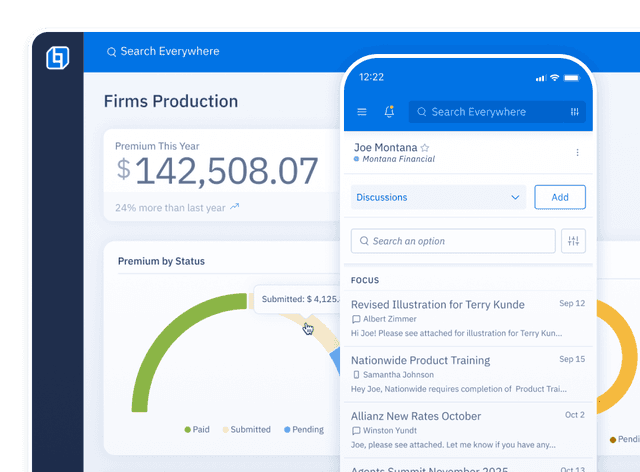
CRM
A CRM built for Insurance Distribution.
DISCOVER CRM
https://onehq-website.s3.amazonaws.com/images/ProductCtas/image-box-crm.png
Can OneHQ help me fix errors in commissions calculations?
How can OneHQ improve the effectiveness of my incentive programs?
How does OneHQ help track commissions owed?
How can OneHQ automate my bank transactions?
How can OneHQ help me analyze agent profitability?
Does OneHQ allow me to hold commission payments?
Can I sync my commissions system with my general ledger accounts in OneHQ?
Can OneHQ help me track policy funding sources?
How does OneHQ help track advisor incentives?
What do your Email Templates do?
What does your full service commission team do?
How can OneHQ manage commissions levels?
How can OneHQ help me answer my agents' commissions questions?
How does OneHQ help me track recoveries?

Launch Plan

Ready to take off? Discover how our proven 3-step process will equip you with the tools, training and ongoing partnership to drive success from day one.

Illustration of a rocket blueprint with the OneHQ logo.Illustration of a rocket blueprint with the OneHQ logo.

All-in-one platform for Insurance Distribution.

Reduce busy work and help more clients.
Our technology is the key to unlocking more sales and providing professional service.